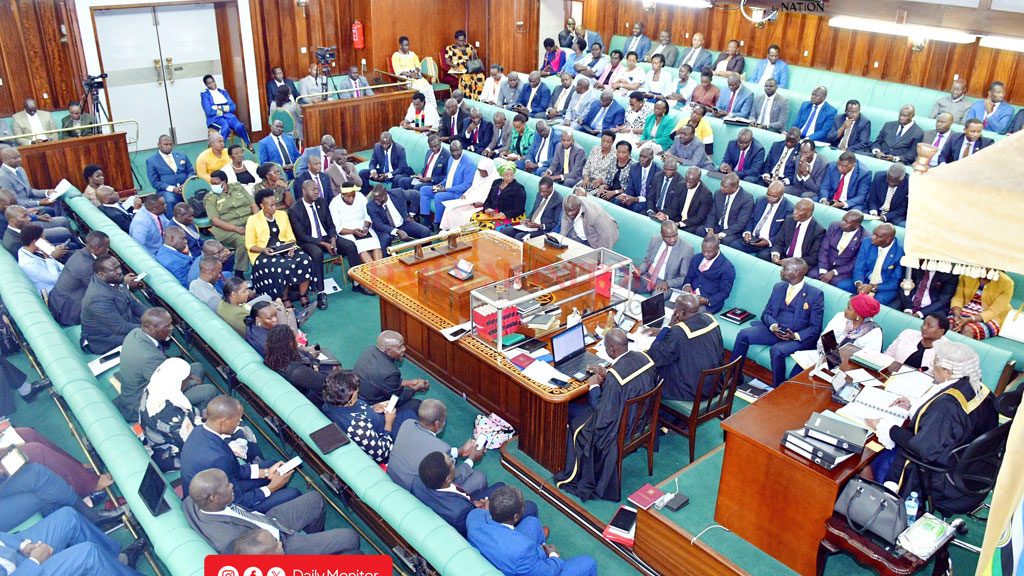

Kampala, Uganda — May 5, 2026-A newly passed provision in the Protection of Sovereignty Bill is drawing intense scrutiny from legal experts and policy analysts, who warn it could significantly expand the state’s power to police information, business activity, and foreign-linked operations under the broad label of “economic sabotage.”
Clause 13 of the bill, approved by Parliament this week, introduces severe penalties — up to 10 years in prison or fines of Shs1 billion for individuals and Shs2 billion for companies — for actions deemed to undermine Uganda’s economic system.
At the centre of the controversy is the law’s definition of economic sabotage: acts committed by an “agent of a foreigner” who knowingly publishes false information or engages in conduct that weakens or disrupts the economy.
But who qualifies as an “agent of a foreigner”? And what counts as “false information”?
These unanswered questions are now at the heart of growing concern.
A Broad Law with Wide Reach
An analysis of the bill suggests that the scope of the clause could extend far beyond traditional espionage or economic crimes. Legal observers say the wording leaves room for interpretation, potentially capturing journalists reporting on economic issues, researchers publishing critical data, or businesses issuing forecasts that contradict official positions.
“If not clearly defined, such provisions can easily move from targeting genuine sabotage to regulating narratives about the economy,” a Kampala-based legal analyst said.
There are also fears that the clause could affect investor confidence. Multinational companies and development partners — often classified as “foreign entities” — regularly interact with local firms, NGOs, and consultants. Any of these relationships could, in theory, trigger scrutiny under the new law.
The Funding Clause Shift
In a notable amendment, Parliament revised Clause 21, narrowing the requirement for declaring sources of funding to only those identified as agents of foreigners.
While lawmakers described the change as a safeguard against overregulation, analysts argue it may instead deepen ambiguity.
“The amendment reduces the compliance burden, yes — but it ties everything back to the same undefined category of ‘foreign agents,’” a governance expert noted. “So the uncertainty remains.”
Potential Impact on Media and Civil Society
Press freedom advocates are particularly concerned about the implications for reporting on inflation, public debt, or government spending — areas that often rely on independent analysis and sometimes contradict official narratives.
Under the new law, publishing information later deemed “false” — even in good faith — could carry criminal consequences if linked to foreign interests.
Civil society organisations, many of which receive donor funding, may also face increased scrutiny, especially if their work touches on economic governance or policy criticism.
Enforcement Questions Loom
Beyond the wording, questions are emerging about how the law will be enforced.
Which authority will determine what qualifies as “false information”?
What standard of proof will be required to establish intent?
How will courts interpret “economic disruption” in complex, real-world situations?
Without clear regulatory guidelines, analysts warn, enforcement could vary widely — raising the risk of selective application.
What Comes Next
The Protection of Sovereignty Bill now awaits presidential assent. If signed into law, it will mark one of the most far-reaching legal frameworks governing foreign influence and economic conduct in Uganda in recent years.
For now, businesses, media houses, and civil society groups are left reading between the lines — trying to understand where legitimate activity ends and criminal liability might begin.
As one policy researcher put it:
“The real test will not be what the law says but how it is used.”
Related Posts
 Who is sabotaging Museveni’s ‘real’ Sovereignty Bill? – FDC
The Forum for Democratic Change (FDC) has demanded answers over the controversial Protection of Sovereignty…