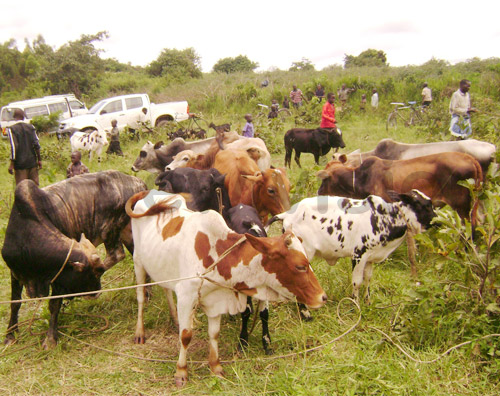
The government has disbursed funds to only 559 households out of the targeted 16,000 under the Shs80 billion cattle restocking programme covering Acholi, Lango and Teso sub regions as the financial year comes to an end.
According to the Office of the Prime Minister, this represents a very small fraction of the intended rollout, with only Shs2.8 billion released so far, equivalent to about 3.5 percent of the total budget. Each beneficiary is expected to receive Shs5 million to purchase five cattle, consisting of three heifers and two bulls.

In a statement issued on June 1, 2026, the government attributed the slow progress to delays by four districts that have not uploaded beneficiary information into the Parish Development Management Information System. The affected districts are Lamwo, Nwoya, Pader and Agago.
The statement indicated that 11,504 beneficiaries have so far been captured in the system, representing 71.9 percent progress toward the target.
However, the absence of data from the four districts has disrupted verification and payment processes.

The Office of the Prime Minister warned that implementation is being held back by the incomplete data submission, urging district leaders and technical teams to speed up the process in order to avoid further delays.
To prevent misuse of funds, government emphasized that no money will be channeled through parish chiefs or parish development committees. Beneficiaries were also cautioned against signing or providing confirmation of receipt before funds are deposited directly into their registered bank accounts or mobile money wallets.
Payments are being processed through the PearlBank Wendi mobile wallet system, which government says is intended to reduce cases of ghost beneficiaries and leakage that have affected past agricultural support programmes.
The restocking initiative, which targets 33 districts across the three sub-regions, was adopted following a presidential directive issued in November 2025 aimed at restoring livestock lost to cattle rustling and prolonged insecurity.
Despite the system being in place, the Office of the Prime Minister did not explain why only 559 households have received payments so far.
Government has urged local leaders to remain vigilant during beneficiary selection and verification, warning that weak controls could open space for fraud and exclusion errors.
As the 30 June 2026 deadline approaches, authorities are racing to complete the initial phase of disbursements. However, unless the outstanding districts submit their data promptly, the programme is unlikely to meet its target within the planned timeline.
The Office of the Prime Minister maintains that it remains committed to ensuring all eligible households benefit from the programme in a transparent and accountable manner, although thousands of intended beneficiaries are still waiting for support.