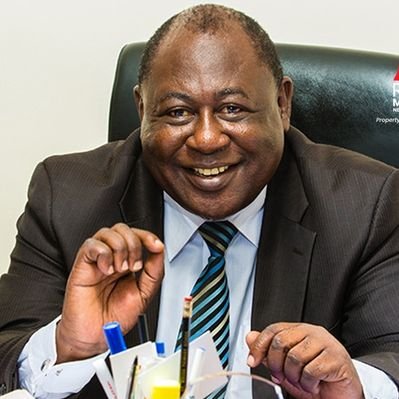
Newly vetted Attorney General Sam Mayanja has dismissed suggestions that his transition from the Ministry of Lands represents a major shift in focus, insisting that his new office is a natural extension of the work he has been carrying out in government.
Speaking shortly after his vetting, Mayanja explained that while his previous role as State Minister for Lands was largely centered on enforcing land laws and government directives, his new position as Attorney General broadens that responsibility to cover the entire machinery of government.

According to Mayanja, the common thread between the two offices is ensuring that the law is respected and implemented by the institutions mandated to enforce it.
“Law and regulation, the Constitution and presidential directives which have the force of law. So where I’ve gone is an extension of what I’ve been doing, ensuring that law is implemented and that the implementing organs are allowed to do their work,” he said.
He added that there is no contradiction between his previous work in the land sector and his new responsibilities as the government’s chief legal adviser.

“There’s no contradiction between what I’ve been doing in the land field and what is in the Attorney General’s chambers. Only that this one is wider, covers the entire spectrum of government, whereas the other one was restricted to land matters,” Mayanja explained.
The veteran lawyer, who became known for his outspoken interventions on land governance, property rights and enforcement of presidential directives, said many of the challenges affecting the land sector do not necessarily require new legislation but rather effective implementation of existing laws.
Asked about gaps he identified during his tenure at the Ministry of Lands, Mayanja was quick to clarify that he did not view them as institutional failures.
“I wouldn’t say they are gaps. You can’t do everything,” he said.
He pointed to persistent issues such as land titling, cases of double titling, the functioning of district land boards and disputes surrounding land ownership, noting that many of these challenges can be addressed through improved compliance with existing legal frameworks.
“These are issues which can be done so fast without having to come to Parliament. It is just to awaken people to their status and what they need to do. That doesn’t need really much. It just needs to tell people to do their work,” he said.
Mayanja also drew a clear distinction between the role he played as Lands minister and the responsibilities he now assumes as Attorney General.
He explained that while serving in the Lands ministry, his duty was to enforce and communicate the law as enacted, rather than interpret it.
“As Minister of Lands, I was not interpreting the law. The interpretation is for the Attorney General. I was telling the law as it is. This is the law. This is the Constitution. This is the Land Act. This is the presidential directive,” he said.
Mayanja revealed that his research had convinced him that presidential directives carry the force of law and should therefore be implemented by public officials.
However, he noted that disputes over whether the implementation of a law or directive is consistent with the Constitution fall squarely within the Attorney General’s mandate.
“If somebody feels that the law as you’re implementing it is going outside the Constitution, then that will require interpretation, and then it goes to the Attorney General. So you will find me there. As for now, the law as it is must be applied,” he stated.
His remarks signal a continuation of the firm legal approach that characterized his tenure at the Ministry of Lands, where he frequently pushed for strict enforcement of existing laws and directives in efforts to resolve long-standing land disputes.
As Attorney General, Mayanja is expected to play a central role in advising government on constitutional matters, representing the state in key legal disputes and ensuring that public institutions operate within the framework of the law.
The newly vetted Attorney General says his priority will remain the same: ensuring that laws, regulations and constitutional provisions are implemented effectively across government, while providing authoritative legal interpretation whenever disputes arise.