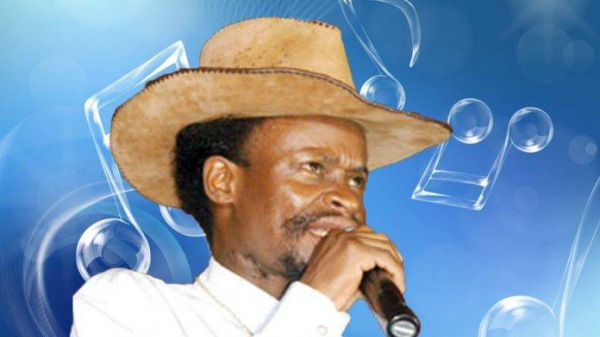
The remains of legendary Kadongo Kamu singer Prince Paul Kafeero were on Monday exhumed for DNA sampling in a major development aimed at resolving a long-running paternity dispute that has divided his family for nearly two decades.
The exercise, carried out under a court order and supervised by forensic experts from the Uganda Police Force, is expected to pave the way for conclusive scientific findings regarding more than 20 individuals who have over the years claimed to be biological children of the late musician.

The development was announced by outgoing State Minister for Youth and Children Affairs Balaam Barugahara, who described the exhumation as a significant step towards uncovering the truth and restoring harmony within the family.
“As I prepare to hand over the Youth and Children Affairs docket soon, I wish to inform the public that the long-standing paternity dispute involving over 20 young people allegedly fathered by my friend, the late Prince Paul Kafeero, will soon be resolved,”Balaam said.
“Following the successful exhumation of his remains this morning for DNA sampling, a process that has remained unresolved for over 20 years is finally underway. The family has been engaged in a prolonged dispute over this matter, and today marks a major step toward establishing the truth,”he added.

The exhumation was conducted by a team of pathologists led by Assistant Inspector General of Police Dr. Moses Byaruhanga, one of the country’s leading forensic experts, who has previously been involved in discussions surrounding the sensitive matter.
According to Balaam, the exercise was conducted professionally and in line with established forensic procedures.
“The exhumation and sample collection exercise was professionally conducted by a team of pathologists led by Assistant Inspector General of Police Dr. Byaruhanga, in accordance with the court order and established forensic procedures,” he said.
The collected samples will now be subjected to scientific analysis by the Government Analytical Laboratory and the Uganda Police Forensic Laboratory, institutions expected to provide definitive DNA results capable of settling the dispute once and for all.
“The Government Analytical Laboratory and the state-of-the-art Uganda Police Forensic Laboratory will now conduct the necessary scientific analysis to provide conclusive facts based on DNA evidence,” Balaam noted.
The controversy surrounding Kafeero’s children has persisted since the singer’s death in 2007. Shortly after his burial, several women emerged claiming that the celebrated musician had fathered their children. Over the years, the number of claimants continued to grow, sparking disagreements over inheritance, family recognition and administration of the late singer’s estate.
Previous attempts to settle the matter through DNA testing generated fresh disputes after some claimants questioned the credibility of earlier results. Court battles, family meetings and mediation efforts failed to produce a universally accepted conclusion, leaving the matter unresolved for years.
The issue has repeatedly attracted public attention, with some family members pushing for exhumation while others opposed disturbing the late musician’s grave on cultural and moral grounds. Prominent voices, including leaders within Buganda Kingdom, previously expressed reservations about the idea, arguing that the deceased should be left to rest in peace.
However, supporters of the exercise maintained that extracting DNA directly from Kafeero’s remains would provide the most reliable evidence and bring closure to one of Uganda’s most publicised family disputes.
Balaam, who has in recent months been actively involved in efforts to find a lasting solution, said the process was motivated by a desire for justice and family unity rather than conflict.
“I wish to thank the Court, the family members, Assistant Inspector General of Police Dr. Byaruhanga and his team, and the Uganda Police Force for making this important process possible. I am also grateful to have fully facilitated this exercise in the interest of justice, truth and family harmony,”he said.
The minister expressed optimism that the scientific findings will finally end years of uncertainty and allow the family to move forward.
His statement concluded with a biblical message often associated with the pursuit of truth.
“There is nothing concealed that will not be disclosed, or hidden that will not be made known,” Balaam quoted from Luke 12:2.
For many of Kafeero’s relatives, supporters and admirers, the awaited DNA results could finally bring closure to a dispute that has overshadowed parts of the legendary singer’s legacy for nearly 20 years.
Widely regarded as one of the greatest Kadongo Kamu musicians Uganda has ever produced, Kafeero remains celebrated for his influential music and enduring contribution to the country’s cultural heritage.
Yet even years after his death, questions surrounding his estate and paternity claims have continued to generate public interest, making the latest forensic exercise one of the most significant developments in the family’s long-running search for answers.