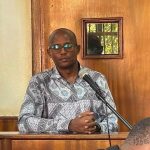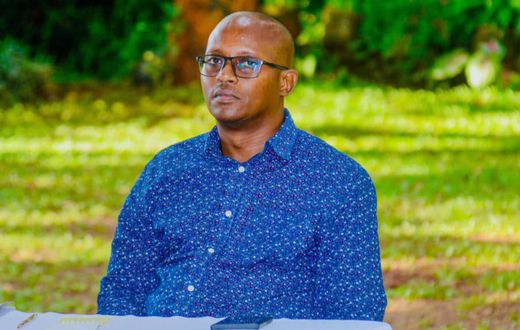
The former Coordinator of Intelligence Agencies, retired Gen David Sejusa, has called on the Ugandan government to reject the extradition of former African Union policy adviser Michael Katungi Mpeirwe to the United States.
He argued that surrendering a Ugandan citizen to a foreign jurisdiction would undermine the country’s sovereignty and perpetuate unequal, neo-colonial relations.

Sejusa’s remarks come a day after the Buganda Road Chief Magistrate’s Court remanded Katungi to Luzira Prison as Uganda commenced extradition proceedings following a request from the United States government.
In a statement via X (formerly Twitter), Sejusa criticised what he termed the “weaponization of extradition treaties” by powerful nations against weaker states, saying such agreements often lack reciprocity.
“Uganda has agreed to extradite its national, Michael Katungi, to the U.S. to be tried for crimes he allegedly committed there. Can the U.S. extradite its national to Uganda to be tried? The answer is never,” Sejusa said.

He added, “That is why the United States is not a party to the International Criminal Court protocol. They cannot allow their citizens to be tried by foreign jurisdictions. In civil law countries such as France, Germany, Russia and Japan, there are strict constitutional or statutory prohibitions against handing over their nationals to foreign countries for trial.”
According to Sejusa, extraditing Ugandan citizens under one-sided treaties violates the principles of state sovereignty and the social contract, under which governments are obligated to protect their nationals.
“It is an abuse of the principle of the sovereignty of states and the sovereign state’s duty to protect its nationals, especially where such an extradition treaty lacks the power of reciprocity,” he said.
The retired general argued that Uganda should instead invoke the Active Personality Principle, which allows a country to prosecute its own citizens for offences allegedly committed outside its borders.
“Uganda must reject the extradition of Katungi to the U.S. and instead subject him to our own criminal trial here. By so doing, we serve both justice and our sovereignty,”he noted.
Katungi, who until last year served as Commissioner for External Affairs and a member of the Central Committee of the Patriotic League of Uganda (PLU), the political organisation led by Chief of Defence Forces Gen Muhoozi Kainerugaba, appeared before Chief Magistrate Ritah Neumbe Kidasa on Monday after he was arrested over the weekend on a warrant issued on June 23 to secure his attendance in court.
The United States is seeking Katungi’s surrender to face charges contained in an indictment issued by the U.S. District Court for the Eastern District of Virginia, Alexandria Division.
State attorneys Adrian Asingwire and Joan Keko told court that the extradition request is being processed under the 1988 United Nations Convention Against Illicit Traffic in Narcotic Drugs and Psychotropic Substances, under which Uganda is obliged to consider requests for the surrender of suspects wanted to face prosecution abroad.
When asked whether he consented to the request, Katungi told court that he opposed extradition to the United States. His legal team, led by Samuel Kakande and assisted by Ramadhan Akatwijuka and Musa Nsamba, also challenged the proceedings, saying they would raise preliminary objections questioning both the legality of the extradition process and the manner in which it had been initiated.
The defence further argued that neither Katungi nor his lawyers had been supplied with the documents the prosecution intended to rely upon, thereby denying them sufficient opportunity to prepare their response. They also applied for his release on bail pending determination of the extradition request.
However, the prosecution opposed both applications, arguing that the defence had misunderstood the nature of the proceedings. State attorney Adrian Asingwire submitted that the arrest warrant had merely been issued to secure Katungi’s attendance before court and that the substantive extradition application had not yet been heard.
According to the prosecution, Katungi’s first appearance was intended only to establish whether he consented to extradition or intended to challenge it. Since he opposed being surrendered to the United States, the state requested an early hearing date to formally present its application.
Prosecutors further argued that requests for bail and disclosure of evidence were premature because formal extradition proceedings had not yet commenced.
In response, defence lawyer Musa Nsamba maintained that no formal extradition application had been filed and argued that the state had relied solely on ex parte proceedings to obtain the arrest warrant. He urged court to release Katungi unconditionally.
In her ruling, Chief Magistrate Kidasa held that Katungi had been lawfully brought before court pursuant to a valid warrant issued to secure his attendance for the commencement of extradition proceedings. She declined to grant bail at the preliminary stage and directed the prosecution to file the formal extradition application by July 1, while the defence was ordered to file its response by July 7. The matter was adjourned to July 10 for hearing, and Katungi was remanded to Luzira Prison until then.
According to the U.S. indictment, Katungi is accused alongside Bulgarian national Peter Dimitrov Mirchev, Kenyan national Elisha Odhiambo Asumo and Tanzanian national Subiro Osmund Mwapinga of conspiring to distribute and possess with intent to distribute at least five kilograms of cocaine, allegedly knowing or having reasonable cause to believe the drugs would be unlawfully imported into the United States.
The four are also accused of conspiring to possess firearms, including machine guns and destructive devices, in furtherance of a drug trafficking offence, as well as conspiring to provide material support to the Cartel de Jalisco Nueva Generación (CJNG), a Mexican criminal organisation designated by the United States as a Foreign Terrorist Organisation in February 2025.
According to investigators, Mirchev allegedly recruited Asumo to obtain a fraudulent End-User Certificate from an African country to conceal the intended destination of the weapons. Asumo is then alleged to have recruited Katungi, who in turn recruited Mwapinga into the scheme.
Prosecutors allege the group later obtained an end-user certificate from Tanzania authorising the importation of AK-47 rifles. Using that documentation, Mirchev and his associates allegedly exported a test shipment of 50 AK-47 assault rifles, magazines and ammunition from Bulgaria, intending that the weapons would ultimately reach the CJNG.
The indictment further alleges that the suspects later planned to supply military equipment worth approximately €53.7 million (about Shs224 billion), including rocket launchers, anti-aircraft systems, drones, sniper rifles, anti-personnel mines, night-vision equipment and surface-to-air missile systems, while using falsified arms control documentation to disguise the intended end user.
Court records also revealed that Mirchev had previously been implicated in supplying arms to convicted international arms trafficker Viktor Bout.
Commenting on the case, Sejusa said Uganda should resist what he described as one-way extradition arrangements driven by political and economic pressure.
“Even during the Constituent Assembly, some of us opposed these one-way-traffic extradition treaties. But then, like now, our economic dependency and the never-ending conditional aid and leverage always determine the outcome,”he said.
He further said that Uganda should safeguard both its judicial independence and the rights of its citizens.
“It is a shame to extradite our national to the U.S. when the U.S. can never extradite an American to Uganda. Doing so is a clear sign of modern master-slave neo-colonial relations, where historical subjugation has evolved into new systems of domination,”he remarked.
The case will return to court on July 10, when the Buganda Road Chief Magistrate’s Court will hear the government’s formal application seeking Katungi’s extradition to the United States.