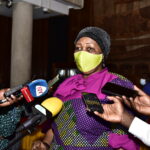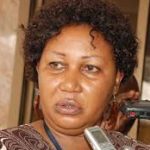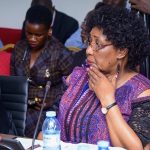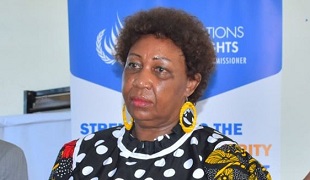
Uganda Human Rights Commission (UHRC) Chairperson Mariam Fauzat Wangadya has resigned from her position, ending a five-year return to the country’s top human rights body that was characterised by institutional reforms, interventions on rights violations and internal disagreements that later exposed deep divisions among commissioners.
Wangadya communicated her decision in a letter dated July 6, 2026, addressed to President Yoweri Kaguta Museveni, in which she formally stepped down from the leadership of the constitutional body.

In the letter, Wangadya expressed appreciation for the opportunity to serve Uganda through the promotion and protection of human rights.
“I hereby tender my resignation as Chairperson of the Uganda Human Rights Commission. I thank you for the opportunity to serve Uganda over the years in the promotion and protection of human rights,” Wangadya wrote.
The letter did not provide reasons for her resignation, but it comes at a time when the Commission has been facing internal disagreements among its leadership, with divisions between the chairperson and some commissioners becoming increasingly visible.

Wangadya, a lawyer and long-time human rights advocate, returned to the UHRC leadership in 2021 after President Museveni appointed her as chairperson, replacing the late Meddie Ssozi Kaggwa who died in 2019.
Before her appointment as chairperson, Wangadya had served as one of the pioneer commissioners of the UHRC and later held the position of Deputy Inspector General of Government. Her return to the Commission was viewed as a move to restore strong leadership at the institution, given her previous experience in governance, accountability and human rights advocacy.
During her tenure, she led the Commission at a time when Uganda faced intense scrutiny over allegations of torture, arbitrary arrests, restrictions on civic space and other human rights concerns. She frequently called for accountability by security agencies and emphasised the constitutional mandate of the Commission to protect citizens’ rights.
However, her leadership later became embroiled in disagreements with some members of the Commission, creating tensions that affected the working relationship among commissioners.
The disagreements reportedly intensified after some commissioners raised concerns over her management style and administrative decisions, prompting internal discussions and attempts to resolve the differences.
The tensions reached a point where Wangadya publicly accused some of her colleagues of undermining her authority as chairperson and frustrating the effective operation of the Commission.
She claimed that some commissioners had failed to respect her position as head of the institution and were determined to challenge her leadership.
“They have never accepted me as their leader and have openly vowed to get me out of office,” Wangadya said during the height of the disagreements.
She also accused some commissioners of turning official meetings into hostile environments, alleging that discussions often became confrontational.
“These people shout at me during meetings, point fingers at me and make statements that are meant to intimidate me. They have made it clear that they want me out of office,” she said.
The disagreements highlighted concerns about leadership, decision-making and accountability within the Commission, an institution whose independence is protected under the Constitution.
The Uganda Human Rights Commission was established under Article 51 of the 1995 Constitution with the mandate to investigate human rights violations, monitor government compliance with human rights standards, visit places of detention and promote awareness of citizens’ fundamental freedoms.
Wangadya’s resignation now leaves President Museveni with the task of appointing a new chairperson, subject to approval by Parliament, to lead the Commission at a time when human rights issues remain a major part of Uganda’s public debate.