Stanbic Bank
Stanbic Bank
19.3 C
Kampala
Stanbic Bank
Stanbic Bank
Home Blog Page 129

NRM Tribunal upholds Gen. Tumukunde’s victory in Rukungiri Municipality

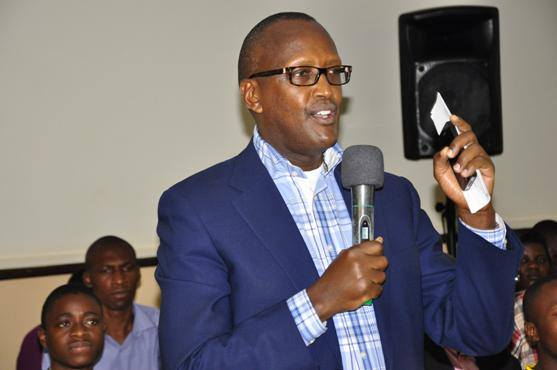
Gen. Henry Tumukunde.

As Akankunda’s petition is dismissed over  lack of evidence  

The NRM Election Disputes Tribunal has upheld the election of Lt. Gen. (Rtd) Henry Tumukunde as the duly elected NRM flag bearer for Rukungiri Municipality, dismissing a petition by Isaac Atukunda who had alleged illegal nomination and widespread electoral malpractice in the July 17, 2025, party primaries.

In a ruling seen by Eagle Online, dated August 6, 2025, the tribunal chaired by John Musiipe, with Elton Mugabi as panel head, Stanley Kangye and Blair Atwebembeire as members, rejected claims of bribery, voter intimidation, and illegal nomination as “general, speculative, and unsupported by sufficient evidence.”

The petition, filed under Petition No. 306 of 2025, evolved from the NRM parliamentary primaries for Rukungiri Municipality, where Atukunda, who garnered 1,646 votes, challenged Tumukunde’s landslide victory of 56,301 votes. Atukunda attempted a political comeback in Rukungiri Municipality after he was humiliated in the Uganda Law Council presidency by Isaac Ssemakadde.

Atukunda, represented by David Kamukama of Credo Advocates, argued that Gen. Tumukunde’s nomination was illegal, citing his 2021 presidential run under a different platform and his alleged non-residency in the constituency. He also alleged election malpractice, including bribery, violence, obstruction of agents, and the procurement of ineligible voters.

However, Gen. Tumukunde, through a high-powered legal team comprising Jude Byamukama, Justinian Kateera, and Andrew Kiryowa, denied all allegations, insisting that he was validly nominated, still a member of the NRM, and that the petitioner’s claims were vague and unsubstantiated.

The tribunal’s first focus was the legality of Tumukunde’s nomination and membership in the party, given his past presidential candidacy.

“The Tribunal is satisfied that there being no proof that the NRM registration process was not followed, the Respondent is a member of the Party,” the ruling reads.

Atukunda had invoked Article 8(4)(c) of the NRM Constitution, arguing that Gen. Tumukunde’s previous presidential run constituted automatic cessation of membership. Nevertheless, the tribunal disagreed, noting that no evidence of a formal dismissal or resignation existed.

“Dismissal of a party member under Article 8(4)(e) is after a fair hearing. The Respondent was never dismissed, and there was no evidence of any hearing.”

Atukunda also argued that Gen. Tumukunde does not originate from or reside within Rukungiri Municipality, making him ineligible.

But the tribunal invoked Section 4 of the Parliamentary Elections Act, which does not require residency as a qualification for parliamentary candidates.

“The Tribunal, while relying on the primary legislation… finds that residency in an electoral area is not a qualification for one to stand for parliamentary elections.”

Atukunda claimed that Gen. Tumukunde’s agents bribed voters with Shs10,000 notes, directed them during the lining-up process, and that violent youths intimidated voters in several cells.

However, the tribunal found the evidence lacking.

“The allegations of election malpractices are general in nature and lack specificity,” the panel ruled.

The Panel added, “The Petitioner did not specify the agents of the Respondent who carried out the said acts or whether they did so with the authority and/or knowledge of the Respondent.”

Even if the irregularities occurred, the tribunal found they were too few and geographically limited to impact the overwhelming vote difference.

“Even if accepted as true, the alleged irregularities occurred in a limited number of polling stations and would not… materially alter the margin of 2,896 votes between the two candidates,” added the Panel.

The tribunal concluded that the petitioner failed to prove all claims to the required standard.

“Having failed to prove the allegations to the required standard, the Petitioner is not entitled to the reliefs sought,” the ruling states.

As such, the election of Gen. Henry Tumukunde as NRM flag bearer for Rukungiri Municipality was upheld, and the petition was dismissed in full.

This ruling strengthens Gen. Tumukunde’s grip on the NRM ticket ahead of the 2026 general elections, removing a major legal hurdle and affirming his political rehabilitation within the party.

For Atukunda, the ruling underscores the stringent evidentiary burden required to overturn party primaries, especially under the NRM’s 2025 Election Regulations that prioritize finality and internal discipline.

“The decisions of the Tribunal are binding on the parties and the NRM Electoral Commission, ensuring certainty, finality and internal discipline within the party’s electoral dispute resolution process,” the panel noted.

Stories Continues after ad

CHAN 2024: Cranes eye comeback against Guinea after poor start

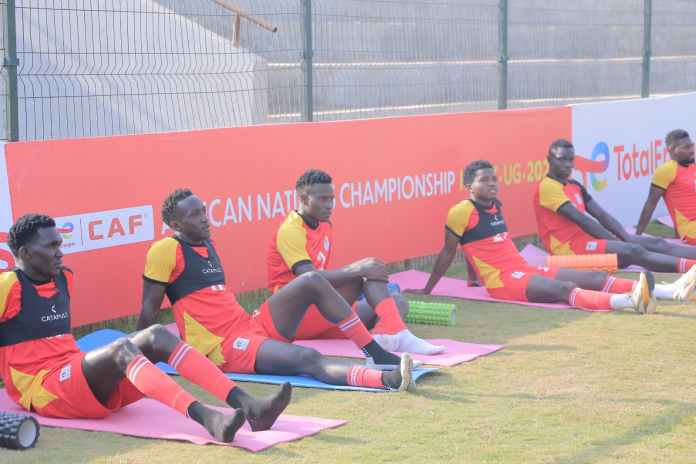
Cranes undergoing training.

After a disappointing start to the TotalEnergies CHAN 2024 campaign, joint co-hosts Uganda Cranes resumed preparations with a recovery session held on Tuesday evening at the FUFA Stadium, Kadiba, Kampala.

The Cranes suffered a 3-0 defeat to Algeria in their opening Group C match on Monday night at the Mandela National Stadium, a result that left fans and players equally disappointed, and a poor show again could see the team fail to qualify for the next stage of the tournament.

Turning their focus to Friday’s crucial clash against Guinea, the team regrouped at the newly built Kadiba facility, located in Mengo, Rubaga Division, Kampala. The FIFA-funded project, launched in 2018, is one of the modern football infrastructure additions to Ugandan football.

The technical staff on the team used the session to address the shortcomings from the Algeria match, with a key emphasis on sharpening attacking efficiency and improving defensive shape and concentration.

Group C action continues on Friday, August 8th, with Algeria facing South Africa in the early kickoff before Uganda squares off with Guinea in the second fixture of the day. This encounter could prove pivotal in the Cranes’ quest to reach the knockout stage.

Uganda Cranes has played against Guinea before. Most recently, they played a FIFA World Cup 2026 qualifier on March 25, 2025, at the Mandela National Stadium in Kampala, where Uganda won 1-0. Prior to that, they also faced each other in a World Cup qualifier in Morocco, where Guinea won 2-1. They also played each other in a 1976 Africa Cup of Nations qualifying match.

Full Uganda Cranes Squad – CHAN 2024

Goalkeepers: Denis Kiggundu [Vipers SC] Joel Mutakubwa [BUL FC] Chrispas Kusiima [Kitara FC]

Defenders: Arnold Odong [SC Villa] Nicholas Mwere [BUL FC] Gideon Odong [NEC FC] Herbert Achai [KCCA FC] Rogers Torach [Vipers SC] Lazaro Muhindo [KCCA FC] Hilary Mukundane [Vipers SC] Kizito Gavin [KCCA FC]

Midfielders: Joseph Youngman Marvin [Vipers SC] Elvis Ngonde [SC Villa] Patrick Jonah Kakande [SC Villa] Allan Okello [Vipers SC] Joel Sserunjogi [KCCA FC] Enock Ssebagala [Vipers SC] Abdu Karim Watambala [Vipers SC]

Forwards: Jude Ssemugabi [Kitara FC] Ivan Ahimbisibwe [KCCA FC] Arafat Kiza Usama [KCCA FC] Yunus Junior Sentamu [Vipers SC] Reagan Mpande [SC Villa] Emmanuel Anyama [KCCA FC] Shafik Nana Kwikiriza [KCCA FC]

To entice the team, President Yoweri Kaguta Museveni pledged a staggering Shs 1.2 billion for every match they win in the tournament, meaning they missed the money after losing the first match.

Kenya head coach Benni McCarthy has urged his players to remain focused and keep their eyes on the prize as they prepare to face Angola in their second Group A match on Thursday [today].

The Harambee Stars opened their campaign with a hard-fought 1-0 victory over DR Congo on Sunday and will be in a strong position to reach the knockout stages if they collect another three points against the Angolans.

Despite the wave of optimism and confidence following the victory, McCarthy has insisted that nothing has been achieved yet.

 “Nothing is done yet. That was just one win — an important one — but we have to remain focused. We faced a very tough opponent and worked hard to get that result, but we shouldn’t let it get into our heads,” McCarthy said.

“The focus now shifts squarely to Angola and the ambition is the same — go in and fight for maximum points.”

Stories Continues after ad

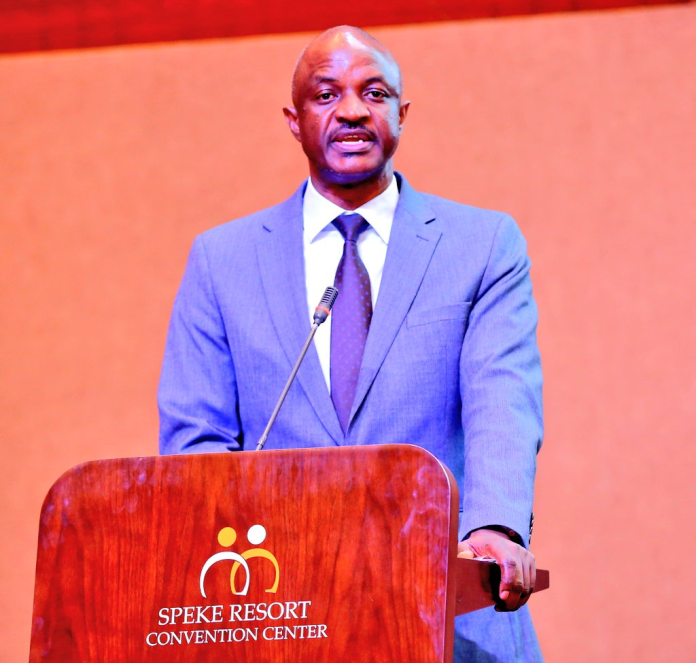
PS Ggoobi warns against budget manipulation & corruption as accountants meet at Munyonyo

PSST-Ramathan Ggoobi.

Speke Resort Munyonyo— The Permanent Secretary and Secretary to the Treasury (PSST), Ramathan Ggoobi has warned government Accounting Officers over what he termed “budget games” deliberate manipulations in the budget process that risk undermining service delivery and fueling corruption.

Speaking during a high-level meeting convened by the Ministry of Finance, Planning, and Economic Development (MoFPED) at Speke Resort Munyonyo on Wednesday, Ggoobi revealed that the ministry had detected disturbing trends in how some Ministries, Departments, and Agencies (MDAs) were misappropriating budget allocations.

“The budget process itself has become a source of corruption. We have identified tricks like ‘Padding Play’, where MDAs ask for more funds than needed, and the ‘Crisis Card’, where officials make alarmist claims to secure extra allocations,” Ggoobi said.

He added that Procurement Officers, HR personnel, and Accountants were under increased scrutiny for facilitating these manipulative practices. MoFPED Budget Analysts have now been directed to intensify budget review mechanisms and stamp out such practices.

“These games are a gateway to corruption. They must stop,” he warned.

The meeting brought together Accounting Officers from central ministries, local governments, Uganda’s missions abroad, regional referral hospitals, and public universities — all tasked with ensuring effective execution of the government’s ambitious Shs72 trillion budget for FY 2025/26.

Chaired by the Head of Public Service and Secretary to Cabinet, Lucy Nakyobe, the meeting sought to align government entities on financial discipline, performance, and transparency in service delivery.

“You must deliver services equitably and on time. Guard against committing a government without adequate resources,” Nakyobe told the officers. “There must be zero tolerance for the creation of domestic arrears. Do not commit beyond cash limits.”

Nakyobe emphasized the need for urgency in project implementation and the publication of clear service delivery standards.

“Fast-track procurement, define your performance standards, and restore citizen trust by being accountable,” she added.

The government is under mounting pressure to ensure value for money amid growing public frustration over persistent service delivery failures and financial wastage. This meeting, therefore, marked a critical step in tightening oversight as the country embarks on a crucial fiscal year.

Representatives from Local Governments voiced concerns about continued delays in service delivery and limited wage allocations that are hindering the recruitment of essential staff.

“We are now focusing on results. Officers who fall short of expectations or engage in budget manipulation risk disciplinary sanctions,” Ggoobi cautioned.

Uganda’s top finance officials are advocating for a cultural shift, one where transparency, efficiency, and ethical leadership become the foundation of public financial management.

Stories Continues after ad

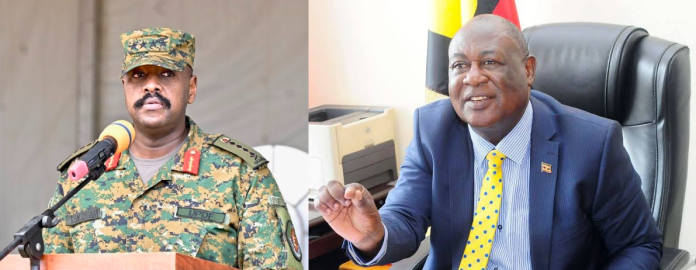
CDF Muhoozi to arrest Lands Minister Sam Mayanja over Kaazi land dispute 

Gen. Muhoozi and Minister Mayanja.

The Chief of Defence Forces (CDF) General Muhoozi Kainerugaba has declared his intention to seek the arrest of the Minister of State for Lands, Sam Mayanja, over what he described as interference with military command and the improper handling of Uganda People’s Defence Forces (UPDF) officers.

Via his X (formerly Twitter) handle, Muhoozi wrote, “I will request Mzee for the arrest of the Minister of State for Lands!” referring to President Yoweri Museveni, the Commander-in-Chief of the Armed Forces.

Muhoozi was concerned about the reports that a UPDF Brigadier had been summoned to appear before the Lands Minister in connection with the contested Kaazi land in Wakiso District.

“We are going to arrest one of our Brigadiers for appearing in front of a Minister, I hear. The next time anyone, except the President and Commander‑in‑Chief, dares to call any officer or man of UPDF for a case anywhere without my authority, we shall arrest them,” Gen. Muhoozi warned.

His revelation follows an intensifying dispute over the 120-acre Kaazi National Scouts Camping Centre claimed by both the estate of the late Kabaka Daudi Chwa II and the Uganda Scouts Association whose legal ownership Minister Mayanja sought to clarify in a petition dated July 25, 2025.

In the petition addressed to Brig. Gen. Henry Isoke, the head of the State House Anti-Corruption Unit, Mayanja accused powerful individuals of trying to illegally appropriate the land and called for the cancellation of land titles he believes were fraudulently acquired. He argued that the land was originally held under private mailo by the late Kabaka and was never lawfully restituted to the Buganda Kingdom under the 1993 Restitution Act.

Mayanja recommended that 100 acres be officially returned to the Uganda Scouts Association and 20 acres to the estate of Prince G.W. Mawanda, a descendant of the Kabaka, as part of an effort to protect youth institutions and historical rights.

“After thorough legal and historical review, the claim by the Daudi Chwa II estate is the most legally grounded,” Mayanja wrote, insisting the Uganda Land Commission rectify the records.

The dispute has since taken a political and military twist, with Muhoozi framing Mayanja’s actions as a breach of military protocol. His demand for the Minister’s arrest has raised eyebrows and debate on the limits of civilian authority over military institutions.

Analysts say the standoff could evolve into a wider test of Uganda’s governance framework, particularly regarding the independence of institutions, land governance, and the military’s role in civil affairs.

Minister Mayanja, for his part, has remained firm on his legal stance, stating his duty lies in protecting public land and upholding the Constitution.

Stories Continues after ad

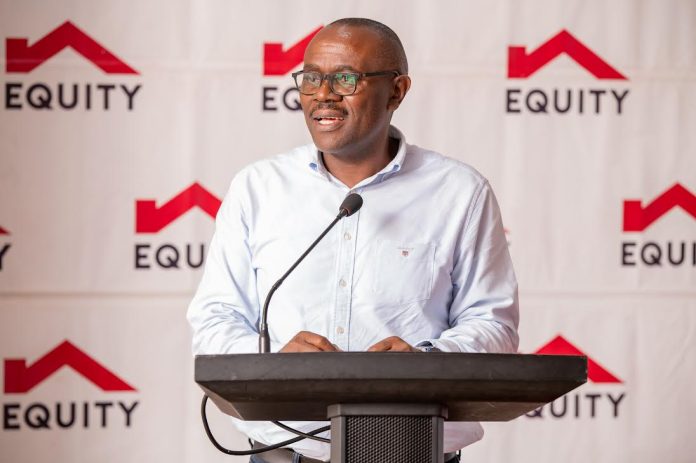
Equity Bank propelled my business from struggles to success — SME leader Kanyike

Nuhu Kanyike testifying during the Unilever-Equity Bank partnership launch at Sheraton Hotel Kampala.

Running a business in Uganda comes with no shortage of challenges. For many small and medium enterprises (SMEs), survival often means navigating delayed financing, cash-handling risks, and limited access to key markets. Nuhu Kanyike, Managing Director of Falkan Investments Ltd, experienced these struggles firsthand until he partnered with a bank that not only understood his pain points but also shared in his vision for growth.

Kanyike’s journey with Equity Bank began in 2017 during a critical period in his career as a Unilever distributor. Frustrated by delays in renewing a bank guarantee with a previous provider, “I had waited for weeks and couldn’t get any help,” he said.

He was introduced to Equity Bank by a fellow distributor, and within a week, everything was sorted. “I had my guarantee sorted at the Equity Bank. They handled everything quickly and professionally,” Kanyike recalls.

That was the start of a new chapter for his business. For SME distributors like Falkan Investments, Equity Bank’s responsiveness and tailor-made financial products have been game changers. The guarantee facility enabled the business to access Unilever stock on flexible 17-day payment terms, easing working capital pressures and supporting sustainable growth. “Equity didn’t just offer credit- they provided a solution that worked for my cash flow cycle,” Kanyike reflects.

But the true impact of Equity Bank lies in how it integrates digital innovation with practical SME needs. Before joining Equity, Kanyike’s sales team handled large amounts of cash after every trip, creating delays and safety risks. “We would spend hours counting money in the warehouse. It was risky and tiring,” he said. But through Equity Bank’s agency banking network with over 9,310 ‘Equi-Duuka’ gents, his field teams now deposit cash in real time with local agents, eliminating security risks and saving valuable operational hours. “That one change has streamlined our operations and enabled us to scale faster,” he notes.

Now, his team deposits money directly with Equity Bank agents in the field, and it reflects instantly in their accounts.

“It has saved us a lot of time and removed the stress of carrying cash,” he added.

This system has also allowed the business to expand into new areas like Ishaka and Karenga, which were previously avoided due to the risks of transporting money over long distances. With agents available across the country, the company’s trucks now return without any cash on board- money is deposited and secured on the spot.

Beyond transaction support, Equity Bank has also provided flexible working capital loans, allowing Kanyike to stock up when needed and pay back within a month. “Even when we need short-term funds to meet monthly sales targets, I can rely on Equity to provide credit I can repay within a month. That kind of agility is essential in our line of work,” Kanyike shares.

For Kanyike, Equity Bank is more than just a lender. “They understand how SMEs operate and give us tools that really make a difference,” he said.

His story highlights the importance of banks going beyond traditional services. “Uganda’s SMEs need partners who listen and offer real-time solutions. Equity Bank has done that for us,” Kanyike concluded.

As more entrepreneurs look for ways to grow, Kanyike’s experience shows that with the right financial partner, small businesses can overcome challenges and succeed.

Stories Continues after ad

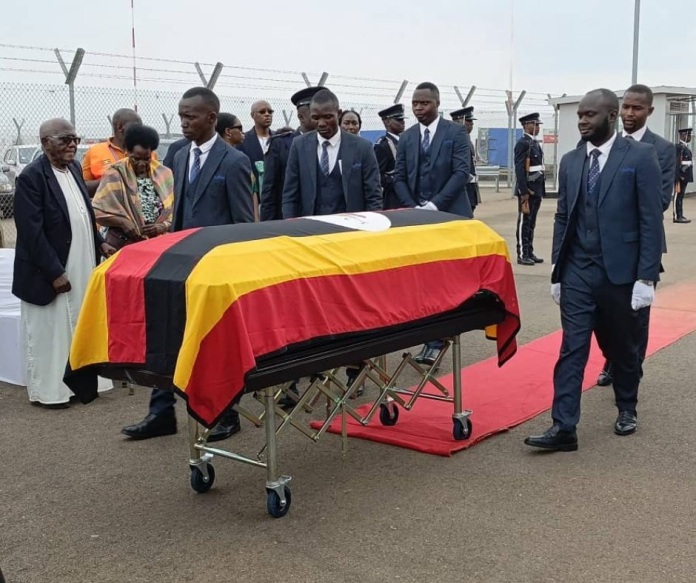
Grief as body of stateswoman Rhoda Kalema arrives in Uganda

Remains of Rhoda Kalema at Entebbe International Airport.

The body of Lay Canon Rhoda Nakibuuka Nsibirwa Kalema, a pioneering Ugandan politician and former Minister for Public Service, arrived this morning at Entebbe International Airport from Nairobi, where she passed away over the weekend following an illness. She was 96.

The body was received by A-Plus Funeral Services, officials from the Uganda Police Force and members of the Kalema family in a solemn early-morning ceremony. A distinguished public servant and a champion of women’s rights, Kalema’s return marks the beginning of official burial proceedings led by the Government of Uganda.

In recognition of her immense contribution to public service and the nation’s democratic development, President Yoweri Kaguta Museveni has directed that she be accorded an Official Burial. A hybrid National Organizing Committee, chaired by Minister for the Presidency, Hon. Milly Babirye Babalanda, has been constituted in consultation with the Kalema family to oversee the arrangements.

According to the funeral program, a church service will be held at Namirembe Cathedral on Thursday, followed by her burial on Saturday in Kiboga District, her ancestral home. The Uganda Police Force will provide full honors, including a gun salute, during the burial ceremony.

In an emotional plenary sitting on Tuesday, August 5, the Parliament of Uganda joined the nation in mourning the death of Rhoda Kalema, who was hailed as a trailblazer in Uganda’s political history and a relentless advocate for women’s rights.

Speaker Anita Among opened the session with a heartfelt tribute, describing Kalema as “a remarkable leader whose legacy will live long after her demise.”

“She served in several cabinet positions, notably as Minister of Culture and Community Development and Deputy Minister for Public Service. On behalf of Parliament and myself, we extend our deepest condolences to the bereaved family, the people of Kiboga, and all the women of Uganda,” Among stated before leading Members of Parliament in a moment of silence.

Kalema was one of the first two women to serve in the National Consultative Council (NCC) Uganda’s third Parliament between 1979 and 1980. She also represented Kiboga District in the Constituent Assembly that crafted the 1995 Constitution.

Christine Kaaya (NUP, Kiboga District) paid an emotional tribute, saying: “She was a mother, mentor, and strategist. When I was elected, she promised to support me for three more years and I thank God she lived to see them.”

Gorreth Namugga (NUP, Mawogola South), speaking on behalf of the Uganda Women Parliamentary Association (UWOPA), urged Parliament to honor Kalema’s legacy by advancing legislation on human rights protections.

“Her work in human rights should inspire us to pass legislation that protects migrant workers and vulnerable citizens. As women, we have lost a hero,” Namugga said. State Minister for Trade, David Bahati, confirmed that the government would release the detailed official burial programme on Wednesday. Speaker Among also directed that local leaders from Kiboga be fully involved in all funeral activities.

Born in 1929 to the former Buganda Katikkiro Martin Luther Nsibirwa, Kalema studied social work in the United Kingdom before returning home to serve during some of Uganda’s most turbulent political times. Her rise to prominence began in 1979, and over decades, she became a respected voice for democracy, women’s empowerment, and good governance.

Her burial on Saturday is expected to draw dignitaries, civil society leaders, and citizens from across the country a testament to the indelible mark she left on Uganda’s political and social fabric 

Stories Continues after ad

FDC founding member James Musinguzi Garuga dies at 72

Late James Garuga Musinguzi.

Prominent entrepreneur and veteran politician James Musinguzi Garuga, a founding member of the Forum for Democratic Change (FDC), has passed away at the age of 72.

Garuga, who played a pivotal role in Uganda’s opposition politics during the early 2000s, passed on Wednesday, July 6, morning at Nakasero Hospital in Kampala, according to a statement from the FDC party headquarters in Najjanankumbi.

A respected voice in both business and politics, Garuga was among the bold figures who championed the Reform Agenda, the precursor to the FDC. He later served as Secretary for Economic Affairs in the Reform Agenda task force, offering critical guidance and support at a time when opposing the regime was a dangerous undertaking.

“Garuga was not only a distinguished entrepreneur and community leader, but also a committed political actor whose contribution to Uganda’s democratic struggle, particularly in the formative years of the Reform Agenda and the birth of the FDC, remains invaluable,” the FDC said in a statement.

The party described Garuga as “a man of rare courage, wisdom, and generosity,” adding that his death is a major blow to the country’s democratic movement.

“As a party and as a country, we have lost a man whose moral and financial support gave life to a cause that many feared to associate with at the time. He stood with us when standing up was not popular,” the statement continued.

Garuga was also a successful businessman, with investments in tourism, agriculture, and real estate. He was widely regarded as a bridge between Uganda’s business and political elite and was known for using his resources to uplift communities in the Kigezi sub-region, particularly in Kanungu District, where he hailed from.

Tributes from across the political divide continued to pour in throughout the day, hailing Garuga as a patriotic Ugandan who served his country with distinction.

The FDC has extended its “heartfelt condolences” to his family, friends, and all those whose lives he touched. Funeral arrangements are expected to be communicated in due course.

“May his soul rest in eternal peace,” the party mourned.

Stories Continues after ad

Museveni’s new budget plan prioritizes road development

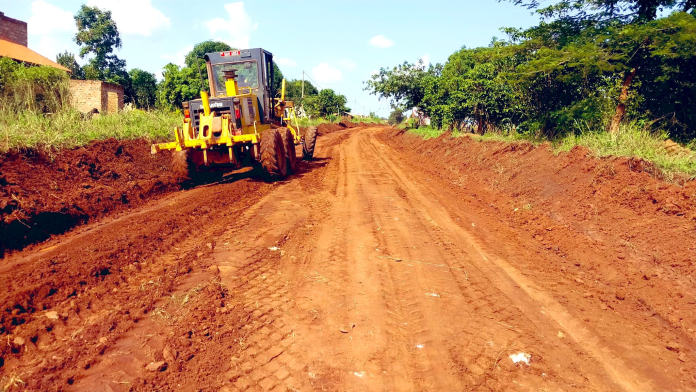
Road construction is one of the few pillars of President Museveni's focus for development.

President Yoweri Kaguta Museveni has criticized the government’s scattered budgeting practices, blaming the neglect of critical infrastructure especially roads on what he termed “okumemerera”, or the spreading of resources too thinly.

In a statement on Tuesday, the President expressed concern over the deterioration of major roads, attributing it to poor prioritization and under-budgeting. He announced an urgent rehabilitation program for key highways and reaffirmed his commitment to strategic planning, particularly in roads and electricity.

“I would like to, again, remind you of the mistake of kumemerera… trying to be everywhere at the same time and ending up being nowhere; trying to do everything at the same time and ending up doing nothing properly,” Museveni said.

Recalling a similar crisis two decades ago, Museveni said Uganda’s reliance on donor-funded development in 2005 nearly paralyzed essential services. He cited examples of failed donor commitments on the Kampala-Masaka road and electricity lines in northern Uganda, which prompted him to chart a new path of self-reliant development.

“I told our people to forget about the donors and we build our country ourselves relying on our scarce resources and the NRA strategy of ‘Kamwe Kamwe Nigwo Mugaanda’ (One by one makes a bundle),” Museveni noted.

He said this shift in policy led to massive investments in roads and electricity, with the roads budget increasing from Shs 374 billion to Shs 6.4 trillion by 2019, and the electricity budget rising from Shs 133 billion to Shs 3 trillion.

“Henceforth, it will be electricity and roads first and the rest later,” Museveni declared in his 2005 directive.

The president emphasized that this focused approach helped Uganda overcome its electricity blackouts and facilitated major road works — including the Soroti-Moroto, Lyantonde-Kazo-Ibanda, and Mpigi-Ssembabule-Masaka highways.

However, Museveni expressed disappointment that the same budgeting errors were creeping back, resulting in the decline of previously strong roads such as Mityana-Mubende-Kyenjojo, Ibanda-Mbarara, and Mukono-Jinja.

“Recently, I have noticed that our road sectors are now in three categories,” he explained.

He added, “The very good brand-new roads, the deteriorated roads due to under-budgeting, and poorly maintained murram roads by local governments.”

He revealed that while the Ministry of Works currently commands a budget of Shs 5.9 trillion, only Shs 3.21 trillion is required annually to maintain Uganda’s roads in excellent condition. The remaining allocation includes funds for other transport-related projects like Uganda Airlines and the Standard Gauge Railway.

“I have instructed the Ministry of Works and the whole Government to rectify that situation,” Museveni stated.

The President listed several roads slated for immediate rehabilitation, including:Mityana–Mubende-Kyenjojo, Ibaanda–Mbarara, Ishaka–Mbarara, Mukono–Lugazi–Jinja, Kikoroongo–Mpondwe, Nebbi–Arua, Ntungamo–Rukungiri.

Additionally, new road projects will commence, such as Jinja–Budondo–Mbulamuti–Kamuli and Bwizibwera–Nsiika–Nyakashaka–Nyakabirizi.

“Targeting the creation of cities, new districts, higher pay for civil servants, etc., before you put aside adequate money for roads, electricity, security, wealth creation, etc., is bad planning,” he warned.

Museveni also cautioned against budget corruption, suggesting that reports of inflated road construction costs could soon be investigated.

Stories Continues after ad

GENERAL: Mbadi, Okiding & Kavuma among 429 to retire from UPDF in 2027

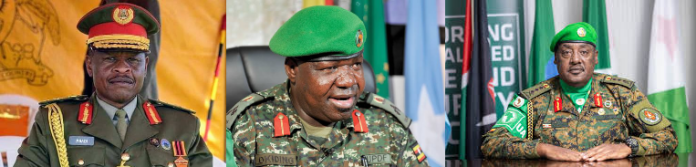
Generals, Okidingi, Mbadi, and Kavuma.

Former Chief of Defence Forces and Minister of State for Trade, Gen. Wilson Mbasu Mbadi has been lined up for retirement in July 2027.

In a document seen by Eagle Online, the Uganda People’s Defence Forces (UPDF) has announced the retirement of 429 officers, including high-profile leaders such as General Wilson Mbasu Mbadi, Lieutenant General Sam Okiding, and Lieutenant General Sam Kavuma.

Among the retirees, Mbadi is the only four-star general. Five (5) Lieutenant Generals, three (3) Major Generals, sixteen (16) Brigadier Generals, 33 Colonels, 55 Lieutenant Colonels, 81 Majors, 132 Lieutenants, and 102 Captains.

The retirement is scheduled to take place in July 20127.  

Who is Gen. Wilson Mbasu Mbadi?

General Wilson Mbadi, born in Kasese District on June 6, 1962, rose through the ranks to become Chief of Defence Forces (CDF) from June 2021 until March 2024. Educated at Sandhurst where he graduated top of his class, Mbadi also holds a Master’s in Strategic Studies from the Air War College in Alabama and a Diploma from the University of Nairobi

Before his tenure as CDF, he served as Joint Chief of Staff and then Deputy Chief of Defence Forces. A calm and detail-oriented leader, he commanded key UPDF reforms, including the rollout of the UPDF Establishment 2021 structure, which modernised Uganda’s military administration.

Lieutenant General Sam Okiding, currently Deputy CDF, will also retire in the 2027 cohort. He previously commanded forces in Somalia under the African Union and has been instrumental in personnel oversight and organisational transformation at home. At recent retirement events, Okiding urged his colleagues to view the next phase as an extension of their service, encouraging wise investment and continued involvement in national life.

Lieutenant General Sam Kavuma, known for his leadership in Operation Wealth Creation and as head of UPDF missions in Somalia, will also join the retirees. Kavuma has been a career military officer since the late 1980s and has held multiple command roles, including leadership of the African Union Transition Mission in Somalia (ATMIS) since March 2024.

The retirement follows UPDF protocol, offering exit packages and ceremonial send-offs. At previous handovers, President Museveni personally addressed retiring officers, urging them to invest their packages wisely and reassuring them that their dismissal marks a transition, not a termination of service.  

UPDF and the Ministry of Defence and Veteran Affairs Spokesperson, Maj. Gen. Felix Kulaigye told Eagle Online, “Retirement is part of the norm within UPDF. So, we wish our comrades the best as they retire,” he said.

Retiring Generals include

General Wilson Mabasu Mbadi

Lt. Gen Jack Bagonza Bakasumba

Lt. Gen Joseph Masanyufu

Lt. Gen Sam Okiding

Lt. Gen Sam Kavuma
Lt. Gen Charles Lutaaya
Maj. Gen Ambrose K Musinguzi
Maj. Gen Samuel Kawagga
Maj. Gen Lucky Kidega
Brig. Gen Sam Kiwanuka  
Brig. Gen Alex Opolot Olupot
Brig. Gen Caesar Innocent Bahwezi
Brig. Gen Michael Kibuye
Brig Gen James Kaija
Brig. Gen Mwanje Ssekiranda
Brig. Gen Robert Freeman Mugabe
Brig. Gen Chris Ogwal
Brig. Gen Kefa Nangeesa
Brig Gen Henry Isoke
Brig. Gen David Tweheyo
Brig. Gen Richard Kiremire
Brig Gen Emmanuel Kazahura
Brig. Gen Geoffrey Karugaba
Brig Gen Emmanuel Tibayungwa Shillingi
Brig. Gen Moses Wandera
Brig Gen James Muhwezi

Stories Continues after ad

UPDF GENERALS: Katumba, Kyanda, Otema among 531 to retire from army

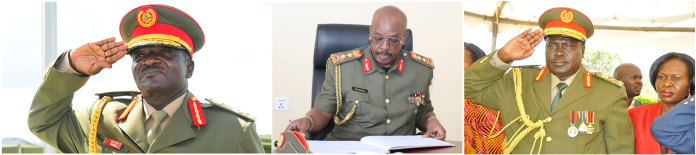
Retiring army generals, Katumba, Kyanda, and Otema.

Uganda Peoples’ Defence Forces has confirmed the impending retirement of 531 officers and militants, including some of its most prominent generals.

Among the notable retirees are the only serving four-star General, Katumba Wamala, a former Chief of Defence Forces and current Minister of Works and Transport. He joined forces in 1980.

The retirement ceremony will be held in July 2026.

According to the official retirement list, which Eagle Online has seen, the cohort includes five (5) Majors, sixteen (16) brigadiers, twenty-eight (28) Colonels, forty-two (42) Lieutenant Generals, 183 Majors, and 254 Captains are set to retire.

According to the UPDF retirement age ceiling, a serving General or Lieutenant General is supposed to retire at the age of 65 years, while those at the rank of Major General are at the age of 62.

From the rank of Brigadier General are supposed to retire at 60 years, Colonels are set at 55 years, whereas Lieutenant Colonels are at 51, and those at the rank of Major are retired at 47 years.

UPDF and the Ministry of Defence and Veteran Affairs Spokesperson, Maj. Gen. Felix Kulaigye told Eagle Online, “Retirement is part of the norm within UPDF. So, we wish our comrades the best as they retire,” he said.

Retiring Army Generals

Gen. Edward Katumba Wamala

Lt. Gen. Charles Awany Otema

Lt. Gen. Charles Angina

Maj. Gen.  Godfrey Katsigazi Tumusiime

Maj. Gen. Henry Ndarubweine Masiko

Maj. Gen. Apolo Kasiita Gowa

Maj. Gen. Leopold Kyanda

Maj. Gen. Abel Kandiho

Brig. Gen. Edson Muhanguzi

Brig. Gen. Bekunda Besigye Cyrus

Brig. Gen. Winston Byaruhanga

Brig. Gen. Stephen Tumwesigye Kashure

Brig. Gen. Tom Kikoyo Kabuye

Brig. Gen. Sam Omara

Brig. Gen. Fred Rugadya Akiiki

Brig. Gen. Mike Samuel Kisame

Brig. Gen. Patrick Mwesigye

Brig. Gen. Fred Mwesigye

Brig. Gen. Herbert Rwego Mbonye

Brig. Gen. Simon Nicholas Ocan

Brig. Gen. Metland K Bitumbika

Brig. Gen. Cyil Mawa Muhindo

Brig. Gen. Charles Bakahumura

Brig. Gen. Charles Asiimwe Kahangire

The retirement process follows standard UPDF protocol, which includes phased retirement for officers who have served their time or reached the age limit.

Who is Gen. Katumba Wamala?

He joined forces in 1980

He has held the current post of Minister of Works and Transport since January 17, 2017, until December 14, 2019, when he served as Minister of State for Works.

He served as the Chief of Defence Forces of the Uganda People’s Defense Force (UPDF) from 2013 until 2017. Before, he was the Commander of Land Forces from 2005 to 2013. He also served as the Inspector General of Police (IGP) of the Uganda Police Force from 2001 until 2005.

Katumba Wamala was born on November 19, 1956, in Bweeza, Kalangala District.

He holds a certificate in agriculture. A Bachelor of Arts degree from Nkumba University in International Relations and Diplomacy  

He also holds a Master of Science degree in strategic leadership from the United States Army War College.

He has military qualifications from the following military schools: Uganda Military AcademyTanzania Military Academy, a military academy in the Soviet UnionNigerian Command and Staff CollegeUnited States Army Command and General Staff College, and United States Army War College. In October 2023, he was awarded an honorary Doctor of Letters by Nkumba University in recognition of his contributions to his community, country, and humanity.

Wamala was an officer in the Uganda National Liberation Army (UNLA) when the National Resistance Army (NRA) defeated the UNLA in 1986. He transitioned into the NRA.

Maj. Gen. Leopold Kyanda

Major General Leopold Eric Kyanda was born on  January 1, 1970, and is a Major General in the Uganda People’s Defence Force.

From June 2021, he has served as the Joint Chief of Staff of the UPDF.  Before, Gen. Kyanda was the Chief of Staff of the Land Forces.

He joined the army in the early 1990s

He later joined the then Presidential Guard Brigade (PGB), which later became the Special Forces Command (SFC). He rose in its ranks and eventually became the Commander of the Presidential Guard Brigade (PGB). At the rank of Colonel, Kyanda would later become the Commandant of the Chieftaincy of Military Intelligence (CMI). From there, he was assigned to the Ugandan Embassy in Washington, D.C., as the Military Attaché, serving in that capacity for two years. On his return to Uganda, he was appointed Chief of Personnel and Administration in the UPDF. From there, he was promoted to the rank of brigadier and assigned as Chief of Staff.  

In December 2017, he completed a military course from the National Defence College in India.

In February 2019, he was promoted from the rank of Brigadier to that of Major General, as part of a promotions exercise involving over 2,000 men and women of the UPDF.

Lt. Gen. Charles Angina

Charles Angina was born on March 29, 1962, and holds the rank of lieutenant general in the UPDF. He is Uganda’s Deputy Ambassador to Cairo. From January 2017 until July 2021, he served as the Deputy Chief Coordinator of Operation Wealth Creation (OWC), a development program operated by the Ugandan government. He previously served as the Deputy Chief of Defense Forces of Uganda, the second-highest military position within the UPDF. He was appointed to that position in May 2013, replacing General Ivan Koreta, who was appointed an ambassador.

He went on to serve as an intelligence officer, platoon commander, operational intelligence officer, Combined Mobile Forces, and as 4th Division intelligence officer. From there, he served as operations coordinator 2nd Division, then as the 305th Brigade commander, and as commander of the 2nd Division.

During the Ituri conflict, Angina served as the sector commander of the Ituri region in the Democratic Republic of the Congo (DRC). He then became sector commander Basankusu during Operation Safe Haven in the DRC.

Thereafter, he served as a military adviser in Tanzania. He then transferred to the Embassy of Uganda in Washington, D. C. as the military attaché. He was then appointed chairman of the General Court Martial of the UPDF. He also has served as the Chief of Staff of Land Forces in the UPDF.

Lt. Gen. Angina joined the UPDF in 1983 following a one-year officer cadet course; he was commissioned in 1985. Angina is said to have joined the UPDF from the Uganda People’s Army.

He attended several military courses and these include;

National Defense Course, China in 1998, Command and General Staff Course (CGSC), in the United States in 2000, Course on Military and Media in a Democracy, at the University of Kansas in 2000, Joint Tactical Command Course in China, and a Combined Platoon Commander Course in North Korea.

Stories Continues after ad