Uganda’s economy remained stable throughout the 2026 general elections and the immediate post-election period, with the government projecting stronger growth, declining inflation, improving trade performance, and a lower-than-expected fiscal deficit despite continued uncertainty in the global economy.
The assessment is contained in the Post Election Economic and Fiscal Update published under the Public Finance Management Act, Cap 171, which requires the Finance Minister to issue an economic and fiscal update within four months after polling day following a general election.

According to the report, the macroeconomic environment remained stable during the election period, with most economic indicators remaining broadly consistent with projections made before the vote.
Government said Uganda’s domestic economy has continued to demonstrate resilience despite a difficult international environment characterised by slow global growth, geopolitical tensions and volatile commodity markets.
Preliminary estimates show the economy grew by 4.8 percent and 8.5 percent in the first and second quarters of FY 2025/26, respectively, compared to 6.2 percent and 5.4 percent during the same periods of the previous financial year. This translated into an average growth rate of 6.7 percent during the first half of the financial year, an improvement from 5.8 percent recorded in FY 2024/25.

The strong performance was driven by increased aggregate demand, higher investment, and stronger exports that boosted production across key sectors.
The industrial sector expanded by 9.1 percent, up from 6.4 percent in the previous year, supported by stronger manufacturing activity, construction and electricity generation.
The services sector registered growth of 6.0 percent compared to 4.1 percent previously, largely driven by growth in real estate, trade, tourism, financial services, education and transport.
Agriculture, forestry and fishing grew by 5.9 percent, supported by improved output of cash crops, livestock and fisheries although adverse weather conditions slowed food crop production.
The report further shows that aggregate demand and investment increased by 15.2 percent and 14.4 percent respectively, supported by government programmes, stronger tourism receipts and increased foreign direct investment especially in the oil and gas sector.
Looking ahead, Government projects the economy to grow by 6.6 percent in both the third and fourth quarters, resulting in overall annual growth of 6.6 percent for FY 2025/26.
High-frequency indicators also pointed to stronger domestic activity. The Purchasing Managers’ Index averaged 53.7 between January and March 2026, remaining above the 50-point threshold, which signals expansion in private-sector output, employment, and demand.
Similarly, the Composite Index of Economic Activity rose to an average of 184.38 compared to 172.06 in the same period last year, indicating continued improvement in economic performance.
However, the government warned of downside risks including global supply chain disruptions, currency depreciation, and rising fuel prices linked to ongoing geopolitical tensions.
On employment, the report revealed that unemployment increased slightly to 12.2 percent in 2025 from 11.9 percent in 2021.
The increase was largely recorded among the male working-age population, where unemployment rose from 10.4 percent to 10.8 percent. Female unemployment declined marginally from 14.1 percent to 13.9 percent, partly due to stronger growth in sectors that traditionally employ more women, including services and trade.
Inflation remained one of the strongest performing indicators.
Annual headline inflation averaged 3.6 percent in 2025 before falling further to an average of 2.9 percent during the first quarter of 2026, staying below the Bank of Uganda target of 5.0 percent.
Government attributed the low inflation environment to prudent monetary policy, stable food prices and relative exchange rate stability which supported purchasing power, investment and aggregate demand.
Annual inflation declined from 3.2 percent in January 2026 to 2.8 percent in March. Core inflation also reduced from 3.3 percent to 2.9 percent while food crop inflation dropped sharply from 3.0 percent to 1.7 percent over the same period.
However, rising tensions in the Middle East pushed up global petroleum prices, causing Energy, Fuels and Utilities inflation to rise from 1.7 percent in January to 4.1 percent in March.
On the exchange rate, the Ugandan shilling remained largely stable and even appreciated for most of the financial year.
Between July 2025 and February 2026, the shilling appreciated by 0.5 percent against the US dollar, trading at Shs 3,568 compared to Shs 3,586 at the start of the financial year.
Government attributed the gains to stronger inflows from coffee exports, tourism, foreign direct investment and remittances.
But in March, the currency weakened to Shs 3,730 against the dollar due to stronger demand from importers and businesses amid rising freight and insurance costs linked to global supply chain disruptions.
The Central Bank Rate remained unchanged at 9.75 percent, a level maintained since October 2024.
Commercial lending conditions also improved slightly. Average lending rates on shilling denominated loans eased to 18.65 percent while foreign currency lending rates declined to 6.98 percent.
Private sector credit continued expanding, with outstanding credit rising by 2.7 percent to Shs 76.77 trillion during the third quarter.
Banks approved loans worth Shs 4.83 trillion mainly directed toward households, trade, business services and the construction sector.
The ratio of non performing loans also improved from 3.6 percent to 3.2 percent as economic conditions strengthened.
Uganda’s external sector also recorded significant gains.
Merchandise exports grew by 57 percent year on year to USD 4.26 billion between January and March 2026, largely driven by non coffee exports especially gold exports which surged by more than 151 percent.
Imports also increased by 36.5 percent to USD 4.23 billion due to stronger domestic demand and growth in private sector imports.
Compared to the previous quarter, exports rose by 2.3 percent while imports declined by 7.7 percent.
As a result, Uganda’s trade balance improved from a deficit of USD 418 million to a surplus of USD 26.7 million.
Export earnings were boosted by stronger receipts from maize, oil re exports, electricity and flowers.
Foreign Direct Investment inflows declined slightly by 6.8 percent to USD 737.8 million in the second quarter, although Government said the decline was much smaller than during previous election cycles.
Remittance inflows from Ugandans abroad fell by 2.3 percent to USD 456.2 million, partly due to weaker economic conditions in the Middle East and Europe.
Tourism however continued its recovery with receipts increasing by 13.3 percent to USD 395.7 million supported by higher visitor spending, longer stays and stronger international arrivals.
On the fiscal side, Government revised the overall fiscal deficit for FY 2025/26 downward from 7.8 percent to 7.0 percent of GDP due to lower than projected expenditure, particularly under externally financed projects.
Preliminary figures show Government operations recorded a fiscal deficit of Shs 3.74 trillion in the third quarter, lower than the planned Shs 4.34 trillion.
Revenue collections including grants amounted to Shs 8.54 trillion, achieving 91.5 percent of the quarterly target.
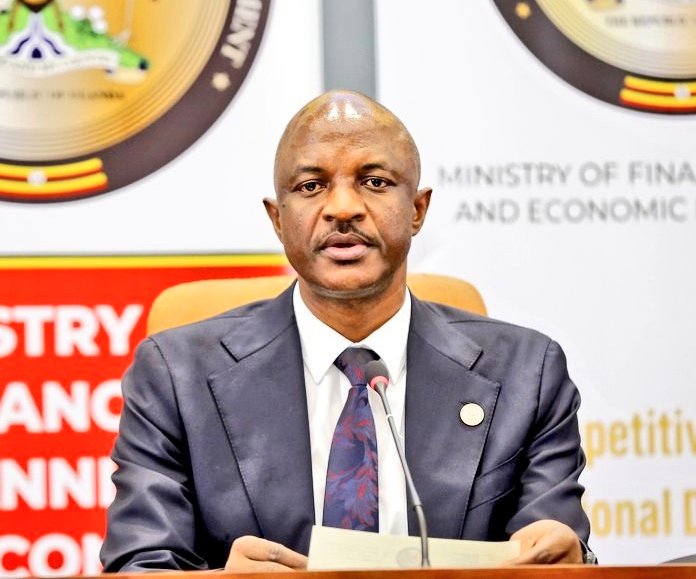
Permanent Secretary and Secretary to the Treasury Ramathan Ggoobi, who is also the Acting Finance Minister, said the successful completion of the elections provides an opportunity to deepen reforms and accelerate economic transformation.
“The successful conclusion of the general elections gives us the opportunity to continue strengthening the efficiency and effectiveness of fiscal policy to increase productivity and speed up the process of socioeconomic transformation in line with Government aspirations,” Ggoobi said.
He said Government would prioritise investment in agro industrialisation, tourism, mineral based development including oil and gas, science, technology and innovation, alongside continued implementation of the Parish Development Model.
“As we continue to set the economy on a tenfold growth trajectory, we are mindful of fiscal and debt sustainability. Therefore, Government will focus on improving domestic revenue mobilisation and efficiency of public expenditure to achieve self sustaining and inclusive growth,” he added.
Government said the latest economic performance reflects continued progress under the Fourth National Development Plan, which seeks to raise household incomes and improve quality of life while advancing the strategy to grow Uganda’s economy to $|500 billion by 2040 through investments in productive sectors, infrastructure, and human capital.