Stanbic Bank
Stanbic Bank
19.7 C
Kampala
Stanbic Bank
Stanbic Bank
Home Blog Page 16

Victoria University VC Dr Muganga applauds Museveni’s mental sharpness, calls for education-led transformation

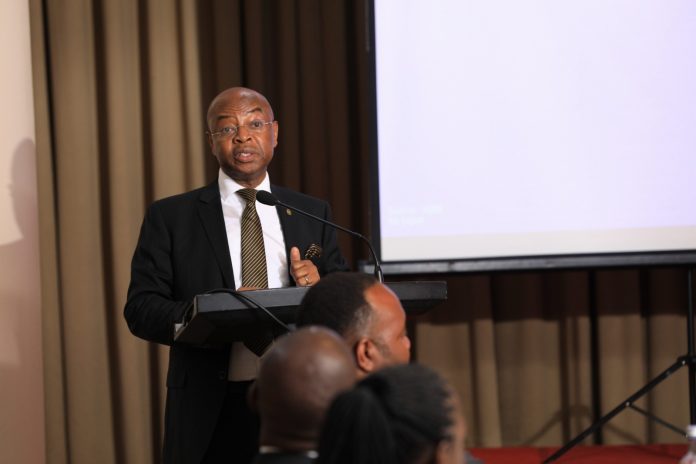
President Museveni with Victoria Vice Chancellor, Dr Lawrence Muganga, shortly after their meeting at State Lodge- Nakasero.

Victoria University Vice Chancellor, Dr Lawrence Muganga, has praised President Yoweri Kaguta Museveni for his mental clarity, composure, and depth of thought, following a meeting at Nakasero State Lodge earlier this week.

In a statement reflecting on the engagement held on January 6, 2026, Dr Muganga said the interaction left a lasting impression on him, particularly the President’s attentiveness and analytical approach at the age of 80.

“Sitting with him, listening intently, observing how he engages and articulates his thoughts, one cannot help but be impressed by his composure, focus, and remarkable mental sharpness at 80,” Muganga said.

He noted that the President demonstrated an ability to listen deeply, ask probing questions and respond with clarity, attributes he said are shaped by decades of disciplined leadership and reflection.

“He listens deeply, asks thoughtful and probing questions, and responds with a clarity that reflects decades of disciplined reflection and an exceptional memory,” the Vice Chancellor observed.

According to Muganga, what stood out most was Museveni’s calm and empathetic leadership style, which he described as quietly commanding and consistent on matters of national importance.

“What stands out most is his calm, genuine, and quietly commanding empathy. There is a steadiness in how he reasons and a reassuring consistency in his approach to national issues,” he said.

Beyond the personal reflections, Dr Muganga used the meeting to make a strong case for education as Uganda’s next major frontier for transformation, urging the President to place renewed focus on reforming the sector.

“As I reflect on our conversation, I am reminded that Uganda’s next great leap will depend on the transformation of its education system. Under your visionary leadership, we have a rare opportunity to reimagine education, making it the envy of Africa and the engine that powers every other sector,” Muganga stated.

He emphasized the need for an education system that goes beyond knowledge acquisition to one that fuels innovation, productivity, and national development.

“I humbly urge you to focus your renewed attention on creating an education system that not only equips our youth with knowledge but also drives innovation, productivity, and national transformation. Let Uganda become a country led by technology, creativity, and enlightened minds,” he added.

Muganga also urged that such a legacy would endure far beyond physical symbols of leadership.

“If you pursue this path, Your Excellency, you will have secured a legacy that will outlive any monument, a legacy that will be remembered with admiration and gratitude by generations to come,” he said.

Stories Continues after ad
High Court upholds EC ruling on Nakawa West nominations

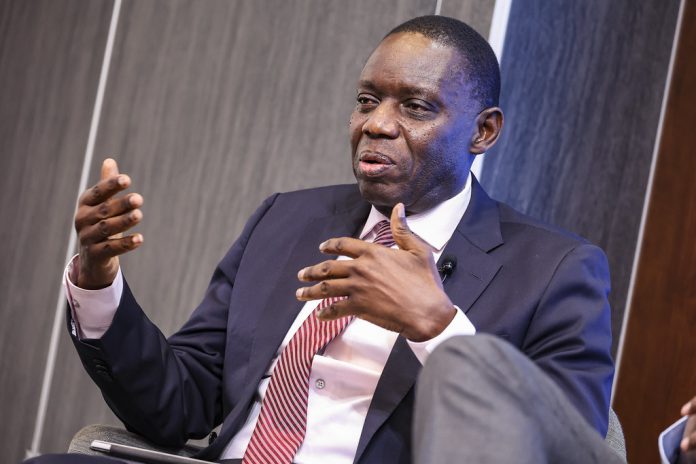
Mr Joel Ssenyonyi, one of the contenders for the Nakawa West constituency.

The High Court in Kampala has dismissed a pre-election petition challenging the nomination of candidates for Nakawa Division West Constituency, ruling that a naming error on nomination documents was a minor clerical mistake that was lawfully corrected by the Electoral Commission (EC).

In a judgment delivered on January 8, 2026, Justice Collins Acellam upheld the EC’s decision to maintain the nominations, saying the error did not prejudice any candidate or confuse voters.

The petition was filed by Bwowe Ivan, who challenged the EC’s decision communicated on December 1, 2025, arguing that several candidates were nominated for a non-existent constituency after filling in Nakawa West instead of the official name, “Nakawa Division West Constituency, on nomination forms.

According to court records, Bwowe and the 2nd to 8th respondents were nominated on October 22 and 23, 2025, to contest for the parliamentary seat. The Returning Officer endorsed the nominations despite the naming discrepancy, prompting Bwowe to seek nullification of the nominations.

In dismissing the appeal, Justice Acellam agreed with the Electoral Commission that the mistake was curable under the law.

“The failure by the 2nd–8th Respondents to fill in the correct name of the constituency for which they were seeking nomination is a minor irregularity or misnomer which could be cured by the Commission under the powers conferred upon it,” the judge ruled.

The court emphasized that electoral disputes should be resolved on merit rather than technicalities, warning against decisions that would undermine voters’ rights.

“To allow this appeal would be denying the voters of Nakawa Division West Constituency the opportunity of choosing their representative to Parliament,” Justice Acellam stated.

He added that granting the petition would amount to imposing the petitioner on voters without their consent.

“Elective democracy requires that anyone seeking political office subjects himself or herself to the will of the electorate. A proper mandate is through the ballot box,” the judge said.

The court further found that “Nakawa West” and “Nakawa Division West Constituency” are commonly used interchangeably and refer to the same electoral area.

“The control form of the parties and all preceding documents in respect to the nomination indicate the constituency as Nakawa Division West. Thus, the clerical error was corrected and cannot be held to cause confusion to anyone,” the judgment reads.

Justice Acellam also faulted the petitioner for failing to raise the alleged anomaly earlier, noting that Bwowe himself had been nominated under the same designation he later challenged.

Citing the case of Kasangaki Diana vs Fulgensia Tumwesigye, the court reaffirmed that substantive justice outweighs procedural technicalities, especially where errors can be explained or corrected.

“Maintaining the said nominations aligns with the principle of substantive justice, ensuring that candidates are not disqualified on account of clerical errors which can be and were cured by the Commission,” the judge held.

The petition was dismissed in its entirety, with the court ordering each party to bear its own costs, effectively clearing the way for the Nakawa Division West parliamentary race to proceed as scheduled.

Stories Continues after ad
First Lardy to commission UVTAB National Skills Assessment Centre at Kyambogo

The First Lady Janet Kataaha Museveni, who also serves as the Minister of Education and Sports, is expected to officially commission the newly constructed Uganda Vocational and Technical Assessment Board (UVTAB) National Skills Assessment Centre tomorrow, marking a milestone in Uganda’s technical and vocational education and training (TVET) reforms.

Located on Kyambogo Hill in Kampala, the eight-storey complex has been purpose-built as a national hub for skills assessment, bringing together all UVTAB operations that had been scattered across rented premises for years.

Education sector officials say the consolidation is expected to significantly enhance coordination, operational efficiency, and the quality of services offered to candidates and training institutions nationwide.

Constructed in a record three years, the Shs25.6 billion facility broke ground on March 23, 2022, and was completed on February 21, 2025, with full funding from the Government of Uganda.

The development comes at a time when the country is repositioning TVET as a central pillar for skilling youth and meeting labour market demands. UVTAB’s printery services, however, will continue to operate separately at Namanve Industrial Park, according to project managers.

UVTAB Executive Secretary Onesmus Oyesigye described the new centre as a turning point for national skills assessment, noting that housing all assessment services under one roof will result in faster turnaround times and improved service delivery.

“With the completion of this Assessment Centre, UVTAB is expected to save at least Shs189.8 million annually in rental costs,” Oyesigye said, adding that the savings will be redirected toward improving assessment quality and expanding access.

The commissioning coincides with the early implementation of the TVET Act, No. 3 of 2025, under which UVTAB has already assessed 275,963 candidates since national assessments commenced on March 15, 2025.

Officials say the growing numbers underscore both the rising demand for certified skills and the pressure that previously overstretched, decentralised facilities placed on the Board.

Architecturally, the complex comprises a main block and a three-storey Short Tower, together offering 6,499.6 square metres of floor space.

The building houses a state-of-the-art auditorium, two boardrooms, several mini meeting rooms, and dedicated innovation and incubation hubs designed to support skills development, assessment research, and collaboration with training institutions.

Staff welfare was also prioritised in the design. A crèche on the ground floor caters to breastfeeding staff, while the sixth-floor building features wellness facilities, including a gym and sauna. The centre provides parking for 60 vehicles and is equipped with advanced ICT and security systems, including access control, lifts, fire detection and suppression systems, UPS power backup, air conditioning, and a public address system to support large-scale assessments and events.

The building’s central atrium allows for natural lighting and ventilation—a design choice aimed at reducing dependence on mechanical cooling and lowering long-term operational costs. Sector experts say such features reflect a growing emphasis on sustainability in public infrastructure.

The project was executed by Seyani Brothers & Co. (U) Ltd, with architectural and engineering oversight provided by Cornerstone Design and Engineering Ltd. With the commissioning of the centre, UVTAB’s full relocation to Kyambogo Hill is complete, a development officials describe as a foundational step in strengthening Uganda’s national skills assessment framework and restoring public confidence in vocational certification systems.

Stories Continues after ad

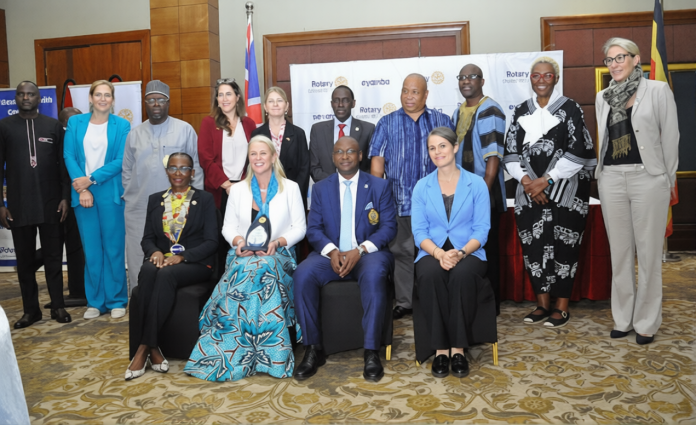
2025, Year of Service Above Self: How Rotary District 9213 touched lives and transformed communities

District Governor Geoffrey Martin Kitakule, Rotary District 9213, at the launch of one of the projects.

Last year, Rotary District 9213 stood out as the most impactful humanitarian network, having quietly but steadily touched lives across the country through health, education, environmental, and economic empowerment initiatives that left a lasting imprint on communities.

Guided by the Rotary International motto ‘Service Above Self’, the district’s work over the past year reflected a deliberate shift from short-term charity to sustainable, community-led solutions aimed at improving the quality of life for the most vulnerable.

Reflecting on the year’s achievements, Rotary District 9213 leadership described the period as one defined by compassion, partnership, and purpose.

“Rotary brought together people who cared deeply about their communities and worked tirelessly to reduce suffering, improve health, and create opportunities for dignity and self-reliance,” the district leadership noted in a year-end reflection.

Under the stewardship of District Governor Geoffrey Martin Kitakule, Rotary District 9213 expanded its footprint across Uganda, mobilising Rotarians, partners, and volunteers to respond to some of the country’s most pressing challenges.

One of the most visible impacts was recorded in the health sector. During the year, Rotary clubs under District 9213 organized multiple blood donation drives, contributing thousands of units to regional blood banks at a time when hospitals faced critical shortages. These drives not only saved lives but also helped raise awareness about voluntary blood donation, particularly among young people.

Health outreach activities were further strengthened through community medical camps, conducted in partnership with corporate entities and health institutions. These camps offered free screening and treatment for conditions such as diabetes, hypertension, malaria, cancer, maternal health complications and mental health challenges, reaching thousands of underserved Ugandans.

“No one should die from preventable or treatable illnesses simply because they cannot afford care,” Governor Kitakule said during one of the outreach activities, reaffirming Rotary’s commitment to equitable access to health services.

The district also made significant strides in the fight against malaria. In Fort Portal Tourism City, Rotary District 9213 launched a community action project that combined mosquito net distribution, household sensitisation and training of Village Health Teams. Schools and communities were engaged in prevention campaigns, helping reduce infection risks among children and expectant mothers.

The Rotary District 9213 also partnered with the Joint Clinical Research Centre and established Uganda’s first Bone Marrow Transplant facility, meant to save lives, reduce treatment costs, and provide advanced care for patients with blood disorders, cancers, and HIV locally. JCRC and Rotary leaders highlighted the potential of bone marrow and gene therapies to transform healthcare in Uganda. With Sickle Cell Disease and HIV creating a heavy health burden, the planned BMT facility will offer curative treatments previously available only abroad, thus bringing hope and better access to thousands of families.

In July, 2025, Mukono District witnessed more than just an event: The Rotary Club of Mukono-Namilyango, together with ten Rotary Clubs and two Rotaract Clubs, led a campaign on menstrual hygiene and skills empowerment at Hasteh Royale Hotel, Njerere. Over 130 women and girls were trained on making reusable sanitary pads, while boys and community members joined to raise awareness and break stigma. The initiative also promoted sustainable practices and economic opportunities, equipping participants with practical skills to improve health, confidence and school attendance across Mukono communities.

Beyond health, Rotary District 9213 invested heavily in education and youth development. Through Rotary Youth Leadership Awards programmes and school based initiatives, hundreds of young people were equipped with leadership, financial literacy and life skills. Several schools benefited from donations of learning materials, sanitation facilities and clean water systems, easing the learning environment for both learners and teachers.

Economic empowerment emerged as another pillar of the district’s work. Throughout the year, Rotary clubs rolled out financial literacy and entrepreneurship programmes, particularly targeting women, youth and informal sector workers. These initiatives helped households gain practical skills in saving, budgeting and income generation, reducing vulnerability and strengthening community resilience.

Environmental protection and climate action were not left out. Rotary District 9213 supported tree planting campaigns, sanitation drives and clean water projects, reinforcing the link between environmental stewardship and public health.

The Rotary Club of Kampala South, together with the Rotaract Club transformed environmental management in Kyaka II Refugee Settlement, reaching over 36,000 residents through waste management and WASH initiatives. Community-led waste groups were established, equipped with tools and training in recycling, composting and bookkeeping, producing briquettes and compost while generating income reinvested into local savings. Settlement-wide cleanups, radio campaigns, and engagement with boda-boda riders further promoted awareness and sustainable practices.

Complementing waste management, the WASH project improved access to clean water for more than 36,800 people. Key interventions included a 100,000-litre water tank, rainwater harvesting systems in schools and health facilities, a mobile water testing lab and the extension of electricity to the Bujubuli Water Plant; reducing carbon emissions and diesel costs while ensuring reliable water supply. Together, these initiatives demonstrate how environmental protection, clean water, and community empowerment can work hand in hand to improve health, livelihoods, and resilience in refugee settlements.

Reflecting on the district’s philosophy, leadership emphasised that Rotary’s work went beyond handouts.

“Service is not charity. It is empowerment. Our goal has always been to work with communities so that solutions last beyond our involvement,” Governor Kitakule said during one of the district engagements.

As the year ended, Rotary District 9213 also acknowledged the role of partners, media houses and volunteers whose support amplified the impact of the district’s work. Media coverage, including features by Eagle Online, helped spotlight community stories that might otherwise have gone untold.

Looking back, the year served as a powerful reminder of what coordinated goodwill can achieve. Through blood donation drives, health camps, education support, financial literacy programmes and environmental action, Rotary District 9213 demonstrated how consistent service can quietly but profoundly change lives.

As communities across Uganda continue to feel the ripple effects of these interventions, Rotary District 9213’s legacy of the past year stands as proof that purposeful leadership and collective action remain powerful tools for social transformation.

Rotary began with just four individuals bound by an idea to come together in friendship and service. From those humble beginnings, it has grown into a global force united by a shared commitment to doing good. Yet at every level, from the global stage to local communities, Rotary’s true strength has always been its people. That is why the future of Rotary depends on being intentional and passionate about welcoming new members into this family of service, ensuring its impact continues to grow for generations to come.

Stories Continues after ad

Victoria University hails Dr Muganga for transformative leadership in higher education

Victoria University Vice Chancellor, Dr Lawrence Muganga.

Victoria University management has congratulated Vice Chancellor Dr Lawrence Muganga following national recognition of his contribution to transforming higher education in Uganda.

In a statement issued on Wednesday, 7, via X (formerly Twitter) handle,  the university praised Dr Muganga for redefining how education is taught and experienced, positioning Victoria University as a leading institution in skills based and student centred learning.

“Dr Lawrence Muganga has emerged as a transformative academic leader whose work at Victoria University is reshaping how higher education is conceived and delivered in Uganda,” the management statement reads.

The university credited the Vice Chancellor with steering far-reaching reforms that have turned Victoria University into a model institution focused on practical skills, technology driven instruction and real world learning outcomes.

“Through visionary reforms, public advocacy and scholarship, he has turned Victoria University into a hub of skills driven, technology enhanced and student centred learning that directly speaks to Uganda’s development priorities,” management noted.

Under Dr Muganga’s leadership, Victoria University has registered significant institutional growth, with a strong emphasis on work-integrated learning and the adoption of emerging technologies in teaching and assessment.

“As Vice Chancellor, he has championed work integrated learning, pioneered the use of artificial intelligence and immersive technologies in teaching, and consistently pushed for a more humane and competency based education system,” the statement said.

University management further applauded Dr Muganga’s role beyond campus, noting that his books and public engagements have influenced national and regional conversations on education reform.

“His scholarship and public engagement have helped shape a new conversation on what meaningful education should look like for Uganda and Africa in the 21st century, one that values creativity, innovation, and real-world skills over rote examinations,” the statement added.

Victoria University described the recognition of Prof. Muganga’s work as a moment of pride for the institution and a source of inspiration for educators and learners across the country.

“We warmly congratulate Dr Muganga on this bold and impactful journey of leadership and innovation. The achievements at Victoria University and the wider influence of his ideas stand as a testament to his commitment, courage, and sense of purpose,” management said.

The university also acknowledged media houses and individuals who highlighted Dr Muganga’s work, saying the recognition will have a lasting impact on the education sector.

“We thank Sanyuka TV, NBS Television, and Mr Kin Karisa for the recognition. This will offer deep encouragement to educators, students, and policymakers who are working to build a more relevant and empowering education system for Uganda,” the statement concluded.

Dr Muganga’s leadership continues to place Victoria University at the centre of national education reform debates, as the country seeks to align learning with labour market demands and future skills.

Stories Continues after ad

Akamba, Namujju, and Mutembuli free at last as DPP withdraws corruption charges against NRM MPs

MPs, Mutembuli, Akamba, and Namujju.

The Director of Public Prosecutions has withdrawn corruption charges against three National Resistance Movement (NRM) Members of Parliament Akamba Paul, Cissy Namujuu Dionizia and Yusuf bringing to an end proceedings that had been pending before the Anti-Corruption Division of the High Court.

In a Nolle Prosequi dated Tuesday, January 6, 2026, the Director of Public Prosecutions Mr Lino Anguzu notified the court that the State would no longer pursue the case against the three legislators, all affiliated to the ruling party.

“TAKE NOTICE that the Government of Uganda intends that the proceedings against A1 Hon Yusuf Mutembuli A2 Hon Akamba Paul A3 Hon Cissy Namujuu Dionizia shall not continue” the notice reads.

The document further states that the trio had been charged with corruption under sections 2 e and 26 of the Anti-Corruption Act 2009 as amended but that the case would be discontinued under the DPP’s constitutional powers to halt criminal proceedings at any stage before judgment.

Under Ugandan law once a Nolle Prosequi is entered the accused persons are released from the charges without a court determination on guilt or innocence unless the State later elects to reinstate the charges.

The three MPs were arrested in June 2024 following investigations into allegations that they had solicited an undue advantage from Uganda Human Rights Commission chairperson Mariam Wangadya. Prosecutors alleged that during a meeting at a Kampala hotel the MPs demanded a percentage of the Commission’s budget in exchange for supporting its funding requests before Parliament’s Budget Committee.

Following their arrest the legislators were arraigned before the Anti Corruption Court and remanded to Luzira Prison. Their remand attracted public attention given their senior political status and the sensitivity of the alleged offence which touched the parliamentary budget process.

Akamba Paul was later granted bail but was controversially rearrested shortly after his release from the court premises by armed security personnel, an incident that sparked public debate about respect for court orders. Yusuf Mutembuli and Cissy Namujuu were initially denied bail after the court ruled that they had not presented substantial sureties. They were later released after spending several weeks on remand as the case proceeded to the High Court for trial.

While the withdrawal of the charges brings closure to this particular case questions have continued to trail the handling of corruption related prosecutions involving politically exposed persons with critics calling for greater transparency in decisions to discontinue high profile cases.

However the Nolle Prosequi does not clear all legal clouds surrounding all the accused legislators. Akamba Paul remains named in separate ongoing proceedings involving alleged conspiracy with former Ministry of Trade Industry and Cooperatives Permanent Secretary Geraldine Ssali over the alleged fraudulent diversion of Shs3.4 billion.

That case also lists PLU mobilization chief Michael Mawanda Elgon County MP Ignatius Mudimi Wamakuyu, lawyer Taitankoko, and Leonard Kavundira as co accused with prosecutors alleging that the funds were meant to compensate war victims under the Buyaka Growers Cooperative Society.

The Office of the Director of Public Prosecutions has not publicly explained the specific reasons for withdrawing the charges against the three MPs. 

Stories Continues after ad

Ugandans to pay up to Shs54m bond for U.S tourist, business visas

Ugandans applying for United States B-1/B-2 visitor visas (tourism and business) will now be required to post a visa bond of between Shs18 million and Shs54 million before their applications can proceed.

The new requirement, announced by the US Department of State, will take effect on January 21, 2026, and applies to Ugandan nationals seeking non-immigrant visitor visas.

The measure is part of a 12-month visa bond pilot programme introduced by the Department of State to reduce the number of foreign nationals who overstay their visas.

Under the programme, Ugandan applicants may be required to post a bond of $5,000,$10,000, or $15,000, approximately Shs18 million, Shs36 million, and Shs54 million respectively,  at the discretion of a US consular officer.

Applicants who are otherwise eligible for a B-1/B-2 visa will be informed during their visa interview whether they must post the bond. Those instructed to do so will receive a direct link to make payment online through the US Treasury’s Pay.gov system. The bond amount will be determined on a case-by-case basis.

The Department of State has cautioned that payment of the bond does not guarantee visa issuance. Applicants are advised to pay only after receiving official instructions; otherwise, “the fees will not be returned”, the advisory states.

As a condition of the bond, successful applicants must enter and exit the United States through designated ports of entry, including Boston Logan International Airport, John F. Kennedy International Airport and Washington Dulles International Airport. Failure to comply may complicate adherence to the bond terms and affect eligibility for a refund.

The bond will be automatically cancelled and refunded if the visa holder departs the United States on or before the end of their authorised stay, does not travel on the visa, or is denied admission at the port of entry.

However, US authorities say that if a traveller overstays their permitted period, applies to adjust to another immigration status, or fails to depart on time, the Department of Homeland Security may refer the case to US Citizenship and Immigration Services to determine whether the bond conditions have been breached.

Uganda and Tanzania are currently the only East African countries affected by the visa bond policy.

Other African countries, including Malawi and Zambia, were incorporated into the pilot programme from mid-2025. Nationals from these countries are also required to post bonds ranging from Shs18 million to Shs54 million when applying for similar US visitor visas.

The governments of the affected countries have yet to issue detailed public responses. However, travel agents warn that the policy will significantly increase the cost of visiting the United States and create “greater uncertainty for ordinary travellers”.

While attention in East Africa has focused on Uganda, Tanzania, Malawi and Zambia, the list of countries subject to the visa bond requirement has expanded to dozens across Africa, Asia and Latin America. These include Bangladesh, Nigeria, Senegal, Venezuela, Cuba and several small island states.

US authorities defend the measure as necessary to reduce visa overstay rates, though critics argue it risks pricing ordinary travellers out of lawful visits and could strain diplomatic relations.

Stories Continues after ad

MelBet exits Ugandan market after gaming board withdraws its license 

The National Lotteries and Gaming Regulatory Board (NLGRB) has announced the closure of operations of Fox Bet Limited, trading as Mel Bet, in Uganda after the company lost its operating licence.

In a public notice issued under Section 4(j) of the Lotteries and Gaming Act, Cap. 334, the Board confirmed that Mel Bet is no longer authorised to operate in the country effective January 1, 2026.

“The National Lotteries and Gaming Regulatory Board informs the public that Fox Bet Limited trading as Mel Bet has ceased operations in Uganda and is no longer licensed by the Board,” the management statement reads.

The regulator has urged all players who previously used the platform to take immediate action to safeguard their funds.

“Players are strongly advised to withdraw any remaining funds immediately and close their betting accounts with the operator,” the Board said.

NLGRB management further cautioned the public against engaging with betting companies that are not licensed, warning that such dealings come with serious financial and legal risks.

“Engaging with unlicensed gaming operators poses significant risks, including loss of funds and lack of recourse in the event of disputes,” the statement added.

The Board reiterated its mandate to regulate and supervise all gaming activities in Uganda, emphasizing that only licensed operators are permitted to offer betting and gaming services in the country.

The notice, dated January 5, 2025, underscores the government’s continued efforts to promote responsible gaming and protect the public from unscrupulous or non-compliant operators.

NLGRB advised the public to always verify the licensing status of gaming companies before participating in any betting activities, noting that enforcement actions will continue against operators found in violation of the law.

Stories Continues after ad

Uganda, NAM States condemn U.S attacks on Venezuela at UN Security Council

The Non-Aligned Movement (NAM), representing 121 member states and chaired by President Yoweri Kaguta Museveni of Uganda has condemned alleged acts of aggression by the United States against the Bolivarian Republic of Venezuela.

The statement was delivered on behalf of NAM by the Ugandan delegation at an emergency United Nations Security Council meeting in New York on January 5, 2026, addressing threats to international peace and security.

“The Coordinating Bureau of the Non-Aligned Movement (NAM) categorically condemns the act of aggression perpetrated by the United States of America against the Bolivarian Republic of Venezuela, since the early hours of 03 January 2026, which included armed attacks against civilian and military locations in the capital city of Caracas, as well as in various other cities of the Venezuelan territory,” the joint statement read.

According to NAM, the attacks violate the purposes and principles enshrined in the United Nations Charter and international law, amounting to an act of war that threatens both regional and global stability.

“The attacks in question… constitute an act of war against the Bolivarian Republic of Venezuela that undermines both regional and international peace, security and stability, while also threatening the very right to life of the Venezuelan people,” the statement added.

The 121-member bloc demanded an immediate cessation of hostilities and called for full respect of Venezuela’s sovereignty, territorial integrity, political independence, and inalienable right to self-determination.

“The Coordinating Bureau of the Non-Aligned Movement (NAM) demands the immediate cessation of all hostilities against the Bolivarian Republic of Venezuela, the full respect for the sovereignty, territorial integrity, political independence and inalienable right to self-determination of the Bolivarian Republic of Venezuela, and that those responsible for these ongoing acts of aggression be held accountable,” the statement read in part.

The joint statement also emphasized the importance of respecting the immunities and protections afforded to Heads of State and Government under international law.

“The Coordinating Bureau of the Non-Aligned Movement (NAM) reaffirms the inviolability of the immunities accorded to Heads of State and Government under international law, which constitute a fundamental pillar of sovereign equality, peaceful coexistence, and stable international relations,” the statement said.

NAM further expressed solidarity with the people and government of Venezuela, cautioning that military solutions cannot resolve international disputes.

“The Coordinating Bureau of the Non-Aligned Movement (NAM) reiterates its full solidarity with the People and Government of the Bolivarian Republic of Venezuela at this critical time and insists that military solutions are not viable avenues for addressing any issue that may be of concern between members of the international community,” the statement concluded.

The Security Council session was convened amid conflicting reports regarding the status of Venezuela’s President Nicolás Maduro, following the alleged attacks. Some media outlets and opposition sources claimed he had been detained or placed under arrest, though these reports have been denied by the Venezuelan government, which maintains that Maduro remains in power.

President Maduro, who has led Venezuela since 2013 has repeatedly accused the United States of seeking regime change through sanctions, political interference and covert operations. His administration insists that any action against him violates international law and the country’s sovereignty.

NAM, under Museveni’s chairmanship, has urged dialogue, restraint, and adherence to international law and warned that escalation could have far-reaching consequences beyond Venezuela and the wider Latin American region.

Stories Continues after ad

Chelsea appoint Liam Rosenior as new head coach

Liam Rosenior.

Chelsea Football Club have announced the appointment of Liam Rosenior as their new head coach, handing the 41-year-old a long-term contract running until 2032.

Rosenior has joined the Premier League side after an 18-month spell in charge of French Ligue 1 club Strasbourg, who, like Chelsea, are owned by BlueCo. His appointment follows the departure of Enzo Maresca, who was relieved of his duties on New Year’s Day.

The former Premier League defender becomes Chelsea’s fifth permanent head coach since 2021, following Thomas Tuchel, Graham Potter, Mauricio Pochettino and Maresca, as the club continues its search for long-term stability and success.

“I am extremely humbled and honoured to be appointed Head Coach of Chelsea Football Club,” Rosenior said in his first statement after the announcement. “This is a club with a unique spirit and a proud history of winning trophies.”

The new Chelsea boss said his priority will be to protect the club’s identity and restore a winning culture at Stamford Bridge.

“My job is to protect that identity and create a team that reflects these values in every game we play as we continue winning trophies. To be entrusted with this role means the world to me and I want to thank all involved for the opportunity and faith in undertaking this job. I will give everything to bring the success this club deserves,” he said.

Rosenior also expressed excitement about working with Chelsea’s players, staff and supporters as he begins a new chapter in his coaching career.

“I am excited to work with this extremely talented group of players and staff, to build strong connections on and off the pitch, and to create an environment where everyone feels united and driven by the same goal,” he noted.

He reserved special praise for the club’s supporters, describing them as central to Chelsea’s identity.

“I want our fans to be proud of who we are and what we represent in every single game that we play. They are the soul of this enormous, historic and huge football club. I cannot wait to meet you all. I cannot wait to get started,” Rosenior said.

Rosenior enjoyed a 17-year playing career, featuring for Brighton & Hove Albion, Hull City, Reading and Fulham in the Premier League, before retiring at the end of the 2017/18 season. He moved into coaching shortly afterwards, taking up a role as assistant manager of Brighton’s Under-23 side in August 2018.

He later held several positions at Derby County, including a spell as caretaker manager at the start of the 2022/23 season. Rosenior was eventually appointed permanent manager at Derby, overseeing 78 matches across one and a half seasons and narrowly missing out on the Championship playoffs in 2023/24, finishing seventh.

In the 2024/25 season, he moved to Strasbourg, guiding the French side to a seventh-place finish in Ligue 1 and securing qualification for the UEFA Conference League. Strasbourg also reached the knockout stages of the competition after winning five and drawing one match in the league phase.

Rosenior departed Strasbourg with the club sitting seventh in Ligue 1, six points behind sixth-placed Rennes.

His first match in charge of Chelsea could come away to Fulham in the Premier League on Wednesday evening. That fixture will be followed by a busy run of five consecutive London matches across four competitions, including an FA Cup tie against Charlton Athletic and home games against Arsenal, Brentford and Cypriot side Pafos.

Stories Continues after ad