Stanbic Bank
Stanbic Bank
16.9 C
Kampala
Stanbic Bank
Stanbic Bank
Home Blog Page 167

Gov’t to Roll Out Malaria Vaccination Campaign for Children Under Five

Uganda is set to launch a nationwide malaria vaccination campaign, Minister of Health Dr. Jane Ruth Aceng Ocero announced. The initiative aims to distribute 2.278 million doses of malaria vaccines across 105 districts with high and moderate transmission rates.
This effort is made possible through support from Gavi, the Vaccine Alliance, with co-financing from the Government of Uganda. UNICEF has facilitated the procurement and air transportation of the vaccines, ensuring timely delivery and maintaining quality standards.
The malaria vaccine will be integrated into Uganda’s routine immunization schedule starting in April 2025, targeting children under two years. This will be the largest malaria vaccine rollout to date in terms of geographic coverage and population reach. The four-dose vaccine will be administered at 6, 7, 8, and 18 months to provide optimal protection during early childhood, the most vulnerable stage.
As part of Uganda’s broader malaria prevention strategy, the vaccine will be incorporated into routine immunization services to protect young children. Malaria remains the leading cause of illness and death among children in Uganda, and the introduction of the vaccine is expected to significantly reduce severe cases and fatalities.
Speaking at the flag-off event, Dr. Aceng emphasized the government’s commitment to strengthening disease prevention and building a resilient health system.
“The introduction of the malaria vaccine in Uganda is a historic step forward in our fight against this deadly disease. With the support of Gavi, UNICEF, and other partners, we are ensuring that every eligible child has access to this life-saving intervention,” she said.
UNICEF, which oversees the procurement and air freighting of the vaccines, reaffirmed its commitment to child health and immunization efforts in Uganda.
“Today, we turn a page in Uganda’s health story. The introduction of the malaria vaccine brings hope for children and adds to Uganda’s already robust immunization schedule, which now includes 14 vaccines—one of the highest on the continent. Our priority now is to ensure these vaccines are delivered safely and efficiently. We urge all parents to ensure their children receive the full range of vaccines, including the new malaria vaccine,” said Dr. Robin Nandy, UNICEF Representative to Uganda.
Gavi, responsible for coordinating the global malaria vaccination program and providing financial support for procurement, transport, and rollout, has so far assisted 17 African countries in introducing the vaccine as part of their routine immunization programs. Gavi also collaborates with governments and partners to ensure malaria vaccines are delivered as part of a comprehensive malaria control and prevention strategy.
Billie Nieuwenhuys, Senior Country Manager for Uganda at Gavi, commended Uganda for this significant milestone.
“The efforts made to prepare for what will be the world’s largest malaria vaccine introduction to date highlight the unwavering commitment of the Government of Uganda and its partners to protecting vulnerable children. As we celebrate our Alliance’s 25th anniversary, we are excited about the potential of this vaccine program to save tens of thousands of lives each year while alleviating the devastating burden malaria places on families, communities, and health systems across Uganda and the African continent,” Nieuwenhuys stated.
The World Health Organization (WHO) coordinated the pilot evaluation of the first malaria vaccine, generating the evidence that led to WHO’s recommendation and pre-qualification of the two safe and effective malaria vaccines currently available. WHO continues to provide guidance, share best practices, and offer technical assistance to ensure successful implementation.
The malaria vaccine rollout aligns with Uganda’s broader malaria control strategy, which includes insecticide-treated nets, indoor residual spraying, seasonal malaria chemoprevention, and effective case management. The Ministry of Health urges parents and caregivers to bring their children to health facilities to receive the malaria vaccine as part of routine immunization services.

Stories Continues after ad

Opposition’s alternative budget to focus on combating corruption

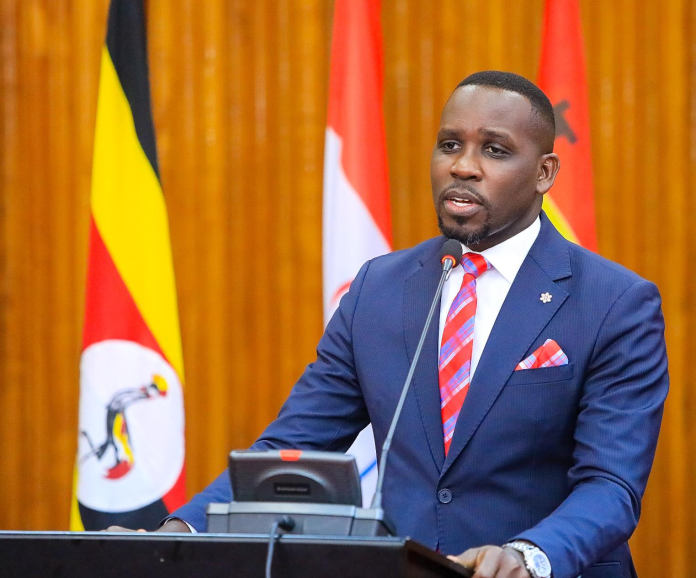
The Leader of Opposition (LOP), Joel Ssenyonyi, has announced that the 2025/26 Alternative Budget will focus on combating corruption, which he described as Uganda’s biggest obstacle to development. Ssenyonyi noted that while citizens are often denied essential services due to alleged funding shortages, public funds continue to be lost through corruption.

Speaking on March 10, 2025, at a workshop for the Opposition Caucus at Parliament, Ssenyonyi emphasized that this year’s alternative budgeting process is centered on the theme, “Combating Corruption: The Sure Way to Effective Service Delivery.”

Ssenyonyi said, “This theme speaks directly to Uganda’s most pressing challenge. Corruption remains the biggest roadblock to our nation’s progress. Year after year, Ugandans are told that resources are scarce, yet we see trillions lost to mismanagement, inflated contracts, and outright theft. These are not just numbers—they represent stolen opportunities for our children, our communities, and our future.”

Ssenyonyi urged Opposition MPs to remain vocal against corruption despite inevitable backlash from those in power.

“We must understand that those in power will try to denigrate us, accusing us of being overly critical or disruptive. But if standing up for fairness makes us disruptive, then we should wear that label with pride. If demanding accountability is considered complaining, then let us complain louder and more strongly—because if we do not speak up for Ugandans, who will?”

He emphasized that the workshop was not just another routine meeting but an opportunity for the Opposition to strategize on alternative policies and priorities for the upcoming financial year.

“Our duty as the Opposition is not just to challenge the government but to offer real solutions. Ugandans are looking for leadership, answers, and hope. Today, we will hear from experts, including the Parliamentary Budget Office and civil society actors, to deepen our understanding of the budget. More importantly, we will define alternative policies that redirect public funds toward effective service delivery and away from wasteful expenditure and corruption.”

Sarah Bireete, Executive Director of the Center for Constitutional Governance (CCG), commended the Opposition’s efforts in exposing corruption through accountability committees but urged them to prioritize funds recovery rather than relying on ineffective prosecutions.

“I know the LOP and your committees are doing great work, but what remains to be seen is the recovery of lost funds. Prosecution in Uganda rarely works. The government only prosecutes its opponents while protecting its cadres. Instead of just exposing thieves, the Opposition should push for the actual recovery of stolen funds. That would benefit taxpayers far more than costly prosecutions that lead to nothing.”

Bireete also challenged the Opposition Caucus to pressure the government into fully funding critical sectors like health and education, rather than relying on donor aid.

“Regardless of whether USAID funds are restored or not, donor aid should go to less critical sectors. Health and education must be fully funded by our government. Given the current global fiscal squeeze and shrinking donor support, Uganda cannot afford to depend on foreign aid for essential services.”

Sulaiman Kiggundu, Director of the Parliamentary Budget Office (PBO), urged Opposition MPs to take the budgeting process seriously, warning that many MPs ignore key budget discussions but later complain about policies they failed to scrutinize.

“We see MPs skipping committee meetings, only to sign reports later without participating in discussions. Then, when issues arise, they ask, ‘Who passed this?’ Well, you did! MPs must engage from the start if they want to challenge wasteful spending and bad policies.”

Kiggundu particularly criticized MPs for neglecting tax policy debates, only to realize their impact when they personally face higher taxes.

“Every year, tax bills are debated and passed, but many MPs don’t pay attention. Then, when the effects hit—whether through increased rental taxes or higher VAT—they start questioning how it happened. We must always consider how taxation affects ordinary Ugandans before approving such laws.”

The Opposition’s anti-corruption stance comes as the NRM Caucus allocates UGX 197 billion to fight corruption in the 2025/26 budget. However, a report by the Inspectorate of Government (IGG) estimates that Uganda loses over UGX 10 trillion annually to corruption in government.

With such staggering losses, Opposition leaders argue that the government’s response remains inadequate. The 2025/26 Alternative Budget seeks to push for policy reforms, stronger accountability mechanisms, and a reallocation of funds toward critical services like healthcare, education, and infrastructure rather than wasteful government spending.

As Uganda prepares for the 2025/26 financial year, the Opposition’s stance on corruption and service delivery is expected to shape key parliamentary debates.

Stories Continues after ad

Museveni orders compensation for families of 1998 Kichwamba ADF victims

President Yoweri Museveni has directed the Ministry of Finance, Planning, and Economic Development to compensate families of students who were killed by Allied Democratic Forces (ADF) terrorists at Kichwamba Technical School in 1998.

In a letter dated February 24, 2025, addressed to Finance Minister Matia Kasaija, President Museveni exercised his powers to authorize ex-gratia payments to the victims’ families.

Each family is set to receive UGX 15 million as compensation.

“I have received a letter dated the 25th of July, 2024, regarding the compensation for the children that died at Kichwamba Technical School, killed by ADF. In the letter, he says that the statute of limitations no longer allows the Government to compensate the families,” Museveni noted.

Museveni however, said the statute of limitations would not apply in this case due to the gravity of the tragedy and the length of time that has passed.

“In that case, I use my powers as President for ex-gratia payment to the families. Each should be paid Shs 15 million given the long time since the incident happened. Ministry of Finance should budget for this money,” the letter reads in part.

The President copied the letter to Vice President Jessica Alupo, Prime Minister Robinah Nabbanja, the Minister of Education, the Attorney General, and all Members of Parliament from the Tooro-Rwenzori Zone, where the massacre occurred.

The Kichwamba massacre, which happened on June 8, 1998, saw ADF rebels attack the school burning 80 students alive and abducting more than 100 others, leaving a lasting scar on the nation.

This compensation will be the first financial relief extended to the families more than two decades after the gruesome attack.

Stories Continues after ad

Standard Chartered and Village Capital Partner to Empower 400 Women Entrepreneurs

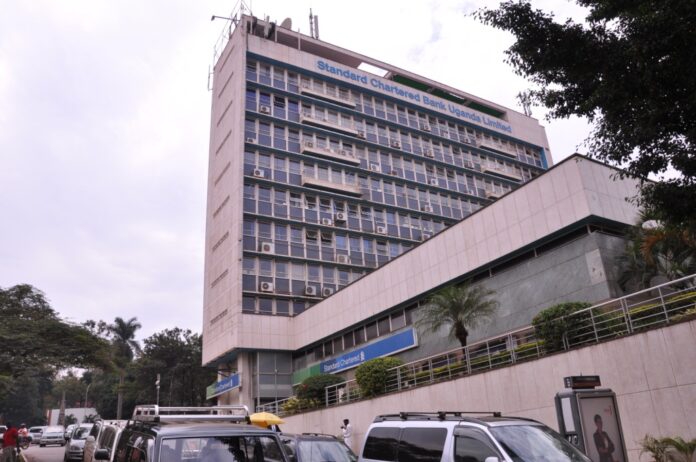
Standard Chartered Bank Speke Road.

Standard Chartered has announced a partnership with Village Capital to expand the Futuremakers Women in Tech Accelerator across Africa, the Middle East, and Pakistan.
As part of Futuremakers by Standard Chartered, the Bank’s global youth economic empowerment initiative for disadvantaged young people, and with funding from the Standard Chartered Foundation, the Futuremakers Women in Tech Accelerator will provide specialised training, catalytic funding, and access to a global network of peers, finance providers, industry leaders, and ecosystem partners.
Over the next three years, 400 women entrepreneurs will receive support to build thriving microbusinesses, create jobs, and drive lasting social and environmental impact. The initiative aims to provide over 32 catalytic grants totaling nearly USD 1.9 million and enable and support more than 1,200 jobs.
The Accelerator will be available across 12 of Standard Chartered’s markets, continuing in Bahrain, Botswana, Ghana, Kenya, Nigeria, Pakistan, Saudi Arabia, South Africa, UAE, and Zambia, while expanding to two new markets Uganda and Egypt.
Empowering Women Entrepreneurs
Tanuj Kapilashrami, Chief Strategy and Talent Officer at Standard Chartered, stated: “Empowering women is critical to economic growth and central to our mission of lifting participation by unleashing the financial potential of women and small businesses. We believe equitable access to funding and resources is essential for fostering innovation and driving meaningful social impact. Whether through our Futuremakers philanthropic programmes, our banking propositions such as the SC Women’s International Network, or our commitment to supporting a diverse supplier base, we are dedicated to addressing the systemic challenges women microbusiness owners face. The Futuremakers Women in Tech Accelerator aims to create pathways for these entrepreneurs to scale their businesses, driving positive change in their communities.”
Sanjay Rughani, CEO of Standard Chartered Bank Uganda, reaffirmed the Bank’s commitment to Uganda’s 10X growth strategy, particularly its focus on enhancing human capital development. He commented: “Investing in women is not just about inclusion; it is about unlocking economic potential and driving sustainable progress. We are excited about launching the Futuremakers Women in Tech Accelerator programme in Uganda. This announcement aligns with our celebration of International Women’s Day and reinforces our commitment to building a more equitable future where women have the skills, opportunities, and support to lead, innovate, and transform their communities.”
Rachel Crawford, Chief Strategy and Innovation Officer at Village Capital, highlighted the importance of this initiative: “Our partnership with Standard Chartered is a game-changer for women-led start-ups across Africa, the Middle East, and Pakistan. By providing critical resources, catalytic capital, and market-level support, we aim to drive inclusive economic growth and ensure that women entrepreneurs can scale their businesses and create transformative impact in their communities.”
Voices from the Field
Priscilla, CEO and Co-Founder of Rhea, a microbusiness based in Kenya, shared her experience: “The Women in Tech programme has been a game-changer for my company. It not only provided access to crucial capital but also a tailored start-up support system designed for women entrepreneurs. I’ve gained financial tools, mentorship, and a strong network that has allowed me to scale my business with confidence.”
Futuremakers Women in Tech: Looking Ahead Applications for the 2025 Futuremakers Women in Tech Accelerator will open in late April. Participants will receive investment-readiness training, personalised development plans, and expert mentorship. They will also collaborate with advisors and industry leaders to strengthen their business models and gain access to networking opportunities. Annually, more than USD 600,000 in grant funding will be distributed across participating markets.
Since its launch over a decade ago, the Women in Tech programme has supported more than 4,000 women entrepreneurs across 17 of Standard Chartered’s markets. Today’s announcement follows the recent news that Futuremakers Women in Tech will continue in the US, with applications already underway.

Stories Continues after ad

Civilians to face charges over illegal use of military gear in Kawempe By-election rally

Government has revealed that some of the civilians arrested during the recent violence in the Kawempe by-election campaign rally will be charged with illegal use of military gear and also vowed to deliver “clean”, “transparent” and safe elections in Kawempe.

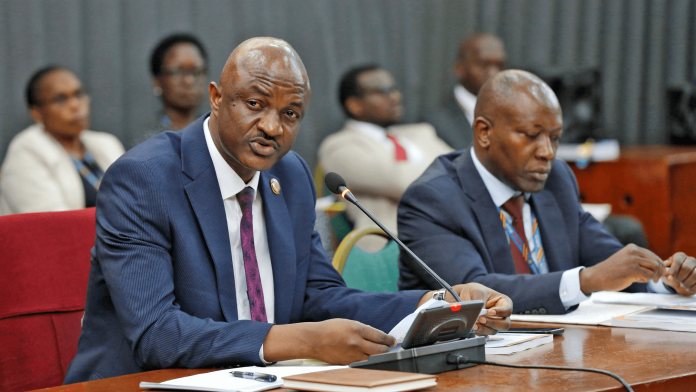
The revelation was made by David Muhoozi, Minister of State for Internal Affairs, while presenting a statement about the incidents registered during the campaign rally in Kawempe, describing the violence and brutality meted on civilians by security forces as just “skirmishes”.

“Those arrested are accused of various breaches of the law including the alleged illegal use of military gear by some of them. Charges known to the law will be preferred for the courts to determine their cases,” Muhoozi revealed.
He added that working with the military and other security agencies, it will be proposed to publish for information, their gazetted uniforms, as well as other gear which are ordinarily the preserve of official uniformed forces. Also, working with the Electoral Commission, guidance will be given to all the players regarding lawfully permissible conduct during this exercise.
“A number of incidents have been registered in the course of the ongoing Kawempe North bi- election related activities. These involve skirmishes between NUP supporters and security forces as a result of which 24 people were arrested and put in custody. Those arrested include two Derrick Nyeko (Makindye East) and Muwada Nkunyingi (Kyadondo East).  Those arrested were presented in court and remanded on Tuesday 4th March 2025,” noted Muhoozi.
Muhoozi said that the government intends to ensure a clean, transparent and safe byelection in Kawempe North Constituency. Towards this end, the various players including the EC (organisers of the by-election), the contenders from the different parties and their supporters, the general public/voters, as well as the security services, have to exercise their roles within the confines of the law. Where there are infractions, there are processes within the law on how to bring them to account, including guidelines on the lawful enforcement of the law.
He added that it is also the law, that for one to be charged with a criminal offence, that offence and the punishment thereof must be expressly provided for in written law.
David Bahati, Minister of State for Industries has revealed that the eye for Ibrahim Miracle, the journalist that was brutally beaten by security forces, while covering activities of Kawempe by-elections has been saved and promised to clear all the pending hospital bills, following his discharge from hospital yesterday.
“I visited the journalist called Miracle, who works with Top TV, it is true he was injured, there were some limited operations on his face. The good thing is, his eye was saved, according to the doctor, he is out of danger and he was discharged yesterday. And on behalf of the Government, I promise that we are going to clear his bills. He also had a complaint that his camera was damaged, but in the meantime, we have agreed with the Ministry of Internal Affairs that the Bill will be cleared by Government. So, I extended our sympathies and we continue to pray for him,” said Bahati.

Stories Continues after ad

Five people perish in a road crash along the Kampala-Bombo Road

Road accident sign (courtesy photo)

Five people have been confirmed dead and 21 others injured in a road crash that occurred last night at Mayanja Valley along the Kampala-Bombo Road, police said.
The crash involved nine motor vehicles (UBQ 745N T/Noah, UAY 704B T/Hiace, UAT 652K T/Hiace, UBK 769 A Fuso Super Grande, UBD 829G T/Hiace, UAL 333C T/Corolla, UAV 026F T/Hiace, UBQ 062B T/Sienta, UBD 483N T/Hiace) & one motorcycle (UES 773K Yamaha).
Michael Kananura, the Public Relations Officer Directorate of Traffic and Road Safety said investigations indicate that the driver of motor vehicle UBK 769A Fuso Super Grande, traveling from Kampala to Bombo, lost control while sloping at Mayanja Valley, resulting in a collision with nine vehicles & one motorcycles traveling in the same direction.
“The incident instantly killed five occupants in other vehicles & one motorcycle rider, while injuring 21 passengers in Toyota Hiaces,” he said in a statement.
The injured victims were rushed to Mulago Hospital for treatment, while the bodies of the deceased were conveyed to Mulago City Mortuary. The vehicles involved were towed to Kawempe Police Station for inspection as investigations commenced.
He urged all motorists to prioritize road safety by ensuring their vehicles are well-maintained, adhering to speed limits & driving defensively to prevent such tragic incidents.

Stories Continues after ad

Stanbic PMI: Private sector firms improve following brief decline at the start of the year

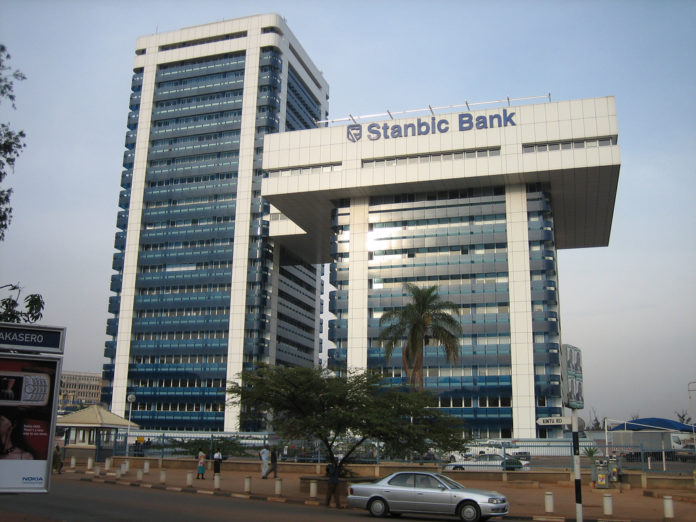
Stanbic Bank Uganda

Operating conditions for Ugandan private sector firms improved in February, following a brief decline at the start of the year, sending the headline Stanbic Purchasing Managers’ Index (PMI) up to 52.6 compared to the January reading of 49.5.
Christopher Legilisho, Economist at Stanbic Bank said, “The Uganda PMI for February shows a private sector back in expansion, with both output and new orders growing robustly, after dipping in January. There was strong demand across all sectors. Employment in the private sector accelerated again after three months of decline due to increased new orders, whilst backlogs fell because of sufficient capacity. Purchasing activity was elevated as firms factored in output having recovered convincingly, but inventories fell for the first time in 12 months.”
According to February survey, renewed growth in part stemmed from expansions in output and new orders, which also saw fresh increases. Demand conditions reportedly strengthened, with companies also stepping up their input buying and staffing levels amid sustained confidence in the outlook for output.
However, Ugandan firms recorded greater cost burdens, as both purchase prices and wage bills increased. Subsequently, firms hiked their output charges for the sixth month running in a bid to pass through higher costs to clients.
“There was pricing pressures related to input and purchasing prices as utility bills and selected commodity prices increased. Staff costs and output prices increased for a further month but at a muted pace. The private sector remains highly optimistic about future output, although optimism has dipped slightly since January. The February PMI implies durable economic conditions in the private sector,” Legilisho said.
The monthly Stanbic PMI is compiled by S&P Global from responses to questionnaires sent to about 400 purchasing managers. The sectors covered by the survey include agriculture, mining, manufacturing, construction, wholesale, retail and services.
The Stanbic PMI is a weighted average of the following five indices: New Orders (30%), Output (25%), Employment (20%), Suppliers’ Delivery Times (15%) and Stocks of Purchases (10%). Readings above 50.0 signal an improvement in business conditions on the previous month, while readings below 50.0 show deterioration.
Panelists stated that stronger demand and a return to new order growth boosted output levels. The fresh increase in new business resumed the sequence of growth seen since April 2024, which was briefly paused in January. Ugandan firms commonly highlighted the acquisition of new customers as a driving factor behind the upturn. In line with the trend for output, new order growth was broad based by sector.
Greater new sales spurred Ugandan companies to increase their staffing levels in February, thereby ending a three-month sequence of job shedding.
Of the five sectors monitored by the survey, only manufacturing recorded a drop in employment. The rise in headcounts reportedly helped ease pressure on capacity, as Ugandan firms registered a further decrease in backlogs of work midway through the first quarter.
At the same time, business expenses went up following increases in both purchase and staff costs. Greater utility bills and higher prices for selected materials were often mentioned as factors behind the latest round of inflation.

Stories Continues after ad

US Reinstates HIV/AIDS Support to the Joint Clinical Research Centre

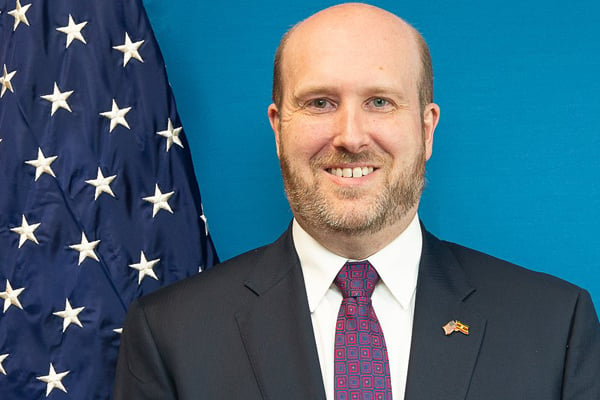
US Ambassador to Kampala, William Popp.

The U.S. government has restored all HIV/AIDS support to the Joint Clinical Research Centre (JCRC), according to the Commander of Defence Forces (CDF), Gen. Muhoozi Kainerugaba.
This decision follows a recent 90-day pause on all foreign assistance, including funding for programs supported by the President’s Emergency Plan for AIDS Relief (PEPFAR). Meanwhile, Family Medical Point has urged the Ugandan government to increase funding for Sexual and Reproductive Health and Rights (SRHR) services.
The U.S. has played a critical role in strengthening Uganda’s healthcare system, addressing major health concerns such as tuberculosis (TB), malaria, maternal and child health, family planning, and HIV/AIDS. Additionally, U.S. funding contributes to economic growth, agricultural productivity, education, and democratic governance by promoting inclusive and accountable institutions.
In 2023, USAID’s budget for Uganda stood at $458 million (Shs 1.6 trillion), supporting emergency aid, healthcare, and essential services. In the fiscal year 2024, the U.S. Department of State reported that the U.S. provided over $471 million (Shs 1.7 trillion) in health and development assistance, along with nearly $182 million (Shs 669 billion) in humanitarian aid.
“I have learned from Ambassador Adonia Ayebare that the U.S. government has restored all HIV/AIDS support to the Joint Clinical Research Centre (JCRC),” Gen. Muhoozi stated.
He expressed gratitude to U.S. President Donald Trump and his administration for their support of Uganda, commending them for being “on the right side of history.”
“I thank U.S. Ambassador to Uganda, Ambassador Popp, for his outstanding efforts in restoring this support, and Ambassador Adonia Ayebare for coordinating this effort,” he said.

Stories Continues after ad

Uganda Airlines wins Africa’s Youngest Aircraft Fleet Award for fifth consecutive year

Uganda Airlines has once again soared to new heights winning the ch-aviation Africa’s Youngest Aircraft Fleet Award for the fifth consecutive year.

The prestigious accolade reaffirms the airline’s unwavering commitment to maintaining a modern, efficient and environmentally friendly fleet.

The award, presented by ch-aviation, a leading global provider of aviation intelligence, recognizes airlines with the youngest and most advanced aircraft fleets across the continent.

Uganda Airlines’ consistent recognition indicates its dedication to delivering topnotch service through the use of cutting-edge technology and sustainable practices.

“We are honored to receive this award for the fifth year in a row,” Uganda Airlines officially posted on X (formerly twitter).

Added in the post, “This achievement reflects our commitment to offering our passengers a world-class travel experience while prioritizing efficiency and environmental responsibility.”

Uganda Airlines operates a fleet consisting of Airbus A330-800neo and Bombardier CRJ900 aircraft, boasting an average fleet age of under five years. The airline’s investment in new-generation aircraft not only enhances passenger comfort but also significantly reduces carbon emissions and operational costs.

As the national carrier continues to expand its network across Africa and beyond, this recognition strengthens Uganda Airlines’ position as one of the fastest-growing airlines on the continent.

Air Tanzania became the second followed by Jambojet, Air Cairo and lastly Air Austral.

The ch-aviation Youngest Aircraft Fleet Award recognizes airlines across the globe which maintains young, modern, and efficient aircraft. Airlines dedicated to keeping their fleet young with new-generation aircraft contribute significantly to decreasing carbon dioxide emissions within the aviation industry and help achieve better fuel efficiency.

Stories Continues after ad

Stop using harsh words to undermine my efforts in improving govt’s budgeting process” – Ggoobi to MPs

The Secretary to Treasury, Ramathan Ggoobi, clashed with MPs on the Public Accounts Committee accusing them of using harsh words to undermine his efforts in improving the Government’s budgeting process.

This followed remarks by Muwanga Kivumbi (Butambala County) who noted that although Ggoobi promised to clean up the budget indiscipline within Government, the challenges have worsened despite even when he promised to clean up the mess in Government when he was named the Secretary to Treasury.

The exchange was prompted by the findings by the Auditor General who noted that although Parliament had initially passed a budget worth Shs52Trn, Government in the same Financial Year 2023/24 requested for a supplementary worth Shs8Trn and despite this, the Ministry of Finance was only able to warrant funds to a tune of Shs50Trn, a trend MPs said has been normalised in Government.

“I attended the first briefing before the Budget Committee where you had been named Secretary to Treasury, if we look back at your submission; I was very inspired that we now have a new day. But here you are, you have been there for four years, it is getting worse. In the eyes of Ugandans, this is gross budget indiscipline. It isn’t good Parliamentary language, but this is gross budget indiscipline on the side of Government,” noted Kivumbi.

However, Ggoobi interjected Muwanga’s submission noting, “You are using very strong words and I would like to interject, it isn’t really acceptable to use that language. We sit every single day to make the budget better and it is getting better, so for you to sit there and you start using those platitudes isn’t acceptable.”

He instead highlighted measures put in place to strengthen public finance management reforms, domestic revenue mobilisation strategy, rationalisation of Gov’t Agencies and expenditure reform (RAPEX) to streamline efficiency and effectiveness in delivery of services as well as reforms in public procurement to improve efficiency, effectiveness and fight against corruption.

The PSST also briefed the Committee on progress in rolling out the human capital management system and implementation of the Parish Development Model (PDM).

Stories Continues after ad