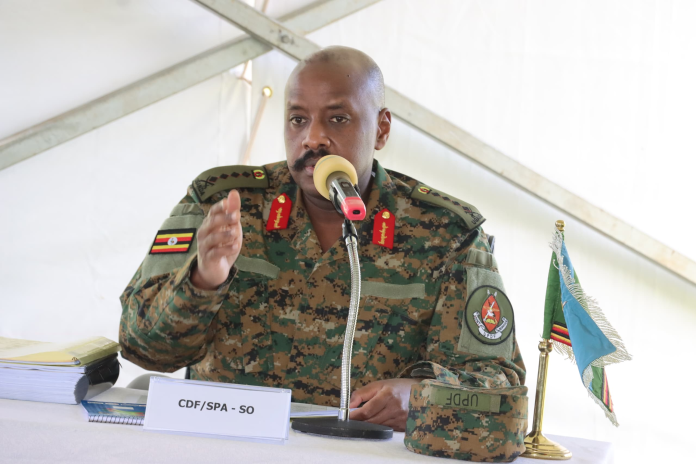
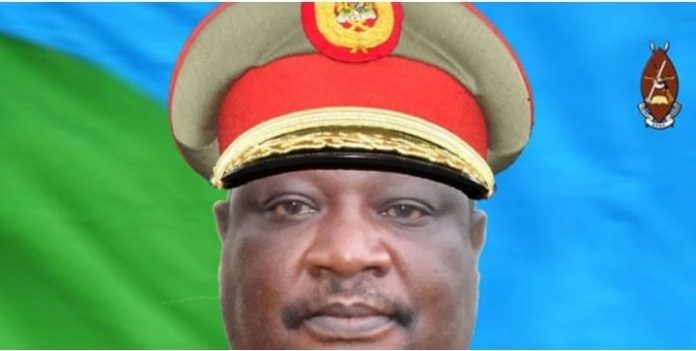
Chief of Defence Forces Gen. Muhoozii and the chairman of Patriotic League of Uganda (PLU).
Being loyal and publicly supportive of appears to have its benefits, as netizens on X (formerly Twitter) would soon discover. In a bid to fight poverty amongst Ugandan youth, the First Son and Chief of Defence Forces (CDF), General Muhoozi Kainerugaba, announced on February 8, 2026, the creation of a wealth fund valued at Shs1 billion, accessible to his followers on the platform.
“In accordance with the theme of wealth creation, I am putting a fund of Shs500 million for all my followers on Twitter. We shall be sending money to people who have projects that make sense. I shall announce the administrators of the fund soon,” he stated. He would later increase the total amount to a staggering Shs1 billion.
The announcement comes at a time when Uganda is grappling with a severe unemployment crisis. Despite government efforts to create jobs, progress has been slow and, at times, largely ineffective. With over three million unemployed youths and another nine million aged between 18 and 30 classified as uneducated and unemployed, the prospects for young Ugandans remain uncertain. Studies conducted in 2024 indicated that 16.1% of the population (approximately ten million youths) were facing significant challenges in accessing both employment and education.
Reactions to the wealth creation fund were mixed. Some critics argued that the initiative was insufficient to address the scale of unemployment and inequality in the country. “Put that money in the health and education sectors instead. That would have helped Ugandans, not merely followers. Make Uganda a better place for everyone, not your Balaams,” One user wrote. Others, however, welcomed the move, describing it as a timely intervention for struggling projects across the country that lack adequate capital.
On February 10, 2026, the CDF announced the administrators of the fund, naming: (i) Hon. Frank Tumwebaze, (ii) Mr. Edwin Karugire, and (iii) Col. Christopher Muwumba. According to the announcement, the fund will primarily target four key areas of wealth creation in Uganda: commercial agriculture, manufacturing, mining, and services—including ICT and tourism.
The fund is among several initiatives championed by Gen. Kainerugaba in pursuit of a faster and more efficient path to middle-income status. Nonetheless, critics continue to highlight concerns over transparency, accountability, and representation within Uganda’s upper echelons of power, arguing that such initiatives risk widening the gap between the ruling class and the broader population. Further details regarding access to the fund and the eligibility criteria are expected to be communicated in the near future.
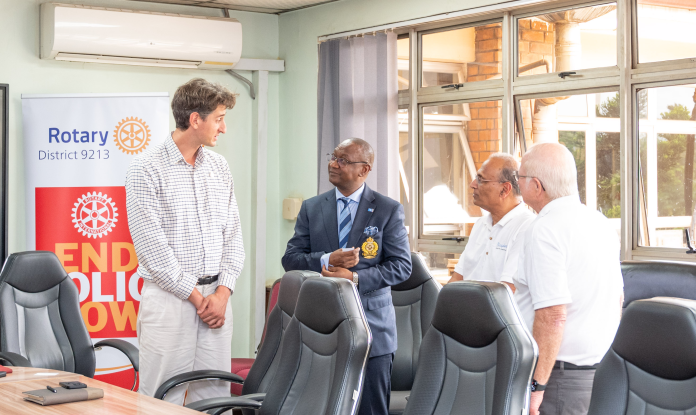
Geoffrey Kitakule, District Governor of Rotary District 9213 chatting with officials from Rotaplast and the Ministry of Health.
Hundreds of children and adults with cleft lips, cleft palates and burn injuries are set to receive life-changing surgeries this June, following the partnership reached by Rotary District 9213, Rotaplast and the Ministry of Health.
Geoffrey Kitakule, District Governor of Rotary District 9213 welcomed the partnership and noted that when policy opens doors and compassion walks in, lives are transformed.
“Together with Rotaplast and the Ministry of Health, we will provide surgeries that give children their smiles back and restore hope to families,” Kitakule said.
He commended the Ministry of Health for easing the regulatory process.
He added, “I want to thank Director Olaro Charles for making it possible to serve more people and change more lives.”
Rotary District 9213 has been at the forefront of health and community service, running medical outreaches, immunization campaigns and programs to fight preventable diseases. Through these efforts, thousands of families across Uganda have benefited from better access to healthcare and life-saving interventions.
Rotaplast, an international nonprofit working with Rotary, has a proven track record of restoring smiles and lives through free reconstructive surgeries. Its work spans across continents, giving children with cleft and burn conditions the chance to live healthy, confident lives.
“This partnership shows how Rotary turns compassion into action,” Kitakule added.
Kitakule urged that all Rotary clubs will support similar initiatives with an aim to make an even bigger impact in our communities.
By June 2026, the surgical mission will not only offer reconstructive surgeries but also community education on preventive health, ensuring lasting benefits for families in need.
“Congratulations to Rotary Club Sonde-D9213, the Ministry of Health, Rotary District 9213, and Rotaplast for sealing a deal that will save smiles and change lives,” Kitakule said.
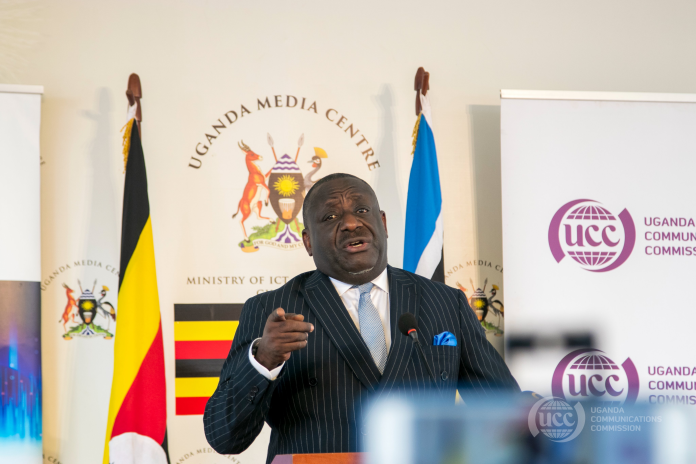
The Uganda Communications Commission (UCC) has directed broadcasters to stop using radio, television and digital platforms to challenge officially declared election results, reminding media houses that only the Electoral Commission has the constitutional authority to announce outcomes.
In a notice issued by UCC Executive Director, Nyombi Thembo on Tuesday, February 10 said the commission had observed a pattern in which unsuccessful candidates in parliamentary and local government elections were using broadcast platforms to dispute results from the recently concluded polls through unverified and sensational claims.
“The Uganda Communications Commission reminds broadcasters and the public that only the Electoral Commission is mandated to declare election results. Broadcast platforms must not be used to dispute officially declared results or air unverified claims,” Nyombi said in the statement.
Nyombi stressed that once results are declared by the Electoral Commission, any dissatisfaction must be addressed through the courts in line with the law and not through media platforms.
“Election disputes should be addressed through the courts by filing petitions within the legally set timelines. The broadcast media should not be used as alternative venues for litigating election disputes,” he cautioned.
According to the regulator, airing unofficial results, parallel tallies or speculative allegations is unlawful and risks misleading the public, eroding confidence in democratic institutions and threatening national unity in the post-election period.
The UCC directed all broadcasters to immediately refrain from hosting or airing content that questions declared election results without verification. This includes programmes, talk shows and call-ins that promote unofficial figures or unsubstantiated claims.
“All broadcasters are hereby directed to refrain from airing content that disputes declared election results without verification. Strict editorial oversight is required to ensure all election-related information is verified against official Electoral Commission sources,” the notice stated.
The Commission warned that enforcement action will be taken against any broadcaster that violates the directive, urging media owners, editors and presenters to act responsibly and uphold professional standards in the handling of post-election content.
The UCC directive aligns with the Electoral Commission’s 2025 media reporting guidelines issued ahead of the general elections, which clearly set out how journalists and broadcasters are required to report on elections and results.
Under the Electoral Commission guidelines, media houses are required to report election results strictly as declared by the Commission and are prohibited from publishing or broadcasting projected, unofficial or parallel results whether attributed to political parties, candidates, agents or members of the public.
The guidelines further require broadcasters to clearly attribute all election results to the Electoral Commission, avoid speculation during tallying and declaration, and repeatedly remind audiences that only the Commission can lawfully announce final outcomes.
Media houses are also obligated to exercise editorial control over live programmes, including call-in shows, to prevent the dissemination of false or misleading election information. Journalists are required to ensure accuracy, balance and restraint in reporting, particularly in the post-election period when tensions may still be high.
The Electoral Commission guidelines emphasise that once results are declared, the electoral process moves into a legal phase, where disputes are resolved exclusively through the courts. Media platforms are therefore not permitted to host debates or narratives that undermine declared outcomes or present them as provisional.
Together, the UCC directive and the Electoral Commission guidelines place responsibility on broadcasters to support public order, confidence in electoral institutions and democratic stability by ensuring that election reporting remains factual, verified and lawful.
India is set to start large-scale domestic production of Sudhir Power generators to reinforce the country’s manufacturing base in power generation equipment as demand rises for reliable and efficient energy solutions across key sectors of the economy.
Sudhir Power Limited has operationalized expanded manufacturing capacity at its production facilities to support increased output of generator sets and associated power infrastructure equipment. The development places India among the leading regional manufacturing hubs for medium and high capacity generators used in industrial, commercial and institutional settings.
The generators to be produced span a wide capacity range, from compact 7.5 kVA units for small commercial operations to heavy-duty 3,750 kVA systems designed for large factories, data centres, and infrastructure projects. The units are configured for standby, prime, and continuous power applications, allowing them to operate both as backup systems and as primary power sources in off-grid or weak grid environments.
Sudhir Power generators are designed with reinforced engine assemblies, high-efficiency alternators, and advanced control systems that ensure stable voltage output and fuel efficiency under variable load conditions. Sound attenuated enclosures are incorporated to reduce noise levels in urban and sensitive environments, while upgraded cooling and filtration systems enable consistent performance in high temperature and dust-intensive locations.
The production programme includes generators equipped with digital control panels that allow operators to monitor power output, fuel usage, engine diagnostics, and system alerts in real time. Larger units are configured with synchronisation and load-sharing capabilities, enabling multiple generators to operate in parallel for high-demand installations such as hospitals, telecom hubs, and industrial parks.
Alongside generator sets, the facilities will also produce automatic transfer switches, power distribution panels, and integrated control systems, allowing for seamless switching during power outages and efficient energy management across complex installations. These components support turnkey power solutions tailored for industrial clients and large-scale infrastructure projects.
The expansion of generator production is closely linked to rising electricity demand driven by industrial growth, urbanisation, and the rapid expansion of digital infrastructure. Data centres, telecommunications networks, and manufacturing plants continue to require dependable backup power to maintain operations during grid instability or outages.
Beyond generators, Sudhir Power’s manufacturing operations also cover transformers, packaged substations and high voltage and low voltage electrical panels, positioning the company as a full spectrum supplier of power equipment. This integrated approach allows clients to source complete power solutions from a single manufacturer, reducing installation timelines and operational risks.
The move to scale up domestic production is expected to support employment, strengthen technical skills, and deepen local supply chains in the electrical and mechanical engineering sectors. It also enhances India’s capacity to serve regional and international markets with competitively manufactured power generation equipment.
Sudhir Power is set to meet both domestic requirements and export demand, as India continues to prioritize industrial self-sufficiency and resilient energy infrastructure.
Charles Mbire and Sudhir Ruparelia remain the most influential individual investors on the Uganda Securities Exchange, as new market rankings underline how a small group of high-net-worth Ugandans continues to command a disproportionate share of listed wealth.
The rankings, compiled by Billionaires.Africa, come at a time when the local bourse has posted a strong recovery. In the twelve months to February 4, 2026, the USE All Share Index rose by 34 percent, lifting total market capitalisation to an estimated Shs37.3 trillion and significantly boosting the value of large, long-held positions.
Mbire tops the list with a listed portfolio valued at $91.1 million, anchored almost entirely in MTN Uganda, where he holds a 4 percent stake and serves as board chairman. His position reflects the continued dominance of telecoms stocks in driving individual wealth on the exchange.
Property mogul Sudhir Ruparelia ranks second with a combined portfolio of $11.4 million, diversified across key banking counters. His holdings include a 0.65 percent stake in Stanbic Uganda Holdings and a 2.5 percent stake in Bank of Baroda Uganda, placing him among the most significant local shareholders in the financial sector.
Banking remains the preferred entry point for most of the top investors. I.K. Kabanda, ranked third, holds shares valued at $4 million in Stanbic, while Ceasor Mulenga follows in fourth place with $3.8 million, largely invested in Bank of Baroda.
The list also highlights the steady performance of the pharmaceutical sector through Quality Chemical Industries. Company founders Frederick Kitaka, Emmanuel Katongole and George Baguma are tied in fifth place, each with stakes valued at approximately $3.4 million, reflecting sustained investor confidence in local manufacturing.
Further down the rankings, Michael Mbire sits eighth with a portfolio worth $1.9 million, followed by Joseph Byamugisha at $1.3 million and Andrew Muhimbise with $1.2 million. All three maintain significant holdings in Bank of Baroda Uganda, reinforcing the stock’s popularity among long-term investors.
Overall, seven of the ten richest individual investors on the Uganda Securities Exchange have substantial exposure to either Stanbic Uganda Holdings or Bank of Baroda Uganda, reflecting the central role of banking stocks in shaping local capital accumulation.
The portfolio values were calculated using recent closing prices on the exchange and converted at an exchange rate of Shs3,561.77 to the US dollar.
Uganda’s economy is expected to grow by about eight percent in the medium term, supported by rising public investment, oil and gas developments, and a gradual strengthening of private sector activity, Bank of Uganda revealed.
Presenting the February Monetary Policy Statement in Kampala on Monday, BoU Governor Michael Atingi-Ego said the growth outlook reflects increased government spending on major infrastructure projects, ongoing preparations in the oil and gas sector, and the impact of economic support programmes aimed at stimulating production and investment.
He said improving global economic conditions, alongside careful management of interest rates and financial sector stability, are also expected to play a key role in supporting stronger growth over the coming years.
“Overall prospects for growth remain favourable, supported by infrastructure and oil-related investments, as well as a recovery in private sector activity,” Atingi-Ego said, while cautioning that the outlook remains exposed to external shocks.
He noted that risks to the growth projection are tilted to the downside, largely due to evolving geopolitical tensions that could slow global economic activity, disrupt trade routes and supply chains, and push up commodity prices, particularly oil. Such developments, he said, could affect both domestic production costs and consumer prices.
“These risks are largely global in nature,” Atingi-Ego said, adding that on the upside, stronger-than-expected investment in the extractive sector, easing trade tensions and a more robust global recovery could lift economic growth above current projections.
Against this uncertain global backdrop, the central bank maintained the Central Bank Rate at 9.75 percent, where it has remained unchanged for the past 14 months. Atingi-Ego said the decision was intended to preserve macroeconomic stability, keep inflation under control and support sustained economic expansion.
“Without compromising the primary objective of price stability, the current policy stance also supports smoothing economic fluctuations and fostering socio-economic transformation,” he said, noting that future policy adjustments will depend on incoming economic data and developments in the global economy.
Uganda’s economy grew by an average of 6.3 percent during the first three quarters of 2025, largely driven by increased government expenditure and resilient household consumption. Government spending rose sharply, while household demand remained strong despite tighter financial conditions.
Although economic growth moderated slightly by September 2025, recent high-frequency indicators suggest a pickup in activity toward the end of the year. Looking ahead, the economy is projected to expand by between 6.5 and 7 percent in the 2025/26 financial year.
The central bank also revised its inflation outlook slightly downward, citing a stronger shilling and easing international oil and food prices. Inflation is expected to remain slightly below the medium-term target in 2026, within a range of 3.8 to 4.3 percent, before stabilising thereafter.
Atingi-Ego said the inflation outlook is underpinned by prudent monetary policy, exchange rate stability and moderating global commodity prices, although risks remain from strong domestic demand pressures, exchange rate volatility, global conflicts and adverse weather conditions that could affect food supply.
On the global front, the International Monetary Fund projects world economic growth of 3.3 percent in 2026 and 3.2 percent in 2027, supported by investment in technology, accommodative financial conditions and private sector resilience.
Growth in sub-Saharan Africa is expected to rise from 4.4 percent in 2025 to 4.6 percent in 2026 and 2027, reflecting macroeconomic stabilisation and reform efforts in several key economies.
Card games have always held a special place in Filipino culture. From simple games played on the floor during family reunions to intense card battles among friends, these games are about more than just cards—they are about strategy, bonding, and friendly competition. As technology continues to evolve, these beloved traditions are finding new life online. One standout example is ZingPlay Pusoy online on GameZone, where classic Filipino card gaming meets modern convenience and intelligent gameplay.
ZingPlay Pusoy takes everything players love about the traditional Pusoy game and enhances it with digital features, competitive modes, and a smooth online experience. When combined with GameZone’s secure, PAGCOR-licensed platform and wide game selection, it creates a card gaming environment that is both exciting and trustworthy. Whether you are new to Pusoy or a seasoned player looking to sharpen your skills, ZingPlay Pusoy on GameZone offers a rewarding experience for everyone.
What Is ZingPlay Pusoy?
ZingPlay Pusoy is an online version of the classic Pusoy card game, also known internationally as Chinese Poker. In this game, each player is dealt 13 cards and must carefully arrange them into three separate hands:
Back Hand – the strongest hand
Middle Hand – the second-strongest hand
Front Hand – the weakest hand
The goal is to ensure that each hand follows proper ranking rules. If the order is incorrect, the player commits a foul and automatically loses the round. This simple rule adds a powerful layer of challenge, making ZingPlay Pusoy a game of balance, planning, and discipline.
What truly makes ZingPlay Pusoy special is its focus on smart card play. Winning is not based purely on luck. Instead, players must analyze their cards, predict possible outcomes, and make calculated decisions every round.
Why ZingPlay Pusoy Appeals to Strategic Players
Unlike fast-paced games that rely heavily on chance, ZingPlay Pusoy rewards players who think ahead. Every move matters, and even a small mistake can change the outcome of a match.
Playing regularly helps develop important skills such as:
Strategic thinking
Decision-making under pressure
Focus and patience
Adaptability to different play styles
Each match feels like a mental puzzle, making the game deeply engaging and satisfying. This is why ZingPlay Pusoy continues to attract players who enjoy games that challenge the mind rather than relying on luck alone.
Why Play ZingPlay Pusoy on GameZone
While ZingPlay Pusoy is already a great game, playing it on GameZone makes the experience even better. GameZone is one of the most trusted online gaming platforms in the Philippines, designed to provide players with fair, smooth, and secure gameplay.
Most importantly, GameZone is licensed by PAGCOR (Philippine Amusement and Gaming Corporation). This means the platform follows strict government regulations to ensure transparency, fairness, and player protection.
By playing ZingPlay Pusoy on GameZone, players enjoy:
A legal and regulated gaming environment
Fair game mechanics and balanced systems
Secure accounts and data protection
Peace of mind while playing competitively
This trusted foundation allows players to focus entirely on enjoying the game and improving their skills.
Explore Multiple Pusoy Variants on GameZone
GameZone offers more than just one way to play Pusoy. To keep gameplay fresh and exciting, the platform features several Pusoy variants, each offering a unique twist on the classic rules.
Popular options include:
Pusoy Plus – A refined version with enhanced features
Pusoy Jackpot – High-risk, high-reward gameplay with bigger prizes
Pusoy Wild – Faster rounds and exciting twists that challenge creativity
These variations allow players to experiment with different strategies and discover which style best fits their strengths.
A Complete Gaming Hub with Over 1,000 Games
ZingPlay Pusoy is just one highlight of the GameZone experience. With over 1,000 games available, GameZone serves as a full gaming hub where players can explore a wide range of Filipino card games and online entertainment.
From Tongits and Lucky 9 to casual and competitive games, players never run out of options. This variety keeps the platform exciting and encourages players to try new games while continuously improving their overall skills.
Join Competitive Tournaments and Events
One of the most exciting features of ZingPlay Pusoy on GameZone is its regular tournaments. These events bring players together in competitive matches that test strategy, focus, and consistency.
By joining tournaments, players can:
Compete against skilled opponents
Improve under pressure
Climb leaderboards
Earn recognition and rewards
Tournaments add purpose and excitement to every match, making wins more satisfying and losses valuable learning experiences.
Skill Over Luck: The Heart of the Game
ZingPlay Pusoy is designed to reward intelligent play. While card distribution involves chance, long-term success depends on how well players manage their hands.
Experienced players understand that:
A strong back hand anchors the entire strategy
Overpowering the front hand causes fouls
Balanced hands lead to consistent wins
This balance between chance and strategy keeps the game engaging and encourages continuous improvement.
Play with Real Players, Learn from Every Match
ZingPlay Pusoy on GameZone connects players with real opponents from across the Philippines. Each match feels different because every player brings a unique strategy and style.
Playing against real people makes the experience more dynamic, competitive, and rewarding. Even losing becomes valuable, as players learn new approaches and refine their strategies over time.
Helpful Tips to Improve Your ZingPlay Pusoy Skills
To get better at ZingPlay Pusoy, consider these simple tips:
Study hand rankings carefully
Take your time arranging cards
Aim for balance, not just strong hands
Observe how opponents play
Practice regularly and join tournaments
Consistent play and learning from experience are key to long-term success.
Final Thoughts
ZingPlay Pusoy online on GameZone offers a complete, engaging, and skill-based card gaming experience. With multiple Pusoy variants, over 1,000 games, exciting tournaments, and a PAGCOR-licensed platform, GameZone stands out as a top destination for Filipino card game fans.
If you are looking for a game that sharpens your mind, rewards smart decisions, and delivers authentic Filipino card gaming fun, ZingPlay Pusoy on GameZone is the perfect place to start.
Frequently Asked Questions (FAQs)
1. What is ZingPlay Pusoy?
ZingPlay Pusoy is an online version of the classic Pusoy card game focused on strategic card arrangement and smart decision-making.
2. Is GameZone legal in the Philippines?
Yes. GameZone is fully licensed by PAGCOR, ensuring fair, secure, and regulated gameplay.
3. Are there different Pusoy versions on GameZone?
Yes. Players can enjoy Pusoy Plus, Pusoy Jackpot, Pusoy Wild, and other variations.
Kampala, Uganda — The Uganda People’s Defence Forces (UPDF) Deputy Commander Land Forces, Maj Gen Francis Takirwa, has died. Details surrounding his death remain limited, but reports indicate that the senior military officer had been battling illness for some time.
His passing marks a significant loss to the UPDF leadership, where he served as one of the most senior commanders responsible for overseeing land force operations. The army is yet to release an official comprehensive statement outlining the exact cause of death, funeral arrangements, or further details regarding his final days.
Maj Gen Takirwa was widely known within military circles for his long service and leadership in various operational and command roles. He previously served as the Commander of the UPDF Second Division based in Mbarara, where he was involved in overseeing security operations in Western Uganda and coordinating key military activities. Throughout his career, Takirwa built a reputation as a disciplined officer who rose through the ranks during decades of service in Uganda’s military structures. Colleagues describe him as a committed commander who played an active role in strengthening operational readiness and internal security management within the UPDF.
News of his death has reportedly shocked sections of the military fraternity and communities where he served, with fellow officers and leaders expected to pay tribute in the coming days. Analysts say his death comes at a time when the UPDF continues to play a significant role both domestically and in regional peacekeeping missions. The UPDF is expected to release an official statement confirming burial arrangements, military honours, and the succession plan for the Deputy Commander Land Forces position.
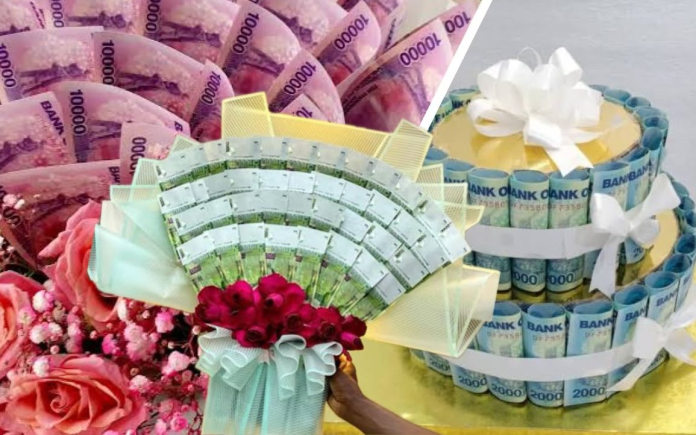
The Bank of Uganda (BoU) has cautioned members of the public against using currency banknotes and coins to create decorative gifts, warning that the practice damages money and disrupts the country’s cash circulation system ahead of Valentine’s Day.
In a public notice, the central bank singled out florists, designers, gifting stylists and their clients, urging them to desist from using Uganda shilling banknotes in bouquets and similar creations, especially where brand-new notes are glued, taped, pinned or clipped together.
“The public is cautioned against any practice that mutilates, defaces, or compromises the integrity of Uganda shilling currency,” BoU said in the statement.
According to the bank, such practices render banknotes unusable in cash-processing infrastructure, including counting machines and automated teller machines, creating inefficiencies within the financial system and imposing unnecessary costs on the public.
“This practice destroys the utility of banknotes, making them unusable in cash processing and distribution equipment such as cash counting machines and ATMs, which are a critical part of the cash distribution system,” the statement reads.
It adds, “It also results in the premature withdrawal from circulation and replacement of banknotes at an avoidable cost to the public.”
BoU clarified that while giving cash as a gift is not prohibited, it must be done in a manner that preserves the normal form and intended use of currency.
“Whereas the Bank does not object to using cash as a gift, this exchange should conform to the normal use of currency to facilitate payment transactions,” the bank emphasised.
Kenneth Egesa, the Director of Communications and Public Relations at the Bank of Uganda, said the advisory is part of the central bank’s mandate to protect the integrity of the national currency.
“Bank of Uganda remains committed to safeguarding the integrity of the national currency in circulation so that it continues to serve effectively as a medium of exchange and a store of value,” Egesa said.
He encouraged the public to seek guidance from the central bank where clarification is required, as BoU continues to monitor practices that may compromise the proper use of currency.
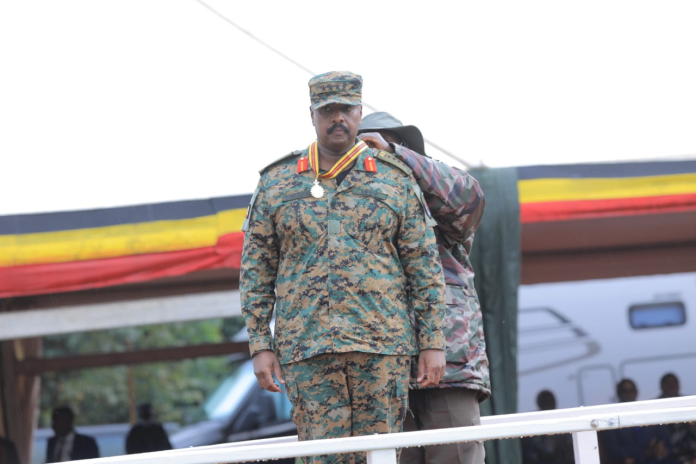
Gen. Muhoozi being decorated by President Museveni after receiving the Kabalega star medal at the Terehe Sita anniversary.
The Chief of Defence Forces, Gen Muhoozi Kainerugaba, has been awarded the Kabalega star medal at the Terehe Sita anniversary held in Kabale District.
Gen Muhoozi was decorated by President Yoweri Kaguta Museveni. The Kabalega Star is the second-highest military decoration in Uganda, awarded for gallantry that does not quite justify the highest award, the Order of Katonga. It is named after Omukama (King) Kabalega of Bunyoro, who resisted British colonialism. The award is typically conferred upon members of the Ugandan Army (UPDF) for bravery.
The 45th Tarehe Sita Anniversary at Kabale National Teachers’ College in Kabale District has been held under the theme: “Defending the Gains of the Revolution & Honouring the Sacrifice of the Freedom Fighters.”
Gen Muhoozi joins other generals: Gen. Caleb Akandwanaho, alias Salim Saleh, Gen. Ivan Koreta, and Brig. Gen. Bosco Omure, who received this in the past celebrations.
Gen Muhoozi Kainerugaba is a career officer of the Uganda People’s Defence Forces whose military career has been shaped by professional training, elite command, and regional operations. He received both local and international military training, including advanced command and strategic studies at the United States Army Command and General Staff College in Fort Leavenworth, equipping him with grounding in modern warfare and joint operations.
He rose through the ranks to command Uganda’s Special Forces Command, overseeing counter-terrorism operations, protection of strategic installations, and high-value assets. During his tenure, the unit underwent significant professionalisation, with greater emphasis on advanced training, discipline, and operational readiness to respond to both conventional and asymmetric threats.
Gen Muhoozi also played a role in Uganda’s regional security engagements, particularly in Somalia under African Union missions, where UPDF forces focused on stabilisation operations, protection of key infrastructure and counter-extremism efforts, strengthening Uganda’s experience in external deployments.
He later served as Commander of the UPDF Land Forces, overseeing core combat units and focusing on force readiness, training coordination, and operational efficiency. As Chief of Defence Forces, he is responsible for the overall command and strategic direction of the UPDF, with emphasis on military professionalism, modernisation, and regional cooperation.
At the same ceremony, Lt. Kayanja Muhanga was awarded the Rwenzori Star medal. He joined the army in 1985. He previously led Ugandan troops under African Union missions in Somalia and commanded forces during Operation Shujaa against the ADF in eastern DRC. He currently serves as the Commander of the UPDF Land Forces, where he is responsible for overseeing the army’s core combat units, force readiness, and operational deployments, both within Uganda and across external missions.
Lt. Gen. Charles Okidi, Commander of UPDF air forces also received the Rwenzori Star medal. He is a highly distinguished aviator. He provides air support to both internal and external operations as well as executing VVIP missions.
Former NRA soldier Col. Samson Mande, back from self-exile after reconciling with the NRM, also received a medal for his role in the liberation struggle.