Stanbic Bank
Stanbic Bank
16.7 C
Kampala
Stanbic Bank
Stanbic Bank
Home Blog Page 40

Court upholds Sanyu FM’s dismissal of ex-COO Betsy Mugamba over 2020 strike

Betsy Mugamba

The Industrial Court has ruled that the dismissal of former Sanyu FM Chief Operations Officer, Betsy Mugamba, in 2020 was lawful and justified, thus bringing to an end a five-year legal battle that started from the radio station’s Covid-19 pay cut strike.

Delivering judgment, Justice Anthony Wabwire Musana said Sanyu FM followed the law both procedurally and substantively when it terminated Mugamba’s employment after she allegedly led and participated in an unlawful strike that disrupted broadcasts during the Covid-19 lockdown.

“The strike which the claimant joined by appending her hand to the joint letter was unlawful,” Justice Musana ruled. “The respondent was justified in commencing disciplinary proceedings against her.”

Mugamba joined Sanyu FM in December 1993 as a marketing executive and rose through the ranks to become Chief Operations Officer in 2005. During the #Covid-19 lockdown in 2020, the radio station announced a 25 percent pay cut to cope with reduced advertising revenues. On June 5, 2020, twenty-seven employees, led by Mugamba, reportedly rejected the pay cut and stopped working, prompting management to accuse her of inciting and participating in an unlawful strike.

She was suspended on August 19, 2020, and after three disciplinary hearings, she was summarily dismissed on September 25, 2020. Mugamba later sued the station, claiming unfair and unlawful termination and seeking more than Shs792 million in compensation for lost income and emotional distress.

Through her lawyer, Anthony Bazira of Byenkya, Kihika & Co. Advocates, Mugamba argued that she never incited the strike but only showed solidarity with colleagues who opposed the pay cut. She told the court that she had continued working during the lockdown and only signed a protest letter in solidarity with fellow employees. Her lawyer claimed the disciplinary process was flawed and biased, saying she was ambushed with unclear charges and denied enough time to prepare her defence.

“The investigation relied on a PowerPoint presentation and hearsay, which fell short of credible evidence,” Bazira argued, urging court to find the termination unlawful and award her damages.

Lawyers Elias Matovu and Shafic Mutesasira of Mugisa, Namutale & Advocates, representing Sanyu FM, maintained that Mugamba’s dismissal was proper, citing gross misconduct and breach of trust. They argued that as a senior manager, she had a duty to ensure smooth operations, not to join a strike. Instead, she allegedly endorsed an illegal work stoppage that tarnished the company’s image.

“She was given a fair hearing. The process met all legal requirements under Section 65 of the Employment Act,” Sanyu FM’s lawyers stated, adding that Mugamba had been given seven days’ notice, legal representation, and the opportunity to cross-examine witnesses.

An internal investigation led by consultant Dr Joel Isabirye found that the strike caused severe brand damage and identified Mugamba as one of its instigators. The Industrial Court found that the disciplinary process was fair and transparent, noting that Mugamba had been properly informed of the charges and given adequate time to defend herself. The court also ruled that the strike was unlawful since staff had not notified the Labour Officer as required by the Labour Disputes (Arbitration and Settlement) Act.

“As a manager, the eyes and ears of management, she was expected to represent her employer’s interests,” Justice Musana said.

Musana added, “By endorsing an unlawful strike, she breached the duty of trust and confidence owed to her employer.”

The court noted that Sanyu FM had genuine and reasonable grounds to terminate Mugamba’s employment. Her claims for compensation were dismissed, and the judge ordered that each party should bear its own costs.

Stories Continues after ad

CID summons Eswatini Consul in Uganda, Quilino Bamwine, over $372,000 fraud land transaction

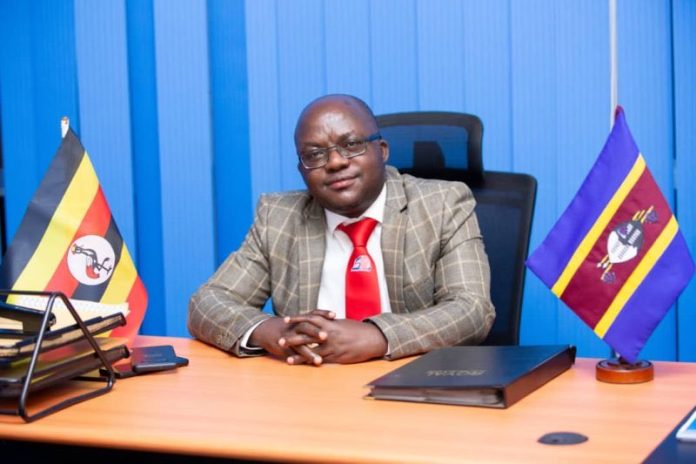
Eswatini Honorary Consul in Uganda, Quilino Bamwine.

The Kingdom of Eswatini Honorary Consul in Uganda, Quilino Bamwine, has been summoned to appear before the Criminal Investigations Directorate of the Uganda Police in relation to grave allegations of fraud, extortion, and criminal involvement in a land transaction

Criminal Investigations Directorate (CID) has opened a file into Bamwine’s alleged role in a fraudulent land deal involving hundreds of thousands of dollars.

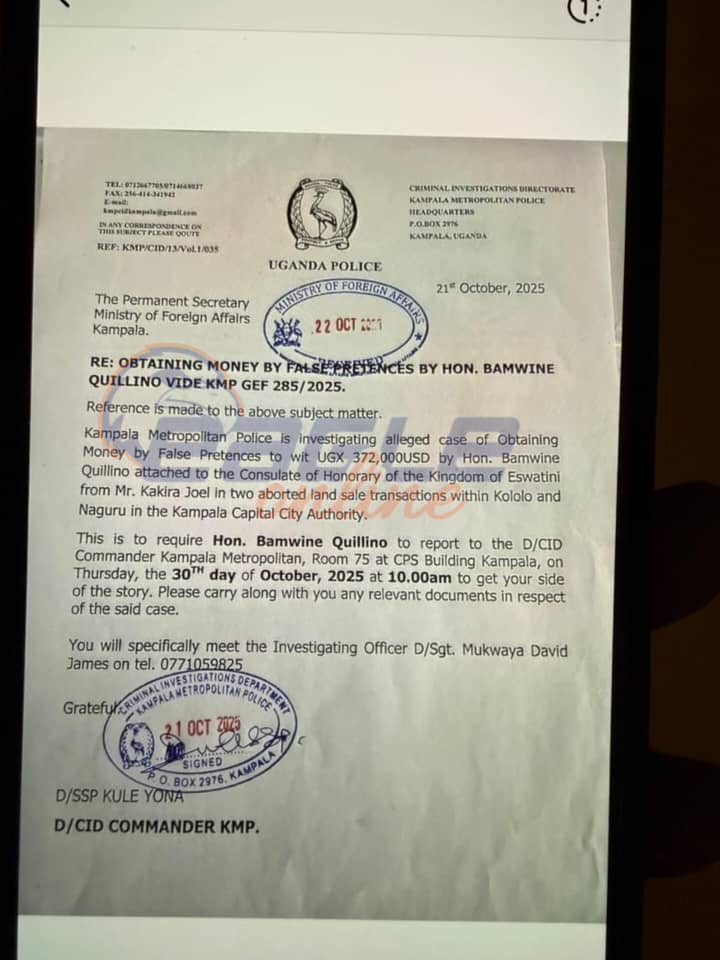
A police communication dated October 21, 2025, and addressed to the Permanent Secretary, Ministry of Foreign Affairs, references the case as Obtaining Money by False Pretences by Mr Bamwine Quillino vide KMP GEF 285/2025.

The letter, under reference KMP/CID/13/Vol 1/035, reads in part, “Kampala Metropolitan Police is investigating an alleged case of Obtaining Money by False Pretences to wit USD 372,000 by Bamwine Quillino attached to the Consulate of Honorary of the Kingdom of Eswatini from Mr. Kakira Joel in two aborted land sale transactions within Kololo and Naguru in Kampala Capital City Authority.”

Police further directed Bamwine to appear before the D/CID Commander Kampala Metropolitan at CPS Building, Room 75, on October 30, 2025, at 10:00 a.m.

“You will specifically meet the Investigating Officer D/Sgt. Mukwaya David James,” the letter signed by D/SSP Kule Yona, the Kampala Metropolitan CID Commander, stated.

The Ministry of Foreign Affairs acknowledged receipt of the police correspondence on October 22, 2025, as indicated by official stamps.

Eswatini’s decision to discontinue Bamwine demonstrates a strong commitment to safeguard its diplomatic integrity after reports that Bamwine used his consular status to solicit payments and manipulate real-estate transactions.

This action reflects the urgent need for Uganda to ensure that diplomatic representation remains a matter of national integrity, not personal enrichment. 

The Ministry of Foreign Affairs is yet to issue a formal public statement but, according to insiders, officials are reviewing Eswatini’s correspondence and evaluating possible implications for future consular engagements.

The diplomatic action, described as both rare and decisive, was confirmed through an official communication dated October 31, 2025, issued by Ambassador Mahlaba A. Mamba, Eswatini’s Permanent Representative to the African Union. 

The letter cites repeated misconduct, failure to heed warnings and ongoing criminal investigations in Uganda as key reasons for the withdrawal of Bamwine’s appointment.

According to Ambassador Mamba, the former consul ignored earlier cautions from both the Eswatini Embassy and Uganda’s Ministry of Foreign Affairs and continued engaging in unethical and unlawful activities.

“Additional allegations of serious misconduct including extortion, fraud, and other criminal activities have since emerged,” Ambassador Mamba wrote

He added that Bamwine had been linked to a questionable land transaction that appears to constitute a criminal act.

The letter further stated that the Embassy had received numerous reports from both government authorities and private individuals, leaving Eswatini with no alternative but to act.

“The government of the Kingdom of Eswatini has advised that we revoke your appointment as Honorary Consul with immediate effect,” Ambassador Mamba declared.

The issue has been communicated to Uganda’s Ministry of Foreign Affairs, which had earlier raised concerns about Bamwine’s conduct and urged collaboration with Eswatini authorities to address the issue.

In a separate account, Ambassador Mamba described a tense encounter with Bamwine at the embassy shortly before his dismissal.

“You appeared unannounced on the day of my departure, demanding to know why issues were raised in writing rather than verbally. The manner in which you addressed me was most disturbing,” Mamba noted.

Stories Continues after ad

Chinese ZTE to curtail internet operations during elections

ZTE Corporation, the Chinese telecommunications company, is reportedly hired to block access to the internet during and after elections, sources have revealed.

ZTE was previously under scrutiny for its role in internet shutdowns designed to suppress transparency and civic participation in the general elections. There is enough circumstantial evidence to raise serious concerns over ZTE’s collaboration with regulatory agencies to disable public access to the internet.

On January 13, 2021, hours before polling, the Uganda Communications Commission reportedly ordered internet service providers to suspend operations, resulting in a nationwide outage lasting several days. The ease with which the telecom backbone and gateways were taken offline points directly to the involvement of ZTE, which has been identified in multiple tender documents as managing key backbone links.

Investigations reveal that ZTE was the company contracted to switch off the internet during and after the general elections for five days.

One anonymous source within a telecom operator said, “We had our bids ready. Then ZTE began telling us the deal was already done, and your company will just service but not own. It felt like the outcome was pre-ordained.” The source requested anonymity for fear of reprisals.

Sources familiar with internal communications between ZTE engineers and network operators say that gateways controlled by ZTE-supplied equipment were the first to shut down on election eve, effectively blocking social media, messaging apps and independent verification of results.

Further exclusive investigation shows that ZTE’s network management software contained pre-configured shutdown protocols that could be triggered remotely.

“It was not just a temporary suspension order from regulators,” the anonymous source revealed.

The source added, “ZTE’s systems already had the switches built in; the blackout could have been executed without human intervention at the operator level.”

The ZTE technicians had administrator-level access to critical national telecom infrastructure, giving them the ability to isolate entire regions from the internet at the push of a button. This level of control raises serious questions about sovereignty and the security of Uganda’s communications infrastructure.

A cyber security expert said that such pre-configured capabilities are unusual for commercial telecom contracts and are more aligned with surveillance or state-directed control operations.

“What we are seeing is not normal telecom practice. This is infrastructure designed for rapid, total shutdown at a national level,” said one independent cybersecurity analyst who reviewed portions of the leaked technical data.

Uganda’s citizens, civil society groups and international observers are now calling for an urgent forensic audit of ZTE’s infrastructure. The focus is on understanding who exactly activated the shutdowns, how much control ZTE had independent of regulatory instructions and what safeguards exist to prevent future abuse.

This investigation raises concerns over the role of foreign-owned technology companies in national infrastructure and highlights the urgent need for oversight, accountability and transparency in telecom contracts linked to critical democratic processes.

Stories Continues after ad

Kampala police arrest 136 suspects in major crackdown on criminal hideouts

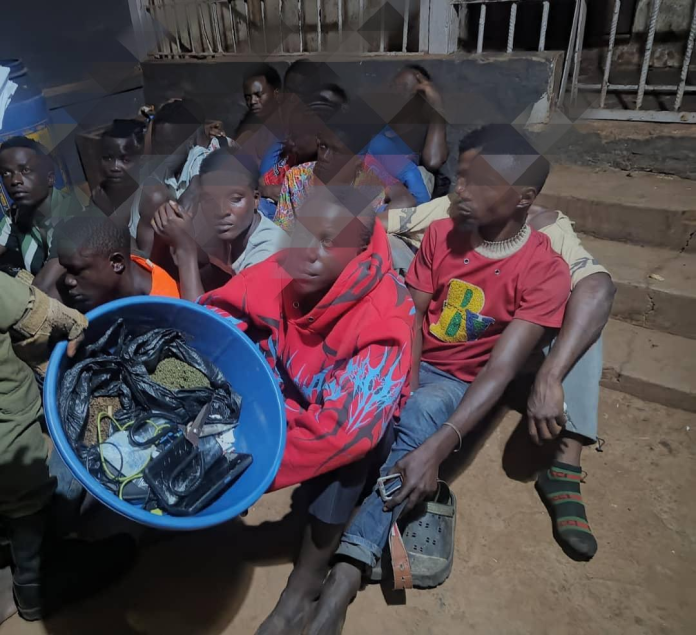
The Kampala Metropolitan Police has intensified operations targeting criminal hideouts, resulting in the arrest of 136 suspects across the region over the past week. The efforts aimed to restore public order, curb unlawful activities, and ensure the safety of residents in known black spots.

In Mukono District, coordinated operations were conducted in Goma, Nama, Central, and Nakisunga areas. Police arrested a total of 61 suspects.

The Deputy Police Spokesperson, Kampala Metropolitan Luke Owoyesigyire revealed that all the suspects were apprehended from known locations where criminals gather to engage in unlawful activities, including narcotic substance abuse and robberies.

Several exhibits of suspected narcotics were recovered, and the suspects were arraigned in court last week.

Some of the key arrests in Mukono included: Goma–Jogo Centre: 9 suspects, Walusubi Centre, Nama Subcounty: 12 suspects, Kitega, Wantoni, Beganzi, and Nsube A: 12 suspects, Namuyenje, Nakisunga Subcounty: 9 suspects, Namataba, Namawojjolo, Walusubi: 10 suspects and Nataburwa, Namanve Industrial Park area: 9 suspects

Kira Division Police also carried out targeted operations. “At Kiyinda Zone, Kira Municipality, three suspects were arrested from a home where narcotics were being sold and consumed. Police recovered 11 bundles of rolled substances suspected to be narcotics,” Owoyesigyire said. The suspects are currently detained pending prosecution.

In Nansana Division, Wakiso District, eight suspects were arrested from Wamala Kasumba, Karanzi, Kinyarwanda, and Tabba sub-zones, while Jinja Road Police Division arrested 16 suspects in Thailand, Katogo, and Kago areas of Kinawataka. Old Kampala Division conducted two separate operations in Nakulabye and Kisenyi, apprehending 48 suspects and recovering suspected narcotics and dangerous weapons.

As part of ongoing community engagement initiatives, the Police have strengthened partnerships with local leaders and residents. On 30th October 2025, Nansana Police Division hosted a meeting chaired by Kampala Metropolitan Police Commander, CP Ecega Richard. Discussions focused on improving vigilance, resolving family conflicts, identifying dark spots, and fostering collaboration between security agencies and the community.

Owoyesigyire emphasized the importance of public cooperation in curbing crime.

He noted, “The sustained efforts and strong community partnerships have been critical in achieving these results. We urge residents to continue sharing timely information and working closely with the Police to ensure safety and security for all.”

The Kampala Metropolitan Police reiterated its commitment to proactive enforcement and maintaining peace across the city, promising continued operations to dismantle criminal networks and secure communities.

Stories Continues after ad

UPDF passes out 168 marine troops after intensive four-month course in Wakiso

UPDF Marine Brigade in action.

The Uganda Peoples’ Defence Forces Marine Brigade passed out 168 new militants who completed a four-month Marine Basic Induction Course at the Marine Training School in Kalangalo, Wakiso District.

Presiding over the ceremony, Brig Gen Michael Nyarwa, Commander Marine Brigade, applauded the graduates for their discipline, endurance, and determination. He described their journey from trainees to professional mariners as a testament to resilience and teamwork.

“You arrived as trainees; you leave as mariners, disciplined, skilled, and ready to serve,” Brig Gen Nyarwa said.

“You have endured the rigours of swimming and combat water survival, mastered navigation and tactics, and proven that determination and discipline yield success.”

The course, which began on June 30, 2025, focused on equipping trainees with essential maritime skills including navigation, communication, small boat handling, tactics, intelligence, first aid, physical fitness, and maritime law.

Brig Gen Nyarwa emphasised that integrity and character remain the foundation of the UPDF’s professional ethos beyond technical proficiency.

“Skill without character is a hollow vessel. Uphold the highest standards of self-discipline and ethical conduct. Respect your uniform, your comrades, and the communities you will serve,” he cautioned.

He commended the Commandant, Chief Instructor, and staff of the Marine Training School for their commitment to building a competent and professional Marine force that is capable of safeguarding Uganda’s waters.

Col David Kararira, the Commandant of the Marine Training School, congratulated the graduates for completing the programme and praised the instructors for maintaining high training standards despite some challenges.

“Finishing this course is a new beginning. Opportunities await those who remain disciplined, focused, and ambitious,” Col Kararira said.

He recognised the Marine Brigade Command for its continued support in strengthening the school’s capacity, noting its growing role as a vital centre for maritime operations training in Uganda.

Stories Continues after ad

Equity group announces 32% growth in Profit After Tax in Q3 2025 results

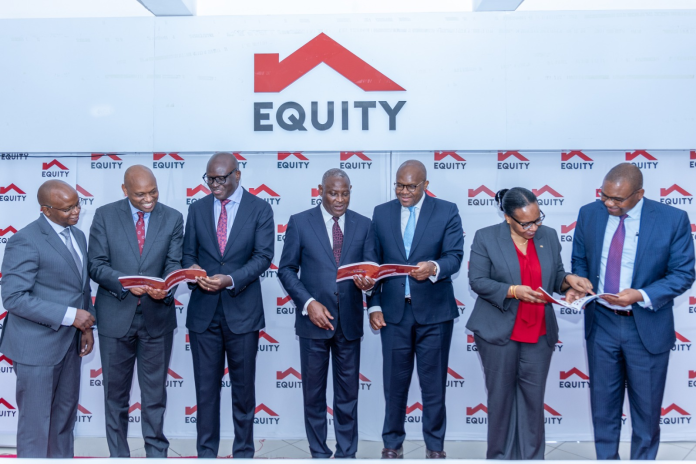
Equity Group Holdings Plc has announced its Q3 2025 results, showcasing a robust performance driven by strategic transformation and resilience. The Group’s Profit After Tax surged 32% to Kshs 54.1 billion up from Kshs 40.9 billion, underpinned by diversified and growing revenue streams, enhanced efficiency, and strong regional contributions and strong recovery of the Kenya banking business.

During the quarter, the global environment demonstrated resilience with slightly stronger economic growth expected for the year. Easing global inflation rates has been helpful in an international landscape increasingly shaped by trade tensions and fragmentation. Most East African economies will retain the benefits of lower global oil prices which usefully combine with high prices in export commodities such as gold, copper, and coffee. Africa stands out as one of the most resilient regions, with nine of the top twenty fastest growing economies in the world for 2025 from the continent.

In East Africa, Rwanda and Uganda are global growth leaders with regional economic momentum supported by Tanzania and Kenya especially. Inflation trends generally support stability with low inflation in Kenya, Uganda, Tanzania, and substantial easing in the DRC. While the region still stands to be comparatively better off regarding new trade tariffs, the end of the Africa Growth and Opportunity Act presents a mixed bag that will need to be monitored.

The Group has developed and mapped its 2030 strategic plan to anchor the Africa Recovery and Resilience Plan (ARRP), with an ambition to have a presence in 15 countries and serve a hundred million customers by 2030. This ambition has necessitated the evolution of the core pillars, key enablers, and critical success factors. Governance and leadership continue to strengthen, focusing on capacity, competence, transparency, and experience. Systems and infrastructure have been fully replaced with scalable, next-generation, Fourth Industrial Revolution technologies that are digital, machine learning-enabled, and based on Generative Artificial Intelligence (GAI), with data analytics at the center of the Group’s strategy. Applications that leverage the capabilities of these systems and infrastructure, with inbuilt enhanced security and innovations, are being deployed. A go-to-market strategy has been developed for the roll-out of these transformational capabilities, delivered by a modern product house to enhance customer value propositions and solutions.

This allows the Group to serve a more diverse and segmented member market on the basis of industries, sectors, demographics, and customer-specific status. The Group’s organizational culture is undergoing transformation to embed customer centricity and market responsiveness as core values, integrity, professionalism, creativity, innovation, and teamwork, fostering a fit-for-purpose human capital corps and attracting and retaining talented, skilled, and experienced staff.

Anchored in the ARRP and its Tri-Engine Business Model, the Group is demonstrating how financial institutions can catalyze inclusive and sustainable growth by aligning private capital with national and regional development priorities. Through blended finance, strategic partnerships, and ecosystem-building across key value chains, the Group is crowding in private investment to complement public efforts, strengthen resilience, and unlock enterprise-driven transformation. This approach positions Equity Group not merely as a bank, but as an integrated Transformation Finance Institution, bridging philanthropy, development finance, and commercial capital to deliver sustainable prosperity across Africa.

Commenting on the third quarter 2025 performance, Equity Group Managing Director and CEO, Dr. James Mwangi said, “The execution of the strategic business plan has started to reflect on the balance sheet and performance of the Group in agriculture, mining, manufacturing, trade and investment, and small and medium enterprises (SMEs) that populate the eco-systems of the formal sector in these value chains and is likely to significantly and increasingly transform the structure and performance of the Group.”

Equity Group’s Q3 2025 performance was marked by a 32% year-on-year increase in Profit After Tax, reaching Kshs 54.1 billion up from Kshs 40.9 billion, alongside strong profitability ratios with Return on Average Equity (RoAE) at 26.4% and Return on Average Assets (RoAA) at 4.1%. The Group demonstrated effective revenue diversification, as evidenced by a 16% growth in net interest income and 3% growth in non-funded income. The Group also achieved improved efficiency, with the cost-to-income ratio significantly reduced to 50.6% from 55.1%, while strong asset quality was maintained through an increase in non-performing loans (NPL) coverage to 71.4% and a contained cost of risk at 1.9%.

“Our Q3 2025 performance reflects the strength of our diversified tri-engine business model, operational efficiency, and continued commitment to transforming lives,” said Dr. James Mwangi, Equity Group Managing Director and CEO.

He noted, “By empowering MSMEs, leveraging digital platforms, and aligning with Africa’s socioeconomic and sustainability priorities, we continue to drive inclusive growth and create shared prosperity. We are particularly proud of our regional subsidiaries, which have demonstrated resilience and contributed significantly to our overall performance.”

In Kenya, Equity Bank reported a strong performance with Profit after Tax rising by 51% to Kshs. 31.1 billion up from Kshs. 20.6 billion in the previous period. Net interest income grew by 27% to Kshs. 53.6 billion from Kshs. 42.0 billion, supported by a 34% decline in interest expenses, which reduced to Kshs. 25.1 billion from Kshs. 38.0 billion. Consequently, total equity expanded by 36% to Kshs. 171.4 billion up from Kshs. 126.1 billion. Equity Bank Kenya sustained its MSME banking leadership, disbursing 45% of the Kshs 201 billion MSME loans in Kenya between January and July 2025, and the Equity Insurance Group reported a 71% increase in gross written premiums, contributing to a 36% growth in profit before tax. Regional subsidiaries also made significant contributions, with Equity BCDC (DRC) recording 19% YoY loan growth and Equity Bank Rwanda achieving 34% YoY loan growth. The strong growth of the region provides a long-term runway and headways for sustained growth of the Group.

“We appreciate our customers for their continued support and patience throughout our transformation journey, despite the challenges experienced during the period,” said Dr. James Mwangi, Equity Group Managing Director and CEO.

He added, “This transformation marks our evolution into a one-stop financial services provider, offering borrowing, investing, insurance, payments, and savings solutions seamlessly, 24 hours a day. With system stability now fully restored, we are focused on expanding our product offerings to better serve our customers and enhance their opportunities for wealth creation. Importantly, this transformation has not changed our true north, our unwavering commitment to supporting micro, small, and medium enterprises. We are proud that industry data shows Equity is home to 45% of all SME loans disbursed this year. We remain dedicated to exploring greater opportunities to make this our core focus.”

Regional diversification continues to transform Equity Group from a Kenyan bank to a regional powerhouse, with 50% of deposits, 53% of the loan book, 50% of total banking assets, and 49% of Group banking revenue originating from regional subsidiaries. This regional banking business has been value-creating, contributing 45% of Profit before Tax and 42% of Profit after Tax of the banking business.

In the DRC, Profit after Tax increased by 21% to Kshs. 13.8 billion up from Kshs. 11.4 billion. Loans and advances grew by 19% to Kshs. 302.7 billion, up from Kshs. 253.5 billion, funded by a corresponding decline in cash holdings from Kshs. 275 billion Kshs. 259.3 billion. Total equity rose by 28% to Kshs. 88.8 billion, up from Kshs. 69.4 billion.

In Uganda, Profit after Tax recorded a significant 61% increase to Kshs. 2.9 billion, up from Kshs. 1.8 billion. Investment securities grew by 23% to Kshs. 39.6 billion from Kshs. 32.1 billion, while total equity rose by 23% to Kshs. 18.5 billion, compared to Kshs. 15.8 billion previously.

In Rwanda, total assets expanded by 5% to Kshs. 122.9 billion, up from Kshs. 116.6 billion, driven by a 34% growth in the loan book, which increased to Kshs. 62.3 billion, up from Kshs. 46.4 billion. Total equity also recorded an 18% increase to Kshs. 19.6 billion, up from Kshs. 16.6 billion.

In Tanzania, Profit after Tax almost doubled, growing by 88% to Kshs. 1.5 billion, up from Kshs. 0.8 billion. Shareholders’ funds rose by 83% to Kshs. 12.1 billion, up from Kshs. 6.6 billion, while loans and advances grew by 51% to Kshs. 37.4 billion, compared to Kshs. 24.8 billion in the previous period.

On business diversification, the Group’s growth in the insurance industry is transforming the Group from a Banking Group into an integrated financial services Group that is powered by technology. Equity Group has now secured three (3) underwriting licenses for life insurance, general insurance, and health insurance. This enables the Group to provide customers with the holistic tools of risk management to protect their lives, their health, and their wealth. Equity Insurance Group registered a 36% growth in Profit before Tax to Kshs.1.46 billion up from Kshs. 1.07 billion in the prior year. This growth is supported by a 71% increase in gross written premiums of Kshs. 6.55 billion up from Kshs. 3.83 billion. Insurance revenue grew by 57% to Kshs.2.46 billion up from Kshs. 1.57 billion in the prior year whilst the Balance Sheet grew by 36% to Kshs.32.1billion up from Kshs. 23.7 billion.

In its 3rd year of operations, the life insurance business has become the third largest group credit insurance company with a market share of 8% of group and credit life, 3rd in return on equity, and 4th in profitability. Equity Life Assurance saw its gross written premiums grow by 28% to Kshs4.9 billion, up from Kshs3.8 billion, with net insurance and investment revenue growing by 20% to Kshs1.39 billion, up from Kshs1.16 billion, and with profit before tax rising by 21% to Kshs1.3 billion Kshs1.1 billion. Insurance contract liabilities grew by 18% to Kshs23.3 billion from Kshs19.7 billion. Total assets increased to Kshs29.5 billion, up from Kshs23.7 billion. Return on average equity stood at 37.7% with a return on average assets of 4.5%. Equity Life Assurance has served 6.8 million unique customers with insurance solutions and has issued 17.8 million policies to date.

Equity General Insurance began operations this year and has had a strong start. With gross written premiums of Kshs1.67 billion within the first 9 months, the business generated insurance revenue of Kshs1.01 billion to register a profit before tax of Kshs140 million, a 19.0% return on average equity and 8.0% return on average assets. Total assets stood at Kshs2.3 billion as capital adequacy rose to 126%, a reflection of strong underwriting culture and risk management practices.

Equity Health Insurance, which was licensed in July this year, has, by the end of the quarter, underwritten gross written premiums of Kshs5 million and closed at a profit before tax of Kshs23 million. Equity Health Insurance registered a return on average equity of 2.6%, return on average assets of 1.9%, and total assets of Kshs831 million.

The insurance subsidiaries show strong growth momentum with enormous headroom to contribute towards the increase in insurance penetration in East Africa from an average of 1.34% to eventual double digits. By demonstrating a decent start in achieving break even within 6 months of operation for each of the subsidiaries, the diversified business is poised to contribute towards increased profitability and return on equity to the overall Equity Group performance.

The non-banking businesses, the technology and insurance Group, raised their total contribution to Group assets from 1.5% to 1.9% year on year and revenue to 3% up from 2.8%. The non-banking Group generated a return on Equity of 38% and a return on assets of 6.6% compared to return on Equity of 26% and a return on assets of 3.7% of the banking group, and return on equity of 26.% and 4.1% of return on assets of the entire Group.

The investment in systems to create convenience with compression of distance and time for customers has led to a transformation of the business delivery model with migration from fixed and variable cost channels to self-service channels. While over 98% of transactions happen outside the branch, 87.4% of these happen on digital channels delivering unparalleled ease and convenience of 24 hour banking.

The Group’s loan book quality remains stable with the Group NPL ratio having peaked to 14.0% in Q1 2025 from 13.4% in Q3 2024 to 12.1 in Q3 2025, driven by improvement in NPL ratios of Equity Bank Tanzania, 2.7%, down from 11.1% and Equity Bank Uganda, which registered a NPL ratio of 8.8%, down from 20.9%. Equity Group outperformed the Kenyan industry, registering an NPL ratio of 12.1% against the industry average ratio of 17.1% as at September 2025, while maintaining an IFRS NPL coverage of 71.4%. The Group’s cost of risk declined from 2.1% to 1.9% year on year.

“Technology remains central to the Group’s strong operational performance and strategic resilience. During the quarter, we further improved system reliability, launched key digital integrations across markets, strengthened fraud controls, and advanced our AI and data governance frameworks. Through investments in modern architecture, emerging AI and data capabilities and the transformation to platform-based business models with integrated ecosystems, we have future-proofed our operations and enhanced service uptime and stability across all markets. This approach not only strengthens brand trust and customer confidence but also positions the Group to capture emerging opportunities in digital finance, data innovation and ecommerce,” said Dr Mwangi, who concluded, “As part of our multi-year information security transformation and remediation program, we continue to invest heavily in security and compliance frameworks aligned with regulatory expectations and international standards such as ISO 27001 and PCI-DSS. These investments assure data protection and safeguard our digital ecosystem as transaction volumes and API integrations scale,” said Dr Mwangi and continued.

“The strong growth in the region presents a long-term runway and significant headroom for sustained expansion of the Group. We are deeply grateful to our customers for their continued support throughout the transformation journey, for their patience and resilience during the temporary system disruptions. These changes are part of our commitment to building a transformative institution: a one-stop financial services provider enabling customers to save, borrow, insure, invest, and transact seamlessly on a 24-hour basis. We are pleased to share that the system instability is now behind us. Our focus has shifted to product innovation, with our product houses actively rolling out new offerings to empower our customers and unlock greater opportunities for wealth creation. Importantly, this transformation has not altered our true north, our unwavering commitment to micro, small, and medium enterprises. We are proud to be recognized in the recent banking industry survey as the home of 45% of all SME loans disbursed between January and July this year. We remain dedicated to expanding this impact and exploring new avenues to support SMEs as our core focus.”

In Q3 2025, the Equity Group Foundation (EGF) continued to advance its mission of transforming lives and expanding opportunities across the East and Central Africa region through its social impact investment initiatives and pillars of impact. The Education and Leadership Development pillar celebrated exceptional results in its Equity Leaders Program where 145 of its scholars received fully funded global university scholarships worth Kshs 3.8 billion (USD 29.47 million). This included 16 placements to Ivy League institutions including Harvard (4), Princeton (8), Columbia (2), and the University of Pennsylvania (2), bringing the cumulative number of ELPs admitted to global universities to 1,115, with 224 Ivy League placements to date. Across the Enterprise Development and Financial Inclusion pillar, 30,000 entrepreneurs received training and 91,000 MSMEs accessed Kshs 38 billion in credit, and earning Equity the 2025 Think Business Award for Best Bank in Financial Literacy. Additionally, the Kenya Bankers Association ranked Equity Bank as the market leader in SME lending with over Kshs 90.727B disbursed to SMEs in FY2025 as of July 2025.

To Date, under the Young Africa Works program in partnership with the Mastercard Foundation, Equity Group Foundation has mobilized 720,968 previously underserved MSMEs for economic empowerment interventions. Kshs78 billion has been disbursed in loans to MSMEs within the program, through a $20 million Credit Guarantee.

Through the Food and Agriculture pillar and the Energy, Environment, and Climate Change pillar, 80,000 farmers were trained in the quarter on climate-smart agriculture, while cumulatively over 535,000 clean-energy solutions have been distributed, positively impacting 2.1 million people, with 39.6 million trees planted to restore natural ecosystems and resilience.

In deepening social and health inclusion, EGF has, through the facilitation of a $20 million risk-sharing facility with IFC, continued to extend financial access to refugees and host communities in 14 counties, while Equity Afya expanded its reach to 147 medical centres in both Kenya and the DRC, that have served over 4.3 million patient visits, anchored on SafeCare international quality accreditation.

Underpinning these pillars, EGF is leveraging its Innovation and Technology pillar with a target to train over 600,000 young people on advanced technologies such as AI, machine learning, and data analytics through partnerships with iamtheCODE, Huawei, and WorldQuant University, along with a focus on strengthened impact measurement through the global Sustainable Disclosure Impact Data (SDID) Reporting framework. Recognized with the Sustainable CSR Award 2025, EGF continues to demonstrate how integrated investments in education, enterprise, health, and climate resilience can deliver inclusive growth and sustainable returns for Africa’s people and its partners.

Equity Bank was named the “Best Regional Bank in East Africa” at the African Banker Awards 2025 and retained the title as Kenya’s most valuable brand in 2025, for the second year running. These recognitions affirm Equity Group’s regional leadership and role in advancing financial inclusion and socio-economic transformation across the continent.

Stories Continues after ad

EC confirms polling dates for presidential and parliamentary elections on January 15

The Electoral Commission (EC) has officially announced the polling dates for Uganda’s 2026 General Elections with the presidential and parliamentary elections scheduled to take place on January 15, 2026.

In a statement issued by the EC Chairperson, Justice Simon Byabakama Mugenyi the Commission confirmed that all polling activities will be conducted in accordance with Article 61(2) of the Constitution of the Republic of Uganda, which mandates the body to organize conduct and supervise regular, free and fair elections within the prescribed period.

Justice Byabakama said, “The Electoral Commission has appointed polling dates for the elections of the President, Members of Parliament, and Local Government Councils, including Councillors representing Special Interest Groups.”

He announced that the election of the President and Members of Parliament, including directly elected MPs and District Woman Representatives, will be conducted on Thursday, January 15, 2026.

The EC chairperson further revealed that subsequent elections for various categories of local government leaders and representatives of special interest groups will follow in a structured sequence across January and early February 2026.

“The National Conference for the election of Persons With Disabilities (PWDs) Representatives to Parliament and Councillors representing Special Interest Groups at the Sub County, Town, and Municipal Division level will be held on January 19, 2026,” Justice Byabakama noted.

According to the schedule, the election of District and City Chairpersons, Lord Mayor, Mayors, and Councillors will take place on January 22, 2026, while Municipality and City Division Chairpersons and Councillors will be elected on January 27, 2026.

On January 28, 2026, three key national-level elections will be held simultaneously — the National Female Youth Representative to Parliament, the National Female Older Persons Representative, and the UPDF Representatives to Parliament.

Justice Byabakama added that “Regional Conferences for the election of Older Persons Representatives to Parliament will be held on February 2, 2026, while elections for Sub County, Town, and Municipal Division Chairpersons and Councillors are set for February 4, 2026.”

The election calendar will conclude with Regional Conferences for the Election of Regional Youth Representatives to Parliament on February 6, 2026.

Justice Byabakama reminded all stakeholders to adhere to the schedule and conduct themselves in accordance with the law during the electoral process.

“All candidates, their agents and supporters, election observers and the general public are reminded to observe the respective dates and participate in accordance with the guidelines for polling for the respective elective positions,” he emphasized.

Currently the presidential candidates are conducting campaigns across the country. Among the front-runners is incumbent Yoweri Museveni of the National Resistance Movement who seeks a seventh term, the opposition figure Robert Kyagulanyi Ssentamu, better known as “Bobi Wine” of the National Unity Platform (NUP), and retired military officer Mugisha Muntu of the Alliance for National Transformation (ANT), joined by candidates such as Munyagwa Mubarak Sserunga of the Common Man’s Party (CMP), Elton Joseph Mabirizi of the Conservative Party (Uganda) (CP), and Kasibante Robert of the National Peasants Party (NPP).

Stories Continues after ad
Uganda’s inflation drops to 3.4% in October as food and transport costs ease

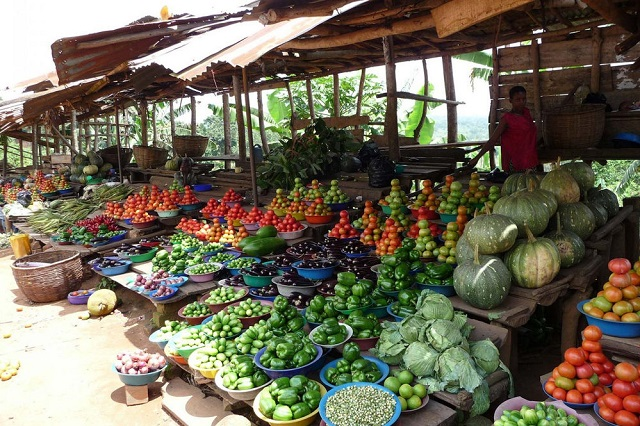
Food and fresh fruits market.

Uganda’s inflationary pressures eased further in October, thus bringing relief to consumers and signaling a more stable environment for businesses.

According to the Uganda Bureau of Statistics (UBOS), annual headline inflation, measured by the Consumer Price Index, declined to 3.4%, down from 4.0% in September 2025. Core inflation, which excludes volatile food and energy prices, also settled at 3.4%, reflecting broad-based price stability across the economy.

The slowdown was largely attributed to reduced food prices. Inflation for food crops and related items dropped from 7.4% to 6.1%, with notable declines in the cost of key staples such as tomatoes, whose prices fell from 30.4% to 18.8%, and pineapples, which dropped from 44.6% to 23.2%.

Core goods also posted lower price growth, with annual inflation easing to 2.6%. Sugar prices slowed to 8.9% from 15.0% a month earlier, while beef registered a modest increase of 11.6%, down from previous highs. The combination of stable food and consumer goods prices suggests a more favorable environment for households and retailers.

Transport costs provided additional relief. Annual transport inflation fell sharply to 1.0%, from 3.3% in September, driven by lower fuel prices particularly petrol, which recorded a negative 2.0% change. The services sector also saw moderation, with overall inflation dropping to 4.5% from 5.1%, supported by cheaper accommodation services now at 3.2% from 4.2%.

However, not all sectors shared in the decline. Education services saw inflation rise to 7.6% from 6.3%, tightening household budgets and raising operational costs for institutions. Kampala’s high-income earners experienced the steepest price growth nationwide, with inflation at 4.9%, largely due to education-related expenses.

Aliziki K. Lubega, speaking on behalf of the UBOS Executive Director, noted that “while the overall decline in inflation is encouraging, structural pressures in sectors such as education and clothing require close monitoring. The high inflation in education services, especially among Kampala’s high-income group, shows that urban price pressures remain concentrated in specific areas.”

The latest figures point to an improved outlook for Uganda’s economy, with easing food and transport costs boosting purchasing power and supporting business stability. However, there is caution that sustaining these gains will depend on keeping commodity prices stable and addressing persistent inflation in urban service sectors.

Stories Continues after ad
Museveni, Ruto congratulate Tanzania’s Samia Suluhu on re-election as president

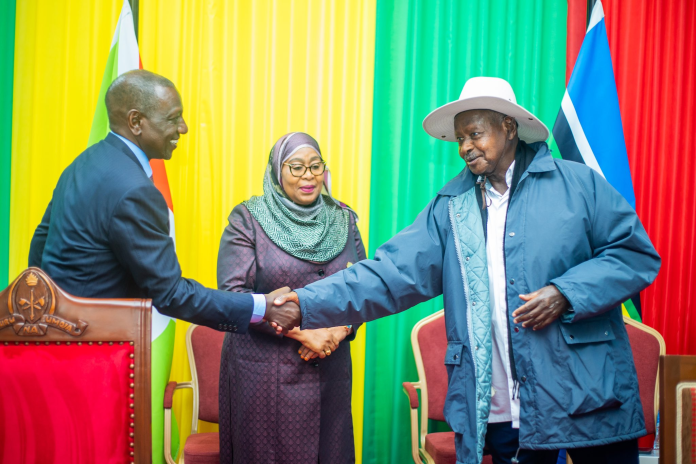
Presidents Ruto, Suluhu, and Museveni at the past event.

President Yoweri Museveni of Uganda and his counterpart, Kenyan William Ruto, have both extended warm congratulations to Tanzania’s President Samia Suluhu Hassan following her decisive re-election victory and reaffirmed their commitment to regional unity and cooperation.

President Museveni, in his congratulatory message issued on Sunday, lauded President Samia and her party, Chama Cha Mapinduzi (CCM), for their triumph in the October 29 general election.

“I congratulate Her Excellency Samia Suluhu Hassan, President of the United Republic of Tanzania and the Chama Cha Mapinduzi (CCM) Party on her re-election as President of Tanzania,” Museveni said.

He added, “This victory reflects the confidence that the people of Tanzania have in her leadership and vision.”

Museveni noted that Tanzania’s continued stability under President Samia’s leadership would contribute to East Africa’s economic and social progress.

“Uganda and Tanzania share historic bonds of friendship and cooperation. I look forward to working with President Samia to further strengthen our partnership in trade, infrastructure, and regional integration for the peace and prosperity of our peoples,” Museveni added.

According to the Tanzania Electoral Commission, President Samia Suluhu Hassan won 97.66 percent of the total vote, securing about 31.9 million ballots. Her closest challenger, Tundu Lissu of the Chadema Party, received 1.72 percent while Zitto Kabwe of ACT-Wazalendo polled 0.31 percent. The remaining candidates collectively accounted for less than 1%.

In a separate statement issued on November 3, 2025, Kenyan President William Ruto also congratulated his Tanzanian counterpart on her re-election and commended the people of Tanzania for upholding democratic processes.

“On behalf of the Government and the people of the Republic of Kenya, and on my own behalf, I extend sincere congratulations to Her Excellency Samia Suluhu Hassan on her re-election in the General Election held on 29 October 2025,” President Ruto said.

He underscored the deep historical ties and shared aspirations between the two nations, emphasizing the importance of peace and collaboration within the East African Community (EAC).

“Kenya and Tanzania share deep historical ties and common aspirations for the prosperity and stability of our peoples, anchored in our shared history and our joint membership in the East African Community,” Ruto stated.

President Ruto further appealed for calm and inclusivity in Tanzania’s post-election period.

“I call upon the patriotic people of Tanzania to uphold peace and the rule of law, and I encourage all political actors and stakeholders to embrace dialogue and tolerance as they seek to resolve any issues at hand in order to safeguard democracy and stability,” he said.

He reaffirmed Kenya’s readiness to work closely with Tanzania under President Samia’s renewed mandate, noting,

He noted, “Kenya stands ready to continue engaging constructively in the pursuit of our shared vision for a peaceful, prosperous, and integrated East Africa.”

Stories Continues after ad

Uganda wins Shs116b from Green Climate Fund for Africa’s first results

Mabira, one of the forests in Uganda.

The Green Climate Fund (GCF) has approved a $31 million  (Shs116 billion) grant-based payment for a landmark climate project in Uganda and recognized the country’s tangible achievements in curbing deforestation and reducing greenhouse gas emissions.

This is the first results-based payment project approved by the GCF Board for Uganda, and for Africa, and also for a Least Developed Country (LDC) marking a milestone in climate action for the continent.

The Food and Agriculture Organization of the United Nations (FAO), as Accredited Entity acting on behalf of the Government of Uganda, presented the project “Uganda REDD+ Results-Based Payment for Emission Reductions (2016–2017)” at the forty-third meeting of the GCF Board held from 27 to 30 October in Songdo, Republic of Korea.

The payout recognizes that Uganda’s targeted efforts at sustainable forest management slashed net emissions by the equivalent of more than 8 million tonnes of CO₂ between 2016 and 2017. That’s roughly the same as growing 133 million tree seedlings for 10 years.

“The GCF’s funding approval shows how results-based finance can reward effective climate action and deliver benefits for people and nature, and is a recognition of Uganda’s efforts and achievements,” said FAO Director-General QU Dongyu.

QU Dongyu added, “It also demonstrates how early investments in readiness and capacity building can yield transformative results for forests, food security, and communities, and is an important milestone for Africa.”

Uganda’s forests cover about 2.36 million hectares,  providing critical ecosystem services, regulating the climate, and supporting livelihoods. At the same time, 90 percent of forest loss in the country is driven by agricultural conversion for crops such as cassava and cattle.

REDD+, standing for reducing emissions from deforestation and forest degradation and the conservation and enhancement of forest carbon stocks, is a voluntary climate mitigation framework developed by the UNFCCC. Deforestation and forest degradation account for around 11 percent of global emissions.

“The Revenue from the REDD+ Results is part of Uganda’s ambitious mobilization of Climate Finance, and it clearly shows how patience in this space of strategic importance pays off,” said Uganda Permanent Secretary, Ministry of Water and Environment Alfred Okot Okidi, welcoming the GCF decision.

Projects under the results-based payment scheme, such as the one co-piloted by the Government of Uganda and FAO, are a proven cost-effective tool to achieve mitigation results. FAO has supported four other countries to access such GCF funding – in Argentina, Chile, Colombia, and Papua New Guinea – worth $237 million

FAO will work with the Government of Uganda to channel the $31 million GCF disbursement into achieving further goals that can relieve pressure on ecosystems and secure further REDD+ benefits and promote local food security. The holistic approach also helps with catalyzing more income opportunities, strengthening governance, bolstering land tenure and contributing to better rural livelihoods.

For example, community-based pole and timber plantations will reduce the distances rural women must walk to collect firewood, while collective forest management and land rights agreements will help reduce conflicts and foster a sense of ownership. A robust Benefit Sharing System will also ensure equitable access to forest resources, particularly for Forest Dependent Indigenous Peoples and other vulnerable and marginalized groups such as women.

FAO has been involved in the Uganda project from the outset and helped the country implement a comprehensive REDD+ readiness phase, laying the foundation for a socially and environmentally viable national strategy, and progressed with concrete policies and actions to reduce deforestation towards the results achieved.

The new project is aligned with Uganda’s National REDD+ Strategy and Action Plan, supports the country’s Nationally Determined Contributions (NDCs) under the Paris Agreement, and consolidates Uganda’s efforts to create a nationally coordinated, scalable model for climate resilience, biodiversity conservation, and sustainable development.

The total value of the FAO-GCF portfolio currently amounts to $1.8 billion, with 114 readiness grants – including 38 in Africa – and 29 investment projects in place worldwide serving more than 60 million people.

Stories Continues after ad