Stanbic Bank
Stanbic Bank
18.1 C
Kampala
Stanbic Bank
Stanbic Bank
Home Blog Page 69

Masunga doctor herbalists invent remedy to help alcohol addicts quit drinking

Have you ever stopped to think about life’s challenges? The world today has more than 7.7 billion people, yet despite our differences, everyone falls into one of three groups:

  1. Those living comfortably – with everything they need.
  2. Those working hard – striving to improve their lives through education, employment, or business.
  3. Those struggling – battling challenges and, in some cases, losing hope.

At some point in life, everyone needs help whether spiritual guidance, financial support, marital stability, healing from illness, or business protection. And it’s important to remember: seeking help is not a sign of weakness. As the saying goes, “Even the rich cry.” The wealthy may seek peace in their relationships or stability in their businesses, while the less privileged may need financial relief or restoration of hope.

Ancient Healing for Modern Problems

For over 15 yearsMasunga Doctors have been providing natural solutions to some of life’s toughest challenges. Using traditional herbal remedies, they have helped people from all walks of life regardless of religion, tribe, or financial status reclaim their happiness and peace.

One of their most notable breakthroughs is a special herbal remedy designed to help alcohol addicts quit drinking. This natural solution works by reducing cravings and breaking dependency, allowing individuals to overcome destructive habits without painful withdrawal struggles. Families who once lost hope have witnessed their loved ones rebuild their lives, careers, and relationships.

More Than Just Addiction Healing

Masunga Doctors’ remedies go far beyond addiction recovery. They also provide:

  • ✅ Relief from headaches, stomachaches, and chronic illnesses like asthma and cancer
  • ✅ Reuniting divorced or separated lovers
  • ✅ Exposing and tracking unfaithful partners
  • ✅ Protection and growth for family businesses
  • ✅ Assistance in winning court cases
  • ✅ Attracting good luck, including lottery wins
  • ✅ Boosting chances of job promotions

Are You Facing Any of These Challenges?

  • Have you or a loved one been struggling with alcohol or drug addiction?
  • Is your marriage on the rocks due to infidelity?
  • Is your business failing despite your hard work?
  • Have you lost property to thieves or conmen?

If yes, then it’s time to seek help.

📞 Call/WhatsApp: +256 769 678 458
🌍 Website: www.masungadoctors.com
💰 Consultation Fee: UGX 42,000

✨ Masunga Doctors – using herbal wisdom to heal modern problems, restore hope, and transform lives.

Stories Continues after ad

RIP: Kyamu Nsereko Kiwanuka, as your bright future is cut short

RIP Kyam Nsereko Kiwanuka.

The family of city businessman Mohan and his wife Maria Kiwanuka, the former Minister of Finance, Planning and Economic Development, and now Presidential Advisor on Economy and Finance, is mourning the sad passing on of their son, Kyamukungubya Nsereko Kiwanuka, popularly known as Kyamu.

He passed away in the United States, where he studied and was living.

According to family sources, Kyam’s post-mortem indicates he had a heart attack.
“He was living alone in an apartment in Washington, DC, USA. Monday was a public holiday in the US, and the alarm was raised when he didn’t go to work on Tuesday, as he was normally in very early. He was found on Wednesday morning when a family friend called the police to break in and found him non-responsive. The TV was still on in the background on his favourite sports channel,” a source told Eagle Online at the family home on Plot 15, Prince Charles Drive, Kololo.


Kyam had recently completed his Master’s degree MBA and had just been notified that he had passed his probation period in his new job in Finance, which he was very excited about.


“We know our Kyam is ok and his Jaaja Kiwana is looking after him,” said one of the family members.

Kyamu’s mother’s side is yet to come to terms with the sad news, not hardly a month after the passing of Ms Rhoda Kalema, who was an aunt to Kyamu’s mother, Maria Kiwanuka, and a family matriarch. This comes after the passing of his maternal grandmother mid this year.

Stories Continues after ad

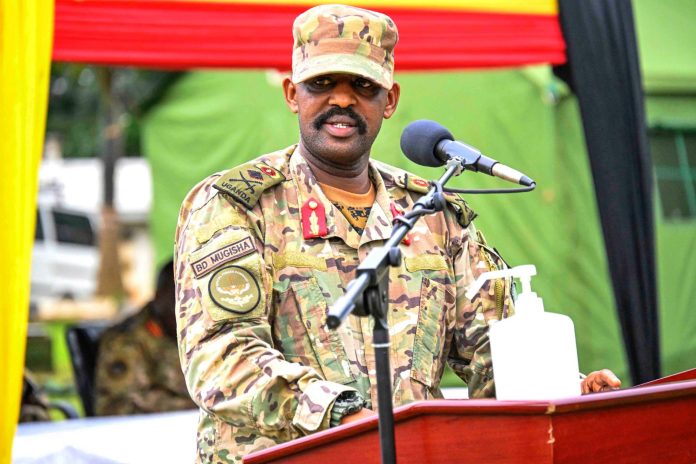
Court orders SFC commander Gen David Mugisha to produce detained man

The High Court in Kampala has directed the Commander of the Special Forces Command (SFC), Maj. Gen. David Mugisha and the Attorney General to produce before the court a man alleged to be in military detention.

Justice Isaac Bonny Teko issued the order on Friday, September 5, 2025 following an ex parte application filed by Mr. Rwangomani Amos Turinawe, through his lawyer, Mr. Peter Mukidi Walubiri.

In his ruling, Justice Teko stated, “It is hereby ordered that a writ of habeas corpus ad subjiciendum do issue directly to Major General David Mugisha (The Commander of Special Forces Command) and The Attorney General to have the body of Rwangomani Amos Turinawe immediately before Court at Kampala on September 10, 2025 at 11:00 am to undergo and receive all and singular such matters and things as this Court shall then and there consider concerning him in this behalf.”

Habeas corpus order: The notice accompanying the writ further warned the respondents against defying the court directive.

“Now, take notice that you are required to have the body of Rwangomani Amos Turinawe before the court on the 10th day of September, 2025, at 11:00 in the forenoon, and to make a return to that writ. Or in default thereof, the court will then, or so soon after as Counsel can be heard, be moved for an attachment against you for your contempt in not obeying the writ,” the notice reads in part

The writ of habeas corpus is a constitutional safeguard compelling authorities to present before court any person alleged to be unlawfully detained, allowing the judiciary to examine the legality of their confinement.

Rwangomani’s application signals a high-stakes legal battle over alleged unlawful detention by security forces, with the court expected to hear the matter next week.

Stories Continues after ad

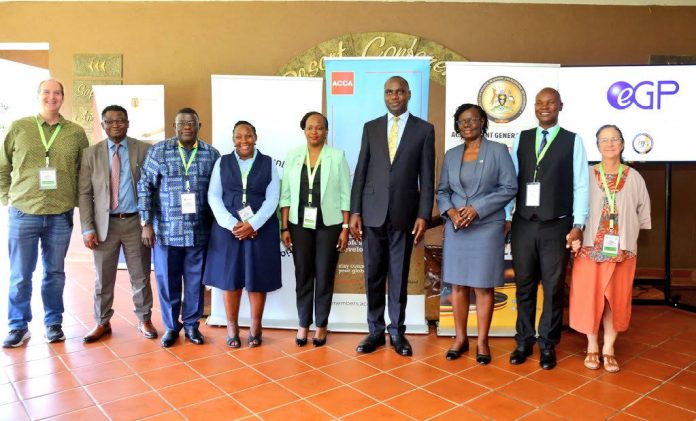
Minister Musasizi urges finance professionals to drive sustainability at AAFA conference held at Speke Resort Munyonyo

Minister of State for General Duties, Henry Musasizi yesterday opened the 2025 annual conference of the African Accounting and Finance Association (AAFA) at Speke Resort Munyonyo, tasking finance professionals to take the lead in balancing Africa’s growth with sustainability.

Held under the theme “Advancing Sustainability Outcomes in Africa: The Strategic Role of Accounting and Finance Professionals,” the conference brought together experts from across the continent to deliberate on how finance and accounting can accelerate sustainable development.

In his keynote address, Musasizi urged professionals to confront three urgent realities—climate change, rising public debt, and inequality—warning that Africa’s future depends on achieving a delicate balance between development and sustainability.

“These realities call for the balancing of growth with sustainability, and Accounting and Finance Professionals are at the centre of this balance,” Musasizi said.

He outlined five critical areas where their contribution is most needed: credible financial reporting, championing sustainability reporting frameworks, structuring green and climate finance, driving public financial management reforms, accelerating digitisation, and strengthening governance, transparency and accountability.

“Strong governance, transparency and accountability are not just principles—they are the lifeblood of sustainable economies,” the Minister emphasised.

The AAFA conference will continue through the week with panel discussions, research presentations, and policy dialogues aimed at reinforcing the role of finance professionals in driving Africa’s sustainable development agenda.

Established in December 2010, the African Accounting and Finance Association (AAFA) provides a platform for academics and practitioners to debate the role of accounting, finance, auditing, corporate governance, and related fields in Africa. Its work contributes directly to advancing SDG 9.5 on enhancing scientific research and fostering innovation in developing countries.

AAFA has developed strong academic and collaboration links with organisations and associations across the globe, and since 2017 has published the African Accounting and Finance Journal to promote African-based research.

Stories Continues after ad

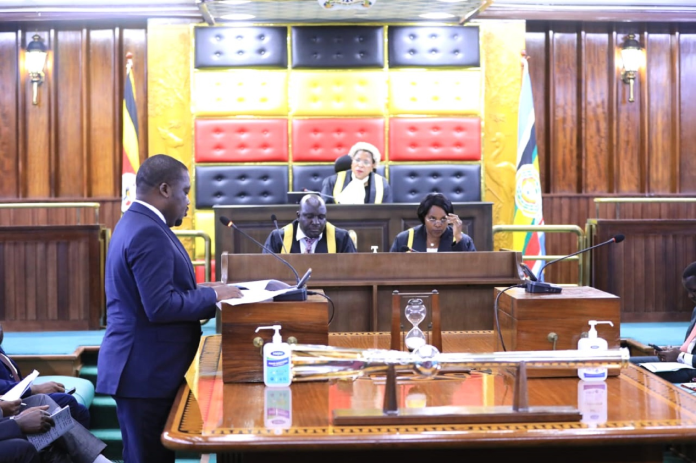
Parliament passes valuation bill to reform Uganda’s property sector

Parliament on Thursday, 4th passed the Valuation Bill, 2024, following the adoption of the Committee on Physical Infrastructure’s report, which introduced sweeping reforms aimed at closing loopholes and professionalizing Uganda’s valuation sector.

According to the committee, the country’s valuation system which is critical for land compensation, loans, real estate, and public projects has long suffered from unreliable and unrealistic assessments.

Tony Awany, Deputy Chairperson of the Committee on Physical Infrastructure, presented the report during the plenary sitting on Thursday, 04 September 2025.

Awany said the flaws in the system had resulted in “delayed implementation of public investments and infrastructure projects, financial losses, contestations of government valuations, increased litigation against government, hefty court awards, as well as imperfect real estate markets and non-performing loans.”

The new law establishes the Institute of Certified Valuers of Uganda, sets professional standards, and strengthens the Office of the Chief Government Valuer (CGV). Key clauses were also amended to prevent abuse.

Valuation in Uganda, Awany said, had long suffered from unprofessional practices that required urgent reform.

“The valuation function has for years suffered from lack of standards, unclear professionalisation, and unreliable practices. This Bill, with the committee’s recommendations, sets clear definitions, strengthens institutions, and streamlines membership and practice to protect both government and the public,” he said.

One major reform concerns the powers of the Chief Government Valuer. The original Bill required statutory valuations whenever a court ordered one, which the committee warned could involve the CGV in every property-related court case.

“Only court orders specifically made to the Chief Government Valuer to carry out valuation should fall under statutory valuation,” the report stated.

Membership of the institute has also been tightened. While the draft Bill allowed the CGV and staff to automatically become members, the committee recommended that all valuers undergo training and examinations, except those already belonging to recognised professional bodies.

Recognition of foreign qualifications was confirmed to remain under the National Council for Higher Education, not the Institute.

Governance of the new Institute was refined. The committee recommended that the four practising valuers on the governing council must have experience, be elected at a general meeting, and that ambiguous dismissal grounds, such as “moral turpitude” or “any other reasonable ground,” be removed.

“The phrase ‘moral turpitude’ is incapable of exact definition; therefore, the proposal is subject to abuse,” the report noted.

Licensing provisions were harmonised. Parliament resolved contradictions between “certificate of licence” and “certificate of practice” for sole practitioners, gave the council discretion to grant or deny licences, and exempted the CGV’s office from requirements designed for private valuers.

New clauses were added to make the Chief Government Valuer responsible for all government valuers and officers undertaking statutory valuations across ministries, departments, and agencies. Another clause ensures that individuals aggrieved by a valuation decision may appeal.

The Bill initially proposed that anyone practicing valuation without a valid certificate would face a fine of Shs100 million or imprisonment of up to two years. The Minister for Local Government, Hon. Raphael Magyezi, argued for a lower fine, suggesting Shs10 million as more realistic.

“It is okay to provide for a penalty, but 5,000 currency points (Shs100 million) is too much. Is it possible to scale it down and be a little more realistic? I am looking at Shs10 million,” he stated.

Deputy Attorney General, Jackson Kafuuzi, noted the difficulty in fixing a penalty, suggesting 1,000 currency points (Shs20 million) as sufficient, and proposed leaving discretion to the courts.

“The effect of this problem might be so huge, in billions and yet the fine might be only Shs10 million or Shs5 million,” he said.

Speaker Anita Among guided that a maximum of 5,000 currency points be approved, in line with the committee’s report.

Following the adoption of the report after debate, the Bill was passed and now awaits the President’s assent.

Stories Continues after ad

Equity Bank Uganda concludes ‘Tupange Business Ne Equity’ campaign in Hoima city

Equity Bank Uganda has concluded its nationwide “Tupange Business Ne Equity” campaign with a final engagement in Hoima city. This campaign was created to support small and medium enterprises (SMEs) by giving them access to financial guidance, networking opportunities and business knowledge. It began in Kampala and later moved to Mbale, Arua and Fort Portal before ending in Hoima.

At each stop, the campaign brought together entrepreneurs, traders and community leaders to share experiences and find solutions to the challenges businesses face.

The Hoima event brought together a wide range of business owners, local leaders and community stakeholders; all focused on strengthening the local business ecosystem and promoting economic growth. Participants had the chance to discuss practical ideas on how to improve access to finance, manage competition and run businesses more efficiently.

Speaking at the event; Olivia Mugaba- Head of SMEs at Equity Bank Uganda, explained the important role SMEs play in the economy. She said that SMEs contribute almost half of the country’s income and create seven (7) out of every ten (10) jobs. She reminded business owners that they are the people who keep the world moving. At the same time, she warned that 50% of SMEs fail within their first three years. According to her, this is not because the businesses lack potential, but because they face barriers such as; lack of financing, limited skills and challenges in the value chain.

According to Mugaba, financing SMEs goes far beyond providing loans. It involves strengthening every link of the value chain; from farmers and suppliers to manufacturers and retailers- so that no weak point disrupts business growth.

She also shared an inspiring success story of a client who started out as a micro-SME with a UGX 20 million loan and has since expanded into a multi-billion-shilling enterprise.

“Our greatest pride comes from seeing SMEs grow from micro ventures into multi-corporations,”she said.

Clare Tumwesigye, Head of Marketing and Communications at Equity Bank, speaking on behalf of the Managing Director, Mr. Gift Shoko, reaffirmed that Equity Bank remains the people’s bank; serving individuals, micro-businesses, SMEs and large corporations. She emphasized, “No financing is too big for us. Whether you are just starting, scaling up or fully established, we have solutions tailored to walk with you at every stage of your journey.”

Reflecting on the lessons from COVID-19, Clare highlighted that Equity Bank launched the $6 billion Africa Recovery and Resilience Plan to help businesses bounce back stronger. “This initiative was designed to empower critical sectors such as agriculture, tourism, manufacturing, and MSMEs. When SMEs recover, Africa recovers.”

Tumwesigye further encouraged SMEs to adopt an ecosystem mindset: “Every supplier, transporter, and partner is part of your value chain. If one link breaks; the whole chain is affected. That’s why Equity supports the entire ecosystem; from the smallest supplier to the largest anchor to ensure no business is left behind.”

The campaign also celebrated local SME leaders whose journeys show the impact of the bank’s support by awarding Mr. John Magara, owner of Hoima Buffulo Hotel and Business Hub Limited- SME Business Influencer Award, Mr. Amator Nyendwoha, Director of St. Peter’s High School- SME Customer Loyalty Award, and Aloysius Ntale of Ntale and Sons Kiboga depot (Beverage distributor)- Best Eco System Customer Award.

Mr. Amator Nyendwoha, Director of St. Peter’s High School, shared how his journey with Equity began in 2013 when other banks turned him away. A committed manager at Equity guided him through opening accounts, managing records, and later accessing his first loan of Shs15 million. With that start, he was able to expand his school and later diversify into farming. He proudly shared how Equity Bank gave him an unsecured Shs200 million loan in just two weeks, which helped him grow further. “Equity Bank treated me like a priority, even when other banks ignored me,” he notes, highlighting the bank’s commitment to giving SMEs real opportunities. Equity Bank goes beyond transactions- it guides, advises and funds growth. “This is the bank I can trust,” he concluded.

Mr. John Magara, owner of Hoima Buffulo Hotel and Business Hub Limited, reflected on his early financial struggles; taking on loans and even losing his family home which taught him invaluable lessons about money management. Through the partnership with Equity Bank; he managed to rebuild, transitioning from rice milling to alcohol distillation and eventually expanding into tourism.

He noted that SMEs often go through cycles of setbacks and recovery. Recalling the challenges of the COVID-19 pandemic, he shared that many businesses thought survival was impossible, but with the right banking partner like Equity Bank; his operations stayed afloat- safeguarding over 170 jobs.

Magara further emphasized that support systems such as Equity Bank’s value chain financing are essential for SME growth, adding that “when one link breaks, the entire chain is affected- making it crucial to have partners who walk the journey with you.”

The Hoima engagement marked the end of the “Tupange Business Ne Equity” journey across Uganda. Through this campaign, Equity Bank has supported SMEs not just with financing, but with knowledge, mentorship, and collaboration. By focusing on innovation, resilience, and value addition, the bank continues to give entrepreneurs the tools to thrive.

Stories Continues after ad

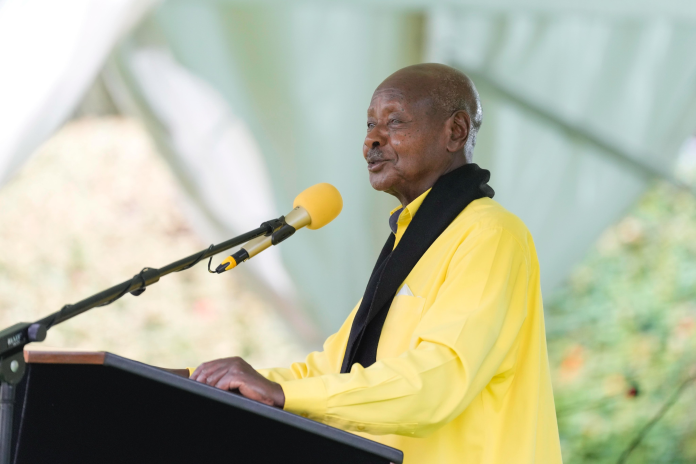
President Museveni troubled by tribal politics, backs NRM’s Karangwa

National Resistance Movement (NRM) party national chairman, Gen. Yoweri Museveni.

President Yoweri Kaguta Museveni has defended senior NRM cadre Moses Karangwa against accusations of being of Rwandan origin, saying such sectarian sentiments have no place in Uganda’s politics and warning that tribalism was the root cause of Uganda’s darkest years.

In a statement issued on Friday, the President dismissed claims raised during the recent NRM Central Executive Committee (CEC) elections in Buganda that questioned Karangwa’s background.

“In the contest between Kasolo, Kiwanda, Karangwa, etc., there was talk of Karangwa having come from Rwanda originally. This is not correct. As a matter of fact, Karangwa is one of the most active NRM cadres and Buganda is a multi-cultural unit,” Museveni said.

The President stressed that any concerns about Karangwa should be based on his actions, not ethnicity.

“The issue I have been intending to sort out with Karangwa is the signed letter I got from the Kayunga area accusing him of being involved in land-grabbing; but not ethnicity,” he clarified.

Museveni cautioned that allowing tribal sentiments to influence politics risked undermining the unity the NRM had built since the 1980s.

“Principled unity, around the four principles, without discrimination, is a time-tested strategy that is correct,” he said.

Turning to Uganda’s history, Museveni warned that sectarianism was the single biggest contributor to political instability in the post-independence period.

“By 1962 – Independence time, Ugandans had been politically fragmented into three sectarian groups. These were: DP for the Catholics; UPC for the Protestants and some Muslims; and Kabaka Yekka for Buganda Protestants and some Muslims,” he explained.

According to Museveni, these divisions forced opportunistic alliances that collapsed within two years, leading to the 1966 Obote–Muteesa clashes and the 1971 Amin coup. Noting, “By 1979 when we defeated Idi Amin, 500,000 Ugandans had been killed extrajudicially and the economy had collapsed so much that people had no soap, no salt, no clothes, no paraffin.”

Museveni said that by 1980, ordinary Ugandans were fed up with sectarian leaders. He narrated how after the disputed elections, people urged him to act.

“I stopped to put fuel in my Isuzu at Kyazaanga. Immediately, the crowd gathered around me and started saying: ‘bbakko kyokola’ (you must do something). I told them: ‘You did not vote for UPM. Why did you vote for the incapable DP?’ Their answer: ‘Vva Kubyobuluulu. Bbakko kyokola’ (forget about the elections. Do something),” he said.

This, he added, reflected the popular consensus for change that justified the NRA’s decision to launch the armed struggle in 1981 and noted that when NRA launched the Kabamba attack on the 6th of February, 1981, 80% of Ugandans were with us. After Kabamba, it would have been irresponsible for anybody to talk of DP, UPC, Kabaka Yekka, UPM, Nabudere group, etc. They were all NRM with equal rights, risks and responsibilities.

He noted that the NRM’s strength has always come from building the broadest possible consensus.

“We have been able to put together this broadest possible consensus because of the correct ideology of the four ideological principles of patriotism, Pan-Africanism, socio-economic transformation and democracy,” he said.

Museveni also highlighted how the NRA deliberately absorbed former adversaries to create a united national army. He listed battalions created from UNLA, UFM, FUNA, and Fedemo fighters, among others.

“That is how we built a very strong army, did not frustrate genuine Ugandans that were interested in soldiership, and took advantage of their different skills regardless of the political groups that had mobilized them,” Museveni said.

He added that unlike the pre-1986 armies that killed each other along ethnic lines, the UPDF had remained united.

“No single soldier has died on account of intra-UPDF conflicts on sectarian grounds—unlike what used to happen between 1962 and 1986,” the President said.

Museveni credited this inclusivity for producing some of Uganda’s most respected commanders, noting that many who once fought against the NRA were now among the UPDF’s senior officers.

Museveni further reminded Ugandans that sectarian politics had only ever brought bloodshed and economic collapse. He urged leaders and citizens alike to focus on ability and commitment rather than ethnicity.

“Even if the population in Buganda was mainly Baganda, you should look for capacity and dedication, not ethnicity,” he stressed.

Museveni said the NRM’s survival and Uganda’s stability depended on rejecting tribalism. “Principled unity, without discrimination, is a time-tested strategy that is correct,” he declared.

Stories Continues after ad

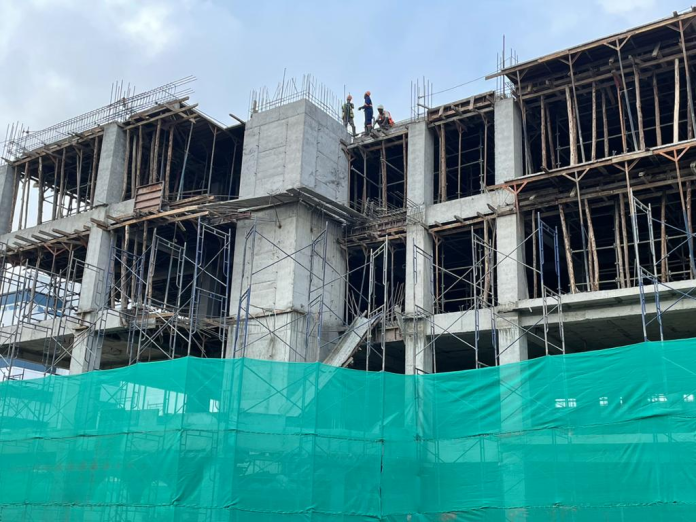
Parliament sets strict penalties in new Building Control Bill

Parliament has amended the Building Control [Amendment] Bill, 2025, Cap.136, making provisions for harsh penalties for illegal construction and reforms to streamline building approval processes.

The Bill was passed during the plenary sitting of Tuesday chaired by Speaker Anita Among.

It seeks to redefine the composition and powers of the National Building Review Board [NBRB], reform the approval of building and occupation permits, and regulate the use of unconventional construction technologies.

One of the key penalties is increment of fines for building without valid permits. The offenders will be liable to imprisonment of up to five years and payment of two currency points, an equivalent of Shs 40,000 for each square metre of the built-up area.

“This will go a long way in addressing the rise in erection of illegal structures and the collapse of buildings in the country. We note the increase in the number of illegal structures being erected by persons who have not obtained building permits and the number of structures that collapse and claim multiple lives and property,” said Tony Awany, Chairperson, Committee of the Physical Infrastructure while presenting the committee report on the Bill.

The same modification was recommended for those who continue building after their permits have expired.

Attempts by the Minister for Local Government, Raphael Magyezi, to retain the penalty at one currency point [Shs 20,000] per square metre and a sentence of two years of imprisonment was met with resistance.

Lawmakers said the stricter penalties are necessary to address the rising cases of illegal structures and building collapses that have claimed lives across the country.

In cases where the local Building Committees delay or fail to issue building or occupation permits, the new Bill grants applicants the right to appeal to the NBRB if no decision is made within the stipulated timelines.

The Bill supports the government proposal to reduce the National Building Review Board from 16 to 09 members, noting that a smaller team would enhance efficiency, accountability and reduce costs.

The legislators however, rejected the proposal by the government to include two members of the public as nominated by the minister, warning that this could politicise the technical body.

They also rejected the proposal to include a lawyer from professional associations since the Attorney General’s Chambers already provides legal representation.

Instead, the legislators okayed representatives from the Ministries of Transport and Works; Labour, Gender and Social Development; Lands, Housing and Urban Development; Local Government; and the Attorney General’s Chambers, alongside professionals in engineering, architecture, physical planning, and surveying.

The Speaker vouched for retention of a representative of persons with disabilities on the board, saying currently most buildings do not provide for their needs. “We are saying the Bill should be specific with disabilities, to ensure there is a representative to take care of their interests,” Among said.

The Youth Representative for Western Uganda, Edson Rugumayo, argued that the representation on the NBRB should be able to include other interest groups such as lactating mothers, and matters of occupational safety and health.

If passed, the new law will significantly tighten Uganda’s building regulations, strengthen accountability in the construction industry, and help curb unsafe developments.

Stories Continues after ad

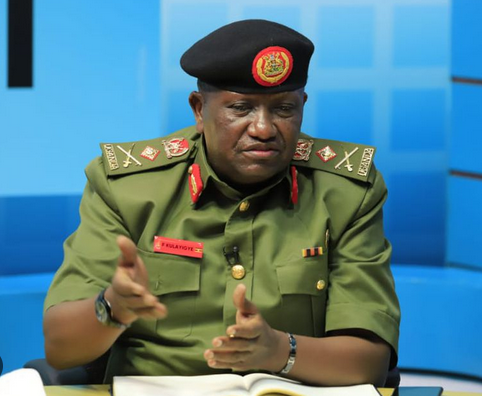
UPDF denies civilian killings in Eastern DRC during Operation Shujja

Maj. Gen. Felix Kulaigye, UPDF Spokesperson.

The Uganda Peoples’ Defence Forces (UPDF) has denied reports of civilian casualties during Operation Shujja in the Democratic Republic of Congo (DRC), saying allegations of killings in Komanda–Eringeti are false.

“There were no killings in the areas of Komanda–Eringeti as alleged,” UPDF Spokesperson Maj. General Felix Kulaigye said in a statement.  

He explained that the actual engagement occurred in Apakwang, approximately 40 kilometres north of Komanda in Mambasa territory where the UPDF lost two soldiers during an operation targeting Allied Democratic Forces (ADF) positions.

Kulaigye added that the area was previously a stronghold of ADF leader Musa Baluku which the UPDF and its Congolese counterparts successfully dislodged.

“The enemy, under sustained pressure from joint UPDF and FARDC operations, has resorted to reprisal attacks in isolated and remotely controlled locations. They also attack isolated villages to intimidate them and gain publicity,” he said.

According to the UPDF, joint operations with the Armed Forces of the Democratic Republic of Congo (FARDC) have continued to pressure ADF fighters. In a recent engagement in Chabi, two enemy groups of 10–15 fighters were attacked resulting in the deaths of three terrorists and the recovery of three firearms. Pursuit operations are ongoing against another splinter group of 15–20 fighters operating around Oicha.

“The UPDF, working jointly with the FARDC, remains committed to protecting civilians, dismantling ADF terrorist networks, and ensuring lasting peace and stability in the eastern DRC,” Kulaigye emphasized.

Stories Continues after ad

I was abused in front of my husband, who later asked me for a divorce

Namakula, a resident of Mukono District, endured a horrifying ordeal when three armed men broke into their home on a fateful Tuesday night. That evening, she and her husband, Ssewanyana, had dinner around 7:00 p.m. and retired early to prepare for the next day. However, their peaceful night was shattered by intruders.

The robbers stormed into their house in the dead of night, looking for valuables. After ransacking their bedroom and taking jewelry and cash, they were still not satisfied. What followed was beyond imaginable Namakula was assaulted in front of her husband. Though Ssewanyana struggled to fight back, he was outnumbered and could do nothing but watch helplessly.

After the ordeal, Namakula was rushed to the hospital, and they reported the attack to the police. However, no meaningful action was taken to bring the perpetrators to justice. In the weeks that followed, their marriage began to fall apart. Ssewanyana became distant, withdrawn, and emotionally unavailable. Eventually, he told Namakula that he could no longer continue being her husband.

Devastated and unwilling to let go of her marriage, Namakula searched for solutions. While browsing the internet, she came across Dr. Masunga’s website and decided to contact him at  +256 769 678458
She explained her situation, and the next morning, she visited Dr. Masunga’s shop in Jinja, where he performed a powerful ritual to restore love and rekindle their bond.

Today, Namakula and Ssewanyana are still together, and their marriage is stronger than ever all thanks to Dr. Masunga.

Get Help Today!

Dr. Masunga and his team are highly experienced in herbal remedies and spiritual guidance. They specialize in:
✅ Reuniting divorced or separated couples
✅ Winning court cases
✅ Enhancing family businesses
✅ Influencing promotions at work
✅ Managing chronic illnesses such as cancer, high blood pressure, ulcers, and asthma

Are you facing any of these challenges? Don’t lose hope help is just a call away! 📞 Call/WhatsApp: +256 769678458
🌍 Website:www.masungadoctors.com

Stories Continues after ad