Stanbic Bank
Stanbic Bank
17.6 C
Kampala
Stanbic Bank
Stanbic Bank
Home Blog Page 74

Anita Among crushes Kadaga in NRM CEC elections with 92% landslide win

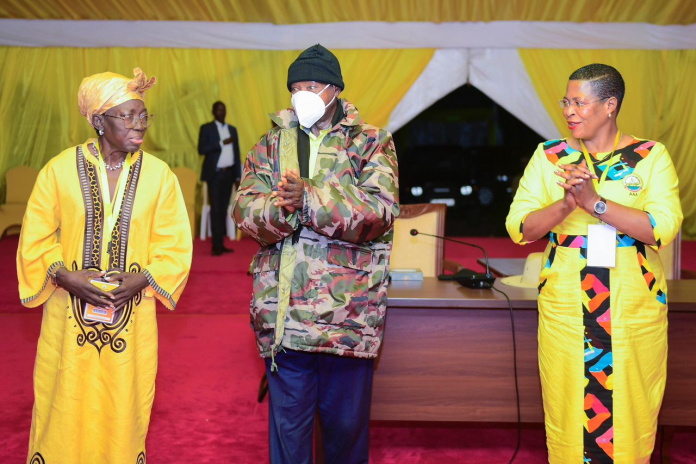
President Museveni (centre) with former Speaker Rebecca Kadaga, Speaker Among.

Speaker of Parliament Anita Annet Among has cemented her dominance in the National Resistance Movement (NRM) after securing a landslide victory in the party’s Central Executive Committee (CEC) elections for 2nd National Vice Chairperson (Female).

According to results released by NRM Electoral Commission chairperson Dr. Tanga Odoi, Among garnered 11,680 votes (92.8%), overwhelmingly defeating her closest rival, former Speaker of Parliament Rebecca Alitwala Kadaga, who managed 902 votes (7.2%).

Among’s sweeping win cut across all regions of the country, including overseas delegates. Notable tallies included: Diaspora: Among 71, Kadaga 36, Rwenzori: Among 835, Kadaga 13, Teso: Among 899, Kadaga 1, Greater Masaka: Among 581, Kadaga 25, Ankole: Among 1,524, Kadaga 65

While Kadaga managed victories in a few districts such as Bugweri, Namutumba, and Kamuli, the overall margin highlighted the steep erosion of her support within the ruling party.

This outcome marks a generational and strategic shift within the NRM leadership, positioning Among as a formidable power broker ahead of the 2026 general elections.

The resounding win shows that Among has not only consolidated her authority as Speaker of Parliament but also entrenched her influence within the party’s top decision-making organ, cementing her role in mobilizing for the NRM party. 

Stories Continues after ad

From debts and losses, to success plus freedom after cleansing my business money

Running a business in Uganda is not for the faint-hearted. Many hardworking men and women put in their energy, time, and savings only to see their shops collapse under mysterious circumstances. That was my life until I discovered the power of Masunga Doctors.

My Struggles in Business

My name is Evelyn, a hardware shop owner in Kampala, around the busy areas of Katwe. When I started, I was full of energy and dreams. I stocked my shop well, treated my customers with respect, and even borrowed loans to expand.

But instead of growing, my business sank deeper into losses.

  • Customers disappeared without reason.
  • Suppliers delayed my stock or delivered half of what I paid for.
  • My debts piled up, and I could no longer keep track.
  • Even when money came in, it vanished so fast that I could not explain where it went.

At some point, I felt cursed. Nothing made sense, and I was ready to close down for good.

Seeking Help from Masunga Doctors

One evening, a friend advised me to visit Masunga Doctors, well-known in Uganda, Kenya, and Tanzania for helping people struggling with finances, relationships, and health. At first, I was skeptical how could traditional cleansing save a sinking business? But with nothing left to lose, I made the call.

The consultation was simple and straight to the point. Masunga Doctors explained that sometimes, money itself can be “cursed” or carry negative energies especially when it comes from painful loans, jealous competitors, or broken family ties. Unless cleansed, such money brings endless debts and losses.

The Cleansing Ritual

Under their guidance, I went through a spiritual business money cleansing ritual.

  • Special herbs were prepared.
  • Ritual prayers were done in Luganda.
  • I was guided on how to set fresh intentions for my shop and protect it from jealousy and bad luck.

The process gave me peace I hadn’t felt in years.

Within days, I began noticing changes:

  • Old customers returned, saying they had missed my services.
  • My stock moved faster than before.
  • Debts I thought would never be paid suddenly cleared.
  • Even suppliers started treating me more favorably.

Today, my shop is thriving again. I am debt-free, respected, and finally enjoying the freedom I dreamed of when I first opened my business.

My Message to Fellow Ugandans

If you are struggling with endless debts, unexplained losses, or a business that just won’t grow despite your efforts know that you are not alone. Sometimes, the problem is not in your hard work, but in unseen forces holding you back.

Just like me, you too can turn your life around with the help of Masunga Doctors.

Masunga Doctors Contact Information

AFRICA OFFICES
📍 Locations: Uganda, Kenya, Tanzania
💰 Consultation Fee: UGX 42,000
📞 Phone: +256 769 678 458
📧 Email: info@masungadoctors.com
🌐 Website: www.masungadoctors.com

✨ From debts and losses to success and freedom Masunga Doctors gave me a second chance at life and business.

Stories Continues after ad

AFSA launches policy brief ahead of Africa Food Systems Forum 2025

The Kampala-based Alliance for Food Sovereignty in Africa (AFSA) has released a new policy brief calling on African leaders to urgently recognise and support Farmer Managed Seed Systems (FMSS) as a cornerstone of climate resilience, food sovereignty and sustainable food systems across the continent.

The brief will be officially launched at the Africa Food Systems Forum, hosted in Senegal from August 31-September 5, 2025, where high-level African ministers and policymakers are convening to shape the future of food and agriculture on the continent.

Today, over 80 to 95 percent of seeds planted by smallholder farmers in sub-Saharan Africa come from these farmer-led systems, which embody ancestral agroecological knowledge, preserve biodiversity, and ensure resilience in the face of climate shocks. Women and youth are the backbone of FMSS, women safeguard up to 90 percent of traditional seed knowledge, yet these systems remain marginalized by restrictive seed laws, corporate pressures, and policies favoring industrial seeds.

AFSA warns that neglecting FMSS risks further biodiversity loss, weakened climate adaptation, and deepened food insecurity. By contrast, recognizing and investing in FMSS offers a “Made-in-Africa” solution to today’s food crisis, one that reduces dependence on costly seed imports, creates green jobs for youth, empowers women, and secures nutritious food for millions.

The policy brief urges African governments to: Legally recognise FMSS in national seed laws, ensuring farmers’ rights to freely save, use, exchange, and sell seeds; invest in infrastructure and financing, including community seed banks, participatory breeding, and farmer training; integrate FMSS into education and research, supporting co-creation of knowledge between farmers, scientists, and institutions; and promote inclusion and equity, strengthening the role of women and youth as leaders and innovators in seed systems.

AFSA emphasises that FMSS are not relics of the past but living pillars of Africa’s food future. They represent a strategic imperative to secure food systems, protect Africa’s genetic heritage, and reduce external dependence.

As the brief concludes, “The seed does not refuse to grow—let us give it the political soil it deserves.”

On the other hand, AFSA has also released a new policy brief calling on African leaders to champion a continental shift from synthetic fertilisers to biofertilizers and biostimulants [B&B] as the foundation of Africa’s soil fertility and food sovereignty strategies.

The brief will also be officially launched at the Africa Food Systems Forum [formerly AGRA Forum], hosted in Senegal from August 31- September 5, 2025.

AFSA notes Africa’s dependence on imported synthetic fertilisers is a triple threat, undermining economic stability, degrading soils, and draining foreign exchange. Prices of fertilisers have spiked by up to 300 percent since 2021, while more than 75 percent of Africa’s soils are already degraded. By contrast, biofertilizers and biostimulants restore soil life, enhance resilience to drought, reduce chemical dependency, and create local jobs through youth- and women-led enterprises. They offer a regenerative, low-cost, and homegrown alternative to synthetic fertilisers.

The policy brief calls on African governments to: Announce national biofertiliser transition plans — replacing 50 percent of synthetic fertiliser use by 2030; redirect subsidies such as Senegal’s CFA 40 billion budget toward local B&B production and soil health packages; develop local infrastructure for composting, microbial inoculant production, quality testing, and community training; harmonise standards through AfCFTA and regional frameworks, enabling trade and mutual recognition of bio-inputs; and engage SMEs, women, and youth as leaders in production, distribution, and innovation

AFSA stresses that this transition is not only about replacing inputs but about leading a systemic shift towards agroecological soil health. With Senegal well-placed to lead as host of the Forum, biofertilisers and biostimulants represent a “Made-in-Africa solution” to the fertiliser crisis, capable of restoring soils, creating green jobs, and reducing the continent’s external dependence.

Stories Continues after ad

UPDF hosts simulation exercise to boost disaster response and risk management

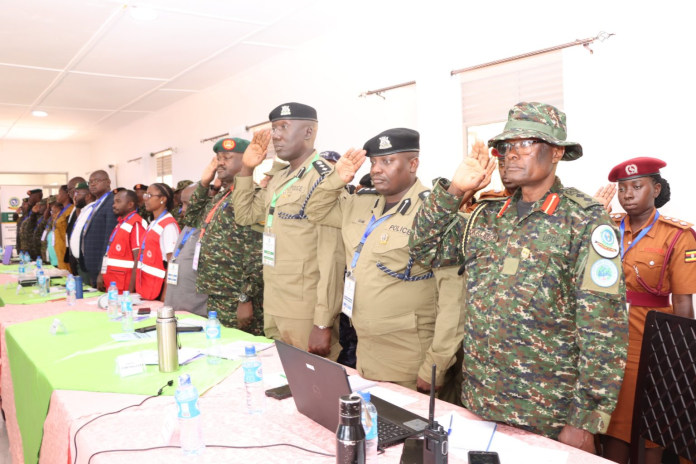
The Command Post Exercise (CPX) “OKOA MAISHA 2025” yesterday officially opened at the Uganda Rapid Deployment Capability (URDC) Headquarters in Jinja.

The exercise is aimed at assessing national preparedness and strengthening the capacity of stakeholders in identifying, managing, and mitigating crises.

Presiding over the opening, Maj Gen Don Nabasa, Joint Staff Policy and Strategy, welcomed participants drawn from government ministries, departments, agencies, non-governmental organisations, and security forces.

He commended the leadership for recognising the exercise as vital to strengthening national disaster response and risk management in disaster-prone areas.

“The primary goal of this exercise is to enhance preparedness, refine response strategies, and identify gaps in existing systems under time-constrained and high-pressure conditions,” Maj Gen Nabasa said.

He urged participants to remain committed to the overall objective of improving planning, preparation, and execution of disaster response operations, adding, “Let us work together to save lives and property.”

Brig Gen Ernest Nuwagaba, Commander URDC and Exercise Director, emphasised the importance of readiness as a continuous process.

“Preparedness isn’t just a moment; it’s a sustained state of readiness that carries us through every phase of crisis,” he said.

He explained that simulating disaster scenarios such as floods, landslides, or pandemics without deploying live field resources allows for both realistic and efficient training.

Brig Gen Nuwagaba further encouraged participants to engage fully, share expertise, and strengthen coordination.

“This exercise provides a critical platform to refine systems, foster trust, and reinforce collaboration, ensuring the nation’s readiness before, during, and after every crisis,” he noted.

Mr. Jacob Siminyu, Regional Immigration Coordinator and Head of the Civilian Component, stressed the importance of joint efforts across agencies. “We are here to make a difference and save lives,” he said.

CPX OKOA MAISHA 2025 is a simulation-based training activity aimed at testing and improving command and control structures, decision-making processes, and communication systems in disaster management.

The exercise theme, “Strengthening Multi-Sectoral Resilience and Local Action on Sustainable Disaster Response and Management through Integrated Leadership and Command”, highlights the importance of collaboration and sustainable approaches to disaster preparedness.

The exercise is expected to strengthen URDC’s ability to coordinate with the Uganda Peoples’ Defence Forces, the Office of the Prime Minister, ministries, local governments, and humanitarian organisations. It will focus on establishing timely response mechanisms, effective communication, coordination, and early detection measures.

The opening ceremony was attended by senior officials, including Brig Gen Flavia Byekwaso, Brig Gen Fred Rugadya Akiiki, Brig Gen Michael Ssesanga, Senior Commissioner of Prisons Frank Baine, representatives from the Office of the Prime Minister, Uganda Red Cross, Ministry of Works and Transport, Ministry of Defence and Veteran Affairs, legal advisors, and local leaders from Bulambuli District.

Stories Continues after ad

Museveni endorsed as NRM party’s presidential flagbearer

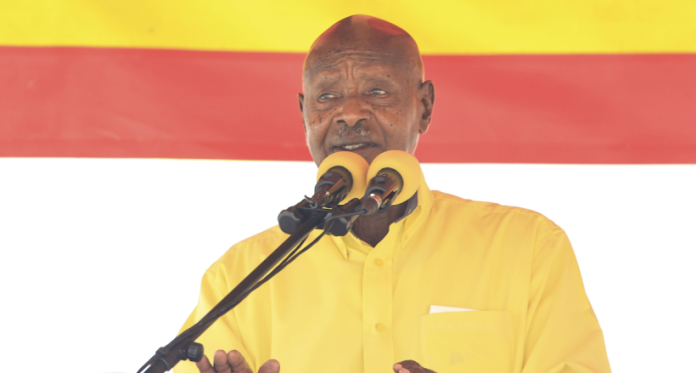
ENDORSED: President Museveni, who has been seconded by his NRM party for the 2026 general election as a flag bearer.

The National Resistance Movement (NRM) National Delegates Conference has endorsed President Yoweri Museveni as the party’s presidential flagbearer for the 2026–2031 term.

In his acceptance speech, during the opening of the National Delegates Conference at Kololo Independence Grounds, President Museveni thanked delegates for entrusting him once again with the chairmanship of the party and the mandate to represent NRM in the upcoming presidential contest.

“I thank you for putting trust in me to be your chairman of the NRM for the period 2026–2031, and for electing me as the party flagbearer for the presidential contest. I congratulate Hon. Hajji Moses Kigongo, a senior cadre of the NRM since 1980, for being elected unopposed,” Museveni said.

Uganda’s Economic Journey

Museveni traced Uganda’s economic history from the colonial period, when the economy was largely based on “the three Cs and three Ts” — cotton, coffee, copper, tobacco, tea, and tourism. By 1961, only 9% of households were engaged in income-generating activities, while the majority survived on subsistence farming.

He recalled that the economic collapse under Idi Amin’s regime led to shortages of basic commodities, but that the NRM government had since guided the country through five phases of economic recovery and growth:

Minimum Economic Recovery – restoring key cash crops like cotton, coffee, tea, and tourism while defeating the black market.

Expansion of the small enclave economy – increasing production of traditional cash crops.

Diversification – making crops such as maize, bananas, milk, beef, cassava, and fruits recognized as cash products.

Value Addition – promoting local industries in textiles, leather, furniture, and other sectors to maximize returns and create jobs.

Knowledge Economy – investing in innovations such as electric vehicles and technology-driven industries.

Museveni noted that Uganda’s economy has since grown from $3.9 billion in 1986 to $66 billion today, with a purchasing power parity (PPP) value of $188 billion. He emphasized that the next phase is a “qualitative leap forward” to transform the economy into a $500 billion high middle-income economy by adding value to raw materials and promoting modern industrialization.

Call for Modernization and Peace

Museveni underscored the importance of transitioning Uganda into a modern society where citizens rely on technology and innovation rather than manual labor.

He highlighted seven guiding principles, beginning with peace, which he said must be preserved at all costs. “NRM has been able to keep peace here for the last 40 years. This may be the first time in 600 years that this area has had peace continuously,” he noted.

He also stressed the distinction between development (ours), which involves public infrastructure such as roads, schools, and hospitals, and wealth (mine), which is created at the household level through commercial agriculture, manufacturing, services, and ICT.

The President encouraged youth leaders to embrace wealth creation, citing examples of young entrepreneurs who have successfully applied his four-acre model of farming to generate income through dairy, poultry, cassava, and value addition projects.

Museveni urged Ugandans to focus on building household wealth, promoting peace, and supporting the NRM’s vision of transforming Uganda into a modern, high-income society.

Stories Continues after ad

Baryomunsi Rallies Ugandans to Join Fight Against Drug Theft as NMS Awareness Campaign Intensifies

Minister of ICT and National Guidance, Dr. Chris Baryomunsi

Uganda — Uganda’s ICT and National Guidance Minister Chris Baryomunsi has called on citizens to play an active role in curbing theft of medicines from public health facilities, warning that pilferage undermines treatment and strains government budgets.
“The fight against corruption and theft of drugs requires government intervention but also we call upon the citizens to be alert,” Baryomunsi told residents of Kabale district.


He said health workers caught selling government-procured medicines face toughened penalties under existing laws.
Public health facilities across Uganda receive drugs from the National Medical Stores (NMS) every month or two, but some still experience artificial stockouts.


NMS reports that pilferage — where medicines are stolen or diverted to private outlets — remains a challenge despite improved supply systems.


Baryomunsi urged health centre management committees to supervise deliveries and keep proper records.
“When drugs are delivered, the chairperson should witness and ensure the amounts match the records,” he said.


His remarks come as NMS, supported by the Ministry of Health, is rolling out a mass sensitisation campaign to mobilise communities, health workers, and local leaders to protect medicines from theft and misuse.

The government has also introduced embossed packaging to mark public drugs with “Government of Uganda — Not for Sale,” deployed digital tracking systems, and intensified ethics training for health workers.
Baryomunsi encouraged citizens to be vigilant when buying medicines in private pharmacies.
“Whenever you see a government-embossed drug on sale, report immediately. That drug was meant to save a life in a public facility,” he said.


Officials say the combined approach of community monitoring, technology, and stricter supervision is key to reducing losses and ensuring patients get treatment on time.

Stories Continues after ad

Don’t just commit suicide after losing the love of your life;

See The Easiest Way To Make Her/Him Come Back Running To You.


A lady called Mercy had always been the epitome of love and sacrifice. Her heart was pure, and her intentions were always noble. She had given her all to her relationship with John, a man she loved more than anything in the world. Their love story was one that seemed straight out of a fairy tale, but reality has a way of shattering even the most beautiful illusions.


John was everything Mercy had ever wanted. He was kind, considerate, and handsome. They had shared countless memories, dreams, and plans for the future. Mercy had sacrificed so much for their relationship, often putting John’s needs above her own. She had turned down job opportunities, distanced herself from friends who didn’t approve of John, and even neglected her own family to make their relationship work. She believed in their love and thought it was worth any sacrifice.


But one day, Mercy’s world came crashing down. John had found someone else. The new woman was more beautiful and educated, someone who, in Mercy’s eyes, seemed to have everything she lacked. John left Mercy without a second thought, shattering her heart into a million pieces. She couldn’t believe it. The man she had loved and sacrificed so much for had abandoned her for someone else.
Mercy was devastated. The pain was unbearable, and she felt utterly lost. Her nights were sleepless, filled with tears and heartache. Days turned into weeks, and the depression grew deeper. She felt worthless and began to question everything about herself. The thought of living without John was too much to bear, and in a moment of utter despair, she tried to take her own life.


Thankfully, Mercy’s friend intervened just in time. Realizing the depth of Mercy’s pain, her friend introduced her to Doctor Masunga, a renowned spiritual healer known for his powerful love spells and ability to mend broken hearts. Skeptical but desperate, Mercy decided to give it a try.
She had nothing left to lose.


Doctor masunga welcomed Mercy with compassion and understanding. He listened to her story, felt her pain, and reassured her that there was hope. He explained that his spells were not about manipulation but about restoring balance and harmony in relationships. With a mixture of herbs, incantations, and spiritual guidance, he cast a spell to rekindle the love between Mercy and John.
The results were nothing short of miraculous. Within a week, John reached out to Mercy. He was remorseful, apologetic, and confessed that he had made a terrible mistake. The other woman, who had seemed perfect, couldn’t compare to the genuine love and connection he had shared with Mercy. He begged for her forgiveness and asked for a second chance.
Mercy was astounded. She had never believed in magic or spells, but the evidence was undeniable. John’s return was the result of Doctor Masunga’s powerful intervention. The love that Mercy thought she had lost forever was restored, and it felt even stronger than before. John was more attentive and loving, realizing the depth of Mercy’s commitment and the strength of her love.

Word of Doctor Masunga’s incredible abilities spread quickly. People from all walks of life sought his services, hoping to mend their broken hearts and restore lost love. Testimonials poured in, each one echoing the miraculous impact of his spells. Relationships were healed, marriages were saved, and countless hearts were mended.
Mercy’s story became a beacon of hope for many. She proved that even in the darkest of times, there is always a glimmer of hope. Doctor Masunga’s spells were a testament to the power of love, faith, and spiritual intervention. For those in need, he was not just a healer but a savior, capable of turning heartbreak into happiness and despair into joy.

📌 Masunga Doctors Contact Information

 Africa Offices

  • Locations: Uganda, Kenya, Tanzania

 Consultation Fee: UGX 42,000

 Phone: +256 769 678 458
 Email: info@masungadoctors.com
 Website: www.masungadoctors.com

Stories Continues after ad

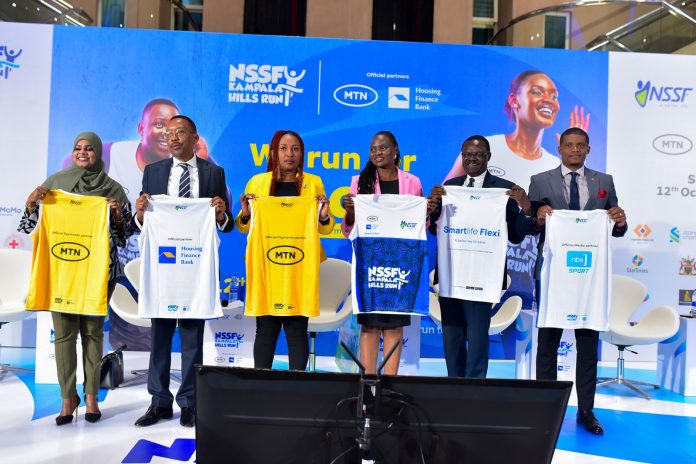
Housing Finance Bank deepens commitment to education with Shs100m support for 2025 NSSF Kampala Hills Run.

Housing Finance Bank today proudly joined partners, sponsors, and members of the public for the official launch of the 2025 NSSF Kampala Hills Run, set to take place on Sunday, October 12, 2025, at Kololo Independence Grounds.

Kampala, UgandaAugust 27, 2025 – Housing Finance Bank today proudly joined partners, sponsors, and members of the public for the official launch of the 2025 NSSF Kampala Hills Run, set to take place on Sunday, October 25, 2025 at Kololo Independence Grounds.

This marks the Bank’s second year of partnership with the National Social Security Fund (NSSF) on this transformative initiative, which aims to improve educational infrastructure across Uganda. In a bold show of commitment, the Bank has pledged Shs100 million to support the renovation of public primary schools, creating safer and more inspiring learning environments for over 10,000 children nationwide.

Last year’s Run led to the construction of new classroom blocks in eight public schools, positively impacting thousands of learners. This year, the goal is even more visionary: to raise Shs1.5 billion to benefit 10 schools across Uganda.

Speaking at the launch press conference, Mr. Mugabi Michael, Managing Director of Housing Finance Bank, underscored the deeper purpose behind the initiative:

“This Run is not just a race; it’s a movement of hope, unity, and transformation. At Housing Finance Bank, we believe every child deserves a safe space to learn, dream, and thrive. Our support reflects a promise to the next generation and a commitment to building a brighter, more resilient Uganda.”

The 21km route through Kampala’s scenic hills is designed to promote physical fitness, mental well-being, and social connection, while mobilizing the nation around a shared cause. Previous editions of the Run have already benefited over 15,000 pupils, refurbishment of 60 classroom blocks and leading to improved enrollment, reduced dropout rates, and enhanced learning outcomes.

Housing Finance Bank’s continued partnership with NSSF is a testament to its broader mission of driving inclusive growth, community empowerment, and sustainable development.

Stories Continues after ad

Kampala Parents School honours Rajiv Ruparelia at colourful sports gala

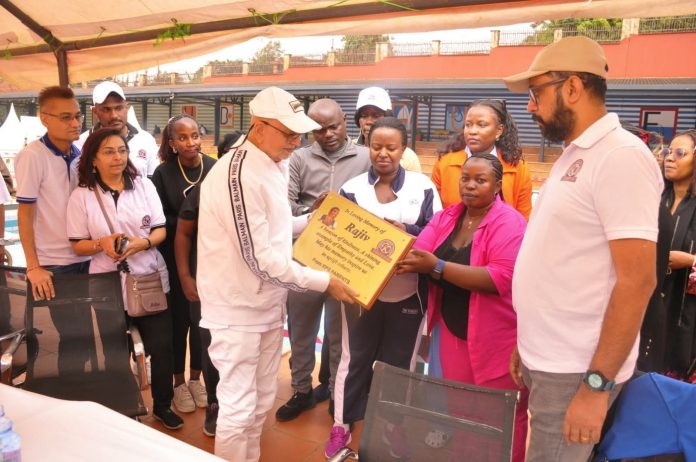
Kampala Parents' School chairman, tycoon Sudhir Ruparelia received the honour in memory of his late son, Rajiv Ruparelia, whom the school recognised for his outstanding contribution.

Kampala Parents School (KPS) came alive with colour, rhythm, and excitement on Saturday, August 23, 2025, as the institution held its annual Sports Gala, blending athletics, cultural performances, and academic pride. The event was crowned by a special honour to Mr. Rajiv Ruparelia for his outstanding contribution to the school’s development.

The gala showcased the unity and spirit of the school community, as pupils participated in energetic games, vibrant cultural dances, and fun-filled exhibitions that celebrated both tradition and innovation.

Speaking at the event, the school’s Headteacher, Mrs. Daphine Kato, expressed pride in the holistic education approach KPS continues to promote.

“Our sports gala is more than just athletics. It is a celebration of teamwork, discipline, cultural pride, and the all-round development of our children,” Mrs. Kato said.

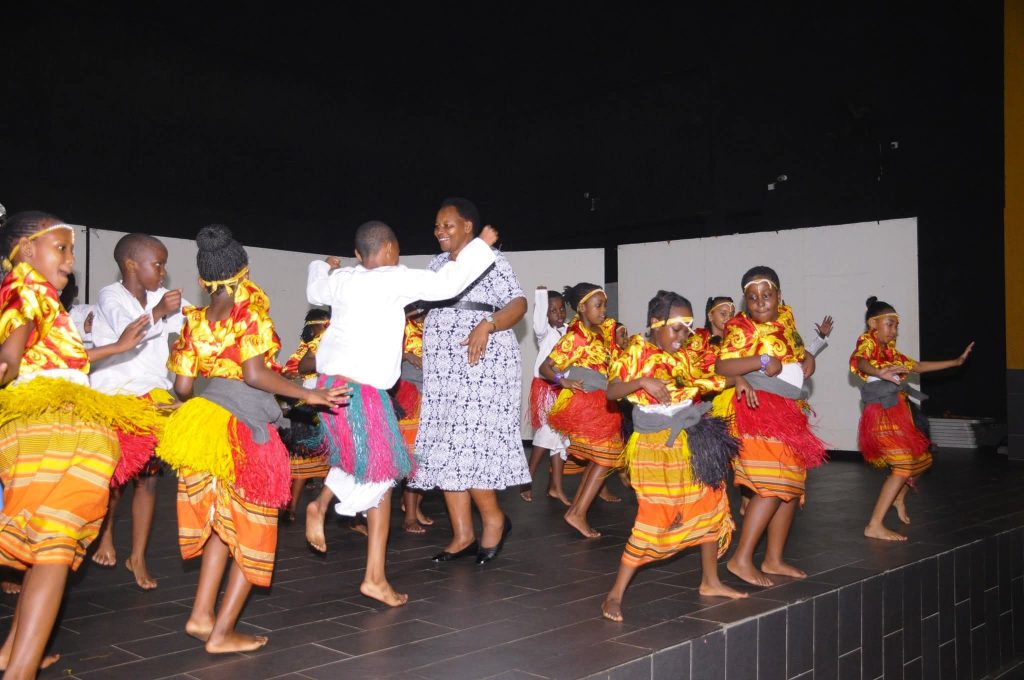
KPS pupils are joined by their school headteacher on stage for one of the local dances.

Pupils entertained parents and guests with cultural dances, demonstrations of traditional food preparation such as the art of making matoke, and exhibitions from recent educational tours that highlighted experiential learning.

“We believe in nurturing children who are not only academically excellent but also physically fit, socially responsible, and culturally aware. That is the essence of our heritage as Kampala Parents School,” Mrs. Kato added.

The day also featured a colourful parade of sports houses, with pupils competing in races, football, netball, and other activities that fostered school spirit and healthy competition. Parents, teachers, and guests cheered on, creating a lively and supportive atmosphere.

The highlight of the gala was the recognition of Mr. Rajiv Ruparelia, who was commended for his continued support and dedication to the growth of the school. His role in advancing both academic and extracurricular activities has positioned KPS as one of Uganda’s leading private schools.

Mrs. Kato noted that such recognition was long overdue noting, “Mr. Rajiv has been instrumental in ensuring that our school remains at the forefront of academic excellence and holistic child development. Today, we honour him not just as a leader, but as a true partner in the education of our children.”

The event was also graced by dignitaries, including the Minister of Youth and Children Affairs, Balaam Barugahara, and KPS Chairman, Sudhir Ruparelia, whose continued support was acknowledged by the school administration.

As the day ended, pupils, parents and staff celebrated not only sporting victories but also a shared sense of pride in a school that continues to balance heritage, innovation, and excellence.

Stories Continues after ad

Andrew Mwenda applauds tycoon Sudhir Ruparelia’s enduring legacy of reinvesting in Uganda

Prominent journalist, Andrew Mwenda has applauded business mogul Sudhir Ruparelia for his enduring legacy of reinvesting in Uganda and shaping the nation’s future through bold developments.

The veteran journalist and political commentator took to X (formerly Twitter) to celebrate Sudhir’s newest accomplishment the RR Pearl Business Park, a 22-story commercial tower built on the site of the former Chieftaincy of Military Intelligence headquarters.

“My grandson Sudhir Ruparelia has done it again,” Mwenda wrote proudly.

He added, “This new 22-story office block complex is a classic case of beautiful architecture and great engineering. A true Ugandan, he invests 99% of his money in this country, unlike many who suck it out.”

For Mwenda, the tower is not just concrete and steel but a statement of resilience, vision, and patriotism. In a country where capital often flees abroad, Sudhir’s decision to invest almost entirely at home stands out as a rare example of confidence in Uganda’s future.

Mwenda affectionately refers to Sudhir as his “grandson, son, brother, friend, and mentor” — a mix of humor and admiration that underscores their bond. Beyond public praise, he has stood by Sudhir through turbulent times, including the lengthy legal battles with the Bank of Uganda over the collapse of Crane Bank. When the Supreme Court ruled in Sudhir’s favor, Mwenda hailed the verdict as not only a personal victory but also a lesson in resilience and principled entrepreneurship.

The RR Pearl Business Park adds to a series of audacious projects under Sudhir’s name. In December 2023, he stunned the nation by completing a 3,800-seater convention centre at Munyonyo Commonwealth Resort in just one year, despite the global economic shocks of the COVID-19 pandemic. With 16 breakout rooms and world-class facilities, the convention center positioned Uganda as a serious contender for international conferences. Mwenda, visibly moved, captured the moment in a video, embracing Sudhir and declaring: “Against all odds, Sudhir has achieved the impossible.”

Sudhir’s vision extends beyond buildings. Through the Ruparelia Foundation, he has invested in education, health, and community initiatives, ensuring prosperity is shared across society. His schools, including Kampala Parents School, Kampala International School Uganda (KISU), and Victoria University, have nurtured thousands of young Ugandans with skills to compete on the global stage.

“Sudhir isn’t just investing in structures; he is investing in people, in ideas, and in the future of Uganda,” Mwenda remarked in a conversation with close associates.

From towers to schools, hotels to community projects, Sudhir’s investments employ thousands of Ugandans, stimulate local industries, and inspire new generations of entrepreneurs. Even in lighter moments, Mwenda celebrates his friend’s journey  recalling chauffeur-driven rides, playful family interactions, and the enduring friendship that underpins the admiration.

As Kampala’s skyline continues to transform, Mwenda insists that Sudhir’s legacy is not measured only in towers but in the vision they represent.

“He’s not just building structures,” Mwenda reflected. “He’s building Uganda’s tomorrow.”

Through his public endorsements, Mwenda ensures that Sudhir’s legacy is framed not just as business success but as a national example, proof that Uganda’s future can be built by those willing to reinvest at home, one tower at a time.

Stories Continues after ad