Stanbic Bank
Stanbic Bank
26.7 C
Kampala
Stanbic Bank
Stanbic Bank
Home Blog Page 78

Nakivubo Channel deal: When Presidential directives bypass environmental safeguards

Mr Deus Mukalazi.

By Mukalazi Deus

Board Chair, UBUNTALISM GLOBAL, a member of the MUNGAANO INTIATIVE FOR CLIMATE JUSTICE (mubirudeus22@gmail.com)

A letter, ostensibly authored by the President of Uganda, surfaced on various social media platforms. In this letter, written on August 2nd, 2025, the President of Uganda issued a directive to the Prime Minister, Rt. Hon Nabbanja approves a “godly” proposal from businessman Hamis Kiggundu to redevelop and cover the Nakivubo Channel. The plan, submitted only a week earlier on July 25, allows him to finance the cleaning, covering, and strengthening of the drainage channel and, in return, build properties above it to recover his investment. At face value, this may appear visionary—combining drainage improvement with urban redevelopment. Yet the speed and manner in which this approval was granted exposes Uganda’s persistent governance challenges, particularly in balancing development ambitions with environmental protection, legal safeguards, and the rights of urban residents.

The Nakivubo Channel is not just a drainage ditch—it is one of Kampala’s most critical urban wetlands, channeling stormwater through the city into Lake Victoria. Any interference with it carries far-reaching consequences: increased risk of flooding, loss of biodiversity, contamination of water sources, and displacement of vulnerable communities. Uganda’s laws, including the National Environment Act, Cap. 153, and the Climate Change Act 2021, make it clear: no project of this magnitude should proceed without an Environmental and Social Impact Assessment (ESIA). This is not bureaucracy for its own sake—it is a safeguard to ensure that decisions consider long-term sustainability, community well-being, and compliance with both domestic and international obligations. By sidestepping this requirement, the directive risks setting a dangerous precedent—that politically connected individuals can override established environmental safeguards for private benefit.

Allowing private property to be constructed directly above a public drainage channel raises fundamental governance and equity questions. Legally, the Nakivubo Channel is a public asset—held in trust for the people of Uganda. Turning it into real estate effectively privatizes what should remain a common good. Kampala’s history already bears scars of poor drainage planning. From Bwaise to Kisenyi, ordinary Ugandans have borne the brunt of floods, waterborne diseases, and displacement—all while watching wetlands disappear under malls, arcades, and condominiums. If precedent is anything to go by, this redevelopment risks worsening urban flooding rather than alleviating it. Moreover, the justification that the developer will recover his money through property development dangerously commercializes public policy. The state’s primary obligation is to protect citizens, not to mortgage public utilities for private profit.

That a proposal dated July 25th could be approved by August 2nd raises serious red flags. Meaningful consultation with technocrats, city planners, environmentalists, and affected communities was impossible within such a short window. Uganda has ratified multiple international frameworks—such as the Paris Agreement and the Ramsar Convention—that obligate it to integrate climate and environmental safeguards in development projects. Approving construction over a major wetland channel without due process violates both these obligations and the spirit of the Constitution, which protects citizens’ right to a clean and healthy environment. This decision also undermines institutions such as the National Environment Management Authority (NEMA) and Kampala Capital City Authority (KCCA), whose mandates are to regulate, not rubber-stamp, projects of this magnitude. Of course, someone may argue that the President wrote to the head of government business and the technical teams are at liberty to provide a feasibility statement for such a project. The tone of the letter is clearly directing the Prime Minister to execute the proposal. The President has already approved and is not seeking for technical advice. Am sure if that was his intention he would have clearly stated so.

Uganda needs investment in urban infrastructure, but it must be done right. Redevelopment of Nakivubo Channel should indeed proceed—but only under conditions that require a full Environmental and Social Impact Assessment in compliance with the law and international standards, include broad stakeholder consultations, ensure transparency in financing arrangements, preserve wetlands and drainage systems as public goods, and align with climate resilience strategies recognizing that wetlands are natural buffers against the very flooding Kampala struggles with.

The President’s directive may have been well-intentioned, but it is dangerously premature. By approving construction above Nakivubo Channel without an ESIA, Uganda risks compounding the very problems the project claims to solve—urban flooding, environmental degradation, and social displacement. Uganda must resist the temptation of shortcuts in development. True modernization is not about covering wetlands with concrete; it is about respecting the rule of law, safeguarding the environment, and ensuring that all Ugandans—not just a few—benefit from urban transformation. The Nakivubo Channel controversy is more than a drainage issue. It is a test of whether Uganda chooses inclusive, sustainable development—or continues down the path where private deals outweigh public interest.

Stories Continues after ad

Afrexim Bank extends Shs1.1 trillion loan to Uganda for infrastructure and development projects

The Government of Uganda has secured a major financial boost after successfully concluding a €270 million (approximately Shs1.1 trillion) 10-year loan facility with the African Export–Import Bank (Afrexim Bank) to finance a wide range of development and infrastructure projects under the 2024/25 national budget.

Announcing the loan agreement, Finance Minister Matia Kasaija emphasized its significance in bridging Uganda’s financing gaps in critical sectors.

“The facility is targeted towards financing of investments in infrastructure and human capital development in the budget, to support sustainable growth and socioeconomic transformation,” Kasaija said.

According to the Ministry of Finance, the funds will be channeled into government programs that directly drive value addition and long-term economic growth. These include agriculture modernization, support to the oil and gas sector, electricity generation and distribution, development of export processing zones and industrial parks, as well as expansion and maintenance of Uganda’s transport network, including roads, railways, and ports.

“This financing is an indication of the capacity of an African development financial institution like Afrexim Bank among others to support African strategies and development objectives,” Kasaija noted.

He added, “This is a clear demonstration of the Bank’s relevance to Uganda and the African continent, as well as an expression of its confidence in delivering solutions tailored to the requirements of its member countries.”

Beyond supporting Uganda’s national development priorities, Afrexim Bank is also deepening its presence in East Africa by establishing its regional headquarters in Kampala. The East Africa Regional Office, currently under construction along Yusuf Lule Road, will host the Africa Trade Centre (ATC), a facility designed to serve as a hub for trade-related financing activities across the region.

Kasaija described this as a strong endorsement of Uganda’s role as a strategic trade gateway in the region.

“These investments signify the Afrexim Bank’s strong confidence in the Government of Uganda and our shared vision of promoting trade and development in Africa,” he said.

The new facility will ease pressure on Uganda’s domestic resources at a time when the government is grappling with high infrastructure demands and limited fiscal space. The loan is expected to accelerate completion of key national projects, while also boosting industrialization and export competitiveness.

Officials further argue that by directing funds to high-return sectors such as energy, agriculture and manufacturing, Uganda stands to reduce its trade deficit and create more jobs for its young population.

Uganda has in recent years partnered with Afrexim Bank on several financing agreements aimed at stimulating economic transformation. The bank has emerged as one of the leading African institutions supporting large-scale infrastructure and trade financing on the continent, complementing other international lenders.

Stories Continues after ad

Uganda’s economy maintains stability as inflation eases and exports surge

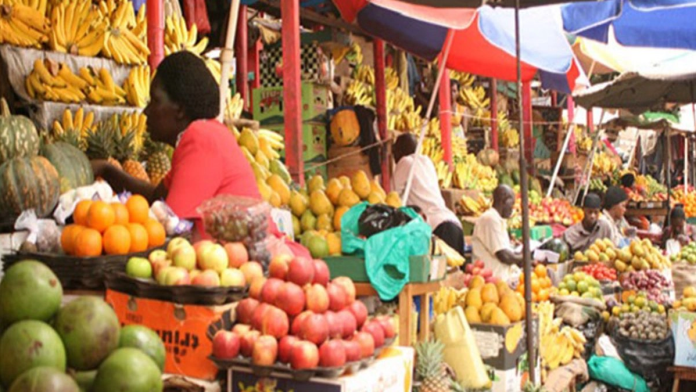
Agricultural products market.

Uganda’s economy demonstrated continued resilience in July 2025, supported by stable inflation, robust private sector activity, and prudent fiscal operations, according to the latest Monthly Economic Report from the Ministry of Finance, Planning, and Economic Development (MoFPED).

The report indicates that headline inflation eased slightly to 3.8 percent in July, down from 3.9 percent in June, primarily due to a decline in food crop prices. A strong harvest season led to price reductions for key staples, including cabbage, tomatoes, peas, and citrus fruits, which helped ease pressure on household spending. Core inflation also declined marginally to 4.1 percent, driven by falling costs in services such as transport and accommodation.

The Ministry attributed the drop to continued decreases in fuel prices and stable electricity tariffs. “Government reforms in the fuel importation regime, managed by the Uganda National Oil Company (UNOC), are playing a key role in maintaining cost stability,” the report noted.

Economic momentum picked up, with the Composite Index of Economic Activity (CIEA) increasing by 1.1 percent in June, a marked improvement from the 0.3 percent growth recorded in May. Private sector confidence remained strong, as reflected in the Purchasing Managers’ Index (PMI), which posted 53.6 – comfortably above the 50-point threshold indicating expansion. While this was a slight dip from June’s reading of 55.6, the Ministry explained it was “largely due to rising input costs.” Despite this, “employment and output grew across all sectors except manufacturing.” The Business Tendency Index (BTI) also painted a positive picture, standing at 58.3. The Ministry noted that this figure reflects “sustained optimism regarding future orders and employment across agriculture, services, construction, manufacturing, and retail.”

The Uganda Shilling strengthened for the fourth consecutive month, gaining 0.5 percent against the US Dollar and 0.6 percent against the Pound Sterling. “This appreciation is being driven by increased offshore investment, improved coffee export earnings, and confidence in Uganda’s macroeconomic policies,” the report highlighted. However, the Shilling slipped by 1.0 percent against the Euro during the same period.

The Central Bank Rate (CBR) remained unchanged at 9.75 percent for the tenth consecutive month, underscoring the Bank of Uganda’s commitment to balancing inflation management with economic growth. Commercial lending rates, however, edged higher. Shilling-denominated loans averaged 19.07 percent, up from 18.64 percent in May, while foreign currency lending rates rose to 8.78 percent. The report cited “increased risk perceptions in sectors such as telecommunications and real estate” as key factors behind the uptick.

Private sector credit continued its upward trajectory, growing by 7.5 percent year-on-year to Shs23.9 trillion. This expansion was underpinned by improved business sentiment and a GDP growth rate of 6.3 percent for the financial year 2024/25.

“Much of the lending in June was directed towards personal and household consumption, trade, and agriculture,” the Ministry noted.

The Government raised Shs2.69 trillion from domestic markets in July through the issuance of Treasury Bills and Bonds.

“Investor appetite remained strong, resulting in oversubscription of Treasury auctions,” the report stated.

Yields on the 91-day and 364-day bills fell to 11.6 percent and 15.3 percent, respectively. On the fiscal side, Uganda recorded a narrower-than-expected deficit of Shs1.46 trillion, attributed to better revenue performance and restrained expenditure. Total revenue and grants amounted to Shs2.54 trillion, surpassing projections, thanks to buoyant corporate tax collections and a Shs168 billion disbursement from the World Bank to support the INVEST project.

Merchandise exports surged by 64.3 percent year-on-year to $1.15 billion in June 2025. However, Uganda’s trade deficit widened to $ 272.9 million, an 11.4 percent increase from June 2024, as import volumes, particularly of oil, mineral products, and base metals, outpaced export growth. Coffee exports continued to shine, with volumes rising by nearly 28 percent month-on-month, offsetting a modest dip in global prices.

“The Middle East remained Uganda’s top export destination, with mineral and coffee shipments to the UAE driving volumes,” the Ministry stated.

Nonetheless, intra-regional trade performance was less favourable. Exports to the East African Community (EAC) declined by 4 percent in June, while imports from the region increased, leading to a $209.5 million trade deficit with EAC partners. The Ministry attributed this to “non-compliance with regional trade protocols and the emergence of new trade barriers.”

Uganda’s inflation trajectory in July mirrored that of Rwanda, which also saw a decline to 7.2 percent. Conversely, Kenya and Tanzania either experienced marginal increases or stable inflation rates. Uganda, Kenya, and Tanzania all registered modest currency gains against the US Dollar, in contrast to continued depreciation in Burundi and Rwanda.

MoFPED concluded that July’s economic indicators reflect “a cautiously optimistic outlook.” With inflation broadly under control, private sector dynamism, and strong fiscal discipline, Uganda appears well-positioned to navigate ongoing global and regional economic uncertainties. However, it warned of emerging risks: “Widening trade imbalances, particularly within the EAC bloc, and rising borrowing costs remain key vulnerabilities that will require close monitoring in the coming months.”

Stories Continues after ad

Uganda confirms migration cooperation agreement with United States

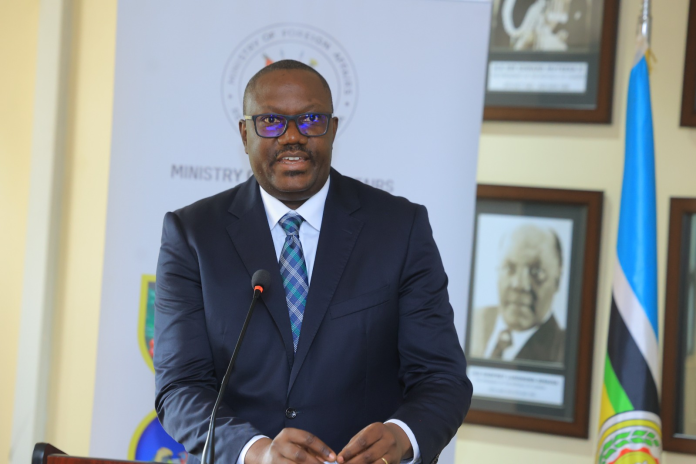
Mr. Vincent Bagiire Waiswa, the Permanent Secretary at the Ministry of Foreign Affairs.

The Government of Uganda has confirmed the conclusion of an agreement with the United States of America as part of ongoing bilateral cooperation on migration management.

In a statement issued by Bagiire Vincent Waiswa, the Permanent Secretary at the Ministry of Foreign Affairs, the arrangement concerns third-country nationals who may not be granted asylum in the United States but are unable or unwilling to return to their countries of origin.

“As part of the bilateral cooperation between Uganda and the United States, an agreement for cooperation in the examination of protection requests was concluded,” Mr. Bagiire said.

He added, “The agreement is in respect of third-country nationals who may not be granted asylum in the United States but are reluctant to or may have concerns about returning to their countries of origin.”

He stressed that the arrangement is temporary and will be guided by clear conditions.

“This is a temporary arrangement with conditions including that individuals with criminal records and unaccompanied minors will not be accepted,” he explained.

Mr. Bagiire further clarified Uganda’s preference regarding the categories of individuals to be considered under the framework.

“Uganda also prefers that individuals from African countries shall be the ones transferred to Uganda,” he noted.

The Permanent Secretary added that both governments are still working out the technical and operational modalities before the agreement comes into effect.

“The two parties are working out the detailed modalities on how the agreement shall be implemented,” he said.

The clarification comes in response to growing public interest in Uganda’s cooperation with the United States on migration and asylum-related matters.

Stories Continues after ad

Rotary Club launches Little Hearts Project to combat childhood heart disease

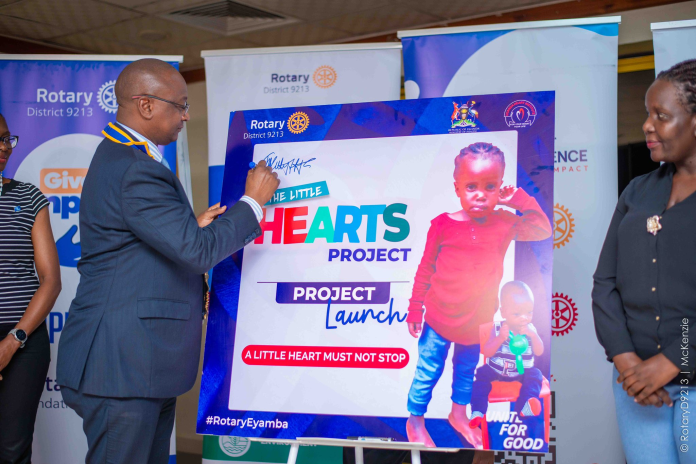
Rotary International District 9213, Governor Geoffrey Kitakule unveils Little Hearts Project, a flagship health initiative aimed at the early detection and prevention of heart disease in children across Uganda.

Rotary International District 9213 has unveiled the Little Hearts Project, a flagship health initiative aimed at the early detection and prevention of heart disease in children across Uganda.

The project was officially launched by the Kampala South Rotary Club on Tuesday, with District Governor Geoffrey Kitakule pledging strong support from Rotarians and partners.

Speaking at the launch, Governor Kitakule emphasized the urgent need to act, noting that thousands of children are at risk of undiagnosed heart conditions.

“Yesterday, I had the honor of joining the Kampala South Rotary Club for the launch of the Little Hearts Project,” Kitakule said. “This initiative focuses on early diagnosis and prevention of heart disease in children, giving every child the chance to live and thrive.”

The cost of treatment remains one of the greatest challenges for affected families.

“A single heart surgery can cost up to $500,000, an impossible figure for most families,” Kitakule noted.

He added, “But with early detection through schools and regional centers, and the right equipment, many of these conditions can be prevented or managed before it’s too late.”

The initiative will be implemented in partnership with the Uganda Heart Institute, the Ministry of Health, medical professionals, Rotarians, and community leaders, creating a collaborative network to reach children at the community level.

“The launch highlighted the importance of partnerships. Together with our partners, we pledged our resources, time, and expertise to make this project a success,” Kitakule said.

At the event, stakeholders signed a commitment pledge symbolizing their dedication to turning words into action.

“The commitment signing was more than a ceremony it was a pledge of action,” Kitakule declared.

He noted, “As Rotarians, we are People of Action. We will stand with families, doctors, and communities to ensure that no child is left behind because of a preventable or treatable condition.”

The Little Hearts Project is expected to roll out screening programs in schools and regional health centers, provide training for medical personnel and equip facilities with modern diagnostic tools. Organizers say the ultimate goal is to ensure that every Ugandan child has access to lifesaving heart care.

Stories Continues after ad

US secures controversial deportation deal with Uganda

Donald Trump, President of the United States of America.

The United States has struck new bilateral deportation agreements with Uganda and Honduras as part of President Donald Trump’s aggressive crackdown on illegal immigration.

Under the arrangement, Uganda will take in an unspecified number of African and Asian migrants who had previously sought asylum at the US-Mexico border, provided they do not have criminal records. Honduras, meanwhile, has committed to receiving several hundred deported migrants from Spanish-speaking countries over two years, with the possibility of expanding that number.

Human rights campaigners have condemned the move, warning that migrants risk being relocated to countries where they could face persecution or unsafe conditions.

“This policy raises serious concerns under international law, as migrants could be sent to nations where they are vulnerable to abuse, or even deported again to places they originally fled,” rights groups have argued.

The deals are part of a wider Trump administration strategy to secure deportation agreements across multiple continents including with countries criticized for poor human rights records. So far, at least a dozen nations have signed similar arrangements.

Just last week, the US State Department confirmed a “safe third country” agreement with Paraguay to “share the burden of managing illegal immigration.” Rwanda has also agreed to accept up to 250 migrants from the US, though the deal gives Kigali the power to review each individual case. Critics say such transfers pose grave risks, given Rwanda’s contested human rights record.

Earlier this year, Panama and Costa Rica also signed accords to take in hundreds of African and Asian migrants. Other countries reportedly approached by Washington include Ecuador and Spain.

Since the start of his second term, Trump has doubled down on his campaign pledge to remove undocumented migrants. In June, the US Supreme Court gave his administration the green light to deport migrants to countries other than their homeland without requiring a review of the risks they may face.

The ruling split the bench, with Justices Sonia Sotomayor, Elena Kagan, and Ketanji Brown Jackson dissenting and denouncing it as “a gross abuse.”

Stories Continues after ad

Col Obbo takes over as deputy director Defence Public Information and vows to uphold UPDF’s reputation   

The Director of Defence Public Information, Maj Gen Felix Kulayigye, presided over the handover ceremony between Maj Bilal Katamba and Col. Henry Obbo.

Colonel Henry Obbo has officially assumed office as the new Deputy Director of Defence Public Information at the Ministry of Defence and Veteran Affairs (MODVA) headquarters in Mbuya. He takes over from Maj Bilal Katamba, who has been nominated to attend the prestigious Senior Command and Staff Course.

The handover ceremony was presided over by the Director of Defence Public Information, Maj Gen Felix Kulayigye, who praised Maj Katamba for his exemplary service in strengthening the image of the Uganda Peoples’ Defence Forces (UPDF) as a people-centred army.

“When given responsibility, don’t ask why, but do it with commitment and dedication,” Maj Gen Kulayigye advised, urging staff to embrace humility, discipline, and the spirit of learning. He reminded officers to value constructive criticism, adding: “Always love people who correct you.”

Maj Katamba, in his farewell remarks, expressed gratitude to the UPDF leadership for entrusting him with the role and thanked Maj Gen Kulayigye for his mentorship, while appreciating the teamwork and cooperation of staff in the department.

Col Obbo, in his acceptance speech, pledged to consolidate the achievements of his predecessor and deepen collaboration across government institutions. “I will deepen and widen teamwork, cooperation, and collaboration with other Ministries, Departments, and Agencies,” he said. 

He also acknowledged the mentorship of Maj Gen Kulayigye, describing him as “a mentor who has nurtured many officers” and emphasized the importance of leadership continuity within the force.

Col Obbo is a seasoned Public Information officer in the UPDF and previously served as the Army’s 3rd Division Spokesperson in Moroto, where he was widely recognized for effectively communicating security operations in the Karamoja sub-region. He also served as the UPDF 1st Division Spokesperson in Kakiri and played a key role in strengthening civil-military relations through open and transparent communication.

Known for his professionalism and calm demeanor, Col Obbo has often been at the forefront of clarifying security matters to the public, a role that has earned him respect within the media fraternity. His appointment is seen as a reinforcement of the UPDF’s commitment to maintaining credibility, transparency, and public trust.

As he steps into his new role at MODVA headquarters, Col Obbo brings extensive field experience, communication expertise, and a reputation for fostering cooperation between the army and the civilian population, qualities expected to further strengthen the image of the UPDF both locally and internationally.

Stories Continues after ad

Tycoon Sudhir unveils RR Pearl Tower One as an honor to his late son Rajiv Ruparelia

RR Pearl Tower One, a 25-storey Grade A office building developed by business magnate Sudhir Ruparelia.

Tycoon Sudhir unveils RR Pearl Tower One as an honor to his late son Rajiv Ruparelia

Kampala’s skyline has received a striking new landmark with the unveiling of RR Pearl Tower One, a 25-storey Grade A office building developed by business magnate Sudhir Ruparelia. The tower, situated on Yusuf Lule Road, marks the first phase of the ambitious Pearl Business Park project, blending commercial ambition with personal remembrance.

The skyscraper, designed to transform the city’s central business district, will host modern office spaces, conferencing facilities, and premium amenities aimed at attracting both local and international tenants. More than just a boost to Kampala’s commercial landscape, the tower carries a deeply emotional significance for the Ruparelia family.

The initials “RR” in its name honor Sudhir’s late son, Rajiv Ruparelia, who died tragically in a car crash on May 3, 2025. Rajiv, remembered for his energy, vision, and commitment to the family business, had been actively involved in real estate, hospitality, and philanthropic ventures within the Ruparelia Group.

“RR Pearl Tower One is more than a structure; it is a symbol of memory and hope,” Sudhir said at the launch, where Rajiv’s mother, Jyotsna Ruparelia, lit a symbolic candle before the unveiling of the tower’s plaque.

RIP: Rajiv Ruparelia.

Family members and close associates see the development as a living tribute to Rajiv’s legacy. Often described as “the modern face of the Ruparelia Empire,” Rajiv’s forward-looking approach positioned him as a rising leader in Uganda’s business community before his untimely death.

The unveiling of the tower is expected to have a significant impact on Kampala’s economy, creating jobs, attracting investment, and providing high-end business spaces that rival regional standards. For the city, the tower reshapes the urban skyline with a modern landmark. For the Ruparelia family, it ensures that Rajiv’s spirit and aspirations remain alive, immortalized in the very heart of the capital.

Standing tall over Kampala, RR Pearl Tower One is both a beacon of commercial progress and a monument of remembrance, a lasting testament to a young life cut short and a family’s enduring commitment to legacy.

Stories Continues after ad

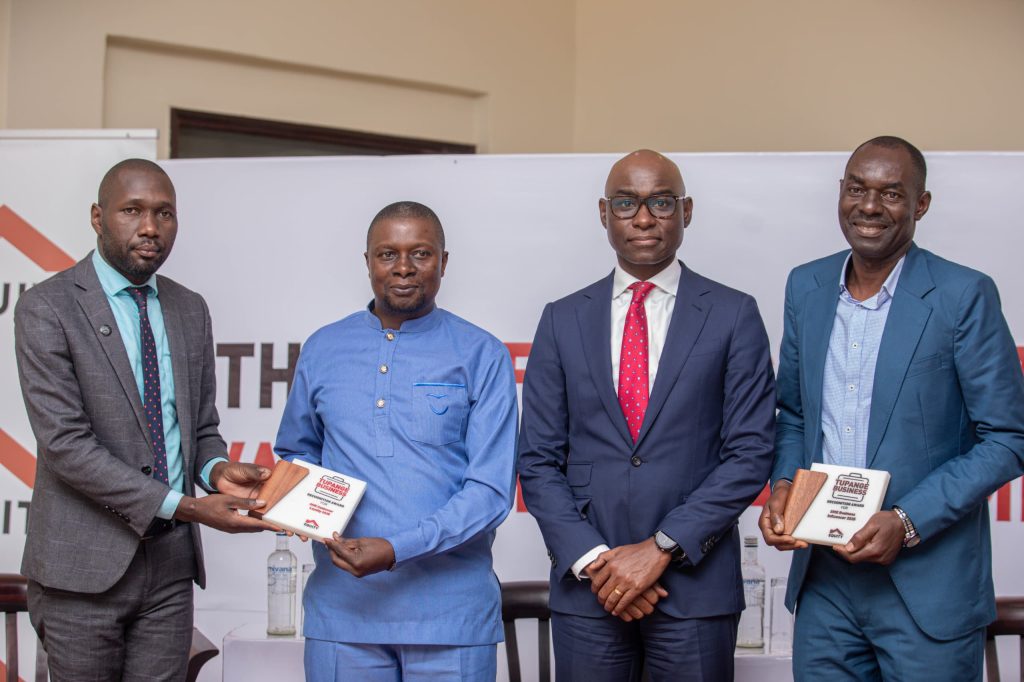
TUPANGE Business Ne Equity Forum empowers Mbale entrepreneurs with financing and growth opportunities

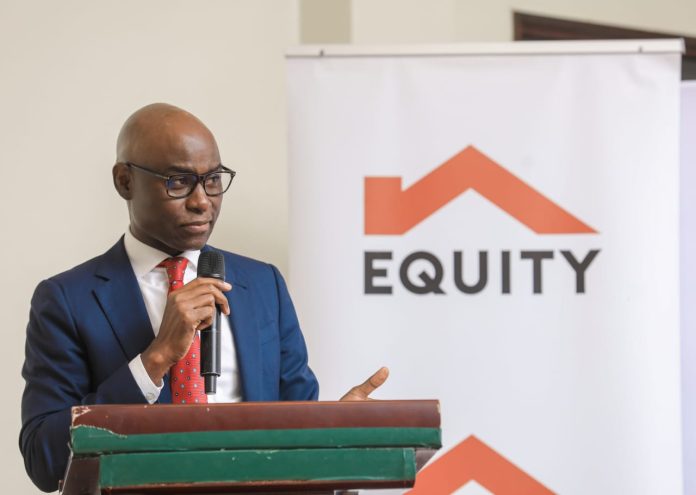
Claver Serumaga, Executive Director of Commercial Banking at Equity Bank.

The bustling city of Mbale came alive on Tuesday,19, as Equity Bank Uganda hosted the first regional edition of the TUPANGE Business Ne Equity Nationwide Forum, following a successful launch in Kampala last week. 

Held under the theme “Financing Integrated Value Chains and SME Growth,” the forum drew more than 500 entrepreneurs, SME owners, and innovators eager to explore new opportunities for growth and sustainability.

The event featured inspiring stories of resilience and transformation, with keynote speaker Mr. Saleh Naminya, Managing Director of Casa Uganda Safaris & Lodges, sharing his remarkable journey from a schoolteacher to a successful tourism entrepreneur.

“I started small, but with determination and collaboration, Casa Uganda thrives today,” he said. “No business stands alone. Our success depends on farmers, furniture makers, transporters, and financiers. Equity Bank’s value chain financing has been key in reducing risks and turning opportunities into reality.”

Mr. Claver Serumaga, Executive Director of Commercial Banking at Equity Bank, reaffirmed the bank’s mission to drive prosperity by empowering SMEs, which he described as the backbone of Uganda’s economy.

“SMEs create seven out of ten jobs globally. Supporting them means supporting national growth,” he said. 

He added, “Equity offers unsecured supplier financing of up to Shs1.5–3 billion, digital platforms like Equity Online for seamless payments, and retrained staff committed to integrity and excellent service.”

The forum distilled eight key lessons for business growth, delivered by panelists including Ms. Olivia Mugaba, Head of SME at Equity Bank; Mr. Odoki Richard, lecturer at Uganda Martyrs University; and Mr. Natalisile James from the Ministry of Trade and Agriculture. These included scaling through tailored financial and technical support, leveraging digital tools to reach international clients, and embracing tax compliance to access government incentives.

One speaker cautioned entrepreneurs against informality, noting, “If you’re not registered, you’re invisible to opportunity.”

The forum also addressed Uganda’s high SME failure rate—estimated at 53%—often linked to limited working capital and market access. Equity Bank showcased practical solutions such as invoice financing and mobile-accessible credit lines. A local case study highlighted a business that grew its credit line from Shs20 million to Shs100 million by partnering with anchor clients like Coca-Cola.

“We don’t just finance businesses; we walk the journey with you,” Serumaga emphasized, urging SMEs to embrace collaboration within value chain ecosystems.

Naminya echoed the call for partnerships, “My lodges need quality produce, reliable transport, and social media marketing. We must collaborate across sectors and use platforms like Equity’s Trade and Investment Tours to access global markets.”

The Mbale edition marked the first of four regional stops on the 2025 TUPANGE Business Ne Equity tour. The next forums will be held in Arua on August 21, Fort Portal on September 2, and Hoima on September 9.

Equity Bank says it aims to support more than 1,000 SMEs nationwide by year-end, with a focus on creating inclusive value chains that foster prosperity.

“When SMEs thrive, the nation prospers. In Mbale, that vision was not just spoken, it was felt,” said Serumaga.

Stories Continues after ad

Uganda Police launch SOPs for crime scene examination in trafficking cases

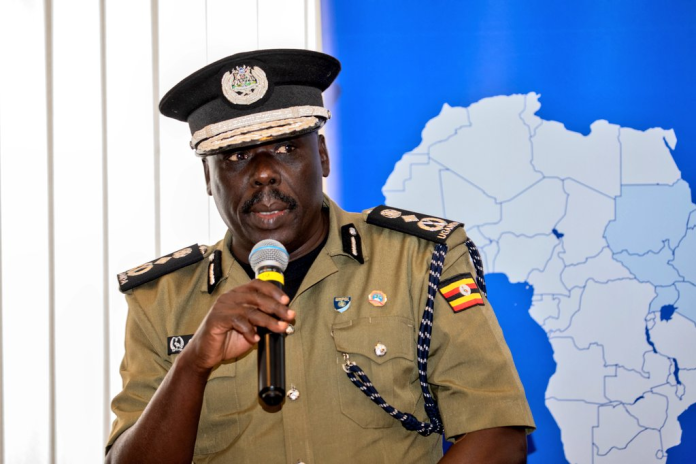
DIGP, James Ocaya.

The Uganda Police Force has unveiled Standard Operating Procedures (SOPs) for crime scene examination in cases of trafficking in persons, with an aim of strengthening investigations and securing justice for victims.

The launch, held at Mestil Hotel in Kampala, was presided over by Deputy Inspector General of Police (DIGP) James Ocaya and brought together key stakeholders in the criminal justice system, including all Regional Forensic Services Scenes of Crime officers.

Assistant Commissioner of Police Andrew Mubirua, the Acting Director of Forensic Services, underscored the centrality of crime scenes in uncovering trafficking networks.

“In every case of trafficking, the crime scene is where the truth begins to emerge. It may be a hidden house, a border crossing, a vehicle, or even a digital environment. Mishandling scenes or losing evidence helps traffickers, harms victims, and undermines justice,” Mubirua said.

He explained that the SOPs were developed by the Uganda Police Force, the Office of the Director of Public Prosecutions (ODPP), and partners to give officers and first responders a clear, practical, and standardised guide to handling trafficking cases.

“Human trafficking survivors often carry deep trauma. By handling crime scenes with professionalism and sensitivity, we shall reduce the need for repeated testimony and minimise re-traumatisation. Evidence, when properly secured, can speak powerfully on their behalf and allow survivors to heal while justice takes its course,” Mubirua added.

Katja Yvonne Kerschbaumer, Head of Austrian Embassy Development Cooperation, noted that securing credible evidence was vital in dismantling trafficking rings.

“To achieve justice, we must also secure high-quality evidence. Human trafficking cases are complex: perpetrators are often organized, crimes are hidden, and victims may be too traumatized or afraid to testify,” she said.

In his address, DIGP Ocaya stressed that the fight against trafficking in persons required professionalism at every stage of the justice chain.

“Combating trafficking in persons requires more than just arrests of the perpetrators — it demands that every step, from the report, prosecution, and adjudication, is handled professionally and with integrity, while observing the rights of the victims. The crime scene is the theatre where this precision begins, and where the truth is secured. If the scene is mishandled—through contamination, procedural error, or oversight—we risk losing irreplaceable evidence, weakening prosecutions, and denying victims justice. This is why today’s launch matters,” Ocaya said.

He emphasised that the SOPs should not remain theoretical documents but must be applied consistently across the country.

“These SOPs are not for the shelves. They are operational tools, and their value will only be realised when they are used consistently and competently across the country. The implementation of these SOPs will significantly improve the quality of investigations, reduce dependence on vulnerable victim testimony, and increase successful prosecutions of traffickers,” he said.

The guidelines call for enhanced capacity building for investigators and prosecutors, as well as community sensitisation to expose the methods traffickers use. They also encourage the use of digital records, financial trails, travel documents, forensic data, and credible witness statements to build strong cases.

Ocaya noted that evidence handling is the foundation of justice in trafficking cases.

“The crime scene is the foundation of truth and precision in any investigation. Mishandling it—whether through contamination, errors, or negligence—means losing vital evidence, weakening prosecutions, and ultimately denying justice to victims,” he said.

Stories Continues after ad