Stanbic Bank
Stanbic Bank
25 C
Kampala
Stanbic Bank
Stanbic Bank
Home Blog Page 77

The 1976 Soweto uprising and the NUP/Bobi Wine Kawempe rally canine dogs

In what one can describe as a rendition of the 1976 Soweto uprising, when the South African Apartheid regime unleashed canine dogs at students demonstrating against school regulation, the Police on Monday, released its canine dogs at the National Unity Platform (NUP) supporters who had gathered to listen to their principal, Robert Kyagulanyi aka Bobi Wine’s Kawempe rallies.

The NUP Presidential candidate’s rallies in Kawempe North and Kawempe South attracted mammoth crowds in the opposition stronghold area prompting police to use resources available to put the crowd in control.

Earlier on, the Police spokesperson Kituuma Rusoke announced the banning of campaign processions for candidates in a bid to promote orderly and peaceful campaigns across the country as presidential, parliamentary, local government, and Special Interest Group (SIG) activities continue nationwide.

“Processions are prohibited, candidates should find their supporters at the campaign grounds” Kituuma noted in a statement.

Despite the restrictions, supporters continued to gather from the NUP Headquarters in Makerere Kanule to the rally venues, prompting police to fire teargas at several points to break up crowds both during and after the rally.

During Bobi Wine’s first address at the Kawempe Growers Playing Ground, the police unleashed the dogs on standing supporters and fired teargas to disperse the massive crowds that had gathered to listen to Bobi Wine.

The teargas, dogs and ensuing chaos left a number of NUP supporters with a number of injuries, the scene wasn’t any different from his second rally in Kawempe North.

Bobi Wine condemned the joint security operations in a post on his X account, noting that the acts were meant to intimidate his supporters and derail his campaign trail.

“The day began with the usual military hostility unleashed on our peaceful supporters. The intention was to break us down, but guess what? Our people were unrelenting, and they braved all this intimidation to be part of our revolution. Kawempe has made a bold statement. This is the true definition of the protest vote,” Bobi Wine posted.
Following the day’s events, police in a statement said seven security officers sustained injuries, and several security vehicles were also damaged by the crowd, including an ambulance, following an attack on them at the NUP headquarters in Makerere-Kavule, which prompted the force to respond.

“Security personnel responded by using public order measures to control the rowdy crowds. Seven suspects have been arrested in connection with these incidents” the statement read.

Bobi Wine is set to campaign in Mukono Municipality on Tuesday as he continues his campaign trail.

Stories Continues after ad

Gulu Chief Magistrate’s Court remands businessman over forcible entry into Church land

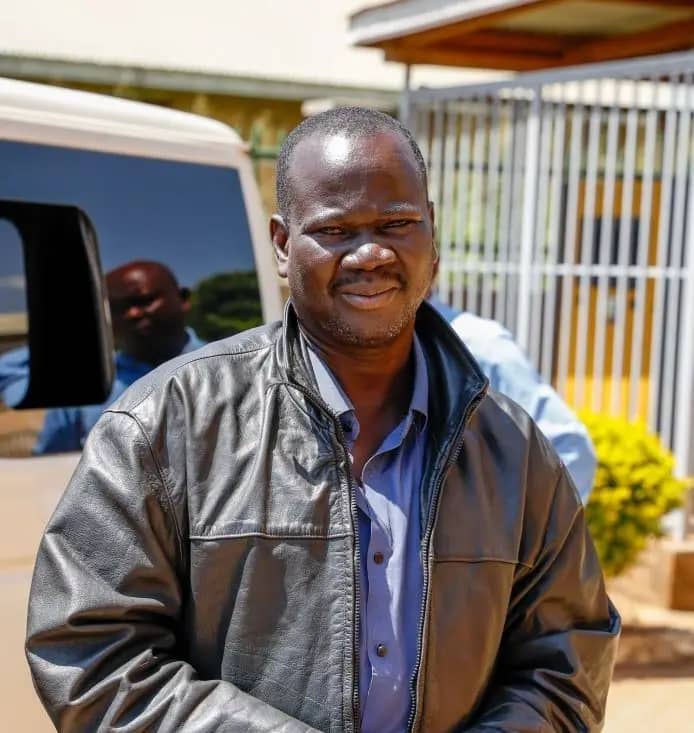
Businessman Peter Abola.

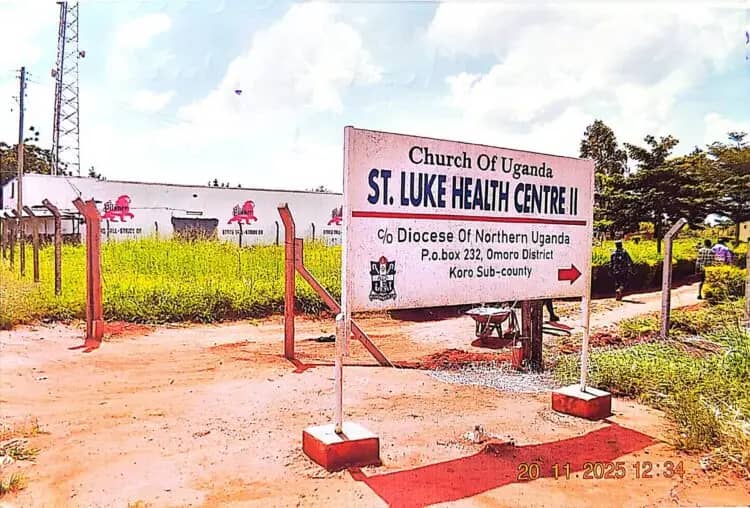
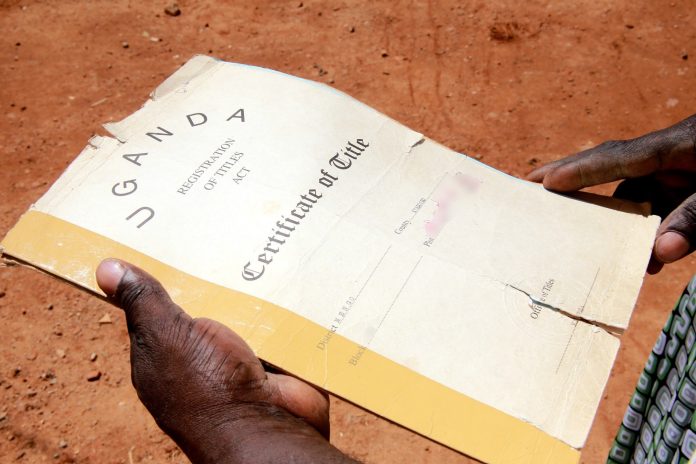
GULU-The Gulu Chief Magistrate’s Court has charged and remanded businessman Peter Abola Peter over forcible entry into land belonging to St. Luke Church of Uganda under the Northern Uganda Diocese.

According to the prosecution, between October and November 20, 2025, at Koro Abili Village, Labwoc Parish, Koro Subcounty in Omoro District, Abola unlawfully and violently entered the Church’s land in an attempt to take possession of it.

It is alleged that he transported concrete poles, wire mesh, and chain links onto the property and began fencing it off, including the area hosting a Health Centre II owned by the Church, thereby blocking the community’s access to vital health services.

Contested church land.

Abola also allegedly chased away the health centre staff without presenting any lawful court order. Historical records indicate that St. Luke Church of Uganda has occupied the 18-acre piece of land since 1926, during which they’ve established a church, primary school, and Health Centre II that have served the community for decades without dispute until this incident.

Abola has been remanded until December 10, 2025, when the case will come up for further mention.

Stories Continues after ad

Victoria University launches postgraduate diploma to tackle Uganda’s skills crisis

Victoria University.

Victoria University Kampala has announced the rollout of its revamped Postgraduate Diploma in Higher Education, a programme aimed at addressing Uganda’s widening skills gap and to equip graduates with the competencies needed in an evolving global job market.

The university notes that the qualification is no longer just an academic milestone but a strategic advantage. 

“A Postgraduate Diploma in Higher Education isn’t just a qualification it’s a competitive advantage,” the university said in a statement.

According to recent global education trends, postgraduate enrolment has climbed by at least 21 percent in the past few years. Research also shows that individuals with postgraduate qualifications earn, on average, 19 percent more and have significantly stronger employment prospects compared to bachelor’s degree holders.

Uganda’s job market mirrors this global shift but also reveals a critical challenge. Employers continue to report substantial gaps in key competencies with 22 percent citing a shortage in managerial skills, 19 percent pointing to deficits in customer-care abilities, and 18 percent highlighting a lack of entrepreneurial competence among graduates.

At the same time, employers say many higher-education graduates struggle to meet industry expectations in areas such as digital literacy, problem-solving, and applied pedagogy.

Victoria University says its Postgraduate Diploma in Higher Education is purposefully designed to bridge these gaps.

“By taking the Postgraduate Diploma in Higher Education at Victoria University, you position yourself ahead of the curve, gaining advanced teaching, leadership, digital-pedagogy, and curriculum-design skills urgently needed in Uganda and valued worldwide,” the university emphasised.

The programme blends theory, practical training and digital-learning tools to prepare graduates for modern classrooms, corporate training environments, and education-sector leadership roles. Coursework is supplemented with mentorship from experienced educators, hands-on curriculum development projects, and exposure to innovative teaching technologies.

The university added that the programme is part of its broader mission to transform higher education in Uganda.

“This is where educators are shaped to lead change, drive innovation, and uplift society,” the statement reads.

With Uganda’s youth population growing and competition for skilled jobs intensifying, the university believes the Postgraduate Diploma in Higher Education will play a key role in shaping the next generation of educators, trainers, and academic leaders. Enrollment for the new intake is already open.

Stories Continues after ad

Naalya student confirmed murdered as police launch full investigation

Aneza Merisa, a murdered student of Naalya SS.

Police have confirmed that the body recovered from a swamp in Kyampisi Subcounty is that of Aneza Merisa, a student of Naalya SS, Lugazi Campus, revealing a tragic turn in a case that began as a missing-person report earlier this month.

In a statement on Tuesday, police spokesperson Kawala Rachael said investigators under Kampala Metropolitan North are now treating the case as murder following DNA confirmation.

“The Territorial Police in Kampala Metropolitan North are investigating the murder of Aneza Merisa, a student at Naalya SS, Lugazi Campus,”

Rachael said.

According to the statement, Aneza’s mother, Kamuganga Sarah first reported her missing at Wandegeya Police Station on 6th November 2025. Four days later, on 10th November, a decomposing body was discovered in Musaale Swamp in Namulaba Village, Kyampisi Subcounty, under the jurisdiction of Nagalama Police Station.

“The body was dressed in a navy-blue student skirt labeled ‘Nanyonga VII,’ suggesting that the victim may have been a student,”

the police spokesperson noted.

Because the body was already in an advanced state of decomposition, it was initially buried by mortuary staff in Kayunga. However, detectives later secured a court order to exhume the remains to establish identity.

“DNA samples were extracted and submitted to the Forensics Headquarters in Naguru,”

she explained, adding that the results conclusively matched the missing girl.

With the identity confirmed, police have now intensified investigations to determine how the student was killed and how her body ended up dumped in the swamp.

“With this confirmation, we are now treating the case as a murder investigation. Detectives are following leads to establish the circumstances under which Aneza was killed and her body dumped in the swamp,”

Rachael said.

She extended condolences to the grieving family and reassured the public of the police’s commitment to pursuing justice.

She mourned, “We extend our deepest condolences to the family and assure the public that we are committed to bringing the perpetrators to justice.”

The body was officially handed over to the family for burial on Saturday.

Stories Continues after ad

Old national IDs to remain with owners as NIRA rolls out new cards

Bundles of National Identity Cards.

The National Identification and Registration Authority has assured Ugandans that their old National ID cards will remain in their possession even as the country transitions to the enhanced generation of high-tech identification cards.

Speaking during the rollout exercise, NIRA Registrar Claire Olama said the old cards will continue to serve as important personal documents and will not be taken away from their owners. She noted that staff will only apply a small administrative mark to show that the cards have expired while keeping all the information readable.

“Our long-awaited moment has arrived. What we registered for, what we hoped to receive, is now here. We are ready to give out the new, more advanced cards,”Olama said, calling on citizens to turn up with their old cards when collecting the upgraded version.

She explained that the old card remains necessary for confirming identity at the point of collection. 

She said, “You present your old card, we verify that you are the rightful owner, and once we establish that your new card is ready, we capture your biometric details, either your fingerprints or your iris, before issuing the new National ID.”

Olama stressed that NIRA officers are required to return the old card to the owner after placing a single punch in a clear corner that contains no personal data. 

She noted, “The old card stays with you. The mark is only to show that its number is no longer active. It should never interfere with your photo, your barcode, or any detail used for identification.”

She said the simple punch helps distinguish valid cards from invalidated ones without damaging the integrity of the document. 

She said, “In the end, you leave with two cards: your new one, clean and untouched, and your old one with a small mark that confirms it has been replaced.”

Olama encouraged Ugandans to approach the collection centres with patience and orderliness. She added that NIRA teams will continue providing updates and responding to inquiries as the nationwide issuance continues.

NIRA is currently distributing the enhanced National ID cards at designated centres across the country, marking one of the largest identification upgrades undertaken in recent years.

Stories Continues after ad

Works Ministry starts returning delayed land titles to affected owners

The Ministry of Works and Transport (MoWT) has kicked off a phase in the long-awaited process of returning residue land titles to Project Affected Persons (PAPs), beginning with land owners along the Busunju–Kiboga–Hoima Road.

In a statement released on November 25, 2025, Permanent Secretary Waiswa Bageya said the ministry is committed to resolving the long-standing issue of land titles that were taken over during major road construction projects by the former Uganda National Roads Authority (UNRA).

“This exercise is aimed at ensuring that all rightful land owners regain full possession of their residue land titles after the completion of road projects. We understand the frustration caused by the delays, and we sincerely apologise for any inconvenience,” Bageya said.

He explained that the process initially commenced with projects such as the Mukono–Katosi/Kisoga–Nyenga Road, the Kampala–Entebbe Expressway, and the Kampala Northern Bypass, but has now been extended to cover other completed road corridors.

The ministry has invited affected title holders along the Busunju–Kiboga–Hoima Road to report to designated district headquarters for verification and collection.

“Property owners in Kiboga District should report to the District Headquarters on Thursday, November 27, 2025,” Bageya noted. 

He added, “Those in Kyankwanzi District should come on Friday, November 28, 2025, during official working hours.”

He urged land owners to carry their National Identification Cards and a passport photo to facilitate processing.

“We call upon all affected individuals to turn up with the required documents so that this long-overdue exercise can finally be concluded,” he added.

Bageya also assured the public that additional dates will be communicated for property owners affected by other completed road projects across the country.

“The Ministry will continue to issue further communication to ensure every affected land owner is served. We appreciate your patience and cooperation throughout this process,” he said. 

Stories Continues after ad

Tycoon Sudhir, businessman Matovu Yanga named Kampala’s best landlords of 2025

Tycoon Sudhir Ruparelia receiving another award at the past event.

Two of Kampala’s most influential real estate moguls, Sudhir Ruparelia and Haji Muhammad Matovu Yanga have been named among the Best Business Landlords of the Year 2025, an honour recognizing excellence and responsibility in property management across the city.

The award, presented by a consortium of urban development stakeholders and tenant-welfare advocates, celebrates landlords who consistently demonstrate outstanding commitment to high-quality property management and positive tenant relations. According to the awarding committee, the Best Business Landlord of the Year accolade recognizes a landlord who has demonstrated exceptional professionalism, responsibility, and care in managing their properties and relationships with tenants. It honours those who provide safe, well-maintained, and accessible premises, uphold tenant rights, and contribute to a healthy, thriving rental community.

Sudhir Ruparelia, Chairman of the Ruparelia Group, controls one of East Africa’s most expansive property portfolios, spanning commercial arcades, office towers, shopping complexes, hotels, and residential units. His real estate footprint includes iconic landmarks such as Kampala Boulevard, Kingdom Kampala, Crane Plaza, and the Speke Group of Hotels. Tenants have long praised Sudhir for his fair and transparent rental agreements, quick response to maintenance needs, and commitment to providing modern, secure, and accessible commercial spaces. He is widely respected for supporting small businesses, especially during difficult economic periods, and for reinvesting heavily in renovations to maintain international property standards.

Haji Matovu Yanga also known as the king of commercial arcades owns several prime buildings in downtown Kampala, including Yanga Plaza, Yanga Mall, and other high-traffic shopping arcades that support thousands of traders. The award committee noted his strong commitment to maintaining safe and business-friendly trading environments and ensuring affordable rental spaces for micro and small enterprises. Traders also appreciate his prompt handling of tenant concerns and the structured property management teams he has put in place to streamline operations. His arcades are among the most organized in the city, with improved security, sanitation, and accessibility.

The recognition of Sudhir and Yanga shows a huge boost for landlordism in Uganda’s capital at a time when commercial real estate continues to play a vital role in supporting trade, employment, and business growth. Organizers of the award said it aims to encourage landlords across the city to adopt responsible practices that protect tenants, promote fair rent, and build a stable urban business environment.

This year’s honour comes as Kampala experiences rapid expansion in commercial real estate, with rising demand for quality office and retail space. The recognition of the two tycoons reassures tenants and business operators that the city’s leading landlords are embracing international standards, transparency, and tenant-centered management.

Sudhir and Haji Matovu Yanga are expected to receive their trophies at a gala ceremony later this month, where urban leaders, business owners, and real estate players will celebrate their contributions to Kampala’s economic transformation.

Stories Continues after ad

Lending rates ease as credit growth strengthens in September

Commercial lending rates in Uganda eased slightly in September 2025, according to the Performance of the Economy Monthly Report for October 2025.

The weighted average lending rate for shilling-denominated credit edged down to 18.45 percent in September 2025 from 18.46 percent in August 2025.

Meanwhile, the weighted average lending rate for foreign currency-denominated credit fell more noticeably, to 8.15 percent in September 2025, from 8.34 percent the previous month.

“Interest rates remained relatively stable on account of low and stable inflation, the Bank of Uganda’s decision to maintain the Central Bank Rate (CBR)at the same level as the previous month, and reduced risk as shown by the decline in the ratio of non-performing loans to total gross loans,” the report notes.

The report adds that the Bank of Uganda kept the CBR unchanged at 9.75 per cent in October 2025, marking the thirteenth consecutive month at this level. 

“This rate was considered appropriate to sustain price stability and anchor inflation around the 5 per cent target while supporting economic growth and socio-economic transformation,” it states.

According to the report, the stock of outstanding private sector credit grew by 1.0 percent to Shs24.29 trillion in September 2025, up from Shs24.05 trillion in August.

“This increase was observed in both shilling- and foreign currency-denominated credit, which rose from Shs17,417.05 billion and Shs6,631.18 billion in August 2025 to Shs17,481.48 billion and Shs6,805.94 billion respectively in September 2025,” the report says. 

It attributes the growth mainly to stronger demand for credit driven by improved economic activity and recent reductions in lending rates.

In September 2025, credit approved for disbursement totaled Shs2.12 trillion, out of a total of loan applications worth Shs2.8 trillion. “This represents an approval rate of 75.5 per cent, up from 61.8 per cent in August 2025, when loan applications totalled Shs2,874.4 billion and Shs1,777.5 billion was approved for disbursement,” the report states.

The improved performance is largely attributed to increased lending to manufacturing, trade, and the building, mortgage, construction, and real estate sectors, all key drivers of economic growth.

As in the previous month, Personal and Household Loans accounted for the largest share of credit disbursements, representing 25.6 percent [Shs544.05 billion] of total approved credit in September 2025.

Other major recipients included Trade at 23.0 percent [Shs487.92 billion], Manufacturing at 13.0 percent (Shs276.25bln, Business, Community, Social and Other Services at 10.6 percent (Shs223.89 billion), Building, Mortgage, Construction and Real Estate at 10.5 percent (Shs222.29 billion), and Agriculture at 9.6 percent (Shs204.56 billion)

Stories Continues after ad

Uganda’s recoverable oil reserves rise to 1.65 billion barrels

Oil rig

Uganda’s petroleum sector has reported an increase in the country’s estimated oil and gas reserves, according to Ernest Rubondo, Executive Director of the Petroleum Authority of Uganda (PAU), a government agency that regulates the sector.

According to Rubondo, the latest assessments indicate that Uganda’s recoverable oil resources have increased to 1.65 billion barrels, up from the previous estimate of 1.4 billion barrels.

He noted that the growth is largely driven by updated evaluations of existing discoveries in the Albertine Graben, supported by an expanded and enhanced data portfolio from discovery and development areas.

“The Authority reviews technical data submitted by licensed oil companies and uses this information to estimate the country’s petroleum resource endowment. This process is carried out professionally using internationally recognised standards,” Rubondo said.

He added that the Tilenga, Kingfisher and East African Crude Oil Pipeline [EACOP] projects have reached advanced stages of completion, keeping Uganda on course to achieve First Oil in the second half of 2026.

“Uganda’s flagship projects Tilenga, Kingfisher and EACOP have now reached advanced stages of completion,” he said. “The progress is substantial, and Uganda remains firmly on track to achieve First Oil in the second half of 2026.”

The Kingfisher Development Project has marked a major milestone, with all 19 wells required for first oil fully drilled. Tilenga is now 97 percent complete, with 164 of the planned 170 wells drilled.

All line pipes for the 1,443-kilometre EACOP pipeline have been delivered, and more than 1,000 kilometres have already been welded. Overall progress currently stands at 60 percent for Tilenga, 74 percent for Kingfisher, and 75 percent for EACOP.

The Uganda Refinery Project is also progressing steadily following the signing of the Implementation Agreement in March 2025. Ongoing work includes finalizing the refinery design, conducting pre-commissioning studies, securing project financing, and operationalizing the fully incorporated Refinery Company.

To support the expanding resource base, PAU has established the National Petroleum Data Centre, which now hosts more than 60 terabytes of electronic data and thousands of physical samples. A planned Real-Time Monitoring Centre will enhance oversight of drilling, production and transportation activities, improving transparency, efficiency and safety.

PAU maintains that environmental protection and social responsibility remain top priorities. Uganda’s petroleum projects are among the least carbon-intensive globally and are designed to deliver net biodiversity gains. Social programmes have provided 475 modern houses for Project Affected Persons, while nearly 20,000 households now benefit from upgraded schools, health centres, water systems and local infrastructure under livelihood-improvement initiatives.

“The oil and gas sector has brought tangible improvements that communities can feel,” Rubondo said.

Local participation has also grown significantly. Of the $7 billion in approved contracts, $2.2 billion has been awarded to Ugandan companies. Nearly 20,000 Ugandans are directly employed in the sector, with more than 180,000 engaged indirectly.

Ugandans now hold 64 per cent of management roles, 85 per cent of technical positions and 99 per cent of support roles. More than 14,000 people have received vocational and technical training, and over 40 joint ventures have facilitated technology transfer.

“Over the last decade, PAU has grown into a strong regulator, ensuring that Uganda’s resources benefit its people,” Rubondo added.

If Uganda meets its target of commencing production in the second half of 2026, it will join other African oil-producing nations including Nigeria, Libya, Algeria, Egypt, Angola, the Republic of Congo, South Sudan, Ghana, and Gabon, among others.

Stories Continues after ad

Equity Bank, NARO unveil 5th golf open to celebrate 17 years of impact

The Equity NARO Golf Open.

Equity Bank Uganda, in partnership with the National Agricultural Research Organization (NARO), has launched the fifth edition of the Equity NARO Golf Open on Monday.

The three-day tournament, which will run from November 27-29, will be held at the Mary Louise Simkins Memorial Golf Club in Namulonge.

This year’s event is themed “17 Years of Transforming Lives in Uganda,” marking 17 years of the bank’s impact and partnerships in the country’s financial sector. The open will gather golfers, corporate leaders, customers, and community partners for competition and networking.

Speaking during the launch at the nine-hole, par-70 Namulonge course, bank officials reaffirmed their commitment to supporting sports development and community engagement.

“This year’s Equity NARO Open is more than a tournament; it is a celebration of legacy, community and the power of nurturing talent,” said Claver Serumaga, executive director of Equity Bank Uganda. 

He added, “As we mark 17 years of serving Ugandans with transformational financial solutions, we are proud to stand with Namulonge Golf Club, a place that has shaped and inspired the country’s golfing talent for generations.”

Serumaga noted that the club, located within Uganda’s largest agricultural research center, has been a starting point for many of the nation’s top golfers.

To commemorate the anniversary, the 17th hole of the tournament will be symbolically marked as the Equity 17th Hole, representing the progress made alongside customers and communities over the 17 years.

The Mary Louise Simkins Memorial Golf Club has a strong reputation for cultivating emerging golf talent. It has recently hosted tournaments such as the Namulonge Ladies Open in May 2025 and the K&K Invitational Pro-Am in July 2025.

Top competitors expected to challenge for the trophy include Meron Kyomugisha, who won the 2022 Namulonge edition and the recent 27th Kinyara Golf Open.

Sheila Aine, Lady Captain of the Mary Louise Simkins Memorial Golf Club, expressed appreciation for the ongoing partnership.

“The Equity Namulonge Golf Open offers us an opportunity to showcase our beautiful course and to continue building and supporting women’s golf in Uganda,” Aine said.

Stories Continues after ad