Stanbic Bank
Stanbic Bank
19.8 C
Kampala
Stanbic Bank
Stanbic Bank
Home Blog Page 96

Meet Jordan Ssebuliba, a man who declared his father mad in order to take over property

Mr Jordan Ssebuliba.

Jordan Ssebuliba, about 50 years old, is an estranged son who has severally dragged his father, city businessman Mohan Musisi Kiwanuka to courts of law over the years.

He has also been bonded severally in many police stations in cases that are not related to his battles with the father.  

In July 2019, Jordan Sebuliba and Lowerhill Management filed a suit (HCCS No. 555/2019) against Visa Investments Ltd. and Kiwanuka, claiming “equitable interest” in company properties. The case was dismissed.

A month later, in August 2019, Ssebuliba again sued Kiwanuka (HCCS No. 249/2019), this time seeking to take over his estate on grounds of alleged insanity. This claim was also lost

In October 2019, Sebuliba, his mother, Beatrice Luyiga Kavuma, and Lowerhill Management brought a third case against his father Kiwanuka (HCCS No. 253/2019), asserting that company properties were actually marital property. This case, too, was lost

Earlier, in March 2012, a court-ordered eviction under EXD MA 1239/2109 resulted in the removal of Sebuliba and Lowerhill Management after an 18-month legal battle.

In June 2021, Victor Nuwagaba backed by an affidavit from Mr Sebuliba filed a fraudulent purchase claim (Originating Summons No. 4/2021) on company property against Kiwanuka and Visa Investments Ltd. The court dismissed the case on grounds of a fraudulent contract.

In September 2021, Beatrice Luyiga Kavuma filed a marital claim (Civil Suit No. 182/2021) against Kiwanuka, Summit Limited, and the Registrar of Titles over company property. The suit was dismissed but marked to be rescheduled.

That same month, Visa Investments Ltd. filed a contempt of court application (Misc. Application No. 471/2021) against Jordan Sebuliba. The court ruled in favor of Visa Investments and awarded Shs100 million in damages for financial loss.

Most recently, in May 2023, four sisters of Kiwanuka—Jalia Muwanga, Yudaya Nsereko, Berti Nsereko Kawooya, and Sarah Nsereko—sought a public mental examination of their brother (HCCS No. 82/2023). This suit was dismissed on the grounds of res judicata.

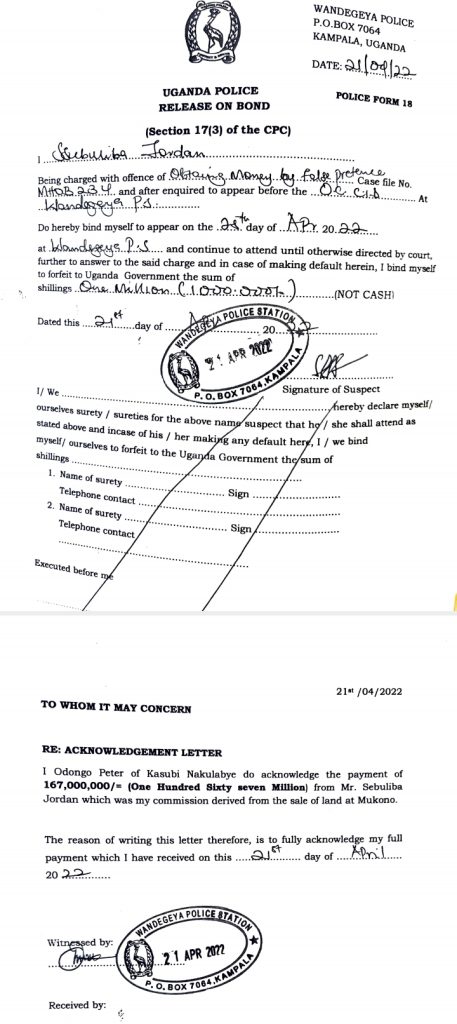
One April 21, 2021, Ssebuliba was given a release bond after being charged for obtaining money by false pretense under the case file no. MHOB 234 and was enquired to appear before the O.C CID at Wandegeya Police Station. He bound himself to appear at the station on of April 25, 2022 and failure to attend was required to pay Shs1 million. Sebuliba had falsely obtained Shs167,000,000/= (one hundred sixty-seven million) from Peter Odongo of Kasubi Nakulabye for the sale of land at Mukono.

Further, on March 18, 2024, Ssebuliba was released on bond over breach of contract under case file No.MU3 and after was required to appear before the Kira Police Station on March 20, 2025, for any default would lead him to pay shs1 million.

On August 29, 2024, Ssebuliba was further released on bond after being charged with the debt of Shs100 million and was enquired to appear before the DPC at Wandegeya Police Station.

As of September 16, 2024, Ssebuliba was released on bond after being charged with debt of Shs25 million and paid Shs10m and after enquired to appear before the OC station at Kansanga Police. He bound himself to appear at Kansanga Police station on Friday, October, 1, 2024 to continue and attend until otherwise as directed by the court further to answer the said charge. A one Jennifer Kangugure declared surety and bound to pay the remaining Shs15 million.
On October 28, 2024, Ssebuliba was freed on police bond over obtaining money by false pretense and was required to appear before the CID Jinja Road.

On October 24, 2019, Mr. Kiwanuka wrote to the Director, Criminal Investigations in Kibuli addressing the dangerous actions by his son Jordan Sebuliba.

Kiwanuka noted that when he searched through the office of Oscar Industries, he uncovered the documents relating to forgery activities of Mr. Jordan Sebuliba.

‘Authorization for LOWERHILL. MANAGEMENT LIMITED to hire Plots 21-29 Golf course Road by VISA INVESTMENT LIMITED. Tenancy agreement between VISA INVESTMENT LIMITED and LOWERHILL MANAGEMENT LIMITED. Renewal of agreement for premises on plot 1-29 Golf course Road. NEMA clearance certificate for the erection of structure of house up Market Restaurant on plots 21-29 Golf course Road. Rejection by NEMA of application to construct a restaurant and lounge on plot 21- 29 Golf course road and Application for power connection (UMEME) to plot 21-29 Golf course Road’.

He revealed that these were discovered in the cabinet of Adana Damula, Ssebuliba’s sibling and these documents were unknown to the business dealings of Visa Investment Ltd and the signatories were unauthorized persons in the company. He declared that those documents were false and forwarded them to police for further investigations.

Mr. Kiwanuka wondered how a child who was raised by him comes up to claim for the properties he has no share. He questioned whether Ssebuliba had bought these properties and told him (Kiwanuka) to keep them for him.

Ssebuliba claims that Kiwanuka is mentally ill and is unable to run the managerial roles of these properties and should be taken for rehabilitation and then he takes over the ownership of the properties.

“It is just and equitable that court adjudges Mr Mohan Kiwanuka as a person of unsound mind so that his estate can be placed under proper management and that I can be appointed manager for the purpose” Mr Ssebuliba submitted to court in his application affidavit witnessed by Fabian Odongon, a Commissioner of Oaths.

And indeed, on June 19, 2025, Jordan Ssebuliba wrote to court declaring himself as dully appointed manager of the Kiwanuka estate without involving the entire family and close members.

“Two family meetings were dully convened on June 14, 2025, and June 19, 2025, during the meeting held on June 19, 2025, the lineal descendants presented appointed me as the family representative. Accordingly, I hereby forward this notice of appointment for the record of this Honourable Court” Ssebuliba submitted to Court of Appeal on June 25, 2025.

However, Mr. Kiwanuka as a parent had earlier advised Sebuliba to apologize to him and demanded for his vacant possession of the plot at Golf Course Road and another one at Akii Bua Avenue in Nakasero.
Kiwanuka was forced to make this decision following the ‘bad character’ of Ssebuliba entering into possession of his property without Kiwanuka’s acknowledgment. Noting, “You will recall that you entered into the above properties without my knowledge which no other sibling of yours has ever done. You occupied these properties for the last ten years on a commercial basis generating money therefrom without any accountability and without paying any rent.”

Kiwanuka further noted “The reason I am doing this is because that you have decided to blow my decision to take away my properties out of my proportion and to portray me amongst your and other relatives as being inconsiderate and unreasonable which is not true,”

Kiwanuka further revealed that Ssebuliba dared and suggested that his father should close and sell his factory.

“Jordan, I was greatly disappointed and hurt. You cannot phantom where I have come from and achieve whatever I have achieved and for you to have the authority to dare to suggest that I should sell my factory because in your view I can no longer manage to run it was an insult,” Kiwanuka regretted.  

Stories Continues after ad

Gen. Sejusa: Don’t compare Balaalo to indigenous squatters

Gen. David Sejusa.

The former Spy chief, General David Sejusa, has spoken out on historical land injustices in Uganda’s cattle corridor, urging citizens to distinguish between the so-called Balaalo and indigenous squatters displaced by past regimes.

Sejusa via  X (formerly Twitter) said that most of the land in the cattle corridor stretching from the Tanzania border through Masindi and Nakasongola to the River Nile and Lake Kyoga was historically occupied by indigenous cattle-keeping communities, not by foreign pastoralists.

“Let me show you the distinction between the now (in) famous Balaalo and squatters of the cattle corridor ranching scheme,” Gen. Sejusa stated.

He noted, “The areas had traditionally been occupied by mainly cattle keepers. And please, understand that cattle keepers here is not synonymous with being Hima, or Tutsi. There are many other tribes who keep cattle in these areas, including indigenous Banyoro, Baruuli, Batooro, Basongora, etc.”

He recounted how the Obote I government, followed by the Idi Amin regime, implemented a sweeping ranching policy that carved up huge tracts of land into ranches. These were then allocated to government officials and those with political influence leaving out the original landowners most of whom were illiterate and lacked political clout.

“Obote I government created a ranching scheme covering this whole area. Ranches were created and allocated to government officials and those with government connections. The indigenous peoples who owned and occupied these areas were excluded from the scheme… they were never resettled elsewhere! ” Sejusa explained.

He noted that even families like his, which had invested in ranches by building dip tanks and dams in Ranch No. 1 and No. 2, were eventually dispossessed in favour of political elites of the day. The displaced communities, he added, became tenants and squatters on their ancestral lands paying rent in cattle to absentee landlords or powerful ranchers.

“These were Ugandans rendered homeless by their own governments, chased from their ancestral lands where even the wars between the Bachwezi and the Babiito couldn’t remove them,” he lamented, adding, “But Obote and Amin, and their henchmen, like Babiiha, dared!”

However, Sejusa dismissed comparisons between these historical squatters and the modern-day Balaalo pastoralists, some of whom are accused of encroaching on land in northern and western Uganda without legal rights or consideration for local communities.

“Never compare these people to the so-called Balaalo who go loitering in foreign land for greener pastures, literally! “Squatters of the ranch restructuring scheme had suffered great injustice which had to be addressed. The governments of Obote and Amin had not only committed a great wrong  but it was criminal,” Sejusa said

Reflecting on his own history of confronting land injustice, Sejusa revealed that his involvement dates back far before the controversial 2010 Buliisa evictions.

“My struggle against land injustice stretches far back. Even in the ranch restructuring scheme, I was central and it wasn’t easy! I remember the then Vice President, comrade Samson Kisekka, grilling me on the floor of Parliament (NRC) and my sister, Miria Matembe calling on the President to sack me as Minister of State for Defence because of my ‘actions’,” he said

Gen. Sejusa concluded by reaffirming his deep commitment to fighting injustice. Noting, “When I hear fellows telling me about Buliisa, I laugh. They know nothing. I don’t like injustice!” he said

Stories Continues after ad

Equity Bank Uganda boosts rural youth enterprise through trainings and loans

In different rural areas of Uganda, a quiet but powerful transformation is unfolding led by young people who are now reshaping their futures through financial literacy and access to capital.

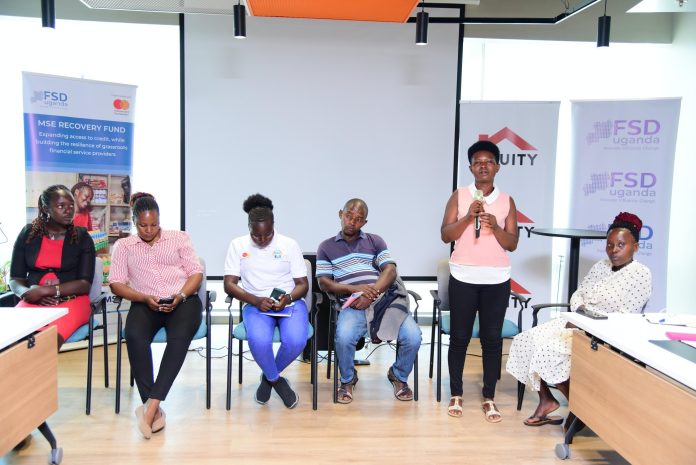
At the heart of this movement is Equity Bank Uganda, whose partnership with the Mastercard Foundation under the Young Africa Works strategy is equipping youth-led micro and small enterprises with the knowledge and resources to succeed.

Many of these young entrepreneurs began their journeys without the tools to manage even the smallest businesses.

“I didn’t keep records or track sales. I would use stock for myself without accounting for it,” a young woman from the Chitwe Youth Farmers Group shared, reflecting on her early challenges running a small salon business.

In Fort Portal, a farmer said he had “no knowledge about money” and often mishandled earnings from agriculture.

In Nakivale, members of the No Empire Women Empowerment Association faced similar chaos. “We had many misunderstandings because we didn’t know how to plan or budget,” a leader admitted.

From Rhino Camp to Isingiro, this pattern repeated—youth struggling with savings, poor business management, and no access to finance. That changed when Equity Bank introduced financial literacy sessions between 2021 and 2023. The training was hands-on and practical, covering bookkeeping, budgeting, inventory management, and how to separate personal and business income.

“I learnt how to track my expenses, monitor stock, and record everything,” said the Chitwe youth, adding, “For the first time, my business made a profit.”

The Fort Portal farmer echoed this shift. “I started budgeting and keeping records. That’s what helped me manage my loan.”

For Nakivale’s No Empire group, the lessons brought structure and trust, helping members align on goals and operate more effectively.

With this new knowledge, youth accessed working capital through Equity Bank’s group lending model. These loans—often between Shs2 million and Shs5 million—require no collateral, making them accessible even to those with limited assets. The Fort Portal entrepreneur used his loan to invest in agriculture, start a mobile money shop, and enroll in a business degree. “Because I understood money, I used it well,” he said.

Others diversified too. In Chitwe, the young salon owner bought large dryers, started poultry farming, and expanded her group’s ventures. In Nakivale, Shs5 million helped No Empire launch tailoring and digital literacy training programs, generating jobs and income. In Rhino Camp, a youth group used funds to construct training facilities and empower 56 members, mostly women, in bakery and catering.

The ripple effects have been remarkable. One formerly struggling salon is now supporting a single mother’s household and educating her children. “My life changed completely,” she shared. “I even mentor others now.” In Isingiro, Misha Dan turned her hair-braiding business around, began poultry farming, and became a mentor to women in six subgroups. “I’m proud to share what I’ve learned,” she said.

In Nakivale, refugee women used their skills to tackle gender-based violence and reduce unemployment. “Each member now has a skill to earn from,” a leader said. Communities have since launched soap-making cooperatives, savings groups, and new enterprises—all sparked by training and accessible finance.

While success stories continue to emerge, these youth are calling for more. “We need refresher courses to help new members and stay sharp,” said the Chitwe entrepreneur.

In Fort Portal, the demand for financial education remains strong. Groups have grown, and members want higher loan limits to support expanding ventures. “Shs5 million isn’t enough when you have 30 people,” a Rhino Camp leader noted.

Still, the progress is undeniable. Many of these youth now run sustainable businesses, employ others, and act as mentors in their communities.

Equity Bank Uganda and the Mastercard Foundation’s vision is becoming a reality one where young people no matter their background have the tools to build lasting livelihoods and drive community development. With continued support and a listening ear, this generation is not just being uplifted—they are lifting others with them.

Stories Continues after ad

 Victoria University, Kyabazinga partner to transform education in Busoga

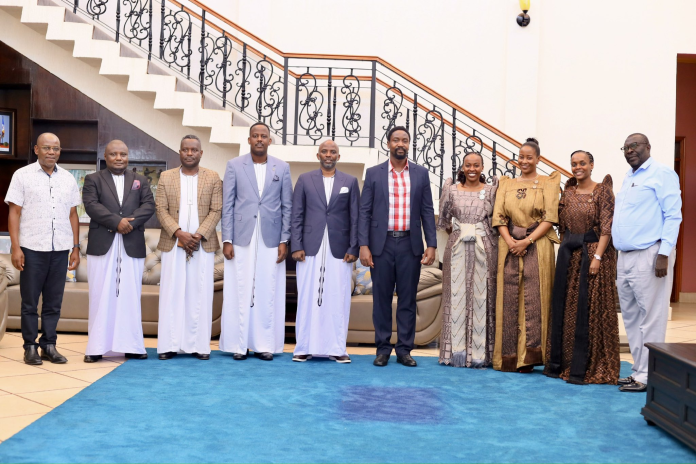
Kyabazinga of Busoga William Gabula Nadiope IV and a team from Victoria University led by the Vice Chancellor, Dr. Lawrence Muganga at the Igenge Royal Palace.

Victoria University Vice Chancellor, Dr. Lawrence Muganga has announced the institution’s commitment to revolutionizing education in Busoga following a high-level meeting with the Kyabazinga of Busoga, His Majesty William Gabula Nadiope IV, at the Igenge Royal Palace.

“Today, Victoria University was deeply honored to meet His Majesty William Gabula Nadiope IV, the Kyabazinga of Busoga, at the magnificent Igenge Palace. I sincerely thank His Majesty for his warm and gracious invitation, ” Dr. Muganga said.

He praised the Kyabazinga as a forward-thinking monarch whose leadership continues to inspire development and educational advancement in the region.

“His Majesty stands among the world’s most visionary and educated leaders. I greatly admire his firm commitment to the progress and welfare of the people of Busoga,” Muganga noted.

Their meeting, he said, focused on a shared belief in education as the cornerstone of social transformation.

“Our conversation was both inspiring and encouraging, grounded in our shared conviction that quality education transforms lives and strengthens communities,” he said.

Dr. Muganga announced that Victoria University is ready to collaborate with the Busoga Kingdom to extend innovative, technology-powered education to underserved areas.

“Victoria University is eager to join hands with His Majesty and the people of Busoga to bring cutting-edge, tech-driven learning to every corner of the kingdom,” he stated.

“We want to ensure that no learner is left behind.”

He emphasized that the initiative will focus on inclusive and accessible education, empowering future generations through digital tools and modern learning methods.

“This collaboration is particularly meaningful to me because it champions inclusive education through innovative solutions,” Muganga said.

He added, “By working together, I am confident we will unlock new opportunities, empower countless young minds, and build a brighter, more inclusive future for generations of Ugandans in Busoga and beyond.”

Stories Continues after ad

Equity Bank, Unilever Uganda launch stock financing to boost distributor liquidity

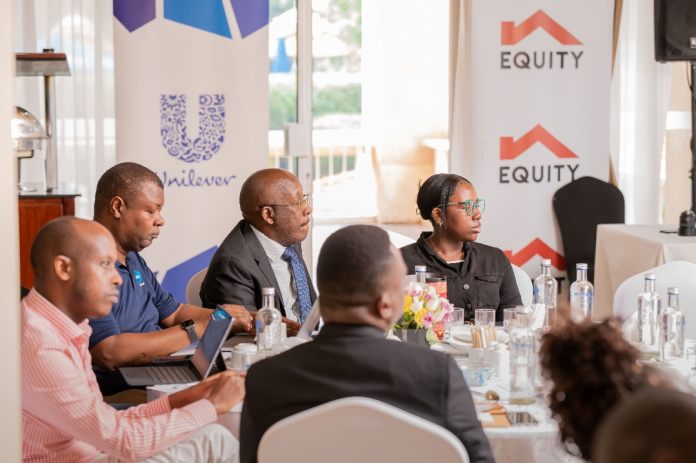
Participants from Equity Bank Uganda in partnership with Unilever Uganda.

Equity Bank Uganda in partnership with Unilever Uganda has announced a strategic financing strategy aimed at enhancing liquidity and operational efficiency within Unilever’s distribution network.

The partnership, launched at a breakfast engagement themed “Unlocking Financing Opportunities for Distributors,” introduces the Eazzystock Financing Product, a working capital loan solution specifically designed for distributors, retailers, and stockists.

This initiative provides easier access to affordable working capital, enabling Unilever’s distribution partners to maintain inventory levels, improve cash flow management, and strengthen the supply chain across Uganda.

“At the heart of Equity’s mission in Uganda is driving social and economic transformation,” said Christine Mukasa Mugerwa, Acting Head of Corporate Banking, Equity Bank. “That bar of soap matters. So how do we ensure it reaches the people who need it while transforming the shop attendant’s life in the process?”

The financing offers flexible working capital loans ranging from sh1 million to sh3 billion. The application process involves a single one-time sign-up, with account auto-sweep functionality enabled. Loan terms and usage are reviewed quarterly. Loans up to UGX 1 billion are unsecured, while those exceeding this amount require security or collateral.

“You need funds that move as fast as your business,” added Christine Mukasa Mugerwa. “Equity’s working capital solutions, tailored for real world businesses like those in the Unilever ecosystem, are quick, convenient, and require just a one-time sign-up. Access up to sh3 billion.”

New partnership between Equity Bank Uganda and Unilever Uganda

Barbara Aseera, Head of Manufacturing and Logistics, Equity Bank Uganda, emphasized the strategic impact of the partnership, stating, “This partnership facilitates easier access to affordable working capital, enabling Unilever’s distribution partners to maintain inventory levels, improve cash flow management, and ultimately strengthen the supply chain across Uganda.”

She further noted, “Equity Bank’s stock financing model was born out of a need to keep businesses alive in the wake of COVID-19. We recognised that many longstanding distributors had their working capital wiped out, and we stepped in to ensure business continuity.”

Gerald Tentena, General Manager – Supreme Branch, Equity Bank Uganda, highlighted the tailored approach of the financing solutions: “Together with partners like Unilever, we’ve developed tailored financial solutions that meet the unique needs of specific distributor networks. It’s not a one-size-fits-all model; it’s deliberate and responsive.”

Luck Ochieng, Managing Director—Unilever Kenya & Uganda, speaking virtually from Nairobi, praised the collaboration: “Our success in Uganda is built on the strength of partnerships like the one we have with Equity Bank. Together, we’re not only moving product, we’re creating opportunities for shared growth.”

Stories Continues after ad

Kabira Country Club unveils special wedding offers ahead of 2025 Bride & Groom Expo

Kabira Country Club.

As Uganda’s biggest wedding exhibition—the Bride and Groom Expo, draws near, Kabira Country Club is set to charm soon-to-be-weds with an unbeatable wedding offer tailored to make dream celebrations a reality.

Slated for June 27–29, 2025, at the UMA Exhibition Hall in Lugogo, the event promises a weekend of glamor, planning and unforgettable deals.

Kabira Country Club will be showcasing at Stall No. 6, where guests will get a chance to explore the hotel’s beautifully curated wedding packages. Among the standout offers is a complete wedding package going for only Shs85,000 per person. This special deal includes a full buffet with soda or water, tables and chairs, two bottles of wine, a one-night stay for the couple on the wedding day, a dedicated service team, and a 10% discount on salon services at Eric’s Salon.

Located in the heart of Bukoto, Kabira Country Club is known for its serene ambience, luxurious amenities, and exceptional event spaces. The offer not only promises value for money but also a stress-free planning experience for couples looking to tie the knot in elegance and style.

The Bride and Groom Expo now in its 16th edition is organized by The New Vision and is the ultimate convergence of Uganda’s wedding industry players. It serves as a platform for vendors, planners, and hospitality providers to network and showcase what’s trending in wedding services.

For those attending the expo, a visit to Kabira Country Club’s stall might be the first step toward planning a perfect wedding celebration. Visitors will also enjoy personalized consultations and access to exclusive expo-only promotions.

For bookings and inquiries, interested couples can reach out via +256 707 780 145 or +256 752 711 738.

Stories Continues after ad

No room for dual citizenship between Uganda and Rwanda –Museveni

President Museveni with some of the leaders of Banyarwanda community.

President Yoweri Museveni has reaffirmed his government’s commitment to safeguarding the rights and identity of the Ugandan-Banyarwanda community, while drawing a firm line against the practice of holding dual citizenship for individuals seeking to identify as both Ugandan and Rwandan.

During a meeting held at State House Entebbe, Museveni engaged with a delegation from the Ugandan-Banyarwanda community to address longstanding concerns about identity, citizenship and perceived discrimination.

“I met with a group from the Ugandan Banyarwanda community at State House in Entebbe,” the President stated.

He added, “I assured them of my commitment to protecting their rights and identity as Ugandans. Those who have lived here for decades and are recognised by local leaders should not be harassed.”

Museveni emphasized the importance of recognizing Ugandan Banyarwanda as an integral part of the national fabric, provided their roots and residence in Uganda are verifiable and longstanding.

However, the President was unequivocal in his position against dual allegiance.

“What we cannot accept is dual citizenship,” he asserted. “One must make a choice; you cannot be both. Even I, as a Muhooro, recognise this. If I wish to be Rwandan, I would go to Rwanda, but I cannot claim both identities.”

He further explained that while cultural ties and heritage may span across borders, legal and civic identity must remain clear and singular to avoid confusion and undermine national cohesion.

To address issues of verification and resolve disputes around identity claims, President Museveni announced the formation of a committee.

“We will form a committee to ensure fairness and truth prevail,” he said. “The goal is to examine each case honestly and ensure those who qualify as Ugandans are fully protected under the law, while maintaining the integrity of our citizenship framework.”

The President’s remarks come amid ongoing concerns from some members of the Ugandan Banyarwanda community who allege discrimination in various regions, including challenges in accessing national identity cards, land rights, and full citizenship recognition.

Museveni’s assurance is expected to ease tensions and pave the way for structured dialogue and resolution through the forthcoming committee, which is anticipated to include representatives from the community, government, and local authorities.

Stories Continues after ad

Uganda’s diaspora fuels development as remittances hit Shs5.6tn – BoU

Najjera Heights apartments.

Uganda’s diaspora continues to play a transformative role in national development, with remittances reaching over $1.5 billion (approximately $5.6 trillion) in 2023 equivalent to 3% of the country’s GDP, according to the Bank of Uganda.

As the world marked the International Day of Family Remittances (IDFR) 2025, the central bank hailed remittances not only as vital support for families but as a powerful engine for sustainable economic growth.

“Uganda continues to benefit immensely from the dedication and resilience of its diaspora,” said Milly Nalukwago Isingoma, Director of the Statistics Department at the Bank of Uganda.

“These funds are not just remittances—they are lifelines. They pay for health care, educate children, fund housing, and support entrepreneurship.”

The Bank of Uganda joined this year’s IDFR global campaign with a strong endorsement of its five-point agenda which includes reducing the high cost of remitting funds and leveraging technology to promote inclusive financial access.

“This campaign rightly calls for recognizing remittances as a critical force in financing development,” Isingoma noted.

Isingoma added, “We fully support efforts to lower remittance costs from an average of 15% to 3%, expand digital financial inclusion, and create investment instruments that tap into diaspora capital.”

In partnership with IFAD, Uganda’s central bank has already taken bold steps to improve remittance oversight by modernizing its data framework. The upgraded system now integrates fintechs and mobile money operators, enabling real-time, weekly transaction-level reporting.

“This reform is not just technical, it’s transformative. It ensures transparency, supports targeted policymaking, and builds resilience across the financial system,” Isingoma stressed.

Uganda’s Second National Financial Inclusion Strategy (NFIS 2023–2028) further positions remittances as a key pillar for empowering households and expanding access to financial services like savings, credit, and insurance especially for rural and climate-vulnerable communities.

“We see remittances as more than just personal support—they’re a springboard for inclusive finance,” Isingoma added.

Further noted, “We are committed to transforming every dollar sent home into long-term opportunity, ensuring no family is left behind.”

With over USD 1.5 billion in inflows annually, Uganda is among Africa’s top recipients of remittances.

Isingoma urged, “Let us use the momentum of the IDFR 2025 campaign to unlock the full potential of remittances as a billion-dollar development force for Uganda and beyond.”

“Let us use the momentum of the IDFR 2025 campaign to unlock the full potential of remittances as a billion-dollar development force for Uganda and beyond,” Isingoma urged.

Stories Continues after ad

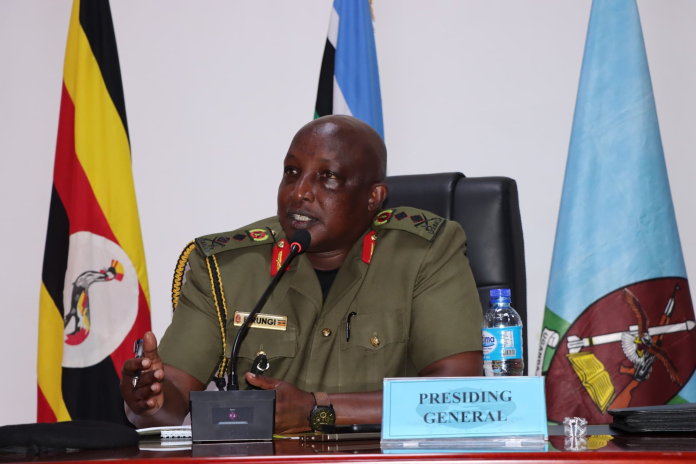
Maj Gen Birungi Sent to Burundi as Military Attaché

Maj. Gen. Birungi.

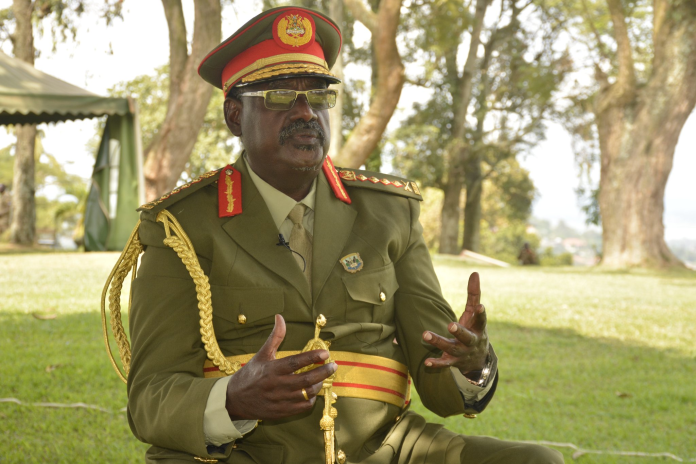
The Chief of Defence Forces (CDF), Gen Muhoozi Kainerugaba, has removed Maj Gen James Birungi from his position as commander of the Mountain Infantry Division just two months after his appointment, and reassigned him to Bujumbura, Burundi, as Uganda’s new Military Attaché and Defence Advisor.

The swift redeployment follows a recent reshuffle in which Maj Gen Birungi had swapped roles with Maj Gen Richard Otto, moving from the Chieftaincy of Military Intelligence (CMI) to the Mountain Division in April 2025.

Brig Gen Paul Muwonge, who has been serving as Deputy Commander of the division, has been elevated to replace Birungi as the new commander of the Fort Portal-based unit. He will also lead Operation Shujaa, the joint UPDF-FARDC mission against Allied Democratic Forces (ADF) rebels in eastern DRC.

“The Chief of Defence Forces (CDF) of the Uganda People’s Defence Forces (UPDF), General Muhoozi Kainerugaba, has appointed Brigadier Paul Muwonge as the new commander of the UPDF Mountain Infantry Division based in Fort Portal, western Uganda,” said Col Chris Magezi, the outgoing Acting UPDF Spokesperson.

He added, “Brigadier Muwonge has been elevated from his previous role as Deputy Commander of the same division, replacing Maj Gen James Birungi, who assumed command in April this year.”

The reassignment of Maj Gen Birungi to a foreign diplomatic military post comes at a time when the UPDF is grappling with internal investigations involving two senior intelligence officers linked to suspected subversive activity.

According to military sources, Col Peter Ahimbisibwe (Director of Counter Terrorism) and Lt Col Ephraim Byaruhanga (Director of Special Operations) were recently arrested from the Defence Intelligence headquarters in Mbuya. Both are reportedly former close associates of Maj Gen Birungi during his time as Chief of Military Intelligence.

“Brigadier Muwonge has been elevated from his current position of Deputy Commander in the same division, replacing Major General James Birungi who assumed command in April this year,” said Col Chris Magezi, Military Assistant to the Chief of Defence Forces – UPDF in a statement this Wednesday night.

The UPDF has not formally linked the arrests or Birungi’s reassignment to the ongoing internal probe. However, sources suggest the arrested officers oversaw units that may have been infiltrated by ADF operatives.

Maj Gen Birungi replaces Brig Gen Simon Ochan, who has completed his diplomatic tour in Bujumbura and will return to the Joint UPDF Services Headquarters for reassignment.

“Major General Birungi now moves to Bujumbura, Burundi, as Uganda’s Military Attaché and Defence Advisor (DA) in the country,” Magezi confirmed.

Brig Gen Muwonge, who recently accompanied the CDF on an official mission to Kinshasa, is now tasked with leading both the division and Operation Shujaa—a high-stakes deployment targeting one of the region’s most notorious terrorist groups.

“Brigadier Muwonge who recently accompanied the CDF on an official working trip to Kinshasa, DRC, now also assumes command of the ongoing Operation Shujaa, a joint operation with DRC’s military forces (FARDC) to degrade and destroy the Allied Democratic Forces (ADF) terrorist group that operate in some parts of eastern DRC.”

While the UPDF remains silent on whether Maj Gen Birungi’s reassignment is connected to the unfolding security probe, the timing has fueled speculation and intensified scrutiny of the inner workings of Uganda’s military intelligence apparatus.

Stories Continues after ad

Victoria University opens July 2025 Intake: Your step-by-step application guide

Victoria University.

Victoria University, Uganda’s leading private institution has officially opened applications for its July 2025 intake. With three intakes each year, this mid-year window offers a great opportunity for students ready to begin or advance their academic journey without waiting for the next academic calendar.

If you’re considering applying, here’s a simple, step-by-step guide to walk you through the process:

Step 1: Complete the Online Application Form

Visit Victoria University’s official website at www.vu.ac.ug and fill out the application form. Ensure all information is accurate and up to date to avoid processing delays.

For international undergraduate applicants, required documents include:

 · A copy of a diploma certificate (if applicable), certified by the National Council for Higher Education (NCHE)

 ·  A copy of an equated certificate (if applicable) from NCHE

 ·  A copy of an equated secondary certificate from UNEB

 ·   A valid form of identification (national ID, passport, or birth certificate)

Step 2: Application Fee Payment

After submitting the online form, you will receive a mobile payment prompt. The application fee is Shs50,000 for Ugandan applicants and Shs60,000 for international students. Complete this payment promptly to proceed.

Step 3: Application Review

Your application will only be reviewed once the application fee has been received. The admissions team will verify that all documents meet the necessary requirements.

Step 4: Further Instructions

If your application passes the initial review, you may be required to pay an admission fee—Shs200,000 for Ugandan students and Shs235,000 for international applicants. You may also be asked to submit any missing documents or correct incomplete information.

Step 5: Admission Decision

Victoria University is committed to a fast and efficient admissions process. Once your application is fully reviewed, you should receive your admission letter within one to two business days. In case of any delays, applicants are encouraged to contact the university’s admissions office for assistance.

Stories Continues after ad