Stanbic Bank
Stanbic Bank
20.6 C
Kampala
Stanbic Bank
Stanbic Bank
Home Blog Page 95

MP Ayume urges community-led fight against drug theft

Ugandan lawmaker Dr. Charles Ayume has called for grassroots mobilisation to combat the persistent theft of government medicines, arguing that communities must take the lead rather than relying solely on top government officials.
Ayume, who chairs Parliament’s Health Committee and represents Koboko Municipality, said progress has been made through digital tracking, embossing, and audits spearheaded by the Ministry of Health and the National Medical Stores (NMS).
But he warned that medicine pilferage remains widespread, especially in rural areas with limited oversight.
“It starts with the person in the village. It is not President Museveni’s affair or the Minister of Health,” Ayume said in an interview.


“Members of the community are the best whistleblowers to tell us where the theft is happening, and we swing in.”

He urged local leaders, boda boda riders, religious figures, and village health teams (VHTs) to front community sensitisation efforts, saying such groups are best placed to protect medicines bought with taxpayers’ money.
Government drugs are embossed with “UG” and labelled “Not for Sale,” but leakages into private pharmacies and black markets remain common.
NMS has said the theft undermines public health programmes and erodes trust in the system.
Ayume called for awareness campaigns through radio, schools, and village meetings to encourage reporting of theft and to ensure medicines reach intended patients.
“This cannot be a top-down enforcement approach,” he said. “It must be a people-led movement. Communities must understand that stolen medicine is stolen life.”

Stories Continues after ad

What Changed My Life After Years of Living Paycheck to Paycheck

My name is Sarah Namukasa, a 34-year-old mother of two living in Nansana, Wakiso District. For many years, my life was the same routine wake up early, rush to work in Kampala, return home exhausted, and still wonder where all my money had gone.

I was earning a decent salary from my office job, but by the end of every month, I had nothing left to show for it. Rent, school fees, transport, feeding, and endless small emergencies left me broke. Sometimes I even had to borrow before mid-month just to survive.

This cycle of living paycheck to paycheck drained me emotionally. I felt stuck working so hard but never moving forward. My dream of starting a small retail shop in Kasubi seemed impossible. I had lost hope.

How I Discovered Masunga Doctors

One afternoon, while visiting my cousin in Mukono, she told me about her own struggles with money and how she managed to turn her life around with the help of Masunga Doctors. At first, I didn’t take her seriously I thought it was just another one of those quick fixes people talk about.

But when I saw the changes in her life how she had managed to clear her debts, open a small salon, and even bought a piece of land I was shocked. She told me about something called the Financial Cleansing and Abundance Rituals that helped her remove the spiritual and emotional blockages that kept her stuck in poverty.

That evening, I went home thinking deeply. Out of desperation, I decided to try.

The Journey with Masunga Doctors

When I reached out to Masunga Doctors, they didn’t just promise miracles. Instead, they guided me through a process:

  1. Cleansing Rituals – I was given herbal baths and simple daily prayers to release negativity and past burdens. They explained that sometimes poverty is tied to generational curses or hidden envy from people around us.
  2. Mindset Shift – I was encouraged to change how I spoke about money. Instead of saying “sente zange tezimala” (my money is never enough), I began affirming that “I attract wealth and abundance.”
  3. Financial Discipline – They advised me to start saving little by little, even if it was just UGX 5,000 a day. I was also taught to track every shilling I spent.
  4. Spiritual Guidance – I was given protection charms to shield me from people who might wish me financial failure.

The Transformation

Slowly, my life began to change:

  • Within two months, I managed to clear a UGX 500,000 debt that had been stressing me for over a year.
  • My boss unexpectedly offered me extra allowances after I took on more responsibilities at work.
  • I finally saved enough to start a small retail shop in Kasubi, something I had been dreaming about for years.
  • Even my children’s school fees stopped being a constant nightmare I could pay on time without borrowing.

The biggest change, however, was in my peace of mind. For the first time in years, I felt in control of my life. I stopped living in constant fear of money running out.

My Message to Others

Living paycheck to paycheck can make you feel hopeless, but I’m here to tell you that change is possible. What I learned from Masunga Doctors is that financial freedom is not only about working hard it’s also about removing hidden blockages, having discipline, and opening yourself to opportunities.

Today, I’m planning to expand my shop and even buy a small piece of land in Gayaza for my family.

If you’re struggling like I was, don’t give up. There is always a way out.

📍 Masunga Doctors Contact Information

Stories Continues after ad

City tycoon Sudhir unveils luxury One Ten Apartment Tower in Kololo

Ugandan Billionaire Sudhir Ruparelia has launched Uganda’s most ambitious residential project to date: the One-10 Apartments, a 15-storey luxury tower set to redefine upscale living in Kampala’s elite suburb of Kololo.

Situated on Prince Charles Drive, one of the city’s most affluent and secure neighbourhoods, the complex comprises 156 premium apartments ranging from one to four bedrooms. These include exceptionally spacious two-bedroom units—from 123 m² to 170 m²—and three-bedroom apartments in multiple variations between 183 m² and 250 m², plus a sumptuous four-bedroom spread of 247 m².

Its name, One-10, reflects more than just a brand. “One” signifies being the number-one choice for sanctuary-style accommodation, while “Ten” embodies the ten hallmarks of luxury: prime location, expansive space, unique comfort, elegant interiors, scenic views, a healthy environment, top-tier security, striking architecture, aesthetic beauty, and premium amenities.

What makes One-10 even more compelling is its premium lifestyle offerings. Italian tiles, high-end finishes, and modern design bring elegance to every corner. The building is crowned with a tranquil swimming pool—an oasis in the sky, flanked by a pioneering poolside bar and a proposed café—the first such feature in Uganda’s condominium developments. Down below, the building ensures security and comfort through underground water storage, backup generators, and secure parking across two basement levels.

Launched under Meera Investments’ build-to-sell arm, a division introduced in 2018, One-10 is the company’s most grandiose residential project yet, joining earlier successes like Tagore Living and Bukoto Living. Prospective buyers can reserve a home with a 20% deposit, and investors can look forward to attractive annual rental yields ranging from 8% to 16%—driven by Uganda’s rising housing demand and growing population.

Beyond just luxury, Sudhir emphasized One-10’s broader economic and cultural significance. Speaking at the launch, he noted real estate’s pivotal role in wealth creation and reaffirmed Meera Investments’ mission to offer top-tier properties to both Ugandans and the global investor community. Sheena Ruparelia, Managing Director of the Ruparelia Group, echoed this ambition, describing One-10 as a fusion of Kololo’s prestige with contemporary design and community spaces.

Kololo’s allure—its green enclaves, diplomatic presence, and proximity to Kampala’s social hubs—makes One-10’s location a standout selling point. Residents will enjoy sweeping city panoramas, enhanced security, and easy access to bars, lounges, and shopping, all while basking in serene urban living.

This development does more than add to Kampala’s skyline—it signals Sudhir’s vision as a custodian of Uganda’s urban future. As part of a portfolio that spans commercial towers, hotels, and mixed-use projects like Kingdom Kampala and Pearl Business Park, One-10 underscores a strategic investment in the city’s growth while offering tangible returns and elevated living standards.

One-10 Apartments are now available for purchase. With construction slated to complete in late 2024 and handover expected in 2025, this project represents both a luxurious home for individuals and families, and a compelling opportunity for savvy investors poised to capitalize on Kampala’s expanding real estate market.

Stories Continues after ad
PAC slams stalled Mubende road after Shs2.5b spent on supervision alone

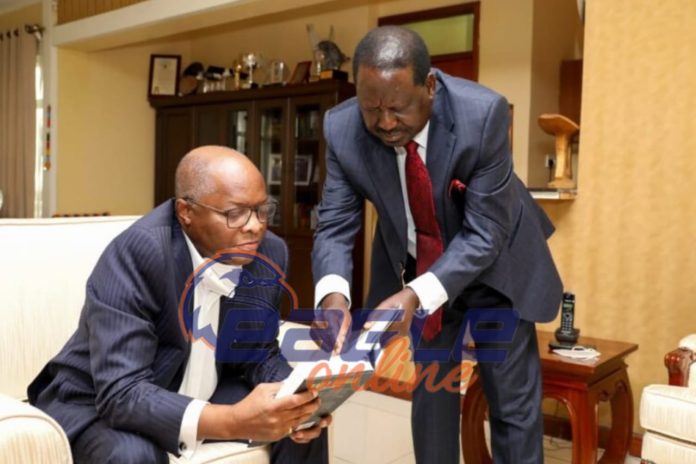
Road equipment on the stalled road site.

The Parliamentary Public Accounts Committee (PAC) on Central Government has raised alarm over the stalled Mubende road project, describing it as a glaring example of how billions of taxpayers’ money are lost to inflated contracts, weak supervision, and poor loan absorption.

Presenting the committee’s findings from the Auditor General’s report for the 2023/2024 financial year, PAC Chairperson Muhammad Muwanga Kivumbi (Butambala County) said the Mubende road has remained incomplete despite billions being allocated, with supervision alone consuming Shs2.5 billion for a stretch of just 2.86 kilometres. On-site inspections revealed that construction equipment has been abandoned for months, leaving residents stranded and businesses struggling as the road remains impassable.

“This project is a glaring example of how borrowed money is wasted. The road is incomplete, yet contractors and supervisors have already been paid billions,” Muwanga Kivumbi told Parliament during a plenary sitting chaired by Speaker Anita Among.

The Mubende road saga was presented alongside shocking cost discrepancies in other projects. The report highlighted that the rehabilitation of 1.37 kilometres in Arua City cost Shs13.4 billion, while 2.68 kilometres in Fort Portal City consumed Shs21.4 billion. By contrast, Mbarara City upgraded a kilometre of road for only Shs4.9 billion. According to the Ministry of Works and Transport, the average cost of upgrading a kilometre of paved road is Shs3.1 billion, meaning that both Arua and Fort Portal projects were billed at over three times the reasonable estimate.

“The Fort Portal project alone could have financed nearly seven kilometres of road at average cost, but only 2.6km was delivered,” Muwanga Kivumbi observed, warning that the pattern pointed to deliberate inflation of contracts.

The committee further condemned skyrocketing supervision costs, such as Shs3 billion spent to oversee the 1.37km project in Arua, arguing that such expenses reflect collusion between contractors and government officials.

Beyond inflated road contracts, the Auditor General’s report revealed widespread failure in loan absorption. Out of Shs7.958 trillion in loans and Shs3.97 trillion in grants accessed in the year under review, less than half of the loans and just a quarter of the grants were put to use. In 17 major government loans examined, the average disbursement rate was 36.7 percent, with the Mbarara–Masaka Transmission Line disbursing only 0.3 percent despite its completion deadline passing in June 2023.

Speaker Anita Among expressed outrage at the findings, particularly the revelation that Uganda continues to service interest on idle loans while projects like Mubende road stall.

“We need to look at this seriously because we are paying for loans that we are not using. We will dedicate a full day for this item to be debated,” she said, directing the Ministry of Finance to update Parliament on the status of borrowed but unused funds.

Minister for Defence and Veteran Affairs, Jacob Oboth, added his voice to the call for reforms, urging Parliament to develop strong policies that ensure better loan absorption and value-for-money in infrastructure spending.

PAC warned that unless corruption, poor planning, and weak oversight are urgently addressed, Uganda risks plunging deeper into debt with little to show for it. 

“These inflated costs have deprived Ugandans of better roads, schools, and hospitals. Borrowed money is wasted on enriching a few individuals,” the committee’s report noted.

The stalled Mubende road, with its idle machinery and wasted billions, now stands as the clearest symbol of how poor oversight and inflated contracts are undermining Uganda’s development efforts.

Stories Continues after ad
Parliament approves Shs374b IFAD loan for livestock project in 55 districts

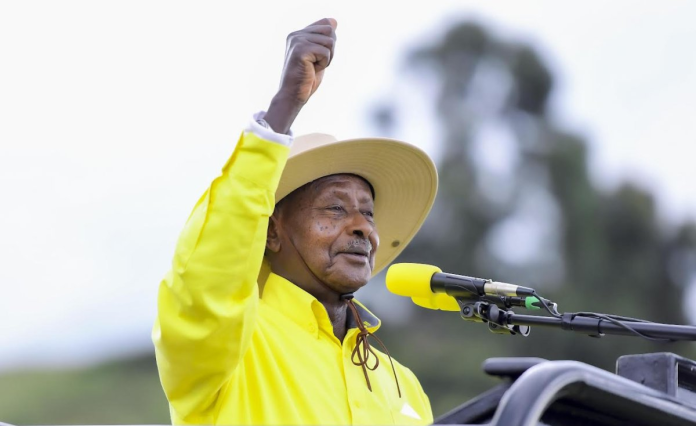
Minister Henry Musasizi

Parliament has approved the government’s request to borrow up to $99.6 million (about Shs374 billion) from the International Fund for Agricultural Development (IFAD) to finance the Resilient Livestock Value Chain Project (ReLiV) in 55 districts, despite sharp disagreements among MPs over its design, cost components, and beneficiaries.

The loan request was presented by the Minister of State for Finance, Planning and Economic Development (General Duties), Henry Musasizi, during a plenary sitting on Tuesday, September 9, 2025, chaired by Speaker Anita Among.

“The goal of the project is to contribute to improved livelihoods of smallholder livestock farmers in Uganda. The project development objective is to enhance income, nutrition and resilience of smallholder dairy and beef producers,” Musasizi explained, adding that the project targets districts along the cattle corridor with high levels of poverty, food insecurity, and malnutrition.

According to the minister, the ReLiV project will directly benefit 400,000 households and an estimated 20 million people indirectly, with at least 40 percent of the beneficiaries being women and 25 percent youth.

However, while presenting the report of the Committee on National Economy, Chairperson Hon. John Bosco Ikojo (Bukedea County) recommended approval of the loan but called for its re-negotiation.

“The loan should be re-negotiated to move resources from consumptive items to acquisition of goods, services, and inputs, as well as equipment and materials,” Ikojo said. He pointed out that Shs600 million had been earmarked for the purchase of vehicles, an expenditure he argued was unnecessary.

The committee further noted that while the IFAD loan terms were highly concessional—with zero interest, a long maturity period, and a 50-year repayment window—members were not given adequate time to scrutinise the loan before approval.

“The committee notes that the proposed financing terms of IFAD are highly concessional with long-term maturing and grace periods. Of recent, government has not been having access to such concessional loans,” Ikojo stated.

But some MPs voiced strong objections. Ibrahim Ssemujju Nganda (FDC, Kira Municipality) warned that Parliament should not rubber-stamp the loan without addressing the committee’s concerns.

“With the proposals that the committee has made, they have left us with no options but to say no to this loan request. I think they are only polite not to make government look bad,” Ssemujju argued.

In defence, Minister Musasizi insisted the loan was urgently needed and had favourable conditions. “To allay Ssemujju’s fears, I would like to clarify that this loan has the best terms. The interest rate is zero and the repayment period is 50 years,” he said, stressing that the government must sign the agreement before 12 September 2025.

But other legislators, including Hon. Muhammad Muwanga Kivumbi (NUP, Butambala County), questioned whether the funds would truly reach farmers. He noted that US$59 million out of the US$99.6 million was allocated to government institutions such as the National Agricultural Research Organisation (NARO) and Kawanda Agricultural Research Institute.

“You do not see a farmer, you only see government ranches being financed. So, who is benefiting from this loan?” Muwanga Kivumbi asked. He also criticised the plan to spend US$8 million on project management, describing it as wasteful. “This looks like a classical failed project that is intended to benefit only the elite, and I am not convinced that this committee has had time to look at the benefits of this project.”

Despite these concerns, the House voted to approve the Shs374 billion loan, though pressure remains on government to re-negotiate the financing plan to reduce administrative costs and ensure the funds directly support farmers in the cattle corridor.

Stories Continues after ad

Germany backs €16.8m Aga Khan University expansion in Kampala

Aga Khan University-Kampala.

The Aga Khan University (AKU) will tomorrow inaugurate two new state-of-the-art buildings for its Graduate School of Media and Communications (GSMC) and School of Nursing and Midwifery (SONAM), in an investment aimed at expanding educational and employment opportunities in Uganda and the wider East African Community.

The facilities, located at the university’s Kampala campus, were made possible through a €16.8 million grant from the German Federal Ministry for Economic Cooperation and Development (BMZ), channeled through KfW Development Bank.

According to a statement from the German Embassy in Kampala, the development reflects Germany’s continued commitment to strengthening higher education, professional training, and skills development in Africa.

“This investment represents a significant step towards improving access to quality education and creating meaningful employment opportunities across the East African Community,” the Embassy noted.

The new buildings are expected to enhance training capacity in two critical sectors – media and healthcare. The GSMC will offer cutting-edge facilities for journalists, communicators, and digital media specialists, while SONAM will provide expanded space for nursing and midwifery education to address regional health workforce gaps.

The German Embassy emphasized that the collaboration aligns with both Uganda’s national development goals and regional integration efforts under the EAC.

“By investing in education, we are investing in the future. These facilities will equip young professionals with the skills they need to contribute to sustainable development in their countries,” the statement added.

The inauguration ceremony will bring together Ugandan government officials, representatives from the German Embassy, Aga Khan Development Network, and education sector stakeholders.

This expansion marks the long-standing partnership between Uganda, Germany, and the Aga Khan Development Network, reinforcing Kampala’s position as a hub for regional academic excellence.

Stories Continues after ad

How Masunga Doctors Changed a Businessman’s Life in Uganda Through Spell Casting

In the busy trading heart of Kampala’s Kikuubo Lane, a man named Joseph Kato once lived in despair. Joseph was a hardworking businessman who ran a small electronics shop. Day after day, he opened early and closed late, yet his sales remained painfully low.

His competitors thrived, while he struggled with unexplained losses. Sometimes goods would disappear mysteriously, other times customers would walk past his shop as if it didn’t exist. His debts grew heavier, his children were sent home from school for lack of fees, and his wife, Sarah, became increasingly worried.

Joseph was on the verge of giving up when he heard of Masunga Doctors, famous traditional healers known across Uganda, Kenya, and Tanzania for their powerful spell casting and spiritual cleansing.

The Turning Point

One evening, while passing through Ham Arcade Market, Joseph overheard traders whispering about how Masunga Doctors had helped them attract more customers and protect their businesses from envious competitors. Curious and desperate, Joseph took down their contact and decided to give them a try.

The following weekend, Joseph travelled to Masaka, where Masunga Doctors were holding private consultations. The shrine was surrounded by lush banana plantations, a calm environment that immediately gave him peace of mind.

When Joseph explained his struggles, Masunga Doctors listened carefully. After a deep spiritual reading, they revealed that his shop had been overshadowed by jealousy and negative energy forces that were silently working against his progress.

“Your enemies have tied your blessings,” the lead healer told him.
“But we shall unlock your path, cleanse your business, and cast a spell of prosperity.”

The Spell Casting Ritual

That night, under the watchful eyes of the ancestors, the ritual began. Cowrie shells were cast to summon guidance, traditional herbs were burnt to chase away negativity, and special chants were recited. A prosperity spell was performed to attract customers, protect Joseph’s income, and break every curse of envy cast upon his life.

Joseph was given blessed charms for protection and instructed to sprinkle sacred water at the entrance of his shop before opening it.

The Miracle in Kikuubo

The next morning, Joseph followed the instructions. To his amazement, customers began flowing into his shop like never before. By the end of the day, he had sold more than what he normally sold in an entire week.

In the weeks that followed, his fortunes completely turned around. His debts cleared, his children returned to school, and Sarah no longer worried about meals or rent. His shop became one of the busiest in Kikuubo, and he even managed to open another branch in Mukono.

Today, Joseph proudly says:
“Masunga Doctors saved me. I was on the edge of losing everything, but their spell casting restored my business, my family, and my hope.”

Other Success Stories Across Uganda

Joseph’s story is just one among many. Across Uganda, people continue to seek help from Masunga Doctors:

  • In Jinja, fishermen by Lake Victoria perform cleansing rituals with Masunga Doctors before fishing seasons, and they return with bigger catches.
  • In Mbale, small shop owners have testified how blessing spells protected them from rivals and brought more customers.
  • In Gulu, families struggling with endless misfortunes have found peace after Masunga Doctors performed protection rituals.

Why People Choose Masunga Doctors

Life is not only about hard work sometimes unseen forces like envy, curses, and bad energy can block success. Masunga Doctors specialize in:

✅ Prosperity and business spells
✅ Love and marriage restoration
✅ Protection from enemies and jealousy
✅ Job-seeking and promotion spells
✅ Cleansing of bad luck and curses

Conclusion

Joseph’s story is proof that with the right spiritual intervention, your life can change. His journey from despair to success shows the power of Masunga Doctors’ spell casting.

If you are struggling with similar challenges whether in business, relationships, or personal life Masunga Doctors can help restore your destiny.


📍 AFRICA OFFICES
Uganda | Kenya | Tanzania
💰 Consultation Fee: UGX 42,000
📞 Phone Number: +256 769 678 458
📧 Email: info@masungadoctors.com
🌐 Website: www.masungadoctors.com

Stories Continues after ad

Unlocking Life’s Hidden Opportunities with Masunga Doctors

Life in Uganda, like anywhere else in the world, is filled with ups and downs. Many people wake up every day with big dreams to grow their businesses, succeed in relationships, secure stable jobs, or enjoy peace of mind in their families. Yet, some find themselves stuck in a cycle of frustration: businesses collapsing, marriages breaking down, jobs slipping away, and health constantly failing despite every effort.

This is where Masunga Doctors have continued to bring hope to thousands of people. Through traditional wisdom and spiritual guidance, they help individuals remove hidden blockages that often stand between them and success.

A Story from Kampala

Just recently, a young man named Ronald from Kampala shared his life-changing experience. Ronald had always been a hardworking man. He opened a hardware shop in Kisenyi, believing that with discipline and effort, success would follow. But life took a different turn.

For three straight years, Ronald struggled. Every time he made profits, unexpected problems arose:

  • His stock would get damaged in mysterious ways.
  • Thieves would break in, yet nothing was recovered.
  • He even fell sick at critical moments, forcing him to spend money meant for the shop.

“I reached a point where I asked myself if someone had cursed me,” Ronald confessed. “I was doing everything right, but nothing seemed to work. I thought maybe God had abandoned me.”

One evening, as he sat in his small rented house in Rubaga, a close friend visited and told him about Masunga Doctors. At first, he doubted. Like many people, he had heard stories but never believed them. But desperation pushed him to give it a try.

The Turning Point

When Ronald visited Masunga Doctors, he was welcomed with kindness. The team listened carefully as he narrated his struggles. After a cleansing session and traditional guidance, he was told that jealousy and spiritual blockages were standing in his way.

Within the first month after the cleansing, things began to shift. Customers started flooding his shop. Debtors who had refused to pay suddenly called and cleared their balances. Even suppliers began offering him discounts.

“I could not believe it,” Ronald said, smiling. “It was as if a heavy stone had been lifted off my shoulders. For the first time in years, I was seeing progress.”

Today, Ronald runs two hardware branches one in Kampala and another in Mukono. He employs more than 15 people and is even planning to buy a plot of land for his family.

Why Many People Trust Masunga Doctors

  1. Spiritual Cleansing – To remove bad luck, curses, and negative energy.
  2. Love and Family Solutions – Helping couples rebuild broken trust and strengthen their bond.
  3. Business Growth Guidance – Unlocking opportunities for wealth, expansion, and financial freedom.
  4. Protection – Safeguarding individuals from envy, jealousy, and spiritual attacks.
  5. Health Support – Using powerful traditional herbal remedies to restore balance and well-being.

The Power of Belief and Tradition

For generations, Ugandans have believed in the power of traditional healing. While modern life has changed many things, the wisdom of our ancestors still carries solutions for everyday struggles.

Masunga Doctors have combined this ancient knowledge with an understanding of modern challenges from business competition and marital conflicts to health issues and financial setbacks. Whether it is constant failure, sleepless nights from stress, or sudden misfortunes that cannot be explained, their remedies restore peace, harmony, and success.

Final Word

Life does not have to remain stuck in cycles of struggle. With the right guidance and cleansing, success, happiness, and peace of mind are possible. Many people across Uganda, Kenya, and Tanzania have already witnessed this transformation.

If you have been asking yourself “Why me?” every time things go wrong, maybe it is time to take a step of faith, just like Ronald did, and open the doors to a new chapter of your life.

📍 Masunga Doctors Contact Information

Stories Continues after ad

Gov’t unveils emergency measures as Lake Bunyonyi suffers brown water crisis

Lake Bunyonyi.

The government has unveiled urgent interventions to restore Lake Bunyonyi following sudden pollution which has left the waters brownish, foul-smelling and covered with oily films and white cream.

Presenting a statement to Parliament, the Minister of State for Environment, Beatrice Atim Anywar said investigations by the Ministry of Water and Environment confirmed that the lake’s ecosystem is under serious threat from runoff, siltation, poor waste management and unregulated human activity.

“Over the last few weeks, Lake Bunyonyi has suddenly turned brownish and begun emitting a strong foul odour, with an oily film and white cream floating on the water. This poses a serious risk to aquatic life and the lake’s potential as a source of safe water,” Anywar told MPs.

According to the ministry’s rapid assessment, the current state of the lake is a result of multiple factors. These include lake turnover triggered by extreme weather, runoff from farms and settlements on the surrounding steep slopes, stone quarrying, and iron ore mining in the catchment.

“The degraded shorelines of the lake have worsened the situation, allowing direct surface runoff into the water body and accelerating siltation,” she explained.

The Minister further highlighted poor waste management from markets, car washing bays, and businesses around the lake as key contributors to declining water quality.

“Oxygen concentrations in the lake are low and this poses a serious threat to the lake’s ecosystem,” she said.

She noted the government has announced a package of measures to curb pollution and restore the ecological balance of the lake.

“We are scaling up protection of the catchment around Lake Bunyonyi to prevent soil erosion and agricultural runoff. This will involve promoting sustainable farming practices, constructing soil and water harvesting structures, bench terraces, and massive tree planting,” Anywar said.

The National Water and Sewerage Corporation (NWSC) has already enhanced water treatment by improving filtration and chlorination processes to ensure safe supply despite the high turbidity.

Government also pledged to collaborate with local governments and communities to improve sanitation and waste management facilities, especially at Harutindo Landing Site market, and to provide alternative income sources for upstream communities as an incentive for environmental protection.

“By implementing these measures, the ecological balance of Lake Bunyonyi shall be restored, ensuring its sustainability for both aquatic life and the local communities,” Anywar assured Parliament.

The Minister said her ministry will continue monitoring the lake and carrying out further scientific research to guide long-term interventions.

“We are committed to working with stakeholders and local leaders to ensure Lake Bunyonyi is preserved for generations to come,” she added.

Lake Bunyonyi, located in south-western Uganda, is one of the country’s most scenic tourist attractions and a vital resource for surrounding communities. However, its rapid degradation now threatens both livelihoods and biodiversity.

Stories Continues after ad

Gov’t commits more funding to strengthen Local Governments’ service delivery

Local Government Minister, Raphael Magyezi.

The Minister of Local Government, Raphael Magyezi, has pledged that the government will substantially increase funding to local governments to improve service delivery across the country.

Presenting a statement to Parliament today, Magyezi was responding to a petition from the Uganda Local Government Association (ULGA) and the Urban Authority Association of Uganda (UAAU), which had raised ten issues undermining local governance and decentralization.

“We acknowledge the challenges affecting service delivery in local governments, especially underfunding, inadequate staffing, and poor facilitation of leaders. Government is committed to strengthening decentralisation by increasing funding and addressing these gaps starting with the 2026/27 financial year,” Magyezi told MPs.

The Minister revealed that the government plans to allocate Shs30 billion for the induction of all councillors at the beginning of their next term of office in 2026. He explained that previous trainings were not conducted due to budgetary constraints.

“Induction of councillors is critical for effective leadership. This training will provide them with essential tools such as the Local Government Act, Council Model Rules of Procedure, the Constitution, and the Physical Planning Act,” he noted.

On remuneration, Magyezi said President Museveni had already directed salary enhancements for all political leaders, from LC1 chairpersons to district and city leaders. The changes will take effect in the 2026/27 financial year.

“Appropriate facilitation and pay of duty bearers is a statutory obligation. We commend our local leaders for their patience and sacrifice, but now government is taking steps to improve their pay,” he said.

To facilitate mobility, the Minister said government had procured brand new double cabin pickups for district chairpersons, city mayors, and municipal mayors. The first batch of 90 vehicles will arrive in September 2025 and the last batch in November.

He thanked Parliament for approving a Shs35.2 billion supplementary budget in April for this purpose.

Magyezi reported that staffing levels had improved from 52% in 2019 to 70% currently. He said the Ministry of Public Service is now working with accounting officers to align wage bills with critical staffing needs.

“Adequate staffing is indispensable for efficient service delivery. We are ensuring vacant posts are filled, recruitment is expedited, and District Service Commissions operate without delay,” Magyezi said.

Government will procure full sets of road equipment for all cities and some critical machinery for municipalities starting in the 2026/27 financial year. He also confirmed that funds will, for the first time, be allocated to town councils and sub-counties to maintain roads under their jurisdiction.

“We have listened to the cries of the lower councils regarding road maintenance. I am glad to report that funds will be provided to all town councils and sub-counties in the next budget,” the Minister revealed.

With Uganda’s urbanisation rate at 5.3% annually, the Minister stressed the need to strengthen physical planning. He revealed that President Museveni had directed allocations of Shs2 billion for each city, Shs300 million for each municipal council, and Shs50 million for each town council to improve planning and avoid slum growth.

“This provision will ensure that our towns grow into better planned, liveable and attractive urban centres,” Magyezi said, adding that the Ministry of Lands and Finance were working together to actualise the President’s directive.

On the centralization of local government revenue, Magyezi noted that government supports Parliament’s resolution that councils should retain and account for their locally generated revenues.

“We continue to engage the Ministry of Finance to ensure that councils retain their revenue while guaranteeing accountability and transparency,” he assured.

He also announced that government had harmonized LC1 and LC2 elections with the 2026 general elections, citing financial constraints.

“This harmonisation will ensure regular elections at reduced costs, as the Electoral Commission will handle them alongside the general polls,” he said.

Magyezi said government appreciates the role of Support to Local Government Associations (ULGA) and UAAU in strengthening decentralisation. He revealed that their annual subvention would be doubled from Shs300 million to Shs600 million starting in the 2026/27 financial year.

The Minister also noted that although local governments had raised concerns about declining service delivery, assessments by the Office of the Prime Minister showed improvements driven by programmes such as PDM, Emyooga, USMID, and UGIFT.

“The situation is promising. The task ahead is to deepen decentralisation, increase funding, and strengthen councils to deliver better services and promote wealth creation for all Ugandans,” he emphasised.

Magyezi also confirmed that President Museveni, who is patron of ULGA, would soon meet district chairpersons and mayors to further discuss the way forward for local governments.

Stories Continues after ad