Stanbic Bank
Stanbic Bank
20.6 C
Kampala
Stanbic Bank
Stanbic Bank
Home Blog Page 94

Parliament queries URA’s Shs15.7b telecom audit over costly delays, unverified equipment

URA boss, John Musinguzi.

Parliament has launched an investigation into the Uganda Revenue Authority (URA) over a controversial Shs15.7 billion contract signed with a foreign consultancy to audit telecom companies. The deal is seen to be filled with delays, unverified expenditures and potential financial loss to the taxpayer.

The contract, signed in May 2023, was meant to run for 18 months with the aim of recovering undeclared taxes from telecom companies and building URA’s internal capacity to conduct such audits. It included the procurement of hardware and software valued at Shs11.4 billion.

However, by the time the Auditor General reviewed progress in late 2024, only MTN Uganda had been audited, while other major players such as Airtel, Smart Telecom, Lyca Mobile, Roke Telecom and Liquid Telecom had not been touched.

“The work remains incomplete as only MTN has been audited. There were no reports or updates on audits of other telecoms. This raises doubts on whether the project can achieve its intended objectives,” the Auditor General cautioned.

Worse still, MPs discovered that despite payments being made, there was no proper documentation confirming that URA had verified delivery of the costly hardware and software.

“There is a risk that the equipment may not have been procured and value for money may not have been achieved,” PAC noted, describing the deal as deeply problematic.

The Committee also expressed concern that the contract’s requirement to train at least 15 URA auditors had not been fulfilled. By February 2025, just three months before expiry, only three officers had participated in skills transfer sessions.

“It is abundantly clear that both parties did not fully appreciate the complexity and nature of the contract they were entering into. With only months to expiry, the work is not even a quarter executed,” PAC said in its hard-hitting report.

The Committee concluded that the project was poorly managed, the timelines unrealistic, and the oversight weak. It warned that without renegotiation of terms, URA risked sinking billions into a failed project.

The revelations have revealed doubt on URA’s procurement practices with MPs calling for accountability.

“URA should renegotiate the timelines and outputs to salvage the project, or else risk a repeat of costly mismanagement of taxpayers’ money,” the report urged.

Stories Continues after ad

Uganda’s public debt hits Shs116tn but remains sustainable, says Kasaija

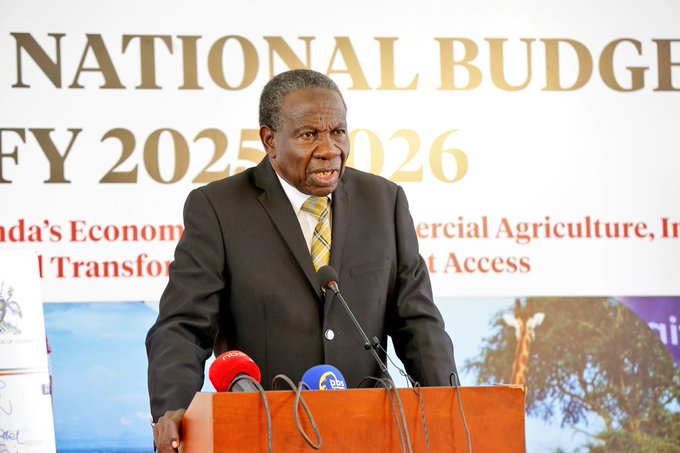
Finance Minister, Matia Kasaija.

Finance Minister Matia Kasaija has reassured Ugandans that the country’s growing public debt remains sustainable despite concerns over increased borrowing.

Speaking at the opening of the National Budget Conference for the Financial Year 2026/27 on Thursday, September 11, 2025, held at Speke Resort Convention Centre, Kasaija revealed that Uganda’s total debt stock had risen significantly in the past year but still falls within safe thresholds.

“By the end of June 2025, the total stock of public debt was $32.33 billion (Shs116.21 trillion), up from $25.63 billion (Shs94.72 trillion) as at the end of June 2024,” Kasaija said.

He added, “Of this, domestic debt was $16.8 billion (Shs60.34 trillion) and external debt was $15.54 billion (Shs55.88 trillion). This translates into a debt-to-GDP ratio of 51.3%, remaining within sustainable thresholds in the short to medium term.”

The Minister attributed the rise in debt to increased financing for major infrastructure projects, noting that the share of domestic debt had also grown significantly.

“The share of domestic debt as a percentage of the total debt stock rose to 51.9% by June 2025, up from 42.9% the previous year. This was within the approved medium-term debt strategy and annual borrowing plan,” Kasaija added.

Despite the surge, Kasaija said government borrowing remains guided by a strict strategy aimed at balancing fiscal needs with sustainability.

“The increase in public debt reflects higher external disbursements and expanded domestic borrowing to finance major infrastructure projects,” he said, emphasizing that debt sustainability frameworks remain intact.

Kasaija also used the conference to unveil Uganda’s Tenfold Growth Strategy, a bold economic blueprint designed to transform the country into an upper-middle-income economy before 2040.

“Uganda has diversified its exports beyond the traditional three Cs — Coffee, Cotton, and Copper — and the three Ts — Tea, Tourism, and Tobacco. We are now opening up regional and continental markets with a shared national consensus to grow the economy tenfold by 2040,” he declared.

The strategy, anchored on boosting value addition, scaling up innovation, strengthening enablers like energy and transport, and enhancing regional integration, is expected to push economic growth to 7% in FY 2025/26 and into double digits after commercial oil production starts in 2026.

Prime Minister Robinah Nabbanja urged all ministries and agencies to align with the new priorities while reducing reliance on borrowing.

“Our collective responsibility is to deepen the implementation of the anchor sectors of agro-industrialisation, tourism, mineral-based industries, and science, technology, and innovation. We must boost revenue collection to secure Uganda’s development path,” Nabbanja said.

With a current debt stock of Shs116.21 trillion and borrowing trends still on the rise, the government is banking on its new fiscal strategy, structural reforms, and the oil and gas windfall to drive growth while keeping public debt within manageable limits.

Stories Continues after ad

Eight arrested in Shs242m aggravated robbery case of hardware accountant

ASP Luke Owoyesigyire, the Deputy Public Relations Officer for Kampala Metropolitan Police.

The Territorial Police in Old Kampala Division have arrested eight suspects in connection with a violent robbery that left a hardware accountant stripped of Shs242 million in Rubaga Division last month.

According to ASP Luke Owoyesigyire, the Deputy Public Relations Officer for Kampala Metropolitan Police, the incident occurred on August 22, 2025, at Kakeka Zone, Rubaga Division.

“On that day, a group of thugs armed with pangas and riding on five motorcycles violently intercepted a city hardware accountant, robbed him of Shs242 million that he was taking to the bank. Fortunately, neither the victim nor his rider was injured during the attack,” said ASP Luke Owoyesigyire, Deputy PRO of Kampala Metropolitan Police.

Following intelligence-led operations, detectives analyzed CCTV footage and pursued other leads that led to the arrest of eight suspects.

“So far, the following individuals have been charged: Bakunda Steven alias Kevin, Atwine Robert Kiiza alias Mzee Lubuto, Andebuni Brian alias Junior Black, Musuza Raymond alias Caesar, Ssali Andrew alias Ande Swag, Kanyerezi Stanley, Nsubuga Andrew, and Aboth Shivan Alecho, who has been charged as an accessory after the fact,” Owoyesigyire revealed.

During the crackdown, police recovered Shs105 million, a motorcycle suspected to have been bought with proceeds of the robbery, and a black laptop bag containing vouchers and receipts belonging to the victim’s hardware. These exhibits were positively identified by the complainant.

“The suspects face charges of Aggravated Robbery, Conspiracy to Commit a Felony, and Being Accessories After the Fact to a Felony. Investigations are ongoing to trace other accomplices who are still at large,” Owoyesigyire added.

The eight suspects appeared before Mwanga II Chief Magistrate’s Court on Thursday, 11th September 2025, where they were formally charged.

Police have since reassured the public of their commitment to tackling violent crime.

“We reassure the public that such violent crimes will be pursued to their full conclusion, and we commend our officers for the dedicated work that has already yielded results in this case,” Owoyesigyire said.

Stories Continues after ad

EXCLUSIVE: URA on spot over misuse of Shs46b and expired appropriations

URA Commissioner General, John Musinguzi

Uganda Revenue Authority (URA) is once again in the spotlight after Parliament’s Public Accounts Committee on Commissions, Statutory Authorities and State Enterprises (PAC-COSASE) accused the tax body of financial recklessness and disregard of the law in handling billions of taxpayers’ money.

The latest revelations from the Auditor General’s 2024 report revealed irregularities in URA’s management of appropriated funds. By June 2023, URA had a cash balance of Shs46.6 billion on its expenditure account, of which Shs4.3 billion was not returned to the Consolidated Fund within the legally required timeframe. Instead, the money was utilized months later, contravening the Public Finance Management Regulations of 2016.

“The usage of expired appropriations contravenes the law, distorts government planning initiatives, and overstates the entity’s budget,” the Auditor General warned.

In the following year, the problem repeated itself. As of June 2024, URA held another Shs26.6 billion on its expenditure account but failed to transfer it to the Consolidated Fund by October 30th, as required by law.

While appearing before PAC, URA management blamed the irregularity on a garnishee order of Shs26.2 billion slapped on the Authority by the High Court in favour of businessman John Imoniroguho after a protracted tax dispute that had dragged on for over two decades.

But MPs were unconvinced. Despite the garnished Shs26.2 billion, there was Shs4.3 billion remaining after the audit process, which was not garnished and could therefore have been transferred. The entity’s retention of the amount was irregular and may have deprived other entities from access and use of the same funds in addition to distorting planning,” the Committee observed.

The Committee also raised eyebrows over URA’s Alternative Dispute Resolution (ADR) process, noting that it is chaired and supervised by the Commissioner General, the very office whose assessments are often under dispute.

“This compromises the independence of the process,” PAC said, recommending legislative reforms to make ADR impartial and effective.

The report concluded that URA’s handling of expired appropriations not only undermines fiscal discipline but also deprives the government of much-needed funds for service delivery.

PAC has now recommended that URA strictly comply with Regulation 17 of the PFMA by returning all unutilised balances to the Consolidated Fund by July 31st of every year.

“Failure to do so will continue to undermine credibility in public financial management and erode confidence in URA’s stewardship of national resources,” the Committee warned.

Stories Continues after ad

One Health Preparedness project launched at Speke Resort Munyonyo

Deputy Speaker of Parliament, Thomas Tayebwa, launching the project.

Deputy Speaker of Parliament, Thomas Tayebwa, this morning officially launched the One Health Preparedness, Prevention, and Response Project in the Greater Virunga Landscape at Speke Resort Munyonyo.

The initiative, funded by the World Bank Pandemic Fund and implemented in collaboration with WHO, FAO, UNICEF, and other partners, aims to strengthen regional defenses against zoonotic diseases, including Ebola, Marburg, Anthrax, and M-pox.

Speaking at the event, Tayebwa emphasized the importance of regional cooperation in combating potential health crises. “Today, we take a decisive step towards protecting the health of our communities and safeguarding our shared ecosystems. This project is not just about disease prevention; it is about ensuring the safety of our people, livestock, and wildlife,” he said.

The Greater Virunga Landscape, which spans Uganda, Rwanda, and the Democratic Republic of Congo, is one of the most biodiverse regions on the planet. Home to the iconic mountain gorilla and numerous other species, it is also an area where human, livestock, and wildlife interactions are frequent, heightening the risk of zoonotic disease transmission.

“The One Health approach recognizes that human, animal and environmental health are interconnected,” Tayebwa explained.

He added, “By investing in joint surveillance, early warning systems, laboratory capacity, and community engagement, we are prioritizing prevention before crises strike.”

On the Ugandan side, the Greater Virunga Landscape encompasses key tourist destinations such as Bwindi Impenetrable National Park and Mgahinga Gorilla National Park. These sites attract thousands of visitors annually and generate millions of dollars in tourism revenue. Officials note that by protecting health security, Uganda also safeguards the future of its vital tourism sector.

Tayebwa reassured stakeholders of Parliament’s support for the project, stating, “As a legislature, we are committed to backing initiatives that enhance public health, promote regional solidarity, and secure our economic growth. This project exemplifies how we can achieve all three.”

The launch at Speke Resort Munyonyo was attended by government officials, development partners, and representatives from the participating countries, highlighting the collaborative spirit of the One Health approach. Through regional cooperation, the project seeks to create resilient systems capable of responding to disease outbreaks before they escalate into full-scale emergencies.

Stories Continues after ad

Rotary, Davis & Shirtliff partner to deliver clean water and solar energy in Uganda

Rotary District 9213 Governor, Geoffrey Kitakule, displaying the landmark Memorandum of Understanding with Davis & Shirtliff Uganda.

Many communities in Uganda continue to face limited access to safe water and reliable energy, challenges that affect health services, education and local development.

To address this, Rotary District 9213 Uganda has signed a landmark Memorandum of Understanding with Davis & Shirtliff Uganda (D&S) to implement sustainable water and solar energy solutions in underserved areas.

The collaboration seeks to leverage Rotary’s community networks and D&S’s technical expertise to design and implement projects that expand access to clean water, improve energy supply, and strengthen community resilience.

Announcing the partnership in Kampala on Thursday, Rotary leaders said the initiative will focus on installing solar-powered water systems for schools, communities, and health facilities. It will also provide sustainable irrigation systems to boost agriculture and food security, as well as water treatment solutions for schools and health centres.

Under the agreement, the two institutions will share responsibilities on a 50-50 cost-sharing model, ensuring sustainability and local ownership. D&S will provide technical expertise, equipment, training, and cost-sharing support, while Rotary will mobilize communities, identify projects, and fundraise.

“This partnership will not only expand access to clean and renewable energy but also improve access to safe water and sanitation, reduce reliance on unreliable utilities, and strengthen the resilience of local communities,” said Samuel Ingambwaaki, District Membership Chair, Rotary District 9213.

The MoU will initially run for one year, with the potential for renewal and expansion. Both partners are committed to promoting joint projects that prioritize inclusion and address Uganda’s infrastructure gaps. They emphasized that access to safe water and energy should not be a privilege, but a fundamental right for all Ugandans.

Stories Continues after ad

Gov’t pledges Shs50b for completion of stalled works on Mubende Road

PM- Robinah Nabbanja.

Prime Minister Robinah Nabbanja has reassured Ugandans that the government is committed to fast-tracking the completion of the Mubende–Fort Portal and Mubende–Kyenjojo road projects, following concerns over stalled works and prolonged delays.

Speaking during the 6th Bi-annual private sector CEO retreat held in Fort Portal, Nabbanja admitted that the contractor, Energo, has faced financial and operational challenges that have slowed progress, but noted that the government has now set aside Shs50 billion to revitalise the project.

“Energo got a number of challenges. When he was paid part of the money last month, he had to solve some of those challenges. The suppliers were on him—fuel, equipment and other costs—so the money was used to clear those obligations,” Nabbanja explained.

She added that despite the setbacks, works never fully stopped but were progressing at a very low pace.

“He has been working, but at a low pace. This week or next week, he will receive another cohort of money. With this money, he is going to receive around Shs50 billion, and it will push him to some level. That I can promise,” she said.

The Prime Minister recalled that President Yoweri Museveni had earlier directed Cabinet to give priority to the Mubende road corridor during his tour of Mubende, Mityana and the surrounding districts.

“Remember when he toured Mubende and Mityana, the President directed us in July to prioritise that road. That is why the contractor was paid, and we are making sure resources are channelled accordingly,” Nabbanja said.

On the Mubende–Kyenjojo road, Nabbanja announced that the Ministry of Works and Transport’s in-house engineering team will be deployed to carry out urgent forward maintenance.

“We are going to use our in-house engineering services under the Ministry of Works. They are the same team that has just completed Jinja Road. The next area is Mubende–Kyenjojo, to at least do forward maintenance so that the road is motorable. I believe to some extent this will solve the problem,” she added.

The Mubende–Fort Portal and Mubende–Kyenjojo roads have, for months, remained a source of public frustration. Road users have complained of potholes, incomplete sections, and muddy diversions that worsen during heavy rains. Transporters say vehicle maintenance costs have soared, while farmers in the Mubende–Kyenjojo belt lament that poor access has reduced their ability to take produce to markets in Kampala and western Uganda.

Local leaders in Mubende have repeatedly accused contractors of abandoning worksites, while business owners warn that the state of the road has disrupted trade and tourism in the region.

Government’s renewed pledge of Shs50 billion now raises expectations that the long-awaited works will resume in earnest. However, Parliament has already raised broader concerns about inflated contracts and poor supervision across Uganda’s road sector, demanding stricter accountability to ensure value for money.

Stories Continues after ad

PAC exposes inflated road costs as parliament probes waste of trillions in loans

The Committee on Public Accounts (Central Government) has sounded alarm over inflated costs of government-funded infrastructure projects, revealing that taxpayers are paying up to three times more for roads of similar length and quality.

In its report on the Auditor General’s findings for the 2023/2024 financial year, PAC showed glaring discrepancies in project costs. For instance, rehabilitating a 1.37-kilometre road in Arua City cost Shs13.4 billion, while 2.68 kilometres in Fort Portal cost Shs21.4 billion. In contrast, a one-kilometre stretch in Mbarara City costs only Shs4.9 billion.

“These roads measure almost the same in length, yet the costs vary abnormally. Such discrepancies are unjustifiable and point to inflated contracts and loss of public funds,” said Muhammad Muwanga Kivumbi, PAC Chairperson, while presenting the report during Tuesday’s plenary, chaired by Speaker Anita Among.

According to estimates from the Ministry of Works and Transport, the average cost of upgrading a kilometre of paved road should be Shs3.1 billion. This makes the Arua project cost more than three times the benchmark, while the Fort Portal works could have financed nearly seven kilometres instead of the reported 2.6 kilometres.

The report also flagged exorbitant supervision costs, which in some cases consumed up to 20 percent of the project budget. Arua’s 1.37km road attracted Shs3 billion in supervision fees, while Mubende spent Shs2.5 billion supervising a 2.86km stretch.

“These inflated costs have deprived Ugandans of better roads, schools and hospitals. Borrowed money is wasted on enriching a few individuals. Government is losing money through inflated contracts and weak supervision,” Muwanga Kivumbi stressed.

PAC further revealed that Uganda is losing value for money on loans, with most funds lying idle despite accruing interest. Out of Shs7.958 trillion in loans and Shs3.97 trillion in grants secured for development projects, less than half was absorbed—48.2 percent of loans and just 25.6 percent of grants.

A review of 17 loans showed an average disbursement of 36.7 percent, with some projects recording almost no utilisation. The Mbarara-Masaka Transmission Line, for example, had a disbursement rate of only 0.3 percent despite its completion deadline passing in June 2023.

Speaker Among expressed concern that government continues to pay interest on unused loans.

“We will give this item a day’s sitting for debate. We need to look at it seriously because we are paying for loans that we are not using,” she said, directing the Ministry of Finance to submit an updated report on all borrowed but idle funds.

The Minister for Defence and Veteran Affairs, Jacob Oboth, urged Parliament to craft proposals that would strengthen loan management and ensure value for money.

Stories Continues after ad

City tycoon Sudhir honored with lifetime achievers award for transforming Uganda’s real estate sector

Tycoon Sudhir Ruparelia.

Ugandan business mogul and property magnate, Sudhir Ruparelia has been honoured with the prestigious Lifetime Achievers Award in recognition of his transformative role in Uganda’s real estate sector and his contribution to affordable housing.

The award was presented by Dr. Edwin Musiime, Chairman of the Uganda Homeowners Association, during the National Property Awards at Sheraton Hotel Kampala, a high-profile ceremony that brought together government officials, business leaders, and key stakeholders in the property industry.

“Dr. Sudhir has lived a life dedicated to bettering the standards of living for many Ugandans. Beyond affordable housing, he has invested heavily in education, healthcare, and recreation,” Dr. Musiime said in his keynote address.

Sudhir, Uganda’s wealthiest businessman, has built an extensive property portfolio through Meera Investments and the Ruparelia Group, reshaping Kampala’s skyline with landmark developments. Among his signature projects are Speke Resort Munyonyo, which has hosted global conferences including the Commonwealth Heads of Government Meeting (CHOGM); Kabira Country Club, a premier hospitality and leisure facility; Kingdom Kampala, a modern mixed-use commercial and retail complex; Pearl Tower One, which recently attracted major tenants including Uganda Revenue Authority; and the newly launched One-10 Apartments in Kololo, setting a new standard in luxury living.

Other notable developments include Speke Apartments Wampewo, Crane Chambers, Insurance Plaza, and Hardware City, all of which have cemented Meera Investments as the country’s largest private property owner and developer. Collectively, Sudhir’s real estate ventures account for over 300 properties spread across prime locations in Kampala and other urban centres, ranging from commercial towers and luxury apartments to hotels and office complexes.

Beyond real estate, the Ruparelia Group has spread into banking, hospitality, education, insurance, and agriculture, making Sudhir one of the country’s most influential business figures. His ventures employ thousands and contribute significantly to Uganda’s tax revenue base.

According to Forbes, Sudhir’s entrepreneurial journey began in the United Kingdom, where he saved $25,000 before returning to Uganda in 1985. He initially ventured into beer distribution before moving into property development, a pivot that would redefine Kampala’s cityscape.

Speaking at the event, Hon. Judith Nabakooba, Minister of State for Lands, Housing and Urban Development, highlighted Uganda’s housing deficit of nearly seven million units, calling for stronger collaboration between government and the private sector to deliver affordable homes.

Her call was backed by Mugabi Lazarus, Director of the Board of Governors at AREA Uganda, who urged Ugandans to keep accommodation costs within 30% of household income, while stressing that housing shortages remain a global challenge requiring targeted local solutions.

Sudhir’s recognition extends beyond real estate, with his philanthropic investments in education (Victoria University, Kampala Parents School), healthcare, and community development projects. Through these, he has created thousands of jobs and driven Uganda’s socio-economic transformation.

Stories Continues after ad

Parliament commends Uganda Cranes’ historic CHAN 2024 quarterfinal feat

The Uganda Cranes team with the Speaker of Parliament and her team

The Uganda Cranes team has been commended for outstanding performance at the just concluded 2024 African Nations Championship (CHAN) in which the national team made a historic qualification to the quarter finals.

Peter Ogwang, Minister of State for Education and Sports [Sports] moved a motion, urging Members of Parliament [MPs] to pay tribute to the national team for their outstanding performance at the CHAN 2024, which was jointly hosted by Uganda, Kenya and Tanzania.

He moved the motion during the plenary sitting on Wednesday.

“The team delivered a historic milestone by advancing to the quarter finals for the very first time. This has been done after the previous six attempts,” Ogwang said.

The minister said that the performance of the Uganda Cranes inspired renewed confidence in the domestic league players.

“The Uganda Cranes were able to top a highly competitive group that included Algeria, South Africa, Niger and Guinea. This is unprecedented success and elevated Uganda’s football profile on the continent,” he noted.

Ogwang said CHAN 202 was not only a football tournament, but also a landmark achievement for the country across several dimensions.

“This tournament made the government to invest, which brought a long lasting infrastructure gain, most notably full renovation of Mandela National Stadium to the Confederation of African Football standard,” he said.

He added that several other football facilities, including the Kyambogo University football training pitch and Mutesa II Wankulukuku Stadium, among others were upgraded with modern facilities.

“CHAN 2024 served as a rehearsal for the African Cup of Nations in 2027, allowing Uganda to successfully test the organisational systems in logistics, security, accreditation, medical preparedness, and ticketing,” Ogwang added.

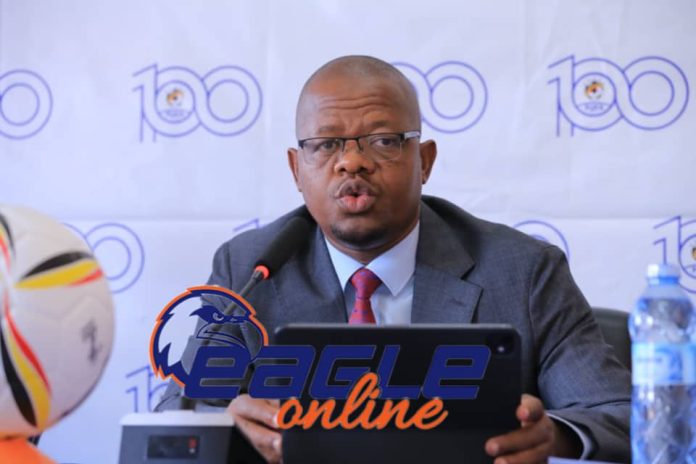
Moses Magogo, the Budiope East County MP who doubles as the President of the Federation of Uganda Football Association [FUFA] said that CHAN enabled the Ugandan domestic players to showcase their skills.

“The two goals we scored against Somalia were scored by two players who come from clubs,” he said.

He, however, called for adequate facilitation of Ugandan football clubs, saying that Uganda has lost key players to Rwanda, because they are well facilitated there.

“Before we see these players in the senior national team, there is work to be done in the clubs. These clubs are being managed by private sector but if we are to compete and qualify for bigger competitions, we need government support,” said Magogo.

Asuman Basalirwa, the Bugiri Municipality MP recognised Parliament’s commitment towards ensuring that funds are allocated towards the sports sector.

“I thank FUFA and the local organising committee for innovating online tickets. This kind of technology shows that we are not moving backwards but forward,” Basalirwa added.

Leader of the Opposition, Joel Ssenyonyi, urged government to consider a holistic investment in sports, saying that it is important that all sportsmen and women access the infrastructure.

“Let us facilitate the players throughout the process, not only when they are playing,” Ssenyonyi added.

President Yoweri Museveni fulfilled his pledge of Shs 1.2 billion to the Uganda Cranes players for each game won, and Ssenyonyi appreciated the President for fulfilling the pledge.

Third Deputy Prime Minister and Minister without Portfolio, Rukia Nakadama, re-affirmed the government’s commitment towards funding sports activities countrywide.

Speaker Anita Among tasked the Auditor General to carry out a special audit on the funds spent on CHAN 2024, saying it will inform funding of AFCON.

“We will ask the Auditor General to give us a special audit on how much we have spent on CHAN for us to be able to plan better for AFCON and we have this report presented by October 30, 2025,” said Among.

Stories Continues after ad