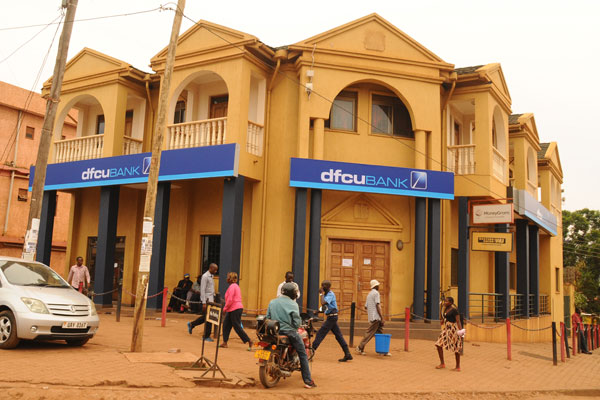
“Justice requires that both parties have equal access to the evidence. Denying the claimants access to their records while seeking to use those records against them is not just unfair, it is unacceptable,” the court noted.
In a sharp legal rebuke, the High Court in London has dismissed an application by DFCU Bank to amend its defence in the long-running Crane Bank case, marking a fresh and significant victory for businessman Sudhir Ruparelia and the former shareholders of Crane Bank Limited (CBL).

The ruling deepens DFCU’s legal troubles in the UK, following earlier defeats in Uganda’s courts, and shines a harsh spotlight on the circumstances surrounding the controversial sale of Crane Bank in 2017.
“This Court is not satisfied that the evidence DFCU seeks to introduce is either reliable or legally admissible,” reads part of the London court’s judgment, which struck out DFCU’s bid to rely on a forensic audit report that was purportedly authored by PricewaterhouseCoopers (PwC).
The disputed report allegedly linking CBL and its shareholders to fraud, mismanagement, and corruption was at the heart of DFCU’s latest legal strategy. The bank had hoped that the UK court would allow it to amend its defence by introducing the report, which it claimed justified the Bank of Uganda’s (BoU) 2016 seizure and subsequent sale of Crane Bank to DFCU.

However, the court sided with the claimants, Crane Bank and its shareholders, who mounted six forceful objections to the report’s authenticity and legality.
“The report was not prepared by the global PwC network but by an unlicensed local entity using the same name. It lacks credibility, was inconsistently documented, and is inadmissible under Ugandan law,” the claimants’ legal team argued.
In its ruling, the court found that the report existed in multiple contradictory versions, some unsigned or backdated, others missing appendices and supporting data. Most critically, the court was persuaded that Crane Bank had been denied access to its own records, held by BoU and DFCU, making it impossible for the shareholders to challenge the report’s claims meaningfully.
As a result, DFCU’s application to amend its defence was thrown out, and the bank was ordered to pay legal costs to the claimants.
The Crane Bank saga dates back to October 2016, when the Bank of Uganda took over the institution, citing undercapitalisation. At the time, Crane Bank was one of Uganda’s largest indigenous banks. The central bank later sold its assets to DFCU Bank in a closed-door deal valued at Shs200 billion, far below the bank’s book value.
Sudhir and other shareholders have long maintained that the sale was fraudulent, unconstitutional, and executed without due process. In 2019, Uganda’s High Court sided with the shareholders, ruling that Crane Bank (under receivership) had no legal standing to sue its former owners. The decision was upheld by both the Court of Appeal and the Supreme Court, which also criticised BoU’s conduct.
Facing legal dead ends in Uganda, DFCU turned to the High Court in London. In addition to the dismissed application to amend its defence, the bank had also filed a second application seeking broad disclosure orders.
In that request, DFCU asked the court to compel access to personal devices, emails, and messages of nearly every person on the claimants’ side, including phones, laptops, and private email accounts. But here too, the court struck a careful balance.
“The court rejected the majority of DFCU’s invasive disclosure requests,” confirmed sources familiar with the ruling.
“Only a few devices and specific periods were approved for search, namely, Sheena’s personal email and messaging apps used by Dr. Ruparelia, Meera, and Sheena from 2015 to 2019.”
Additionally, the court formally recognized Ruparelia as the legal representative of the estate of his late son Rajiv Ruparelia, who was previously part of the case.
The court further declined to fix hearing dates for October until all necessary filings are completed, effectively slowing DFCU’s attempt to expedite proceedings.
This latest legal blow adds to mounting scrutiny over DFCU’s acquisition of Crane Bank. Key questions continue to emerge!
Why was the sale of a multibillion-shilling institution conducted in secrecy and without public bidding?
Why did DFCU accept the PWC report without independent due diligence?
Has DFCU’s legal strategy abroad become a liability for its shareholders?
Legal analysts say DFCU’s efforts in London increasingly appear to be a strategic miscalculation.
“What started as a tactical shift to UK courts is now unravelling,” said a Kampala-based corporate lawyer familiar with the case. “They’ve lost in Uganda, and now they’re losing in the UK. This could have serious reputational and financial consequences for DFCU.”
With another major application dismissed, DFCU’s legal campaign in London is faltering. The attempt to revive its case using a discredited audit report has not only failed but also deepened the credibility crisis surrounding its acquisition of Crane Bank.
Meanwhile, Sudhir Ruparelia’s legal team remains undefeated, cementing his position as a formidable force in one of Uganda’s most consequential financial and legal battles.