The Parliamentary Public Accounts Committee (PAC) on Central Government has raised alarm over the stalled Mubende road project, describing it as a glaring example of how billions of taxpayers’ money are lost to inflated contracts, weak supervision, and poor loan absorption.
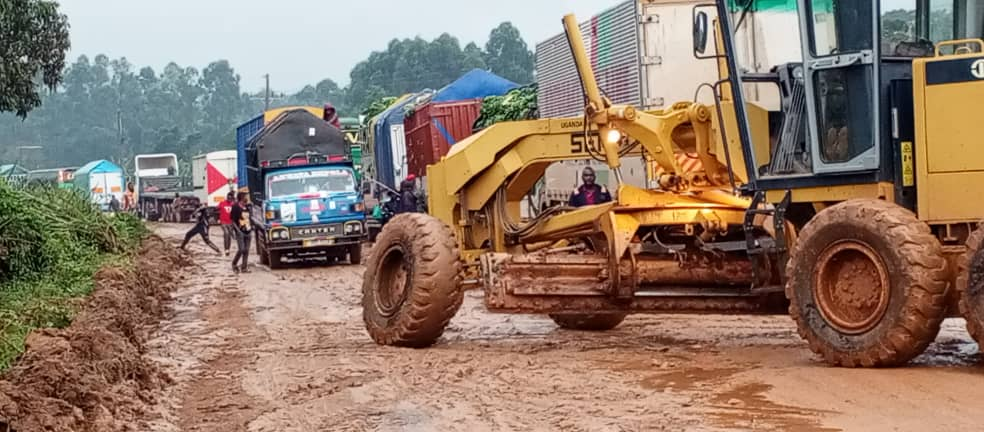
Presenting the committee’s findings from the Auditor General’s report for the 2023/2024 financial year, PAC Chairperson Muhammad Muwanga Kivumbi (Butambala County) said the Mubende road has remained incomplete despite billions being allocated, with supervision alone consuming Shs2.5 billion for a stretch of just 2.86 kilometres. On-site inspections revealed that construction equipment has been abandoned for months, leaving residents stranded and businesses struggling as the road remains impassable.

“This project is a glaring example of how borrowed money is wasted. The road is incomplete, yet contractors and supervisors have already been paid billions,” Muwanga Kivumbi told Parliament during a plenary sitting chaired by Speaker Anita Among.
The Mubende road saga was presented alongside shocking cost discrepancies in other projects. The report highlighted that the rehabilitation of 1.37 kilometres in Arua City cost Shs13.4 billion, while 2.68 kilometres in Fort Portal City consumed Shs21.4 billion. By contrast, Mbarara City upgraded a kilometre of road for only Shs4.9 billion. According to the Ministry of Works and Transport, the average cost of upgrading a kilometre of paved road is Shs3.1 billion, meaning that both Arua and Fort Portal projects were billed at over three times the reasonable estimate.
“The Fort Portal project alone could have financed nearly seven kilometres of road at average cost, but only 2.6km was delivered,” Muwanga Kivumbi observed, warning that the pattern pointed to deliberate inflation of contracts.

The committee further condemned skyrocketing supervision costs, such as Shs3 billion spent to oversee the 1.37km project in Arua, arguing that such expenses reflect collusion between contractors and government officials.
Beyond inflated road contracts, the Auditor General’s report revealed widespread failure in loan absorption. Out of Shs7.958 trillion in loans and Shs3.97 trillion in grants accessed in the year under review, less than half of the loans and just a quarter of the grants were put to use. In 17 major government loans examined, the average disbursement rate was 36.7 percent, with the Mbarara–Masaka Transmission Line disbursing only 0.3 percent despite its completion deadline passing in June 2023.
Speaker Anita Among expressed outrage at the findings, particularly the revelation that Uganda continues to service interest on idle loans while projects like Mubende road stall.
“We need to look at this seriously because we are paying for loans that we are not using. We will dedicate a full day for this item to be debated,” she said, directing the Ministry of Finance to update Parliament on the status of borrowed but unused funds.
Minister for Defence and Veteran Affairs, Jacob Oboth, added his voice to the call for reforms, urging Parliament to develop strong policies that ensure better loan absorption and value-for-money in infrastructure spending.
PAC warned that unless corruption, poor planning, and weak oversight are urgently addressed, Uganda risks plunging deeper into debt with little to show for it.
“These inflated costs have deprived Ugandans of better roads, schools, and hospitals. Borrowed money is wasted on enriching a few individuals,” the committee’s report noted.
The stalled Mubende road, with its idle machinery and wasted billions, now stands as the clearest symbol of how poor oversight and inflated contracts are undermining Uganda’s development efforts.