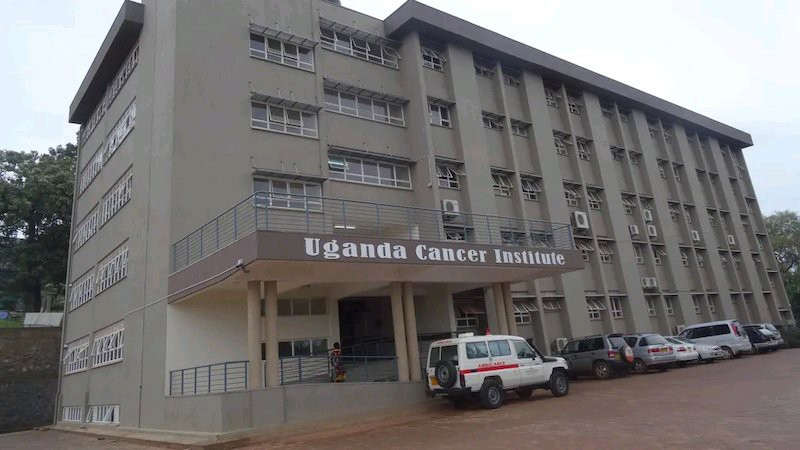
Uganda registers at least 36,000 new cancer cases and 24,600 deaths each year, the Uganda Cancer Institute (UCI) has revealed, as the government defends plans to borrow Shs165.4 billion to establish regional oncology centres in Arua and Mbale.
The funds, sought from the Austrian Unicredit Bank and the Islamic Development Bank, will finance the construction and equipping of the two centres, including radiotherapy services in Mbale in a bid to decentralize cancer care and reduce Uganda’s high mortality rates.

While appearing before Parliament’s Committee on National Economy, Dr. Nixon Niyonzima, Head of Research and Training at UCI, warned that cancer remains one of the country’s deadliest diseases.
“Every year, Uganda has 36,000 new cancer cases and unfortunately, 75% of those patients, about 24,000, die every year,” Niyonzima said.
He added, “Of all the cancer patients in the country, only 25% access care in Uganda, with the majority concentrated in the Central Region. This shows we are undeserving the rest of the country, which is a disservice we must urgently address.”

He explained that the high numbers from the Central Region do not necessarily reflect higher prevalence, but rather better access to screening and treatment services due to the proximity of the UCI headquarters at Mulago.
“Now you may ask whether the Central Region has more cancer patients than other regions. The answer is no. It is because of access. Our target as UCI is to change these dynamics and by 2030, we want at least 85% of new cancer patients accessing care through UCI. The only way to achieve this is by decentralising cancer care,” he added.
According to UCI, about 80% of cancer patients in Uganda are diagnosed at stage three or four, leaving minimal room for effective treatment.
“We want to see at least 90% of patients come with stage one or two. But for that to happen, screening must be brought closer to the people. Nobody will travel 500km from Kisoro to Kampala for a test when they have no pain,” Niyonzima explained.
State Minister for Finance, Hon. Henry Musasizi, backed the loan request, citing the urgency of decentralizing oncology services to reduce patient congestion at UCI, cut treatment delays, and improve survival rates.
“Limited availability of oncology services outside Kampala creates significant challenges, including geographical barriers, long waiting times, and high costs of travel. This has resulted in late-stage diagnoses and high mortality,” Musasizi told MPs.
“Decentralization will reduce congestion at UCI and ease financial burdens on patients while ensuring equitable access to quality care across the country.”
The Minister further noted that funding opportunities for cancer care remain scarce globally, making it imperative for Uganda to utilize any available resources.
“There are few funders willing to invest in cancer because of its resource-intensive nature. Therefore, any funding opportunity should be embraced and used incrementally to address gaps in care and research,” Musasizi said.
The loans under consideration include €9.4 million (approximately Shs38.4 billion) from UniCredit Bank Austria for the Mbale Oncology Centre and $36.5 million (approximately Shs126.9 billion) from the Islamic Development Bank for the Arua Oncology Centre and radiotherapy equipment in Mbale.