The Netherlands and Uganda have reached an agreement to cooperate on managing rejected asylum seekers through a new transit arrangement, the Dutch government announced on Thursday.
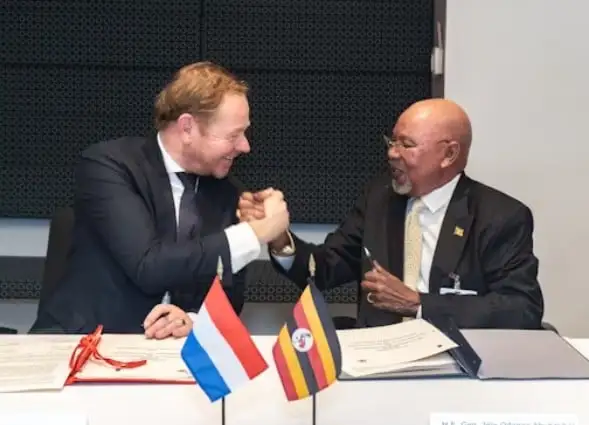
The pact was formalized through a Letter of Intent signed in New York by Dutch Minister for Migration and Foreign Affairs David van Weel and Uganda’s Foreign Affairs Minister Jeje Odongo on the sidelines of the United Nations General Assembly.

According to the Dutch government, the arrangement will apply to individuals from countries neighboring Uganda who have been denied asylum in the Netherlands but cannot be repatriated directly or voluntarily within a reasonable period. These individuals will be temporarily hosted in Uganda before being returned to their respective home countries.
“We are taking this step with Uganda to get migration under control,” Minister Van Weel said.
He added, “Obviously, the human rights of people who return to their country of origin via Uganda will be safeguarded.”

The two countries are now expected to refine the letter of intent into a pilot transit hub that will initially handle a small number of rejected asylum seekers. However, the statement did not specify when the pilot phase will begin.
Van Weel added that the Netherlands will consult closely with the European Union and international agencies such as the International Organization for Migration (IOM) and the UN Refugee Agency (UNHCR) to ensure the program aligns with international standards.
Uganda’s Ministry of Foreign Affairs has yet to issue an official comment on the development.
The initiative reflects European efforts to manage migration beyond EU borders. Earlier this year, the European Commission proposed allowing member states to establish migrant centers in non-EU countries for rejected asylum applicants.
Still, the legal and political implications remain uncertain. A similar arrangement between the United Kingdom and Rwanda was eventually scrapped after legal challenges and policy changes under the new Labour government.
Migration remains a heated topic in Dutch politics, with the issue contributing to the collapse of the caretaker government in June over disagreements on asylum policies.
According to official data, the Netherlands registered 32,175 asylum seekers in 2024, marking a 16% decline compared to 2023, a trend the Dutch government hopes to reinforce through new international cooperation agreements, such as the one with Uganda.