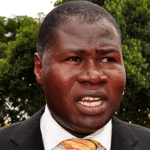

March 18,2026-Kampala, Uganda — The Parliament of Uganda has passed the Copyright and Neighbouring Rights (Amendment) Bill, 2025, marking a major step toward strengthening intellectual property protection in the country’s fast-evolving creative economy.
The legislation, which amends the Copyright and Neighbouring Rights Act of 2006, was approved during a recent plenary sitting after extensive debate among lawmakers and stakeholders. The Bill now awaits President Yoweri Kaguta Museveni’s assent before it can become law.
The amendment seeks to address long-standing gaps in Uganda’s copyright regime, particularly in relation to the distribution of digital content and enforcement. Government officials have argued that the existing law has struggled to keep pace with technological advancements, leaving artists and content creators vulnerable to widespread piracy and revenue losses.

Among its key provisions, the Bill introduces stricter measures to combat copyright infringement, especially on digital platforms. It also strengthens the regulation of collective management organisations, which are responsible for collecting and distributing royalties on behalf of artists. Lawmakers say the reforms will improve transparency and accountability in how creators are compensated for the use of their work.
The legislation further aims to enhance the rights of performers, producers, and broadcasters—collectively known as neighbouring rights holders—by ensuring they receive fair remuneration when their content is used commercially. This includes provisions expected to affect music distribution channels such as radio, television, and telecom-operated services.
Supporters of the Bill have welcomed its passage as a long-overdue intervention to protect Uganda’s creative sector. They argue that stronger copyright enforcement will not only safeguard artists’ livelihoods but also attract investment into the country’s cultural industries.
However, the Bill has also sparked debate among sections of the public and industry players, with some raising concerns about its potential impact on access to content and the operational demands it may place on media houses and digital service providers. Critics have called for clear implementation guidelines to ensure the law does not unintentionally stifle innovation or limit public access to creative works.
The passage of the amendment comes at a time when Uganda is seeking to expand its digital economy and position its creative industries as key contributors to national development. Analysts note that effective enforcement will be critical in determining whether the law achieves its intended goals.
Once assented to by the President, the new law is expected to usher in a more structured and enforceable framework for copyright protection in Uganda, reshaping how creative works are produced, distributed, and monetised across the country.
Related Posts
 Minister Aceng tables organ donation and transplant Bill
The Uganda Human Organ Donation and Transplant Bill, 2021 which seeks to regulate organ and…