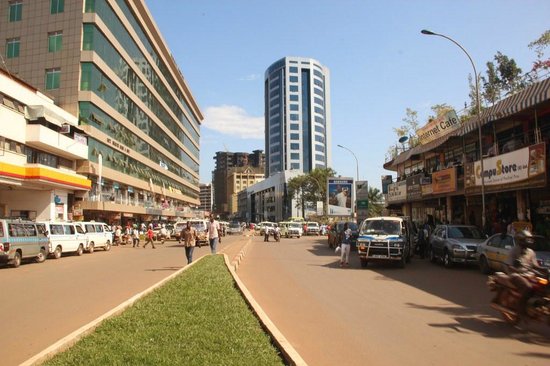
The Kampala Capital City Authority (KCCA) has suspended all on street parking along Kampala and Jinja roads in the traffic management intervention aimed at easing congestion and improving mobility within Kampala’s Central Business District.
The directive, announced in a public notice dated May 13, takes immediate effect and affects the busy stretch from the Entebbe Road junction through Kampala Road up to the Jinja Road and Yusuf Lule Road junction near Kitgum House.

KCCA said the decision forms part of broader efforts to restore order in the city center, improve road safety and create a more efficient transport system for motorists, pedestrians and public service vehicles.
“The general public and all motorists are hereby informed that on street vehicle parking along Kampala and Jinja Roads from the Entebbe Road junction to Jinja Road/Yusuf Lule Junction (Kitgum House) has been suspended,” the authority stated.
“This change has been implemented to improve traffic flow, enhance safety for all road users, and support better mobility within the Central Business District,” the notice added.

Kampala Road is one of the busiest commercial corridors in Uganda’s capital, connecting the city center to major routes leading to Entebbe Road, Jinja Road and Yusuf Lule Road. The area experiences heavy traffic throughout the day due to the concentration of banks, shopping arcades, government offices, hotels, taxi stages and corporate headquarters.
For years, motorists have parked along sections of the road, a practice city authorities say has contributed to traffic bottlenecks, delayed movement of emergency vehicles and increased risks for pedestrians navigating narrow road spaces.
The suspension is expected to significantly change traffic patterns in downtown Kampala, especially during peak business hours when motorists scramble for parking spaces near offices and commercial buildings.
KCCA advised motorists to use alternative parking areas including Station Road, Dewinton Road, Said Barre Road and Nkrumah Road.
The authority also encouraged drivers to utilize parking spaces within buildings and private premises they intend to access, as well as commercial parking facilities at the National Theatre, Uganda House and the multi storey parking facility along Portal Avenue.
“Motorists are therefore advised to utilize alternative parking locations,” KCCA said.
“All motorists are requested to comply with the new parking arrangements and cooperate with enforcement officers.”
The development comes at a time when Kampala continues to face mounting traffic challenges driven by rapid urbanization, increasing vehicle numbers and limited road expansion within the city center.
KCCA has in recent years undertaken several initiatives aimed at improving traffic flow, including road reconstruction projects, installation of traffic lights, introduction of smart city systems and stricter enforcement against illegal street parking and roadside vending.
Urban planners have long argued that uncontrolled roadside parking reduces the carrying capacity of roads and worsens traffic congestion in rapidly growing cities like Kampala. Transport experts also say removing parked vehicles from major roads can improve public transport movement and reduce travel time for commuters.
However, some business operators in the city center are likely to raise concerns over the new directive, arguing that limited accessible parking could affect customer convenience and daily business operations.
Despite the expected inconvenience for some motorists, KCCA insists the measures are necessary to create a safer and more organized city transport network.
“We appreciate your understanding and cooperation as we continue working towards a safer and more efficient city transport system,” the authority said.
The directive reveals a renewed push by KCCA to transform Kampala into a more orderly and modern city amid growing pressure on urban infrastructure and transport services.