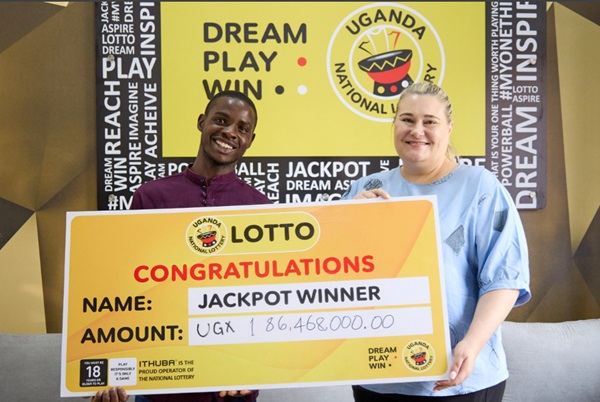
Uganda’s ambitious National Lottery project has suffered setback after ITHUBA Uganda Limited, the company contracted to operate the lottery for a decade, abruptly halted its operations barely two years after launching the venture, forcing regulators to intervene to protect thousands of players, retailers and employees while charting the future of the country’s fledgling lottery.
The National Lotteries and Gaming Regulatory Board (NLGRB) confirmed on Thursday that ITHUBA Uganda stopped selling lottery tickets on June 30 before officially ceasing all business operations the following day, bringing an unexpected end to a project that had been touted as a landmark public-private partnership designed to generate government revenue, create jobs and support national development.

The regulator revealed that the closure followed months of engagement with the company over its deteriorating financial and operational position before it eventually received formal notification that ITHUBA had decided to withdraw entirely from operating Uganda’s National Lottery.
Although the company has ceased operations, the Board stressed that ITHUBA remains legally bound by the commitments contained in both its operating licence and concession agreement.
“The cessation of operations does not absolve ITHUBA Uganda Limited of its obligations under the licence and concession agreement,” the regulator said.

It added that it has already activated regulatory and oversight mechanisms to safeguard government revenue, ensure payment of legitimate player winnings, protect retailer commissions, preserve company records and safeguard the interests of employees affected by the shutdown.
The development marks an abrupt collapse of a project that had generated significant optimism when it was launched in 2024.
The Ministry of Finance awarded ITHUBA Uganda, a subsidiary of South Africa’s ITHUBA Holdings, a 10-year licence to operate Uganda’s first-ever National Lottery, with the concession expected to run until 2033.
At the launch, government officials said the initiative was an important step towards expanding domestic revenue while creating opportunities for businesses and communities across the country.
The company pledged to invest more than US$14.5 million in establishing the lottery, promising to build a nationwide retail network, create employment, introduce modern lottery technology and support community development initiatives through lottery proceeds.
More than 85 percent of lottery proceeds would remain within Uganda’s economy instead of flowing abroad, while part of the revenues would eventually contribute to strategic national projects, including infrastructure linked to Uganda’s preparations for hosting the 2027 Africa Cup of Nations (AFCON).
During its first year of operations, ITHUBA Uganda reported what appeared to be encouraging progress.
The company announced that it had paid out more than Shs3.6 billion to over 520,000 winners, while steadily expanding its footprint beyond Kampala into regional cities including Mbarara, Mbale and Gulu.
It also broadened access to lottery services by integrating mobile money payment systems, USSD platforms and point-of-sale terminals through partnerships with local financial technology firms, allowing players across the country to participate more conveniently.
Those milestones, however, ultimately proved insufficient to sustain the business.
Neither ITHUBA Uganda nor its parent company publicly explained the specific reasons behind the decision to discontinue operations, while the regulator also stopped short of disclosing what financial or operational challenges had become insurmountable.
The sudden collapse has now left several critical questions unanswered, including the fate of the National Lottery itself and whether government will appoint another operator to continue the programme.
For thousands of Ugandans who had already purchased tickets or won prizes, the immediate concern is whether they will receive the money owed to them.
The NLGRB sought to reassure the public that all unresolved matters remain under its supervision.
“All outstanding matters, including player wallet balances, pending prize claims, company records and other operational liabilities, remain subject to regulatory oversight and due legal process,” the Board said.
Players with pending prize claims have been advised to continue contacting ITHUBA Uganda through its official communication channels as regulators oversee the settlement process.
The Board further pledged to issue additional public guidance whenever necessary as efforts continue to secure an orderly, accountable and legally compliant outcome.
Beyond players, uncertainty also hangs over approximately 600 retail partners that had been enlisted to sell lottery products across the country, as well as employees whose jobs depended on the company’s continued operations.
The developments in Uganda come against the backdrop of significant changes affecting ITHUBA Holdings in its home market of South Africa.
Only weeks ago, the company’s 11-year tenure as operator of South Africa’s National Lottery came to an end after the licence expired and a new operator, Sizekhaya Holdings, assumed responsibility for running the lottery.
That transition was reportedly marred by disagreements over the transfer of operational data, with reports indicating that more than one million historical draw records and numerous jackpot claims became caught up in the handover process, delaying payments to winners.
Although there has been no official suggestion that the South African developments directly caused the Ugandan shutdown, the back-to-back disruptions involving ITHUBA have attracted attention within Africa’s gaming industry.
The twin developments will scrutinize companies seeking long-term lottery licenses across the continent, with regulators expected to place greater emphasis on financial resilience, operational capacity and business continuity before awarding public concessions involving substantial financial transactions and public trust.
For Uganda, however, the immediate priority remains protecting consumers and preserving confidence in the country’s lottery framework.
The National Lotteries and Gaming Regulatory Board is working to ensure that all legal obligations are fulfilled, outstanding claims are processed and the interests of players, retailers, employees and government are protected as the country determines the future of a National Lottery that has come to an unexpected standstill barely two years after it began.