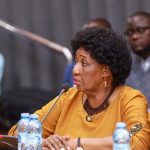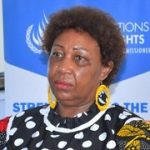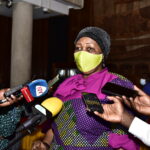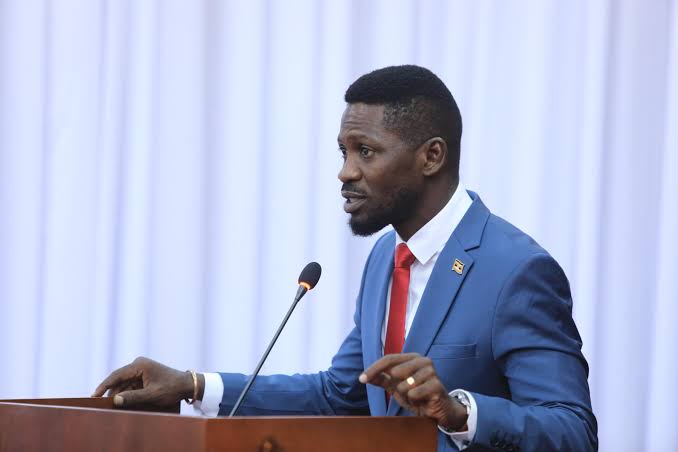
National Unity Platform (NUP) leader Robert Kyagulanyi Ssentamu has revealed that the resignation of Uganda Human Rights Commission (UHRC) chairperson Mariam Wangadya is an opportunity for her to reclaim her dignity and argued that individuals who serve in powerful positions under President Yoweri Museveni’s government often end up abandoned once they lose political relevance.
Kyagulanyi alias Bobi Wine, made the remarks in a statement titled“On the Wangadyas of this World” following reports that Wangadya had stepped down as chairperson of the country’s human rights watchdog.

He said Wangadya’s resignation reflected what he described as a repeated pattern where public officials who serve within the ruling system eventually face isolation after their usefulness to those in power diminishes.
“We have seen this pattern repeatedly: Kakooba Mutale, Abdallah Kitatta, Kale Kayihura, Peter Elwelu, Anita Among, and now, apparently, Mariam Wangadya, who has reportedly resigned as Chairperson of the Uganda Human Rights Commission after she was reminded that she’s not one of them,” Kyagulanyi said.
“Whatever the reasons behind her resignation, I think she has taken what could be her final opportunity to reclaim what is left of her dignity,” he added.

Kyagulanyi accused the government of rewarding individuals who protect its interests while failing to stand by them when political circumstances change.
“The tragedy here is not one individual’s downfall. It is the fact that this cycle keeps repeating itself. People are appointed, empowered, and celebrated, not to serve the public but to serve the regime, many times at the citizens’ painful cost,” he said.
He added,“They become instruments of repression against their own people. Then, after years of unquestioning loyalty, they are dumped the moment they cease to be politically useful.”
The NUP president said public officials should consider how their actions in office will be remembered after their positions and privileges come to an end.
“Offices are temporary but reputations are permanent. Power expires. Titles disappear. Official protection ends. What remains is your name, your conscience, and the legacy of the choices you made while you had authority,” Kyagulanyi said.
He added,“Before accepting the role of persecuting, silencing, or oppressing fellow Ugandans for political survival or personal gain, ask yourself one question; what will remain when the office and the power is gone?”
“The Museveni regime does not protect its enablers forever. It simply replaces them,” he said.
Wangadya’s resignation was communicated through a letter addressed to President Museveni, in which she thanked the President for appointing her to lead the Uganda Human Rights Commission and reflected on her service at the institution.
Wangadya, who was appointed UHRC chairperson in 2022 following the death of former chairperson Med Kaggwa, served at a time when the commission faced intense public scrutiny over its independence and response to human rights concerns.
In her resignation letter, Wangadya said she was grateful for the opportunity to serve Uganda through the constitutional body and highlighted her commitment to fulfilling the mandate entrusted to her.
“I wish to express my sincere gratitude for the opportunity granted to me to serve as Chairperson of the Uganda Human Rights Commission. It has been an honour and privilege to lead this important constitutional body,” Wangadya wrote.
She added,“I have discharged my duties with commitment and dedication, always guided by the mandate of the commission and the interests of the people of Uganda.”
Wangadya acknowledged that her tenure had come with challenges, saying leading a national human rights institution required navigating complex issues and different expectations from various stakeholders.
“The journey has not been without challenges, but I remain grateful for the experiences gained and the opportunity to contribute to the strengthening of human rights protection in Uganda,” she said.
Her time at the commission was marked by several controversies, including criticism from human rights defenders and opposition actors who questioned the institution’s handling of alleged abuses involving security agencies.
The commission also experienced internal tensions, with reports of disagreements among commissioners over administrative decisions, leadership approaches and the direction of the institution.
Some commissioners were said to have differed on how the commission should balance its constitutional duty of protecting citizens’ rights with the realities of operating within a government structure.
Despite the criticism, Wangadya maintained that the UHRC remained committed to its mandate of promoting and protecting human rights as provided for under the Constitution.