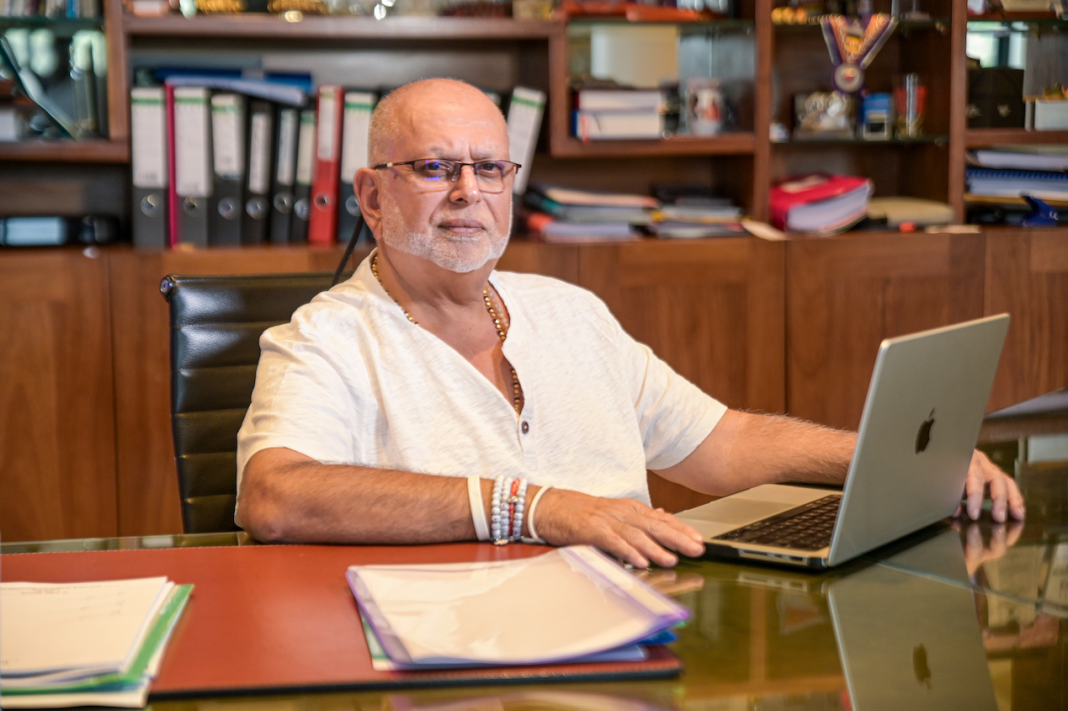
Businessman Sudhir Ruparelia has urged Ugandans seeking to build lasting wealth to start with what they can afford, reinvest their earnings and expand their businesses in line with available cash-flow rather than rushing into heavy borrowing.
Ruparelia, the Founder and Chairman of Ruparelia Group revealed that sustainable wealth is rarely created overnight and that entrepreneurs should concentrate on understanding their markets, controlling expenditure and steadily growing their enterprises.

Ruparelia returned to Uganda in 1985 after working in the United Kingdom, bringing with him about $25,000 in savings. Instead of immediately pursuing large investments, he started by trading everyday commodities such as salt, beer, wine and soft drinks.
His early experience, he explained, taught him the importance of identifying what people needed and building reliable relationships with suppliers and customers.
As the business grew, he expanded into foreign exchange before moving into sectors including real estate, hospitality, education, insurance, agriculture and media. The businesses later became part of the Ruparelia Group, which has grown into a major business conglomerate employing thousands of people.

Ruparelia said the early years also required personal sacrifice, with his family keeping their spending modest while the business was being established.
“It is step-by-step,” Ruparelia said, recalling that he and his wife went for about a year without owning a personal car after returning to Uganda, despite having had vehicles while living in Britain.
He said their priorities at the time were basic and focused on building a secure home and ensuring their children received a good education rather than maintaining an expensive lifestyle.
For entrepreneurs, Ruparelia said personal consumption should not grow faster than the business because excessive spending can deprive a young enterprise of the capital it needs to expand.
A major part of his advice centres on cash-flow management. He encouraged business owners to first build income-generating activities capable of producing surplus cash before taking on substantial debt for expansion.
“Grow according to the cash flow you have,” he said.
Ruparelia cautioned entrepreneurs against taking on large loans before their businesses have developed reliable income streams capable of supporting repayments.
He said borrowing can become more manageable once a business has established several stable sources of income and accumulated assets that can support expansion, but warned that excessive debt at an early stage can expose entrepreneurs to unnecessary financial pressure.
He also encouraged Ugandans to concentrate on genuine opportunities in the market instead of pursuing schemes promising quick riches.
According to Ruparelia, his entry into business came at a time when Uganda had shortages of basic commodities and limited access to foreign currency services. Responding to those needs enabled him to generate income while establishing trust with customers and suppliers.
He advised young people interested in entrepreneurship to first spend two or three years gaining practical experience in the industry they intend to enter.
Such experience, he said, can help prospective entrepreneurs understand how businesses operate before committing their savings or borrowing money to finance a venture.
Ruparelia’s approach places emphasis on patience, reinvestment and controlled growth, with profits being used to strengthen the business and acquire assets rather than immediately financing a higher personal standard of living.
He said entrepreneurs who understand their businesses, manage their expenses and remain disciplined with cash flow can gradually build enterprises capable of generating wealth over many years.
The businessman’s business journey, which began with relatively modest trading activities in the 1980s, has since expanded across multiple sectors of Uganda’s economy, offering an example of how a small enterprise can grow through successive investments and diversification.