Stanbic Bank
Stanbic Bank
23.3 C
Kampala
Stanbic Bank
Stanbic Bank
Home Blog

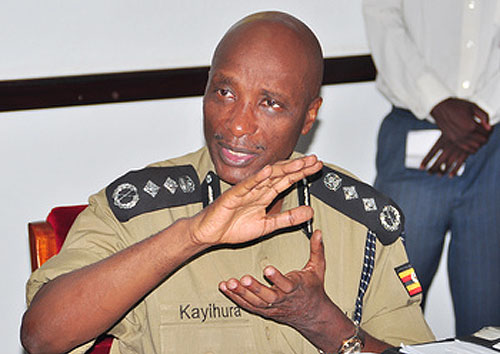
Kayihura supporters besiege Makindye court

Former Inspector General of Police Gen. Kale Kayihura

Hundreds of people have turned up at the Makindye Magistrate’s court to express their solidarity with the Inspector General of Police General Kale Kayihura.

According to our reporter on the ground, some of the placards-holding supporters of the IGP have turned rowdy, chasing away perceived opponents of the police chief.

Already, Lord Mayor Erias Lukwago and city lawyer and president of opposition JEEMA party are at Makindye, where the security has been tightened ahead of the expected arrival of the IGP and his co-accused. General Kale Kayihura, was dragged to court by a group of 20 lawyers, for allegedly failing to superintend his subordinates who were involved in beating the opposition Dr Besigye’s supporters and bystanders, on July 12 and 13.

This was after Dr Besigye had been released on bail from Luzira prison, where he was held for two months on treason charges.

Two days ago, while addressing a presser at his Kasangati home Besigye said that time has caught-up with Gen Kayihura and others who have been traumatizing him, his supporters and innocent civilians, as witnessed by the indictment of the General.

“Things have changed; I am out of court and Kayihura is in,” the retired army colonel said.

Meanwhile, yesterday afternoon another group of placard-holding supporters of the IGP staged a demonstration around Parliament, temporarily paralyzing activities around the house.

Story evolving

Stories Continues after ad

UBOS donates 4,050 census tablets to religious and cultural institutions

UBOS Executive Director Dr Chris N Mukiza with religious leaders.

The Uganda Bureau of Statistics yesterday donated 4,050 tablets and six computers to selected religious, cultural and government institutions in a move aimed at strengthening administrative data systems across the country.

The devices, which were used during the National Population and Housing Census 2024, were handed over at a ceremony held at Statistics House in Kampala. The donation targets institutions within the National Statistical System to enhance data collection, management and reporting.

UBOS Executive Director Dr Chris N Mukiza said the redistribution is part of the Bureau’s post census utilisation strategy designed to maximise public investment in digital data infrastructure.

“I can confirm they are still in very good and usable condition. They should principally be deployed for statutory and administrative data purposes to strengthen data collection, analysis, dissemination and evidence based policy decision making,” Dr Mukiza said during the handover.

He noted that the government invested significant resources in procuring the devices and that redeploying them to institutions that generate administrative data will improve efficiency and support evidence-based planning.

According to UBOS, the intervention reflects continued efforts to strengthen collaboration with faith based organisations, cultural institutions and other planning bodies within the National Statistical System.

Dr Mukiza said the tablets will help religious institutions, including Uganda’s more than 26,730 Born Again churches, to better organise and manage administrative data for planning purposes.

“The tablets will help in collecting administrative data to support better planning,” he said, urging beneficiaries to ensure the devices are used responsibly and for institutional work.

He also called on religious leaders to use their platforms to promote productivity and economic empowerment among their followers.

“Just praying alone will not improve lives. People must be encouraged to work hard and better themselves,” Mukiza emphasized.

UBOS officials said the donation marks an important step in sustaining the digital gains made during the 2024 census while deepening the use of quality administrative data to inform national development.

Stories Continues after ad

Makerere, Kyambogo among public universities hit by severe staffing crisis

Parliament has exposed alarming understaffing levels across Uganda’s public universities, revealing that several institutions are operating far below half of their required academic workforce, with some functioning at less than 20 percent staffing capacity.

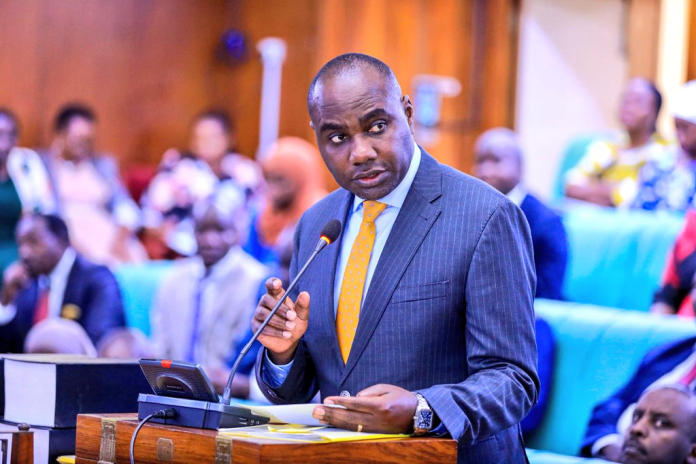
Presenting the report on the 2026/27 National Budget Framework Paper, Remigio Achia, Vice Chairperson of the Budget Committee, told Parliament that the crisis is undermining the quality of higher education.

“Most public universities are grossly understaffed, with some institutions operating below 20 percent staffing levels,” Achia said.

He added, “This persistent gap continues to strain the system and affects teaching, research and supervision.”

According to the committee report, Busitema University has the lowest staffing level at just 10 percent and currently has only nine professors despite its multi-campus structure. Muni University operates at 15.65 percent and is grappling with a wage gap of Shs8.2 billion.

Soroti University stands at 19 percent, while Kabale University operates at 24.6 percent. Kabale has about 13 professors but requires an additional Shs10 billion to recruit more staff.

Lira University, a science-based institution, is operating at a 22.2 percent staffing level and currently has only two professors and 12 associate professors. The report indicates that Gulu University has nine professors and is operating at 39.04 percent.

Makerere University, the country’s oldest public university, is functioning at 39.63 percent staffing level, while Kyambogo University stands at 34 percent and requires an additional UGX28.5 billion to address wage shortfalls and boost recruitment.

Mbarara University of Science and Technology operates at 33 percent, while the Uganda Management Institute stands at 49.6 percent. UMI currently has eight professors and requires Shs2.18 billion for recruitment and promotions.

Mountains of the Moon University recorded the highest staffing level among the listed institutions at 72 percent and has only four professors.

“The Committee recommends that the Government commits to addressing the persistent issue of understaffing in public universities so that they operate at an average of at least 50 percent staffing level,” Achia noted.

Stories Continues after ad

Equity Bank staff trained to unlock green finance under UGEFA program

Equity Bank staff, after undergoing training under the Uganda Green Enterprise Finance Accelerator.

Equity Bank Uganda has strengthened its internal capacity to attract new clients and mobilize green finance opportunities following intensive training under the Uganda Green Enterprise Finance Accelerator (UGEFA).

The three-day Green Loan Product Development Training, facilitated by UGEFA’s Green Finance Experts, brought together 20 operational staff from across the bank’s key departments such as, Product Development, Finance, Environment Social, Governance (ESG) and Sustainability, Public Sector and Social Investment, Credit and Front Office, Risk, Reporting and Data, Marketing, as well as Branch Operations.

The training was held at the Golden Tulip Hotel in Kampala and concluded with a simple graduation ceremony where participants received certificates.

The program was designed to equip SME-focused teams with practical tools to design green loan products that balance commercial viability with measurable environmental impact. Participants were guided through critical components such as eligibility criteria, risk management, pricing models, and go to market strategy.

Uganda’s green SME sector continues to face significant financing gaps. Many enterprises remain underserved due to limited collateral, lack of credit history, and the longer payback periods often associated with green investments. These challenges have slowed the growth of environmentally sustainable businesses.

For financial institutions, the segment has traditionally presented hurdles including high transaction costs, difficulty in assessing emerging green technologies, and perceived risk exposure. However, the growing demand for sustainable finance and the introduction of Uganda’s National Green Taxonomy present new opportunities for banks ready to innovate.

By developing tailored green loan products, banks can unlock new client segments, strengthen ESG compliance, and position themselves as leaders in a rapidly expanding sustainable finance market.

Catherine Psogmen, Director Public Sector and Social Investment at Equity Bank Uganda, who was the Chief Guest at the graduation ceremony, emphasized the importance of strategic partnerships and regulatory alignment.

“As a Bank we appreciate the partnership that we have with the European Union and Adelphi GLOBAL under the UGEFA Project. We learned something on scoping opportunities. This is critical. The regulatory environment and the terrain within which we operate and how we should comply with some of those areas, regulatory areas such as the green taxonomy, climate risk regulations and the expectations vary. We need to demonstrate that we have a sustainable organization,” she said.

She reaffirmed the bank’s commitment to implementing the lessons from the training. “You have our commitment that we will indeed implement and grow the numbers when it comes to refinancing,” she added.

Virginia Ssemakula, Pillar Head Energy, Environment and Climate Change at Equity Bank Uganda, noted that building internal expertise is essential to scaling sustainable finance solutions. She highlighted that strengthening staff capacity enables the bank to confidently structure green products that respond to market needs while aligning with national and global climate priorities.

The training concluded with a clear outcome-a practical starting point for developing a bank-ready green loan product and a stronger institutional foundation to mobilize green finance.

Through partnerships under UGEFA, Equity Bank Uganda is positioning itself not only as a financial intermediary, but as a catalyst for Uganda’s green enterprise growth and sustainable development journey.

Stories Continues after ad

UNEB: 99% of candidates excel in 2025 UCE

Education and Sports Minister, Janet Museveni, at the release of UCE exams.

The Uganda National Examinations Board has announced an improvement in performance in the 2025 Uganda Certificate of Education examinations, with 99.69% of candidates qualifying for the award of the UCE certificate.

Releasing the results today at Nakasero State House, UNEB Executive Director Dan Odongo said the 2025 cohort registered the strongest outcome since the rollout of the Competency Based Curriculum.

“A total of 428,628 candidates representing 99.69 percent of those who sat have qualified for the UCE certificate. This will be reflected on both the transcript and the certificate as Result 1,” Odongo said.

According to UNEB data, 432,163 candidates from 3,975 examination centres registered for the 2025 examinations, compared to 359,417 in 2024, marking an increase of 72,746 candidates, equivalent to 20.2 percent growth.

Of the registered candidates, 204,292 were male, representing 47.3 percent, while 227,871 were female, representing 52.7 percent. Beneficiaries of the Universal Secondary Education programme accounted for 154,642 candidates or 35.8 percent, while 277,521 candidates representing 64.2 percent were non-USE.

A total of 429,949 candidates sat the examinations, translating into 99.5 percent attendance. Only 2,214 candidates were absent, representing 0.5 percent. In 2024, 357,120 candidates sat the examination.

“As observed in 2024, the rate of absenteeism continues to decline, reflecting improved candidate participation and retention,” Odongo noted.

Performance analysis released by UNEB shows a marked improvement compared to 2024. In 2025, 428,628 candidates attained Result 1, while 1,191 candidates recorded Result 2, and 130 recorded Result 3. Only 0.31 percent did not qualify for the certificate, a significant drop from 1.9 percent in 2024.

“The percentage of candidates who did not qualify for the UCE certificate has declined significantly from 1.9 percent in 2024 to just 0.31 percent in 2025,” Odongo said. “Result 2 and Result 3 indicate that a candidate did not fulfil all conditions for the award, such as missing project scores, sitting fewer subjects than required, or lacking Continuous Assessment scores.”

Under the Competency Based Curriculum framework, candidate achievement levels are graded A to E. UNEB explained that results are derived from a combined assessment approach, with Continuous Assessment contributing 20 percent and the End of Cycle Examination contributing 80 percent.

“The achievement levels are determined through systematic statistical and psychometric analysis to ensure fairness and objectivity,” Odongo explained.

Special Needs Education candidates were also accommodated extensively. A total of 708 candidates registered, comprising 342 males and 366 females. These included 27 blind candidates, 116 with low vision, 60 deaf, 90 dyslexic, 72 physically handicapped, and 343 with other disabilities requiring extra time, including those with sickle cell anaemia, epilepsy, and accident-related conditions.

Only four Special Needs candidates were absent.

UNEB said comprehensive arrangements were made to ensure fairness, including Braille question papers, sign language interpreters, enlarged print papers, support personnel, and an additional 45 minutes per paper.

Cases of examination malpractice remained minimal, with 63 cases reported, largely in Mathematics and practical papers in Physics, Chemistry and Biology.

“In a few instances, there was overwhelming evidence that some candidates were provided with experimental results by teachers, which they merely copied,” Odongo said.

He added, “Under the Competency-Based Assessment framework, candidates must design and conduct investigations. Where the investigation design did not correspond with the recorded results, malpractice was evident.”

UNEB Chairperson Celestino Obua hailed the progress made in the second cohort under the Competency Based Curriculum.

“Whereas in 2024 UNEB was treading on new ground, the 2025 terrain proved far more familiar, with significantly improved institutional capacity. I sincerely commend the Executive Director and staff for their dedication and professionalism which has enabled the successful release of these results,” Prof Obua said.

He reiterated that the curriculum reform is yielding measurable benefits.

“The findings confirm that the Competency Based Curriculum is a strong and transformative reform, well positioned to produce the type of Ugandans needed to drive socio economic transformation,” he said.

According to the Board’s study, learners under the new curriculum demonstrate stronger research skills, improved creativity and innovation, better communication abilities and enhanced critical thinking and problem solving capacity.

“These outcomes affirm that the curriculum is strategic in shaping a competent and globally competitive generation,” Prof Obua added.

UNEB further announced that the Senior Five selection exercise will be conducted from February 18–19. Senior Five students are expected to report for the first term on Thursday, March 5, 2026.

Stories Continues after ad

I forged Milly Babalanda’s recommendation to be appointed deputy RDC as she didn’t merit being one- Kadaga

Ministers Rebecca Kadaga and Milly Babalanda.

Busoga-The First Deputy Prime Minister Rebecca Alitwala Kadaga has delivered one of the most political exclusives in recent memory after declaring that she personally forced through the appointment of Milly Babalanda as Deputy Resident District Commissioner despite her lacking the minimum academic qualifications.

Kadaga’s revelation comes at a time of open friction between the two leaders, following a controversial National Resistance Movement meeting in Iganga chaired by President Yoweri Kaguta Museveni which Kadaga was not invited to.

Speaking with unmistakable resolve, the veteran Busoga power broker dismantled any notion that Babalanda’s rise was organic.

“You remember government consideration for RDC or deputy RDC, you must have an A’Level certificate. I looked around for a Musoga girl to recommend. I found Milly Babalanda. She had no Senior Six, no Senior Four, no certificate. I forged the recommendation because I lacked a qualified Musoga girl. That is how Babalanda became deputy RDC,” Kadaga revealed.

The statement, delivered without hesitation, reframes Babalanda’s political trajectory as one engineered by Kadaga at a time when she says the minister did not meet the threshold for appointment.

The timing of the disclosure is significant. On January 11, President Museveni openly questioned Kadaga’s absence from the Iganga NRM meeting.

“I spoke to my young sister Rebecca Kadaga and asked her whether she was coming for the meeting. She told me she was not invited,” Museveni said before party leaders.

He further revealed that he contacted Speaker Anita Annet Among to clarify the matter.

“She told me that all flag bearers were invited. I called her again and told her Kadaga said she was not invited. She asked me how they invited her,” Museveni recounted.

However, Kadaga insists the January 5 letter authored by NRM Secretary General Richard Todwong was never meant for her category.

In a detailed breakdown, she listed those invited to the meeting: all NRM city chairpersons, district chairpersons, municipality and city division chairpersons, town council chairpersons, parish and ward party leaders, LC1 chairpersons, sitting district LC5 chairpersons, city mayors, and other sitting local government leaders aligned to the NRM structures in Acholi, West Nile and Busoga.

“I am not a city chairperson. I am not a district chairperson. I am not a parish or ward chairperson. I am not among those categories. This letter was never intended for flag bearers. Therefore I was not invited,” Kadaga said.

She added, “It was addressed to district and city chairpersons, parish and ward leaders. I am not among those. This letter was never intended for flag bearers. I was not invited.”

But beyond the invitation dispute lies what appears to be a deeper political rupture.

Kadaga reminded Babalanda that she once publicly acknowledged the role she played in her rise.

“One day she hosted the President and confessed that had it not been Kadaga, you would not have seen me. She said it herself,” Kadaga revealed.

In a pointed caution that carried both political and personal weight, she added, “I want to request Milly Babalanda to calm down. The wars you want to start up, you may not manage them.”

Kadaga did not stop there. She questioned Babalanda’s command of the powerful Ministry for the Presidency, suggesting that key functions are handled by aides.

Kadaga revealed that there are things that are not about that but now that Babalanda has raised the head, she had to do so.

“Even the speeches and research she reads are written for her by Faruok Kirunda. It is Farouk that has been running the ministry. She reads word per word. If you ask her a question, she cannot respond,” she said, alleging that others are effectively running the ministry.

Another issue, Babalanda has a habit of blackmail, she got that position becausing of blackmailing Esther Mbayo, she blackmailed her until she was taken to another ministry., because Babalanda’s job is just to to come to the airport to wave at someone travelling and even another one returning then you make a line and kneel down, Kadaga further revealed.

The unfolding confrontation lays bare growing fractures within Busoga’s NRM leadership, a region long considered one of Kadaga’s strongest political bastions. At the Iganga meeting, Museveni urged unity, warning that internal battles were hurting ordinary citizens.

“What I advise you is that poor people need unity among leaders because you are delaying their exit from poverty by not working together,” the President cautioned.

Yet the latest escalation signals that reconciliation may not be imminent. What began as a dispute over invitations has now evolved into a full-blown political reckoning, with Kadaga asserting her historical influence and questioning the legitimacy of the very leader she says she elevated.

Stories Continues after ad

Uganda gains EU approval for farmed fish exports, boosting aquaculture sector

Ugandan farm displays harvested fish.

Kampala, Uganda — February 12, 2026-Uganda has officially been cleared to export farmed fish to the European Union, a milestone expected to give a major boost to the country’s aquaculture industry.

The EU’s approval, as outlined in Commission Implementing Regulation (EU) 2026/187, formally designates Uganda as an authorized exporter of aquaculture products, including tilapia and other farmed finfish.
The move opens up one of the world’s largest and most lucrative fish markets to Ugandan producers, creating opportunities for higher-value exports and foreign exchange earnings. The clearance follows compliance with stringent EU standards for food safety, hygiene, and traceability.
Industry experts say the development could drive investment in fish farming, processing facilities, and cold-chain infrastructure. “This is a turning point for Uganda’s aquaculture sector,” said a senior official at the Ministry of Agriculture. “Farmers now have access to premium markets, which will incentivize quality production and strengthen the entire value chain.”


Uganda’s aquaculture sector has been expanding steadily, driven by domestic demand and government programs promoting fish farming. EU access is expected to accelerate growth further, increase employment in rural areas, and enhance export revenues for the country.

Stories Continues after ad

European Parliament questions legitimacy of January elections, calls for independent investigation

EU parliament.

Brussels/Kampala — February 12, 2026-The European Parliament has formally questioned the credibility of Uganda’s January 2026 elections and called for an independent investigation into alleged crimes against humanity in the country.
In a resolution passed on Wednesday, Members of the European Parliament (MEPs) cited allegations of “abuses, widespread intimidation, electoral fraud, violence, and a nationwide internet blackout” as factors that undermined the integrity of the electoral process. The Parliament urged Ugandan authorities to permit impartial international oversight to ensure accountability.


“The European Parliament is deeply concerned about the conditions under which the January elections were conducted, which raise serious doubts about their legitimacy,” the resolution stated.
Observers and rights groups have documented numerous instances of political harassment, suppression of dissent, and restrictions on media and communication channels during the electoral period. The internet shutdown, in particular, was widely criticized for limiting access to information and obstructing transparency.

The European Parliament’s call aligns with mounting international concern over Uganda’s human rights record and the broader political climate. Lawmakers stressed that any credible democratic process must protect the freedoms of expression, assembly, and the press.
Ugandan authorities have not yet issued a response to the European Parliament’s demands, though past statements from the government have dismissed similar international criticisms as “interference in domestic affairs.”

Stories Continues after ad
Museveni commends MTN for advancing digital transformation and economic growth

President Yoweri Museveni and the MTN team, led by Board Chairman Charles Mbire.

President Yoweri Kaguta Museveni has applauded MTN Uganda for its contribution to Uganda’s socio-economic transformation following a meeting with the company’s top leadership at State House, Entebbe.

The President hosted MTN Uganda Chairman Charles Mbire and his team for discussions on the performance of the telecommunications sector and its growing role in innovation, service delivery and economic growth.

“Today at State House, Entebbe, I welcomed the Chairman of MTN Uganda, Charles Mbire, and his team,” President Museveni said.

He commended their continued contribution to Uganda’s development.

“We held good discussions on the telecommunications sector and its role in driving socio-economic transformation, innovation and service delivery,”Museveni added.

The meeting highlighted the strategic importance of digital infrastructure in supporting government programmes, private sector competitiveness and access to essential services.

MTN Uganda Chief Executive Officer Sylvia Mulinge described the engagement as constructive and forward-looking, noting that it reaffirmed the shared vision between government and the private sector.

“It was a privilege to be hosted by you, Your Excellency. We truly appreciated the opportunity for such a meaningful discussion on our shared vision for Uganda’s economic prosperity,”Mulinge said.

She emphasized that digital transformation remains central to Uganda’s growth agenda.

“Digital transformation is at the heart of Uganda’s economic growth, and MTN Uganda is proud to be at the forefront of these efforts,”Mulinge said. 

She added,“We remain fully committed to expanding connectivity, driving innovation and supporting inclusive development across the country.”

MTN Uganda is one of the country’s leading telecommunications companies, providing voice, data and mobile financial services to millions of subscribers. 

The company continues to invest in network expansion and digital solutions aimed at deepening financial inclusion and strengthening Uganda’s transition to a technology-driven economy

Stories Continues after ad

Uganda Tourism Association launches Strategic Plan 2026-2030 at Speke Resort Munyonyo 

The Uganda Tourism Association (UTA) has unveiled its Strategic Plan for 2026–2030, setting out an ambitious roadmap aimed at strengthening the private sector’s role in transforming Uganda’s tourism industry.

Launched at Speke Resort Munyonyo, the five-year strategy marks a significant milestone for the country’s apex private sector tourism body. The plan outlines a renewed commitment to sustainable growth, innovation, professionalism, and stronger collaboration between government and industry players.

The Strategic Plan positions UTA as a more structured and results-driven institution ready to lead alongside government in advancing Uganda’s tourism agenda. It emphasizes the need for strong standards, accountability, and coordinated action across the sector to enhance competitiveness and global visibility.

Central to the strategy is the vision of building a competitive, sustainable, and inclusive tourism industry that firmly positions Uganda as “The Pearl of Africa.”

UTA seeks to shift the focus of value creation beyond visitor numbers to quality experiences, environmental sustainability, innovation, and effective public–private partnerships.

The plan sets out clear priorities including institutional strengthening, sustainable financing, improved service delivery to members, enhanced communication and visibility, and the promotion of professionalism and responsible tourism practices. 

It also underscores the importance of unifying tourism stakeholders under one strong umbrella body to ensure coherence in advocacy and representation.

Over the next five years, UTA will roll out a nationwide membership campaign aimed at consolidating the private sector voice, including bringing community-based tourism enterprises into a more coordinated framework. 

The association intends to position itself as a professional and efficient apex body capable of influencing policy, driving standards, and fostering investment.

The development of the Strategic Plan was undertaken in collaboration with Enabel through the WeWork – Green and Decent Jobs for Youth project, funded by the European Union and the Government of Belgium. 

The partnership highlights the growing emphasis on tourism as a vehicle for employment creation, particularly for young people, while promoting environmentally responsible practices.

UTA leaders noted that tourism cannot thrive without a united and organized private sector, stressing the importance of sustained dialogue and joint implementation of the plan’s priorities. 

They emphasized that tourism development goes beyond marketing destinations and requires clear strategy, strong institutional structures, and shared purpose among stakeholders.

With the launch of the 2026–2030 Strategic Plan, UTA signals a decisive step toward consolidating private sector leadership and shaping a resilient, inclusive, and globally competitive tourism industry for Uganda.

Stories Continues after ad
Namuganza turns heat on Anita Among for Speakership

Minister Namuganza and Speaker Anita Among.

Bukono County Member of Parliament, Persis Namuganza, has officially declared her candidacy for Speaker of Parliament for the 2026–2031 term. She sets up a direct contest with incumbent Speaker Anita Among.

In a statement issued on Tuesday, Namuganza said she seeks the speakership to promote unity, transparency, and inclusive leadership.

“With a heart full of gratitude and unwavering dedication to our beloved nation, I humbly express my interest in serving as Speaker of the Parliament 2026–2031,” Namuganza said.

She added, “Guided by a vision of unity, progress, and justice, I am committed to amplifying every voice, fostering transparent governance, and building a brighter future for all.”

Namuganza, who represents Bukono County in Namutumba District, is a prominent figure in Parliament, known for her bold interventions and motions targeting leadership accountability.

She has repeatedly moved measures challenging the conduct and decisions of Speaker Anita Among, highlighting her influence and willingness to confront established authority.

The legislator recently graduated with a law degree from the Islamic University in Uganda (IUIU), a qualification she says strengthens her ability to preside over parliamentary proceedings and interpret legislative rules.

Namuganza joins a competitive field that includes Anita Among, seeking re-election, and Democratic Party president Norbert Mao. The speakership will be decided by MPs at the opening of the 12th Parliament, with party caucuses expected to play a significant role in shaping the outcome.

Others interested in the same post are Mr Nobert Mao, the newly elected MP for Laroo Pece division in Gulu City. Sources have further told this website that the earlier claim by sections of the press that the Central Executive Committee had ringfenced the two positions of Speaker and Deputy Speaker was a hoax, as there was no resolution, but rather an expression of interests by the current holders to have them endorsed without competition.

Stories Continues after ad