Stanbic Bank
Stanbic Bank
18.4 C
Kampala
Stanbic Bank
Stanbic Bank
Home Blog Page 2

High Court grants son right to bury remains of murdered Entebbe couple

late David Mutaaga and his wife, Deborah Mutaaga.

The High Court in Kampala has ruled that the biological son of the late David Mutaaga and Deborah Mutaaga has the final authority over their burial, ending a prolonged family dispute that had delayed their interment for more than nine months.

In a ruling delivered by Celia Nagawa at the Family Division on Monday, 20, the court ordered the unconditional release of the couple’s remains to their son, Mark Mutaaga Kabenge, within 48 hours. The judge also declared that the son, together with his sister Isabella Najjita Mutaaga, holds the paramount right to determine how and where their parents will be laid to rest.

The couple was found dead on July 6, 2025, at their home in Lugonjo, Nakiwogo in Entebbe, in what police are investigating as a suspected murder. Their deaths sparked a criminal probe under the Uganda Police Force, but no arrests have been made to date, leaving the case unresolved months later.

Since their death, the bodies have been kept at A-Plus Funeral Home in Mengo, Kampala, as disagreements emerged within the family. While the children pushed for cremation and repatriation of the remains to Switzerland, some relatives and clan leaders insisted on a traditional burial at the ancestral home in Buddo, Wakiso District, in accordance with Kiganda customs.

In resolving the dispute, Justice Nagawa placed significant weight on the relationship between the deceased and their children, describing it as the closest and most fundamental bond. She observed that the couple had lived and raised their family in Switzerland for many years and that their children remained the most directly connected to them throughout their lives.

“The deceased were parents before they were anything else, and their children were the persons for whom they lived and worked for the entirety of their adult lives,” the judge ruled, underscoring the central role of the children in making burial decisions.

The court further noted that although extended family members, including a clan leader and the deceased’s sister, had raised cultural and customary arguments, their claims could not override the rights of the biological children. Justice Nagawa explained that while culture is recognised under the law, it must be balanced with the realities of personal relationships and proximity to the deceased.

“A cousin, however distinguished by his customary title, does not occupy the same position of closeness to the deceased as a biological child who shared a home and daily life with them,” she stated.

On the issue of the ongoing murder investigation, the court ruled that it was not sufficient to justify continued retention of the bodies. Justice Nagawa pointed out that a full postmortem examination had already been conducted and its findings preserved, meaning the evidentiary value of the remains had largely been exhausted.

“There is no evidence before this court that the police require further access to the physical bodies for any ongoing investigative purpose,” she ruled, adding that the law does not permit indefinite retention of human remains at the expense of dignity and family rights.

The judge emphasized that keeping the bodies unburied for such an extended period was unreasonable and contrary to the need for a dignified burial. She noted that nine months was already beyond what would ordinarily be required for investigative purposes, especially in the absence of any significant progress in the case.

In her final orders, Justice Nagawa directed the Attorney General to facilitate the immediate release of the bodies and ensure that all necessary documentation is processed within 48 hours to allow burial arrangements to proceed without further delay. She also issued a permanent injunction restraining any other parties, including clan representatives, from interfering with the burial process without the express consent of the son.

“The applicant has the paramount right to determine both the mode and place of disposal of the remains, including cremation and repatriation,” she ruled, effectively clearing the way for the family to proceed according to the wishes of the children.

Despite the firm legal position, the court called for unity among family members during the mourning process. Justice Nagawa urged all parties to put aside their differences and come together to give the deceased a dignified send-off, noting that while the right to decide burial rests with the children, the right to mourn belongs to everyone who loved them.

Stories Continues after ad

HIGH COURT RULING: Airtel Uganda fined Shs1.09b in tax dispute with URA

The High Court in Kampala has upheld a tax assessment of Shs1,091,541,475 against Airtel Uganda Limited, ruling that the telecommunications company is liable to pay the amount following a dispute with the Uganda Revenue Authority over the valuation of imported equipment.

In a judgment delivered on April 22, 2026, Justice Stephen Mubiru found that URA acted within the law when it rejected Airtel’s declared import values and applied an alternative method of assessing tax based on identical goods.

“The respondent was justified, on the facts of the case, to depart from the transaction value method and instead apply the transaction value of identical goods,” Justice Mubiru ruled.

The case arises from Airtel Uganda’s 2018 importation of a Broadband Processing Board from China, which it declared at a unit price of about 1,349 dollars. However, URA established that another telecommunications company had imported similar equipment from the same manufacturer at a much higher price of over 10,000 dollars per unit.

The significant price difference prompted URA to conduct a customs audit and request further documentation from Airtel to justify the declared value. Among the documents requested were details of pricing negotiations, discount arrangements and proof that such discounts were available under normal commercial conditions.

Court records show that Airtel did not provide the additional information despite being given time, raising doubts about the accuracy of its declared value.

“The appellant failed to demonstrate how it arrived at the invoiced unit price,” the judge observed.

He noted that this failure justified URA’s decision to question the transaction value.

URA then applied the method of valuation based on identical goods and issued an additional tax assessment of more than Shs 1.09 billion.

Airtel challenged the decision before the Tax Appeals Tribunal, arguing that it had provided sufficient documentation including purchase orders and invoices. The Tribunal, however, did not make a final determination and instead directed further inquiries, including verification of the equipment and confirmation of prices from another importer.

The High Court disagreed with that approach and found that the Tribunal erred in law by failing to resolve the matter on the available evidence.

“The Tribunal misdirected itself when it ordered further verification despite sufficient material on record,” Justice Mubiru stated.

The court also rejected Airtel’s attempt to introduce new evidence at the appeal stage, including a receipt that had not been presented earlier.

“A party who has been unsuccessful at the trial must not seek to adduce additional evidence to fill up omissions or patch up weak parts of their case,” the judge ruled.

On the question of valuation, the court agreed with URA that the imported equipment qualified as identical goods, noting that both sets were produced by the same manufacturer, around the same time, and had the same technical characteristics and function.

“There is no evidence showing any difference in brand, physical characteristics, quality or functionality,” the judgment states.

Justice Mubiru further noted that the large price gap, combined with the lack of supporting documentation, provided sufficient grounds for URA to reject the declared value and apply an alternative method of assessment.

The court ultimately held that while Airtel succeeded on a legal point regarding the Tribunal’s handling of the case, the tax liability itself remained valid and enforceable, with each party ordered to bear its own legal costs. 

Stories Continues after ad

Kampala Parents School to host vibrant Gujarat Diwas 2026 celebrations

The Indian community in Uganda is set to come alive with colour, culture and cuisine as Gujarat Diwas 2026 is scheduled to be hosted at Kampala Parents School grounds on Saturday, May 2, starting at 6:00 PM.

Organised under the guidance of the Indian Association Uganda, the event will bring together Gujarati communities and well-wishers to celebrate the rich heritage of Gujarat, one of India’s most culturally vibrant regions.

This year’s celebration promises an exciting lineup of activities, including live traditional performances such as Lok Dayro and the energetic Garba Dhamal dance. Attendees can also look forward to a variety of Gujarati cultural showcases, a dedicated children’s play area, and a grand fireworks display to cap off the evening.

Food will be a major highlight, with a wide selection of pure vegetarian dishes and non-alcoholic drinks available, reflecting the community’s traditions and values.

Gujarat Diwas, observed annually to mark the formation of the state of Gujarat in India, has steadily grown into one of the most anticipated cultural events for the Indian diaspora in Uganda.

Over the past three editions, the celebration has attracted large crowds, blending cultural pride with community bonding.

Previous events have featured vibrant dance performances, cultural exhibitions and business networking opportunities, drawing not only members of the Indian community but also Ugandans eager to experience Gujarati culture.

The event has consistently promoted unity, diversity and cultural exchange.

This celebration is about preserving the Indian heritage while sharing it with others. It is a family-friendly event where everyone feels welcome.

Entry to the event is free with an intention to encourage bigger participation and inclusivity.

Stories Continues after ad

Fisheries Officer killed in highway crash as taxi driver flees

The taxi that killed the fisheries officer.

Bugiri, Uganda — April 21, 2026-A fisheries officer attached to Bugiri District has died in a fatal road crash along the Tororo–Jinja highway, after a taxi he was travelling in was involved in an accident, authorities have confirmed.
The incident occurred on Tuesday along one of eastern Uganda’s busiest transport routes. According to preliminary police reports, the taxi was involved in a high-impact collision that left the officer dead at the scene, while several other passengers sustained varying injuries.
Police suspect that reckless driving linked to competition for passengers—commonly known as “stage wars”—may have contributed to the crash. Witnesses say the driver of the taxi fled immediately after the accident and remains at large.
“We are actively pursuing the driver who abandoned the scene,” a police spokesperson said, adding that the suspect will face charges related to reckless driving and causing death once apprehended.
The injured victims were rushed to nearby health facilities for treatment, though their current conditions have not yet been officially disclosed.
The Tororo–Jinja highway is a vital transport corridor connecting eastern Uganda to major commercial centers, but it has also gained notoriety for frequent and often fatal accidents. Authorities have repeatedly attributed these incidents to speeding, dangerous overtaking, and indiscipline among drivers—particularly those operating public service vehicles.
The death of the fisheries officer has cast a shadow over Bugiri District, where colleagues described the deceased as a dedicated public servant who played a key role in supporting local fishing communities and enforcing fisheries regulations.
Local leaders and residents have renewed calls for stricter enforcement of traffic laws and tougher penalties for errant drivers, warning that continued inaction could lead to more preventable deaths on Uganda’s roads.
Police investigations into the crash are ongoing.

Stories Continues after ad

Three Ngora district officials remanded over mismanagement of Shs1b road fund

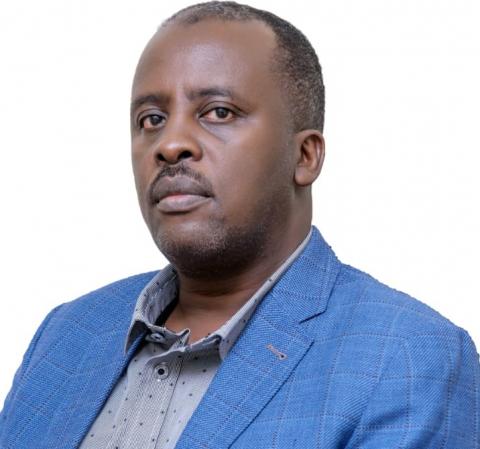
The Ngora district suspects, Stanslas Francis Opio, Acting District Engineer, Okello Samuel, Assistant Engineering Officer, and Oroni Herbert, Station Manager at Retta Solutions Uganda Ltd.

Three officials from Ngora District Local Government and a private sector actor have been remanded over alleged mismanagement of Shs1 billion meant for road works in the district.

The suspects are Stanslas Francis Opio, the Acting District Engineer, Samuel Okello, an Assistant Engineering Officer, and Herbert Oroni, the Station Manager at Retta Solutions Uganda Ltd.

They were arraigned before the Ngora Grade One Magistrates Court by the State House Anti-Corruption Unit, working jointly with the Criminal Investigations Directorate and the Office of the Director of Public Prosecutions, on charges of theft and conspiracy to defraud. The trio was remanded until May 5, 2026.

Prosecution alleges that the three, together with others still at large, between 2024 and March 2026 conspired to steal fuel valued at over Shs35 million, belonging to Ngora District Local Government. The fuel was reportedly obtained under the pretext that it would be used for road works within the district.

Investigators say the claims were false and that the fuel was diverted for purposes not related to the intended road construction and maintenance activities.

According to investigations, Ngora District Local Government received a total of Shs1.75 billion in the financial years 2024/2025 and 2025/2026 for road construction and maintenance. However, concerns from community members and stakeholders pointed to poor utilisation of the funds, with several roads reportedly left in substandard condition.

It is alleged that Okello Samuel frequently received fuel without proper authorization or documentation and without the approval of the Acting District Engineer. He is said to have acted in collusion with Oroni Herbert, who managed the fuel station supplying the fuel.

Investigations further indicate that Opio Stanslas Francis failed to effectively supervise the engineering department, allowing the alleged misuse of resources to occur.

The investigations are ongoing to trace other individuals believed to have been involved in the scheme.

The government disburses funds to local governments to support road rehabilitation and maintenance, but anti-corruption agencies say misuse of such funds remains a recurring challenge across districts.

Stories Continues after ad

Bank of Uganda begins buying locally mined gold to boost reserves

Gold stones.

The Bank of Uganda has launched a three-year pilot Domestic Gold Purchase Programme with an aim to strengthen the country’s foreign exchange reserves and reduce reliance on traditional reserve assets.

Test purchases under the programme commenced on April 17, 2026, with the central bank confirming that it will begin acquiring gold mined within Uganda as a strategy to diversify its reserve portfolio.

The initiative will see the central bank purchase gold from prequalified and licensed miners, paying in Uganda shillings based on prevailing international prices, before processing and eventually incorporating the gold into the country’s official reserves.

Under the arrangement, gold acquired will first be delivered to designated refineries for assaying, after which it will be securely stored and later refined domestically to meet international monetary gold standards.

“Once certified, the gold will be incorporated into Uganda’s official foreign exchange reserves,” the Bank said.

The programme is a long-term intervention aimed at enhancing reserve adequacy and reducing exposure to risks associated with conventional reserve instruments.

Beyond reserve management, the central bank says the programme is designed to formalise Uganda’s gold sector, promote value addition and strengthen economic linkages within the mining industry.

“The programme will test the full value chain, from purchasing gold to including it in official foreign exchange reserves and enhancing traceability systems,” the statement noted.

A key feature of the initiative is a strict chain of custody framework to ensure full traceability of gold from the mine to final processing. The system has been developed in collaboration with the Ministry of Energy and Mineral Development to improve transparency and curb illicit trade.

The traceability mechanism aligns with regional obligations under the International Conference on the Great Lakes Region certification system, which requires member states to verify the origin of minerals and prevent illegal flows.

“This framework is critical in ensuring a transparent and accountable supply chain, mitigating risks of illicit trade and strengthening confidence in Ugandan gold in both domestic and international markets,” the Bank stated.

To support the programme, the central bank has secured a Mineral Dealer’s Licence from the Ministry of Energy and Mineral Development and is registered with the Financial Intelligence Authority as an accountable entity under anti money laundering and counter terrorism financing regulations.

The three year pilot phase will allow the Bank to test operational systems, strengthen oversight mechanisms and refine the model before a potential scale up.

The programme follows extensive groundwork coordinated through a high level intergovernmental committee that brought together key institutions including the Ministry of Finance, the Uganda Revenue Authority, the National Environmental Management Authority and the Uganda National Mining Company.

According to the central bank, the framework developed covers governance, risk management, compliance and environmental safeguards, with existing licensing regimes expected to ensure adherence to environmental and social standards.

Uganda now joins countries such as Ghana and Tanzania that have integrated domestically sourced gold into their reserve management strategies.

The move is also aligned with the government’s broader economic agenda, where mineral development is identified as a key driver under the national growth strategy.

The Bank of Uganda said it will implement the programme in a prudent, transparent and accountable manner positioning it as both a macroeconomic tool and a catalyst for building a more formal and resilient gold sector.

Stories Continues after ad

All similes as Delhi Public School International excels in CBSE grade X exams 2025–2026

Delhi Public School International, Kampala – Uganda has recorded a strong performance in the CBSE board examination 2025–2026 Grade X results with 20 out of 58 students scoring above 90%, thus consistent academic achievement across the class.

The school is affiliated to the CENTRAL BOARD OF SECONDARY EDUCATION, New Delhi under affiliation no.7630001.

The school average score stood at 82.7%.

Top performers

 The top performer was SAI DEEPTHI DUDYALA scored 98%, followed by ANAY MANOJ GANMOTE who scored 97.2%, ISHA SURESH MENON scored 97% and SURE SANKARI SRESHTA scored 97%.

Star performers

 Other high-achieving students included:

KATIK SINGH BAGHEL – 96.8%

SREERAM RAMKUMAR – 96.6%

ANANYA S. KUMAR – 96.4%

RIGHUNATH VIJAY SHIVANSH MISHRA – 95.2%

SHARVI UDIT – 95%

LU SAI SREEJA ADDEPALLI – 93.8%

KAMSIYOCHUKWU PEACE UMEOKONKWO – 93.6%

SHREYA PANDEY – 93.6%

JEMIMAH EMMANUELLA MIREMBE – 93.2%

THARUN VISAKAN VAITHIYANATHAN SUNDARRAJAN – 93.2%

HET HAMSMUKHBHAI JAYANI – 92.4%

AARUSH GARG – 92%

OMKAR AMRUT EKKE – 91.6%

KAMANI PRISHA ASHISH – 90.8%

SAMADRITA DAS – 90.2%

PATEL VRUNDA NITULKUMAR – 89.8%

VISHNU VINOD NAIR – 89.8%

The school congratulated the students for their performance, noting that the results reflect discipline, consistency in preparation, and steady academic guidance from teachers throughout the year.

It further highlighted that the performance reinforces its commitment to delivering structured learning under the CBSE curriculum while supporting students’ overall academic development.

Stories Continues after ad

Parliament passes VAT Amendment Bill as committee pushes tax relief for SMEs and investors

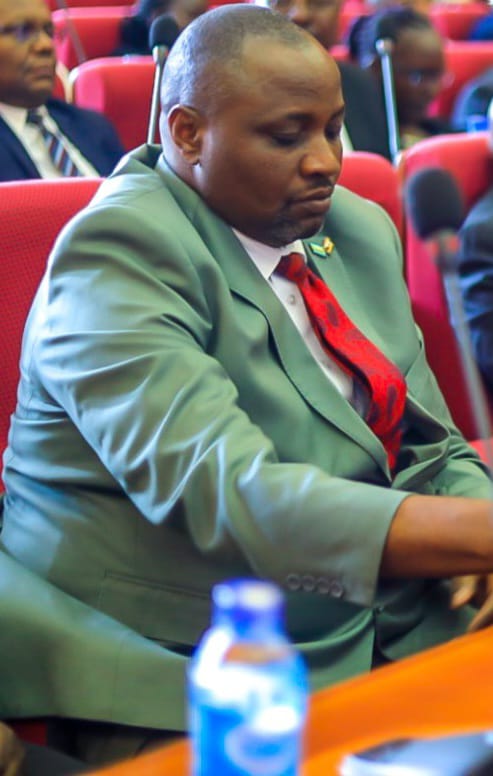
Karim Masaba, Mbale Industrial Division MP.

Parliament has passed the Value Added Tax Amendment Bill, 2026, adopting a series of reforms aimed at easing compliance for small businesses, improving tax administration, and attracting investment, following a report presented by Mbale Industrial Division MP Karim Masaba.

The House approved the Bill with amendments after scrutiny by the committee, which argued that the changes would modernise the VAT system while addressing long standing concerns from taxpayers and the private sector.

At the centre of the reforms is the increase in the VAT registration threshold from Shs150 million to Shs250 million, a move lawmakers say will reduce the compliance burden on small and medium enterprises.

“The increase in the VAT threshold will shift focus of tax administration to higher earning businesses, making it easier for the Uganda Revenue Authority to administer VAT,” the committee report states.

Legislators noted that many businesses within the current threshold contribute only a small share of total VAT collections but face high compliance costs, including filing monthly returns and maintaining accounting systems.

The Bill also removes VAT withholding where a taxpayer issues an electronic invoice or receipt, allowing suppliers to receive the full 18 percent VAT and easing cash flow constraints.

“With the proposed amendment, a supplier will now have the full 18 percent VAT, thereby addressing the prevailing cash flow challenges,” the report notes.

However, debate on the floor revealed concerns over key provisions, particularly the treatment of software under the proposed amendments.

Kira Municipality MP Muhammad Nsereko raised reservations over the proposal to impose VAT on software, warning that it could undermine Uganda’s digital transformation agenda.

“I have a huge passion for technology,” Nsereko told the House, describing it as an equaliser for unemployed but innovative young people and a driver of growth in emerging economies.

He argued that software is central to innovation and cautioned against policies that could slow technological progress.

“Software infrastructure is central to innovation. Without it, progress in technology and digital transformation would be limited,” he said.

Nsereko further noted that software is already embedded in critical systems across the economy, including government platforms such as electronic receipting systems, warning that taxing it could affect service delivery.

“Software is embedded in everyday systems across the economy, including government platforms like EFRIS,” he added.

Concerns were also raised over the broader VAT framework, with Erute South MP Jonathan Odur questioning both the tax rate and structural changes proposed in the Bill.

Odur noted that Uganda’s VAT rate of 18 percent remains higher than in some East African countries and said government had not presented sufficient justification for maintaining it.

“Some countries in the region apply lower rates including 16 percent and even 8 percent, but no report has been presented to guide this House,” he said.

He also questioned the rationale for raising the VAT registration threshold and criticised provisions that create different conditions for citizens and foreign investors in accessing tax credits.

“Amounts equivalent to millions of dollars are far beyond the reach of most Ugandan citizens. These are not easy conditions for an ordinary person investing in this country to meet,” Odur argued.

Despite the concerns, Parliament adopted the committee recommendations, including expanded tax credits for developers of hotels and tourism facilities, aimed at lowering investment costs and boosting the sector.

Lawmakers said the changes will allow investors to recover more VAT on construction inputs, making large scale projects more viable.

“This change ensures that VAT does not become an extra cost to a VAT registered business, reducing the overall cost of building hotels and making Uganda more attractive to investors,” the committee observed.

The Bill also introduces incentives to promote electronic receipting by lowering the threshold for VAT refunds to non-registered taxpayers from Shs5 million to Shs2 million within 30 days.

“This amendment is intended to encourage the use of electronic fiscal receipting and invoicing and improve transparency in tax collection,” the report states.

Other provisions include revising rules on interest for delayed VAT refunds, granting the Finance Minister powers to determine tax payment timelines for the mining sector and extending tax exemptions to selected international organisations.

The committee drew input from a wide range of stakeholders including the Ministry of Finance, the Uganda Revenue Authority, the Private Sector Foundation Uganda and the Uganda Manufacturers Association among others.

The Bill, which is expected to generate an additional Shs353 billion annually, was passed after Parliament considered it clause by clause in the Committee of the Whole House.

Stories Continues after ad

OPM warns officials over illegal pre-signing of cattle restocking forms in Acholi, Lango and Teso sub-regions

The Office of the Prime Minister has warned local government officials over the illegal practice of forcing beneficiaries to sign cattle restocking declaration forms before receiving funds, saying the move undermines accountability and exposes citizens to fraud.

In a clarification issued on April 8, 2026, the Office said it had received credible reports from the Acholi, Lango, and Teso sub-regions where some officials are demanding pre-signed forms from beneficiaries under the ongoing cattle restocking programme.

“Beneficiaries are required to sign declaration forms acknowledging receipt of funds before any payment is made. This practice is a direct violation of the approved Programme Implementation Guidelines and is firmly condemned,” the statement said.

The cattle restocking programme stems from a presidential directive aimed at rebuilding household incomes in northern and eastern Uganda. It was operationalised under Cabinet Minute 46 of 2025, with the government approving funding for thousands of households across the three sub-regions.

According to the Office of the Prime Minister, 11,023 beneficiaries were cleared to benefit from the programme during the 2025 to 2026 financial year, each receiving Shs5 million to procure five animals, including heifers and bulls.

The funds, the government clarified, are not handled in cash by officials but are directly transferred to verified beneficiaries through bank accounts or registered mobile money platforms after due verification.

“Verified beneficiary lists are submitted to OPM through the Ministry of Local Government. OPM then disburses funds directly to each beneficiary’s bank account or registered mobile money number,” the statement explained.

The Office emphasized that the declaration form is strictly meant to confirm receipt of funds and must only be signed after the full Shs5 million has been received by the beneficiary.

“Pre-signing of receipt declarations creates a risk of false financial accountability, exposes vulnerable beneficiaries to fraud, and is an abuse of trust by those mandated to implement this programme,” the statement added.

Under the approved process, beneficiaries are first identified and vetted by district technical teams at parish level before lists are consolidated and submitted through the Ministry of Local Government for final verification and payment.

Authorities now warn that any deviation from these procedures not only violates programme guidelines but also threatens the integrity of a project designed to uplift vulnerable communities.

Beneficiaries have been advised not to sign any document confirming receipt of funds they have not received and to report any such demands to district authorities or directly to the Office of the Prime Minister.

“Any official requesting a pre signed declaration should be reported immediately to the relevant District authorities or directly to the Office of the Prime Minister,” the statement urged.

The government reiterated its commitment to ensuring that all funds reach the intended beneficiaries in full, stressing that the cattle restocking programme will be implemented under strict standards of transparency and accountability.

“The Government of Uganda remains firmly committed to ensuring that all programme funds reach intended beneficiaries in full and that the Cattle Restocking Programme is implemented with the highest standards of transparency, accountability and integrity,” the statement noted.

Stories Continues after ad

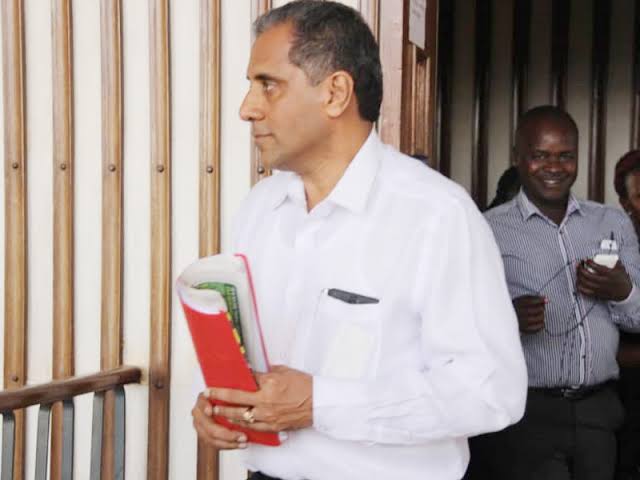
Relief as Ruparelia Foundation is to provide free prosthetic limbs to hundreds of amputees at Mulago camp

The Ruparelia Foundation will in May conduct a free medical outreach at Mulago National Referral Hospital where hundreds of amputees are expected to receive prosthetic limbs in an effort to restore mobility and improve livelihoods.

The planned camp builds on the Foundation’s growing humanitarian work across the country, targeting vulnerable populations who often lack access to specialised and affordable medical care.

The three-day camp will commence on 1st May 1-3, in memory of tycoon Sudhir Ruparelia’s late son, Rajiv Ruparelia, for his vision of service and legacy of compassion.

The Mulago initiative will focus on identifying, fitting and supporting amputees with appropriate prosthetic limbs, offering many a chance to regain independence after years of limited movement.

This intervention is expected to change lives by enabling beneficiaries to move, work and participate more fully in their communities.

The development follows the Foundation’s recent eye care camp in Bukedea District, where hundreds of patients received free treatment, including cataract surgeries and other vision-related services. 

Medical teams at the camp reported a strong turnout, with many patients regaining their sight after years of visual impairment.

Health workers involved in the Bukedea outreach described the exercise as successful, noting that it not only addressed immediate medical needs but also reduced the burden on families who had long struggled to access such services.

Encouraged by the outcome, the Foundation is now extending its interventions beyond eye care to include mobility support, reflecting a broader approach to improving quality of life among underserved communities.

The additional medical camps and specialised treatment programmes are being planned for later in the year, with a focus on reaching more remote and disadvantaged areas.

For now, attention turns to Mulago this May, where the prosthetic limb fitting exercise is expected to restore dignity, independence, and hope to hundreds of amputees.

Stories Continues after ad