Stanbic Bank
Stanbic Bank
26.7 C
Kampala
Stanbic Bank
Stanbic Bank
Home Blog Page 113

Kabira Country Club wins 2025 Tripadvisor Travelers’ Choice Award

Kabira Country Club.

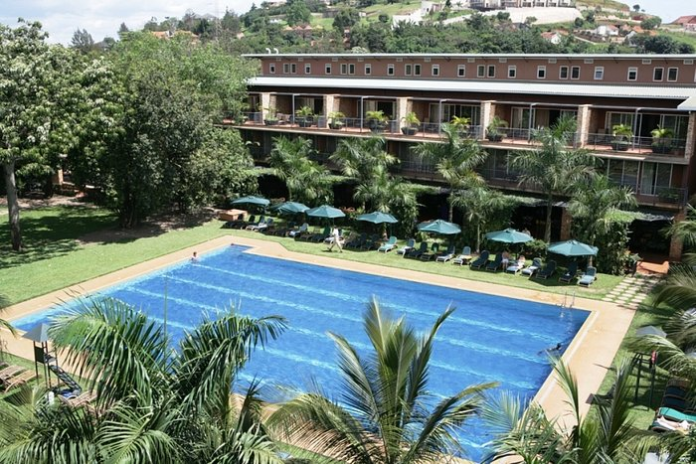
Kabira Country Club, a four-star award-winning boutique hotel located in the serene Bukoto suburb of Kampala, has been honoured with the 2025 Tripadvisor Travellers’ Choice Award.

Unlike many industry accolades, the Travellers’ Choice Awards are determined entirely by reviews, ratings, and feedback from real travellers collected over a 12-month period. Each year, Tripadvisor highlights the world’s favourite destinations, hotels, restaurants, and experiences making this recognition a genuine reflection of guest satisfaction.

The award places Kabira Country Club among the top 10 percent of all listings on Tripadvisor, celebrating businesses that consistently earn excellent reviews and demonstrate an unwavering commitment to hospitality excellence.

Kabira continues to distinguish itself with a wide range of offerings from luxurious accommodation and top-tier conference facilities to fine dining and extensive sports and wellness amenities. Guests enjoy access to a world-class gym, an Olympic-sized swimming pool, and both indoor and outdoor sports facilities including squash, tennis, basketball and football.

To further elevate the guest experience, the facility is currently undergoing expansion.

Stories Continues after ad

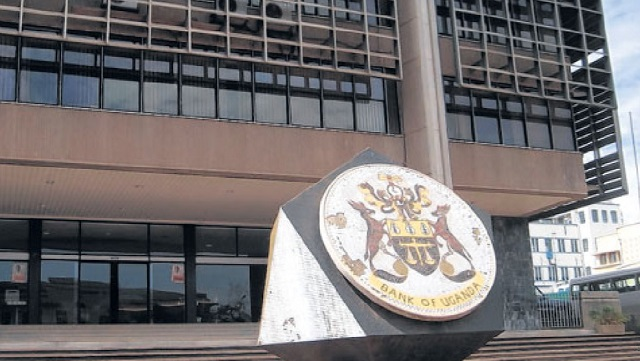
BoU raises Shs1.86t from Treasury Bills and Bonds in June 2025

Uganda’s domestic debt market remained active in June 2025, with the government raising Shs1.86 trillion from three auctions of Treasury Bills and Bonds, according to the June 2025 Performance of the Economy Report issued by the Ministry of Finance, Planning, and Economic Development.

Of the total amount raised, Shs393.09 billion was used to refinance maturing debt. At the same time, the larger portion — Shs1.47 trillion — was channeled to support the national budget, reflecting the government’s continued reliance on domestic borrowing to plug fiscal gaps.

Interest rates on government securities saw mixed movements. The 364-day and 182-day Treasury Bills rose to 15.6% and 12.8% in June, respectively, from 15.4% and 12.7% in May, suggesting rising investor risk perceptions or tighter liquidity conditions. However, the 91-day Bill yield slightly declined to 12.0%, down from 12.1% in May, likely reflecting short-term market optimism or a surge in investor demand for shorter tenors.

Despite rate fluctuations, all Treasury Bill auctions remained oversubscribed, with an average bid-to-cover ratio of 1.55 — a key indicator of strong market interest.

Longer-term Treasury Bonds also saw upward movement in yields. The 5-year bond rose to 16.8%, up from 16.7%, while the 15-year bond climbed to 17.8% from 17.7% in previous auctions. The 2-year bond yield held steady at 15.75%, maintaining its level for the third consecutive month.

These higher yields reflect the government’s effort to attract long-term investors amid inflationary pressures and tighter global financial conditions, especially as interest rates in developed markets remain high, attracting capital away from frontier economies like Uganda.

Meanwhile, growth in private sector credit was nearly flat in May, with the total stock of credit inching up by just 0.1% to Shs23.54 trillion, from Shs23.52 trillion in April. The marginal growth underscores lingering caution in the lending environment, as both banks and borrowers remain wary amid elevated interest rates and uneven post-pandemic recovery across sectors.

Of the total credit stock, Shs16.86 trillion was denominated in Uganda Shillings, marking a slight uptick from Shs16.76 trillion in April. However, credit denominated in foreign currency dropped to Shs6.68 trillion, down from Shs6.77 trillion, suggesting reduced demand for dollar loans, possibly due to improved local currency stability.

Uganda’s domestic borrowing remains a key pillar of government financing, especially in the wake of subdued external financing and mounting expenditure pressures. However, rising domestic yields could signal higher debt servicing costs and crowding out of private sector credit if not carefully managed.

Analysts note that while current oversubscription in debt auctions indicates market confidence, the government must be cautious not to over-rely on domestic markets at the expense of credit expansion for the productive sectors.

As Uganda heads deeper into the 2025/26 fiscal year, the effectiveness of fiscal consolidation, monetary policy coordination, and private sector credit stimulation will be critical in maintaining macroeconomic stability and driving sustainable economic recovery.

Stories Continues after ad

MTN Uganda clears mobile money into an independent Fintech Company

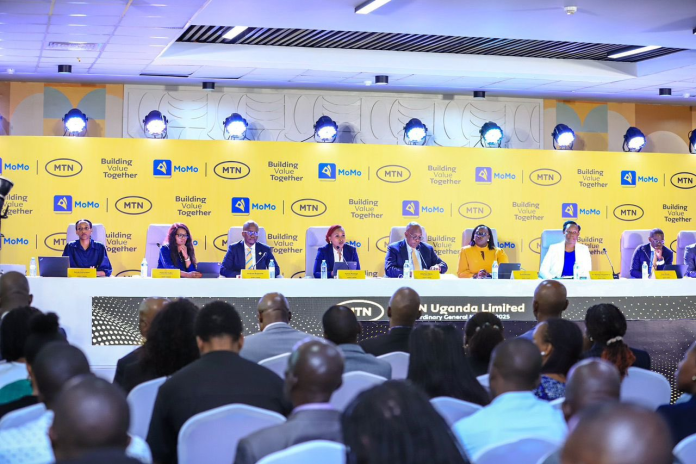
MTN Uganda shareholders during the Extraordinary General Meeting yesterday.

MTN Uganda shareholders have approved a plan to separate the mobile money business from the main telecommunications company, paving the way for the creation of a new fintech entity. The decision, made during an extraordinary general meeting, is part of a broader move by MTN Group to establish a separate company for its financial technology services.

The separation, which has been in the works since 2020, aims to transition mobile money operations into a larger fintech company, FinCo, which will consolidate MTN’s mobile money businesses across Africa. MTN believes this new structure will foster growth, improve efficiency, and attract investors who understand financial services regulations.

MTN Chairman Charles Mbiiire stated Tuesday that “Fintech is different. It needs freedom and flexibility to grow. By separating it, we are giving it room to innovate and lead.”

Leading up to the decision, MTN engaged with shareholders nationwide through town hall meetings to explain the plan and address concerns, which helped secure their support.

Following the extraordinary general meeting, MTN announced it had received official approval to proceed with the structural separation of its mobile money unit.

MTN Mobile Money was launched in 2009. In 2021, MTN Uganda took its first step by legally separating its mobile money unit under the National Payment Systems Act. The current step involves transforming the mobile money business into an independent fintech company.

Ms. Sylvia Mulinge, MTN’s chief executive officer, described this as the second phase of a three-step journey. The final step will involve listing the new fintech company on the Uganda Securities Exchange within three to five years. The new company will be majority-owned by MTN Group Fintech Holdings B.V., with the remaining shares held in trust for Ugandan investors.

Stories Continues after ad

SEFA injects Shs15.4b to replace charcoal with electric cookers in Uganda, Kenya & Zambia

The Sustainable Energy Fund for Africa [SEFA], managed by the African Development Bank [AfDB], is supporting efforts to reduce charcoal dependence in Uganda, Kenya, and Zambia through a $4 million (Shs15.4 billion) reimbursable grant.

The funding will support the Burn Electric Cooking Expansion Programme [BEEP], which aims to deploy 115,000 Burn ECOA electric induction cookers to low-income, grid-connected households currently reliant on charcoal.

BEEP is being implemented by Burn Manufacturing, a Kenya-based clean cookstove company and carbon developer operating in over 10 African countries. The programme seeks to make clean cooking appliances more affordable by pre-financing induction cookers and recovering costs through carbon credit sales in the voluntary carbon market. This innovative model combines carbon-backed subsidies with pay-as-you-go payment plans, significantly reducing upfront costs for users.

The programme is capitalised through a Special Purpose Vehicle [SPV], comprising a $5 million senior loan from the Spark+ Africa Fund, a $4 million reimbursable grant from SEFA, and $1 million in equity from Burn Manufacturing.

The SPV, in partnership with Burn, will oversee the sales, distribution, and servicing of the cookers. The cookers will generate carbon credits, owned by the SPV, with revenue shared among the project’s investors.

Dr Daniel Schroth, Director for Renewable Energy and Energy Efficiency at the AfDB Group, commented: “This represents the Bank’s first carbon finance transaction of its kind, with SEFA playing a vital role in mitigating carbon market risks and enhancing the financial sustainability of the programme.”

The initiative aligns with SEFA’s energy efficiency focus, aiming to catalyse private sector investment in energy-saving appliances and support the scale-up of clean cooking technologies. It also contributes to the Mission 300 Initiative and the Bank’s New Deal on Energy for Africa, which seeks to achieve universal access to energy through low-carbon solutions.

Peter Scott, Founder and CEO of Burn, said: “We are honoured to receive this catalytic investment from SEFA—its first-ever investment in carbon projects focused on electric cooking. This milestone allows Burn to rapidly scale our IoT-enabled induction cookers across Kenya, Uganda, and Zambia, offering low-income households a zero-emission, digitally monitored alternative to charcoal and wood.”

“By integrating cutting-edge technology, carbon financing, and mobile-enabled ‘Pay-As-You-Cook’ models, we are proving that electric cooking can be clean, affordable, and scalable across the continent,“ he added.

In addition to environmental and health benefits, the programme is expected to create jobs and strengthen local supply chains in the three countries, laying the foundation for a cleaner, healthier, and more prosperous future for communities across East and Southern Africa.

Stories Continues after ad

2026 Elections: President to be elected on January 12

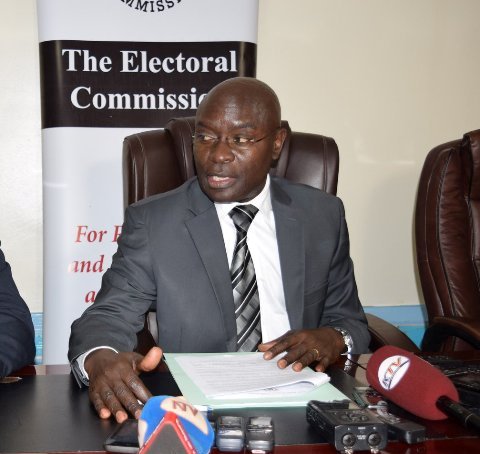
EC chairman Justice Simon Byabakama.

The Electoral Commission (EC) has confirmed that Uganda’s Presidential, Parliamentary and Local Government elections will be held between January 12 and February 9, 2026 as outlined in its newly revised Roadmap for the 2025/2026 General Elections.

In a statement released to the public, the EC Chairperson, Justice Simon Byabakama said the roadmap provides clear timelines to guide all electoral activities across the country from grassroots to national level.

“In line with Article 61(2) of the Constitution, the polling period for Presidential, Parliamentary, and Local Government Councils will run from 12th January to 9th February 2026,” said Byabakama.

The EC boss also announced that the nomination of presidential candidates will take place on September 23 and 24, 2025, followed by official campaign activities beginning on October 4, 2025, and running through January 12, 2026.

“We urge all political parties, aspirants, and stakeholders to strictly observe these timelines and prepare in advance. This will ensure the smooth conduct of the general elections,” he emphasized.

Justice Byabakama said the revised roadmap also includes detailed schedules for Special Interest Groups (SIGs), including Older Persons, Youth, Persons with Disabilities (PwDs), and Workers, with elections at various administrative levels starting as early as July 24, 2025.

“These structures are vital in promoting inclusive participation. The Electoral Commission remains committed to conducting transparent, inclusive, and credible elections,” he noted.

Nominations for Parliamentary seats will be held on September 16-17, 2025, while Local Government nominations will take place from September 3- 12, 2025.

Byabakama reminded candidates and parties to respect the law and avoid any parallel political activities before the official campaign windows open.

“There will be no room for impunity or illegal campaigns. All campaign activities must fall within the legal periods specified in this roadmap,” he warned.

The Commission says it will work closely with security agencies, local governments, civil society and media to ensure voter education, access to information and peaceful conduct of the elections.

Ugandans are now looking ahead to a tightly scheduled election season that will determine the country’s leadership for the next five years, with heightened attention on the presidential race, expected to be hotly contested as many new opposition parties have emerged to race the ruling party National Resistance Movement. 

Stories Continues after ad

SFC to guard all 2026 presidential candidates-Gen Muhoozi

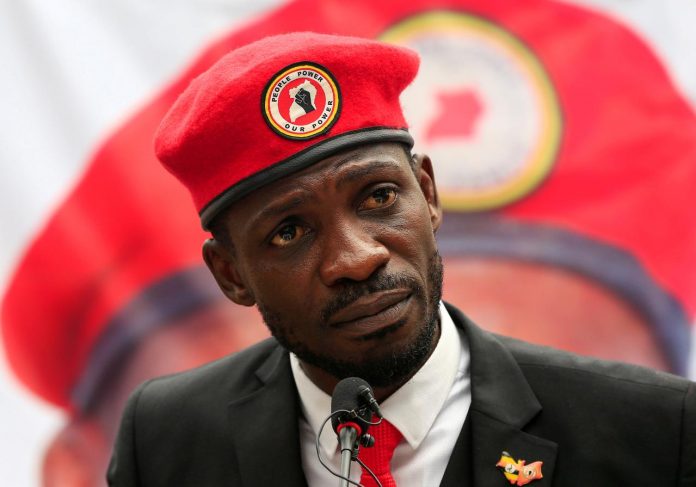
Robert Kyagulanyi aka Bobi Wine hails from Buganda.

The Chief of Defence Forces (CDF), Gen Muhoozi Kainerugaba has announced that all presidential candidates in Uganda’s 2026 general elections will be exclusively protected by the Special Forces Command (SFC), shifting from the previous tradition of police-led protection.

In a statement posted on his official X (formerly Twitter) account, Gen Muhoozi said the elite force will be solely responsible for securing all contenders for the country’s top seat.

“I have said it once and for all, all presidential candidates will be guarded only by SFC! Any personal arrangements that do not concur with our standard operating procedures (SOPs) will be smashed immediately,” he declared.

The declaration marks a departure from previous electoral cycles in which the Electoral Commission (EC) provided each presidential candidate with police protection. In past elections, candidates were assigned armed escorts and a convoy of police officers to ensure their safety during campaign activities.

According to the Electoral Commission Act and Presidential Elections Act, the state is mandated to provide equal security and logistical facilitation to all presidential aspirants. In the 2021 elections, all 11 candidates were assigned police guards, escort vehicles, and liaison officers.

However, the lead-up to 2026 appears to be taking a new security direction under the stewardship of Gen Muhoozi, who also previously commanded the Special Forces Command — a unit tasked with protecting the President, First Family, and key national assets.

The move comes amid reports that some political organizations are training their own bodyguards to provide personal protection to their leaders, a trend that has drawn scrutiny from security agencies and political analysts alike.

Critics argue that this practice not only undermines official security protocols but also risks escalating political tension and violence during campaigns. Others see the decision to place SFC at the center of election security as a sign of growing militarization of Uganda’s politics.

However, the move is seen with an aim to ensure uniformity, professionalism and the safety of candidates in what could be a high-stakes and potentially volatile election season. Yet, opposition figures and human rights advocates have raised concerns about impartiality, citing the SFC’s close ties to the ruling establishment.

Electoral observers will be watching closely to see how this policy is implemented, and whether it allows for free and fair participation by all candidates regardless of political affiliation.

The Electoral Commission is yet to comment officially on Gen Muhoozi’s statement or issue formal guidelines regarding candidate security ahead of nominations.

Stories Continues after ad

Museveni pledges Shs1b per parish for Kampala ghetto groups

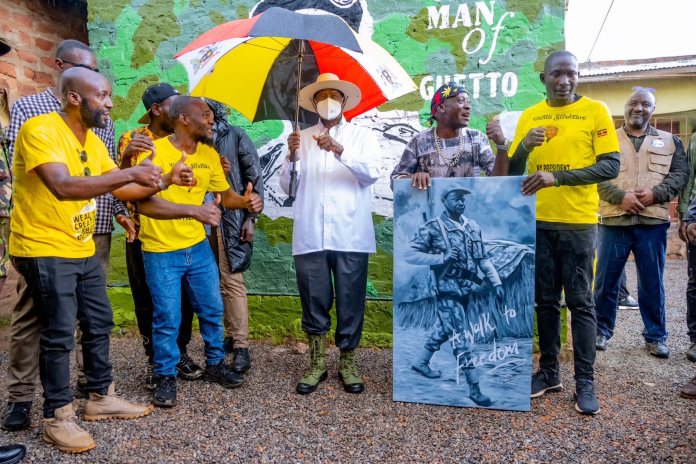
President Museveni.

President Yoweri Museveni has pledged to increase government funding for wealth creation in urban poor communities, raising allocations for ghetto-based structures in Kampala from Shs100 million to Shs1 billion per parish annually.

The announcement came on Friday during the President’s resumed Parish Development Model [PDM] and wealth creation tour, with a stop in Bwaise II, Nabukalu Zone, Kawempe Division, one of Kampala’s most densely populated and economically marginalised areas.

“Now here in the ghetto, because of the high population numbers, we can go from Shs100 million to Shs1 billion per parish per year for the ghetto structures alone,” President Museveni said.

“In the 22 parishes of Kawempe Division, there’s already Shs 2.2 billion of PDM each year, but the ghetto needs special attention.”

The President explained that the increased allocation forms part of a wider government strategy to stimulate small-scale, income-generating activities among the urban poor, particularly those without access to formal employment or business financing.

“Kampala will receive Shs5 billion for ghetto-specific programmes across its five divisions,” he said, clarifying that this is in addition to existing PDM funding.

Museveni also toured several micro-enterprises funded through previous rounds of ghetto development funds. These included goat rearing, electrical repairs, tailoring and design, bakery work, and printing services.

Joined by local government officials and community mobilisers, the President stressed the importance of “pro-poor budgeting,” noting that a significant portion of the national budget is lost to administrative overheads and inefficient spending.

He urged youth and ghetto leaders to take an active role in national development rather than remain passive recipients of aid.

“Support me politically so I am not just left in the hands of technocrats and parliamentarians. If we unite and you support these programmes, we can transform Uganda from the bottom up,” he stated.

President Museveni also called for vigilance in monitoring public funds, pointing to the Shs10 billion allocated to Kawempe under the PDM over the past four years, along with support from Emyooga, the Youth Livelihood Fund [ULP], and the Uganda Women Entrepreneurship [UWEP] Fund.

“Follow the money and ensure it is not eaten. You received Shs500,000 and managed to start something. That shows the potential when funds reach the right people,” he said.

On education, Museveni criticised the undermining of Universal Primary Education (UPE) due to corruption and poor oversight.

“Headmasters connive with PTAs to charge illegal fees. LC5 chairmen and MPs don’t follow up. The poor suffer, and children drop out,” he said, blaming the issue on misplaced political priorities.

He praised the State House Skilling Hubs as a model for vocational training, offering six-month programmes to school dropouts.

“We’ve shown that you can turn someone with nothing into someone productive. Everyone now wants skilling hubs,” he said.

Stories Continues after ad

Gov’t grants Bright Sparks Farm license to grow and export medicinal cannabis

Cannabis.

The Ugandan government has granted Bright Sparks Farm Limited an experimental license to grow, process and export medicinal cannabis, marking a big step in the country’s entry into the global medical marijuana industry.

The license, issued by the Minister of Internal Affairs, Maj. Gen. (Rtd) Kahinda Otafiire allows the company to cultivate cannabis in two districts of Nakasongola and Luwero.

In Nakasongola, it will be grown in Luwampanga, Kisweramindu, while parts of Bulemezi in Luweero.

“Reference is made to your application dated 10th June 2025 for grant of a licence to grow, process and export medicinal cannabis,” reads the government letter addressed to Bright Sparks Farm Limited.

Otafiire added, “An experimental Licence to grow cannabis is granted on the following conditions.”

According to the document, the licensed company must adhere strictly to Uganda Police Force rules and regulations concerning the growth and processing of cannabis.

“Cooperate with the Uganda Police Force Rules and Regulations on the growth and processing of cannabis,” Otafiire instructed.

The government emphasized that the licence comes with clear restrictions on location and oversight.

“In line with existing controls, the Uganda Police Force will supervise your operations as mandated,” the letter continues. Adding, “The License is not transferable nor change of location.”

This move comes amid increasing interest from both domestic and international investors seeking to tap into the lucrative medicinal cannabis market. Uganda’s favorable climate makes it an attractive destination for the cultivation of high-quality cannabis for medical use.

The licence also signifies a cautious but deliberate shift in Uganda’s drug policy, recognizing the potential economic and health benefits of regulated medicinal cannabis production while maintaining strict oversight.

The Inspector General of Police has also been copied in the communication, underscoring the critical role of security agencies in monitoring the production process.

Uganda now joins a growing list of African countries such as Lesotho, Zimbabwe, and South Africa, which have legalized medicinal cannabis production under strict regulatory frameworks.

Stories Continues after ad

Museveni mourns Prof. Kanyeihamba, hails his legacy

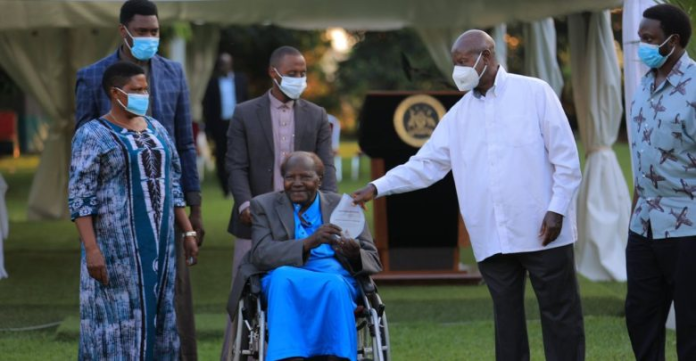
President Museveni presenting an award to the late Prof. Kanyeihamba at a past event.

President Yoweri Kaguta Museveni has paid tribute to former Supreme Court Judge Prof. George Wilson Kanyeihamba, describing him as a patriotic Ugandan who contributed immensely to the country’s liberation, governance, and legal development.

In a statement, the President said he first encountered Prof. Kanyeihamba during the legendary Mazrui-Rodney debate at Makerere University in the 1970s—a moment etched in East Africa’s intellectual history.

“I remember first meeting Professor Kanyeihamba, I think, at the historic debate between Prof. Mazrui and Dr. Rodney at Makerere University,” Museveni recalled. “This is when Prof. Mazrui, in his remarks, said that he was not in conflict with Dr. Rodney, whereupon Rodney said that they cannot be in ‘conflict’ because they were not even in ‘touch’.”

Museveni, reflecting on the ideological depth of the debate, noted that while Mazrui spoke about neo-colonialism, Rodney was focused on complete independence—a discourse that influenced many Ugandan thinkers of that time, including Kanyeihamba.

Prof. Kanyeihamba would later become a key figure in Uganda’s political transition, joining the external committee of the NRM during the 1981–86 liberation war. After the victory, he was appointed to several senior positions in the NRM government—including Minister of Justice and Constitutional Affairs—and eventually served as a Justice of the Supreme Court.

“After liberation, he became part of the NRM Government as a minister and, at one time, he represented Rubaanda. Later on, he became a Judge,” Museveni said. “I salute his contribution to Uganda and to the NRM over the years. Condolences to his family and friends. May his soul rest in eternal peace.”

Born in 1939, Prof. George Kanyeihamba was not only a legal luminary but also a respected academic, author, and one of the framers of the 1995 Constitution. He was known for his fearless stance on constitutionalism, often dissenting from majority judgments in defense of civil liberties and the rule of law.

Educated at the University of London and the University of Warwick, Kanyeihamba’s career spanned academia, politics, and the bench. He taught law at Makerere University and was a visiting professor at institutions in the UK and Nigeria. He also served as a judge on the African Court on Human and Peoples’ Rights.

Even after retirement, he remained an active voice in public discourse, often challenging government excesses and advocating for judicial independence.

His passing marks the end of an era for Uganda’s legal and intellectual community, with many remembering him as a brilliant, principled, and courageous jurist who always spoke truth to power.

Museveni also mourned the passing of Professor Livingstone Luboobi, former Vice-Chancellor of Makerere University and his classmate at Ntare School (1961–1964).

“He was a gifted mathematician, who rendered good contribution to the education sector,” Museveni wrote. “I salute his contribution and thank God for his life. Condolences to his family and friends.”

Prof. Luboobi served as Makerere VC from 2004 to 2009 and was known for championing research and institutional reforms. A product of Ntare School and Makerere University, he also held a PhD in Mathematical Statistics from the University of Sussex.

Prof. Luboobi championed rigorous research, curriculum innovation, and academic integrity. He believed deeply in the transformative power of science and education and was a tireless advocate for capacity-building in the sciences in Africa.” Prof. Winston Tumps Ireeta – College Principal/Ag. DVCFA

The deaths of Prof. Kanyeihamba and Prof. Luboobi come at a time when Uganda is grappling with questions around institutional reform, education quality, and governance—issues both men addressed through their life’s work.

Their passing leaves a gap in Uganda’s intellectual and leadership fabric. Yet, as President Museveni emphasized, their legacies remain etched in the nation’s journey toward justice, education and liberation.

Stories Continues after ad

Charles Mbire warns: Africa must abandon political planning or risk losing its youth

Charles Mbire, MTN-Uganda board chairman.

At the just-concluded Africa Unlocked 2025 forum hosted by Standard Bank Group, Uganda’s leading businessman and MTN Uganda Chairman, Dr. Charles Mbire delivered a wake-up call to African leaders: the continent must urgently abandon political planning in favour of economically grounded strategies especially if it is to meaningfully include its youth in shaping the future.

The annual summit, held under the theme “Purposeful and Authentic Leadership in Times of Disruption,” featured a heavyweight panel of African business icons, including Sim Tshabalala (CEO, Standard Bank Group), Dr. Mteto Nyati (Executive Chairman, BSG), and Vukani Mngxati (CEO & Chairman, Accenture Africa). Yet it was Mbire’s sharp commentary rooted in Uganda’s current development paradox that stood out as both timely and provocative.

“We churn out students of IT whose shelf life is seven months with no jobs. They end up being Boda Boda riders or shopkeepers,” Mbire lamented.

He added, “How much money do we spend training them? I think we’ve got to have integrated planning. We should move away from political planning and go to economic planning.”

Dr. Mbire’s words captured the urgency many feel about Africa’s youth bulging a demographic dividend that threatens to become a social and economic liability if not meaningfully engaged. He warned that failing to integrate the younger generation into the continent’s economic systems risks transforming them into a “nuclear landmine.”

“The market is a landmine because we are planning politically, not economically,” he said, calling for better linkage between education, skills development, and actual market demands.

In a strong rebuke to the cookie-cutter development models often pushed by global institutions, Mbire also cautioned against “transplanting business strategies” across African countries without appreciating their unique realities.

“You cannot blindly apply a strategy from one African country to the next. The context in Uganda is not the same as in South Africa or Nigeria. That’s why many multinationals fail.” he said.

While his counterparts on the panel echoed various themes, Mbire’s message offered a grounded, practical take on the cost of planning missteps.

Sim Tshabalala, Standard Bank Group CEO, opened the panel with a philosophical reflection on leadership during uncertainty, urging African leaders to “own up to past decisions that left many behind.”

“We instituted policies, strategies, and actions that caused a lot of people to be left behind… and then we should not be surprised that they’re so angry,” Tshabalala said. “Leadership with purpose is a must. Our job as leaders… is to be dealers in hope.”

He added that hope and vision not fear must guide leadership in both corporations and governments.

Dr. Mteto Nyati, who recently turned down a request by the South African President to lead reforms at Eskom, spoke about the importance of self-awareness in leadership. “You need to know what you’re good at, and what you’re not,” he said, citing personal decisions rooted in introspection and courage.

Vukani Mngxati focused on the authenticity crisis among African leaders. “Authentic leaders are the people who really change the world,” he said. “People don’t follow leaders they cannot trust.”

Mngxati also challenged the global tendency to see Africa as a monolithic entity. “We have 54 countries. Johannesburg is not Africa,” he said, drawing laughter and nods of agreement. “You cannot put one strategy from one country into the next. Each country is different.”

The panel concluded with a powerful call to elevate the voice of African youth in both policy and business planning. Mbire once again raised a red flag: “We’ve let their mindset wander. We don’t control it. We don’t guide it. And that’s the problem we are going to solve.”

Tshabalala acknowledged the brilliance of Africa’s Gen Z but warned of the risks of premature exposure to high-stakes leadership. “It would be great to have a 21-year-old on the Standard Bank board. But if they suffered a massive fraud in Nigeria, they wouldn’t know how to manage the regulator, the staff, or the angry client.”

Nonetheless, all speakers agreed on one thing: Africa’s time is now but only if its leaders move from speeches to substance, from short-term fixes to long-term vision, and most importantly, from political calculations to economic planning.

As Mbire summed it up: “Africa must integrate, invest, and involve. If we don’t, we will be led by a frustrated generation we failed to prepare for.”

Stories Continues after ad