Stanbic Bank
Stanbic Bank
28.6 C
Kampala
Stanbic Bank
Stanbic Bank
Home Blog Page 12

Ghanaian national admits role in $100m online romance scam

A Ghanaian national has pleaded guilty in the United States to participating in a large international fraud scheme that targeted vulnerable victims through online romance scams and business email compromises, stealing more than $100 million.

The announcement was made by Jay Clayton, who said Derrick Van Yeboah, also known as “Van,” admitted his role before Arun Subramanian in the United States District Court for the Southern District of New York.

Van Yeboah pleaded guilty to conspiracy to commit wire fraud for his involvement in an international criminal network that defrauded individuals and businesses across the United States.

“Derrick Van Yeboah pled guilty today to a massive criminal scheme targeting elderly men and women in online romance scams. Many New Yorkers search for companionship online, and no one deserves to have their vulnerability met with fraud and theftClayton said in a statement.

He added,“Van Yeboah cruelly exploited those vulnerabilities for over $10 million in illicit profit. Today’s plea is a reminder to be vigilant online especially on dating websites. Never give money to someone you just met and if it seems too good to be true, it probably is.”

According to court documents and public filings, Van Yeboah was part of a criminal organization largely based in Ghana that conducted romance scams and business email compromise schemes against victims throughout the United States.

Investigators say members of the network created fake online identities to deceive victims, many of whom were elderly men and women seeking companionship online. After building trust, the scammers convinced victims to send money or assist in transferring funds obtained from other victims.

Authorities said the syndicate also targeted businesses through email compromise schemes, tricking companies into wiring funds to accounts controlled by the fraud network.

In total, the criminal enterprise is believed to have stolen and laundered more than $100 million from dozens of victims, with much of the money later transferred to West Africa.

Prosecutors said Van Yeboah personally carried out several romance scams by impersonating romantic partners online and is being held responsible for more than $10 million obtained from victims through the scheme.

Van Yeboah, 40, faces a maximum sentence of 20 years in prison for the charge. He has also agreed to pay restitution and forfeiture totaling $10,149,429.17.

Sentencing is scheduled for June 3, 2026, before Judge Subramanian.

Clayton commended the work of the Federal Bureau of Investigation in investigating the case and also acknowledged the support of authorities in Ghana and the U.S. Department of Justice Office of International Affairs.

The case is being handled by prosecutors from the Complex Frauds and Cybercrime Unit of the U.S. Attorney’s Office, including Assistant U.S. Attorneys Kevin Mead and Mitzi Steiner.

Stories Continues after ad

Uganda leads Africa’s coffee export growth in January 2026

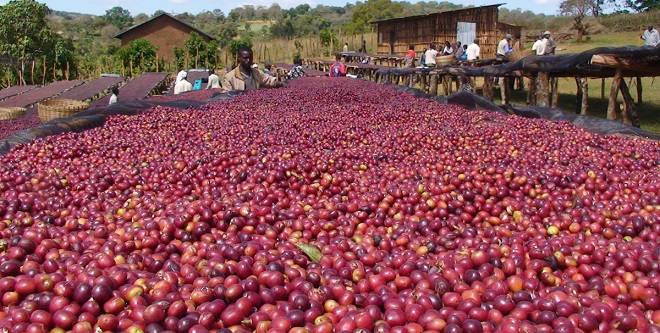
Uganda coffee beans.

Uganda has emerged as a key driver of Africa’s coffee export growth after shipments from the continent rose significantly in January 2026, according to the latest report by the International Coffee Organization (ICO).

The report shows that Africa’s coffee exports increased by 15.3 percent to 1.27 million bags in January 2026, compared with 1.1 million bags recorded during the same month in 2025.

The expansion was largely propelled by Uganda, whose exports surged by 25.1 percent to 0.69 million bags, up from 0.55 million bags a year earlier.

“This growth has been mainly driven by rising production, which is also likely behind the latest increase in exports,” the report noted.

According to the ICO’s February 2026 Coffee Market Report, Uganda’s export performance has been steadily improving since the 2023/24 coffee year, reflecting increased production and favourable international prices.

Shipments from Uganda surpassed the seven-to-eight million bag range for the first time in the 2024/25 coffee year, reaching 8.26 million bags, a milestone that signals the country’s growing influence in the global coffee trade.

The report further indicates that Uganda’s production is expected to expand even more during the 2025/26 coffee year, with projections suggesting growth of more than 10 percent.

Uganda was also among the countries contributing to the surge in global Robusta coffee exports.

Globally, exports of green bean Robusta coffee jumped by 49.1 percent to 5.25 million bags in January 2026, up from 3.52 million bags during the same month last year.

The increase was mainly driven by Vietnam, whose shipments rose sharply by 73.3 percent to 3.69 million bags.

The report notes that India, Indonesia, and Uganda also played a positive role in boosting Robusta exports, with their combined shipments increasing by 20.4 percent to 1.2 million bags, compared with 1.0 million bags in January 2025.

“These gains were partly offset by Brazil, where Robusta exports declined by 25 percent to 0.18 million bags,” the report states.

The ICO explains that while some changes in global supply reflect market adjustments, Uganda’s export growth appears to be more structural.

“By contrast, Uganda’s growth appears structural, with exports on a sustained upward trajectory since mid-2023/24,” the report says.

Uganda exported a record 7.32 million bags in 2024/25, supported by rising production, strong international prices and increased drawdowns from existing stocks.

Under its national Coffee Roadmap launched in 2017, Uganda has set an ambitious target of producing 20 million bags of coffee annually by 2030.

Meanwhile, the report shows that global exports of Arabica coffee declined in January 2026. Shipments fell by 8.3 percent to 5.59 million bags, down from 6.1 million bags recorded in January 2025.

As a result, Arabica’s share of total green bean exports during the first four months of the 2025/26 coffee year dropped to 61.1 percent, compared with 66.4 percent during the same period a year earlier.

Overall, global green bean exports reached 10.85 million bags in January 2026, representing a 12.7 percent increase from 9.63 million bags recorded in January 2025.

The ICO notes that green beans remain the dominant form of coffee traded globally, accounting for 85.23 percent of total exports, while soluble coffee and roasted coffee represented 14.24 percent and 0.53 percent, respectively, during the first four months of the current coffee year.

Stories Continues after ad

Over 113,000 candidates qualify for University as UNEB releases 2025 UACE results

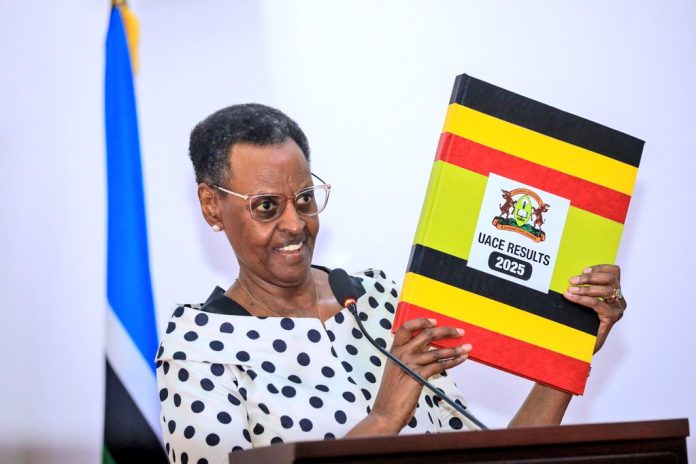
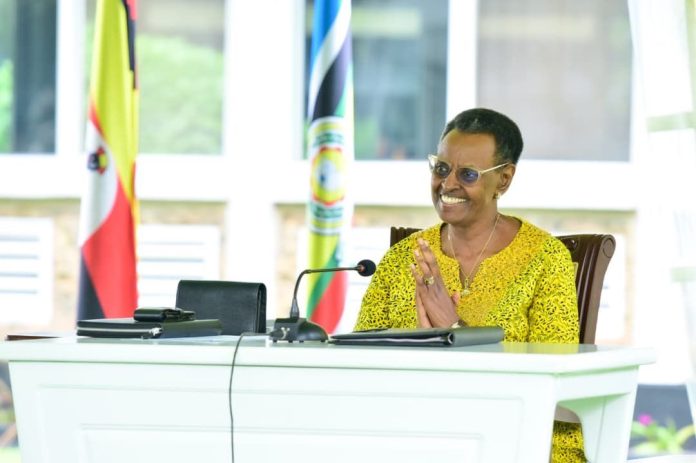
Mrs. Janet Museveni, First Lady and Minister of Education and Sports, during the release of the 2025 Uganda Advanced Certificate of Education (UACE) results.

More than 113,000 candidates have qualified for university admission after the Uganda National Examinations Board (UNEB) released the 2025 Uganda Advanced Certificate of Education (UACE) results.

A total of 166,400 candidates registered for the 2025 examinations compared to 141,996 in 2024, representing an increase of 24,404 candidates or 17.2 percent. Of those registered, 165,172 candidates sat for the examinations, including 72,374 females and 92,798 males.

Speaking during the official release of the results in Kampala, the Minister of Education and Sports, Janet Museveni, urged parents and guardians to take a more active role in shaping the future of their children.

“Parents and guardians, I intentionally call upon you to embrace your God-given roles, be present and actively involved in your children’s lives. Play a key role in nurturing your children,” she said.

She emphasised that education should not only focus on knowledge acquisition but also equip learners with practical skills to address societal challenges.

“Education must not be about the acquisition of knowledge per se, but about how knowledge helps us to be creative, productive, and able to find solutions to the problems in our communities and country,” she said.

The First Lady also expressed gratitude for the learners who successfully completed the three national examinations in 2025.

“We thank God for 1,402,434 of our children who completed the three levels of our basic and secondary education,” she said.

According to UNEB Executive Secretary Dan N. Odongo, female candidates continued to outperform their male counterparts overall, particularly in Humanities subjects.

“Female candidates have continued to perform commendably better than their male counterparts, maintaining stronger performance grades at several subject levels in the Humanities and demonstrating lower overall failure proportions,” Odongo said.

However, he noted that male candidates still dominated the highest grade A passes in Mathematics and Science subjects, partly because more male students register for those subjects.

“There is still a higher concentration of female candidates in the Humanities than in the Sciences. Broader participation of both male and female candidates in Science subjects will enhance equity and balance across future professional fields,” he added.

Performance analysis released by UNEB shows improvement in several subjects including Mathematics, Chemistry, Agriculture, Geography, Economics, Biology and Literature in English. However, declines were recorded in Entrepreneurship Education, Christian Religious Education, Fine Art and Physics.

Examiners reported that in Science subjects, some candidates struggled with practical experiments, interpretation of data, drawing conclusions from observations and writing correct chemical equations. Limited practical exposure and misunderstanding of experimental procedures were also cited as major challenges.

In Humanities subjects, examiners observed difficulties in interpreting questions and applying theoretical knowledge to real-life situations. In History, for instance, many candidates displayed weak analytical skills and failed to provide relevant examples, while Religious Education candidates struggled to apply teachings from sacred texts to contemporary issues.

UNEB said 113,291 candidates, representing 68.6 percent, obtained the minimum requirement of two Principal passes needed for admission to degree programmes. This is an increase from 92,273 candidates (65.5 percent) who qualified for university admission in 2024.

Odongo noted that the rise in qualifying candidates could require additional university spaces.

“This improvement aligns with the significant increase in entries for the 2025 examination, indicating that an additional 21,018 university places may be required to accommodate the increased number of qualifying candidates,” he said.

For diploma programmes in Technical and Vocational Education and Training institutions, candidates require at least one Principal pass and two Subsidiary passes. Under this category, 145,129 candidates, representing 87.9 percent, qualify for admission.

The Chairperson of UNEB, Celestino Obua, said the Board assessed a total of 1,402,434 candidates across the three national examinations — Primary Leaving Examination, Uganda Certificate of Education and UACE — in 2025, up from 1,294,731 candidates in 2024.

“As candidature expands, the Board remains mindful of its responsibility to safeguard standards, ensure comparability over time and maintain fairness in assessment,” Obua said.

He added that the number of candidates who register but fail to sit examinations continues to decline, reflecting improved supervision and completion rates in schools.

Meanwhile, UNEB reported relatively low cases of examination malpractice. A total of 351 candidates, representing 0.2 percent of the total candidature from 47 examination centres, had their results withheld over suspected malpractice.

According to Odongo, the cases mainly involved candidates receiving assistance during Science practical examinations, possession of unauthorised materials and impersonation.

UNEB said investigations into the suspected malpractice cases are ongoing and hearings will begin for some examinations in the coming days.

The release of the 2025 UACE results clears the way for thousands of successful candidates to pursue university and other tertiary education opportunities across the country.

Stories Continues after ad

Old students donate books to Bubulo Secondary School to boost academics

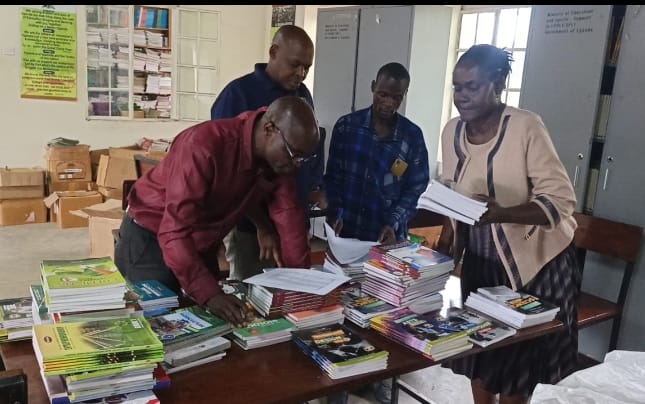
The Headteacher of Bubulo Secondary School, Ms. Rose Akello, received copies of books donated to the school by old students. The brief ceremony took place at the school located in Manafwa Town Council and was witnessed by Mr. Medard Mandu and Robert Nangalama, both of whom are old boys of the school.

March 12, 2026-Manafwa-Joy and excitement filled the atmosphere at Bubulo Secondary School, Manafwa District on Thursday, 12th March 2026, as members of the 𝘽𝙪𝙗𝙪𝙡𝙤 𝙎𝙚𝙘𝙤𝙣𝙙𝙖𝙧𝙮 𝙎𝙘𝙝𝙤𝙤𝙡 𝙊𝙡𝙙 𝙎𝙩𝙪𝙙𝙚𝙣𝙩𝙨’ 𝘼𝙨𝙨𝙤𝙘𝙞𝙖𝙩𝙞𝙤𝙣 (𝘽𝙐𝙎𝙊𝙎𝘼) returned to their former school with a generous donation of assorted 225 textbooks for lower secondary curriculum aimed at improving academic research for both students and teachers.

The textbooks were procured and delivered through the efforts of 𝙈𝙧. Paul Michael Wandulu, whose commitment to giving back to his former school continues to inspire fellow alumni. The brief but colourful ceremony attracted several old students, including Mr. Medard Mandu, Mr. Robert Nangalama Robert, and others who represented the wider BUSOSA fraternity.

As the parcel of books was unveiled to the school administration, excitement and appreciation were visible among both staff and students who welcomed the timely intervention.

Speaking during the handover, Dr Bernard Wabukala, the President of BUSOSA, expressed gratitude to the school administration for maintaining a strong partnership with the association. He particularly appreciated Mr. Wandulu Paul Michael for his generous donation of textbooks, noting that BUSOSA remains committed to supporting the school in every way possible so it can reach greater academic heights.
“𝘛𝘩𝘦 𝘎𝘰𝘷𝘦𝘳𝘯𝘮𝘦𝘯𝘵 𝘰𝘧 𝘜𝘨𝘢𝘯𝘥𝘢 𝘥𝘦𝘴𝘦𝘳𝘷𝘦𝘴 𝘤𝘰𝘮𝘮𝘦𝘯𝘥𝘢𝘵𝘪𝘰𝘯 𝘧𝘰𝘳 𝘣𝘰𝘭𝘴𝘵𝘦𝘳𝘪𝘯𝘨 𝘉𝘶𝘣𝘶𝘭𝘰 𝘚𝘦𝘤𝘰𝘯𝘥𝘢𝘳𝘺 𝘚𝘤𝘩𝘰𝘰𝘭 𝘸𝘩𝘪𝘭𝘦 𝘤𝘩𝘢𝘮𝘱𝘪𝘰𝘯𝘪𝘯𝘨 𝘴𝘬𝘪𝘭𝘭𝘴-𝘣𝘢𝘴𝘦𝘥 𝘩𝘶𝘮𝘢𝘯 𝘤𝘢𝘱𝘪𝘵𝘢𝘭 𝘥𝘦𝘷𝘦𝘭𝘰𝘱𝘮𝘦𝘯𝘵 𝘵𝘰 𝘱𝘳𝘰𝘱𝘦𝘭 𝘯𝘢𝘵𝘪𝘰𝘯𝘢𝘭 𝘱𝘳𝘰𝘴𝘱𝘦𝘳𝘪𝘵𝘺, he said.

The Head Teacher, Ms. Rose Akello, warmly welcomed the old students and thanked them for their unwavering support of the institution.


“𝘞𝘦 𝘭𝘢𝘤𝘬 𝘵𝘩𝘦 𝘢𝘱𝘱𝘳𝘰𝘱𝘳𝘪𝘢𝘵𝘦 𝘸𝘰𝘳𝘥𝘴 𝘵𝘰 𝘦𝘹𝘱𝘳𝘦𝘴𝘴 𝘰𝘶𝘳 𝘢𝘱𝘱𝘳𝘦𝘤𝘪𝘢𝘵𝘪𝘰𝘯 𝘧𝘰𝘳 𝘸𝘩𝘢𝘵 𝘺𝘰𝘶 𝘤𝘰𝘯𝘵𝘪𝘯𝘶𝘦 𝘵𝘰 𝘥𝘰 𝘧𝘰𝘳 𝘵𝘩𝘪𝘴 𝘴𝘤𝘩𝘰𝘰𝘭,” she said. “𝘠𝘰𝘶 𝘰𝘧𝘵𝘦𝘯 𝘤𝘰𝘮𝘦 𝘵𝘩𝘳𝘰𝘶𝘨𝘩 𝘧𝘰𝘳 𝘶𝘴 𝘢𝘵 𝘢 𝘵𝘪𝘮𝘦 𝘸𝘩𝘦𝘯 𝘸𝘦 𝘭𝘦𝘢𝘴𝘵 𝘦𝘹𝘱𝘦𝘤𝘵 𝘪𝘵. 𝘞𝘩𝘦𝘯 𝘵𝘩𝘦 𝘴𝘤𝘩𝘰𝘰𝘭 𝘣𝘦𝘨𝘪𝘯𝘴 𝘵𝘰 𝘭𝘰𝘴𝘦 𝘩𝘰𝘱𝘦, 𝘺𝘰𝘶𝘳 𝘴𝘶𝘱𝘱𝘰𝘳𝘵 𝘨𝘪𝘷𝘦𝘴 𝘶𝘴 𝘳𝘦𝘯𝘦𝘸𝘦𝘥 𝘴𝘵𝘳𝘦𝘯𝘨𝘵𝘩 𝘢𝘯𝘥 𝘮𝘰𝘵𝘪𝘷𝘢𝘵𝘪𝘰𝘯 𝘵𝘰 𝘬𝘦𝘦𝘱 𝘴𝘵𝘳𝘪𝘷𝘪𝘯𝘨 𝘧𝘰𝘳 𝘦𝘹𝘤𝘦𝘭𝘭𝘦𝘯𝘤𝘦. 𝘛𝘩𝘦𝘴𝘦 𝘵𝘦𝘹𝘵𝘣𝘰𝘰𝘬𝘴 𝘸𝘪𝘭𝘭 𝘨𝘳𝘦𝘢𝘵𝘭𝘺 𝘳𝘦𝘥𝘶𝘤𝘦 𝘵𝘩𝘦 𝘣𝘶𝘳𝘥𝘦𝘯 𝘰𝘧 𝘪𝘯𝘴𝘶𝘧𝘧𝘪𝘤𝘪𝘦𝘯𝘵 𝘳𝘦𝘧𝘦𝘳𝘦𝘯𝘤𝘦 𝘮𝘢𝘵𝘦𝘳𝘪𝘢𝘭𝘴 𝘧𝘰𝘳 𝘣𝘰𝘵𝘩 𝘵𝘦𝘢𝘤𝘩𝘦𝘳𝘴 𝘢𝘯𝘥 𝘴𝘵𝘶𝘥𝘦𝘯𝘵𝘴 𝘢𝘯𝘥 𝘸𝘪𝘭𝘭 𝘴𝘪𝘨𝘯𝘪𝘧𝘪𝘤𝘢𝘯𝘵𝘭𝘺 𝘣𝘰𝘰𝘴𝘵 𝘢𝘤𝘢𝘥𝘦𝘮𝘪𝘤 𝘱𝘦𝘳𝘧𝘰𝘳𝘮𝘢𝘯𝘤𝘦.”

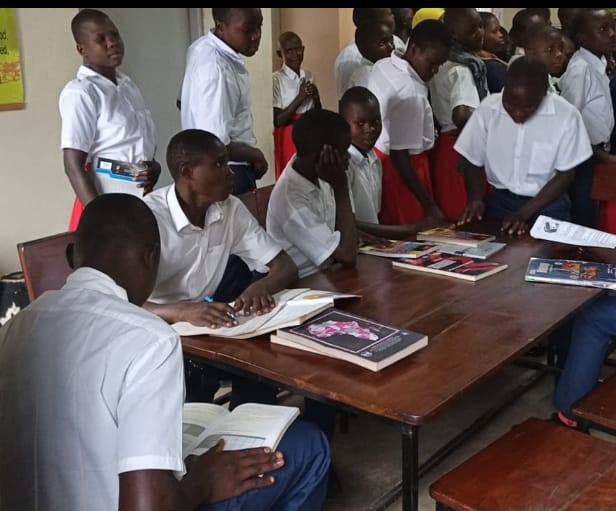
Bubulo Secondary School students admire books donated by old students of the institution.

The newly appointed Deputy Head Teacher, Mr Alex Robert Kutosi, who has spent barely three weeks at the school, also expressed his admiration for the dedication of the alumni.
“𝘐𝘯 𝘵𝘩𝘦 𝘴𝘩𝘰𝘳𝘵 𝘵𝘪𝘮𝘦 𝘐 𝘩𝘢𝘷𝘦 𝘣𝘦𝘦𝘯 𝘩𝘦𝘳𝘦, 𝘐 𝘩𝘢𝘷𝘦 𝘩𝘦𝘢𝘳𝘥 𝘮𝘢𝘯𝘺 𝘱𝘰𝘴𝘪𝘵𝘪𝘷𝘦 𝘵𝘦𝘴𝘵𝘪𝘮𝘰𝘯𝘪𝘦𝘴 𝘢𝘣𝘰𝘶𝘵 𝘵𝘩𝘦 𝘤𝘰𝘯𝘵𝘳𝘪𝘣𝘶𝘵𝘪𝘰𝘯 𝘰𝘧 𝘰𝘭𝘥 𝘴𝘵𝘶𝘥𝘦𝘯𝘵𝘴,” he said. “𝘛𝘰𝘥𝘢𝘺 𝘐 𝘢𝘮 𝘱𝘭𝘦𝘢𝘴𝘦𝘥 𝘵𝘰 𝘸𝘪𝘵𝘯𝘦𝘴𝘴 𝘵𝘩𝘪𝘴 𝘨𝘦𝘯𝘦𝘳𝘰𝘴𝘪𝘵𝘺 𝘧𝘪𝘳𝘴𝘵𝘩𝘢𝘯𝘥. 𝘖𝘭𝘥 𝘴𝘵𝘶𝘥𝘦𝘯𝘵𝘴 𝘱𝘭𝘢𝘺 𝘢 𝘷𝘪𝘵𝘢𝘭 𝘳𝘰𝘭𝘦 𝘪𝘯 𝘵𝘩𝘦 𝘳𝘦𝘫𝘶𝘷𝘦𝘯𝘢𝘵𝘪𝘰𝘯 𝘢𝘯𝘥 𝘥𝘦𝘷𝘦𝘭𝘰𝘱𝘮𝘦𝘯𝘵 𝘰𝘧 𝘪𝘯𝘴𝘵𝘪𝘵𝘶𝘵𝘪𝘰𝘯𝘴, 𝘺𝘦𝘵 𝘵𝘩𝘦𝘺 𝘢𝘳𝘦 𝘰𝘧𝘵𝘦𝘯 𝘨𝘪𝘷𝘦𝘯 𝘭𝘪𝘮𝘪𝘵𝘦𝘥 𝘳𝘦𝘱𝘳𝘦𝘴𝘦𝘯𝘵𝘢𝘵𝘪𝘰𝘯 𝘰𝘯 𝘨𝘰𝘷𝘦𝘳𝘯𝘪𝘯𝘨 𝘣𝘰𝘢𝘳𝘥𝘴. 𝘐 𝘵𝘩𝘦𝘳𝘦𝘧𝘰𝘳𝘦 𝘢𝘱𝘱𝘦𝘢𝘭 𝘵𝘰 𝘢𝘭𝘭 𝘢𝘭𝘶𝘮𝘯𝘪 𝘵𝘰 𝘤𝘰𝘯𝘵𝘪𝘯𝘶𝘦 𝘫𝘰𝘪𝘯𝘪𝘯𝘨 𝘩𝘢𝘯𝘥𝘴 𝘪𝘯 𝘴𝘶𝘱𝘱𝘰𝘳𝘵𝘪𝘯𝘨 𝘵𝘩𝘦 𝘨𝘳𝘰𝘸𝘵𝘩 𝘰𝘧 𝘵𝘩𝘪𝘴 𝘨𝘳𝘦𝘢𝘵 𝘴𝘤𝘩𝘰𝘰𝘭.”

The Director of Studies, Moses Walimbwa, also applauded the alumni for their continued interventions aimed at strengthening academics.
“𝘛𝘩𝘪𝘴 𝘥𝘰𝘯𝘢𝘵𝘪𝘰𝘯 𝘪𝘴 𝘯𝘰𝘵 𝘫𝘶𝘴𝘵 𝘢𝘣𝘰𝘶𝘵 𝘣𝘰𝘰𝘬𝘴,” he said. “𝘐𝘵 𝘳𝘦𝘱𝘳𝘦𝘴𝘦𝘯𝘵𝘴 𝘩𝘰𝘱𝘦 𝘢𝘯𝘥 𝘢 𝘭𝘢𝘴𝘵𝘪𝘯𝘨 𝘪𝘮𝘱𝘢𝘤𝘵 𝘧𝘰𝘳 𝘵𝘩𝘦 𝘧𝘶𝘵𝘶𝘳𝘦 𝘰𝘧 𝘰𝘶𝘳 𝘴𝘤𝘩𝘰𝘰𝘭. 𝘗𝘳𝘦𝘷𝘪𝘰𝘶𝘴𝘭𝘺, 𝘉𝘜𝘚𝘖𝘚𝘈 𝘢𝘭𝘴𝘰 𝘧𝘢𝘤𝘪𝘭𝘪𝘵𝘢𝘵𝘦𝘥 𝘵𝘩𝘦 𝘥𝘰𝘯𝘢𝘵𝘪𝘰𝘯 𝘰𝘧 𝘴𝘦𝘷𝘦𝘯𝘵𝘦𝘦𝘯 𝘤𝘰𝘮𝘱𝘶𝘵𝘦𝘳𝘴, 𝘸𝘩𝘪𝘤𝘩 𝘩𝘢𝘷𝘦 𝘨𝘳𝘦𝘢𝘵𝘭𝘺 𝘣𝘰𝘰𝘴𝘵𝘦𝘥 𝘰𝘶𝘳 𝘐𝘊𝘛 𝘥𝘦𝘱𝘢𝘳𝘵𝘮𝘦𝘯𝘵 𝘢𝘯𝘥 𝘪𝘮𝘱𝘳𝘰𝘷𝘦𝘥 𝘴𝘵𝘶𝘥𝘦𝘯𝘵𝘴’ 𝘳𝘦𝘴𝘦𝘢𝘳𝘤𝘩 𝘢𝘯𝘥 𝘭𝘦𝘢𝘳𝘯𝘪𝘯𝘨 𝘴𝘬𝘪𝘭𝘭𝘴.”
He further encouraged parents to entrust the school with their children, emphasizing that the institution now offers a conducive learning environment supported by an improved library, an equipped computer laboratory, and science laboratories.
He also noted that BUSOSA continues to sponsor several underprivileged students by paying school fees and providing scholastic materials.

Headteacher Bubulo Secondary School, Ms. Akello, displays a copy of the Biology textbook.

On behalf of the visiting alumni, Mr. Mandu Medard thanked the school administration for the warm reception and for their willingness to work closely with old students in rebuilding and strengthening the academic success of Bubulo Secondary School.

The students, visibly overwhelmed with joy, received the books with appreciation and promised to work harder in their studies to build a better future and make their school proud.

The donation stands as yet another testament to the enduring bond between Bubulo Secondary School and its old students, whose commitment continues to light the path for generations to come.

Stories Continues after ad

Police officers assigned to Bobi Wine arrested over allowance dispute

Police officers who had been deployed to provide security to National Unity Platform (NUP) president Robert Kyagulanyi Ssentamu alias Bobi Wine have been arrested following a dispute over payments they claim to have earned while guarding the opposition leader during the election period.

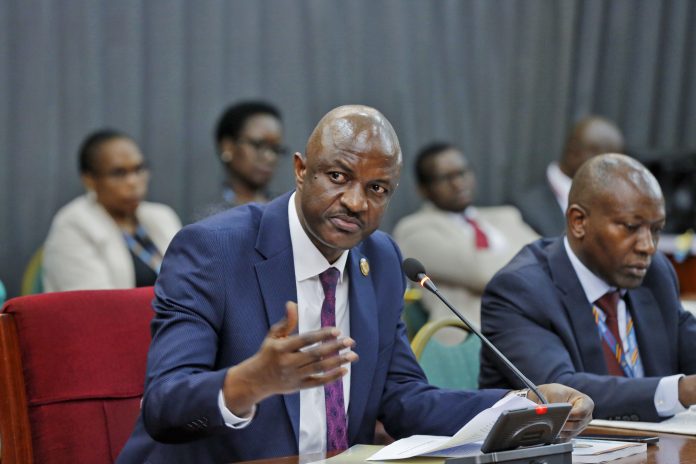
The revelation was made by David Waswa, the head of the Police Counter-Terrorism Division, while appearing before the Public Accounts Committee of Uganda’s Parliament. Waswa told lawmakers that the officers were taken into custody after demanding payment for funds they said were owed to them for providing security to Kyagulanyi during the campaigns.

According to Waswa, the officers insisted they were entitled to allowances for the period they spent protecting the opposition leader, a claim that triggered internal action by the police leadership.

“Their payment has to be effected by the Electoral Commission of Uganda, which appointed them to the job, and not the Uganda Police Force,”Waswa told the committee.

The senior officer explained that the deployment of security personnel to presidential candidates during elections is coordinated through the electoral body, which bears responsibility for facilitation and logistical support during the exercise.

Waswa, who also heads the Counter-Terrorism unit, declined to disclose the exact location where the arrested officers are currently being held, saying he would need to consult relevant authorities before confirming their detention facility. However, he noted that such cases involving security personnel are typically handled internally within the specialized unit.

He added that officers implicated in such matters are often charged under disciplinary procedures within the unit, particularly in cases involving alleged misconduct or breaches of operational guidelines.

During election periods in Uganda, security personnel are routinely deployed to protect presidential candidates as part of arrangements coordinated by the electoral body. These teams are tasked with maintaining order at campaign events and ensuring the safety of candidates amid large gatherings of supporters.

The disputes over facilitation and operational allowances among deployed security personnel are not uncommon during highly demanding electoral exercises, especially when assignments involve long deployments across different parts of the country.

It remains unclear when the detained officers will formally face disciplinary proceedings as internal investigations into the matter continue.

Stories Continues after ad

State seeks protection for six witnesses in Kizza Besigye treason trial

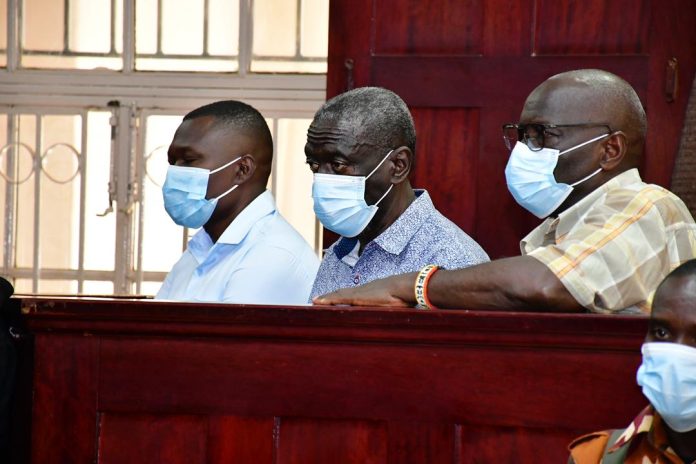
Dr. Kizza Besigye and his co-accused in court.

The Office of the Directorate of Public Prosecutions has asked the High Court of Uganda to conceal the identities of six key witnesses expected to testify in the ongoing treason trial involving opposition figure Kizza Besigye.

In a Notice of Motion filed before the Criminal Division of the High Court in Kampala, prosecutors requested permission to protect the witnesses by allowing them to testify under pseudonyms and delaying the disclosure of their identities until shortly before they take the stand.

According to the application, the prosecution wants the six witnesses to appear in court using the pseudonyms “Witness A, B, C, D, E and F,” with their real identities concealed from the public record in all proceedings related to the case.

“The concealment of the identities and non-disclosure of any material that is likely to reveal the identities of six prosecution witnesses prior to their testimonies in court is necessary,” the application reads in part.

Prosecutors further asked the court to allow disclosure of the witnesses’ evidence to the defence within seven days before each of them testifies.

The application is supported by an affidavit sworn by Joseph Kyomuhendo, a Chief State Attorney in the DPP’s office and a member of the prosecution team handling the case. In the affidavit, Kyomuhendo told the court that the witnesses are central to the prosecution’s case and their safety could be compromised if their identities are revealed prematurely.

“All the witnesses subject to this application are factual witnesses whose evidence is crucial and directly implicates the accused persons,” Kyomuhendo stated.

He added that investigations had already uncovered threats directed at some of the witnesses, including one incident where an alleged accomplice to the accused reportedly threatened to harm one of them.

“There is a security threat against the six witnesses and if their identities are disclosed at this stage, their lives and that of their loved ones would be in danger,” Kyomuhendo said.

The state argues that early disclosure could expose the witnesses to intimidation, interference or harm, potentially undermining the integrity of the trial.

“If the identities of these witnesses are disclosed now, there is a high likelihood of interference, intimidation and harm towards them or their loved ones,” the affidavit further notes.

However, the prosecution maintains that granting the orders would not prejudice the defence because the accused persons will still receive the relevant evidence before the witnesses testify.

“The orders sought if granted will not cause any injustice to the accused persons since redacted disclosures will be made,” Kyomuhuhendo added.

Dr Besigye and two other accused persons are jointly indicted on charges of treason and misprision of treason under the Penal Code Act and are currently being held on remand at Luzira Prison as the trial continues.

Besigye was arrested in November 2024 in Nairobi and later transferred to Uganda where he was charged in court.

The High Court is expected to consider the prosecution’s application as the hearing of the case progresses.

Stories Continues after ad

Floods kill 48 people in Gamo area Ethiopia

Devastating floods caused by heavy rainfall have killed several people in Gamo, Ethiopia.

Thursday, March 12, 2026-Flooding caused by heavy rains in the Gamo area of southern Ethiopia has left at least 48 people dead, police said on Wednesday.


Authorities reported that the floods struck several communities in the Gamo Zone, sweeping away homes and farmland after days of intense rainfall. Local police and emergency teams have been deployed to search for missing residents and assist survivors.


Officials said the flooding occurred after rivers and streams burst their banks following persistent downpours across the region. Many residents were caught off guard when water rapidly inundated villages overnight.
Rescue operations are ongoing, with local authorities warning that the death toll could rise as search teams continue combing through affected areas. Displaced families have been moved to temporary shelters while humanitarian agencies assess the damage and provide emergency aid.
Seasonal rains often trigger flooding and landslides in parts of southern Ethiopia, especially in rural areas where communities live close to rivers and low-lying terrain. Authorities have urged residents in flood-prone areas to remain vigilant as heavy rains are expected to continue in the coming days.

Stories Continues after ad

Teen entrepreneur petition parliament to support community organisations

Martin Luther Nyanzi.

Thursday, March 12, 2026- KAMPALA — A 16-year-old student and young media entrepreneur, Martin Luther Nyanzi, has formally petitioned the Parliament of Uganda seeking legislation that would allow the government to provide financial support to community-based organisations (CBOs) and local non-governmental organisations (NGOs).
Nyanzi, a student at Kisozi High School in Buddo, believes grassroots organisations play a vital role in delivering services that complement government programmes, particularly in areas such as education, healthcare, youth empowerment, and community development.
Through his petition, the teenager is calling for the establishment of a legal framework that would enable Parliament to allocate funds directly to registered community organisations in order to strengthen their operations and ensure sustainability.
Concerns Over Shrinking Funding
In his proposal, Nyanzi highlights the growing challenges faced by NGOs and CBOs following the withdrawal or suspension of funding from major international partners.
He specifically points to the suspension of support from the Democratic Governance Facility (DGF) and reduced assistance from the United States Agency for International Development (USAID), which he says significantly affected the operations of many grassroots organisations.
According to Nyanzi, numerous organisations that had been providing vital community services were forced to scale down activities or close operations entirely due to financial constraints.
“The absence of consistent funding has left many community organisations struggling, yet they provide services that directly impact vulnerable populations,” Nyanzi said during an interview.
He argues that structured government support could help bridge the funding gap and ensure that these organisations continue to deliver services at the grassroots level.
Political Engagement
To advance his proposal, Nyanzi has already engaged several leaders in Parliament.
He recently held discussions with Deputy Speaker Thomas Tayebwa and has also secured support from Kawempe North Member of Parliament Elias Luyimbazi Nalukoola, who has expressed willingness to present the proposal to Parliament as a Private Member’s Bill.
“We are hopeful that the 12th Parliament will consider this proposal and debate a bill that ensures community organisations receive the support they need to continue serving Ugandans,” Nyanzi said.
However, MP Nalukoola noted that the proposal would require careful consideration to ensure it aligns with the current regulatory structure governing NGOs in Uganda.
He emphasised that community organisations should remain complementary partners to government programmes rather than becoming fully dependent on public funding.
Registration of Community Organisations
Under Uganda’s current legal framework, CBOs are registered at the district level through District NGO Monitoring Committees, which operate based on recommendations from Sub-County NGO Monitoring Committees.
The registration process requires organisations to submit a formal application letter, a constitution, a detailed work plan and budget, and proof of payment of the required registration fees.
Authorities also require organisations to renew their operating permits regularly, with penalties imposed on groups that operate without valid permits. Organisations found operating illegally may be fined 10 currency points (Shs200,000) for every month of unauthorised activity.
Rising Young Media Entrepreneur
Born on December 5, 2009, in Kampala, Martin Luther Nyanzi is the son of Simon Ssekaayi and author Joan Vumilia.
Despite his young age, Nyanzi has already built a reputation as an emerging entrepreneur in Uganda’s digital media space.
After completing his primary education at MK International School in 2023, he joined Kisozi High School where he is currently pursuing his O-Level studies.
His interest in media began at the age of 13, when he launched Block FM, an online radio station designed to provide a platform for young people to express their ideas and creativity.
Inspired by prominent Ugandan media personalities such as Don Wanyama and Kin Kariisa, Nyanzi has continued to expand his ventures in the digital media industry.
He currently serves as Chief Executive Officer of APEX Media Services, an organisation focused on digital media production and youth skills development.
Through Apex Digital Skills, he runs training programmes aimed at equipping young people with digital literacy, content creation and media production skills.
His ventures reportedly employ more than 55 staff members, supported by an executive board that includes his mother and investor Isaac Ssegawa.
In addition, he leads The Block Foundation, a non-profit organisation that offers free digital literacy training and employment opportunities to young professionals.
Youth Voice in National Policy
Nyanzi says his long-term vision is to build a major media company in Uganda while empowering young innovators across the country.
His petition to Parliament has drawn attention as a rare example of youth participation in legislative advocacy, highlighting the growing role young people are playing in shaping policy discussions around development and community empowerment.

Stories Continues after ad

UNEB to release 2025 UACE results on Friday at State House Nakasero

First Lady and Minister of Education and Sports, Mrs. Janet Museveni.

Wednesday, March 11, 2026, Kampala- The Uganda National Examinations Board (UNEB) has confirmed that the 2025 Uganda Advanced Certificate of Education (UACE) results will be officially released on Friday, March 13, 2026.

According to the board, the results will be announced at 11:00 am during an official ceremony at State House, Nakasero, presided over by the Minister of Education and Sports.

In a brief statement issued on Wednesday, UNEB confirmed the date and venue for the long-awaited release of the national examination results.

“The Uganda Advanced Certificate of Education (UACE) results for 2025 will be released on Friday, March 13, 2026, at 11:00 AM at State House Nakasero,” the board stated.

The release will mark the conclusion of the 2025 national examinations cycle, which started with the Primary Leaving Examination (PLE) and Uganda Certificate of Education (UCE) before culminating in the Advanced Level examinations.

More than 166,000 candidates sat for the 2025 UACE examinations, which were conducted between November 10 and December 5, 2025, across 2,844 examination centres nationwide.

According to UNEB data, 166,402 candidates registered for the exams, representing a 14.6 percent increase from the 141,996 candidates who sat for the examination the previous year.

During the start of the examinations last year, UNEB explained that candidates began with several key subjects across both arts and sciences.

“The writing of papers for the 2025 UACE Examination starts today with candidates writing Theory of Government and Constitutional Development, History of Africa for Arts candidates, and Physics Paper One for Science candidates,” UNEB said at the time.

The board also reported that examination materials were successfully distributed to storage centres across the country ahead of the exams, with security agencies deployed to ensure the integrity of the exercise.

About 1,650 scouts and security personnel were deployed to supervise and monitor the conduct of the examinations across the country.

Of the candidates who sat the examinations, 42,328 were government-sponsored under the Universal Post O-Level Education and Training (UPOLET) programme, while 124,074 were privately sponsored.

The gender distribution showed 77,772 female candidates and 93,630 male candidates sitting the examinations.

UNEB also confirmed that 521 candidates with special needs participated in the exams, with the board providing necessary facilitation, including an extra 45 minutes for their papers.

The board has repeatedly emphasized its commitment to maintaining the credibility and security of national examinations and has warned against any form of malpractice.

“Once again, we would like to caution the public against involvement in any form of examination malpractice,”UNEB Principal Public Relations Officer Jennifer Kalule Musamba previously said.

“Anyone apprehended will be dealt with under the UNEB Act, which provides for a fine of up to Shs40 million or imprisonment of up to ten years, or both,”she added.

The UACE results determine the candidates’ eligibility for university admission, tertiary education, and other post-secondary opportunities.

Stories Continues after ad

MPs warn it could take 48 years to clear Uganda’s Shs8.4t domestic arrears

Appearing before Public Accounts Committee of Parliament, Ramathan Ggoobi, Permanent Secretary, Ministry of Finance, and Secretary to the Treasury.

Parliament has been told that at the current rate of funding allocated to settle government domestic arrears, it could take more than four decades to clear the outstanding debt currently estimated at Shs8.4 trillion.

The revelation emerged during a meeting between Parliament’s Public Accounts Committee (PAC) and officials from the Ministry of Finance while reviewing the December 2025 Auditor General’s report, which highlighted the growing burden of domestic arrears owed to suppliers and contractors.

During the session, Kashari North MP Basil Bataringaya calculated that if the government continues allocating Shs200 billion annually to clear arrears, it would take about 48 years to eliminate the current stock.

“I have computed, it is 48 years. For the Shs9.6 trillion, Shs200 billion per year is 48 years. The mid-term has a maximum of five years. But also remember there is a rate of growth of domestic arrears,” Bataringaya told the committee.

He warned that the debt is unlikely to remain static because new arrears continue to accumulate as government obligations increase.

“So the domestic arrears will be growing, it will not be static. But the current one, at the rate at which we have programmed to pay, we shall cover it in 48 years,”he added.

The discussion followed concerns raised by PAC Vice Chairperson Gorreth Namugga, who questioned government’s commitment to settling debts owed to individuals and companies that supplied goods and services to government institutions but have remained unpaid for years.

Namugga argued that the UGX 200 billion allocation in the upcoming 2026/27 national budget is insufficient given the magnitude of the outstanding arrears.

“If you look at the trend of budgeting for domestic arrears over the previous five years, Shs200 billion has been your allocation most of the time. Yet the validated arrears stand at about Shs8 to Shs9 trillion,” Namugga said.

She added, “So if you really have a budget of Shs200 billion, which miracle are you going to perform to clear this debt? At the end of the day, you are seriously killing the private sector.”

However, Secretary to the Treasury Ramathan Ggoobi defended the government’s approach, explaining that the Shs200 billion reflects the base funding currently available and that additional resources could be allocated if they become available.

“The Shs200 billion is the money we had in the base, and that is why I communicated it. If we manage to get new resources, it is an area of priority. When we fail, we shall definitely pay Shs200 billion. We can’t pay money we don’t have,” Ggoobi explained.

He also revealed that a verification exercise conducted by the Auditor General had uncovered irregularities in some of the claims.

“I requested the Auditor General to verify these arrears. The verifiers are finding that some claims had no concrete evidence that goods or services were supplied to government,”Ggoobi said.

He added that once verification is completed, government will begin releasing funds to settle the legitimate claims.

“We are going to do very well in wiping out the portfolio that remains. Starting next quarter, we shall release money to pay those who have been certified as legitimate arrears,”he said.

Ggoobi further clarified that the figure of Shs9.6 trillion cited during the committee meeting was inaccurate, noting that a revised figure will soon be announced by the Auditor General.

“That number you have is not correct. There is a new number coming and the Auditor General will announce it soon,”he said.

Despite concerns about arrears, the Treasury Secretary told MPs that Uganda’s economy remains stable and continues to register strong performance across several indicators.

He revealed that the country earned $14.4 billion (about Shs53.6 trillion) in exports in 2025, the highest export earnings in Uganda’s history.

“Uganda has never in its history exported goods and services worth that magnitude. Our export performance reached $14.4 billion,” Ggoobi said.

According to him, the strong export performance has helped stabilize the Ugandan shilling, which has recently appreciated against major currencies including the US dollar.

“The shilling is stable and strong mainly because of the good performance of exports,” he explained.

Ggoobi also told the committee that inflation has remained under control despite Uganda entering an election period, which has historically triggered price instability.

“Usually, around election periods we see inflation rising, but this time prices of goods and services have remained stable,” he said.

He noted that Uganda’s economy is projected to grow between 6.5 and 7 percent this financial year, driven by expansion in agriculture, manufacturing, and the services sector.

“The GDP is continuing to grow, driven by all sectors of the economy. Agriculture, manufacturing and services are all growing,”Ggoobi said.

He further revealed that Uganda recorded strong inflows in its financial account, amounting to US$5.6 billion, including $3.56 billion in Foreign Direct Investment and $1.7 billion from portfolio investors.

“As a result, our balance of payments registered a surplus of $2.37 billion, meaning Uganda received more money from international transactions than what went out, ”he said.

However, Ggoobi acknowledged that revenue collection remains a weak area, despite registering growth of about 16 percent, and said the government is working on measures to strengthen domestic revenue mobilisation.

“Revenue collection is still one of the areas of weakness, and we are working to address it in the coming budgets, ”he said.

He assured MPs that despite global and domestic economic pressures, Uganda’s economy remains resilient.

“The state of the economy is quite good, and we hope it will remain stable despite geopolitical challenges around the world,” Ggoobi said.

Stories Continues after ad