Stanbic Bank
Stanbic Bank
25.8 C
Kampala
Stanbic Bank
Stanbic Bank
Home Blog Page 11

Opposition rejects Sovereignty Bill, warns of threats to economy and civil liberties

Joel Ssenyonyi, Leader of Opposition.

The Opposition has rejected the proposed Protection of Sovereignty Bill, 2026, saying it is unnecessary, legally redundant and potentially harmful to Uganda’s democratic and economic environment.

Appearing before a joint parliamentary committee on April 24, 2026, Leader of the Opposition Joel Ssenyonyi argued that the Bill duplicates provisions already covered under existing laws, including the Penal Code Act, Anti-Money Laundering Act, Public Finance Management Act and the NGO Act.

“We have a plethora of laws that touch critical concerns that anyone would have; the Penal Code Act captures a number of those provisions, so it is redundant,” Ssenyonyi said.

He explained that offences such as treason, illicit financial flows and unlawful foreign funding are already addressed within the current legal framework.

“If a foreign embassy tries to fund a violent coup, the Penal Code Act already criminalises treason. If someone launders illicit foreign money, the Anti-Money Laundering Act already mandates declarations of source of funds,” he added.

Ssenyonyi warned that the Bill introduces stringent provisions that could negatively affect Uganda’s economy and civic space, citing a clause that caps foreign funding at Shs400 million. Receiving funds beyond this limit without ministerial approval would attract penalties of up to 20 years in prison.

He also raised concerns over Clause 2(2), which criminalises influencing the public against government policy, arguing that it undermines the constitutional role of the Opposition.

Separately, the Uganda People’s Congress, through its General Secretary Francis Ebil, called for the withdrawal of the Bill, describing it as unconstitutional.

“By reclassifying Ugandans as purely foreigners based on residence, the Bill is bypassing the 1995 Constitution, which guarantees that every person who was a citizen at the commencement of the Constitution remains a citizen,” Ebil said.

Ebil criticised the proposed penalties, including jail terms of up to 20 years and fines reaching Shs4 billion, arguing that they violate protections against cruel, inhuman or degrading punishment.

He further warned that vague definitions such as ‘economic sabotage’, ‘foreigner’ and ‘foreign agent’ could be abused to suppress press freedom and freedom of expression.

“A New Vision journalist could be prosecuted for publishing an accurate report if the report leads to a drop in company shares or investor confidence,” he cautioned.

Despite the Opposition’s concerns, some legislators on the committee called for further scrutiny rather than outright rejection of the Bill.

Bugabula County North MP John Teira said the proposed law is intended to address subversive activities against Uganda’s interests rather than broadly target citizens.

Meanwhile, Kibale County MP Richard Oriebo argued that consolidating sovereignty-related provisions into a single law could be more effective than amending multiple existing statutes.

Stories Continues after ad

Housing Finance Bank records Shs85.4b profit as assets hit Shs2.7t in 2025 performance

Housing Finance Bank has reported a robust financial performance for the year ended December 31, 2025, posting a 20 percent increase in profit after tax to Shs85.4 billion, up from Shs71.1 billion recorded in 2024.

The bank’s total assets grew by 15 percent to Shs2.70 trillion, while customer deposits rose by 14 percent to Shs1.95 trillion, signaling growing public confidence in the institution. Net loans and advances also increased by 11 percent to Shs1.20 trillion, driven by sustained lending to households, businesses, and key sectors of the economy.

Speaking on the results, Board Chairperson Josephine N. Mukumbya attributed the performance to strong governance and disciplined execution of strategy.

“On behalf of the Board, we are pleased with the Bank’s performance in 2025, which underscores the resilience of our business model and our commitment to financing a sustainable future for all,” she said.

She added, “The Board has ensured that this growth is delivered responsibly, within a robust governance and risk management framework, and aligned to our High Impact Goals.”

Mukumbya emphasized that the bank remains focused on advancing financial inclusion, affordable housing, enterprise development, and sustainable finance as key drivers of long-term value.

Managing Director Michael K. Mugabi said the results reflect effective implementation of the bank’s purpose-driven strategy.

“The 2025 financial year reflects strong execution and continued progress in advancing our purpose. Our performance was driven by portfolio growth, improved operational efficiency, and deepened customer engagement,” he noted.

“These results highlight the growing relevance of our solutions in supporting individuals, households, and businesses across Uganda,” Mugabi added.

The bank’s growth was anchored in the execution of its 2023–2027 strategic plan, through which it expanded outreach and deepened impact across the country. During the year, the bank reached over 8 million Ugandans through digital lending channels, supported more than 2,500 households to access housing, and financed over 4,200 enterprises.

It also extended funding to more than 2,000 SACCOs under the Parish Development Model, reinforcing its role in supporting grassroots economic transformation.

In housing finance, the bank strengthened its position through solutions such as Zimba Mpola Mpola, enabling thousands of customers to build homes progressively in line with their income levels. On the enterprise side, initiatives including the Agricultural Credit Facility and the Small Business Recovery Fund boosted business resilience and recovery.

The bank further advanced Shs56 billion towards agro-industrialisation, aligning its operations with national development priorities and supporting value chain growth.

To enhance accessibility, Housing Finance Bank expanded its branch network with new outlets in Masaka, Soroti, and Nansana, bringing its total to 21 branches nationwide. At the same time, continued investment in digital banking platforms improved service delivery and customer convenience.

The bank also strengthened its governance and risk management credentials, attaining ISO 27001:2022 certification, a key benchmark in information security, while advancing efforts toward full sustainable finance certification by embedding environmental, social, and governance principles in its operations.

Looking ahead, Mugabi said the bank is well-positioned to sustain growth and expand its impact.

“With a strong balance sheet, growing customer base, and clear strategic direction, we are well-positioned to sustain our growth trajectory and expand our impact,” he said.

Stories Continues after ad

Silent Law, Loud Consequences: Sovereignty Bill raises fears of expanding state power beyond public Scrutiny

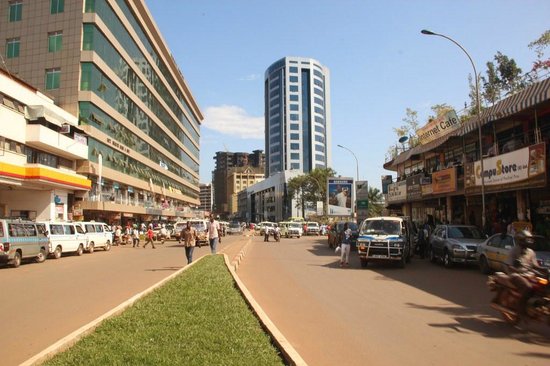
KAMPALA — While lawmakers in the August House debate a law that could see ordinary citizens jailed for 20 years over a foreign bank transfer, the streets of Kampala remain eerily oblivious. This “dangerous” vacuum of public awareness has prompted a 16-year-old media mogul to sound a national alarm, claiming the government is effectively legislating in a graveyard of civic silence.
But beyond the question of awareness, a deeper concern is taking shape: whether the National Sovereignty Bill signals a decisive shift toward tighter state control over citizens’ financial and civic space—with minimal public resistance.
Nyanzi Martin Luther, CEO of Apex Media Services, emerged from proceedings at the Parliament of Uganda with a stark conclusion—not just that Ugandans are uninformed, but that the balance of power between the state and the individual may be quietly tilting.

“People don’t even know this law is being discussed,” he said. “But it has the potential to affect how they receive money, how organizations operate, and how communities survive.”

The bill, introduced by David Muhoozi, seeks to regulate foreign influence by imposing strict controls on external funding. Its penalties are severe: up to 20 years’ imprisonment and fines in the billions for unauthorized foreign financial transactions.

Redefining Control

Supporters frame the legislation as a necessary defense mechanism—an assertion of Uganda’s right to shield itself from external interference. Veteran politician Yusuf Nsibambi has described it as a long-overdue legal framework to protect national interests.
However, critics argue the bill’s implications stretch far beyond sovereignty.
At issue is not just foreign influence, but who ultimately controls the flow of resources within Uganda—and under what conditions. By centralizing approval authority, the state could gain unprecedented oversight over NGOs, community initiatives, and even individual financial decisions linked to international sources.

Citizens on the Frontline

Civil society actors warn that the people most likely to feel the impact are not foreign entities, but ordinary Ugandans.
Chapter Four Uganda has cautioned that vague definitions within the bill could expose citizens to prosecution for routine transactions, while Miria Matembe has warned that thousands of vulnerable households depend on foreign-supported programs that could be disrupted.
For many families, remittances, scholarships, and NGO support are not abstract concepts—they are lifelines.
Yet under the proposed law, such lifelines could become regulated channels, requiring state clearance and carrying legal risks if mishandled.

From Policy to Power

For Luther, the shift is particularly striking. Just weeks before, he had advocated for increased government support to local organizations through a proposal submitted to Deputy Speaker Thomas Tayebwa.
Now, he says, the conversation has moved in the opposite direction—from enabling civil society to tightening its operating space.
“What we are seeing is not just policy,” he said. “It is a restructuring of how power flows—from citizens upward, rather than outward.”

The Silence Factor

Perhaps the most unsettling element of the debate is not the bill itself, but the environment surrounding it.
There has been no widespread public campaign to explain its provisions. Public discourse remains limited, fragmented, and largely confined to policy circles. Meanwhile, Parliament continues to process the bill alongside major national decisions, including the approval of a multi-trillion-shilling budget.
Political analyst Charles Onyango-Obbo has warned that such conditions risk producing laws that are technically sound but socially disconnected.

A Turning Point

The National Sovereignty Bill may ultimately pass or be amended. But its broader significance may lie in what it represents: a test of how laws are made, who participates in that process, and how power is negotiated between the state and its citizens.

“When enforcement starts, it will not ask whether you understood the law,” Luther said. “It will only ask whether you followed it.”

As Uganda edges closer to a decision, the country faces a defining moment—not just about sovereignty, but about transparency, participation, and the future relationship between government and the governed.
For now, the debate continues behind parliamentary walls. Outside them, the silence persists.

Stories Continues after ad

Massive turnout marks Gen. Muhoozi’s 52nd birthday run at Kololo

KAMPALA, April 26, 2026 — A massive crowd turned up at Kololo Independence Grounds on Sunday as thousands participated in the 52nd birthday run of Muhoozi Kainerugaba, underscoring the growing scale and influence of the annual event.
The run, held under the theme “Run for Charity, Run for Hope,” brought together a wide range of participants, including political figures, security personnel, youth leaders, and ordinary citizens. The atmosphere was high-energy, with music, coordinated warm-ups, and branded merchandise adding to the spectacle.
Organised by the Patriotic League of Uganda, the event is part of broader nationwide activities celebrating Gen. Muhoozi’s birthday. Funds raised from the run are expected to support charitable causes, particularly initiatives targeting vulnerable children and underprivileged communities.
This year’s edition saw intensified mobilisation efforts across the country, contributing to the significant turnout witnessed at Kololo. Analysts say the event is increasingly taking on a dual role — both as a charity drive and a platform for social and political visibility.
Gen. Muhoozi took part in the run alongside supporters, drawing cheers from participants as he joined different groups along the route. His presence added momentum to an event that continues to blend public engagement with philanthropy.
Security and traffic were tightly managed around Kololo, with authorities implementing earlier advisories to ensure order during the high-profile gathering.
As the crowds dispersed, the 2026 birthday run further cemented its status as one of Kampala’s largest annual public events, reflecting its expanding reach and significance beyond a celebratory occasion.

Stories Continues after ad

Gen. Muhoozi thanks Sudhir for birthday run as tycoon led with Shs100m boost

Tycoon Sudhir Ruparelia.

City tycoon Sudhir Ruparelia has taken lead at the “Run For Hope” marathon in Kampala, combining financial support with personal participation as the event marked the 52nd birthday of Chief of Defence Force, Muhoozi Kainerugaba.

The prominent investor injected Shs100 million into the charity initiative, a contribution that is a major boost toward the cause of improving access to healthcare services in Uganda.

David Kabanda, Secretary General of the Patriotic League of Uganda, singled out Ruparelia among the leading contributors to the run.

“Our patriotic investor Sudhir Ruparelia, Mr Abu Mukasa and State House stand out among the premium top funders of this initiative. This is the spirit of patriotism and commitment to national causes,” Kabanda said.

Beyond the financial backing, Ruparelia joined hundreds of runners at Kololo Independence Grounds in the early hours, signaling his hands-on support for the cause.

The marathon attracted a cross-section of participants, ranging from political leaders and security officials to members of the business community, reflecting its growing profile as both a social and civic event.

Although Gen Muhoozi did not attend in person, he was represented by Deputy Speaker Thomas Tayebwa, who presided over the function as chief guest.

Other dignitaries included State Minister for Foreign Affairs Henry Okello Oryem and former Inspector General of Police Kale Kayihura.

The “Run For Hope” theme focused attention on persistent gaps in Uganda’s health sector, particularly shortages of medical personnel, limited access to treatment, and inadequate supply of essential medicines in many parts of the country.

In a message shared during the celebrations, Muhoozi hailed Ruparelia’s presence and contribution to the event.

“I thank our beloved elder Mr Sudhir Ruparelia for attending the birthday run. He is the richest and smartest business man in Africa,” he said.

Ruparelia’s involvement highlighted the increasing role of private sector players in supporting national causes, with the marathon blending charity, public awareness and community participation into a single platform.

Stories Continues after ad

Gov’t suspends trade order enforcement

Government has suspended the enforcement of the controversial trade order following widespread complaints from traders, religious leaders and the Inter-Religious Council, State Minister for Trade David Bahati has announced.

Bahati said the decision was taken to allow further consultations with key stakeholders before the operation can resume under a revised framework.

“We are going to continue the consultations to see how best the objective of this exercise can be achieved, and we’ll ensure that nobody is hurt, nobody is abused,” Bahati said.

He added, “The intention of this is to bring order, and order must be brought in an orderly manner without interfering with people’s lives and livelihoods.”

The minister emphasised that the suspension takes immediate effect, with formal communication expected from the Prime Minister’s office.

“The most important thing to note today as we go into appropriation is that the trade order has been suspended until further notice. We need that communication out so that whatever is happening is put at halt,” he said.

Bahati also issued an apology to religious leaders over the conduct of some enforcement teams, acknowledging concerns raised about how the operation was carried out on the ground.

He maintained that while the policy aims to streamline trading activities and ensure proper use of government-built markets, enforcement must be conducted professionally and with respect for citizens.

“We shall ensure that professional people are used to do any government work so that there is peace,” he said.

According to Bahati, the government has already held meetings with the Inter-Religious Council, traders and officials from the Ministry for the Presidency, and plans to continue engagements until the end of June.

A final consultation meeting is expected then, paving the way for a refined implementation strategy in July.

However, Members of Parliament raised concerns about the impact of the halted enforcement on affected traders.

Kira Municipality MP Ibrahim Ssemujju Nganda questioned what support the government would extend to traders whose businesses were disrupted before the suspension.

He criticised the manner in which the operation was conducted, alleging the involvement of security agencies and “goons.”

Bukooli Central MP Solomon Silwany also pressed government for clarity, saying Parliament had not been formally briefed on the trade order.

Silwany noted that traders operating kiosks and small businesses were suffering as enforcement teams reportedly removed structures and goods without prior notice.

He called on the Ministry of Trade to explain how it plans to address the plight of affected traders and ensure a more transparent and humane approach going forward.

The trade order, which has been at the centre of the dispute, is part of a government initiative aimed at reorganizing urban trade by relocating vendors from streets and informal spaces into designated markets and gazetted trading areas. The policy is intended to decongest cities, improve sanitation and safety and promote fair competition among traders operating in formal premises.

However, its implementation has sparked tension in several towns and cities, with many small-scale traders complaining of abrupt evictions, loss of merchandise and limited access to affordable market spaces. The rollout lacked adequate sensitisation and failed to consider the realities of informal businesses that rely on high-foot-traffic locations.

Religious leaders and civil society actors have since called for a more consultative and phased approach, urging the government to balance order with economic survival for thousands of urban livelihoods.

Stories Continues after ad

Parliament passes Lotteries and Gaming Bill introducing 30% tax, targets Shs24b annual revenue

Parliament has passed the Lotteries and Gaming (Amendment) Bill, 2026, introducing a harmonised 30 percent tax on betting and gaming activities with a projection of an annual revenue increase of Shs24 billion from the reform.

The Bill was first read on Wednesday, April 1, 2026 by the State Minister for Finance, Planning and Economic Development (General Duties), Henry Musaasizi, who also tabled a certificate of financial implications indicating the expected revenue gains from the proposed amendments.

The Bill was subsequently committed to Parliament for detailed scrutiny in accordance with Rule 135 of the Rules of Procedure, where the committee undertook a comprehensive review before reporting back to the House for consideration.

The objective of the Bill is to amend the Lotteries and Gaming Act, Cap. 334 in order to harmonise the gaming tax rate by introducing a uniform 30 percent levy on betting and gaming activities, computed on total stakes less payouts. The reform also introduces a clear definition of payouts to eliminate ambiguity and improve consistency in tax administration.

During scrutiny, the Committee engaged a wide range of stakeholders including the Ministry of Finance, Planning and Economic Development, the Uganda Revenue Authority, the Uganda Gaming and Betting Alliance, the Uganda Gaming Operators Association and the Tax Justice Alliance. 

The Committee also relied on written submissions, the Explanatory Notes to the Bill and provisions of the Lotteries and Gaming Act, Cap. 334.

The Committee observed that the proposed amendment addresses existing disparities in the sector where gaming tax was previously charged at 30 percent while pool betting attracted 20 percent, despite both activities operating under similar economic structures. It noted that harmonising the rate eliminates inconsistencies and promotes fairness across licensed operators.

“The proposed tax is computed on net winnings as opposed to applying a uniform thirty percent Gross Gaming Revenue to both betting and gaming activities, including land based and live casinos,” the Committee observed.

The committee added that this approach ensures a level playing field for all operators regardless of the form of gambling.

The Committee further observed that defining payouts is critical in ensuring clarity in tax computation and strengthening enforcement mechanisms, while also simplifying tax administration processes.

The Ministry informed the Committee that the harmonisation was necessary given the evolving nature of betting and gaming activities, which now operate in a closely linked environment, making differentiated taxation less practical and harder to administer.

The Committee recommended an amendment of the Bill by substituting the words “transferred or credited” with “paid” in order to remove ambiguity that could arise in interpretation and application of the law.

Following consideration of the Committee report, Parliament adopted the recommendations and passed the Bill at Third Reading after it had earlier gone through the Committee Stage for detailed consideration.

The law now establishes a uniform 30 percent tax on net gaming revenue and is expected to enhance compliance, strengthen revenue mobilisation and improve regulation of Uganda’s rapidly growing gaming sector.

Stories Continues after ad

Dr Lawrence Muganga rallies Ugandans for tomorrow’s blood donation drive at Victoria University

Victoria University Vice Chancellor, Dr Lawrence Muganga.

Victoria University Vice Chancellor, Dr. Lawrence Muganga, has called on the public to turn up in large numbers for a blood donation drive set for tomorrow, April 24, at the university.

Drawing from a personal experience, Muganga recounted the difficulty his family faced while searching for blood for his mother during her admission at Kampala Hospital and said the situation exposed the gaps in blood availability.

“In life, there are so many things that we share that make us the same… and that thing runs in our veins, and that is blood,” he said.

He explained that blood remains one of the most critical yet scarce resources in times of need, especially for patients with rare blood groups.

“Blood is something that is scarce when everyone needs it. I have seen that firsthand,” Muganga added.

According to Muganga, his mother required AB negative blood, one of the rarest types, making it extremely difficult to secure in time.

“We looked everywhere, and it was very, very scarce to get. These blood banks called upon very kind, selfless people. They showed up and donated blood to save my mom,”he said.

He acknowledged the role played by voluntary donors, noting that their intervention provided critical support during a difficult time.

“Much as she passed on, the best people out there donated the blood that we needed,”he said.

Muganga emphasized that many Ugandans continue to face similar situations, particularly accident victims and patients battling life-threatening illnesses.

“As I speak, there are so many people who need blood in this country,”he said.

He stressed that the solution lies in collective responsibility, urging individuals to donate blood whenever possible.

“But we are lucky that we can solve that problem by simply donating what we have most,” Muganga added.

The drive, organised in partnership with the Uganda Blood Transfusion Service, will run throughout the day at Victoria University and is open to the public.

“So I am calling upon every human being in this country who cares about others… because tomorrow it could be me, the other day it could be you,”he said.

Muganga also revealed that the event will mark his 40th time donating blood, describing it as a milestone in his personal commitment to saving lives.

“I am happy to let you know that that day will be my fortieth time donating blood, a cause I am proud to carry forward,”he said.

He reiterated that blood donation remains the only way to ensure a steady supply for those in need.

“Blood has no substitute. When it is needed, it can only come from people willing to give. Today it might be someone else. Tomorrow it could be me or you,”Muganga said.

The university calls on students, staff and members of the public to participate in the exercise in order to strengthen community response to blood shortages.

Stories Continues after ad

Dangote commits to build 650,000 barrel per day Nigeria-style mega oil refinery in East Africa 

Nigerian billionaire, Aliko Dangote, with Uganda and Kenyan presidents, Yoweri Museveni and William Ruto.

Nigerian billionaire, Aliko Dangote has committed to constructing a large-scale oil refinery in East Africa modelled on his Nigerian facility. The project will only move forward with strong political and institutional backing as Africa accelerates efforts toward industrial self-sufficiency.

Speaking at the Africa We Build Summit 2026 in Nairobi on Wednesday,22, Dangote said discussions around the proposed refinery were still in early stages but expressed confidence that the initiative would succeed with an aim to boost Africa’s capacity to deliver major industrial projects.

“I can commit the two presidents (Museveni and Ruto) who were here. If they will support the refinery, we will build the identical one that we have in Nigeria, six hundred and fifty thousand barrels,” Dangote said.

He added that the refinery plan forms part of a wider industrial push already underway in Nigeria, which he said is designed to make Africa more self reliant in energy and petrochemical production.

“The discussions are still early, though, but the three of you, it seems like you are trying to make this work. It will work. There is nothing that can stop it. We have done the one in Nigeria and that is why we are taking the bold move, which we have started already. Piling has started. We are building that one to a scale of one point four million barrels a day will give us the will be the largest refinery in the world,”he said.

Dangote warned that Africa’s continued reliance on importing finished goods while exporting raw materials was economically unsustainable, citing sharp increases in global input costs.

“This is coming with a lot of petrochemicals. I mean you look at it today in Nigeria, if not because we have polypropylene, many businesses would have collapsed because cement, flour, rice, grains, everything depends on it. And the cost has shot up from nine hundred dollars a ton to three thousand. There is no way you can afford it. That is why we must learn how to build self sufficiency,”he said.

He also recalled earlier challenges in financing large industrial projects, saying Africa’s financial ecosystem has matured enough to support ambitious investments.

“We were even paying forty four percent interest rates in Nigeria. We had to go to IFC to raise money. Our first loan was four hundred and seventy eight million dollars. They said you need seven years, two years moratorium, five years repayment. We agreed. But we paid the money back before the expiration of the moratorium, in eighteen months. So it is possible Africans can do it. Let us not be scared,”he said.

Dangote further supported recent policy moves by Uganda aimed at stopping the export of unprocessed minerals, saying such decisions are critical for retaining value within African economies.

“I must really thank the President of Uganda for taking this bold move, stopping the export of unprocessed minerals. No export of tin, no export of copper. They are all there in the ground. They will be forced. They will come and produce,”he said.

Ugandan President Yoweri Museveni said Uganda’s long term resource strategy has been to ensure minerals and oil benefit the domestic industry rather than being exported in raw form.

“What he told you, in Uganda, I have banned the export of unprocessed minerals. I have banned all of them. No export of tin, no export of copper. They are all there in the ground. But slowly, we are getting investors,” Museveni said.

He cited Uganda’s iron ore as an example of lost value due to raw exports, saying earlier deals undervalued the country’s resources.

“Some Indian guy from India had come and made a deal to sell our iron ore at forty seven dollars per ton. The iron ore of Uganda is the best in the whole world. It is about seventy percent pure. When you sell iron ore, somebody goes and makes it into steel and earns far more. I stopped them,” he said.

Museveni added that Uganda is now attracting investors into steel production, including those from Kenya.

“I am glad that some investors from Kenya, encouraged by His Excellency Ruto, are now investing in the steel industry in Uganda,” he said.

Kenyan President William Ruto highlighted growing regional cooperation in infrastructure and resource development, citing past discussions with Museveni on strategic investments.

“Kenya Pipeline, because we wanted to unlock the value of Kenya Pipeline and use it for the transformation of the country. President Museveni called me and said I want to buy fifty percent of Kenya Pipeline. He told me I don’t care the price,” Ruto said.

He said Uganda and Kenya are now aligning their investment strategies to ensure long term regional benefits.

“Mzee, I want to assure you that the same way you invested in Kenya Pipeline, Kenya is going to invest in your refinery and in the future of our resources together,” Ruto said.

Ruto also urged African leaders to prioritize long term industrial development over short term gains.

“Not the short term benefit you get from something cheap from somewhere else, but the benefit of building something for the future that will not only earn you money today, but earn you opportunities tomorrow,” he said.

The summit concluded with calls for deeper regional integration and joint investment in large scale infrastructure projects, with the proposed East African refinery emerging as one of the most ambitious industrial proposals under discussion.

Stories Continues after ad

Museveni arrives in Nairobi for Africa We Build Summit 2026

President Museveni arriving in Nairobi Kenya.

President Yoweri Kaguta Museveni has arrived in Nairobi-Kenya to take part in the Africa We Build Summit 2026, a high level gathering that brings together leaders from across the continent to push forward Africa’s infrastructure agenda.

In a brief statement issued on Thursday morning upon arrival, Museveni said the summit is focused on turning long standing infrastructure priorities into real projects that can drive growth and development.

“I have this morning arrived in Nairobi, Kenya, to attend the Africa We Build Summit 2026,” Museveni said. 

Museveni added that the Summit brings together leaders from the public and private sectors to discuss practical ways of moving Africa’s infrastructure from priority to implementation.

He noted that infrastructure remains a critical pillar in unlocking Africa’s economic potential, particularly in areas such as transport networks, energy development and digital connectivity.

“I look forward to engaging with fellow leaders, investors, and partners on strengthening collaboration to accelerate infrastructure development for Africa’s socio-economic transformation,” he noted.

The Africa We Build Summit has in recent years grown into an influential platform that convenes heads of state, policymakers, financiers and industry leaders to address the continent’s infrastructure financing gap and implementation challenges. 

Previous editions of the summit have focused on mobilising private capital, strengthening public private partnerships, and improving regulatory frameworks to attract long term investment.

Discussions at earlier meetings have also emphasized the need for regional integration through cross border infrastructure such as highways, railways and energy interconnections, seen as key to boosting intra African trade under frameworks like the African Continental Free Trade Area.

In past summits, participants have called for faster project preparation, bankable infrastructure pipelines and stronger coordination between governments and development partners. 

There has also been growing emphasis on sustainable infrastructure, including climate resilient projects and green energy investments.

This year’s summit in Nairobi is expected to build on those discussions, with a sharper focus on implementation, delivery timelines and innovative financing models to bridge Africa’s multi billion dollar infrastructure deficit.

Uganda continues to invest in major infrastructure projects including roads, energy generation and oil related developments, which are vital for driving industrialisation and economic transformation.

Stories Continues after ad