Stanbic Bank
Stanbic Bank
24.6 C
Kampala
Stanbic Bank
Stanbic Bank
Home Blog Page 10

Immigration authorities arrest 231 foreign nationals in illegal migration crackdown

The arrested illegal immigrants.

The Directorate of Citizenship and Immigration Control under the Ministry of Internal Affairs has arrested 231 foreign nationals in coordinated intelligence-led raids across the country.

In a statement issued on April 28, 2026, immigration authorities confirmed that the operations targeted individuals residing and operating in Uganda without valid documentation in a bid to safeguard national security and enforce immigration laws.

According to Simon Peter Mundeyi, the spokesperson for the Directorate, the first operation was conducted in Adjumani District on April 27, where 62 Nigerian nationals were apprehended.

ā€œActing on credible intelligence, our enforcement teams arrested 62 Nigerian nationals who were operating illegally without valid work permits. Some of them were engaged in running a church,ā€ Mundeyi said.

He added that a second, more complex operation was carried out overnight in the Bukoto-Ntinda area of Kampala, leading to the arrest of 169 foreign nationals found living in an apartment complex under highly suspicious circumstances.

ā€œDuring an intelligence-led night operation in Bukoto, our officers detained 169 foreign nationals, including 36 women, who were residing in a self-contained apartment complex without valid immigration status,ā€ Mundeyi stated.

He further revealed that the premises had been deliberately structured to control movement and facilitate illegal activities.

ā€œThe facility was highly restricted, with its own internal systems designed to limit movement. Upon search, we recovered a large number of computers and IT equipment believed to have been used for illegal gaming, betting, and organized cyber fraud,ā€ he said.

Authorities noted that the suspects did not possess any form of identification, including passports. The group comprised individuals from several countries, including Pakistan, India, Bangladesh, Ghana, Myanmar, Ethiopia, Sri Lanka, Cambodia, Thailand, Nepal, Indonesia and Malaysia.

Preliminary investigations indicate that while some of the suspects were actively involved in cybercrime, others may have been victims of human trafficking.

ā€œSome individuals have claimed they were trafficked into Uganda under false promises of employment, while others appear to have been directly engaged in cyber-scamming and related criminal activities,ā€ Mundeyi explained.

All 231 suspects are currently undergoing screening and verification processes. Immigration officials say those found to have violated Ugandan laws will be prosecuted, while cases involving human trafficking or organized crime will be handed over to relevant security agencies for further investigation.

ā€œThe Directorate remains committed to ensuring that all foreign nationals in Uganda are properly documented and compliant with the law. Those found in violation will face the full force of the law,ā€ Mundeyi emphasized.

The Ministry has also called on members of the public to support ongoing enforcement efforts by reporting suspicious individuals or activities to the nearest immigration office or police station.

Stories Continues after ad
Who got the lion’s share of Shs84.3 trillion 2026/27 national budget?Ā 

State Minister of Finance Henry Musasizi.

Parliament passed a Shs 84.39 trillion national budget for the 2026/2027 financial year following the adoption of the Appropriation Bill and the report of the Budget Committee, which outlines how the funds will be raised and spent amid growing fiscal pressure from debt and statutory obligations.

The allocations are heavily skewed towards a few key sectors, with human capital development taking the largest share (Shs13.5 trillion), followed by infrastructure development (Shs10.8 trillion), the security sector (Shs10.2 trillion), wealth creation programmes (Shs2.5 trillion), agro-industrialisation (Shs2.2 trillion), legislation and oversight (Shs1.2 trillion), science, technology and innovation (Shs1.1 trillion), manufacturing (Shs1.04 trillion), administration of justice (Shs651.5 billion), tourism development (Shs571.5 billion), environmental protection (Shs514 billion) and mineral-based industrial development including oil and gas (Shs435.5 billion).

The budget was approved during a sitting of the House chaired by Speaker Anita Among on Friday.

The State Minister for Finance, Henry Musasizi, told Members of Parliament (MPs) that the budget will be financed through domestic revenue of Shs44.18 trillion, representing more than half of the total.

Other sources include domestic borrowing of Shs 11.97 trillion, external project support of Shs11.27 trillion, domestic refinancing of Shs13.97 trillion, petroleum revenues of Shs1.44 trillion, budget support grants of Shs1.22 trillion, and local government revenues of Shs339 billion.

Of the approved expenditure, Shs47.16 trillion has been allocated to discretionary spending, while Shs37.23 trillion is classified as statutory expenditure, covering debt servicing, wages, pensions, and other legally mandated obligations.

Presenting the Budget Committee report, the Deputy Chairperson, Remigio Achia, noted that a significant share of the budget is absorbed before reaching service delivery sectors, largely due to debt obligations.

Debt servicing alone is projected to consume about Shs33.4 trillion, nearly 40 per cent of the total budget.

Interest payments are estimated at Shs12.4 trillion, driven mainly by domestic borrowing, while principal repayments push total debt servicing above Shs33 trillion, making it the single largest expenditure item.

Achia said the budget is anchored on boosting production, industrialisation and household incomes across key sectors.

Agro-industrialisation has been allocated Shs2.2 trillion for agricultural research, inputs, irrigation, extension services, agro-processing and market access.

Tourism development will receive Shs571.5 billion for infrastructure at tourism sites and global promotion.

Mineral-based industrial development, including oil and gas, has been allocated Shs435.5 billion for mineral exploration, the national mining company, mineral markets and ongoing petroleum infrastructure projects.

Science, technology, and innovation, including ICT and the creative industry, have been allocated Shs1.1 trillion to support innovation, digitisation of government services, internet expansion, and business process outsourcing.

Shs2.5 trillion has been allocated to wealth creation programmes under the Parish Development Model (PDM), Emyooga and youth initiatives, while the security sector will receive Shs10.2 trillion to maintain peace and stability.

Human capital development takes the largest share at Shs13.5 trillion, including a phased 25 per cent salary enhancement for teachers and Shs496.3 billion for preparations for the African Cup of Nations (AFCON) 2027.

Infrastructure development has been allocated Shs10.8 trillion for roads, railways, water, electricity, and transport systems.

Manufacturing will receive Shs 1.04 trillion, while environmental protection has been allocated Shs514 billion.

Other allocations include Shs651.5 billion for the administration of justice and Shs1.2 trillion for legislation and oversight.

Additional funding has also been provided to address priority gaps, including Shs664.3 billion for road completion works, Shs45 billion for rural electrification, Shs100 billion for medicines and health supplies, Shs20 billion for export promotion, Shs100 billion for cattle compensation in Northern Uganda, Shs20 billion for ambulances, and Shs10 billion for maintenance.

In a minority report, Kira Municipality MP, Ibrahim Ssemujju Nganda, strongly opposed the late changes, accusing the government of undermining the Public Finance Management Act by introducing what he termed as last-minute trafficking of budget figures.

Ssemujju said the corrigenda, introduced just 48 hours before the deadline, increased the budget by Shs997 billion and reallocated Shs862 billion without supporting procurement or recruitment plans.

ā€œThis money is susceptible to abuse,ā€ Ssemujju warned, adding that the late movements were deliberately designed to shift funds into areas with easier access.

He argued that four expenditure items alone consume about 70 per cent of the budget: debt servicing at Shs33.6 trillion, wages and salaries at Shs14.1 trillion, administrative expenses at Shs8.2 trillion, and classified expenditure at Shs2.6 trillion.

Ssemujju Nganda also questioned Uganda’s reparations to the Democratic Republic of Congo amounting to Shs260.4 billion.

During the debate, Asuman Basalirwa (JEEMA, Bugiri Municipality) called for support for sickle cell disease in the budget, noting that the prevalence is high in Uganda, yet no funding had been provided.

Speaker Among asked government officials to desist from borrowing money and then conducting feasibility studies later.

The Minister for Information, Communication and Technology and National Guidance, Chris Baryomunsi defended borrowing, stating that everywhere in the world people borrow, and that Uganda is repaying and utilising the funds effectively.

Kassanda County North MP, Patrick Nsamba Oshabe, proposed that several allocated funds could be rechannelled, for example from Atiak Sugar Works to health workers and education.

Edson Rugumayo, Youth Representative for the Western Region, said Ugandans are interested in deliverables, noting that clearly indicating which roads will be constructed and how communities will benefit is crucial.

Buhanguzi East MP, Stephen Aeera, expressed disappointment that Shs100 billion initially proposed for Bunyoro University had been reduced to Shs87 billion, and later to Shs12.5 billion.

The State Minister for Education (Sports), Peter Ogwang, said the government will ensure that the university is built in line with the President’s pledge.

The Leader of the Opposition, Joel Ssenyonyi, stated that the government has continued allocating funds for the International Specialised Hospital Lubowa despite little visible progress.

ā€œWhy do you keep coming back for money here? We should stop playing around with money, because nearly Shs1 trillion has been spent,ā€ he said.

The State Minister for Primary Health Care, Margaret Muhanga, said the hospital is 75 per cent complete and pledged to present a comprehensive update on its status within two weeks.

Speaker Anita Among said the government has decided not to pay money directly to ROKO Construction but instead to suppliers, noting that the contractor’s work had significantly slowed.

Stories Continues after ad
Tycoon Sudhir wins 2025-2026 global investment award, tops Uganda property champions

Tycoon Sudhir Ruparelia.

City tycoon Sudhir Ruparelia has been awarded the 2025–2026 Responsible Investment Global Award, earning the title of Uganda’s Property Development Champion in recognition of his far-reaching impact on the country’s real estate and investment landscape.

The accolade, presented by Public Opinions, honours investors championing sustainable and transformative development. Sudhir’s selection reflects decades of large-scale investments that have reshaped urban living, particularly in Kampala, through modern, high-value infrastructure.

His property portfolio features some of the most recognisable structures defining the capital’s skyline, including Speke Apartments Wampewo, Kingdom Kampala and Speke Apartments Kitante. These developments, alongside hospitality investments such as Kabira Country Club and Speke Resort Munyonyo, have boosted tourism, created employment and elevated standards in Uganda’s construction and property market.

In addition to the global recognition, Sudhir has been inducted among the 2025–2026 Uganda Development Champions and will feature in the Public Opinions Journal for Certified Development Champions and Responsible Investments.

He joins a distinguished group of national figures drawn from key government ministries and institutions. 

These include Yoweri Kaguta Museveni, Edward Ssengozi Damulira from the Ministry of Finance, Diana Atwine from the Ministry of Health, Vincent Waiswa Bagiire representing the Ministry of Foreign Affairs, and Pius Bigirimana from the Judiciary.

Others recognised include Edwin Karugire from the legal sector, Mathias Magoola in the pharmaceutical industry, Muhoozi Kainerugaba from the defence forces, Caleb Akandwanaho under Operation Wealth Creation, and Ziria Tibalwa Waako from the energy regulatory body.

The recognition comes at a time when Uganda’s real estate sector continues to expand steadily, supported by rapid urbanisation, infrastructure development, and increasing demand for commercial and industrial spaces. The rise of green building practices and digital property technologies is further shaping the industry’s future.

Sudhir’s investments have not only transformed Kampala’s urban outlook but have also strengthened Uganda’s wider economy through job creation and enterprise growth across sectors such as education, hospitality, and agriculture.

Stories Continues after ad

Kampala Serena Hotel staff remanded after stealing Shs45m meant for President Salva Kiir’s gift

Kampala Serena Hotel.

A Serena hotel staff member has been remanded to Luzira prison on allegations of stealing $12,000 (about Shs45 million), which money had reportedly been earmarked by a soldier to buy a gift for the President of South Sudan.

William Ssemata, 39, appeared on Monday, April 27, before Grade One Magistrate Rophine Achayo at Buganda Road Chief Magistrate’s Court.

Prosecution led by Ms Grace Amy, told court that inquiries are incomplete and requested more time to conclude investigations.

ā€œInvestigations in this matter are still ongoing,ā€ she said

Ssemata, a staff at Serena Hotel and a resident of Nansana Village in Wakiso District, is charged with theft contrary to Sections 237(1) and 244 of the Penal Code Act.

According to the charge sheet, Ssemata is alleged to have stolen Shs45 million on April 12, 2026, at Serena Hotel in Kampala. The money is said to belong to Brigadier Aaron Jeremiah Balla, a South Sudanese national.

Magistrate Achayo remanded the accused to prison until May 13, when he is expected to appear before the trial Chief Magistrate Ritah Neumbe Kidasa for plea taking.

The prosecution alleges that on the day of the incident, Brig Gen Balla had just arrived in Uganda from Malaysia through Entebbe International Airport at around 4:00pm.

He reportedly had about Shs46 million in his possession, which he intended to use to procure a gift specifically a watch for the President of South Sudan.

In his statement to police, Balla said he exchanged part of the money upon arrival and set aside Shs45 million, which he kept in his luggage before proceeding to Serena Hotel in Kampala.

Court documents indicate that upon arrival at the hotel, the complainant’s luggage comprising three suitcases and a handbag was received and screened by hotel staff, including Ssemata.

That the accused was then assigned to deliver the luggage to Balla’s room.
However, it is during this process that the money allegedly went missing.

According to the court documents CCTV footage from the hotel show Ssemata handling the luggage and entering a lift alone while transporting the items.

Notably, there are no surveillance cameras inside the lift, which authorities believe may have provided an opportunity for the alleged theft to occur undetected.

ā€œNo footage shows any other person accessing the luggage during that period,ā€ states part of the court documents.

A statement from the hotel’s assistant security manager, Moses Olowo, further indicates that an internal review of CCTV footage and staff movements pointed to Ssemata as the only individual who had direct contact with the bags at the critical time.

ā€œThe internal checks and CCTV analysis identified Ssemata as the sole staff member in possession of the luggage before it reached the guest’s room,ā€ Olowo said in his statement to police.

Following these findings, Ssemata was apprehended and later handed over to police on April 18, 2026, to assist with investigations.

Despite the allegations, Ssemata has not yet responded to the charges in court, as he is yet to take plea.

Lately, Serena Hotel has been grappling with many challenges, including nonpayment of workers that forced staff to strike.

Stories Continues after ad

Mao calls for postponement of 12th Parliament induction until election of Speaker

The Minister of Justice and Constitutional Affairs, Norbert Mao.

The Minister of Justice and Constitutional Affairs, Norbert Mao has asked Parliament to defer the induction and orientation of Members of the 12th Parliament until after the election of the Speaker and Deputy Speaker. He argued that the current arrangement risks undermining both procedure and focus.

In a letter dated April 27, 2026, addressed to the Clerk to Parliament, Mao states that while induction is an essential process for equipping legislators with knowledge on lawmaking, ethics, and parliamentary procedure, its timing is critical to achieving its intended purpose.

ā€œAccording to the program your office has released, the induction of members of the 12th Parliament will take place soon after the swearing in of the members but before the election of the Speaker and Deputy Speaker. This is an important program that will orient the members… I fully support the idea of the induction because it will improve the quality of work and effectiveness among both the returning and new members,ā€ Mao wrote. 

However, the minister cautions that holding the induction before Parliament elects its leadership could distract legislators from what he describes as a fundamental constitutional task.

ā€œI’m therefore of the opinion that to ensure that nothing interferes with the noble objectives of the induction, it should take place AFTER the election of the Speaker and Deputy Speaker. More importantly the 12th Parliament will only be considered fully constituted after the Speaker and Deputy Speaker have been elected,ā€he emphasized.

Mao further underscores that a significant proportion of incoming legislators are new, noting that nearly two thirds will require focused orientation free from political distractions. He likens the current plan to ā€œtaking a sports team to a training camp before determining who will captain the team,ā€ warning that such sequencing could dilute the effectiveness of the exercise.

The letter also raises concerns about the neutrality of the planned induction process, with Mao pointing to the role of the outgoing Speaker, Hon. Anita Among.

ā€œThe situation wasn’t helped by the unwarranted outburst from the outgoing Speaker when she attacked me for aspiring to lead the 12th Parliament yet I’m not a member of the NRM,ā€ Mao wrote, referencing tensions emerging within the ongoing speakership contest.

He further alleges potential bias in the selection of facilitators for the orientation sessions.

ā€œI have seen the list of speakers during the orientation and I’m concerned that the outgoing Speaker has deliberately lined up her loyalists, especially from the political class, to be the main presenters. Given their bias… they’re likely to spend more time promoting the candidature of the outgoing Speaker rather than imparting useful knowledge,ā€he stated.

Drawing from his experience at the recent NRM retreat in Kyankwanzi, Mao said discussions around the speakership had already shown signs of overshadowing substantive engagement.

ā€œI noticed how the issue of who will be the Speaker of Parliament distracted members to the extent of almost overshadowing the important knowledge being shared,ā€ he wrote.

As a remedy, the minister proposes that Parliament entrust the induction process to a more neutral and institutional framework, including reviving the idea of an independent parliamentary training body.

ā€œThis bias can only be cured by entrusting an impartial body to be in charge of the capacity building of Parliamentarians,ā€ Mao noted, suggesting the reintroduction of a structured Institute of Parliamentary Studies.

The intervention comes at a politically sensitive moment as the race for Speaker of the 12th Parliament gathers momentum, with Hon. Mao himself among those who have expressed interest in the position. His proposal is likely to intensify debate within parliamentary and political circles over the sequencing of key transition activities and the need to safeguard institutional integrity.

ā€œI have written this letter in good faith to ensure that the orientation… achieves its objectives and that the politics around the election of the Speaker does not distract the members,ā€ he concluded.

Parliament is yet to formally respond to the request.

Stories Continues after ad

UPDF general, senior officers charged over alleged theft of 270,000 litres of fuel

The suspects appearing beore Court Martial are Brigadier General James Barigye Ruheesi, Colonel David Ocitti Kidega, Major Innocent Kikongo Mugumya, Captain Kenneth, and Labwon Kinyera.

Four senior officers of the Uganda People’s Defence Forces have been charged before the General Court Martial in Makindye over allegations of diverting large quantities of operational fuel for personal use.

The accused are Brigadier General James Barigye Ruheesi, Colonel David Ocitti Kidega, Major Innocent Kikongo Mugumya and Captain Kenneth Labwon Kinyera. The officers appeared before a court chaired by Brigadier General Richard Tukachungurwa, where they denied all charges.

The officers denied the charges and court was adjourned up to May 29, 2026, for mention.

Prosecution alleges that the four officers irregularly diverted fuel meant for military operations and instead used it for personal benefit.

The Court documents indicate that the offences were allegedly committed between July 2022 and December 2023 in Kampala and Jinja. 

While the initial charge sheet references approximately 27,000 litres of diesel, investigators have since linked the accused to a broader scheme involving up to 270,000 litres of fuel under scrutiny in an ongoing probe into UPDF fuel management.

ā€œThe accused persons, being subject to military law, are alleged to have misused operational logistics in a manner prejudicial to the good order and discipline of the defence forces,ā€prosecution told court.

The four officers were arrested earlier in 2026 following a joint investigation by military intelligence and the UPDF’s internal oversight units. 

Their arrest is understood to have been carried out on the orders of the Chief of Defence Forces, General Muhoozi Kainerugaba, as part of the crackdown on corruption and abuse of office within the armed forces.

Sources close to the investigation indicate that the probe was triggered by discrepancies in fuel accountability records, which raised red flags about possible diversion of supplies intended for official deployments. 

The investigation reportedly uncovered irregular documentation and unexplained fuel withdrawals across multiple units.

The case is part of the effort by the UPDF leadership to strengthen transparency and enforce discipline in the management of military resources, particularly in logistics departments that handle fuel and other critical supplies.

Following their plea, the court adjourned the matter to May 29, 2026 for mention as investigations continue and the prosecution prepares to present its case.

The proceedings will be closely followed, given the seniority of the officers involved and the magnitude of the alleged fuel diversion, which could have far-reaching implications for accountability within the military if the charges are proven.

Stories Continues after ad

Opposition rejects Sovereignty Bill, warns of threats to economy and civil liberties

Joel Ssenyonyi, Leader of Opposition.

The Opposition has rejected the proposed Protection of Sovereignty Bill, 2026, saying it is unnecessary, legally redundant and potentially harmful to Uganda’s democratic and economic environment.

Appearing before a joint parliamentary committee on April 24, 2026, Leader of the Opposition Joel Ssenyonyi argued that the Bill duplicates provisions already covered under existing laws, including the Penal Code Act, Anti-Money Laundering Act, Public Finance Management Act and the NGO Act.

ā€œWe have a plethora of laws that touch critical concerns that anyone would have; the Penal Code Act captures a number of those provisions, so it is redundant,ā€ Ssenyonyi said.

He explained that offences such as treason, illicit financial flows and unlawful foreign funding are already addressed within the current legal framework.

ā€œIf a foreign embassy tries to fund a violent coup, the Penal Code Act already criminalises treason. If someone launders illicit foreign money, the Anti-Money Laundering Act already mandates declarations of source of funds,ā€ he added.

Ssenyonyi warned that the Bill introduces stringent provisions that could negatively affect Uganda’s economy and civic space, citing a clause that caps foreign funding at Shs400 million. Receiving funds beyond this limit without ministerial approval would attract penalties of up to 20 years in prison.

He also raised concerns over Clause 2(2), which criminalises influencing the public against government policy, arguing that it undermines the constitutional role of the Opposition.

Separately, the Uganda People’s Congress, through its General Secretary Francis Ebil, called for the withdrawal of the Bill, describing it as unconstitutional.

ā€œBy reclassifying Ugandans as purely foreigners based on residence, the Bill is bypassing the 1995 Constitution, which guarantees that every person who was a citizen at the commencement of the Constitution remains a citizen,ā€ Ebil said.

Ebil criticised the proposed penalties, including jail terms of up to 20 years and fines reaching Shs4 billion, arguing that they violate protections against cruel, inhuman or degrading punishment.

He further warned that vague definitions such as ā€˜economic sabotage’, ā€˜foreigner’ and ā€˜foreign agent’ could be abused to suppress press freedom and freedom of expression.

ā€œA New Vision journalist could be prosecuted for publishing an accurate report if the report leads to a drop in company shares or investor confidence,ā€ he cautioned.

Despite the Opposition’s concerns, some legislators on the committee called for further scrutiny rather than outright rejection of the Bill.

Bugabula County North MP John Teira said the proposed law is intended to address subversive activities against Uganda’s interests rather than broadly target citizens.

Meanwhile, Kibale County MP Richard Oriebo argued that consolidating sovereignty-related provisions into a single law could be more effective than amending multiple existing statutes.

Stories Continues after ad

Housing Finance Bank records Shs85.4b profit as assets hit Shs2.7t in 2025 performance

Housing Finance Bank has reported a robust financial performance for the year ended December 31, 2025, posting a 20 percent increase in profit after tax to Shs85.4 billion, up from Shs71.1 billion recorded in 2024.

The bank’s total assets grew by 15 percent to Shs2.70 trillion, while customer deposits rose by 14 percent to Shs1.95 trillion, signaling growing public confidence in the institution. Net loans and advances also increased by 11 percent to Shs1.20 trillion, driven by sustained lending to households, businesses, and key sectors of the economy.

Speaking on the results, Board Chairperson Josephine N. Mukumbya attributed the performance to strong governance and disciplined execution of strategy.

ā€œOn behalf of the Board, we are pleased with the Bank’s performance in 2025, which underscores the resilience of our business model and our commitment to financing a sustainable future for all,ā€ she said.

She added, ā€œThe Board has ensured that this growth is delivered responsibly, within a robust governance and risk management framework, and aligned to our High Impact Goals.ā€

Mukumbya emphasized that the bank remains focused on advancing financial inclusion, affordable housing, enterprise development, and sustainable finance as key drivers of long-term value.

Managing Director Michael K. Mugabi said the results reflect effective implementation of the bank’s purpose-driven strategy.

ā€œThe 2025 financial year reflects strong execution and continued progress in advancing our purpose. Our performance was driven by portfolio growth, improved operational efficiency, and deepened customer engagement,ā€ he noted.

ā€œThese results highlight the growing relevance of our solutions in supporting individuals, households, and businesses across Uganda,ā€ Mugabi added.

The bank’s growth was anchored in the execution of its 2023–2027 strategic plan, through which it expanded outreach and deepened impact across the country. During the year, the bank reached over 8 million Ugandans through digital lending channels, supported more than 2,500 households to access housing, and financed over 4,200 enterprises.

It also extended funding to more than 2,000 SACCOs under the Parish Development Model, reinforcing its role in supporting grassroots economic transformation.

In housing finance, the bank strengthened its position through solutions such as Zimba Mpola Mpola, enabling thousands of customers to build homes progressively in line with their income levels. On the enterprise side, initiatives including the Agricultural Credit Facility and the Small Business Recovery Fund boosted business resilience and recovery.

The bank further advanced Shs56 billion towards agro-industrialisation, aligning its operations with national development priorities and supporting value chain growth.

To enhance accessibility, Housing Finance Bank expanded its branch network with new outlets in Masaka, Soroti, and Nansana, bringing its total to 21 branches nationwide. At the same time, continued investment in digital banking platforms improved service delivery and customer convenience.

The bank also strengthened its governance and risk management credentials, attaining ISO 27001:2022 certification, a key benchmark in information security, while advancing efforts toward full sustainable finance certification by embedding environmental, social, and governance principles in its operations.

Looking ahead, Mugabi said the bank is well-positioned to sustain growth and expand its impact.

ā€œWith a strong balance sheet, growing customer base, and clear strategic direction, we are well-positioned to sustain our growth trajectory and expand our impact,ā€ he said.

Stories Continues after ad

Silent Law, Loud Consequences: Sovereignty Bill raises fears of expanding state power beyond public Scrutiny

KAMPALA — While lawmakers in the August House debate a law that could see ordinary citizens jailed for 20 years over a foreign bank transfer, the streets of Kampala remain eerily oblivious. This ā€œdangerousā€ vacuum of public awareness has prompted a 16-year-old media mogul to sound a national alarm, claiming the government is effectively legislating in a graveyard of civic silence.
But beyond the question of awareness, a deeper concern is taking shape: whether the National Sovereignty Bill signals a decisive shift toward tighter state control over citizens’ financial and civic space—with minimal public resistance.
Nyanzi Martin Luther, CEO of Apex Media Services, emerged from proceedings at the Parliament of Uganda with a stark conclusion—not just that Ugandans are uninformed, but that the balance of power between the state and the individual may be quietly tilting.

ā€œPeople don’t even know this law is being discussed,ā€ he said. ā€œBut it has the potential to affect how they receive money, how organizations operate, and how communities survive.ā€

The bill, introduced by David Muhoozi, seeks to regulate foreign influence by imposing strict controls on external funding. Its penalties are severe: up to 20 years’ imprisonment and fines in the billions for unauthorized foreign financial transactions.

Redefining Control

Supporters frame the legislation as a necessary defense mechanism—an assertion of Uganda’s right to shield itself from external interference. Veteran politician Yusuf Nsibambi has described it as a long-overdue legal framework to protect national interests.
However, critics argue the bill’s implications stretch far beyond sovereignty.
At issue is not just foreign influence, but who ultimately controls the flow of resources within Uganda—and under what conditions. By centralizing approval authority, the state could gain unprecedented oversight over NGOs, community initiatives, and even individual financial decisions linked to international sources.

Citizens on the Frontline

Civil society actors warn that the people most likely to feel the impact are not foreign entities, but ordinary Ugandans.
Chapter Four Uganda has cautioned that vague definitions within the bill could expose citizens to prosecution for routine transactions, while Miria Matembe has warned that thousands of vulnerable households depend on foreign-supported programs that could be disrupted.
For many families, remittances, scholarships, and NGO support are not abstract concepts—they are lifelines.
Yet under the proposed law, such lifelines could become regulated channels, requiring state clearance and carrying legal risks if mishandled.

From Policy to Power

For Luther, the shift is particularly striking. Just weeks before, he had advocated for increased government support to local organizations through a proposal submitted to Deputy Speaker Thomas Tayebwa.
Now, he says, the conversation has moved in the opposite direction—from enabling civil society to tightening its operating space.
ā€œWhat we are seeing is not just policy,ā€ he said. ā€œIt is a restructuring of how power flows—from citizens upward, rather than outward.ā€

The Silence Factor

Perhaps the most unsettling element of the debate is not the bill itself, but the environment surrounding it.
There has been no widespread public campaign to explain its provisions. Public discourse remains limited, fragmented, and largely confined to policy circles. Meanwhile, Parliament continues to process the bill alongside major national decisions, including the approval of a multi-trillion-shilling budget.
Political analyst Charles Onyango-Obbo has warned that such conditions risk producing laws that are technically sound but socially disconnected.

A Turning Point

The National Sovereignty Bill may ultimately pass or be amended. But its broader significance may lie in what it represents: a test of how laws are made, who participates in that process, and how power is negotiated between the state and its citizens.

ā€œWhen enforcement starts, it will not ask whether you understood the law,ā€ Luther said. ā€œIt will only ask whether you followed it.ā€

As Uganda edges closer to a decision, the country faces a defining moment—not just about sovereignty, but about transparency, participation, and the future relationship between government and the governed.
For now, the debate continues behind parliamentary walls. Outside them, the silence persists.

Stories Continues after ad

Massive turnout marks Gen. Muhoozi’s 52nd birthday run at Kololo

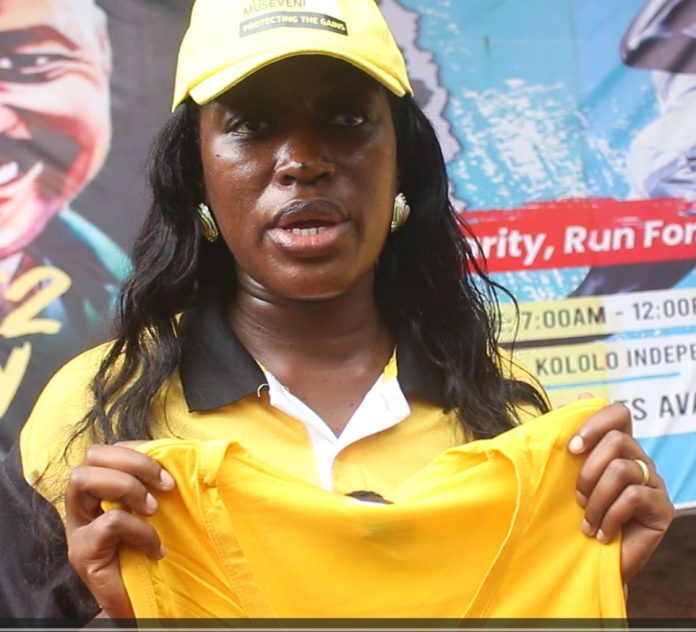
KAMPALA, April 26, 2026 — A massive crowd turned up at Kololo Independence Grounds on Sunday as thousands participated in the 52nd birthday run of Muhoozi Kainerugaba, underscoring the growing scale and influence of the annual event.
The run, held under the theme ā€œRun for Charity, Run for Hope,ā€ brought together a wide range of participants, including political figures, security personnel, youth leaders, and ordinary citizens. The atmosphere was high-energy, with music, coordinated warm-ups, and branded merchandise adding to the spectacle.
Organised by the Patriotic League of Uganda, the event is part of broader nationwide activities celebrating Gen. Muhoozi’s birthday. Funds raised from the run are expected to support charitable causes, particularly initiatives targeting vulnerable children and underprivileged communities.
This year’s edition saw intensified mobilisation efforts across the country, contributing to the significant turnout witnessed at Kololo. Analysts say the event is increasingly taking on a dual role — both as a charity drive and a platform for social and political visibility.
Gen. Muhoozi took part in the run alongside supporters, drawing cheers from participants as he joined different groups along the route. His presence added momentum to an event that continues to blend public engagement with philanthropy.
Security and traffic were tightly managed around Kololo, with authorities implementing earlier advisories to ensure order during the high-profile gathering.
As the crowds dispersed, the 2026 birthday run further cemented its status as one of Kampala’s largest annual public events, reflecting its expanding reach and significance beyond a celebratory occasion.

Stories Continues after ad