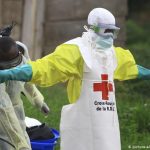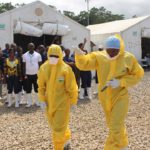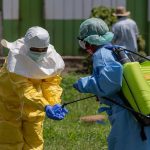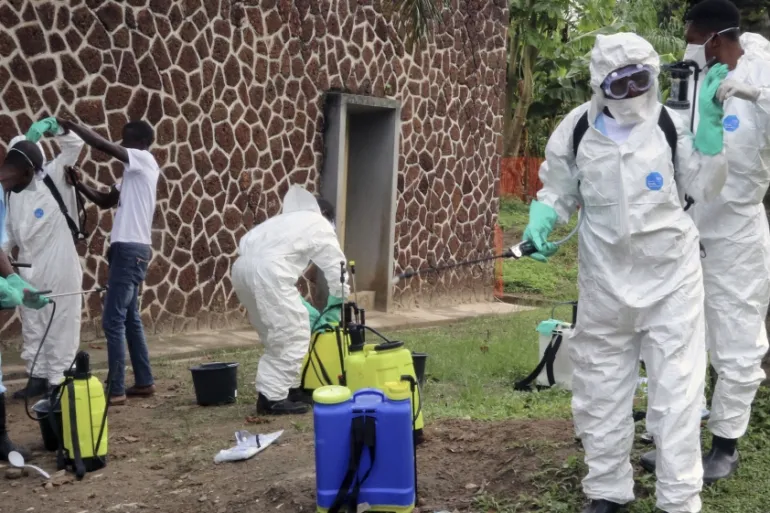
The Ministry of Health has cautioned Ugandans to remain vigilant following a fresh Ebola outbreak in eastern Democratic Republic of Congo (DRC), where health authorities have confirmed new infections and dozens of suspected deaths near the Ugandan border.
According to the Africa Centres for Disease Control and Prevention (Africa CDC), at least 13 Ebola cases have so far been confirmed in Ituri Province, particularly in the gold-mining towns of Mongwalu and Rwampara, while about 65 deaths are suspected to be linked to the outbreak.

The outbreak has raised concern across the region because of frequent cross-border movements between the DRC, Uganda and South Sudan.
Speaking on the situation, Health Minister Jane Ruth Aceng assured the public that Uganda has built a strong disease surveillance and emergency response system capable of quickly identifying and containing outbreaks before they spread widely.
“We have built up a very strong system of identification, detection and response to these outbreaks, and the system starts from the grassroots and moves up to the central region,” Aceng said.

The minister explained that Uganda’s response network begins at village level through community health extension workers and Village Health Teams (VHTs), who have been trained to detect and report unusual illnesses within communities.
“At the grassroots level, we have our community health extension workers and the VHTs who have been trained not only to offer services door to door, but also to act as surveillance officers,” she noted.
According to Aceng, the surveillance officers are trained to monitor both known diseases and any unusual health occurrences that may signal the beginning of a dangerous outbreak.
“In their work as surveillance officers, they don’t only attend to diseases that we know. They actually carry out surveillance to detect any unusual occurrence and report through an electronic system called the e-Community Health Information System,” she said.
She added that once information is submitted through the electronic reporting system, it is immediately transmitted to emergency operation centres located across all the country’s 18 health regions, allowing authorities to respond in real time.
“This information is relayed directly to our emergency operation centres that are in every region of the country. That makes it 18 regions. So we pick up this information, and we are able to respond in real time, and that is our strength of responding to outbreaks,” Aceng explained.
The minister acknowledged that Uganda remains vulnerable to infectious disease outbreaks because of its geographical location within the Congo Basin region and climatic conditions that favour the emergence and spread of some viruses.
“First of all, we are in an area people refer to as the Congo Basin, but also our climate is quite good. It favors some of these outbreaks that occur from time to time,” she said.
Africa CDC on Friday officially declared the outbreak in Ituri Province and warned that the situation poses a high risk of regional spread because of population movement and commercial activities around mining centres.
The continental health body revealed that approximately 246 cases and 65 deaths have been recorded so far, although only a portion of the cases have been laboratory confirmed.
Preliminary tests conducted by the Institut National de Recherche Biomédicale (INRB) in Kinshasa detected the Ebola virus in 13 out of 20 samples analyzed after consultations with the DRC Ministry of Health and the National Public Institute.
Additional suspected infections have also been reported in Bunia, the provincial capital of Ituri, with laboratory investigations still ongoing.
Africa CDC Executive Director Jean Kaseya warned that significant movement of people between affected areas and neighbouring countries makes regional coordination critical.
Emergency coordination talks involving the DRC, Uganda, South Sudan, the World Health Organization (WHO), and other international partners are currently underway to strengthen cross-border surveillance, preparedness and response efforts.
Ebola is a severe viral disease spread through direct contact with infected bodily fluids or contaminated surfaces. The disease was first discovered in 1976 in what is now the DRC and is believed to originate from bats.
Symptoms include fever, muscle pain, fatigue, vomiting, diarrhea, sore throat, skin rashes, bleeding and organ failure. According to the WHO, Ebola has an average fatality rate of around 50 percent.
Uganda previously battled an Ebola outbreak in 2025, which was eventually contained after months of aggressive surveillance, isolation measures, contact tracing and public health mobilization.
Health authorities are now urging members of the public, especially those in border districts, to report unusual illnesses immediately and avoid unnecessary contact with suspected cases as monitoring efforts intensify across the country.