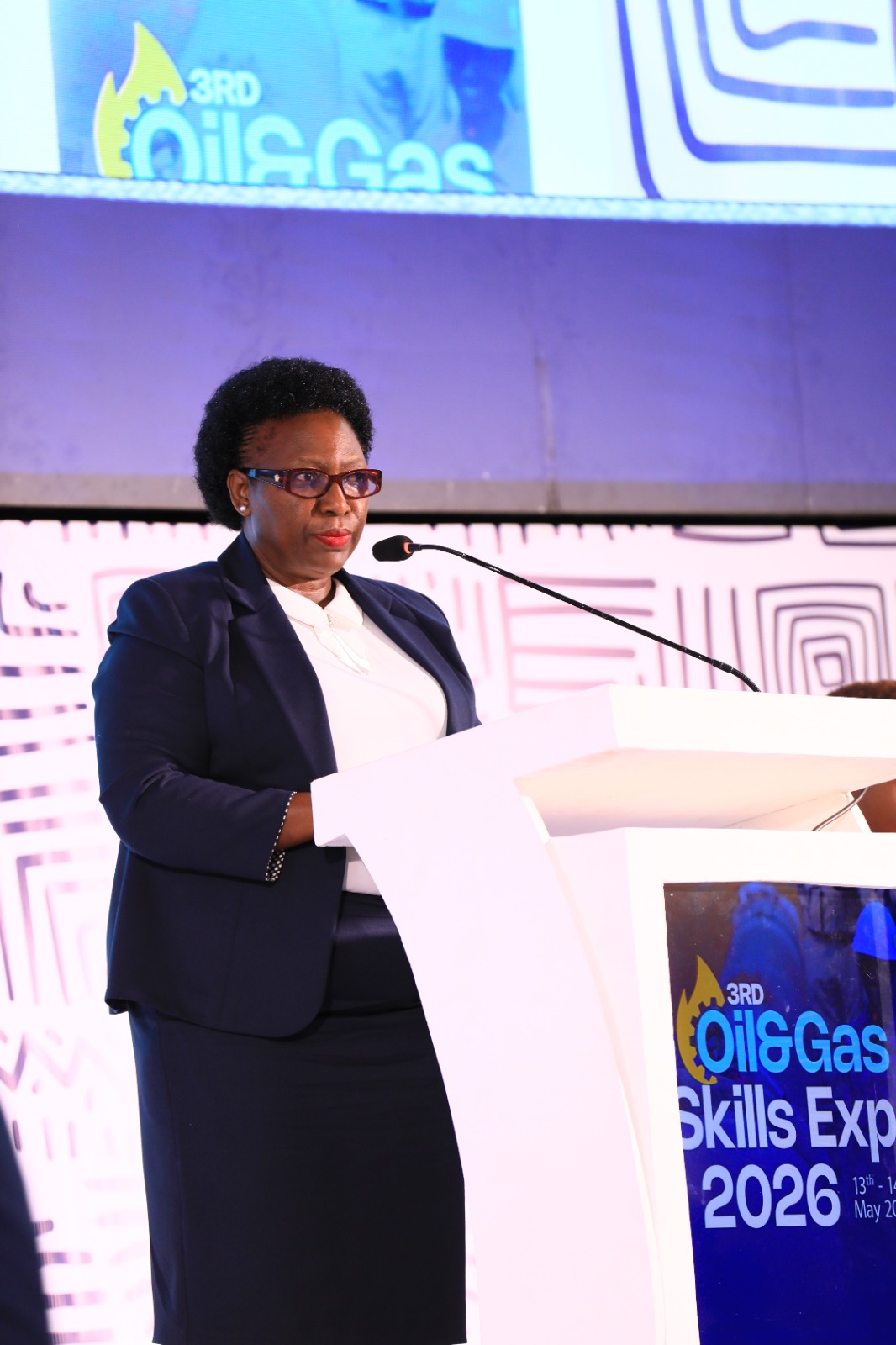
Uganda’s oil and gas sector is steadily positioning itself as a major catalyst for national development as it is already creating thousands of jobs, attracting billions of dollars in investment and equipping Ugandans with skills capable of transforming the wider economy.
This was revealed during the opening of the 3rd Annual Oil and Gas Skills Expo 2026 at Makerere University, where government leaders, petroleum industry players, development partners, students and academia gathered to discuss workforce readiness and sustainable growth in the country’s petroleum sector.

The two day expo was held under the theme, “From Oil and Gas to the Wider Economy: Transferable Skills Driving Sustainable Growth.”
Representing Energy Minister Ruth Nankabirwa, Under Secretary at the Ministry of Energy and Mineral Development Grace Tusiime said Uganda’s petroleum industry was no longer just about oil extraction, but had become a foundation for industrialisation, innovation and economic transformation.
“Uganda’s oil and gas sector is steadily becoming a key driver of national transformation, creating jobs, building skills and unlocking opportunities across multiple sectors of the economy,” Tusiime said.

She noted that government was strategically leveraging petroleum resources to accelerate industrial growth, enterprise development and long term socio economic progress.
According to the minister’s message, Uganda’s petroleum sector has attracted more than 15 billion United States dollars in investment since the Final Investment Decision was announced in 2022.
The investments, estimated at approximately Shs75 trillion, have stimulated growth in construction, transport, information technology, manufacturing, agriculture, financial services, hospitality and education.
“The oil and gas sector is creating opportunities beyond petroleum production. The skills, infrastructure and investments being developed are supporting wider economic growth across the country,” she said.
Tusiime revealed that more than 21,000 Ugandans are currently employed in the sector, with over 90 percent of the workforce being Ugandan nationals.
She attributed this to government’s national content policy, which seeks to ensure meaningful participation of citizens in petroleum activities.
The minister also disclosed that more than 14,000 Ugandans have undergone specialised training in areas such as welding, fabrication, engineering, heavy machinery operation, health and safety, logistics and environmental management.
She explained that the skills acquired through the oil and gas sector can easily be transferred to other industries including infrastructure development, renewable energy, transport, mining and manufacturing.
“These are not skills for oil and gas alone. They are skills that can transform Uganda’s broader economy and prepare our young people for global competitiveness,” she said.
Tusiime further reaffirmed government’s commitment to ensuring that petroleum resources contribute to sustainable national development.
She pointed to the recently launched National Petroleum Policy 2025, which prioritises technology transfer, innovation, skills development and stronger collaboration between training institutions and industry players.
The government, she added, is also developing the Local Content Development Fund Bill aimed at establishing a dedicated financing mechanism to support enterprise growth, technology transfer and increased participation of Ugandans in the oil and gas industry.
She urged young people to embrace technical education, professionalism, discipline and innovation in order to benefit from opportunities emerging within the sector.
“Uganda’s energy future requires a skilled workforce that is ready to compete globally and drive national transformation,” she said.
Meanwhile, Executive Director of the Petroleum Authority of Uganda, Ernest Rubondo, said the country’s petroleum industry continues to create transformative opportunities for citizens through employment, industrial growth and skills development.
Rubondo revealed that more than 300 Ugandan professionals have already received international technical training to support major petroleum projects in the country.
He added that by the end of 2025, Uganda’s oil and gas sector had generated nearly 200,000 jobs through direct, indirect and induced employment opportunities.
“The sector is advancing towards commercial production and deliberate efforts are needed to ensure that the skills acquired in oil and gas are transferred to other sectors of the economy to support long term national development,” Rubondo said.
He also highlighted the growing number of Ugandans occupying senior technical and management positions within the petroleum industry, describing it as evidence that national capacity building efforts are beginning to yield results.
The expo continues to serve as a platform for strengthening partnerships between government, academia and the private sector while preparing Ugandans to tap into opportunities emerging from both the petroleum industry and the wider economy.