Stanbic Bank
Stanbic Bank
19.3 C
Kampala
Stanbic Bank
Stanbic Bank
Home Blog Page 127

Rotary Clubs empower vulnerable girls with baking and entrepreneurship skills

Rotary District 9213 Governor Geoffrey Martin Kitakule, presiding over the ceremony.

At least 48 young women from Kampala’s urban slums are set to graduate with life-changing baking and entrepreneurship skills, thanks to a joint initiative by Rotary Clubs in Uganda and The Netherlands.

The training, conducted at Chesire Home, Mpererwe, targeted vulnerable girls, mostly single mothers from communities in Kamwokya, Kazo in Kawempe, Kamwanyi in Luzira, and Acholi Quarters in Kinawataka. According to Uganda’s statistics, nearly 16 percent of young people are unemployed, with the situation more severe among young women in informal settlements.

To address this challenge, the Rotary Club of Kampala partnered with the Rotary Club of Kitante, the Rotaract Club of Kampala City and Rotary Vorst of District 1560 in The Netherlands, securing a $41,000 Rotary Foundation Global Grant to fund the two-year empowerment program.

On Friday, August 15, Rotary District 9213 Governor Geoffrey Martin Kitakule will preside over the graduation ceremony, where certificates will be handed to the trainees who have completed a one-month intensive course in pan-baked products.

The curriculum combined both theoretical and practical sessions. Modules covered financial planning, sales forecasting, pricing strategies, marketing, and customer identification, while hands-on training included making and selling popular products such as mandazi, chapati, samosas, doughnuts, and half cakes.

Each graduate will also be eligible for an interest-free start-up loan of up to Shs2 million, repayable within one year. Those who successfully repay will progress to the second phase of the program, acquiring advanced oven-based baking skills, sitting for UVTAB exams, and accessing up to Shs9 million in additional start-up capital. Internships will also be offered at leading bakeries such as Hot Loaf, Karveli, and Katalemwa Bakery.

The training was implemented in partnership with Bake for Life Holland through its Ugandan non-profit branch, BISS, which will continue to mentor and monitor the graduates’ businesses. Local community-based organizations, including Slum Life Survival in Kazo, Single Mothers Club in Luzira, and Kamwokya Christian Caring Community, played a key role in identifying the beneficiaries.

“Rotary’s mission is not only to uplift individuals from poverty but to transform them into job creators and entrepreneurs,” said officials involved in the project.

Globally, Rotary brings together over 1.4 million members across 46,000 clubs in more than 200 countries, working to tackle pressing humanitarian challenges, from promoting peace and education to fighting poverty and disease.

This latest project demonstrates Rotary’s growing focus on economic empowerment, with hopes that the young women will inspire others in their communities to break free from cycles of poverty and unemployment.

Stories Continues after ad

Speke Resort Munyonyo welcomes Indian spiritual leader Bageshwar Dham Sarkar for a luxurious stay

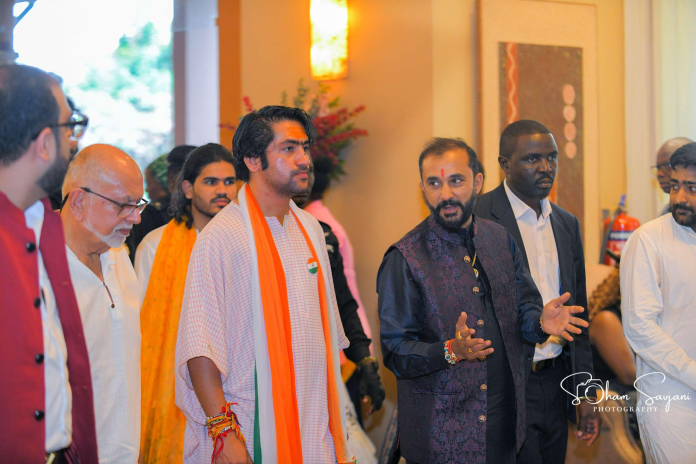
Uganda tycoon Sudhir Ruparelia welcomes Bageshwar Dham Sarkar, Shri Dhirendra Krishna Shastri, the revered Peethadhishwar of Bageshwar Dham in Madhya Pradesh, India at the Commonwealth Resort Munyonyo.

Speke Resort Munyonyo, Uganda’s premier luxury destination, has rolled out its signature red-carpet hospitality for Bageshwar Dham Sarkar, Shri Dhirendra Krishna Shastri, the revered Peethadhishwar of Bageshwar Dham in Madhya Pradesh, India, who is in the country for a special staycation.

The spiritual leader’s visit marks yet another milestone in the resort’s tradition of hosting world-renowned figures, blending five-star service with meaningful cultural connections.

Upon arrival, Shri Shastri was warmly received by business mogul Sudhir Ruparelia, Chairman of the Ruparelia Group of Companies, under whose portfolio the resort falls.

Renowned as Uganda’s largest and most opulent resort, Speke Resort and Commonwealth Resort Munyonyo offers unmatched elegance and comfort. Accommodation options range from lavish Presidential Suites and private Cottages to stylish Executive and Superior Rooms, all boasting sweeping views of Lake Victoria and the resort’s tropical gardens.

The resort is famed for hosting high-profile international summits, heads of state, and prestigious events, featuring East and Central Africa’s largest conference facilities. Guests enjoy a full luxury experience, with five gourmet restaurants, two chic bars, 19 fully equipped conference halls, and five outdoor venues ideal for weddings, business retreats, and grand celebrations.

During his stay, Shri Shastri is expected to engage in cultural exchange, moments of spiritual reflection, and enjoy the signature hospitality that has made Speke Resort Munyonyo a jewel in Uganda’s tourism crown.

Stories Continues after ad

Equity Bank expands Tupange Business Forum to boost SME growth nationwide

Tupange Equity Business Forum with a vibrant gathering of over 500 small and medium enterprise (SME) leaders at Hotel Africana on Wednesday.

Equity Bank Uganda launched the 2025 edition of its flagship Tupange Equity Business Forum with a vibrant gathering of over 500 small and medium enterprise (SME) leaders at Hotel Africana on Wednesday. Now in its second year, the initiative is extending its reach beyond Kampala to Mbale, Arua, Hoima, and Fort Portal, taking vital financial and business development support directly to entrepreneurs across the country.

The forum offers SMEs more than just access to credit. Participants benefit from mentorship, business advisory services, market linkages, and financing solutions designed to boost competitiveness. Equity Bank Uganda’s Head of SME, Olivia Mugaba, praised branch managers for their role in mobilising participants and reminded attendees that SMEs generate seven out of every ten new jobs in Uganda. She reaffirmed the bank’s commitment to supporting its growth through integrated value chain financing.

Executive Director Claver Serumaga unveiled a suite of innovations tailored for SMEs—from agent banking and point-of-sale services to ERP-integrated internet banking, real-time supplier financing, and unsecured loans of up to Shs1.5 billion. He also announced the upcoming Pay with Equity platform, set to streamline daily transactions for business owners.

“Our mission is to transform lives, provide dignity, and create wealth opportunities,” Serumaga told the audience.

“Every service we provide must help SMEs succeed. If we’re not enabling transformation, we’re not meeting our purpose.” He highlighted the importance of youth-focused programs, customised financial packages, and faster guarantees to enable enterprises to grow sustainably.

Dr. Fred Muhunza, Economic Advisor to the President, commended the bank’s integrated value chain approach, noting that financing every link from suppliers to buyers builds stronger, more resilient businesses.

Pastor Robert Kayanja, another guest speaker, praised the bank for supporting social enterprises, citing initiatives in Karamoja where Equity Bank has funded tractors and farming projects to combat hunger and improve livelihoods.

One of the highlights of the event was the recognition of outstanding SME clients, including Nuhu Kanyike, Managing Director of Falkan Investments Limited, who received an award for excellence in enterprise growth.

By expanding Tupange Equity Business Forums to more regions, Equity Bank aims to modernise SME operations, enhance efficiency, and strengthen market presence. The approach goes beyond individual businesses, seeking to grow entire ecosystems so that when SMEs thrive, communities thrive alongside them.

With its mix of financial innovation, hands-on support, and national outreach, Equity Bank Uganda is positioning itself not just as a lender, but as a long-term partner in building resilient, future-ready enterprises that will power Uganda’s economic growth.

Stories Continues after ad

Gov’t secures Shs534.9b loan to upgrade Lusalira–Nkonge–Lumegere–Ssembabule road

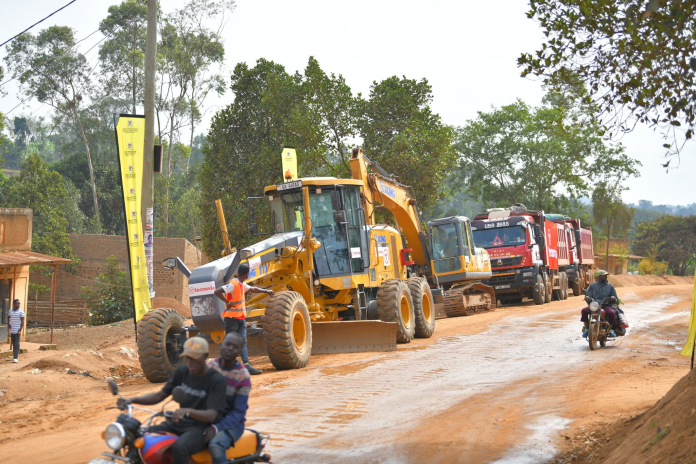
Contractor on theLusalira–Nkonge–Lumegere–Ssembabule Road.

The Government of Uganda has signed a financing agreement to upgrade the 97-kilometer Lusalira–Nkonge–Lumegere–Ssembabule Road (Package 4) from gravel to a Class II bitumen standard, significantly enhancing regional connectivity and economic integration. The project is valued at approximately Shs534.9 billion ($147 million / EUR 126.44 million), exclusive of VAT.

Under the arrangement, Citibank Uganda serves as the Mandated Lead Arranger, contributing Shs479.8 billion ($132 million), while the Government of Uganda will provide Shs55.11 billion ($15.1 million) in equity and cover applicable taxes. Additional financing will be supported by Absa Bank (Mauritius) Limited, the Development Bank of Southern Africa, and African Trade and Investment Development Insurance.

The works will be undertaken by Tecnovia Group, a joint venture between Tecnovia S.A. of Portugal and Tecnovia Angola, with oversight by the Uganda National Roads Authority. Construction is expected to begin in January 2025 and run for 36 months, with completion targeted for the end of 2027 or early 2028. The road will be upgraded to a Class II bitumen surface and will feature shoulders, drainage channels, culverts, and planned grade-separated intersections and underpasses.

The Lusalira–Nkonge–Lumegere–Ssembabule Road begins in Mubende District at Lusalira, passes through Nkonge, Kabamba, and Lumegere, and ends in Sembabule District. It is set to serve as an alternative corridor linking the Northern Corridor routes of Kampala–Masaka–Mbarara and Kampala–Mubende–Fort Portal. The upgrade is expected to reduce vehicle operating costs, cut travel time, and improve access to social and economic services, while stimulating trade and mobility across the Central Region.

Speaking at the signing ceremony, State Minister for Finance (General Duties) Henry Musasizi emphasized the road’s role in boosting local economies and enhancing national connectivity. Minister of Transport and Works Gen Edward Katumba Wamala called for the inclusion of local contractors and urged compliance with Uganda’s local content laws. The loan facility has a 10-year maturity period with a three-year grace period. Interest is pegged to the six-month EURIBOR plus five percent, with a 2.25 percent insurance premium, bringing the effective rate to approximately 9.08 percent. Additional charges include a 1.75 percent commitment fee, a 1.4 percent arrangement fee, and an annual agency fee of EUR 15,000.

By modernising this strategic 97-kilometer route, the government aims to strengthen economic resilience, improve regional integration, and open up new opportunities for communities along the corridor. The government says the project is part of a wider strategy to transform the country’s road network into a reliable enabler of trade, investment, and socio-economic growth.

Stories Continues after ad

First Lady reopens renovated Mary Stuart Hall at Makerere University after Shs10.5b upgrade

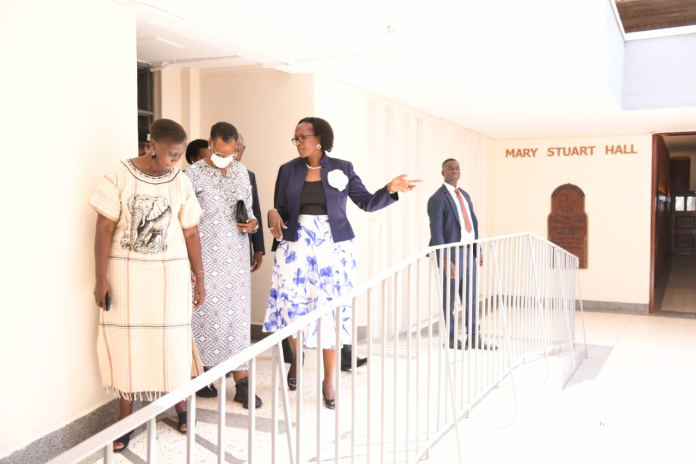
First Lady and Minister of Education and Sports, Janet Museveni, is being shown around the renovated Mary Stuart Hall.

Makerere University’s iconic Mary Stuart Hall has been officially reopened after a Shs10.5 billion facelift, in a ceremony presided over by the First Lady and Minister of Education and Sports, Janet Kataaha Museveni. The First Lady hailed the renovation as proof of the NRM Government’s commitment to creating conducive learning environments in higher institutions.

Janet Museveni recalled touring the university’s halls of residence during the #COVID-19 lockdown and being deeply concerned about their poor condition. She thanked God and the Ministry of Finance for prioritising the funding and praised the National Enterprise Corporation (NEC) for completing the work on time and to a high standard.

The upgrade, she said, is part of a wider plan to modernise all halls of residence at Makerere and other public universities. She urged students to maintain the facility with discipline, good character, and wise financial habits, while embracing moral guidance through programs such as the Emerging Leaders Program, which promotes the SAFE framework — Sober, Addiction-Free, Financially Faithful, and Education-Focused.

Vice Chancellor Prof. Barnabas Nawangwe described the reopening as a momentous occasion for Uganda’s oldest and largest female students’ hall, named after Mary Stuart, wife of Uganda’s first Anglican Archbishop and a champion of women’s admission to Makerere.

Before renovation, he said, the hall had a lift that had not worked in 50 years, leaking roofs, and poorly lit corridors. NEC’s year-long renovation included a modern lift, improved lighting, upgraded pantries, new washrooms and laundry facilities, a reading room, and a senior common room. NEC has also pledged to install solar lighting and landscape the grounds.

Prof. Nawangwe thanked President Yoweri Museveni for directing the renovations and announced plans to refurbish Complex Hall for Girls once funds are released.

University Council Chairperson Mrs. Lorna Magara hailed the reopening as a milestone in Makerere’s infrastructure transformation under the First Lady’s nine years of stewardship. She highlighted a 116% increase in staff salary allocations, a 132% rise in the development budget, and the introduction of Shs20 billion in annual research funding. Mary Stuart Hall’s capacity has risen from 376 to 512 female students, contributing to a total of 1,357 on-campus spaces for women.

However, she noted that the university still accommodates only 13% of its 30,000 students, many of whom rent in areas that may not meet safety standards, and called on the government to prioritise more student housing.

Both the First Lady and university leaders urged students to take pride in the refurbished hall and safeguard it for future generations, describing it as more than a building — a symbol of progress, resilience, and the transformative power of education.

Stories Continues after ad

Climate Resilience must not displace the poor: A call for just urban adaptation in Kampala

Mr. Deus Mukalazi

By Deus Mukalazi

Board Chair, UBUNTALISM GLOBAL, a member of the MUNGAANO INITIATIVE FOR CLIMATE JUSTICE

Kampala faces an uncertain climate future. Like the rest of the world, Kampala is experiencing climate change, mostly with increased temperatures and more intense rainy seasons, which are less predictable and more erratic, leading to flooding and food insecurity. The recorded temperature has increased by 1.50 °C over the last 50 years. Although the amount of rain hasn’t changed much, it now comes at more unpredictable times. This makes the urgency to build climate climate-resilient city necessary. A Kampala Climate Change Action Strategy was put in place in 2019. City authorities, donors, and planners are investing heavily in infrastructure upgrades—stormwater drainage systems, roads, and greening projects—meant to help the city cope with these pressures. But while these efforts are necessary, they have also created a new crisis: the forced displacement and marginalization of the urban poor.

Across informal settlements in Kampala—such as Bwaise, Katanga, Kinawataka, Lubigi, and Kisenyi—residents are increasingly living in fear of eviction. The very communities that have long been excluded from formal housing, water, and sanitation services are now being blamed for occupying wetlands and flood-prone areas. Under the guise of climate adaptation and environmental protection, entire neighborhoods are being cleared, often without compensation, relocation, or a meaningful chance to be heard. In the rush to make Kampala “climate smart,” justice is being left behind.

Climate risks in Kampala do not affect everyone equally. Informal settlements, which house over 60% of the city’s population, are often built on marginal lands such as wetlands, steep slopes, or floodplains. These areas were not chosen out of preference but out of necessity. They reflect decades of neglect in housing policy, rising land values in central areas, and a failure to provide affordable alternatives for low-income earners.

When floods hit, these communities suffer the worst losses—destroyed homes, waterborne disease outbreaks, disruption of livelihoods, and death. Yet when adaptation projects are planned, these same communities are often treated as the problem rather than partners in the solution.

True climate resilience requires acknowledging this imbalance and addressing it, not reinforcing it. It is not enough to build bigger drainage channels or expand roads if doing so leaves the most vulnerable even worse off than before.

One of Kampala’s flagship climate actions is wetland restoration. Wetlands are vital ecosystems that regulate floods, purify water, and store carbon. However, the implementation of wetland recovery projects in urban areas has largely targeted settlements of the urban poor, not the factories, upscale homes, or commercial developments that have also encroached on wetlands—sometimes with tacit approval or licenses.

This selective enforcement raises critical questions. Why are evictions more common in low-income settlements than in commercial zones? Why are ordinary citizens penalized for settling in places where the state failed to provide alternatives? And why is there no serious effort to integrate housing, livelihoods, and climate adaptation into a single, coherent urban plan? The answer lies in the lack of climate justice framing in Kampala’s urban adaptation strategies.

Adaptation without justice is no adaptation at all.Adaptation, by its very definition, should enhance the ability of communities to cope with climate shocks—not expose them to new vulnerabilities. If building a storm drain means displacing hundreds without compensation, it is not resilience—it is injustice disguised as progress.

Just urban adaptation must be guided by the principle of “not harm.” This includes: securing land for vulnerable residents, especially those with long histories of informal occupancy, meaningful participation in planning processes, where communities help shape the projects that affect them, equitable compensation and resettlement, not only for physical displacement but also for economic and social disruption and integration of nature-based solutions with inclusive urban design—like retaining wetlands while upgrading housing in adjacent communities. Without these safeguards, adaptation becomes yet another driver of inequality and exclusion.

Cities around the world are demonstrating how climate resilience can be built with, not against, the poor. In Durban, South Africa, informal settlements have been integrated into flood management plans through co-designed infrastructure and participatory mapping. In Nairobi’s Mukuru slum, residents developed their climate resilience strategies, which were adopted into the city’s adaptation plan. These approaches are not only more just—they are more effective, because they are rooted in the lived realities of those most affected.

Kampala can do the same. Uganda’s own National Climate Change Policy recognizes the need for socially inclusive adaptation. The Kampala Climate Change Action Strategy also emphasizes equity and citizen engagement. The challenge is translating these principles into practice on the ground. What is needed now is a shift in mindset—from “clearing the poor to save the environment” to “working with the poor to protect both people and nature.” This means investing in informal settlement upgrading, enhancing community-based early warning systems, and ensuring that urban infrastructure is designed to serve everyone—not just the privileged.

Climate change will reshape Kampala in profound ways. But the question is: will we allow it to deepen injustice, or will we use it as an opportunity to build a fairer, more resilient city? Urban adaptation must not be reduced to engineering projects and technical blueprints. It must be a democratic process that centers the voices, needs, and rights of all city residents—especially the poorest.

The floods that engulf Kampala’s slums are not just the result of climate change. They are also the outcome of policy choices, governance failures, and social neglect. If we want a resilient Kampala, we must first build a just Kampala. Let us not solve one crisis by creating another. Climate resilience must never come at the cost of human dignity, inclusion, or justice.

Stories Continues after ad

Tycoon Sudhir unveils iconic 19-storey Pearl Tower One in Kampala

East African mogul Sudhir Ruparelia has officially unveiled Pearl Tower One, an iconic new 19-storey Grade-A office tower marking the inaugural phase of the sprawling Pearl Business Park.

Located at the intersection of Yusuf Lule and Old Kiira Roads, this architectural marvel features 16 floors of premium office space, spanning approximately 24,000 square metres of lettable area, supported by three secure basement parking levels with capacity for over 360 vehicles, though some reports estimate parking for over 1,000 vehicles.

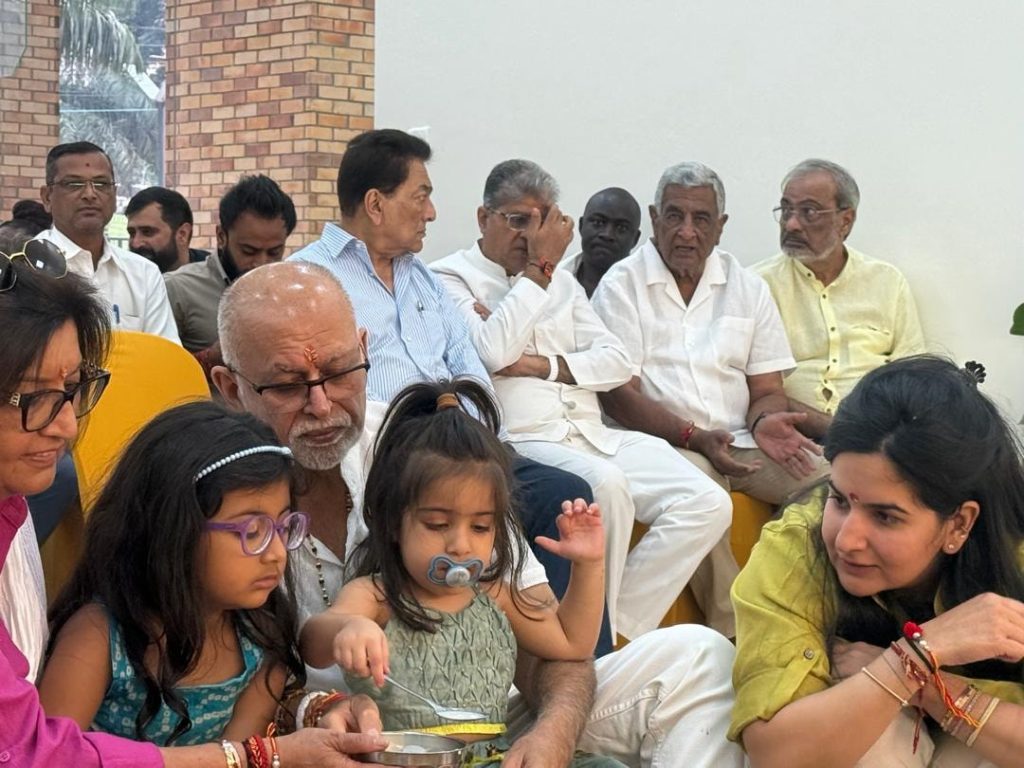
City Tycoon Sudhir, Wife Jyostna, Daughter Sheena and grandchildren are joined by family friends at the unveiling of the new building on Monday August 11, 2025.

Its distinctive combination of brick and glass façade and modern lines now stands as a visible landmark across central Kampala

Pearl Tower One is a bold statement of Sudhir’s confidence in Uganda’s economic future.

It reflects his commitment to creating world-class infrastructure that supports business growth and urban transformation.

The structure boasts world-class amenities designed to meet the demands of modern enterprises: energy-efficient lighting and ventilation, high-speed dual-fibre internet, automated fire detection and sprinkler systems, 24/7 security with over 170 CCTV cameras, reliable power backup via three-phase Umeme supply supported by a multi-day generator backup, and consistent water provision through underground and rooftop storage tanks.

As the first of an impressive 10-tower master plan within the 18–20 acre Pearl Business Park, the project paves the way for an integrated commercial ecosystem featuring a five-star hotel, modern shopping mall, hospital, and landscaped open spaces, effectively creating a “city within a city” in Kampala’s heart.

Strategically positioned near the Central Business District, Mulago Hospital, Makerere University, banking hubs, government institutions, and luxury hotels, the tower’s accessibility via both private and public transport routes makes it an ideal address for embassies, multinationals, startups, and growing enterprises.

Leasing is now open, with businesses already showing interest in securing space in this prime location ahead of its official opening.

Pearl Tower One is more than a building; it’s a grand manifestation of vision, innovation, and investment. It underscores Uganda’s leap into modernity while honoring the enduring legacy of the entrepreneurial spirit. To the Ruparelia family: your perseverance continues to elevate our nation. We cherish the memory of Rajiv Ruparelia, whose spirit remains a guiding light for us all.

Stories Continues after ad

128 Equity scholars secure Shs85b in scholarships to join top global universities

EPL students to fly to different Universities.

A total of 128 scholars under the Equity Leaders Program (ELP) have secured fully funded scholarships worth Ksh2.79 billion (approximately $21.6 million) to study at 62 prestigious universities across 19 countries and five continents. The cohort includes 87 students from Kenya, 33 from Rwanda, four from Uganda, and four from the Democratic Republic of Congo.

Equity Group Foundation Executive Chairman, Dr. James Mwangi, officially commissioned the scholars’ airlift, each receiving up to Ksh200,000 to facilitate their transition to their respective institutions. Sixteen of the scholars will join Ivy League universities, including Harvard, Princeton, Columbia, and the University of Pennsylvania.

Speaking at the commissioning ceremony, Dr. Mwangi said the ELP was designed not just to educate, but to transform the continent’s future.

“The Equity Leaders Program is both an investment in Africa’s future innovators and a catalyst for the continent’s transformation,” he said.

He added, “Return with a spirit of innovation, a commitment to building a more prosperous and equitable Africa, and the knowledge, skills, and networks to drive economic growth, promote social progress, and build a brighter future for generations to come.”

Among the Ugandan scholars is Garvin Alimu, headed to Harvard University to study Engineering. He reflected on a journey marked by persistence:

“The journey to realizing my dream has been filled with risks, sacrifices, and challenges that at times felt insurmountable. I started my education in a little-known school in Nansana, but worked hard and joined King’s College Budo, where I scored 20 points. But excelling in Uganda is one thing and sitting for a USA essay exam is another altogether,” Alimu said.

Alimu added, “Equity bank staff prepared me for four straight months. This opportunity is not just for me; it’s for the collective good of our communities.”

Claire Nsaba from Kisoro District, who will join New York University’s Abu Dhabi campus to study Environmental Engineering, shared a similar message of perseverance:

“When I received the scholarship, I saw hope for my future and my family’s. Facing rejections from some universities was disheartening, but mentorship from Equity taught me that rejection can redirect you to something better,” she said.

She added, “Applying to New York University was my last attempt, and it worked. Proof that persistence and faith can open doors you never imagined.”

Dr. Mwangi urged the scholars to use their time abroad as an opportunity for growth beyond academics.

“See your time abroad as more than just an academic pursuit—it is a profound global opportunity for personal growth. Let accountability and integrity be your compass. Use your skills, knowledge, and global exposure to become solution-oriented leaders, bridge cultures, and inspire others to dream bigger,” he advised.

Since its inception in 1998, the ELP has supported 23,825 scholars, with 1,098 earning admission to top global institutions on full scholarships. Launched in Uganda in 2022, the program has already admitted 419 scholars, 13 of whom are currently studying abroad.

The program’s holistic approach—blending academic excellence, leadership training, mentorship, and global exposure—aims to equip Africa’s brightest young minds with the tools to drive sustainable economic growth and tackle the continent’s most pressing challenges.

Stories Continues after ad
BoU holds Central Bank Rate steady at 9.75% amid global uncertainties

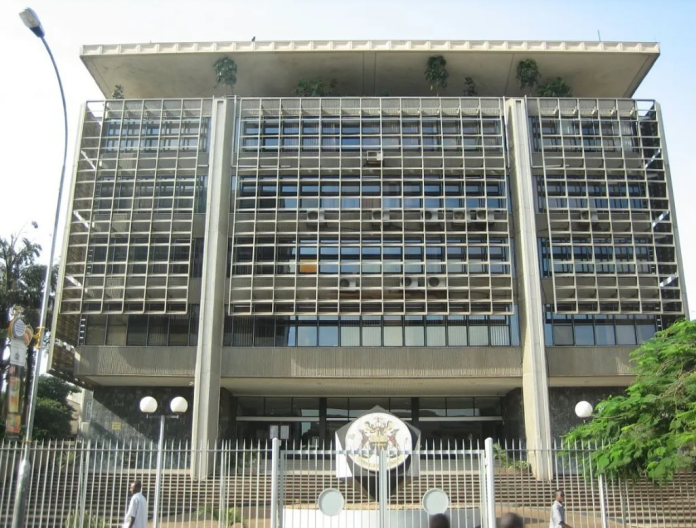
Bank of Uganda.

The Bank of Uganda’s Monetary Policy Committee (MPC) has opted to maintain the Central Bank Rate (CBR) at 9.75%, signaling a cautious yet confident approach to navigating ongoing global economic volatility and geopolitical tensions.

The decision, announced on Tuesday, underscores the central bank’s balancing act of controlling inflation while fostering economic growth and socio-economic transformation.

The fiscal year 2024/25 showcased Uganda’s macroeconomic resilience, buoyed by strong coordination between monetary and fiscal policies. This partnership helped anchor investor confidence and preserve economic stability despite a challenging external environment marked by unpredictable commodity markets and geopolitical frictions.

Inflation remained well within manageable limits, with annual headline inflation averaging 3.4% and core inflation at 3.9%, both comfortably below the medium-term target of 5%. July 2025 figures indicated a modest easing, as headline inflation declined to 3.8%, supported by lower prices in food crops and services.

Uganda’s economy expanded by an estimated 6.3% in the past fiscal year, a slight improvement over the 6.1% growth recorded in FY2023/24. Key drivers of this growth include stable inflation rates, a steady exchange rate, and strategic government investments in infrastructure and the extractive industries.

Looking ahead to FY2025/26, the Bank of Uganda projects real GDP growth between 6.0% and 6.5%, buoyed by prudent monetary policy, rising agricultural production, and increased capital inflows into mining and oil sectors. Inflation is expected to edge closer to the 5% target, with core inflation forecasted between 4.5% and 4.8%, supported by a stable exchange rate, improved food availability, and favorable global oil prices.

However, the MPC cautioned that inflationary risks remain. A stronger Ugandan shilling and subdued domestic demand could exert downward pressure on prices, whereas potential exchange rate depreciation, rising import costs, and expansive fiscal spending pose upside inflation risks. The committee emphasized the need for vigilance to manage these dynamics effectively.

Alongside maintaining the CBR at 9.75%, the rediscount rate remains at 12.75% and the bank rate at 13.75%. The MPC indicated that future rate adjustments will be data-driven, responding to evolving economic indicators and external shocks. The current policy stance reflects a “cautious approach” aimed at sustaining economic momentum while safeguarding against inflationary shocks amid uncertain global conditions.

Market analysts view the MPC’s decision as prudent, reflecting a commitment to stability amid external risks such as fluctuating commodity prices and geopolitical unrest in key trading partners. Investors have welcomed the steady rate environment, which provides a predictable monetary landscape conducive to long-term planning and investment.

By maintaining the Central Bank Rate at 9.75%, the Bank of Uganda signals confidence in its current monetary policy framework to balance inflation control with growth stimulation. As the global economy continues to face uncertainty, Uganda’s focus on prudent fiscal and monetary coordination, infrastructure investment, and targeted sectoral support will be critical in sustaining economic resilience and achieving development goals in the coming years.

Stories Continues after ad

Kiwis Deserve Safe Gambling That Gives Back

The Government’s new Online Casino Gambling Bill, currently under Select Committee review, is a step in the right direction toward creating a safer, fairer, and more transparent gambling environment for New Zealanders. As the country’s leading source of information on legal online gambling, we at PlayCasino.co.nz support the push to regulate offshore operators and introduce licensing, age checks, harm minimisation measures, and tax contributions.

But we believe the bill has a serious flaw: it makes no provision for the ongoing funding of community sport, which currently receives over NZ$170 million annually from gaming machine grants.

This gap in the legislation threatens the very fabric of Kiwi sport — the local clubs, youth teams, and community programmes that rely on consistent, ring-fenced funding from gambling grants. If licensed online operators are going to take market share away from the current retail sector, then it is only fair and responsible that they contribute back to the communities they serve.

We Believe in Smart Regulation That Gives Back

The bill includes strong proposals for reducing harm, enforcing local oversight, and holding operators accountable. That’s excellent — and long overdue.

But regulation is not just about minimising harm. It’s also about maximising benefit. And right now, community sport stands to lose big.

As Martin Snedden, Chair of Cycling New Zealand, rightly put it:

“Sport has thrived for decades off the back of community gambling grants. It all goes to clubs, not professional sport.”

We couldn’t agree more. If these new offshore casinos are to be welcomed into our regulatory framework, then they must be required to support the public good, just like the domestic gaming trusts they’ll be replacing.

Public Submissions Close 17 August – Let’s Make Our Voices Heard

This is not a done deal. The bill is still under Select Committee review, and the Government is accepting public submissions until 17 August. That means every New Zealander has a chance to weigh in and help shape the future of online gambling in Aotearoa.

We’re calling on our readers, our fellow players, sports lovers, parents, club organisers — everyone who cares about keeping our communities strong — to speak up.

We’ll be publishing a simple guide to help you make a submission quickly and easily. The more people who raise this issue, the harder it will be for lawmakers to ignore.

How We See It: Four Principles for a Better Gambling Bill

  1. Safer Gambling for Players
    We fully support age verification, harm prevention, and enforcement of responsible gambling standards.
  2. Legal Options for Kiwis
    Licensing offshore operators gives Kiwis safe, controlled alternatives to the black-market casinos they’re already using.
  3. Fair Play for Communities
    If operators are earning revenue from Kiwi players, they must return some of it to the grassroots clubs that hold our communities together.
  4. Transparency for All
    Licensing is meaningless unless it comes with clear rules — and clear benefits — for the whole country.

We want the Online Casino Gambling Bill to succeed. We want safer play. But we won’t stay silent while community sport is pushed to the side.

We’ll Only Recommend Licensed, Responsible Operators

Once New Zealand’s online gambling market is regulated, we at PlayCasino.co.nz will only promote and review licensed casinos that meet the highest standards of safety, fairness, and transparency.

But we also want to see those operators contributing back — not just to tax revenue or harm services, but to the clubs and communities that make New Zealand what it is.

 Final Word: Gambling Should Be Safe — and It Should Give Back

This bill is a chance to build a future where gambling works for players and communities, not just for offshore companies.

Let’s not miss that chance.

About PlayCasino.co.nz

PlayCasino.co.nz is New Zealand’s go-to platform for finding safe, legal, and high-quality online casinos. We help players compare casinos, understand payment options, claim free no deposit bonuses responsibly, claim free spins bonus, and stay informed about the latest casino news and regulations.

We’re committed to responsible gambling, local transparency, and promoting only trusted operators — now and after regulation. Find the list below.

#Mobile CasinoWelcome Bonus PackageBonus Code
1SlotBox Casino100% up to $1,000 + 100 Free SpinsN/A
2Grand Rush Casino$4,000 Free + 40 Spins on 7 ChakrasN/A
3Jackpot City Casino100% up to NZ$400 Free Welcome BonusN/A
4Kiwis Treasure Casino50 Free Spins for $1 DepositN/A
5Lucky Dreams Casino100% Bonus Up To $500 + 100 Free SpinsN/A
6Lets Lucky Casino100% Deposit Bonus Up To $1500 N/A
Stories Continues after ad