Stanbic Bank
Stanbic Bank
22.7 C
Kampala
Stanbic Bank
Stanbic Bank
Home Blog Page 13

Kenya’s Ruto congratulates Museveni on re-election, pledges stronger regional cooperation

Museveni on an official visit and holding bilateral talks with William Ruto last year.

Kenyan President William Samoei Ruto has congratulated President Yoweri Kaguta Museveni on his re-election as President of the Republic of Uganda.

He praised the outcome of the January 15, 2026 general elections and reaffirmed Nairobi’s commitment to deepening bilateral ties with Kampala.

In a formal message dated January 18, President Ruto conveyed warm congratulations on behalf of the Government and people of Kenya, as well as in his personal capacity, following the official pronouncement of the election results on January 17.

“Following the formal pronouncement of your re-election as the President of the Republic of Uganda, I convey, on behalf of the Government and people of the Republic of Kenya and my own behalf, my warm congratulations and best wishes to Your Excellency and to the great people of Uganda,” the message reads.

President Ruto described Museveni’s victory as decisive, saying it reflected the confidence Ugandans have in his leadership and in the ruling National Resistance Movement (NRM) party.

“Your decisive victory at the just concluded competitive General Election reflects the trust that the people of the Republic of Uganda have in your personal leadership and the confidence enjoyed by the NRM party,” he said.

The Kenyan leader added that Museveni’s re-election would reinvigorate efforts to accelerate Uganda’s socio-economic transformation.

“I am certain your re-election reinvigorates Your Excellency’s resolve to accelerate the transformation of your country,” Ruto noted.

President Ruto also commended Uganda for conducting a peaceful election, describing the process as a sign of growing democratic maturity.

“For undertaking a peaceful election, I sincerely commend the people of Uganda and all stakeholders in the electoral process, which attests to the democratic maturity of Uganda,” he said.

Emphasising the longstanding ties between the two neighbours, Ruto reaffirmed Kenya’s readiness to work closely with Uganda to advance shared regional and continental priorities.

“Our two countries enjoy deep fraternal bonds which will no doubt benefit from your unwavering commitment. I reaffirm the readiness of the Government of the Republic of Kenya to work with Your Excellency to advance our shared priorities for the mutual socio-economic benefit of the citizens of Kenya and Uganda, as well as our region and the continent,” he stated.

President Ruto wished President Museveni success as he begins a new term in office, expressing confidence in continued cooperation between the two countries.

“I wish Your Excellency success and good fortune as you embark on this sacred and high obligation,” the message said.

Stories Continues after ad

70 years of Tycoon Sudhir and how his journey has turned around Uganda’s economy

City tycoon Sudhir Ruparelia hands over a gift to President Yoweri Museveni in appreciation of his services.

As Uganda marked January 17, its most influential private-sector figure, tycoon Sudhir Ruparelia, quietly turned 70. 

Born on January 17, 1956, in Kabatoro, Kasese District, Ruparelia’s rise is often cited as a classic example of resilience and long-term vision. After years abroad, he returned to Uganda in 1985 with modest savings and a determination to invest in a country rebuilding from years of economic turmoil. That decision would later redefine multiple sectors of the Ugandan economy.

Nepal Consul to Uganda Sudhir Ruparelia, serves guests at his office.

His entrepreneurial breakthrough came with the establishment of Crane Forex Bureau in 1989, followed by the founding of Crane Bank in 1995. These ventures laid the groundwork for what would become the Ruparelia Group, now one of the most diversified indigenous conglomerates in the region, with interests spanning real estate, hospitality, education, insurance, floriculture and leisure.

Today, Ruparelia is widely recognised as Uganda’s leading private real estate investor, with more than 50 premium commercial and residential properties in Kampala’s Central Business District alone. 

He is also the country’s number one rental tax contributor, a distinction that underscores the scale of his formal investments and their role in public revenue generation.

City tycoon Sudhir Ruparelia and other guest at last year’s Diwali celebrations.

His footprint in leisure and tourism is equally significant. Flagship facilities such as Speke Resort Munyonyo and Commonwealth Resort Munyonyo have positioned Uganda as a competitive destination for international conferences and high-end tourism. Other properties under his portfolio include Speke Apartments, Paradise Island, Kabira Country Club, Forest Cottages, Dolphin Suites, Tagore Apartments, Kitante Apartments, and several other hospitality and residential developments that have transformed Kampala’s urban landscape.

Beyond property and hospitality, Ruparelia has made notable contributions to education. Through institutions such as Victoria University, Kampala Parents’ School, Kampala International School Uganda and Delhi Public School International, he has played a central role in expanding access to quality education, from primary to university level, for both Ugandans and international students.

Mr. Sudhir presenting his credentials to Foreign Affairs Minister, Sam Kutesa.

In recent years, his influence has extended beyond commerce. Through the Ruparelia Foundation, he has supported initiatives in education, health, youth empowerment and environmental conservation. 

In 2025, these efforts were formally recognised when he received several national honours highlighting his contribution to tourism development, property investment, and conservation.

As tributes continue to flow from business leaders, policymakers and ordinary citizens, Ruparelia is increasingly described not just as a successful tycoon, but as a long-term investor who believed in Uganda when confidence was scarce.

At 70, his story remains closely intertwined with Uganda’s private-sector growth over the past four decades, a reminder of how patient capital, local investment, and institutional building can shape a nation’s economic future.

Stories Continues after ad

UHRC audit of 2026 polls reveals logistical gaps, technology failures and rights concerns

Mariam Wangadya, Chairperson, Uganda Human Rights Commission.

The Uganda Human Rights Commission (UHRC) has released a detailed preliminary assessment of the 2026 General Elections, identifying logistical delays, widespread failures of biometric voter verification technology and notable human rights concerns. 

However, UHRC acknowledged that Ugandans were largely able to exercise their right to vote in a peaceful and secure environment.

In a statement issued on January 18, 2026, UHRC Chairperson Mariam Wangadya said the delivery of polling materials was timely at most polling stations observed across the country. However, significant delays were recorded in Kampala, Wakiso, and Mukono districts, resulting in the late opening of polls at several locations.

“Polling materials were delivered on time at the majority of polling stations observed. However, delays were recorded in Kampala, Wakiso, and Mukono, with some materials arriving as late as 10:00 a.m.,” Wangadya noted, adding that voting at some stations only commenced between 9:00 a.m. and 11:30 a.m.

According to the Electoral Commission, Uganda had 21,649,068 registered voters, of whom 11,366,201 cast ballots in the presidential and parliamentary elections. This translated into a voter turnout of 52.50 percent, a decline of 6.85 percentage points from the 59.35 percent recorded during the 2021 “scientific” elections.

“Higher voter turnout was observed in rural areas compared to urban centres, with particularly low participation recorded in Kampala and Wakiso districts,” the UHRC observed, noting that voters generally arrived as early as 6:30 a.m. and remained calm despite delays in the opening of polls.

The Commission expressed concern over the performance of the Biometric Voter Verification Kits (BVVKs), which were introduced by the Electoral Commission to strengthen transparency and electoral integrity. While each polling station was allocated a primary and backup kit, the UHRC documented widespread technical failures on polling day.

“The BVVKs functioned effectively at only a limited number of polling stations visited,” Wangadya said, citing parts of Kyankwanzi, Buliisa, Karenga, Kaabong, Moroto, Napak and Mbarara as among the few areas where the systems operated as intended.

The UHRC further noted that some polling stations in Yumbe and Wakiso did not receive the biometric kits at all. At about 9:30 a.m., polling officials were directed to revert to the use of the manual National Voters’ Register where the digital systems failed, a move the Commission said ensured that eligible voters were not disenfranchised.

Polling officials were largely commended for professionalism, with the UHRC observing that they clearly explained voting procedures, complied with minimum requirements for opening polls, and effectively communicated guidance received from the Electoral Commission.

Security during polling was described as largely calm nationwide, with regular police patrols around polling stations that did not interfere with the voting process.

“The deployment of multi-agency security personnel was visible and consistent with Article 212 of the Constitution,” Wangadya stated, while cautioning that the presence of armed polling constables in some areas of Kampala, Sembabule and Mbarara highlighted the need for careful calibration of security deployments to safeguard free participation.

Vote counting and tallying were conducted in line with Electoral Commission guidelines, in the presence of candidates’ agents, voters and observers. Although most polling stations closed at 5:00 p.m., counting and declaration of results at some stations extended beyond 8:00 p.m. All candidates’ agents present were issued with copies of the Declaration of Results Forms.

The UHRC also raised red flags over human rights concerns linked to the electoral process, particularly the temporary limitation of public internet access ahead of polling day.

“This partial shutdown limited the right of access to information and freedom of expression and association,” the Commission noted, adding that disruptions to mobile money services disproportionately affected rural communities that rely on mobile money as an alternative to formal banking.

While voting was generally peaceful, the Commission documented incidents of violence at polling stations and tally centres in several districts, with media reports indicating deaths, injuries and arrests linked to election-related disturbances.

On the integrity of the vote, the Electoral Commission reported 11,090,848 valid votes and 275,353 invalid votes, many of which resulted from incorrect or absent marking of ballot papers.

“The number of invalid votes remains high,” the UHRC observed, recalling similarly elevated figures recorded during the 2021 general elections.

The Commission further noted imbalances in the deployment of candidates’ agents, with major political parties widely represented at polling stations, while smaller parties and some parliamentary candidates had minimal or no representation in many areas observed.

In its preliminary recommendations, the UHRC called for comprehensive training and large-scale testing of electoral technologies prior to polling, mandatory allocation of election financing to voter education, and the continued use of manual registers by candidates’ agents where digital verification is unavailable.

“Despite the challenges observed, Ugandans were able to exercise their right to vote in a generally peaceful and secure environment,” Wangadya concluded, adding that the Commission will continue to engage stakeholders and issue further statements as the electoral process unfolds.

Stories Continues after ad

Schools to reopen on February 10, gov’t announces

Dr. Kedrace R. Turyagyenda.

The Ministry of Education and Sports has announced a revised reopening date for all schools and education institutions across Uganda, shifting the start of the 2026 academic year to Tuesday, February 10, 2026.

In an official statement issued on January 16, the Ministry said the change follows the ongoing general elections and is intended to ensure the safety of learners and staff across the country. 

The earlier reopening date of February 2 had been communicated on January 6.

The announcement was signed by the Permanent Secretary, Dr. Kedrace R. Turyagyenda.

“The Ministry hereby informs you that due to the General Elections and to ensure the safety of all learners, all Schools and Education Institutions across the country are directed to reopen on Tuesday 10th February 2026,” the statement reads.

The directive applies to all categories of learning institutions, including government and private primary and secondary schools, international schools, tertiary institutions and universities.

For clarity, the Ministry emphasized that no institution is exempt from the new schedule. 

“For avoidance of doubt, this includes all International Schools, Tertiary Institutions and Universities,” the notice stated.

According to the revised academic calendar, Term One of the 2026 academic year will run from Tuesday, February 10, to Friday, May 1, 2026. School administrators have been instructed to comply with the updated dates strictly.

“All school administrators are directed to adhere firmly to these dates and the approved school calendar published on the Ministry website,” the statement added.

The Ministry has urged vice chancellors, principals, head teachers, parents, guardians and students to take note of the adjustment and plan accordingly. 

Stories Continues after ad

AU Commission chairperson commends Uganda’s Elections, congratulates Museveni on re-election

President Yoweri Museveni.

The Chairperson of the African Union Commission, H.E. Mahmoud Ali Youssouf, has commended the conduct of Uganda’s presidential elections and congratulated President Yoweri Kaguta Museveni on his re-election, following polls held on January 15.

In a statement issued on Saturday, Youssouf hailed the outcome of the vote in which Museveni secured 71.61 percent of the ballots cast, extending his leadership for another five-year term.

“The Chairperson of the African Union Commission commends the conduct of the elections in the Republic of Uganda and congratulates H.E. Yoweri Kaguta Museveni on his re-election as President,” Youssouf said.

He noted that the process reflected the commitment of Ugandans to democratic governance.

He also expressed appreciation to the leadership of the Joint African Union–Common Market for Eastern and Southern Africa (COMESA)–Intergovernmental Authority on Development (IGAD) Election Observation Mission, which monitored the polls across the country.

“The Chairperson expresses his sincere appreciation to H.E. Goodluck Jonathan, former President of the Federal Republic of Nigeria, for his sterling leadership of the Joint AU–COMESA–IGAD Election Observation Mission to Uganda,” the statement read.

Youssouf further reaffirmed the African Union Commission’s commitment to supporting democratic processes and effective governance across the continent, while applauding Ugandans for maintaining peace and stability during the electoral period.

“He reiterates the commitment of the African Union Commission to continue supporting the promotion of democracy and effective governance on the continent, and applauds the people of Uganda for their dedication to consolidating democratic gains, peace, security and development,” he said.

President Museveni was officially declared winner of the presidential race by the Electoral Commission on Saturday after garnering more than 7.9 million votes out of approximately 11.3 million valid ballots cast. 

His closest challenger, National Unity Platform leader Robert Kyagulanyi, popularly known as Bobi Wine, received over 2.7 million votes, with the remaining votes shared among six other candidates.

Announcing the results at the National Tally Centre in Kampala, Electoral Commission Chairperson Simon Byabakama described the polls as generally peaceful and urged any aggrieved parties to seek redress through the courts.

Preliminary findings from the AU observer mission noted that the elections were conducted in a calmer environment compared to the 2021 polls, although observers raised concerns about reported harassment of opposition figures, the suspension of some civil society organisations and an internet shutdown issues the government has previously dismissed.

Museveni’s victory secures him a seventh five-year term, extending his time in power to more than four decades since he first assumed office in 1986.

Stories Continues after ad

Electoral Earthquake: 10 Cabinet Ministers swept out in Uganda’s 2026 parliamentary elections

ARROGANCE: Gender Minister Betty Amongi lost the Lira City Woman slot due to her arrogance. Her desire to take on her fellow Minister Ruth Aceng while abandoning her Oyam South constituency.

Kampala, Uganda – January 18, 2026Uganda’s 2026 general elections have delivered one of the biggest political upheavals in recent history, after ten serving cabinet ministers lost their parliamentary seats in a stunning rejection by voters across the country. The defeats mark a dramatic shift in public sentiment, signaling mounting pressure on the ruling party to refresh its political class.

The most shocking casualty was Beatrice Anywar, the Minister of Water and Environment, who lost Kitgum Municipality to opposition candidate Dennis Onekalit Amere. Anywar, once a political heavyweight both within opposition and later government, failed to mobilize enough support to retain her seat.

Another major loss came from David Bahati, State Minister for Trade, Industry and Cooperatives, who was defeated in Ndorwa West County. Bahati, long considered one of the most influential ministers from the Kigezi region, had already lost the NRM primary and ran as an independent, but still fell short.

In a headline-grabbing contest in Lira City, Betty Amongi, Minister of Gender, Labour and Social Development, was defeated by fellow cabinet member Dr. Jane Ruth Aceng, in what became the only race nationally where two serving ministers battled for a single parliamentary slot.

Government Chief Whip Hamson Obua also lost the Ajuri County contest, despite his national stature and longtime loyalty to the ruling National Resistance Movement. Analysts say his defeat underscores frustrations in northern Uganda over service delivery and youth unemployment.

Other ministers who failed to secure a return to the 12th Parliament include:

Moriku Kaducu, State Minister for Primary Education – defeated in the Moyo District Woman MP race

John Mulimba, State Minister for Foreign Affairs (Regional Affairs) – voted out

Okello Oryem, State Minister for Foreign Affairs (International Affairs) – lost Chua County

Frederick Ngobi Gume, State Minister for Cooperatives – defeated in Bulamogi North West, Kaliro District

Florence Nambozo Wamala, State Minister for Karamoja Affairs – lost Sironko Woman MP seat

Peter Lokeris, Minister for Karamoja Affairs – lost in Chekwii East County

A Public Demand for Change

Voting patterns across the country revealed a clear appetite for renewal, particularly in regions where incumbents had held office for more than a decade. Opposition parties and independents made significant inroads in urban constituencies, while traditional NRM strongholds fractured in several districts.

Political commentators say the wave of losses represents a broader message from the electorate — dissatisfaction with stalled economic progress, local-level governance, and unmet campaign promises.

“This election was a referendum on the performance of both Parliament and Cabinet,” one analyst noted. “Voters wanted new faces, new energy, and fresh leadership.”

Implications for Cabinet and Governance

With so many ministers removed from Parliament, President Yoweri Museveni faces mounting pressure to reorganize and possibly downsize the Cabinet. While Uganda’s constitution allows the President to appoint ministers from outside Parliament, the defeat of senior figures suggests deeper realignments may be inevitable.

NRM insiders privately acknowledge concerns that the party’s internal cohesion could weaken if defeated ministers are retained in government roles, sidelining newly elected MPs eager to participate in Cabinet.

A New-Look Parliament Ahead

As results continue to be certified by the Electoral Commission, one outcome is already clear — Uganda’s 12th Parliament will be younger, more competitive, and considerably less predictable than its predecessor. Several first-time MPs, many under the age of 35, defeated long-serving incumbents.

Whether the public’s demand for change will translate into policy shifts remains an open question, but the electorate has already reshaped Uganda’s political landscape with a clear and unmistakable message: no seat is safe, not even for ministers.

Stories Continues after ad

Uganda orders temporary Internet shutdown ahead of elections

Kampala, Uganda – January 13, 2026-The Uganda Communications Commission (UCC) has announced a nationwide suspension of public internet access and selected mobile services starting at 6:00 pm on Tuesday, January 13, 2026, as the country heads into a tense election period.
Speaking at a press briefing in Kampala, UCC Executive Director Irene Kaggwa Sewankambo (represented at the announcement by a senior commissioner pictured in the circulated notice) said the directive is aimed at maintaining national security and safeguarding the integrity of the electoral process.
According to the statement, the shutdown affects social media platforms, mobile data usage, and several digital communication services deemed likely to disrupt public order. Voice calls and basic SMS services are expected to remain operational, allowing limited communication among citizens.
UCC argued that the temporary blackout is necessary to curb misinformation, incitement and online mobilisation that could interfere with polling activities and post-election safety.
“This temporary suspension is a precautionary intervention to ensure peace, protect national stability and prevent the misuse of communication platforms during a sensitive national exercise,” the Commission noted.
However, the decision has already sparked strong reactions across the country. Civil society groups, opposition leaders and digital rights advocates criticized the shutdown, warning that limiting access to online information undermines transparency and impedes election monitoring.
Businesses dependent on the internet — including mobile money operators, online media and e-commerce firms — also stand to be affected, with some expressing concern over expected financial losses.
Uganda has implemented similar nationwide blackouts during past elections, most notably in 2016 and 2021, drawing international criticism and calls for constitutional reforms on digital freedoms.
The UCC did not specify when the services will be fully restored, only stating that access will return “once the election period has stabilized.”
As polls open nationwide, all eyes remain on the voting process, security agencies and the internet switchboard — now unplugged millions who rely on digital platforms for information, business and daily communication.

Stories Continues after ad

You will collect your Shs40b after Appeal case, Court tells Sudhir in the DFCU battle

In a ruling that favours businessman Sudhir Ruparelia and his company Meera Investments Limited, the High Court has announced that the Shs40 billion claim against dfcu Bank remains live and payable once the appellate process concludes.

The court clarified that it did not dismiss or reject the multi‑billion‑shilling claim filed by Meera Investments relating to restoration and refurbishment costs for properties previously linked to the controversial Crane Bank takeover. Rather, the judge held that enforcement of the claim must wait until dfcu Bank’s appeal is finalised.

The decision confirms that Meera Investments will collect the full amount owed; Shs40 billion after the Court of Appeal determines the outstanding legal issues. This means Sudhir’s substantial claim is still valid and has not been extinguished by the High Court.

Justice Samuel Emokor emphasized that the ruling was procedural and not a ruling against the substantive merits of the claim. Because dfcu Bank has filed an appeal, the High Court said it would be premature to order payment now, as doing so might conflict with the appellate court’s eventual decision.

This procedural stance protects Sudhir’s rights rather than undermining them, as it leaves intact the legal basis for the Shs40 billion demand once the appeal is disposed of.

The latest ruling reveals litigation involving ownership and compensation tied to commercial properties that were originally part of Crane Bank’s portfolio and which Meera Investments says were transferred to dfcu without adequate restitution.

The case has seen earlier victories for Sudhir in related matters, including rulings that swung in his favour in disputes involving BoU and property rights. For example, previous court decisions have dismissed claims against him by Bank of Uganda and upheld Meera Investments’ interests in contested assets.

By making it clear that the claim survives and will be enforceable after the appeal, the court essentially told Sudhir and his legal team that the Shs40 billion is theirs to collect; they must only await the completion of the appellate process.

The development reinforces the ongoing legal strategy by Sudhir’s side to secure full compensation for what they argue were unlawful transfers of valuable assets during the 2017 Crane Bank resolution process. The appellate court is now poised to decide the fate of the substantive issues that will ultimately determine how and when the funds are paid.

The High Court’s emphasis on due process and orderly adjudication ensures that the claim remains intact and that Sudhir’s legal rights are preserved pending the appeal outcome.

Stories Continues after ad

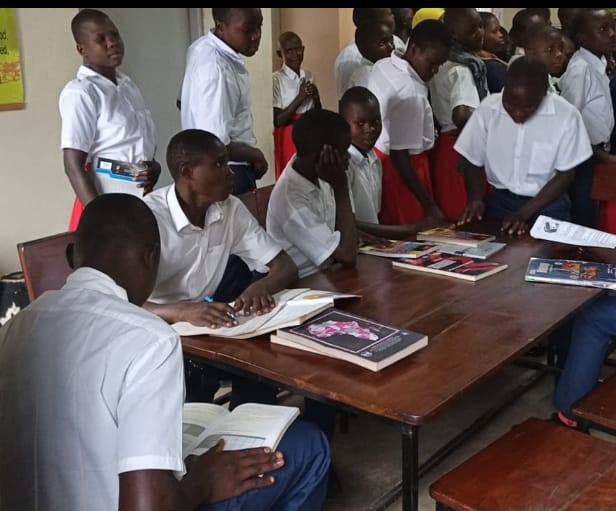
Victoria University launches free artificial intelligence lectures to secondary school vacists

Victoria University has announced a new initiative offering free Artificial Intelligence (AI) lectures aimed at equipping young learners with early exposure to one of the world’s fastest-growing fields.

The Vice Chancellor of Victoria University, Dr. Lawrence Muganga, said the program is designed to help students understand the fundamentals of AI and prepare them for future opportunities in the digital economy.

“If you are interested in learning about Artificial Intelligence, this is an opportunity to gain early exposure and build a strong foundation,” Dr. Muganga said.

He explained that the free lectures will introduce participants to how AI works, its real-world applications, and the direction in which global technology is headed.

“At Victoria University, we want young people to understand where the world is going and how they can position themselves early to benefit from the opportunities ahead,” he added.

According to the university, the AI lectures will be conducted in both physical and online modes to ensure wide access and flexibility for learners across the country. Senior Four and Senior Six vacists have been strongly encouraged to apply, as part of the university’s broader strategy to nurture future innovators at an early stage.

“These lectures are open and accessible because no one should be left behind in the AI revolution,” Dr. Muganga said.

He also called on parents, teachers and students to share the information widely.

The initiative builds on Victoria University’s growing investment in artificial intelligence and digital skills training. In recent years, the university has integrated AI-related content into its academic programs, established innovation and technology hubs, and promoted hands-on learning through practical projects and industry partnerships.

Victoria University has also positioned itself as a regional leader in emerging technologies by emphasizing skills-based education, encouraging creativity, and aligning its curriculum with global technological trends, including data science, automation, and AI-driven solutions.

The free AI lectures are part of a long-term vision to prepare Uganda’s young population for future jobs, many of which will be shaped by artificial intelligence and advanced technologies.

Stories Continues after ad

Police assure Indian community of security ahead of 2026 general elections

IPG, Abas Byakagaba receives peace symbol from city tycoon Sudhir Ruparelia, Trustee of the Indian Association Uganda.

The Inspector General of Police (IGP) Abbas Byakagaba has assured members of the Indian Community in Uganda of a stable and secure environment ahead of the 2026 General Elections scheduled for Thursday.

He reaffirmed the readiness of security agencies to maintain law and order across the country.

The assurance was delivered during a meeting with members of the Indian Association in Uganda at Kabira Country Club in Kampala, where Byakagaba reiterated the Uganda Police Force’s commitment, together with sister security agencies, to safeguarding all persons and their property before, during, and after the electoral process.

“The Uganda Police Force, working closely with sister security agencies, is fully prepared to guarantee the safety and security of all persons and their property across the country,” Byakagaba said.

The IGP briefed the community on the state of national security preparedness and urged members to remain calm and continue with their lawful business, emphasizing that the security situation in the country remains stable.

“We encourage all communities to remain calm and confident. Our security agencies are on high alert to ensure a peaceful and secure electoral period,” he added.

The meeting also recognized the significant role played by the Indian business community in Uganda’s socio-economic development. In particular, Sudhir Ruparelia, a trustee of the Indian Association Uganda was highlighted as one of the country’s leading investors, whose contributions span banking, real estate, education, hospitality, and agriculture.

Ruparelia’s investments have over the years created thousands of jobs for Ugandans and supported key sectors of the economy, reinforcing Uganda’s attractiveness as a destination for foreign investment. His involvement in education and hospitality has also played a role in skills development and tourism growth.

Leaders present at the meeting included Mr. Sasi Nair, Honorary Secretary of the Indian Association Uganda; Mr. Paresh Mehta, Chairman of the Indian Association Uganda; Sudhir Ruparelia, Trustee of the Indian Association Uganda; H.E. Upendra Singh Rawat, High Commissioner of India to Uganda; and Mr. Amitesh Kumar, Deputy Head of Security Wardens for the Indian Community.

Stories Continues after ad