Stanbic Bank
Stanbic Bank
21.9 C
Kampala
Stanbic Bank
Stanbic Bank
Home Blog Page 158

Stanbic PMI: Private sector mood remains upbeat during November

The mood in Uganda’s private sector remains upbeat with the monthly StanbicPurchasing Managers’ Index (PMI) jumping to 55.7during Novemberfrom the 52.9 recorded in October. Readings above 50.0 mean a positive outlook.

Christopher Legilisho, Economist at Stanbic Bank said, “The Stanbic Bank Uganda PMI data for November revealed a vibrant private sector growing in optimism about both current and future economic conditions. The PMI rose to 55.7 which is an extension in business conditions for an eighth consecutive month due to strong, sustained customer demand resulting in an expansion in output and new orders despite a dip in employment.”

He said the uptick in new orders growth was broad-based, reflecting the acquisition of new clients and an improvement in consumer purchasing power. Firms ramped up purchasing activity and inventories to accommodate strong demand.

The Stanbic PMI is a weighted average of the following five indices: New Orders (30%), Output (25%), Employment (20%), Suppliers’ Delivery Times (15%) and Stocks of Purchases (10%). The sectors covered by the survey compiled by S&P Global, include agriculture, mining, manufacturing, construction, wholesale, retail and services.

At the sector level, expansions in business activity and new orders were recorded across all five monitored segments.

Greater output and new orders supported overall growth, with demand conditions reportedly strengthening. In response to increased new business, and hopes of future expansions in client demand, firms stepped up their input buying. Despite a rise in new sales, companies were able to deplete backlogs of work further, leading to the first cut in staffing numbers since March 2023.

Meanwhile, total operating expenses increased again amid hikes in purchase and staff costs. At the same time, businesses were able to raise selling prices for the third month.
Legilisho said, “Employment levels fell in November across all surveyed sectors, implying firms targeted cost containment amid reduced work backlogs. Input and output  price pressures increased due to high utility and energy bills. Further, purchase prices increased due to higher costs for construction materials, food, and toiletries.”

He said, “Notwithstanding the dip in employment, firms remain positive about the economic outlook due to planned investment as well as expectations of strong consumer demand conditions over the coming year.”

On the price front, total input costs rose further, as both purchase and staff costs increased again. Higher utility and material prices were commonly highlighted as the driving factors behind overall cost inflation.

In line with greater cost burdens, Ugandan businesses raised their selling prices for the third month running in November.  Although all monitored sectors registered higher overall input costs, only construction companies did not raise.

Finally, input buying grew again midway through the fourth quarter. Increased purchasing activity was facilitated by another improvement in suppliers’ delivery times. Consequently, Ugandan companies were able to build desired safety stocks amid hopes of further upturns in new orders in the coming months.

Stories Continues after ad

Tayebwa demands gov’t action on harassment by online money lending apps

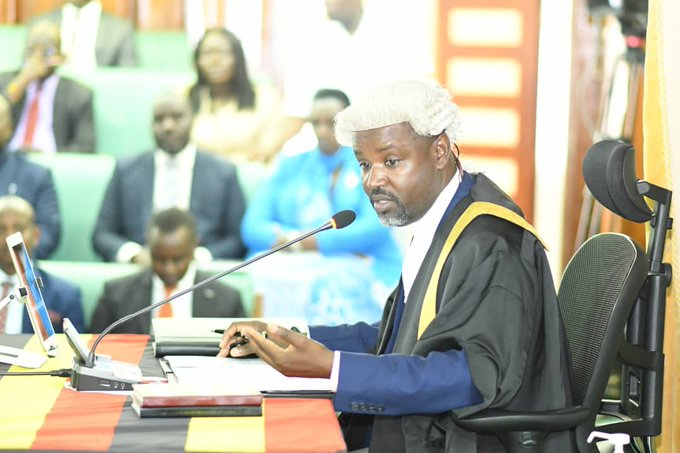
Deputy Speaker Thomas Tayebwa has directed the government to present to Parliament a detailed report on investigations into the operations of online money lending apps, following numerous complaints from Ugandans about harassment.

Narrating his personal ordeal, Tayebwa recounted being insulted and accused of being a “conman” by an agent from Mangu Cash, an online money lending app. This occurred after he refused to settle a loan for an individual who had fraudulently listed him as their next of kin.

“Recently, I received a call from someone identifying herself as an agent of Mangu Cash, threatening me to pay a loan for someone who borrowed and listed me as their next of kin. I humbly explained that I had no connection to the company or the individual. However, the response was rude and escalated when I revealed my identity,” Tayebwa explained.

Sharing his experience on social media, Tayebwa revealed that many Ugandans are enduring severe harassment from these apps, which operate unregulated and use unethical practices. He cited public feedback highlighting how these apps are run by powerful, untouchable entities and pointed out similar issues in other countries, such as India, where victims have reportedly taken their own lives due to the pressure.

Minister of State for Finance Henry Musasizi confirmed that the matter had reached the Central Bank and investigations are underway. He emphasized that the activities of these apps are not a result of regulatory gaps but are outright illegal.

“What these apps are doing is illegal. The regulated money lending businesses are operating without issues. However, we are investigating these rogue apps and will provide a detailed report to Parliament,” Musasizi assured the House.

Tayebwa’s call for accountability underscores the urgent need for government intervention to curb the predatory practices of online money lending apps that continue to exploit vulnerable Ugandans.

Some of the apps extorting Ugandans include; iKash, Flypesa, banana app, Loango, Nile, gloan app, Boom loan, Mpacash, Cashpulse, Credit lab, Flowerloan, Wind-money, Lever credit, Cashmate, Ezee loan, Kasente, Sunlit, Wind money, Cashflow, Moji, Ozzy money, Mumu money, Kasquick, More Pesa, Muno, My loan, Real Cash, Star Loan, Get Cash.

Stories Continues after ad

Three arrested over gov’t drugs found in private clinic in Gulu

Police have uncovered illegal use of government drugs at a private medical facility in Gulu District following a whistleblower tip-off.

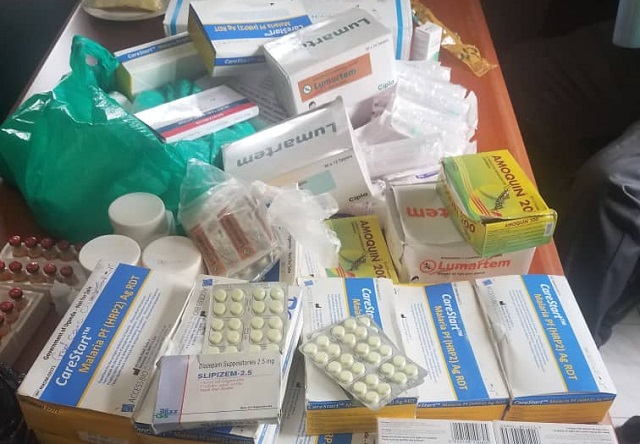
The Uganda Police Force raided St. Mary’s Medical Centre and discovered government-issued drugs, an official computer, and medical register books being used at the private clinic.

The raid resulted in the arrest of Okello Simon, Clinical Officer, Ayot Shalome Proscovia, Administrator and Dr. Opwonya David, Facility Owner, who is currently employed at Anaka Government Hospital.

Authorities emphasized that misuse of government resources is a severe crime, urging the public to report any suspicious activities.

The Uganda Police Force has reiterated its commitment to curbing corruption and protecting public resources, warning that those found guilty will face legal consequences.

Stories Continues after ad

BoU Deputy Governor dismisses financial systems hacking claims as Shs60Bn money heist probe deepens

BoU Deputy Governor, Michael Atingi-Ego

Deputy Governor of the Bank of Uganda, Michael Atingi-Ego, has dismissed allegations that the Central Bank’s financial systems were hacked in connection with the recent Shs60 billion money heist.

He assured the public and international stakeholders that a thorough investigation found no evidence of hacking.

Atingi-Ego made the remarks today while appearing before Parliament’s Committee on Commissions, Statutory Authorities, and State Enterprises (COSASE) where he was summoned to explain the suspicious transactions involving misdirected payments to the tune of $14.73 million.

“At the Central Bank, we were so concerned. There was a lot of negativity in the media that the Bank of Uganda had been hacked. For a Central Bank to be hacked, this is a very serious matter,” Atingi-Ego said.

He noted that the allegations caused ripples internationally prompting inquiries from correspondent banks.

“Some of our corresponding banks started contacting us, asking how sure they could be that they were dealing with the right people,” he added.

Atingi-Ego explained that the money involved two debt servicing payments one to the World Bank to a tune of US$6.134 Million which was instead paid to Road Way Company limited through a Bank in Japan on 12th September 2024, while the payment of US$8.596M meant for the African Development Fund was paid in Japan on 20th September 2024, only for Bank of Uganda to receive an inquiry from the Ministry of Finance on 8th September 2024 about the payment to World Bank.

Following the discovery, the Central Bank convened a meeting with the Ministry of Finance and its Chief Internal Auditor to investigate the matter. Atingi-Ego revealed that the Bank and the Ministry of Finance agreed to hire an independent forensic audit firm and informed the police about the incident.

“We wanted to make sure that our systems weren’t hacked, so we did a thorough investigation of our systems. There was nothing whatsoever to show that our systems were hacked,” Atingi-Ego affirmed.

He also disclosed that recovery efforts are underway, with the Bank taking steps to trace and retrieve the misdirected funds.

The hacking allegations and the dubious transactions have raised concerns about the integrity of the Central Bank’s operations. However, Atingi-Ego emphasized that the Bank of Uganda’s international credibility remains a priority, as it works to reassure its global partners.

Stories Continues after ad

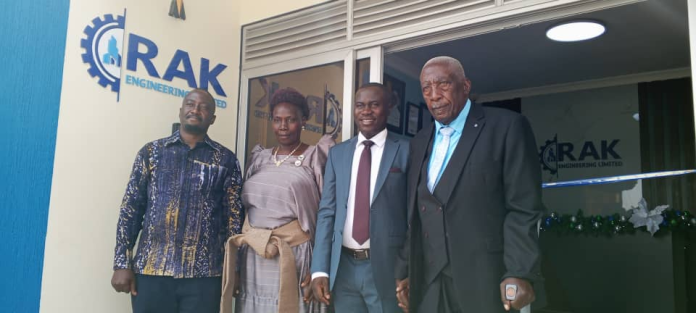
RAK Engineering Limited launches head offices, pledges more subsidiaries to employ Ugandans

In a groundbreaking event, RAK Engineering Limited launched Head Offices in Kawempe and pledged to open more subsidiaries across to employ more Ugandans.


In the same event, RAK Engineering Limited was celebrating fourteen (14) years of excellent operation, dedicated service, and innovation in the engineering and infrastructure sectors.
Since its establishment in 2010, the company has grown to become one of Uganda’s most trusted providers of engineering solutions, delivering transformative projects that contribute to the nation’s development.


RAK Engineering Ltd specializes in providing cutting-edge solutions in telecommunications engineering, power line construction, road and building infrastructure, and project management. From its humble beginnings, the company has consistently evolved, expanding its portfolio to serve various industries, including telecommunications, construction, IT, and utilities. The company’s mission to deliver exceptional, quality-driven services has been the foundation of its success. Over the past 14 years, RAK Engineering has upheld its vision to be the leading provider of professional engineering solutions in the region, with sustainability and innovation at the core of its operations.


The Managing Director, Kamuhanda Rogers described the launch of the new offices as a milestone in achieving the targeted goals and objectives for the 14 years of operation and delivering high quality work.


 “This is a great achievement to see a small company RAK grow this big in just 14 years. This office in Kawempe will be the head office and more subsidiaries will be built. However, we have many warehouses for quick services to our clients.


He said that RAK has so far employed over 100 Ugandan workers both on permanent and temporary contracts, noting that these workers have to be fully qualified and meet the standards of engineering to produce quality work.
“We have over 100 Ugandans workers both on permanent and temporary contracts. Most of the temporary workers are recruited depending on the area of the company’s operation. This has enabled many Ugandans to acquire jobs in different areas of the country.


RAK Engineering Limited has solely been focusing on telecommunications engineering; however it has opened more interests in civil construction, electricity installation and oil and gas sector.
Kamuhanda noted that the company has been able to take interns’ interest in engineering and have graduated and fully been employed.
Kamuhanda’s father, Naris Ruhindi Zirahagye, former civil servant applauded the son for the achievements the company has so far witnessed and urged him to improve for better heights.
Ruhindi urged Kamuhanda to be cautious citing that the civil engineering field is a terrible sector and requires pure production of works and trustworthy.


“I joined the Ministry of Works as an assistant worker and later became a Principal Support Officer. Therefore I know all the areas in the field of engineering and working hard there will make you stronger and earn a better reputation,” Ruhindi said.


He urged the youths working in the company to be committed to the work they do. He reminded them that education is not easy and once given a chance, utilize it to achieve their dreams.
Gerald Isabirye, a great friend to Kamuhanda, appreciated him for his visionary works in the engineering sector and bringing great influence in the city.


“You have exceeded your expectations. We all have to admit that growth is the driving force to serving a bigger population. RAK Engineering Limited is set to attract many clients in years to come now that it has situated the Head Offices in Kampala, a business center,” Isabirye said.
He added that the launch of these offices is a step forward for the steady movement of the company and this will house more ideas and objectives of the company.
“These offices are more than bricks and water where dreams meet reality. Focus on the future in order to navigate achievements,” he urged.
Isabirye also advised the Ugandan local companies to learn from RAK Engineering Limited to do high quality works in order to thrive in this competitive market full of international companies.
He further cautioned the workers to maintain their discipline within the company and express their skills to become highly recognized engineers.
RAK Engineering Ltd has successfully delivered numerous high-impact projects for some of Uganda’s leading organizations. These include infrastructure support for telecommunications expansion with MTN Uganda, key construction collaborations with Roko Construction, telecommunications engineering solutions for ZTE, and network and infrastructure enhancement for Uganda Broadcasting Corporation (UBC). The company has also partnered with Mota-Engil to execute large-scale infrastructure projects and supported the National Water and Sewerage Corporation (NWSC) in water and sewerage system development. These partnerships demonstrate RAK Engineering's ability to meet the demands of high-profile clients while maintaining excellence in service delivery.
RAK Engineering Ltd plays a pivotal role in Uganda’s socio-economic development and is committed to aligning its operations with the National Development Plan (NDP IV). By focusing on infrastructure development, telecommunications, and sustainable practices, the company supports key national priorities, including enhancing connectivity through reliable telecommunications infrastructure, strengthening utility infrastructure to improve access to water, electricity, and essential services, and contributing to industrialization and urbanization goals by executing high-quality construction projects, employment of local talent. Furthermore, the company promotes sustainability through green practices and energy-efficient solutions. By directly contributing to Uganda’s economic growth and the attainment of NDP IV goals, RAK Engineering Ltd continues to demonstrate its commitment to the development of resilient infrastructure that underpins the country’s transformation.
Under the leadership of Managing Director Rogers Kamuhanda, through his skills and competence, RAK Engineering Ltd has remained committed to quality, operational excellence, and client satisfaction. Rogers Kamuhanda’s strategic vision and hands-on approach have been instrumental in positioning the company as a reliable partner in the sector.
RAK Engineering Ltd integrates sustainability into all aspects of its operations. By adopting green practices, implementing energy-efficient solutions, and prioritizing workplace safety, the company continues to align itself with global and national sustainability goals.
As RAK Engineering Ltd celebrates this 14-year milestone, it remains focused on the future.
With plans to further diversify its services and expand into new sectors, the company is well-positioned to continue shaping Uganda’s infrastructure landscape and contribute to the development and achievement of NDP IV priorities.

Stories Continues after ad

Cornerstone Asset Managers to offer wealth management solutions in Uganda

Cornerstone Asset Managers has launched its operations in Uganda, offering wealth management and investment services to individuals, institutions, and corporations.
The new firm, which has been granted a license by the Capital Markets Authority of Uganda (CMA), will provide a range of investment services, including unit trusts and wealth management solutions.
According to Henry Ariganyira Musasizi, Uganda’s Minister of State for Finance, Planning and Economic Development, the firm’s presence in the Ugandan market marks a significant milestone in the country’s journey towards financial inclusion and economic growth.
“Cornerstone’s wealth management services and Unit Trust Funds represent a bold step forward in enabling Ugandans to secure their financial futures,” Musasizi said in a statement.
Michael Opira, Board Chair of Cornerstone Asset Managers, said the firm is committed to delivering bespoke investment solutions that cater to the unique needs of its clients.
 “We are dedicated partners who work closely with our clients to achieve their financial goals,” Opira said. “Our team of experts has a deep understanding of the local market and is well-positioned to provide innovative solutions that meet the evolving needs of our clients.”
The launch of Cornerstone Asset Managers comes at a time when Uganda’s economy is experiencing significant growth, driven by a young and entrepreneurial population, as well as an expanding middle class.
With its innovative approach and commitment to excellence, Cornerstone Asset Managers is poised to make a significant impact on Uganda’s wealth management landscape.
Officiating at the launch of Cornerstone Asset Managers’ Investment Management Services in Naguru,Kamplala,the Minister of State for General DutiesHenry Musasizi, congratulated the company for achieving this milestone and being licensed by the Capital Markets Authority (CMA).
The license authorizes the company to offer financial products such as private wealth management, unit trust funds, and pension management, among others.
Musasizi said this development is in line with the Government policy on capital mobilization and financial inclusion.
“Our young population, thriving entrepreneurial spirit, and increasing middle class provide enormous prospects for growth. To fully achieve this potential, we must guarantee that individuals, families, and businesses have access to a wide range of financial solutions that address their needs for security, growth, and long-term prosperity,” said Musasizi.
He said the total capital market capitalization as at 31st August 2023 stood at Shs 7.2 trillion, representing only 4.4% of GDP compared to 10.5% of GDP for Kenya, 45.3% of GDP for Mauritius, and 327.6% of GDP for South Africa (equivalent to USD 1.23 trillion).
Musasizi said this implies that our capital markets are not doing well compared to our peers and more work needs to be done.
The Minister said the Finance Ministry is working to strengthen capital markets as an alternative source of long-term development finance for both the public and private sector.
He said the Government interventions include: establishment of a framework for operationalising the fixed income market, expansion of the Investor compensation Fund,strengthening the dispute settlement mechanism & promoting private equity finance, among others.
“We believe the above proposed interventions shall contribute to the development of capital markets in Uganda,” said the Minister.

Stories Continues after ad
PSFU recognizes Uganda Baati’s community initiatives

Uganda Baati has been named the Community Development Champion of the Year at the 2nd Annual Private Sector Gala, an award recognizing the company’s profound impact on communities through its Corporate Social Responsibility (CSR) initiatives under the Safal Uganda Baati Foundation.
Guided by its four CSR pillars- Health, Education, Shelter, and Environment, the leading steel manufacturer has consistently demonstrated its pledge to uplifting lives and nurturing sustainable development across Uganda.
Over the past year, the foundation has tackled diverse challenges with impactful results. Among its impactful projects, the re-roofing initiative at Nyamifura Primary School has provided better learning conditions for over 400 pupils, while Busoga College Mwiri in Jinja now serves 1,000 students in a more conducive learning environment. These efforts, coupled with training programs for graduates in partnership with PSFU and Mastercard, highlight the company’s dedication to fostering education and employability.
The health sector has also been a major focus. The clinics in Tororo and Kampala have improved access to medical services for over 500 individuals, offering family planning, immunizations, and disease testing. Through partnerships like the Kabaka’s Birthday Run, Rotary Cancer Run and Malaria Free Uganda, Uganda Baati has made strides in HIV/AIDS awareness, early cancer detection and malaria prevention. The North Ankole Mission Hospital project, which expanded access to maternal healthcare for one million mothers and children, stresses the company’s commitment to improving lives.
At Sanyu Babies Home, Uganda Baati transformed a dilapidated shelter into a safe, sustainable haven for abandoned children. Donating roofing materials, the initiative addressed health risks caused by leaking roofs and enabled rainwater harvesting, drastically reducing water bills. The new roof also supports solar water heaters, ensuring warm baths for the children while cutting electricity costs.
A skilling initiative was launched in Tororo District targeting over 260 out-of-school youth aged 16-25.
This program provides training in practical areas such as hairdressing, backyard gardening, roofing, and detergent making, while incorporating life skills like financial literacy and business management. Aimed at tackling youth unemployment and teenage pregnancies, the initiative empowers participants to create sustainable livelihoods.
Uganda Baati, in partnership with the National Forestry Authority (NFA) intensified efforts to restore forest cover in Uganda by replanting 10 hectares in Mubuku Central Forest Reserve, Kasese. This marked the second milestone in a four-year collaboration, following similar work in Kayunga. The initiative addresses deforestation’s impacts and promotes environmental sustainability.

The Safal Eye in the Wild photography competition has further heightened awareness about wildlife conservation and climate action. The 2023 edition themed “Drought in Focus,” in 2023 aimed to raise awareness about drought’s impact and promote environmental conservation. Participants from Kenya, Uganda, South Africa, Ethiopia, and Tanzania showcased creative and powerful imagery that sparked discussions on climate action.
The company’s leadership is unified in its commitment to these causes. George Arodi, CEO of Uganda Baati, captures the essence of their work: “For us, it’s about empowering lives and driving sustainable progress. These projects are stories of resilience and transformation.”
George Mubiru, Manager of the Safal Uganda Baati Foundation, highlighted the collective spirit behind these projects. “The success of our initiatives is as a result of the partnerships we’ve built with organizations like NFA, NEMA, PSFU, Uganda Police and many others. Together, we’re addressing critical gaps in shelter, education, healthcare, and environmental conservation.”
Ian Rumanyika, Head of External and Corporate Affairs, emphasized that Uganda Baati’s initiatives reflect its core values of care, partnerships and excellence. He remarked that the award serves as evidence of the lives the company has positively impacted and its forward-looking vision.
As Uganda Baati marks its 60 th anniversary, its accomplishments highlight a deliberate pledge to transforming communities and fostering meaningful progress. Through interventions in education, healthcare, shelter, and environmental restoration, the company demonstrates that corporate responsibility is about addressing real needs and creating tangible change.

Stories Continues after ad

High health care costs in Africa continue to push over 150 million into poverty- new WHO report

A new report by the World Health Organization (WHO) Regional office for Africa finds that most African countries continue to rely heavily on out-of-pocket payments to fund their health services, and urges countries to reduce the financial strains that high health-care costs place on their population.


The practice of out-of-pocket payments, warns the report, continues to; place a financial burden on over 200 million people, including pushing over 150 million people into or deeper into poverty across the WHO Africa Region; exact a heavy price on people’s health; and hamper progress in attaining universal health coverage.
“Having to pay for medicines and other health-care costs out of their own pocket can instantly bend the trajectory of someone’s life toward financial hardship and ill health. Such payments force many people to spend less on other basic needs such as food, housing and utilities, which, in turn, may worsen their conditions. This also creates a major barrier for the poorest and the most vulnerable who cannot get, as a result, the care they need,” said Dr Matshidiso Moeti, WHO’s Regional Director for Africa.


“Despite countries’ efforts to build more sustainable health financing systems, more needs to be done so that people across Africa have access to the quality health services they need, when and where they need them, without having to fall into financial hardship,” added Dr Moeti.


Between 2000 and 2019, the period analysed by the report, the number of people making ‘catastrophic’ out-of-pocket payments  rose every year by 2.5 million people  from 52 million in 2000 to 95 million in 2019.


That said, progress, albeit at a slower pace than globally, has been made during the same period, with the overall number of people pushed into or deeper into poverty because of out-of-pocket payments having halved between 2000 and 2019.


The report, the only one of its kind, helps countries track progress on financial protection in health and make evidence-based decisions to accelerate efforts to attain universal health coverage.


The report highlights good practices by several countries to address the burden of out-of-pocket payments by, for example, abolishing patients’ fees at the point of care, introducing health insurance schemes, and progressively increasing reliance on government-funded health services.
 “I hope this report will strengthen countries’ resolve to improve financial protection in health for their populations and to invest in better data generation, analysis and use to inform better decision-making,” said Dr Moeti

Stories Continues after ad

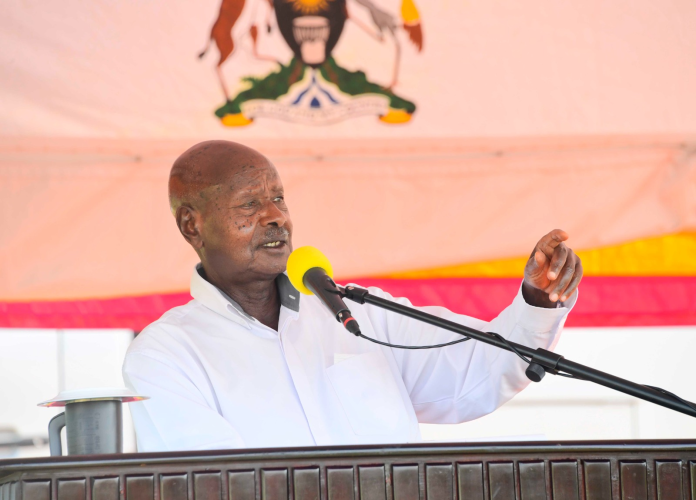
Museveni Defends the Trial of Civilians in the General Court Martial

President Yoweri Museveni has defended the trial of civilians in the General Court Martial, stating that it contributes to the stabilization of the country.

Museveni’s defense came at a time when former bush war fighter Rtd. Col. Kizza Besigye and Obed Lutale are facing multiple charges, including possession of firearms at Riverside Apartments in Nairobi, Kenya, and allegedly holding meetings in Greece and Switzerland with the intent to undermine the security of the Ugandan army.

The two suspects were reportedly abducted last month in Nairobi, where they had attended a book launch event hosted by Kenyan opposition politician and lawyer Martha Karua. Karua is currently in Uganda, leading a team of 50 lawyers defending Dr. Besigye and Hajji Kamulegeya.

“I have seen the arguments in some papers by lawyers regarding the correctness of trying civilians in the Court Martial. I want to affirm that this move was correct and useful and has contributed to the stabilization of Uganda,” Museveni said. “It was the NRM that, in 2005, enacted this law through Parliament because of the rampant activities of criminals and terrorists who were using guns to kill people indiscriminately.”

He explained that at the time, civilian courts were overwhelmed with cases such as murders, rape, assaults, robbery, and land disputes, which made it difficult to address the threat posed by gun-wielding criminals swiftly.

“For stabilization, you need speed,” Museveni emphasized. “These individuals, although not soldiers, voluntarily and with malicious intent acquired weapons that should be the monopoly of the Armed Forces, governed by the relevant laws. Uganda, like many parts of Africa, has been and, in some cases, still is disturbed by such unprincipled actors. This is why the law provided that since you became a ‘soldier,’ albeit an illegal one, you should be tried by a court-martial, which is the court that deals with firearms.”

He further clarified that the General Court Martial system is subordinate to the country’s higher courts. If the Court Martial makes an incorrect judgment, superior courts can rectify it.

“The advantage of trial in the General Court Martial is that, in the meantime, these dangerous individuals are legally provided for—they are fed, medically treated by the State, and kept away from harming people,” Museveni said. “It also benefits the lawbreakers because their dangerous activities, such as killing people, can lead to their own deaths in encounters with law enforcement and peacekeeping agencies.”

Museveni added that after a conviction, the defendant has the right to appeal the decision of the General Court Martial.

Stories Continues after ad

Museveni directs CDF Gen. Muhoozi to release 900 remanded Karamajong youths

President Yoweri Museveni has directed the Chief of Defence Forces (CDF), General Muhoozi Kainerugaba, to spearhead the review and potential release of 900 Karamajong youths currently idtaine at Kitalya Prison.

These youths were arrested and prosecuted by military courts for their involvement in criminal activities particularly illegal possession of firearms.

In a statement, Museveni lauded the role of military courts in restoring peace in Karamoja and the neighboring regions emphasizing their efficiency in handling cases involving armed offenders. He explained that the military courts’ swift actions had removed dangerous individuals from society thereby contributing to peace efforts.

“Oh, I now remembered one of the factors that caused the return of peace in Karamoja and the neighboring areas,” Museveni said.

“It was the efficient and focused work of the military courts that had supplemented the military operations by legally putting away these confused youths from society for a given period,” he added.

Museveni contrasted the operations of the military courts with civilian courts which he argued often granted bail or kept suspects in remand for prolonged periods contributing to the backlog in the general judicial system. He defended the use of military courts for suspects involved in gun-related crimes, noting that these courts though subordinate to civilian courts were established to handle cases involving weapons.

“Indeed, Uganda and many parts of Africa were, and in some cases are still, disturbed by these unprincipled actors. This is why that law provided that since you became a ‘soldier,’ albeit an illegal one, be tried by a court-martial because it is the one that deals with guns,” Museveni noted.

While touring Karamoja last week, Museveni was approached by leaders and elders who pleaded for the release of the detained youths. He revealed that of the 2,000 inmates at Kitalya Prison, 900 are Karamajong youths. He directed the CDF and the army to audit these cases and determine who among them could be pardoned.

“Just by coincidence, last week, I started my tour of Karamoja. While there, the leaders and elders appealed to me to pardon the, apparently, thousands of the Karamajong youth that had been safely put in prison by the active Court Martial courts in the 3rd Division AOR (Area of Responsibility). Kitalya Prison has, apparently, 2,000 inmates, and the Karamojong youth account for 900 of that number,” he said.

Museveni assured Ugandans that the review process would be rigorous distinguishing between those eligible for pardon and hardcore criminals who should remain in custody.

“I have already directed the CDF together with his army colleagues to audit the Karamojong youth who are in prison now to see the ones who can be pardoned separate from the hardcore criminals who should not be pardoned yet,” he revealed.

The President also hinted at the possibility of holding a referendum on the use of military courts in handling such cases expressing confidence that communities in the affected regions would support the initiative.

“Should we have a referendum on this issue? Why would lawyers not see what the ordinary mwanainchi sees? If we were to have a referendum in the affected districts neighboring Karamoja on this issue, I am sure 100% would support the law,” Museveni stated.

Stories Continues after ad