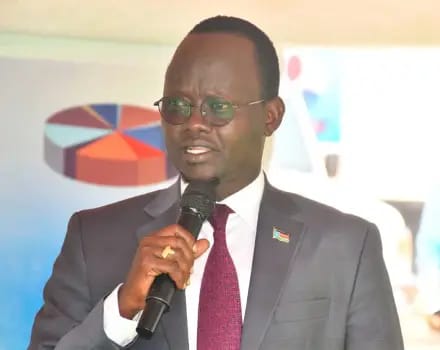
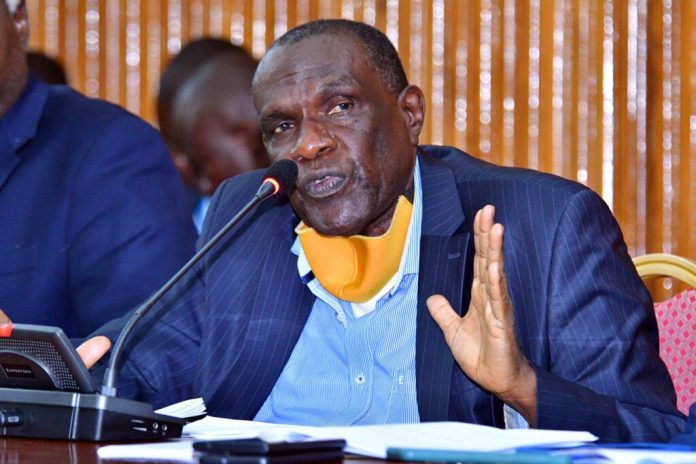
Former South Sudan Finance Minister Dr. Bak Barnaba Chol.
The Former South Sudan Finance Minister, Dr. Bak Barnaba Chol, has been arrested at the Nimule, Uganda-South Sudan Border, as he allegedly tried to escape to Uganda on Friday night. According to sources, Dr. Chol, who was recently dropped from his cabinet position by President Salva Kiir in a sudden reshuffle, was intercepted by security personnel at around 8 pm as he tried to escape to Uganda on a boda boda. Sources further intimated that the former minister was found with large sums of U.S dollar notes during his arrest.
Footage circulating on social media shows the former minister with apparent bloodstains on his clothing following a pursuit by security forces. Chol’s arrest comes days after he handed over his office to the newly appointed finance minister, Salvatore Garang Mabiordit. Dr. Chol, a professor at the University of Juba, had previously served as finance minister from August 2023 until March 2024; his second tenure in the position only lasted three months. By the time of this publication, the South Sudanese government hadn’t yet stated the arrest, observers intimated that this might be part of a widening crackdown on high-profile figures in the country’s finance and security sectors At the beginning of this week, South Sudan’s former central bank governor, Moses Makur Deng Manguak, was also placed under house arrest in Juba shortly after returning from medical treatment in India, where he underwent head surgery. Manguak led the Bank of South Sudan from January to August 2022.
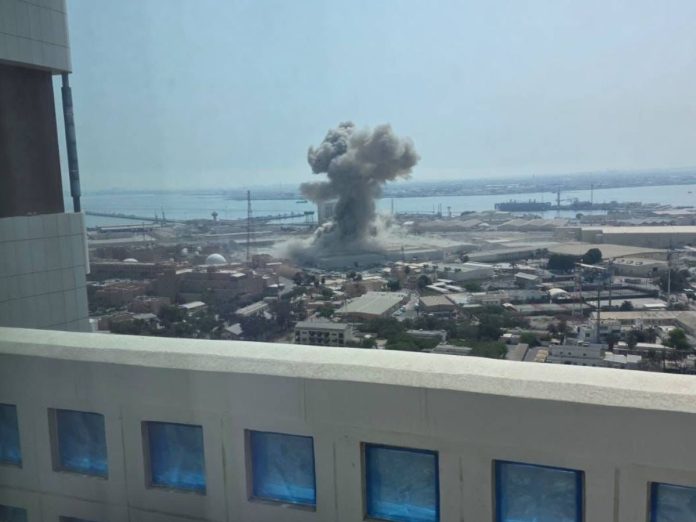
Iran attacks US Navy base in Bahrain, Fifth Fleet headquarters targeted in operation Epic Fury, Gulf capitals on high alert.
Residents in Tehran woke to the sound of explosions and the sight of smoke drifting across the skyline after Israeli forces launched strikes that officials described as pre-emptive defense measures. In several neighborhoods, families gathered in apartment corridors and basements as emergency sirens echoed through the city. Iranian authorities moved quickly to reassure the public, stating that air defense systems were activated and investigations into the targets were underway. Across the border, Israelis also experienced a tense morning. Sirens warning of potential incoming threats prompted residents in major cities to seek shelter. Public events were canceled, and transportation services were disrupted as authorities assessed the security landscape. Diplomatic fallout was swift. Regional leaders expressed concern that the confrontation could spiral into broader warfare. Some neighboring states closed portions of their airspace as a precaution, while international airlines rerouted flights. Political observers note that the latest strikes come at a time of fragile diplomacy and strained negotiations over Iran’s nuclear ambitions. Previous rounds of indirect conflict between the two countries have typically played out through cyber operations or proxy forces. Direct strikes on Iranian territory represent a significant escalation. For civilians on both sides, uncertainty now defines daily life. “We don’t know what comes next,” said a Tehran shopkeeper reached by phone. “We just hope it doesn’t become a full war.” Military analysts caution that the coming days will be critical in determining whether the confrontation remains contained or expands into a broader regional conflict.
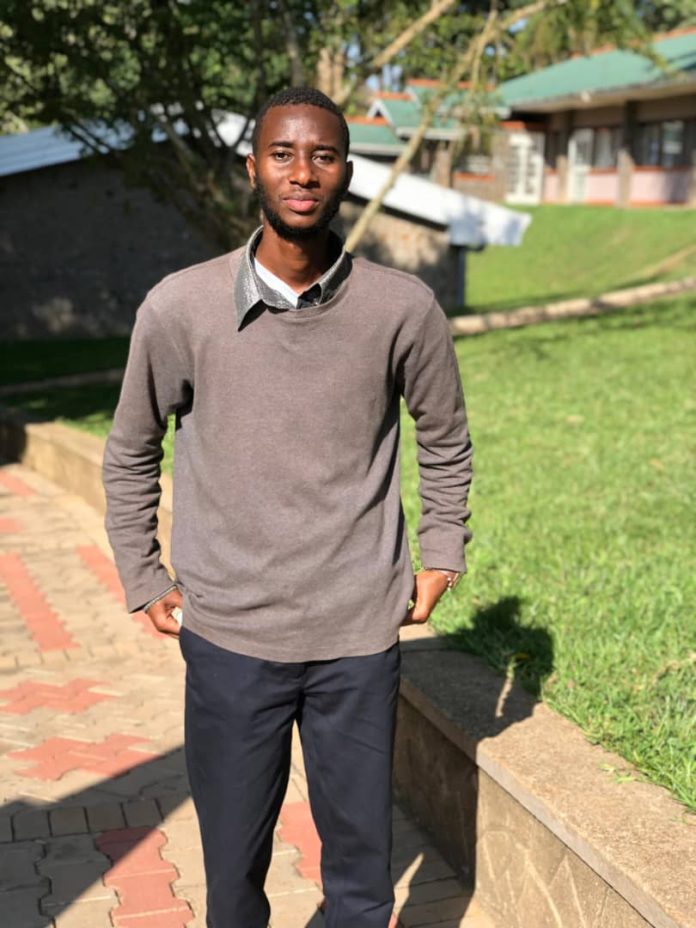
UCU student, Nathan Tuwandike, who was reported to have gone missing, has been found alive in Mukono District.
MUKONO — Mukono Police have launched an urgent investigation into the disappearance of Nathan Tuwandike, 25, a student at Uganda Christian University and resident of Nsibambi A11 in Mukono District. Tuwandike was last seen on February 25, 2026, in Mukono Town. Authorities say he left behind his mobile phone and other personal belongings at his hostel, raising concerns about his sudden disappearance. Mukono Police have appealed to the public to come forward with any information that could help locate the missing student. “Anyone who has seen Tuwandike or knows his whereabouts should report immediately to the nearest police station or contact Mukono Police Station,” a police statement said. Family and friends are anxiously awaiting news, with many taking to social media to share his details and urge anyone with information to assist the authorities. Police investigations are ongoing, and residents are being urged to stay vigilant and report any suspicious activity in the area.
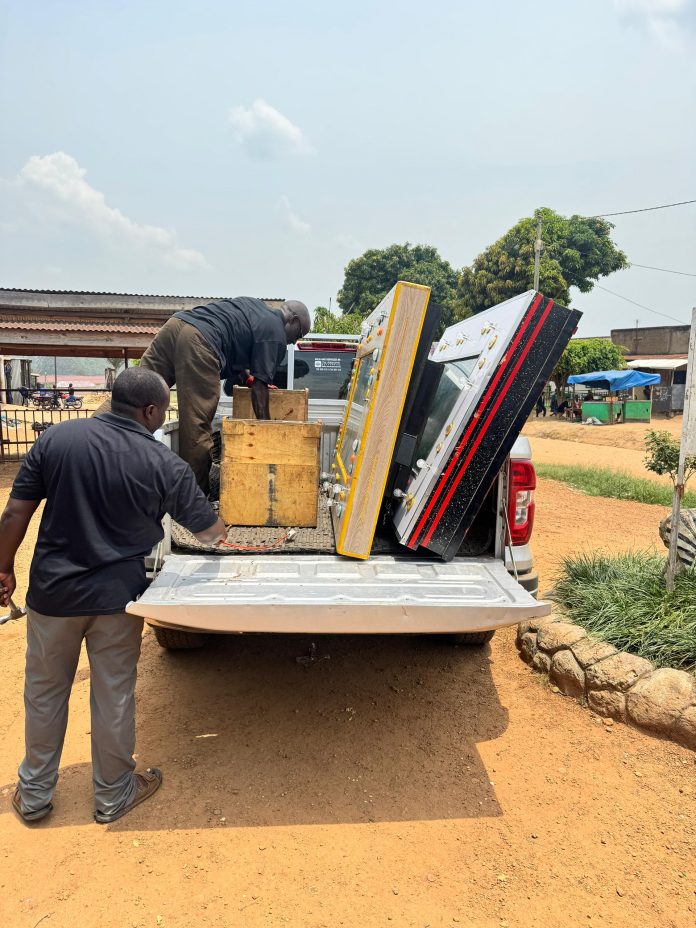
The National Lotteries and Gaming Regulatory Board has seized more than 28 illegal gaming machines during an enforcement operation conducted in the Western Uganda districts of Sheema, Rubirizi and Kabale.
The crackdown targeted unlicensed gaming operators in Kishabya in Sheema District, Katerera in Rubirizi District and parts of Kabale District.
Officials said the operation followed intelligence gathered with the support of local leaders and community members.
In a statement, the Board commended residents who tipped off authorities about the illegal activities.
“We thank the community members for their vigilance and collaboration. The public is encouraged to report any suspected illegal gaming operators and suppliers. Your voice strengthens regulation,”the management noted.
The regulator said the confiscated machines were operating without valid licences, contrary to the Lotteries and Gaming Act, and that enforcement teams will continue conducting compliance inspections across the country.
In previous operations in other parts of the country, the Board has impounded dozens of illegal slot machines and shut down unlicensed betting outlets found operating outside the law. Some operators have faced prosecution while others have been directed to regularise their operations before resuming business.
The Board has in recent months stepped up public sensitisation campaigns through community engagements, radio talk shows and meetings with district leaders to raise awareness about responsible gaming and the dangers of illegal gambling. The campaigns also guide operators on licensing requirements and compliance standards.
Officials maintain that public reporting remains critical in eliminating illegal gaming activities and protecting communities from unregulated gambling.
The Board urged members of the public to remain vigilant and to use the toll-free line to report suspicious gaming activities in their areas.
The Minister for the Presidency, Milly Babirye Babalanda, has warned the public against a fraudulent scheme in which individuals are soliciting money from unsuspecting citizens while falsely claiming they can secure appointments as Resident District Commissioners and their deputies.
In an official notice issued by the Office of the President, Babalanda said her office had received credible reports that unscrupulous individuals are approaching members of the public and promising to influence appointments to positions of Resident District Commissioners, Deputy Resident District Commissioners and Assistant Resident District Commissioners in exchange for money.
“The Office of the President has been alerted that some unscrupulous individuals are fraudulently soliciting money from the public under the guise of securing appointments as Resident District Commissioners, Deputy Resident District Commissioners, and Assistant Resident District Commissioners,” the notice states.
She emphasized that the claims are entirely false and intended to exploit job seekers while damaging the integrity of the Presidency.
“The public is hereby notified that these claims are false and aimed at tarnishing the name and reputation of Office of the President. Please take note that such appointments are effected through the established procedures and any communication to that effect is disseminated through the official channels. No person should be duped to part with money for such appointments,”she noted.
Resident District Commissioners are presidential appointees mandated to represent the Head of State at district level, coordinate government programs and oversee security matters alongside other agencies. Their deputies and assistants support them in supervising the implementation of national policies, monitoring service delivery and ensuring compliance with government directives.
The warning comes amidst public interest in RDC positions which are often reshuffled or newly appointed as part of administrative changes across districts. Such transitions have in the past created opportunities for fraudsters to target hopeful applicants with promises of fast tracked appointments.
Government officials have repeatedly clarified that RDC appointments are made strictly at the discretion of the President and follow internal vetting and administrative procedures. There is no application fee or payment required at any stage of the process.
Babalanda urged members of the public to remain vigilant and report any individuals demanding money in exchange for government jobs.
“Members of the public are urged to disregard such calls and report any related incidents to the nearest Police Stations,”she said.
Security agencies have previously investigated similar scams involving fake recruitment into government ministries, security agencies and commissions, where victims were asked to pay facilitation fees for non existent jobs. Authorities say such acts amount to obtaining money by false pretence and impersonation, both criminal offences under Ugandan law.
The Office of the President announced that all official communication regarding appointments is made through recognized government channels and cautioned citizens against dealing with middlemen who claim to have influence within State House or the Presidency.
The government’s warning aims to protect the public from financial exploitation and to safeguard the credibility of presidential appointments.
Rotary District 9213 has officially launched the 2026 edition of the Rotary Cancer Run in Nsambya, setting an ambitious target of raising Shs5 billion to complete and equip the Cancer Treatment Centre with advanced Linear Accelerator technology.
The launch, held amid excitement and renewed commitment, marked 15 years of citizen driven efforts to expand access to cancer care in Uganda.
This year’s campaign runs under the theme Gwanga Mujje, a rallying call inviting communities across the country and beyond to take collective responsibility in the fight against cancer.
Addressing guests at the launch, District Governor Geoffrey Kitakule described the initiative as a national movement of hope.
“Today we joyfully celebrate the launch of #CancerRunUg26, but more importantly, we celebrate 15 years of Ugandans standing together to give hope to cancer patients,” Kitakule said.
He added,“Under the inspiring theme Gwanga Mujje, we are calling upon 100,000 runners to join us in raising Shs5 billion to help complete the Cancer Treatment Centre with state-of-the-art Linear Accelerator technology.”
He emphasized that the run goes beyond athletic participation, positioning it as a platform for awareness, screening and early detection.
“This is more than just a race. With over 70 medical camps planned across the country, we are taking services closer to the people. It is a powerful act of hope and solidarity for families affected by cancer,”Kitakule noted.
Funds raised will support the completion and equipping of the cancer centre at St. Francis Hospital Nsambya, which has over the years become a key referral facility for cancer patients. The installation of modern Linear Accelerator machines is expected to significantly improve radiotherapy services and reduce the burden on patients who often travel long distances in search of treatment.
Kitakule also paid tribute to national leaders who have backed the initiative.
“We are deeply thankful to His Excellency Yoweri Museveni for his generous contribution of Shs3 billion towards this cause. We equally appreciate the unwavering support of the Rt Hon Speaker Anita Among, whose commitment continues to inspire many to stand with us,” he said.
Since its inception, the Rotary Cancer Run has mobilized billions of shillings and thousands of participants annually, evolving into one of Uganda’s largest health-focused fundraising events. Organisers say the 2026 edition aims to surpass previous records in both participation and impact.
Rotary leaders are confident that the spirit of Gwanga Mujje will resonate widely, turning the streets into a sea of solidarity and transforming individual steps into collective progress in the fight against cancer.
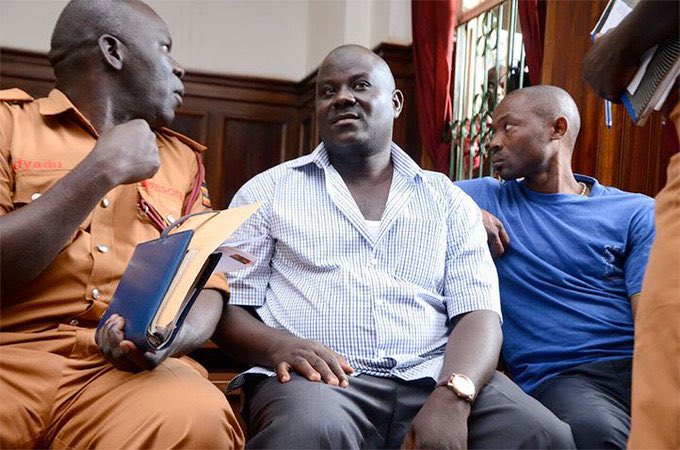
Pine Car Bond boss, Muhammad Ssebuwufu, with prison warders.
President Yoweri Kaguta Museveni has pardoned former Pine Car Bond Managing Director Muhammad Ssebuwufu, the businessman convicted in 2019 for the kidnap, aggravated robbery and murder of his client Betty Donah Katusabe.
Ssebuwufu has been release from prison on following the presidential pardon granted under Article 121 (4) (a) of the 1995 Constitution on the advice of the Advisory Committee on the Prerogative of Mercy.
Confirming the development, the Uganda Prisons Service said it had implemented the directive upon receipt of the instrument of pardon.
“The President of the Republic of Uganda, H.E. Yoweri Kaguta Museveni, in accordance with Article 121 (4) (a) of the 1995 Constitution and on the advice of the Advisory Committee on Prerogative of Mercy, has exercised his constitutional powers to grant pardon to Convicted Prisoner No. 489, Hajji Muhammad Ssebuwufu,” said Senior Commissioner of Prisons Frank Baine Mayanja in a statement.
“On receipt of the instrument, the beneficiary has been released from prison,” he added.
Ssebuwufu’s conviction arose from one of Kampala’s most closely followed criminal trials. Court heard that in 2015, businesswoman Betty Donah Katusabe had approached Pine Car Bond, a vehicle financing company in downtown Kampala, seeking a loan of Shs10 million. The prosecution successfully argued that after she failed to clear the debt, she was kidnapped from her workplace, violently assaulted and later died from injuries sustained during the ordeal.
In 2019, the High Court found Ssebuwufu and his co-accused guilty of kidnap, aggravated robbery and murder. He was sentenced to 40 years in prison.
However, in 2025, a panel of three justices of the Court of Appeal of Uganda re-evaluated the sentence and reduced it to 18 years, ruling that although the conviction stood, the initial punishment imposed by the lower court was excessively harsh in the circumstances of the case.
By the time of his release, Ssebuwufu had spent 11 years in incarceration at Luzira Prison.
Pine Car Bond, which operated as a vehicle financing and lending business, had faced intense criticism during the trial, with the case highlighting concerns about the use of force in debt recovery.
Under Uganda’s constitutional framework, a presidential pardon does not overturn a conviction but extinguishes the remainder of the sentence.
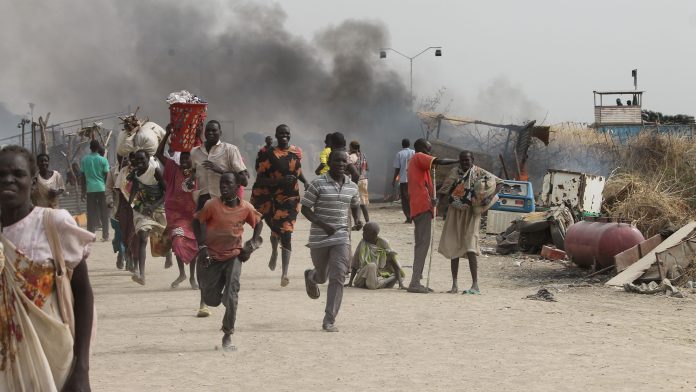
TOPSHOT - South Sudanese civilians flee fighting in an United Nations base in the northeastern town of Malakal on February 18, 2016, where gunmen opened fire on civilians sheltering inside killing at least five people.
Gunfire broke out in the base in Malakal in the northeast Upper Nile region on February 17, 2016 night, with clashes continuing on Thursday morning that left large plumes of smoke rising from burning tents in the camp which houses over 47,000 civilians.
/ AFP / Justin LYNCH (Photo credit should read JUSTIN LYNCH/AFP/Getty Images)
It said “escalating atrocity risks” and the collapse of political safeguards in the country made “urgent preventive action imperative”, calling on regional and international actors to engage with diplomatic pressure, sanctions and enforcing the UN arms embargo until concrete improvements in human rights and accountability are achieved.
“Preventing further mass atrocity crimes, institutional collapse, and the destruction of South Sudan’s fragile transition requires urgent coordinated national, regional and international re-engagement,” the report said.
The report, drawing on a year of investigations and testimony, blamed the actions of political and military elites – in detaining opposition leaders, eroding power sharing, and attempting to change the terms of a 2018 peace agreement – for placing a peace framework in the country under major strain and increasing instability.
It noted that the arrest and removal from office of First Vice President Riek Machar last year, and his prosecution for murder, treason and crimes against humanity, had undermined “the core power-sharing guarantees” of the peace agreement, and triggered “political uncertainty and armed clashes on a scale not witnessed” for a decade.
Machar, an ethnic Nuer, was suspended last year as South Sudan’s number two after opposition Nuer White Army fighters overran a military garrison in the town of Nasir.
Civil war broke out in South Sudan in 2013, two years after gaining independence from Sudan, when President Salva Kiir, a member of the Dinka ethnic group, the country’s largest, first dismissed Machar as vice president, accusing him of plotting a coup.
The report also noted that intensifying military operations had been marked by a “dangerous shift in tactics”, including air strikes on civilian-populated areas.
It said that the deployment of forces from neighbouring Uganda, a guarantor of the 2018 peace agreement, had “materially strengthened” government forces militarily and “raised credible concerns” of violations of a UN arms embargo.
The CHRSS report noted that joint aerial bombardments by the Ugandan and South Sudan armies had targeted civilian areas, “predominantly affecting [ethnic] Nuer communities in opposition-affiliated areas”.
Sexual violence ‘widespread, systematic’
Conflict-related sexual violence remained a “defining and persistent feature” of the crisis, the report found, with survivor testimonies over the past decade showing “widespread and systematic patterns of rape and other forms of sexual violence perpetrated by all armed forces and groups”.
Most women and girls lived “at constant risk of sexual violence,” it said, adding that last year, the threat of such abuse had again “functioned as a strategic instrument of conflict deployed to terrorise civilian populations, drive displacement, and fracture social cohesion”.
The report said that impunity was entrenched, with senior commanders and political actors rarely held accountable for serious abuses perpetrated on their behalf.
The report also noted a sharp deterioration in civic space, with journalists, activists and opposition figures facing harassment, surveillance and arbitrary detention, undermining prospects for inclusive political participation and long-term stability.
The commission urged the government to immediately halt violations by its forces, release those arbitrarily detained and guarantee freedoms of expression, assembly and association.
It also called for the urgent establishment of long-delayed transitional justice mechanisms to investigate and prosecute war crimes committed since 2013.
Renewed conflict
An estimated 400,000 people were killed in the five years of a war waged largely along ethnic lines, before calm was restored with a peace deal in 2018.
But escalating fighting in recent months has brought renewed fears of a return to civil war.
Beginning in December, a coalition of opposition forces – some loyal to Machar, leader of the Sudan People’s Liberation Movement in Opposition (SPLM/IO) – seized a string of government outposts in Jonglei state, an opposition stronghold northeast of the capital, Juba that is the homeland of the Nuer ethnic group.
Following the territorial losses, South Sudan’s army announced a major military operation against opposition forces in late January, ordering civilians and aid groups to leave areas of Jonglei state, a move that the International Crisis Group said showed the country had “returned to war”.
Millions affected
The United Nations said earlier this month that an estimated 280,000 people have been displaced by the fighting and air attacks since late December, including more than 235,000 across Jonglei alone, while UNICEF warned last week that more than 450,000 children are at risk of acute malnutrition due to mass displacement and the halting of critical medical services in Jonglei.
Nearly 10 million people need life-saving humanitarian assistance across South Sudan, while humanitarian operations have been crippled by attacks and looting, with observers saying both sides in the conflict have prevented assistance from reaching areas where they believe civilians support their opponents.
The CHRSS report said that civilians had borne the “overwhelming human brunt” of the crisis as conflict, violence, displacement and sexual violence had intensified “an already-dire humanitarian situation”.
Last year, it said, displacement had risen by nearly 40 percent to 3.2 million people, while declining international assistance was disproportionately affecting women and children.
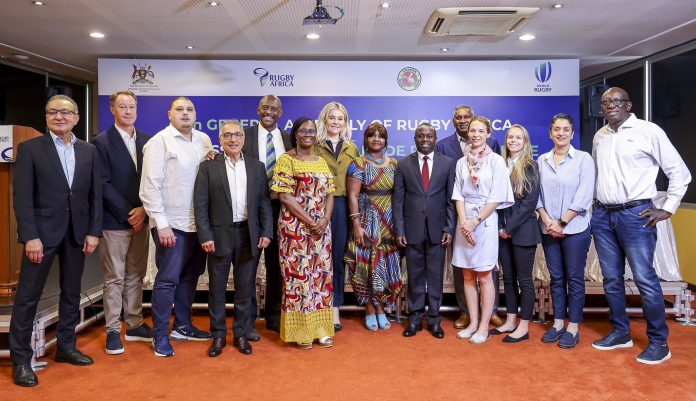
Kabira Country Club today opened its doors to Africa’s top rugby leaders as the 17th Annual General Meeting of Rugby Africa officially got underway in the Ugandan capital.
The three day high level assembly, held in collaboration with Uganda’s Ministry of Education and Sports and the Uganda Rugby Union, has drawn senior decision makers from 32 national unions for what is expected to shape the future governance and strategic direction of the sport across the continent.
Presidents, executive members and official delegates convened in Kampala to review the organisation’s progress, exercise their voting rights and deliberate on major constitutional reforms aimed at strengthening leadership and accountability structures.
Among those in attendance are Rugby Africa President and World Rugby Executive Board Member Herbert Mensah, Vice President Nasser Bougja, and senior representatives from World Rugby, including Director of International Relations, Investment and Member Services Clare Barrell and Regional Partnerships Manager for Africa Coralie Van Den Berg. Rugby Africa General Manager Maha Zaoui, General Secretary Jurie Roux and Uganda Rugby Union President Godwin Kayangwe are also participating in the proceedings.
Addressing delegates at the opening session, Herbert Mensah underscored the urgency of reform.
“We are in Kampala with a clear objective, to modernise our structures and strengthen the foundations of African rugby. Governance sits at the heart of everything we do, and good governance is not optional, it is essential,” Mensah said.
At the centre of the meeting are proposed amendments to Rugby Africa’s Constitution, the organisation’s supreme governing document that defines how decisions are made, how leaders are elected and how accountability is maintained. Delegates are expected to debate and vote on reforms designed to reinforce governance systems, enhance gender representation in leadership and align the body with international best practice.
“These proposed reforms are about unity, integrity, gender inclusion and independent expertise, ensuring Rugby Africa is future focused and ready for the next phase of growth. Africa must stand eye to eye with the world. With limited resources we have delivered extraordinary tournaments, and now we must build the structures that allow us to grow sustainably and create opportunity for all 40 Member Unions. The future of African rugby will be shaped by us, together,” Mensah added.
Elections for key positions on the Executive Committee are also on the agenda, including the role of Treasurer and a potential Executive Committee Member seat, in line with constitutional requirements.
World Rugby has expressed strong backing for the reform process.
“World Rugby fully supports Rugby Africa’s ambitious constitutional reform process, a robust and inclusive journey that reflects the continent’s commitment to excellence. These forward looking reforms align with global best practice while celebrating Africa’s identity, strengthening the game and empowering all members to shape a bright future for rugby across the region,” said Coralie Van Den Berg.
Uganda Rugby Union President Godwin Kayangwe said hosting the continental gathering marks a defining moment for the country’s rugby development.
“Hosting the 17th Rugby Africa AGM in Kampala marks a pivotal milestone in Uganda’s rugby journey, showcasing our nation’s growing stature on the continental stage. This event unites African rugby leaders to shape the sport’s future while accelerating our domestic development through investment pathways, talent nurturing and infrastructure growth,” Kayangwe said.
Rugby Africa General Manager Maha Zaoui described the Assembly as a testament to the organisation’s growing institutional strength.
“This Annual General Meeting reflects the maturity and institutional strength Rugby Africa has built in recent years. Our governance reforms, strategic clarity and operational discipline demonstrate that we are not only growing the game but managing it with accountability and vision,” Zaoui noted.
The meeting comes at a time when African rugby continues to gain momentum, driven by a youthful population and expanding grassroots and women’s programmes. The continent’s competitive edge was highlighted in 2023 when South Africa claimed their fourth Rugby World Cup title, becoming the most successful men’s team in the tournament’s history.
Deliberations will continue over the next two days before concluding with an official press conference at Kabira Country Club, where leaders are expected to communicate the key resolutions reached in Kampala.
The Permanent Secretary in the Office of the President, Yunus Kakande.
The Permanent Secretary in the Office of the President, Yunus Kakande, has admitted that unidentified security operatives took control of the electoral process in Ssembabule during the January general elections after both the area army commander and Resident District Commissioners denied knowledge of the forces deployed.
Kakande made the revelation while appearing before Parliament’s Public Accounts Committee to respond to issues raised in the December 2025 Auditor General’s report. The session quickly shifted to the conduct of Resident District Commissioners during the recently concluded elections, with legislators demanding answers over alleged interference and disorder in several districts.
In a candid submission, Kakande told MPs that he personally tried to trace the command behind the security presence in Ssembabule but received no clear answers.
“I contacted the late Deus Sande, the former Masaka Army Commander, and I asked what was going on in Ssembabule. He told me those were not his forces. I asked whose forces they were and he said I should ask the regional police commander. I asked the regional police commander and he would not give me the right answer. The RDC had already given up. I said where do I go? You cannot allow impunity to go on in the elections,” Kakande said.
He added that he would not tolerate any RDC attempting to override the authority of the Electoral Commission’s returning officers.
Kakande further startled the committee when he disclosed that he intervened in Kassanda North to ensure that National Unity Platform candidate Patrick Nsamba was declared winner after hesitation from local authorities.
“I talked to my RDC in Kassanda. They called me saying there was a problem because the one who was winning was not being declared. I asked who that was and they told me Nsamba was leading by 200 votes. I told the RDC that if Nsamba is winning, what is the problem? Tell the Returning Officer to declare the one who is winning, and they declared him,” Kakande revealed.
He explained that his intervention was informed by his long memory of Uganda’s electoral tensions.
“So where I got information early, I intervened. My phone was on 24 hours because I knew I was the only person who could prevail over RDCs,” he said.
Nsamba, who was present at the meeting, responded with appreciation, saying, “Hajji, if it was you, thank you.”
Beyond individual cases, Kakande proposed structural changes to the management of elections at district level. He suggested that Chief Administrative Officers should take up the role of returning officers instead of officials appointed by the Electoral Commission, arguing that they would be more accountable and less vulnerable to intimidation.
“Why should a returning officer allow an RDC to tell you who to declare? It would be better if the chief administrative officer is mandated because he is accountable and can be brought to court,” Kakande said.
He also distanced himself from directly criticising the Electoral Commission.
He also conceded that not all of the country’s 146 RDCs performed satisfactorily. He cited districts including Kibuku, Buvuma, Ssembabule and Lwengo, noting that some RDCs were under review, with a number facing transfers or interdiction.
“We invited them and asked what happened and why they lost control of the districts. We also asked security officers why they complicated the work of the RDC. I told one RDC, do you not think you need to be transferred? She asked for time to conclude the lower elections and leave peacefully,” he said.
However, several MPs rejected the idea of transferring underperforming RDCs, arguing that it merely shifts problems from one district to another.
Buvuma Woman MP Susan Mugabi criticised the redeployment of controversial officials instead of dismissing them.
“Instead of taking action and dropping her, you transferred her. You brought a problem to Buvuma. Such people should be dropped because no one needs officials who are careless about their roles and responsibilities,” Mugabi said.
Mawogola South MP Gorreth Namugga echoed the concerns and opposed the transfer of the Ssembabule RDC, arguing that the same team oversaw violence in both parliamentary and local council elections.
“They went ahead to mess up the LC5 elections and the lower local governments. Please do not transfer. Please interdict. We have evidence,” Namugga said.
She also raised alarm over the militarisation of elections, particularly the alleged involvement of the Special Forces Command in Ssembabule.
“I want you to interest yourself in the conduct of SFC in Ssembabule. The army took over and managed the elections. Some people did not vote. The vehicle of the RDC had its number plates removed and was used in the elections,” Namugga said.
She added,“We cannot compromise governance. We are a democratic country and we cannot have the person in charge of security being an active participant in causing insecurity.”
Nsamba added that some RDCs portray themselves as the ultimate representatives of the President in their districts, a posture he said fuels overreach and public mistrust.
“These RDCs introduce themselves as the voice of the President on all matters. Then you are transferring the problem to another district because the behaviour will remain the same. There are many people who want to be RDCs. Why keep those who are tainting the government?” he asked.
He further urged the Office of the President to clarify the expanding role of RDCs in land transactions, arguing that many contentious land dealings originate from their offices.