Stanbic Bank
Stanbic Bank
18.4 C
Kampala
Stanbic Bank
Stanbic Bank
Home Blog Page 22

UPDF, Somali forces capture senior Al-Shabaab commander in Mubaraka operation

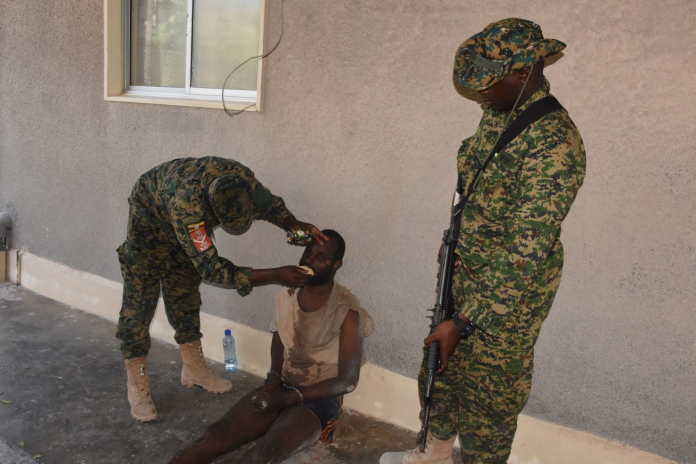
Captured senior Al-Shabaab commander Salaad Cusmaan Macalin being treated for injuries by UPDF soldiers soon after his capture.

The Uganda Peoples’ Defence Forces (UPDF) operating under the African Union Support and Stabilization Mission in Somalia has jointly with the Somali National Army (SNA) captured a senior Al-Shabaab commander during a coordinated operation in Mubaraka.

The suspect, identified as Salaad Cusmaan Macalin also known as “Sahm,” was apprehended on Wednesday in the north-western outskirts of Mubaraka by AUSSOM troops alongside the SNA’s elite Gorgor Unit 203.

Macalin, 40, is described as a battalion commander within the Al-Shabaab ranks and is believed to have been playing a key operational role in the group’s activities in the area.

According to military sources, he was captured while conducting reconnaissance on SNA defensive positions in preparation for a planned attack.

“At the time of his arrest, he was surveilling our defensive positions with the intention of facilitating an imminent attack on Mubaraka,” a military source said.

He is also reported to have been operating with a group of fighters, including about 17 foreign militants who had recently moved from Jilib to Ugunji, raising concerns about the presence of foreign elements within the militant network.

The Sector One Commander, Jackson Kayanja, hailed the operation as a major success in ongoing counterterrorism efforts.

“This is a significant breakthrough in our continued operations to degrade Al-Shabaab capabilities in this sector,” he said, commending the troops for their coordination and professionalism.

Brig Gen Kayanja called on local leaders and residents to continue sharing information with security forces, noting that community cooperation remains critical in sustaining security gains.

The UPDF contingent under AUSSOM, working closely with Somali forces, continues to conduct operations aimed at weakening Al-Shabaab and supporting efforts to restore lasting peace and stability in Somalia.

Stories Continues after ad

Uganda Airlines aborts  flight from Johannesburg to Entebbe after mid-air bird strike

Uganda Airlines passenger plane.

Uganda Airlines was this Friday morning forced to turn back one of its international flights after a bird strike shattered the aircraft’s windscreen shortly after take-off from Johannesburg.

The incident occurred on April 3, 2026, involving a flight en route from OR Tambo International Airport to Entebbe International Airport, prompting the crew to abort the journey mid-air as a safety precaution.

“This morning of April 3, 2026, our flight from Johannesburg (JNB) to Entebbe (EBB) experienced a disruption approximately 45 minutes after take-off due to a bird strike, which resulted in a shattered windscreen,” the airline said in a statement.

The crew opted to return to base in line with standard aviation safety procedures.

“The flight crew made the decision to return to OR Tambo International Airport (JNB), where the aircraft landed safely,” the statement added.

All passengers and crew on board were reported safe.

“We confirm that all guests and crew are safe. The safety and security of our passengers and staff remain our highest priority,” Uganda Airlines said.

The latest incident adds to a series of operational setbacks the national carrier has faced in recent months, raising concerns over reliability despite ongoing expansion efforts.

Earlier this year, Uganda Airlines suspended its Entebbe–Dubai route, one of its key international connections, citing airspace restrictions linked to escalating tensions in the Middle East. The suspension disrupted scheduled flights on the busy route, affecting travellers who rely on the corridor for business and labour export.

The airline has also faced recurring complaints from passengers over delays, last-minute schedule changes and limited communication during disruptions, particularly during peak travel periods.

The challenges are partly linked to fleet constraints, with a limited number of aircraft stretching operations across multiple regional and international routes, making recovery from disruptions more difficult.

Uganda Airlines has in recent years also navigated governance and financial pressures, including past management shake-ups and continued reliance on government support as it works toward profitability following its re-launch in 2019.

Despite the mounting operational concerns, Friday’s incident demonstrated adherence to safety protocols, with the flight crew’s decision to return to Johannesburg ensuring the safety of all on board.

The airline is expected to rebook affected passengers and carry out technical inspections on the aircraft before it resumes service.

Stories Continues after ad

Lotteries Board seizes 104 illegal gaming machines in ongoing crackdown

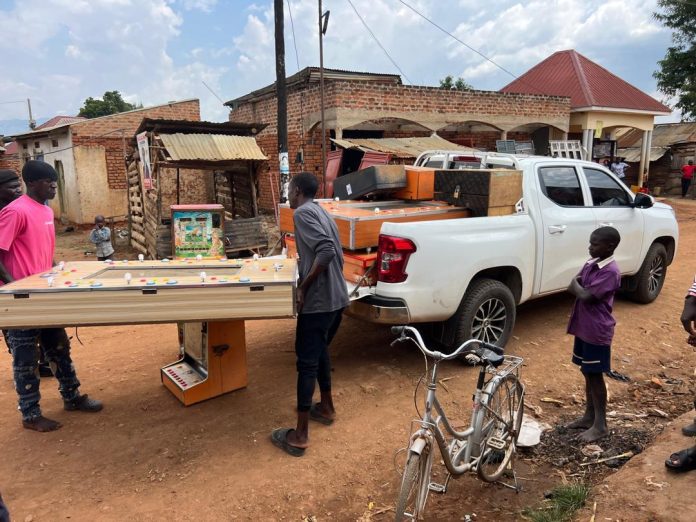
The 104 illegal gaming machines from Eastern Uganda being enforced by the Lotteries and Gaming Regulatory Board (LGRB).

The Lotteries and Gaming Regulatory Board (LGRB) has seized 104 illegal gaming machines in a fresh enforcement operation targeting unlicensed gambling activities across parts of central and eastern Uganda.

The machines were recovered during operations conducted along Mityana Road in areas of Buyala, Bujuko, Bukasa, Nabbweru, and Lusaze, as well as in parts of Eastern Uganda, where operators were found running gaming activities outside the law.

“Our enforcement teams conducted operations along Mityana Road, covering Buyala, Bujuko, Bukasa, Nabbweru, and Lusaze, and parts of Eastern Uganda where a total of 104 illegal gaming machines were confiscated for operating outside the law,” the Board said in a statement.

The regulator said the operation forms part of its ongoing campaign, Operation Mashine Haramu, aimed at eliminating illegal gaming machines from communities.

“We remain committed to protecting the public from the adverse effects of gaming and ensuring that only licensed operators conduct gaming activities,” the statement added.

The machines are installed in small businesses and trading centres without approval, often targeting youth and low-income earners. Besides exposing users to gambling-related harm, the illegal setups also undermine government revenue collection.

The Board has recently increased field inspections and joint enforcement actions with other agencies to track down unlicensed operators and ensure compliance with gaming laws. It has also warned business owners against hosting illegal machines, saying they risk legal action.

In addition to enforcement, the regulator continues to carry out public awareness campaigns on responsible gaming, urging the public to verify licensed operators and report illegal activities.

The latest operation adds to a series of similar crackdowns as authorities move to restore order in Uganda’s rapidly expanding gaming sector.

Stories Continues after ad

CDF Muhoozi directs death sentence for suspect in killing of four children at Ggaba school

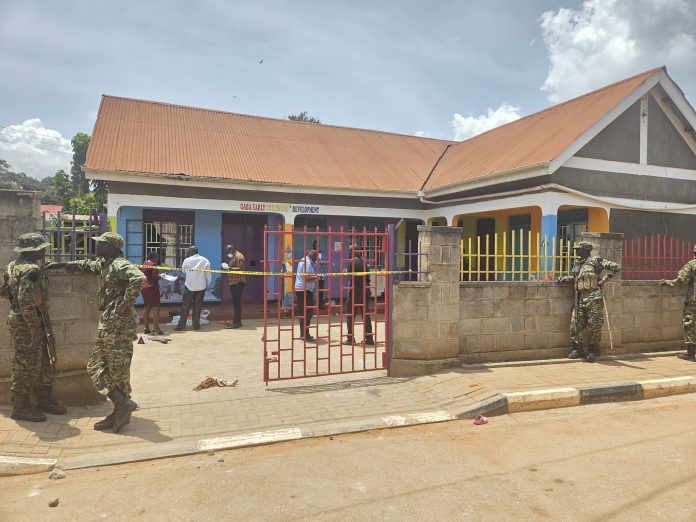
Suspect in the Ggaba Early Childhood Development school killings, Christopher Okello Onyum.

The Chief of Defence Forces, Gen Muhoozi Kainerugaba, has directed the death penalty against a suspect arrested over the brutal killing of four children at a daycare centre in Ggaba, Kampala.

In a statement shared on his X(formerly Twitter) handle, Gen Muhoozi said the suspect was already in custody and vowed that authorities would pursue the maximum punishment under the law.

“The suspect in the Ggaba attack has already been apprehended. We shall push for the death sentence for this criminal,” Muhoozi directed. 

Police later confirmed the incident and provided details of how the attack unfolded at the facility.

According to the Uganda Police spokesperson, Rusoke Kituuma, officers responded swiftly after receiving a distress call from the daycare centre.

“Today, Thursday, April 2, 2026, at around 1100 hours, the Police in Ggaba responded to a distress call reporting an individual allegedly attacking children at Ggaba Early Childhood Development Program, a daycare centre located in Ggaba Parish, Makindye Division, Kampala City,”Kituuma said.

He added that responding officers managed to arrest the suspect at the scene, identifying him as 39-year-old Okello Christopher Onyum.

“Preliminary findings confirm the tragic loss of four minors during the incident,” Kituuma noted.

The deceased were identified as Eteku Gideon, aged about two years; Kaise Alungat, aged about two years; Ignatius Sserwange, aged about three years; and Ryan Odeke, aged about two years. All the victims were pupils at the same daycare centre.

Police said the suspect remains in custody as investigations continue.

“The suspect is currently under interrogation as investigations continue to establish his motive, background, and any other relevant circumstances surrounding this heinous crime,” Kituuma said.

He added that the force had extended condolences to the bereaved families and assured the public of a thorough probe.

“The Uganda Police Force extends its deepest condolences to the affected families and assures the public that all efforts are underway to ensure a thorough investigation and justice for the victims,” he said.

Management at the daycare centre told investigators that the suspect had earlier approached the premises seeking admission for a child, a request that was still being processed before the incident occurred.

Police noted that further updates will be provided as more details emerge from the ongoing investigations.

Stories Continues after ad

EcoSkills Initiative empowers Kyegegwa farmers with Cocoa seedlings and climate-smart skills

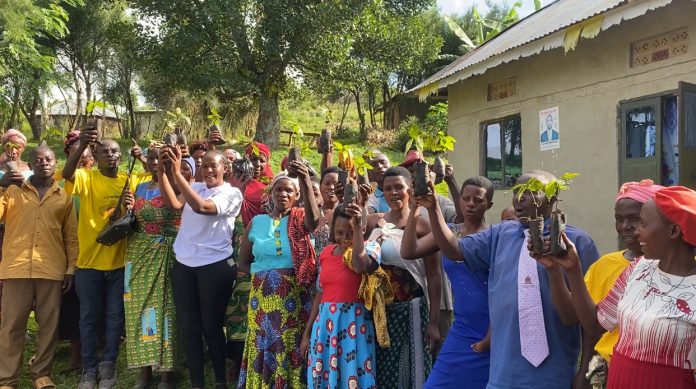
EcoSkills in Kiguya Village, Kyegegwa District.

EcoSkills Initiative intensified its efforts in Kyegegwa District by distributing cocoa seedlings and training farmers in sustainable agricultural practices to improve livelihoods and promote climate resilience.

During a community outreach held in Kiguya Village, Kyegegwa District, the organisation distributed cocoa seedlings to over 60 farmers, targeting improved household incomes through the adoption of high-value cash crops.

The outreach also focused on equipping farmers with practical knowledge, including financial literacy, family planning, environmental conservation, and small-scale farming techniques.

Speaking during the engagement, the Founder of EcoSkills Initiative, Maxiline Kansabe urged farmers to shift their focus from subsistence farming to more profitable ventures.

“Farmers should begin to think about the value of what they plant. It is not just about farming, but about the output and income it can generate,” she said.

Kansabe noted that the initiative was informed by reports indicating that Kyegegwa is among the poorest districts in the Tooro region, despite having a largely agricultural population.

She emphasized that crops like cocoa, which currently fetch between  Shs30,000 and Shs35,000 per kilogram at maturity present a viable pathway to improved livelihoods when properly managed.

The training session on small-scale farming was led by Sserunkuma Venansio, an expert in crop seedlings, who encouraged farmers to make productive use of limited land and available resources.

“You don’t need a large piece of land to farm successfully. With proper planning and use of available materials, even small-scale farming can be profitable,” he explained.

Farmers were also encouraged to adopt environmentally friendly practices, including recycling materials like bottles for planting instead of allowing them to pollute the environment.

The training further addressed environmental challenges affecting the district, particularly deforestation and poor waste disposal. Participants were guided on alternative eco-friendly practices, such as using maize residues for cooking instead of cutting down trees.

Philip Alihika, a project coordinator, emphasized the importance of planning in farming and household management.

“Everything begins with proper planning. Decision-making within families should also be inclusive to improve overall welfare,” he advised.

Local leaders welcomed the initiative, with Rukanga Asiimwe, Chairperson of Kiguya Village, expressing gratitude.

“We thank EcoSkills Initiative for supporting our farmers. We request more trainings like this to help uplift our community,” he said.

In addition, the initiative extended support to vulnerable households by donating clothes to community members, particularly single mothers and families in need.

In her speech, Kansabe also expressed gratitude to all individuals and well-wishers who contributed clothes and other forms of support, noting that their generosity played a key role in restoring dignity and hope within the community. She further advised farmers to put into practice what they were taught during the training for the good of the community and environment.

“Real change begins when knowledge is put into action. What we practice today will shape the future of our families, our community, and our environment,” she said.

Stories Continues after ad

Four children killed in Ggaba School attack, suspect arrested 

Police in Kampala have confirmed a tragic incident in which four juveniles were killed in a knife attack at a school in Makindye Division.

The incident occurred at Ggaba Early Childhood Development Program school, where a male suspect reportedly attacked and fatally stabbed the children.

Kampala Metropolitan Police spokesperson, Rachael Kawala confirmed the development, describing the incident as both shocking and deeply disturbing.

“We confirm a tragic incident at the Ggaba Early Childhood Development Program school in Makindye Division Kampala City where a male suspect brutally stabbed and killed four juveniles,” Kawala said.

She added that the suspect has since been arrested and is currently in police custody as investigations continue.

“The suspect has been apprehended, and the motive behind the killings is still under investigation,” she said.

She noted that more details will be communicated as inquiries progress.

Police have not yet disclosed the identity of the suspect or the victims, but investigators have since visited the scene and begun gathering evidence to establish what led to the fatal attack.

The latest incident adds to a growing number of violent crimes reported in Kampala in recent months, with authorities increasingly highlighting domestic and community-related tensions as key triggers. In February this year, police arrested a woman in Nateete for allegedly stabbing her three-year-old daughter to death, with preliminary findings linking the case to domestic disputes .

Security agencies have in previous statements emphasized the need for early reporting of suspicious behavior and conflicts, particularly in communities and homes, to prevent such incidents from escalating into deadly violence.

Kawala reiterated police commitment to ensuring justice for the victims and their families.

“Further details will be provided in due course,” she said.

Stories Continues after ad

What a Pair of EAMV surgical gloves, Kabaka’s Birthday, and Shs593t plan have in common

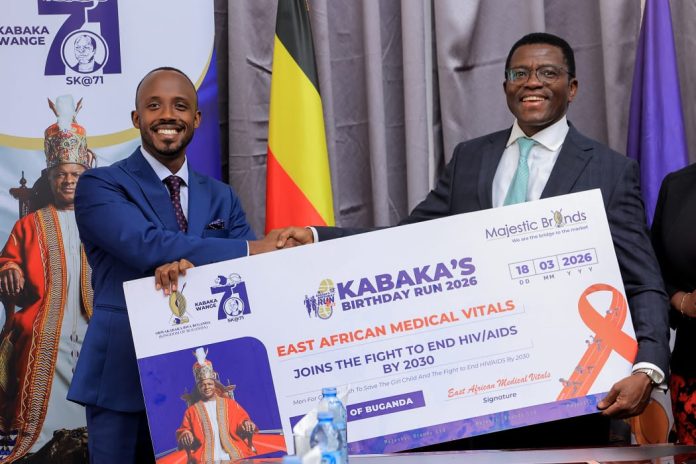
On March 31, 2026, inside the stately corridors of Bulange in Mengo, EAMV Managing Director Brian Kavuya handed a Shs10 million cheque to Charles Peter Mayiga, confirming the company’s Silver Sponsorship of the 13th Kabaka’s Birthday Run.

At first glance, the moment could easily be dismissed as a routine corporate gesture. But beneath it lies a deeper narrative about Uganda’s evolving development model.

East African Medical Vitals is the first manufacturer of powder-free latex surgical gloves on the African continent. Its factory in Namanve Industrial Park produces approximately 95 million gloves annually. Its involvement in a cultural health marathon signals a powerful convergence of local industry, traditional leadership, and national health priorities.

A Run That Reflects a National Development Blueprint

Uganda’s Fourth National Development Plan (NDP IV), covering FY 2025/26 to 2029/30, was approved by Parliament in January 2025. It seeks to increase household incomes and create employment through sustainable industrialisation for inclusive growth.

The plan is the first of three five-year strategies aimed at expanding Uganda’s economy tenfold by 2040. It is anchored on five strategic objectives: boosting production and value addition, strengthening human capital, enabling private sector-led growth, expanding infrastructure, and improving governance.

EAMV’s sponsorship of the Kabaka Run reflects several of these priorities in action. A local factory transforming imported latex into finished medical products highlights value addition and import substitution. A cultural institution mobilising over 130,000 people around a public health cause reinforces human capital development. Meanwhile, private sector investment in community health demonstrates partnership in national transformation.

This is policy translating into practice.

Made in Namanve: The Industry Behind the Investment

EAMV was established by Ben Brian Kavuya at a cost of approximately $14.5 million, with financing support from the East African Development Bank.

Since producing its first glove in 2021—an event attended by Yoweri Museveni—the company has grown into a regional supplier serving East and Central Africa. It holds ISO 13485:2016 certification for medical devices and Q-Mark certification from the Uganda National Bureau of Standards.

At full capacity, EAMV meets about 70 percent of Uganda’s domestic demand for surgical gloves. Previously, all such supplies were imported, often taking up to three months to arrive. Today, local deliveries take between three to five days.

The company has secured a ten-year government off-take agreement covering 30 percent of the national market, helping to save an estimated $17.8 million annually in foreign exchange. A second production line launched in early 2025 has further expanded capacity while creating hundreds of jobs.

This aligns directly with NDP IV’s vision of building industries that utilise local resources, promote exports, and reduce reliance on imports.

Running Towards 2030: The HIV Fight Driving the Cause

This year’s run carries the theme;“Men for Good Health to Save the Girl Child and the Fight to End HIV/AIDS by 2030.”

It highlights a critical public health concern: men remain a key transmission group, while adolescent girls and young women continue to face a disproportionate risk of new infections.

According to UNAIDS, Uganda’s HIV prevalence among adults aged 15 to 49 declined to 4.9 percent in 2024, down from 7.3 percent in 2010. Annual new infections have dropped by 61 percent, from 96,000 to 37,000. More than 1.3 million Ugandans are currently receiving antiretroviral treatment.

In the Buganda region, new infections declined by 21 percent between 2020 and 2024. However, more than 4,700 babies were still born with HIV in 2024 alone.

The Katikkiro emphasised that awareness, open dialogue, and knowledge remain the most effective tools in combating the disease. The run’s theme, therefore, is not just a slogan but a reflection of a broader development priority.

Private Sector Role in a Shs593 Trillion Vision

NDP IV is estimated to cost Shs593.6 trillion over five years, with approximately 30.4 percent, about Shs180.4 trillion, expected from the private sector.

This contribution is not framed as charity, but as co-investment in national development.

EAMV’s Shs10 million sponsorship may appear modest in scale, but it represents a larger principle: aligning business operations with national priorities and community wellbeing.

“Our sponsorship is a testament that we have our communities at the heart of our business,” Kavuya said during the handover.

The Katikkiro, in turn, acknowledged the importance of locally manufactured surgical gloves in strengthening Uganda’s healthcare system and urged men to take a leading role in the fight against HIV.

Culture, Commerce, and the Road to 2040

Uganda’s Vision 2040 aims to transform the country into a modern and prosperous society. NDP IV represents a critical phase in achieving that ambition.

However, such plans depend on active participation from industries, institutions, and citizens alike.

The moment at Bulange was more than a ceremonial cheque handover. It illustrated how a Ugandan manufacturer, built with regional capital and producing life-saving medical supplies, can reinvest in community health initiatives that align with cultural traditions and national goals.

That is not merely philanthropy. It is development in motion.

The 13th Kabaka’s Birthday Run will take place on 12 April 2026, starting from Lubiri in Mengo. Participation kits are available at Shs20,000, with race categories of 21km, 10km, and 5km.

Stories Continues after ad

Police arrest over 100 suspects ahead of Easter safety operations 

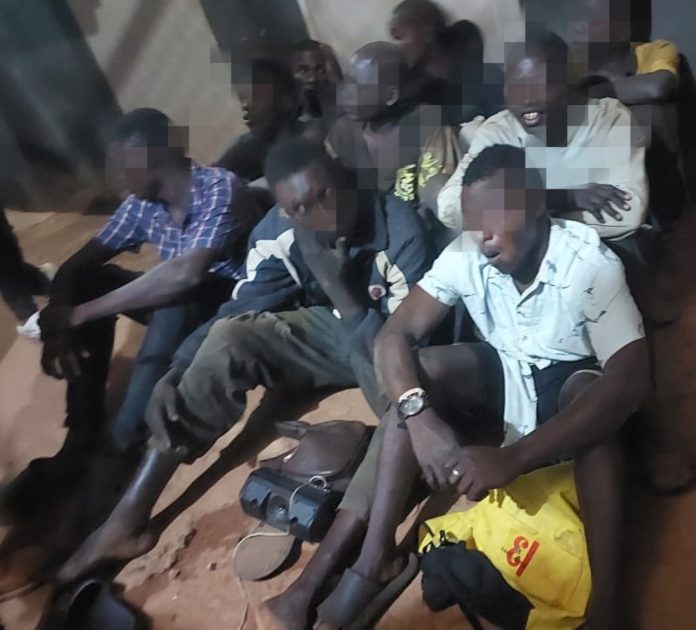
Police have arrested more than 100 suspects across the Kampala Metropolitan Area ahead of the Easter celebrations, following intensified security operations aimed at ensuring public safety during the festive period.

Kampala Metropolitan Police spokesperson Rachael Kawala said the arrests were made during coordinated night operations conducted across several divisions.

“In a bid to ensure a safe and secure Easter holiday, the Kampala Metropolitan Police have intensified patrols, visibility, and intelligence-led disruptive operations across the region,” Kawala said.

She explained that on April 1, 2026, between 8:30pm and 3:00am, police carried out targeted operations in crime-prone areas within the metropolitan region.

“In Entebbe, operations were conducted in Kasenyi and Nakiwogo, resulting in the arrest of 23 suspects,” she said.

Kawala added that in Mukono District, operations in Kawoola, Katoogo, Takajjunge, and Kubiri led to the arrest of 36 suspects, while Old Kampala Police arrested 24 suspects in the New Taxi Park and Kakajo areas.

“At Katwe Division, operations in St Augustine Zone resulted in the arrest of 14 suspects, while Kira Division carried out operations in Mulawa, Kitukutwe, and Kiwologoma, leading to the arrest of 11 suspects,” she noted.

Police also recovered exhibits including dry marijuana leaves, rolled sticks, and fresh plant materials, among other items suspected to be linked to criminal activity.

“All suspects are currently in police custody pending court proceedings,” Kawala said, 

She added that the operations will continue to ensure a safe and secure Easter season.

She emphasized that the ongoing enforcement efforts are intended to deter crime and maintain order as Ugandans prepare to celebrate the holiday.

Stories Continues after ad

CDF Muhoozi appoints Brig. Namanya, Col Deo Akiiki and 10 other officers as Uganda’s military Attachés

Col.Deo Akiiki handover a report to Chief of Defence Forces, Gen. Muhoozi Kainerugaba.

The Chief of Defence Forces, Muhoozi Kainerugaba, has appointed Colonel Deo Akiiki as Uganda’s new Military Attaché and defence advisor in Washington, D.C.

In the same appointment, Gen. Muhoozi appointed 10 others to different countries. Those appointed include Brig. Gen. Johnson Namanya who has been posted to Burundi, Brig. Gen. Edward Ronald Mutaawe Ethiopia, Brig. Gen. Paddy Ankunda Belgium, Brig. Gen. Julius Rubakuuba Tanzania, Brig. Gen. Richard Rubongoya Russia, Brig. Gen. Paul Muwonge Democratic Republic of Congo, Col. Alex Tumushabe United Arab Emirates, Col. Godfrey Kyomuhendo Algeria, Col. Steve Mulindwa Saudi Arabia, Col. Victor Busobozi Rukonge Somalia, Col. Ezekiel Katatembeya Rwanda and Col. Albert Nomwesigwa as Liasson Officer Beni Democratic Republic of Congo.

The announcement was made on Wednesday night, confirming the new diplomatic postings.

Col Akiiki, who has been serving as Deputy Director of Defence Public Information and deputy army spokesperson, described the appointment as a privilege and a call to greater service. He said the trust placed in him by the army leadership will guide his commitment to representing Uganda with professionalism and integrity.

“I am honoured by the trust placed in me by the Chief of Defence Forces to serve as Defence Attaché in Washington. I will carry out my duties with commitment and uphold the values of the UPDF,” Akiiki said.

The role of Defence Attaché involves representing Uganda’s armed forces in the United States, strengthening bilateral defence cooperation, and coordinating military-to-military engagements between Kampala and Washington. The position also includes advising on security matters and supporting Uganda’s broader diplomatic objectives.

Over the years, he has communicated the army’s role in regional missions, including operations in Somalia and eastern Democratic Republic of Congo, helping shape public understanding of Uganda’s security engagements.

Stories Continues after ad
Uganda’s remittance inflows hit Shs9.25t in 2025, BoU launches tracking dashboard

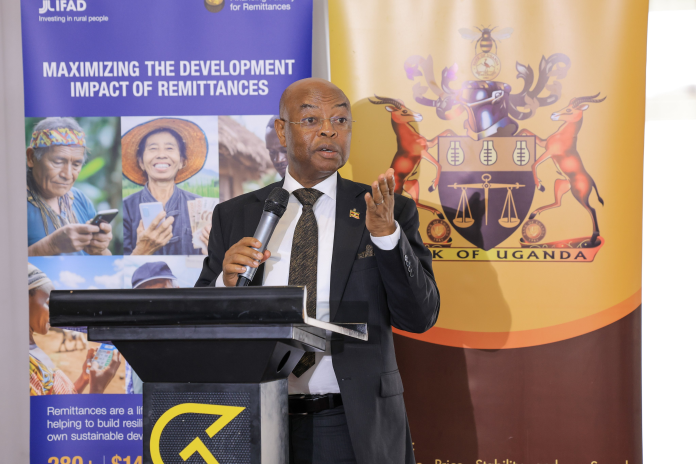
Bank of Uganda Deputy Governor, Augustus Nuwagaba.

Uganda’s remittance inflows reached Shs9.25 trillion ($2.5 billion) in 2025, the Bank of Uganda has revealed, showing the growing importance of diaspora contributions to the country’s economy.

The figures were disclosed during the launch of an interactive remittance dashboard developed by the central bank in collaboration with the International Fund for Agricultural Development in East Africa, a tool expected to improve the accuracy, frequency, and accessibility of remittance data.

Launching the platform, Deputy Governor Augustus Nuwagaba described remittances as a critical pillar of Uganda’s economic stability and noted that they continue to rival traditional foreign exchange earners.

“Remittances are a lifeline. They are more than statistics, they represent the sacrifices of Ugandans abroad who work to earn this money,” Nuwagaba said.

He added, “They provide for families and households both formally and informally and have proven to be a sustainable source of foreign currency inflows, competing with other sources such as coffee and tourism, which supports our Balance of Payments.”

The new dashboard stems from an enhanced data collection framework that expands coverage to include remittance service providers across the financial sector, including mobile money platforms and fintech channels. This shift has significantly improved visibility into flows that were previously not captured.

According to Nuwagaba, the improved methodology has already led to the discovery of substantial additional inflows.

“This tool has already helped us capture an additional US$1 billion in remittances, significantly higher than previous estimates of around $1.5 billion, showing that inflows in 2025 reached approximately US$2.5 billion,” he said.

He added that beyond increasing the headline figures, the new system provides deeper insights into the origin, transmission channels and usage of remittances, which are essential for informed policy decisions.

“It is not simply a larger number but it is more accurate because it includes information on where the remittances come from, how they are sent, plus what they are used for. That distinction matters enormously for policymaking,” he explained.

Nuwagaba also commended Ugandans living abroad for their continued support to the domestic economy, noting that remittance inflows play a stabilizing role in the foreign exchange market.

“These remittances can be a wonder in building a country’s inflows which help stabilize the foreign exchange markets and relieve exchange rate pressures, which is an important aspect of economic fundamentals,” he said.

The dashboard replaces a system that relied largely on annual surveys and aggregated submissions from commercial banks and foreign exchange bureaus, which often came with limited detail and significant delays. Under the new approach introduced in May 2025, data is collected more frequently and at transaction level, improving both timeliness and reliability.

The platform will be updated monthly and will provide stakeholders with accessible insights into both inbound and outbound remittance trends. The existing Annual Personal Transfers Survey will continue to complement the system by capturing non cash and informal transfers that may not pass through formal financial channels.

The central bank emphasized that while the data currently published is subject to refinement as more inputs are incorporated, the new system brings in transparency and evidence-based economic planning in Uganda’s financial sector.

Stories Continues after ad