Stanbic Bank
Stanbic Bank
19.7 C
Kampala
Stanbic Bank
Stanbic Bank
Home Blog Page 34

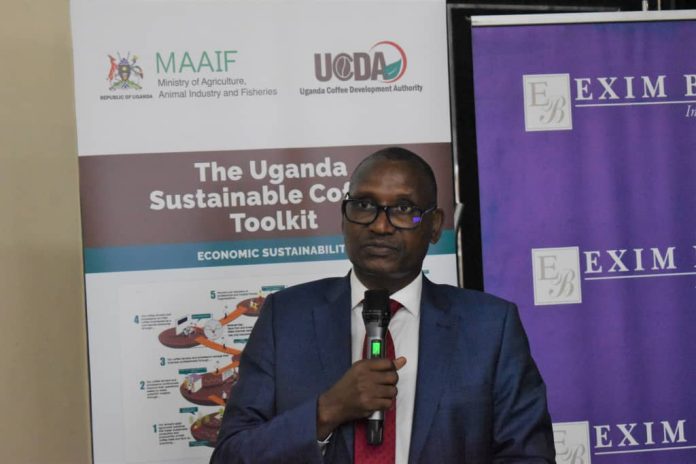
Frank Tumwebaze mourns former UCDA boss Emmanuel Iyamulemye

RIP Dr. Emmanuel Iyamulemye.

The former Executive Director of the defunct Uganda Coffee Development Authority (UCDA), Dr. Emmanuel Iyamulemye, has passed on, according to Agriculture Minister Frank Tumwebaze, who announced the sad news on X (formerly Twitter) this morning.

“I have learnt this morning with deep sorrow the passing of Dr. Emmanuel Iyamulemye, the former ED of UCDA. Dr. Iyamulemye passed away this morning, November 18, 2025. Dr. Iyamulemye was a pillar of Uganda’s coffee sector and played a key leadership role in the design and implementation of Uganda’s coffee roadmap that brought about Uganda’s exponential growth,” Tumwebaze wrote.

Under Iyamulemye’s leadership, Tumwebaze noted, Uganda strengthened its coffee quality standards, expanded farmer extension support systems, and positioned itself among the world’s most competitive coffee origins.

“He fought firmly in international coffee bodies and forums, demanding the correct classification of African coffees (Uganda’s Robusta and Ethiopia’s Arabica). He was a bold, firm and intelligent officer. Together with other colleagues, he worked hard to open up Uganda’s new coffee markets like China. On behalf of MAAIF Uganda, the coffee stakeholder fraternity, and on my own behalf, I extend our heartfelt condolences to his family, colleagues, and friends. May his soul rest in eternal peace,” Tumwebaze posted on X.

By November 2021, Iyamulemye’s career spanned more than 15 years. After graduate school, he served for two years as programme director of an initiative promoting NERICA rice in Uganda, supported by the Food and Agriculture Organisation.

He later served as National Programme Coordinator for two major development programmes jointly funded by the European Union and the Government of Uganda to uplift communities in Northern Uganda. The Northern Uganda Agricultural Livelihoods Recovery Programme (ALREP), worth €20 million, and the Karamoja Livelihoods Programme (KALIP), worth €15 million, both ran between 2010 and 2016.

Iyamulemye was first appointed CEO of UCDA in 2016. In 2021, the UCDA Board renewed his contract for another five years following the successful delivery of his first term.

UCDA was among the government agencies later dissolved, with its activities absorbed into the Ministry of Agriculture.

Stories Continues after ad

Tayebwa rallies religious leaders to champion modern farming as Uganda targets Shs500b economy by 2040

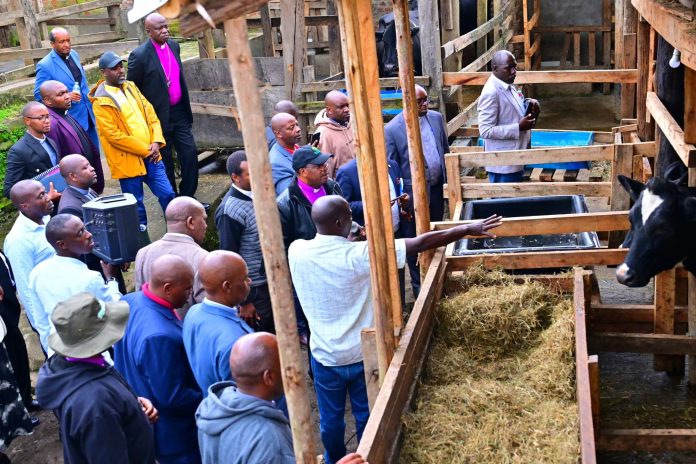
Kigezi religious leaders at Kana Farm in Rwengaju Sub-County, Fort Portal City.

Deputy Speaker of Parliament Thomas Tayebwa has called on religious leaders to take a frontline role in transforming Uganda’s agricultural practices since they are key influencers capable of inspiring communities toward modern, income-generating farming.

Speaking after a field tour with Kigezi religious leaders at Kana Farm in Rwengaju Subcounty, Fort Portal City, Tayebwa emphasized that Uganda’s development ambitions hinge heavily on agro-industrialisation.

“We have big dreams as a country, one of them being to grow our economy to $500 billion by 2040,” he said. 

He added, “One of the surest paths to achieving this vision is through agro-industrialisation. But before we industrialise agriculture, we must first get farming right, especially in regions like Kigezi, which is becoming increasingly densely populated.”

The visit to Kana Farm, owned by renowned farmer Richard Nyakana, exposed religious leaders to practical models of commercial agriculture on small acreage. The 1.3-acre farm generates a net income of Shs17.2 million per month and employs 15 people, making it a living example of how limited land can be used for substantial socioeconomic progress.

Tayebwa said Uganda needs champions who can learn, teach and motivate communities toward better farming practices.

“To improve farming practices, we need allies who can learn, teach and inspire others. As government, we believe those allies are our religious leaders,” he noted. 

He further said, “Religious leaders command great respect, and we believe they can inspire many others to embrace modern agriculture.”

He stressed that beyond influencing communities, farming offers a pathway for religious institutions to strengthen their own financial stability.

He added, “Farming is also one of the best ways for religious institutions to become sustainable by generating their own income instead of relying solely on tithes.”

The initiative was inspired by a directive from President Yoweri Museveni, who earlier met leaders from Kigezi and urged them to become ambassadors of economic transformation. Tayebwa commended the clerics for embracing the call and dedicating time to learn.

He said their involvement is a strong signal that Uganda’s push for agro-industrial development has credible community entry points.

“I deeply appreciate them for taking time out of their busy schedules to learn about farming. Their participation reflects real commitment to this cause,” Tayebwa remarked.

The Deputy Speaker expressed optimism that the religious leaders will return home and drive change from the pulpit by preaching modern farming, starting demonstration projects and helping communities adopt practices that can lift household incomes.

“After this learning experience, we hope these leaders will return to their communities and spread the gospel of good farming practices, and start model projects in the churches and schools they oversee,” he said.

Tayebwa reaffirmed the government’s belief that with the right partnerships especially with faith leaders Uganda’s dream of building a modern, industrialised and prosperous nation is within reach.

Stories Continues after ad

Victoria University secures NCHE accreditation for three new tech-focused programmes

Victoria University has received a boost after the National Council for Higher Education (NCHE) approved three new academic programmes, thus strengthening the institution’s push toward innovation and digital-ready education.

The approval, communicated in an official letter dated 10th November 2025 and signed by NCHE Executive Director Prof. Mary J. N. Okwakol, confirmed that the programmes were accredited during the Council’s 82nd Meeting held on 3rd November 2025.

The newly accredited programmes, each tailored to meet modern workforce demands, include: Postgraduate Diploma in Higher Education (50 admissible students per year; accredited for 5 years), Bachelor of Science in Cyber Security and Digital Forensics (85 students; 7 years), and Bachelor of Science in Artificial Intelligence and Data Science (85 students; 7 years)

Prof. Okwakol, in her communication emphasized the importance of compliance and quality assurance across institutions offering higher education.

“You shall not run any academic programmes that have not been accredited by the National Council for Higher Education (NCHE),” she cautioned, reminding the university of its obligation under Section 125 of the Universities and Other Tertiary Institutions Act.

She further called on Victoria University staff to uphold rigorous standards in delivering the newly approved programmes.

“Please urge your staff members to implement these programmes in accordance with the regulations of NCHE. Officers of the NCHE shall review the implementation during their periodic administrative and monitoring visits,” the Executive Director noted.

The NCHE also reiterated the statutory requirement for every student enrolled in accredited programmes to contribute Shs20,000 per year, payable through the URA portal.

The accreditation marks a significant milestone for Victoria University, which has been positioning itself as a leader in tech-driven education. The new programmes spanning cyber security, digital forensics, artificial intelligence, data science and modern higher education pedagogy are expected to attract learners eager to compete in fast-evolving digital industries.

These additions align perfectly with the institution’s mission to train highly skilled graduates capable of solving real-world challenges through innovation, technology and research.

Stories Continues after ad

First Lady commissions Henry K. Grameen hospital built from women’s savings

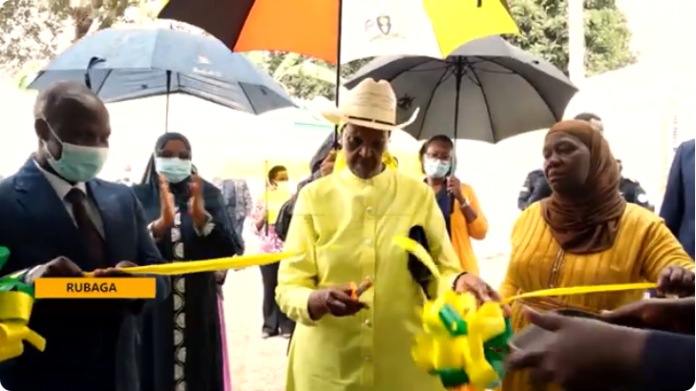
First Lady and Minister for Education, Janet Museveni, at the commissioning of the facility.

The First Lady and Minister of Education and Sports, Janet Kataaha Museveni, on Friday commissioned the Henry K. Grameen Hospital in Rubaga and praised the women behind the project for transforming a small savings effort into a landmark achievement.

She revealed that the hospital was built entirely from the collective savings of the women under the Grameen Women’s Development Initiative and described it as a powerful testament to what unity and discipline can accomplish.

Tracing the project’s roots, Mrs. Museveni noted its remarkable growth. 

“What began in May 2023 with a seed of Shs100 million has now grown into a movement of over 20,400 women with assets exceeding Shs4.2 billion,” she said.

The First Lady applauded the women of Rubaga for demonstrating that community-driven development remains the strongest tool for uplifting families. She emphasized that their success mirrors the vision of Nobel Peace Prize laureate Prof. Muhammad Yunus, the brain behind the global Grameen concept.

“The Grameen concept; an innovation of Nobel Peace Prize laureate Prof. Yunus Muhammad was created to uplift the poorest women, and today its impact is evident in this community. I applaud them for proving that real development begins at home, when families save faithfully, support one another, and stay united,” she said.

Mrs. Museveni encouraged the women to expand their initiative beyond Rubaga. 

“The women of Rubaga have already laid a strong foundation; now they must continue building on it,” she noted, urging them to spread the model across Kampala and eventually throughout Uganda.

In a message directed at the youth, she called for unity, diligence and purpose-driven living. 

“To the youth: Africa will rise when we choose unity over division and work over idleness. Our true enemies are poverty and disease, not our political or cultural differences,” she added.

Stories Continues after ad

Gov’t should prioritize national medical insurance, says Basajjabalaba

City businessman and educationalist Hassan Basajjabalaba speaking at the mother's sendoff on November 16, 2025.

Businessman Hassan Basajjabalaba has urged the government to urgently prioritize the establishment of a national medical insurance scheme, saying the absence of such a system continues to expose Ugandans, especially the poor, to unbearable medical costs and preventable deaths.

He made the call on Saturday, November 16, during the burial of his mother, Hajjat Azida Basajjabalaba, who was laid to rest at the family home in Ishaka–Bushenyi. Amid grief, Basajjabalaba recounted the painful journey the family endured as they tried to save their mother, who battled a complicated heart condition.

In his testimony, he narrated the desperate attempt he made to secure a heart transplant abroad.

“I asked Ambassador Mubiru, can’t you use your office, and I get a heart for this old woman? I wanted him to talk to the government so that I could get the heart,” he said.

He revealed that Ambassador Mubiru later received an emergency call from Kampala and could not advance the matter, while the medical authorities abroad refused to bend any rules.

He recalled, “The commission said it is unethical to smuggle a heart and that we could be arrested for that. Having failed to secure the heart, we gave up, and I sought ways of saving the life of my mother.”

Basajjabalaba said the cost of his mother’s medical care was overwhelming, even for a wealthy family like his.

He disclosed that he spent a minimum of €20,000 (about Shs1 billion) per trip, an amount he said is beyond the reach of an ordinary Ugandan.

“We went to Germany more than ten times, the UK five times, and South Africa five times,” he said, describing the emotional, physical and financial strain his family endured.

He appealed to Parliament and the government to fast-track the national health insurance scheme, saying Ugandans deserve a system that cushions them from catastrophic medical bills.

“I request Deputy Speaker Thomas Tayebwa to tell President Museveni to sign the medical insurance. In Germany, if one falls sick and insurance helps a lot. Instead of striking for political reasons, let’s strike for medical insurance. If my mother had insurance, I would have paid only 40% of the money,” he said.

He cited several regional examples to show the urgency and importance of universal medical insurance.

“In Tanzania, a person above 70 years is treated for free, and a child under five is also treated for free. A woman giving birth receives free medical care,” he said.

Basajjabalaba also noted that the cost of modern medical equipment makes it impossible for hospitals to rely on patient fees alone.

“For instance, the only PET scan in East Africa is at Aga Khan Hospital. It costs $9 million, and no one will pay that money without assurance of recovering it,” he added.

He emphasized that even in neighbouring countries, private hospitals outperform public ones because of limitations in government healthcare systems.

He said, “Even if you go to Kenya or Tanzania, the best hospitals are private. You cannot expect government hospitals to be the best because the process of equipping and supervising them is long and most doctors are always absent.”

Basajjabalaba proposed a bold financing model in which government acquires partial ownership of mission hospitals to subsidize services.

“I propose that since we have Nsambya, Mengo, and Kibuli hospitals, the government should invest 30% of the national budget, about Shs1 trillion, and get ownership so that people are treated at a subsidized cost,” he said.

He cited Kenya’s example, where the government bought 49% of Nairobi Hospital, resulting in more affordable healthcare for citizens.

“These cancer institutes being built won’t work,” he warned, arguing that without an insurance system and proper investment model, many specialized health projects will fail to serve their intended purpose.

Reflecting on his final attempt to save his mother, Basajjabalaba described the heartbreaking moment when he was ready to spend an extraordinary amount of money to secure a heart transplant.

He recounted, “I even walked with $2 million, and I could double it to $4 million to get a heart for my mother. The professor looked at me and asked, Are you sure you can pay $2 million for the 86-year-old woman? I said yes. If it’s not allowed here, we take her to Germany.”

However, the German commission blocked the transplant due to age restrictions.

He added, “The professor told me a person of 80 years cannot be given a heart. And at that time, my mother could not fly to another place.”

Basajjabalaba said this painful experience should compel the country to rethink its health system so that no Ugandan rich or poor has to go through such anguish again.

Stories Continues after ad

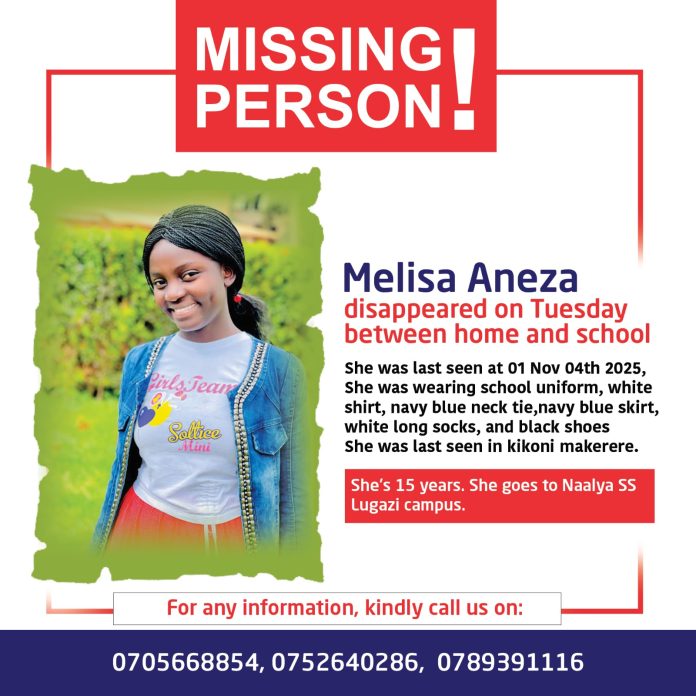
Police probe two separate incidents involving missing Kampala girl and body found in Kyampisi swamp

The Territorial Police in Kampala Metropolitan East and North have launched two parallel investigations following the disappearance of a juvenile and the discovery of a decomposing body in a swamp in Kyampisi Subcounty.

In the first case, officers at Wandegeya Police Station are handling a report filed on November 6, 2025, by Kamuganga Sarah, who said her daughter, Aneza Merisa, had gone missing under unclear circumstances.

“The first is a case of a missing juvenile reported at Wandegeya Police Station on 6th November 2025, in which Kamuganga Sarah reported the disappearance of her daughter, Aneza Merisa,” Kampala Metropolitan Deputy Police Spokesperson Luke Owoyesigyire stated.

The second investigation is being conducted at Nagalama Police Station after the recovery of a decomposing body on November 10, 2025, from Musaale Swamp in Namulaba Village, Kyampisi Subcounty. The body was discovered wearing a navy-blue student skirt labelled “Nanyonga VII.”

“The body was dressed in a navy-blue student skirt labelled ‘Nanyonga VII,’ indicating that the victim may have been a student. The specific school is yet to be identified,” Owoyesigyire said.

He added that police have begun engaging nearby schools to establish if any learners have been reported missing.

Due to its advanced state of decomposition, the body was buried by Kayunga mortuary staff. But when the parents of the missing girl learnt about the Nagalama recovery, they suspected it could be their daughter although they never physically viewed the body.

Police have since moved to secure a court order to have the body exhumed for forensic testing.

“Samples will be extracted for DNA analysis to determine whether the remains are those of the missing child, Aneza Merisa,” Owoyesigyire explained.

He urged the public to remain patient and avoid speculation as detectives have not yet linked the two cases.

“We appeal to the general public to remain calm as investigations have not yet established any link between the missing juvenile and the body recovered in Nagalama,” he said.

Police say additional updates will be communicated as the investigations progress.

Stories Continues after ad
Kiira Motors launches ambitious 13,000km electric expedition to Cape Town

Kayoola Electric Coach.

Kiira Motors Corporation (KMC) has flagged off a 13,000-kilometre trans-African journey of Kayoola Electric Coach on a month-long expedition aimed at opening new markets and elevating Uganda’s technological footprint across the continent.

The mission, which runs from November 20 to December 20, will see the 13-metre e-coach traverse Tanzania, Zambia, Botswana, Eswatini and finally Cape Town, South Africa. The initiative is part of Uganda’s wider push to position itself as a regional hub for innovation, electric mobility and high-value manufacturing.

Unveiled at a dedication ceremony held at Protea Hotel Kololo on November 14, the expedition is designed as a moving exhibition of Ugandan innovation. A 42-member team will travel aboard the 62-seater electric coach, supported by a portable charging system and uninterrupted connectivity provided by MTN, the main sponsor.

Officials say the “Made in Uganda to Southern Africa” tour aims to introduce the Kayoola Electric Coach to potential buyers while showcasing the expanding capabilities of Uganda’s innovation ecosystem. At each stop, the team is expected to hold technical demonstrations, town-hall engagements and policy forums with transport operators, investors, business groups and government leaders.

A key commercial target is securing at least 1,000 orders for the Kayoola bus model while building partnerships in distribution, technology development and investment. The expedition will also promote a broad range of Ugandan-made products, including solar routers, IoT security devices, DC fast chargers, 3D printers and water pumps. Agro-processed items such as coffee, honey, herbal teas, fruit products and tooke flour will also be showcased to potential markets.

Backed by the Ministry of Science, Technology, and Innovation, Uganda’s foreign missions, the Uganda Export Promotion Board, and Uganda Airlines, the initiative aligns with national efforts to boost exports and scale indigenous technologies. It is also expected to help position Ugandan enterprises for stronger trade and industrial cooperation with Southern Africa.

Dr. Monica Musenero, Minister for Science, Technology and Innovation, encouraged the team to carry Uganda’s innovative identity with confidence. 

“There is power in ideas and the wealth God has given us to inherit is in ideas. Wherever you go, carry the pride of the Pearl of Africa and be the best,”she said.

KMC chief executive Paul Isaac Musasizi described the journey as an electric trans-African exhibition of technology and innovation, affirming the corporation’s ambition to amplify the visibility of Uganda’s homegrown solutions.

 “We are taking Made in Uganda to Africa,” he said.

Through live tracking, interactive maps and real-time performance updates, audiences across the continent will be able to follow the journey as the Kayoola coach demonstrates Africa-built electric mobility on the road. If successful, the expedition could mark a decisive step toward expanding Uganda’s industrial reach and positioning its electric mobility sector for continental leadership.

Stories Continues after ad
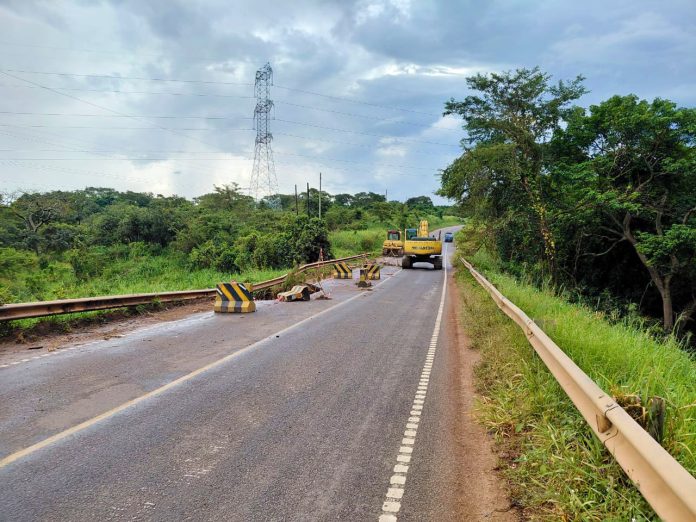
Transport ministry orders immediate diversion as Karuma–Kamdini road section collapses

The affected section of the road.

The Ministry of Works and Transport has ordered an urgent diversion of all traffic following the collapse of a major section of the Karuma–Kamdini road on the Gulu Highway, severely disrupting movement between northern Uganda and Kampala.

In a statement dated November 16, officials confirmed that the affected point lies about one kilometre from the Karuma–Oliwiyo–Pakwach junction on the Kampala side. Continuous heavy rains have weakened the embankment, leading to further deterioration over the past few days.

“More than half of the road carriageway is now affected, rendering the section unsafe for all traffic. The failure continues to widen due to the persistent heavy rains impacting the embankment,” the ministry revealed.

The damaged stretch has since been sealed off to protect road users as engineers prepare emergency works to restore the corridor. 

“For public safety, the section is now hoarded off as we mobilize for emergency restoration works,” said the Permanent Secretary, Bageya Waiswa.

The ministry directed motorists to avoid the area and follow the newly established diversion route.

“All vehicles are advised to divert at the Karuma–Pakwach junction (URA checkpoint) and proceed to Olwiyo Trading Centre, then turn right and continue through Anaka to Gulu; and vice versa for vehicles from the Gulu side heading to Kampala,” the statement read.

The diversion, which covers over 100 kilometres, is expected to increase travel time for both commuter and cargo traffic. The route is one of the busiest corridors linking northern Uganda to the capital, and any extended closure is likely to affect trade, long-distance travel, and the movement of goods to and from South Sudan and the DR Congo.

The ministry pledged to provide timely updates as restoration works progress and apologized for the inconvenience caused to the public.

Stories Continues after ad

HIV/AIDS ALERT: Bugisu Sub-Region facing critical situation

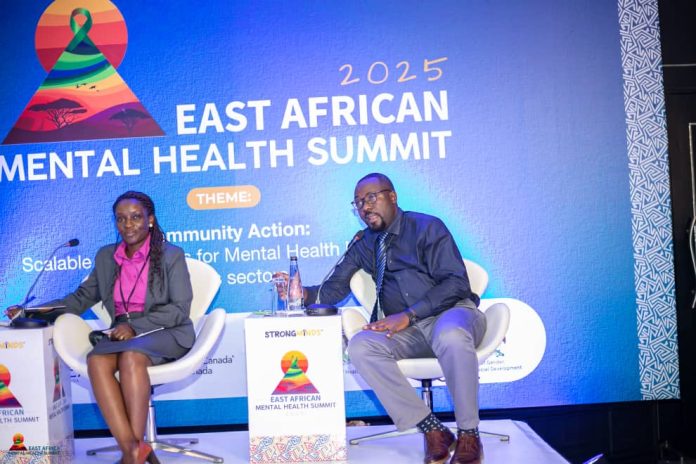
Mr Wamutu James and another panelist at a health facilitation event.

By Mr. Wamutu James,

Public Health Specialist and Executive Director, Uganda Health Developers (UHD)

MBALE, UGANDA – The Bugisu sub-region is grappling with a rising tide of HIV/AIDS cases, particularly among adolescents, young people, and youth, with females disproportionately affected. According to recent statistics, Uganda recorded 38,000 new HIV infections in 2023, with the majority being youths aged 15-24.

Of these new infections, females account for 22,000, highlighting the urgent need for targeted interventions. The national HIV prevalence stands at 5.1%, with 1.5 million people living with HIV in Uganda. While 92% of those living with HIV are aware of their status, and over 90% are receiving ARV therapy, more needs to be done to curb the spread of the disease.

Key drivers of the epidemic in the Bugisu sub-region include early marriage, polygamy, gender inequality, poverty, and cultural silence and stigma. To address these challenges, cultural and faith-based leaders are being urged to take immediate action.

“Our analysis reveals that cultural and faith-based institutions have a pivotal role to play in addressing this issue,” said Mr. Wamutu James, Executive Director, Uganda Health Developers (UHD). “We must work together to promote cultural values that protect women, girls, and young people, advocate for girls’ education and economic empowerment, and integrate comprehensive HIV education into programs.”

Other recommended actions include supporting community-based initiatives, engaging men and boys in HIV prevention and support, and addressing stigma and discrimination.

To achieve these goals, UHD is calling for the establishment of a cultural institution-led HIV/AIDS task force, development of culturally sensitive HIV education materials, engagement of local leaders in advocacy and awareness campaigns, and support for community-based initiatives addressing HIV/AIDS.

“We must unite to address the social and economic drivers of HIV/AIDS, protecting our young people and promoting a culture of life, love, and support,” Mr. Wamutu James emphasized. “Together, we can create a healthier Bugisu sub-region and stem the tide of this epidemic.”

Stories Continues after ad

From Shs40,000 to a thriving multi-branch business: The journey of Abel Byamukama

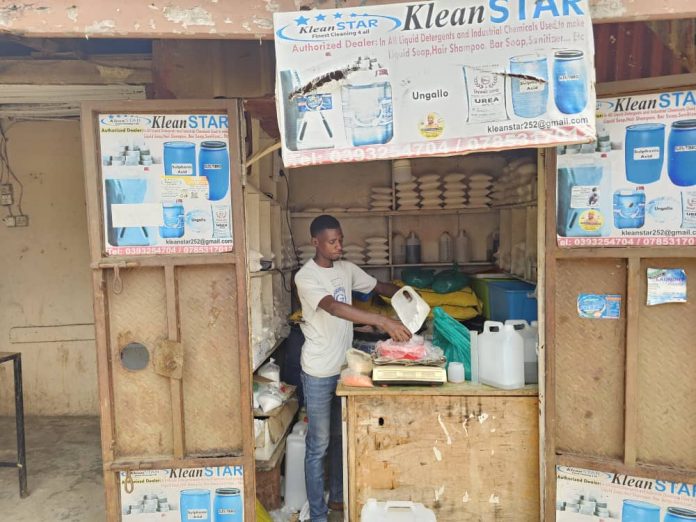
Abel Byamukama at his shop.

My name is Abel Byamukama, a 29-year-old entrepreneur from Maguru Village, Kyabukonkoni Division, Fort Portal City. I am the founder of “Klean Star Products”, a growing enterprise that manufactures liquid soap and a range of home-care products.

My entrepreneurial journey began eight years ago, shortly after completing Senior Six. I moved from Ntungamo to Fort Portal with hopes of helping my uncle start a business. Unfortunately, the venture didn’t materialize, and I was left with just Shs40,000 and nowhere to go. A friend offered me shelter in an abandoned house. He was making liquid soap and encouraged me to learn the skill as a means of survival.

With the little money I had, I bought ingredients and started to learn how to make liquid soap. After a few months, I  began producing liquid soap, packaging it in reused mineral water bottles. I hawked my products around Fort Portal City, determined to make ends meet. I tried to access financing from a bank, but the requirements were overwhelming. Eventually, I secured a small loan of Shs480,000 from a microfinance institution, which was far less than I needed. Despite the frustration, I worked hard to repay it.

A turning point came when a friend introduced me to Equity Bank’s Youth Loan. The process was more accessible, and the Relationship Officer guided me through every step. I mobilized a group of friends, and we received Financial Literacy training from the bank. With group guarantors, I successfully applied for my first youth loan of Shs2,500,000.

This loan was transformative. It allowed me to increase production, expand my market, improve product branding, and meet client requirements. At this point, I was invited by the Tooro Women’s Group to train them in liquid soap making, which boosted my visibility and client base. I began supplying hotels, supermarkets, and other businesses across Fort Portal and neighbouring districts. As demand grew, I hired my first employee—initially temporarily, then permanently.

After repaying the first loan, I applied for a second loan of Shs4,500,000 to scale production. Over time, I have accessed six youth loans ranging from Shs2.5 million to Shs5 million, and six digital loans between Shs1 million and Shs3 million. My capital grew from Shs1.5 million to Shs40 million currently.

Today, Klean Star Products operates three branches in Fort Portal (head office), Kyenjojo, and Mbarara. Our product line has expanded to include Jik, body lotions, jellies, candles, shampoo, and bar soap, many made on pre-order. We also supply raw materials to other soap makers.

We now serve 11 districts including Mbarara, Kabarole, Kagadi, Kalizi, Bunyangabo, Bushenyi, Kamwenge, Ibanda, Kasese, Kyenjojo, and Kyegegwa. Our clientele includes hotels, supermarkets, bakeries, factories, and the general market. The business employs eight full-time staff.

Beyond business, I’ve invested in 10 cows back in Ntungamo, managed by a full-time herdsman. I’ve acquired land near the highway, a car, and a motorbike for distribution. From living in an abandoned building, I now reside in a decent home and can afford a comfortable life.

I am proud to be a role model in my village and among my peers. Equity Bank believed in me when others didn’t. Their Youth Loan program addressed my biggest challenge—limited capital—and turned my dreams into reality.

My vision is to grow Klean Star Products into a fully-fledged factory that creates more jobs and supplies products across Uganda and beyond.

I am forever grateful to Equity Bank’s youth loan product for empowering young entrepreneurs like me.

Stories Continues after ad