Stanbic Bank
Stanbic Bank
16.7 C
Kampala
Stanbic Bank
Stanbic Bank
Home Blog Page 55

Uganda kicks off Continental Africa Amnesty Month with symbolic firearms destruction

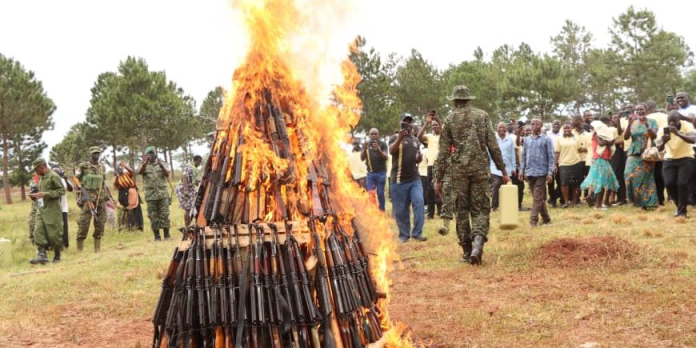
The Minister of Defence and Veterans Affairs, Jacob Markson Oboth Oboth yesterday presided over a symbolic firearms destruction ceremony at the Junior Staff College, Gadaffi Barracks. The event, held under the theme “A Safer Community Through Voluntary Disarmament” forms part of the annual Continental Africa Amnesty Month, observed every September.

“I commend the efforts of all stakeholders involved in making this initiative a success. Together, we can build a brighter future for our nation,” Oboth said.

He highlighted the significance of the Amnesty Month in removing uncontrolled weapons from civilian possession.

To date, Uganda has destroyed over 140,800 small arms and more than 1,980 tons of unexploded ordnance (UXO).

“These weapons are major enablers of violence, whether in the form of insurgencies, armed banditry, terrorism, or communal conflicts,” Hon. Oboth added.

The minister emphasized the role of disarmament in fostering harmony between the Uganda Peoples’ Defence Forces (UPDF) and local communities, particularly in the Karamoja region, where ongoing efforts have created a peaceful environment that supports socio-economic transformation.

He acknowledged the contributions of Maj Gen Don Nabaasa for coordinating the collection of illicit firearms and ensuring security in Karamoja, as well as the support of the African Union and other partners.

H.E. Ambassador Tebelelo Alfred Boang, Chairperson of the African Union and Security Council for October 2025, commended the Ugandan government for safeguarding communities, maintaining peace and stability, and advancing socio-economic development by silencing the guns.

Ms. Anna Mensah Sacky, representative of the UN Office on Disarmament Affairs in New York, praised Uganda’s collaboration with the UN on security matters and reaffirmed continued UN support for the government and the African Union’s disarmament agenda. She stressed that uncollected weapons pose a persistent threat to national security and thanked Uganda for ensuring that confiscated firearms are destroyed.

Representing the Cantonment Commander, Brig Gen Ernest Nuwagaba, Commander Headquarter URDC, described the event as both a national milestone and a continental statement of Uganda’s commitment to peace, security, and stability.

Brig Gen Nuwagaba noted that Uganda, in collaboration with the African Union, has actively encouraged the voluntary surrender of illegal firearms, particularly from rebels and ex-combatants in Northern Uganda.

He added that Uganda’s hosting of the AU Peace and Security Council meetings in Kampala from October 2–3, 2025, underscores the nation’s leadership in advancing disarmament and promoting community security.

“Every firearm removed from circulation is a life potentially saved, a community made safer, and a step closer to an Africa that is peaceful, secure, and prosperous for all,” Brig Gen Nuwagaba noted.

Stories Continues after ad

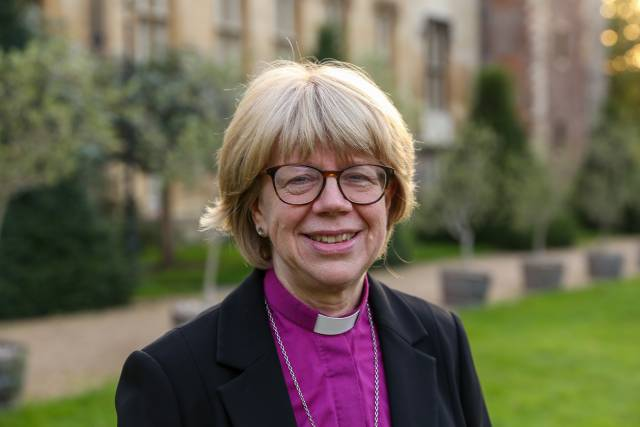
Kaziimba opposes appointment of Bishop Sarah Mullaly as Archbishop of Canterbury over same-sex marriage advocacy 

Rt. Rev. Sarah Mullaly.

The Archbishop of the Church of Uganda, The Most Rev. Dr. Stephen Samuel Kaziimba Mugalu has opposed the appointment of the Rt. Rev. Sarah Mullaly, the Bishop of London as the next Archbishop of Canterbury over her support for “unbiblical positions” on sexuality and same-sex marriage.

“Praise God from whom all blessings flow! I am writing to share the sad news that the Rt. Rev. Sarah Mullaly, the Bishop of London, has been appointed as the next Archbishop of Canterbury,” Archbishop Kaziimba announced in his statement.

He added that the Church of Uganda views the development with deep concern.

He revealed, “Our sadness about this appointment is her support and advocacy for unbiblical positions on sexuality and same-sex marriage that reveal her departure from the historic Anglican positions that uphold the authority of Scripture for faith and life.”

The Archbishop noted that the appointment signifies a further rift within the Anglican Communion, which, he said, began in 2003 when the Episcopal Church in the United States consecrated as bishop a divorced father of two in a same-sex relationship.

“The tear in the fabric of the Anglican Communion has now reached the highest level of the Communion. There appears to be no repentance. Make no mistake, this is a grievous decision at the highest levels of the Church of England to separate itself from the vast majority of the global Anglican Communion,” he stated.

Archbishop Kaziimba reaffirmed the Church of Uganda’s commitment to the Global Anglican Future Conference (Gafcon) and the Global South Fellowship of Anglicans, stressing that the appointment has diminished the global authority of the Archbishop of Canterbury.

“As we declared in our 2023 Gafcon statement from Kigali, we no longer recognize the Archbishop of Canterbury as having global authority and the office is certainly no longer an ‘Instrument of Communion.’ With this appointment, the Archbishop of Canterbury is reduced simply to the Primate of All England,” he declared.

He reassured Ugandan Christians of their place within the worldwide Anglican family, saying: “Through Gafcon and the Global South Fellowship of Anglicans, we are part of a worldwide communion of Anglicans who continue to proclaim the historic and Biblical faith of Anglicanism – faithfulness to Christ and submission to the authority of Scripture.”

Despite the controversy, Archbishop Kaziimba expressed optimism about the future of mission in the Anglican tradition.

“The future of Gospel-centred mission in our Anglican tradition is bright. The fields are ripe for harvest; we pray for laborers to go into the harvest. As we declared at our 2018 Gafcon meeting in Jerusalem, we will proclaim Christ faithfully to the nations,” he said.

The Church of England announced Dame Sarah Mullally as the next archbishop on Friday and became the first female Bishop ever to take this role.

Stories Continues after ad

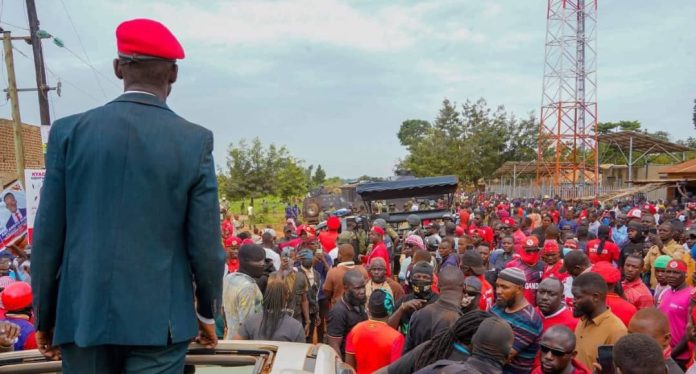
Police block Kyagulanyi from campaigning in Iganga

NUP presidential candidate Robert Kyagulanyi being blocked in Iganga.

National Unity Platform (NUP) presidential candidate, Robert Kyagulanyi, aka Bobi Wine, has been blocked from campaigning in Iganga District by a combined team of the UPDF, Police, and other sister agencies.

According to the Electoral Commission’s harmonized programme, Kyagulanyi was scheduled to campaign in Iganga Municipality and Mayuge district today but was stopped from proceeding to Iganga after his rally in Mayuge earlier in the day.

Kyagulany took to his X handle to express his disappointment at the security personnel’s actions, noting that NUP was striving to build a country where security forces are there to protect citizens and not to terrorise them.

“Blocked from proceeding to Iganga for our campaigns by the military and police! Although two other presidential candidates have so far campaigned in Iganga Municipality, the RDC, RPC and DPC in Iganga have insisted that we must not campaign in Iganga Municipality,” Kyagulanyi said.

He noted that the security forces started by intimidating venue owners until the party secured Oxford High School playground for their campaign in Iganga.“This morning, these partisan criminals insisted that we must not campaign anywhere in the Municipality. This, in addition to the long, dusty roads they’re forcing us to use! Seeing that they came armed to the teeth to injure or kill our people, we have decided to postpone our campaign in Iganga,” he said.

He said the party will engage the Electoral Commission, “So they make it clear that I and the National Unity Platform are now allowed to campaign in Iganga Municipality while other candidates campaign there!”

NUP Secretary General David Lewis Rubongoya said the military and police insisted the candidate could not proceed, effectively forcing the team to abandon the plan.

“We have been blocked from campaigning in Iganga Municipality… We have made it clear that just like other candidates, we have every right to campaign in every constituency in Uganda, including Iganga,” he said.

The security forces’ actions have been condemned by the Human Rights Defenders, noting that this contravened the electoral process.

“Today Uganda Military Blocks @HEBobiwine Campaign in Iganga district, Defying Electoral Guidelines

Heavily armed military & police forces, gun cocked, blocked the route to the venue—forcing him to cancel his rally. “This is illegal interference in the electoral process,” he says, accusing the regime of inciting violence, the rights defenders posted.

Kyagulanyi’s campaigns have been marred by security forces’ interceptions from the outset, who have forced the NUP Principal and his supporters to divert from the main road and use tedious, longer inner roads.

Stories Continues after ad

MUSIC: Kampala’s hottest hits, top 5 Ugandan songs this week

Da Agent.

Uganda’s vibrant music scene continues to thrive, captivating audiences with fresh sounds and collaborations. Here are the top five trending Ugandan songs currently making waves in Kampala:

  1. “Baliwa” by Da Agent: Song by Uganda’s fastest rapper.
  2. “Sure” by Jose Chameleone feat Lydia Jazmine: Blending Jose Chameleone’s signature style with Lydia Jazmine’s powerful vocals, this song likely evokes strong emotions and showcases their musical chemistry.
  3. “Lala” by Vinka: Vinka’s distinctive voice shines in this urban and afro-pop fusion, connecting with fans through her unique artistry.
  4. “Silumbe” by King Saha: King Saha’s expressive delivery and genre-blending approach likely resonate deeply with listeners, highlighting his musical versatility.
  5. “Ki Uganda Kinyuma” by Acidic Vokoz ft Omega 256, Feffe Bussi & Mark Da Urban: This lively anthem celebrates Uganda, showcasing the collaborative spark between these prominent artists and blending their sounds into a cohesive, energetic track.

Uganda’s dynamic music landscape is marked by artists pushing creative boundaries and engaging audiences through diverse genres like afrobeat, dancehall, and urban grooves.

Stories Continues after ad

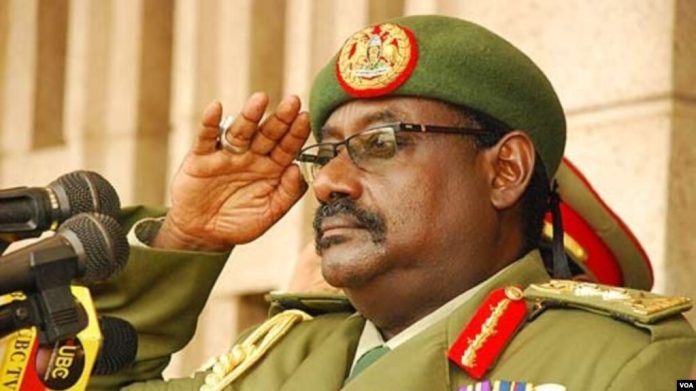
Gen David Sejusa: Africa needs liberators, not neo-colonial agents

Gen. David Sejusa.

Former Coordinator of Intelligence Services, Gen. David Sejusa, has raised a concern about what he describes as “neo-colonial collaborators” and “agents of global capitalism” masquerading as African leaders.

The outspoken general via X (formerly Twitter) questioned the criteria by which some leaders are praised.

“How can someone qualify as a good leader because he speaks good English (colonial language) and works as an agent, actually a conduit of neo-liberal policies which keep Africans enslaved to global capitalism and subservient to Eurocentric interests?” he asked.

Sejusa insisted that those who enable Africa’s continued subjugation should not be celebrated.

“Neo-colonial corroborators and enablers of African subjugation should be trashed not praised!” he declared.

He emphasized that the true purpose of African politics should be centered on liberation and empowerment of the masses.

“African politics should be about liberating African peoples from servitude and oppression. It should be centred on mobilizing the population, and their empowerment,” Ssejusa said.

According to him, the continent does not need elites who mimic Western styles and institutions but rather leaders deeply rooted in their societies.

“If this be the case, then the type of leaders Africa needs are not the tie-wearing compradors, but goal-oriented, society-rooted organisers and mobilisers; not Cambridge-Oxford wannabes!” he argued.

The general further warned against the betrayal of the people by leaders who align with foreign interests.

“Africa is tired of the traitor comprador bourgeoisie who deceive the people as liberators when they are just ‘transmission belts’ for neo-colonial interests,” Ssejusa charged.

He further urged leaders to commit themselves to Africa’s cause.

Stories Continues after ad

 AfDB grants Shs1.9b to support flood and landslide relief in Uganda

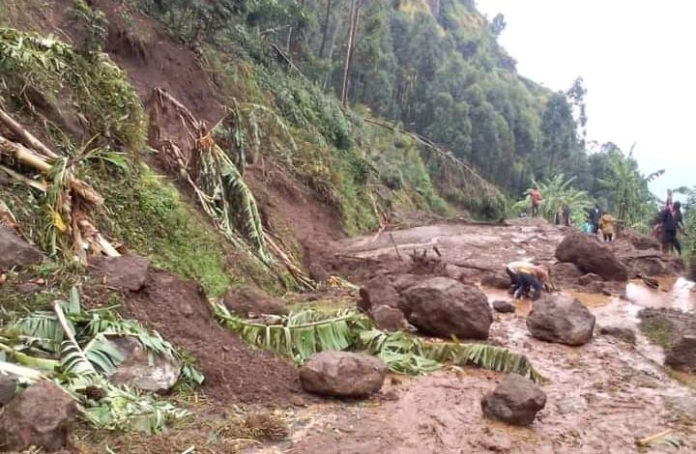
A landslide hit area of Bududa in Eastern Uganda.

The Board of Directors of the African Development Bank (AfDB) has approved a grant of approximately $500,000 (Shs1.9 billion) from its Special Relief Fund to support Uganda’s Relief Emergency Response Project.

The funding will provide urgent assistance to communities severely affected by floods and landslides in Bulambuli, Kasese, and Ntoroko districts. Key interventions include the provision of family-size tents for an estimated 1,500 internally displaced persons (IDPs), aiming to improve living conditions in camps sheltering thousands since the disasters.

From August 17-19, 2025, heavy rains in the Mount Elgon subregion of eastern Uganda caused widespread flooding in Bulambuli, Sironko, and Mbale districts, triggering landslides in neighboring Namisindwa district. Local authorities reported five deaths, 50 injuries, and approximately 2,000 homes damaged or destroyed, leaving 5,000 people displaced and affecting a total of 15,000 residents.

“Beyond emergency relief, the project is an investment in dignity, safety, and recovery,” said Mercuria Assefaw, AfDB’s Division Manager for Water Security and Sanitation.

Assefaw added, “Providing decent temporary housing will address critical shelter needs, improve living conditions for displaced families, and stimulate the local economy through procurement and logistics.”

The Office of the Prime Minister will implement the project through the Department of Relief, Disaster Preparedness, and Management. By prioritizing rapid procurement and efficient delivery, the initiative will create opportunities for local suppliers and service providers, contributing to the broader recovery of flood-affected communities.

Project activities are expected to be completed within six months, ensuring timely relief for those in urgent need of shelter. With this support, the AfDB strengthens Uganda’s humanitarian response and contributes to rebuilding community resilience.

“This grant reflects the Bank’s solidarity with Uganda. By providing immediate relief, we aim to restore hope and stability as communities continue their journey of recovery,” Assefaw added.

Stories Continues after ad

Speke Resort Munyonyo to host Uganda–Russia Intergovernmental Commission next week

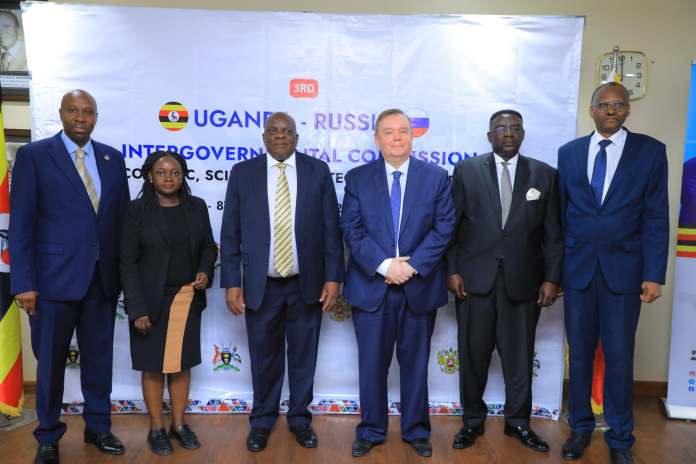
The committee overseeing the arrangement.

Speke Resort Munyonyo is ready to host the Third Intergovernmental Commission on Economic, Scientific and Technical Cooperation between Uganda and the Russian Federation, an event aimed at strengthening bilateral ties and finalizing key agreements.

The high-level meeting, which will run from October 7–8, will be accompanied by a Business Conference bringing together government officials, diplomats, and private sector players from both countries. Delegations are expected to begin arriving on October 5.

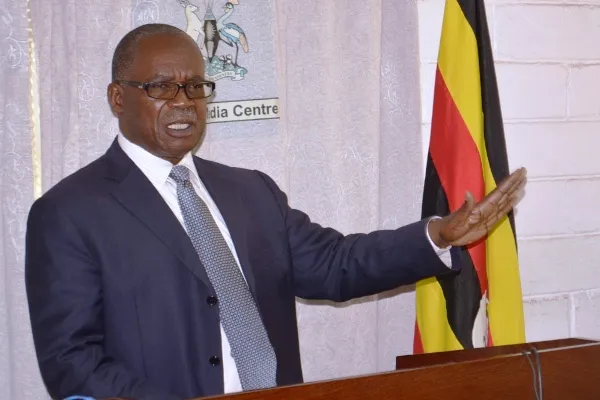
The announcement was made at a media briefing by Uganda’s Ambassador to the Russian Federation, Moses Kizige, and Russian Ambassador to Uganda, Vladlen Semivolos, at the Ministry of Foreign Affairs in Kampala.

Ambassador Kizige said the session will review progress made since the last commission in Moscow in May 2018 and will address stalled Memoranda of Understanding (MoUs).

“Despite a steady pace, we need to actively follow up on MoUs signed so that we can benefit from one another,” Kizige said.

He explained that priority will be given to cooperation in technology, science, energy, trade, and investment. Uganda, he noted, continues to benefit from Russia’s scholarships and training programs, while Russia remains a strong market for Ugandan exports like coffee and minerals.

“To attract more opportunities, we shall hold a Business Conference on the sidelines, for which we have encouraged Russian investors to come to Uganda,” Kizige added. The conference will include a Private Sector Exhibition supported by the Presidential Advisory Committee on Exports and Industrial Development (PACEID).

He further revealed that Uganda is processing more than 23 MoUs for future signing, and reminded the media that Uganda officially became part of the BRICS arrangement on January 1, 2025.

Ambassador Semivolos thanked Uganda for hosting the commission, describing it as a sign of Kampala’s strategic importance in Russia’s relations with Africa.

He pointed to MoUs already signed in fields such as health, education, and agriculture and confirmed Russia’s commitment to expanding cooperation in agriculture, technology, and infrastructure.

“Russian companies are interested in establishing a presence here, particularly in agricultural machinery supply and servicing infrastructure development equipment,” Semivolos said. He added that Russia is also preparing a program to supply specialized machinery to Uganda’s Ministry of Agriculture.

The Business Conference Forum will feature plenary sessions, business-to-business meetings, and exhibitions to create new avenues for investment. Ugandan officials believe the event will not only strengthen state-to-state relations but also open doors for private sector partnerships.

The Uganda–Russia partnership dates back to 1962, when Moscow opened its first embassy in Kampala. Both governments say this year’s commission at Speke Resort Munyonyo will mark a new chapter in expanding economic, scientific, and technical cooperation.

Stories Continues after ad

Museveni pledges five cows for every family hit by cattle-rustling in Lango

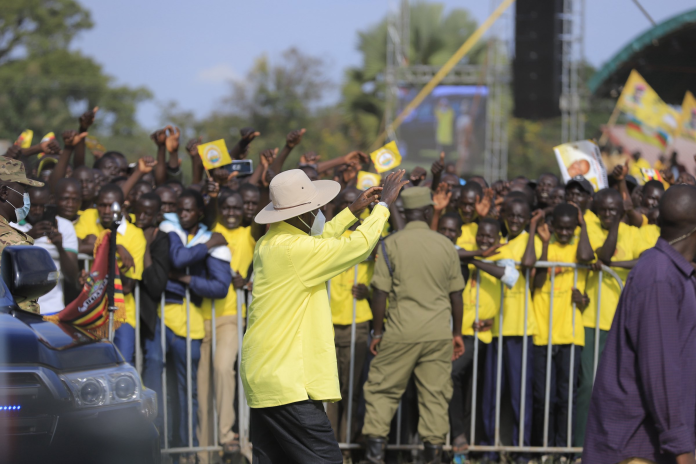
President Yoweri Kaguta Museveni has pledged that every household affected by cattle-rustling in northern Uganda will receive five cows under a flat-rate compensation plan, a proposal he says will restore livelihoods destroyed by war and raids.

Addressing campaign rallies in Alebtong and Otuke Districts on Thursday, the NRM flag bearer said the new approach, which he has already discussed with leaders from Lango, Teso, and Acholi sub-regions, is designed to be fair and sustainable.

“Regarding cattle compensation, I recently consulted with leaders in Lango. I proposed to implement a flat approach, suggesting that each household receive five cows,” Museveni said. “While some people had reservations about this idea, the wananchi voiced their support, saying Museveni is right. Teso is on board, Lango is supportive, and I am waiting for feedback from Acholi. I have urged government to begin planning for this initiative.”

The President reminded the people that cattle rustling and armed conflict had wiped out the livestock wealth that once sustained households across the greater north, noting that rebuilding this wealth is vital for long-term recovery.

Alongside the compensation plan, Museveni stressed that peace and stability remain the cornerstone of Uganda’s progress. “Nobody will be allowed to disturb the hard-earned peace in Lango,” he declared, drawing cheers from supporters. He added that unity has been central to NRM’s governance since coming to power.

On development, the President said Uganda’s oil revenues, once production begins, will be used strictly for infrastructure and social services. “When our oil comes out, I will not allow it to be wasted on importing whiskey or perfumes. That money will be for roads, the railway, electricity, schools, hospitals and security,” he emphasized.

In Alebtong, Museveni listed government achievements in the district, including electricity connections, 76 UPE schools, 122 private schools, and 7 USE secondary schools. He also cited a maintained murram road from Lira through Aloi, Apala and Alebtong to Abim, which he said will soon be upgraded to tarmac.

He further highlighted wealth creation programs such as the Parish Development Model (PDM), Youth Livelihood Fund, Emyooga, and the Women Fund, which are designed to uplift households.

“Even if the government tarmacks the road, you do not sleep on the road. You go back home, where poverty may still be waiting. That is why we insist that people embrace programs like PDM and Emyooga for their prosperity,” Museveni told the gathering.

Uganda’s confirmed commercial oil reserves lie in the Albertine Graben along the western rift valley. The government, in partnership with international companies, is constructing production facilities and the East African Crude Oil Pipeline to transport crude oil to Tanga, Tanzania. Once production starts, the President noted, revenues will generate billions annually, earmarked for infrastructure and social services.

Stories Continues after ad

Besigye challenges High Court order restricting him from speaking directly during trial

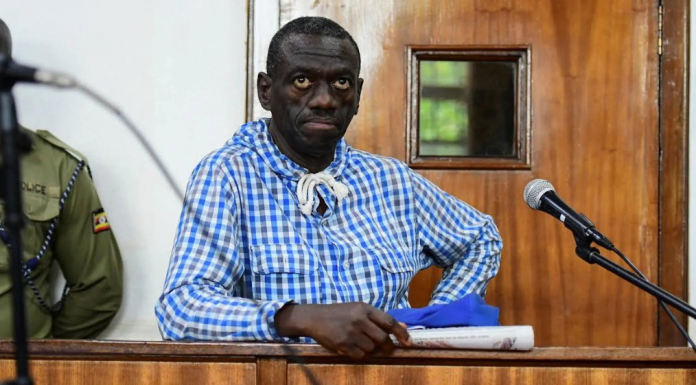
Embattled Kizza Besigye has written to the High Court protesting a directive by Justice Emmanuel Baguma that bars him from directly raising concerns orally during his ongoing trial, insisting the move is “oppressive” and undermines his right to be heard.

In a letter dated 2nd October 2025, addressed to the Officer-in-Charge of Luzira Upper Prison for onward delivery to court, Besigye challenged the judge’s earlier decision requiring him to only file written concerns through his lawyers.

“Being a person accused of a serious offence, I find it strange and oppressive if I cannot raise a concern directly in open Court,” Besigye wrote.

He added, “If each time, a written submission of the concern has to be made and a time fixed for your response, the case may never be concluded. Meanwhile, I remain confined in prison.”

He noted that while Justice Baguma initially declined his request to address the court, he later allowed it on condition that Besigye files his concerns in writing, a requirement he has now formally contested.

“Prior to raising my concern in writing, I request you to point me to the provision of the law that bars an accused person from orally raising concerns in Court, touching their trial, during any audience with the Judge, in the presence of their lawyers,” Besigye stated.

During the court session this week, Justice Emmanuel Baguma of the Criminal Division, Kampala, defended his earlier directive, saying the requirement for written concerns was meant to ensure orderliness and efficiency in handling the matter.

“The accused persons are entitled to raise their concerns, but this must be done in a manner that does not derail proceedings. The Court gave an opportunity for written submissions so that issues are properly considered and responded to within the law,” Baguma said.

He emphasized that the measure was not intended to silence the accused but to ensure that the trial moves forward without unnecessary interruptions.

Besigye, who is accused number three in Criminal Suit No. 335 of 2025, maintains that oral submissions remain an integral part of his right to a fair trial and has demanded legal clarity on the matter before proceeding with further written submissions.

Stories Continues after ad

Gov’t declares teachers’strikes illegal, sets one-week ultimatum

The Government of Uganda has declared the ongoing strike by teachers and the planned industrial action by local government workers illegal, warning all those involved to return to duty within a week or risk being treated as having resigned.

In a statement issued in Kampala, the Minister of Public Service, Wilson Muruli Mukasa, said government remains committed to improving public officers’ welfare through phased salary enhancements but condemned the strikes as “uncalled for” and procedurally unlawful.

“The commencement of industrial action by some teachers on 15th September 2025, and the planned strike by Local Government Workers from 1st October 2025, is premature and jeopardises the cordial relationship government has enjoyed with labour unions,” said Mukasa.

According to the Ministry, government has so far invested Shs 2.5 trillion in salary enhancements since the 2018/2019 financial year, prioritising sectors in health, education, infrastructure, innovation, economic recovery, and security.

As of July 2024, a total of 125,276 public officers had benefited from salary increments since 2017/2018, though 66 percent have not received adjustments since 2014/2015. Beneficiaries, excluding the UPDF, are currently earning up to 77 percent of the approved long-term pay targets.

Looking ahead, government has pledged to enhance the pay of humanity subject teachers by 25 percent of the long-term pay target in the 2026/2027 financial year. Salary proposals for primary teachers, public university staff, and other categories earning below 25 percent of the target have been submitted to the Ministry of Finance for inclusion in the national budget.

“Consultations and negotiations on salary enhancement are ongoing, and dispute resolution mechanisms have not been exhausted. No union has obtained the required Certificate from the Public Service Negotiating and Consultative Council,” Mukasa emphasised, declaring the 90-day strike notices invalid.

The Minister instructed all public servants engaged in the strike to resume work without delay.

“All public officers involved are expected to return to work immediately and not later than one week from now. Failure to do so will be considered abandonment of duty, and resignation,” the statement read.

District and city leaders, including Chief Administrative Officers, Education Officers, and Resident District/City Commissioners, have been directed to monitor compliance and enforce disciplinary action where necessary.

Concluding his statement, Muruli Mukasa reiterated government’s pledge to handle salary improvements in a phased, consultative, and lawful manner.

“We appeal to all public servants to continue serving the country with the same zeal and commitment they have always demonstrated,” he said.

Stories Continues after ad