Stanbic Bank
Stanbic Bank
18.1 C
Kampala
Stanbic Bank
Stanbic Bank
Home Blog Page 70

Tycoon Sudhir unveils State-of-the-Art Barge to service Paradise Island Resort on Lake Victoria

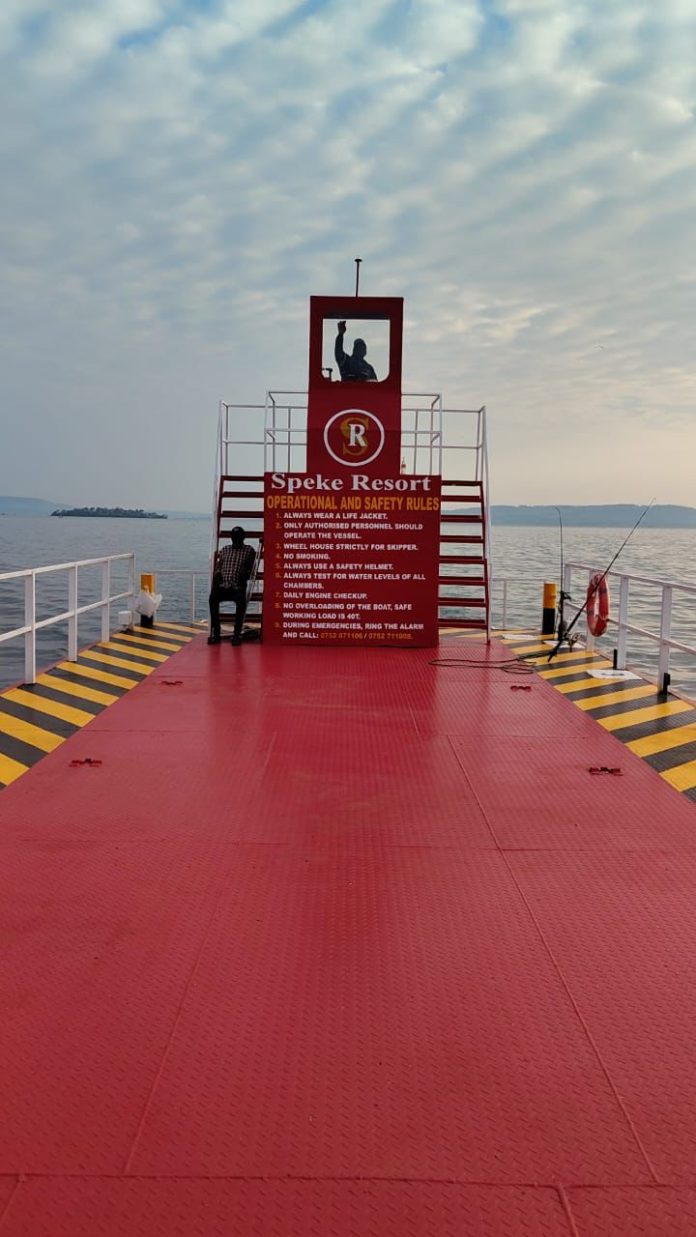
City Tycoon Sudhir Ruparelia has unveiled The Barge, a custom-built flat-bottomed vessel designed to connect Speke Resort Munyonyo with the newly launched Paradise Island Resort on Lake Victoria.

The innovative barge, described as a “floating lifeline,” reveals the Ruparelia Group’s commitment to pairing luxury tourism with world-class infrastructure. It will ensure the smooth transportation of supplies, logistics, and essential goods between the mainland and the 19-acre eco-luxury Paradise Island Resort.
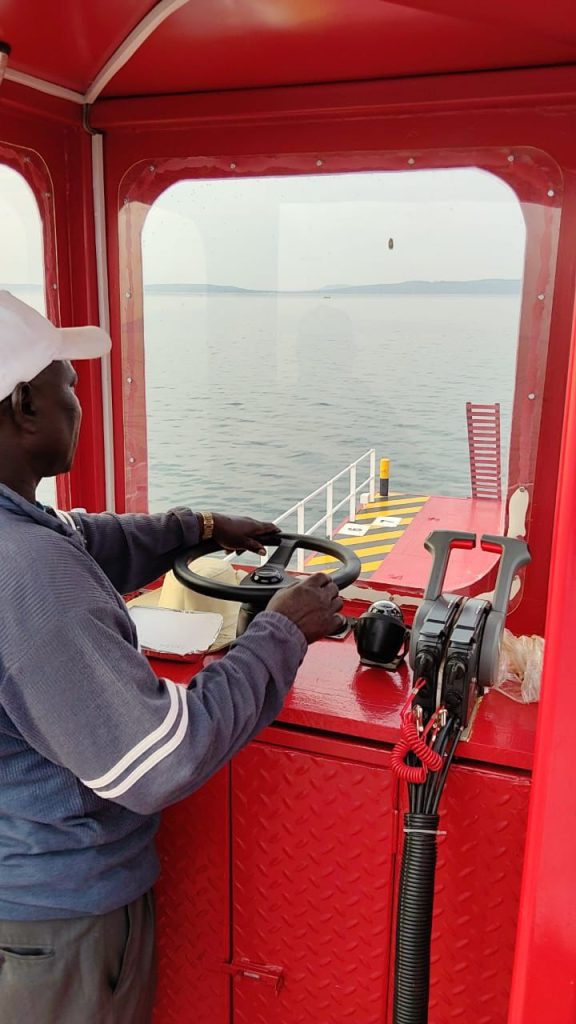
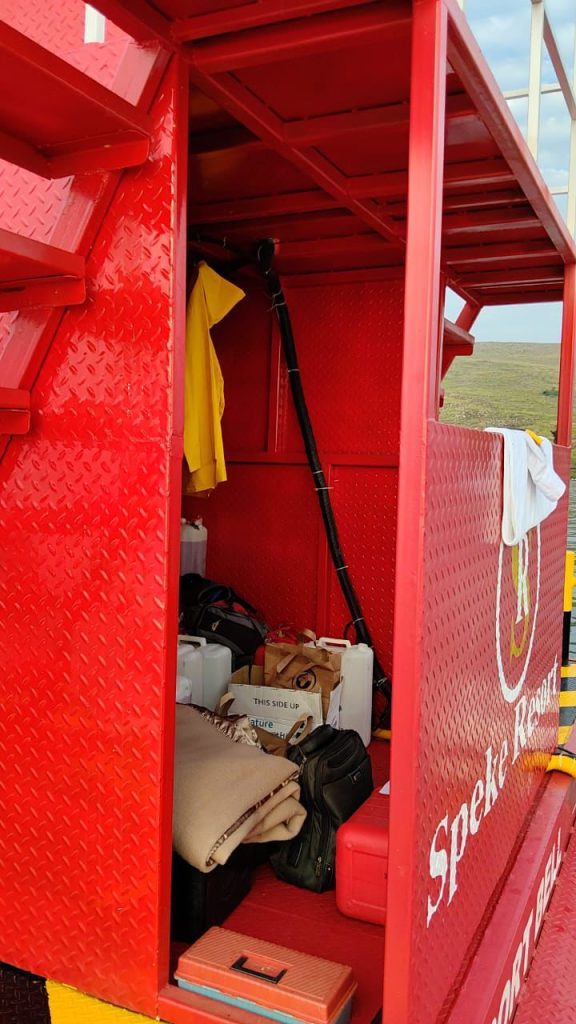
Unlike traditional workboats, the Barge has been engineered for resilience, efficiency, and capacity. Its design allows it to carry heavy loads from fresh produce and beverages to linens, equipment, and luxury amenities while maintaining the resort’s eco-sustainability standards.

“Running a high-end property on a private island requires consistency and reliability. This barge ensures our guests will never experience service interruptions, no matter the demands of running a modern resort,” a manager at the Ruparelia Group explained.

Completed in 2024 after construction began in 2021, Paradise Island Resort is already being hailed as one of Uganda’s most ambitious hospitality projects. Located just 20 minutes by speedboat from Speke Resort Munyonyo, the retreat blends exclusivity with natural charm.

The resort features 10 Standard Cottages, 11 Cliff-Hanger Cottages perched dramatically on rocks, 14 Deluxe Two-Bedroom Cottages and three opulent Executive Villas. Each unit integrates into the island’s bird-rich landscape, offering panoramic views of Lake Victoria.
With tourism contributing 7.7% to Uganda’s GDP and directly employing more than 600,000 people, industry players say investments like Paradise Island Resort are vital to strengthening the country’s competitiveness as a global destination.

For Businessman Sudhir Ruparelia, The Barge represents more than logistical convenience; it reflects a broader strategy to redefine Uganda’s tourism experience.

“This is not just about building a resort. It’s about elevating Uganda’s image as a world-class destination and ensuring the infrastructure matches the experience,” a tourism industry insider remarked.

The Barge also complements Speke Resort Munyonyo’s marina fleet, which includes the 70-seater Sundowner cruiser used for leisure excursions. Together, these investments expand the Group’s capacity to deliver unmatched guest experiences on Africa’s largest freshwater lake.

By cutting supply chain costs, improving reliability and safeguarding sustainability, The Barge positions Paradise Island Resort as a crown jewel in Uganda’s tourism offering.

Since tourism is a cornerstone of Uganda’s economy, contributing significantly to GDP and employment. The Barge not only supports the operational needs of Paradise Island Resort but also strengthens our mission to position Uganda as Africa’s premier tourism destination.

With the arrival of its first wave of visitors, Paradise Island Resort signals a new era for luxury hospitality on Lake Victoria, where innovation, exclusivity, and natural beauty converge.

Stories Continues after ad

Princess Komuntale appointed UTB ambassador in royal homecoming

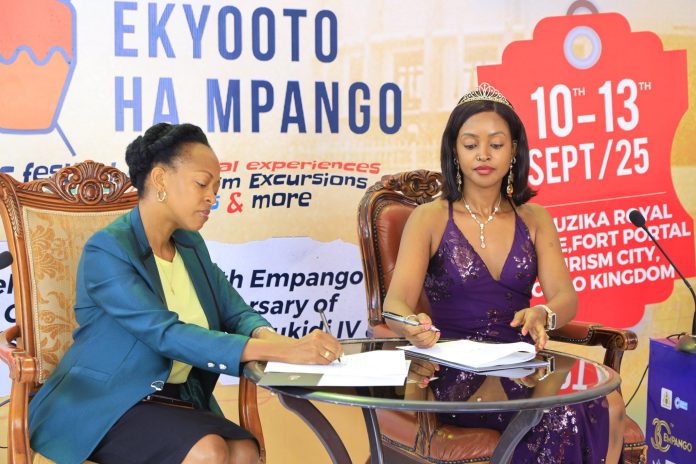
UTB Chief Executive Juliana Kaggwa and Princess Komuntale.

Uganda Tourism Board (UTB) has unveiled Princess Ruth Nsemere Komuntale of Tooro Kingdom as its newest Brand Ambassador, in a partnership officials say will boost cultural tourism and international visibility for the country.

The appointment was announced during a moving homecoming ceremony in Buziga, Kampala, where Komuntale returned from the United States with her husband, Prince Philip, to celebrate the 30th coronation anniversary of her brother, King Oyo Nyimba Kabamba Iguru Rukidi IV.

UTB Chief Executive Juliana Kaggwa signed the partnership with the princess, calling her “the perfect voice to share Uganda’s story with the world.”

“Her royal heritage, international profile, and deep love for Uganda make her a natural cultural envoy. This moment, as we celebrate 30 years of King Oyo’s reign, reflects the strength of cultural tourism in Uganda,” Kaggwa said.

Tukeikiriza Mellon, head of the Uganda Convention Bureau unit at UTB, said Komuntale’s appointment marks a bold step in elevating culture as a core pillar of tourism promotion.

“We believe that culture is one of our strongest assets in positioning Uganda as a premier global destination,” Mellon said. “Yesterday, we took another bold step in this direction by appointing Princess Ruth Komuntale of Tooro Kingdom as our Tourism Ambassador for the United States market.”

She explained that the appointment is not just symbolic but reflects growing collaboration between cultural institutions and tourism promotion.

“Princess Komuntale, with her strong presence in the U.S. and deep cultural roots in Tooro, brings a unique opportunity to showcase Uganda’s story beyond wildlife and landscapes. Her voice will amplify Uganda’s rich traditions, heritage, and cultural events like the Empango celebrations, while also attracting interest in our cuisine, music, and hospitality.”

Mellon added that the initiative is part of a wider UTB strategy that includes: Leveraging cultural icons and diaspora Ugandans to open new international markets. Blending heritage with modern tourism experiences and Strengthening Destination Uganda’s visibility and competitiveness on the global stage.

“With culture as a cornerstone, tourism becomes more than travel—it becomes a journey into identity, belonging, and pride. Partnerships like this with the Tooro Kingdom are helping us build packages and experiences that carry the true promise of the Pearl of Africa to the world,” she said.

Tourism is Uganda’s leading foreign exchange earner, contributing about 7.7% to GDP and employing more than 600,000 people directly, according to government data. The country welcomed 1.3 million international visitors in 2023, a recovery from pandemic lows but still below the pre-COVID peak of 1.5 million arrivals in 2019. Officials say new branding efforts are critical to reaching the target of 3 million annual arrivals by 2030.

Komuntale, who was raised in both Uganda and the United States, pledged to use her ambassadorship to promote Uganda’s culture and tourism globally. She also paid tribute to her brother, who ascended the throne at just three years old and has since become one of Africa’s most recognized monarchs.

“I am so proud of my brother, not only as a great king but as the man he has become. To see him lead with grace, wisdom, and humility for 30 years is deeply moving,” she said.

She also delivered a message to young Ugandans, urging them to embrace their heritage and “let culture be a source of strength as they create, innovate, and lead.”

The appointment comes ahead of the Ekyooto Ha Mpango festival, scheduled for September 10–13 in Fort Portal, which will showcase royal rituals, cultural performances, fashion, and tourism in celebration of King Oyo’s 30-year reign.

Komuntale’s global profile is expected to boost Uganda’s campaign to position Fort Portal and the wider Tooro region as cultural tourism hubs, complementing its wildlife and adventure attractions.

Stories Continues after ad

Global coffee exports fall for sixth month as Africa led by Uganda defies the trend

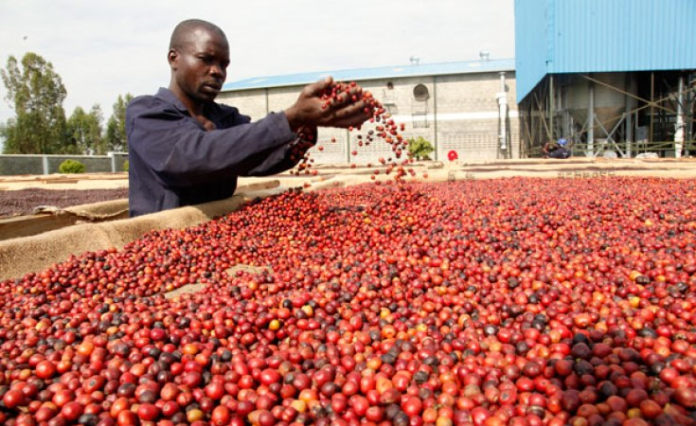
Coffee beans.

Global exports of green coffee beans fell by 0.7 percent in July 2025, totalling 10.3 million bags compared to 10.38 million bags in July 2024, according to the Coffee Market Report – August 2025 released by the International Coffee Organisation [ICO].

According to the report, this marks the sixth consecutive month of negative growth in the current coffee year, with year-to-date green bean exports down 2.5 percent to 102.25 million bags, from 104.89 million bags recorded between October 2023 and July 2024.

“Coffee year 2023/24 was a record year for green bean exports, reaching 125.44 million bags, the highest volume ever recorded, representing a 12.4 percent increase and a net gain of 13.87 million bags,” the ICO report noted. “To put this into context, the average annual net gain from coffee years 2011/12 to 2018/19 was 3.32 million bags, with the highest single-year gain being 9.7 million bags. Therefore, the current downturn, both monthly and year-to-date, was not unexpected and is partially attributed to a base effect.”

The report also highlights a structural shift in the global coffee trade, with green beans comprising a declining share of total coffee exports. On a 12-month moving average basis, this share has dropped by 5.8 percentage points, from 94.5% in January 2011 to 88.6 percent in July 2025.

Over the past five years, several major exporters have been investing in value-added processing, particularly soluble coffee production. Between 2020 and 2025, India increased its soluble coffee capacity by the equivalent of 0.89 million bags of green beans, while Vietnam added 1.92 million bags. In Mexico, Nestlé commissioned a new plant in July 2022 with a capacity of 0.67 million bags.

On the other hand, the ICO report shows total global exports of all coffee types decreased by 1.6 percent in July 2025 to 11.42 million bags, down from 11.6 million bags in July 2024. “This marks the fifth month of negative growth in the current coffee year, with year-to-date exports slightly lower at 115.61 million bags, compared to 115.94 million during the same period last year,” says the report.

In contrast, Africa’s exports of all coffee forms rose by 4.4 percent to 2.05 million bags in July 2025, up from 1.96 million in July 2024. Uganda led this growth, with exports surging by 51.4 percent to 1.01 million bags.

“A strong harvest, especially from the Greater Masaka and southwestern regions—along with high international prices and front-loading strategies, contributed to Uganda’s impressive performance,” the report said, citing a report by Uganda’s Agriculture ministry.

Ethiopia also posted a strong showing, exporting 0.81 million bags, up 12.5 percent from 0.72 million in July 2024.

However, the region’s overall growth was tempered by significant declines in Côte d’Ivoire and Kenya, whose exports fell by 59.9 percent and 40.5 percent, respectively. These two countries recorded a combined net loss of 0.12 million bags.

The report says South America was the largest contributor to the global decline, with exports falling by 18.5 percent to 4.4 million bags in July 2025 from 5.4 million bags in July 2024. “As a result, the region’s share of global exports dropped to 38.5 percent, down from 46.5 percent a year earlier. This was the ninth consecutive month of export contraction in the region,” says the report.

The report argues Brazil was primarily responsible for the decline, with exports down 28.6 percent to 2.73 million bags from 3.83 million in July 2024. The ICO attributes this downturn to a base effect, following a record-breaking 2023/24 coffee year in which Brazil exported 50.1 million bags, 13.01 million more than in 2022/23, marking a 35.1 percent increase.

The surge in Brazil’s exports last year was largely driven by a supply gap caused by a poor harvest in Vietnam, whose exports were down 11.7 percent [a net loss of 3.31 million bags]. With Vietnamese supply now stabilised, demand pressure on Brazil has eased. Additionally, ongoing logistical challenges at the Port of Santos have further dampened Brazilian export volumes.

The report says coffee exports from Mexico and Central America grew by 7.2 percent in July 2025, reaching 1.63 million bags, up from 1.52 million bags in July 2024. This marks the ninth month of growth in the first ten months of the 2024/25 coffee year, with year-to-date exports up 11.1 percent to 13.73 million bags.

Asia and Oceania recorded the strongest growth among all regions, with exports up 22.7 percent to 3.34 million bags in July 2025, compared to 2.73 million in the same month last year. The expansion was largely driven by Vietnam, which saw a 29.4 percent increase in exports, rising from 1.31 million to 1.7 million bags.

This growth, the report notes, also reflects a base effect, as Vietnam’s July 2024 export figures were the lowest for that month since 2010.

Stories Continues after ad

Opinion: Village Health Teams — The Community’s Eyes on Drug Accountability

Minister Baryomunsi urges District Health Officers to address critical health logistics challenges at a recent event.

In Uganda’s public health system, Village Health Teams (VHTs) serve as the first link between the community and formal health services.
Known for mobilizing households, delivering health education, and following up on immunization and maternal care, VHTs also play a less publicized but equally vital role: protecting medicine accountability.
Trusted Messengers
VHTs are often neighbors, relatives, or respected elders. This unique position allows them to communicate critical information that formal channels may miss or delay.
They can help educate households about what medicines are free, when deliveries are expected, and what to do if someone is asked to pay for drugs labeled “Government of Uganda – Not for Sale.”
By dispelling myths and offering clarity, VHTs ensure patients are empowered to demand services they are entitled to—and recognize when something is amiss.
Because they routinely interact with both patients and health workers, VHTs are often the first to notice unusual trends: patients being turned away, frequent drug shortages, or informal payments for items like Mama Kits.

Their reports can be relayed to LC1s, HUMC members, or health facility in-charges for follow-up. In cases of suspected theft or chronic shortage, VHTs can escalate matters to parish chiefs or the Office of the RDC.
Importantly, VHTs serve not to accuse but to raise early warning signs so that challenges can be addressed before they become crises.
Stock Visibility
In facilities with high patient volumes, VHTs can also assist health workers in tracking medicine usage, especially during community outreaches or emergency distributions.
They help verify whether the medicines intended for a specific health campaign—like deworming tablets or malaria treatments—were received by households, offering a grassroots audit trail.
Where applicable, they can even assist in reconciling distribution lists with actual beneficiaries, particularly for maternal and child health supplies.
When equipped with accurate information and supported by health facility leaders, VHTs can host village dialogues that invite health workers to explain medicine availability and stock status. This builds community trust and reduces suspicion or misinformation.
Above all, VHTs remind us that medical accountability doesn’t end at the storeroom door. It continues through the people—the mothers, caretakers, and youth—who rely on these services.
By working closely with communities and leaders alike, VHTs ensure that every medicine counts—and every citizen is part of the system that protects it.

Stories Continues after ad

Prof Balunywa’s case is witch-hunt and test for Speaker Among on saving Basoga – MP Mugema

Prof. Waiswa Balunywa

Parliament on Tuesday turned its attention to the corruption and abuse of office charges against former Makerere University Business School (MUBS) principal, Prof. Waswa Balunywa with legislators urging Speaker Anita Among to intervene.

Iganga Municipality MP, Peter Mugema, popularly known as Panadol, claimed that Balunywa was being unfairly targeted or witch-hunted.

“Prof. Balunywa is being witch-hunted and used as a bet to test if the Speaker can rescue a Musoga following her election to the NRM Central Executive Committee (CEC),” Mugema told the House.

Mugema noted that Prof. Balunywa was illegally arrested, arguing that those who remanded him claimed he had recruited two staff members whose names are not reflected anywhere.

He said, “This is a selective approach being used to test whether the Speaker can stand up for the Basoga.”

Mugema also took a personal moment to thank the Speaker, saying: “I want to appreciate you for taking care of the medical bills of my deceased daughter.”

Bugiri Municipality MP, Asuman Basalirwa, criticized the government for allegedly manipulating Balunywa’s case.

“Government controversially amended the charge sheet of Prof. Balunywa which raises serious concerns about fairness and due process,” he said.

Speaker Among however, cut his submission short, telling the House that “the issue of Balunywa is being handled.”

Prof. Balunywa was arrested and arraigned before Chief Magistrate Rachael Nakyazze on September 2, 2025. He was charged with two counts of abuse of office and corruption before being remanded to Luzira Prison.

According to the charge sheet, Balunywa is accused of unlawfully appointing three individuals—James Arike, Nathan Nuwagira, and Nimrod Kakayi as administrative assistants between March 18 and March 28, 2023, without the required academic qualifications. He is jointly charged with former acting Human Resources Director at MUBS, Jacqueline Namaganda, who allegedly neglected her duty to verify their eligibility.

In a separate file, prosecutors accuse Balunywa of irregularly recruiting more than 200 staff members—including 103 academic, 17 administrative and 69 support personnel between 2020 and 2023 without the approval of the MUBS Appointments Committee.

Balunywa pleaded not guilty to all charges. Prosecutors opposed bail, arguing that he had previously skipped summonses and that the offenses were serious in nature. His sureties, including his brother, Prof. Muhammad Ngoma (Vice Chancellor of Kampala International University), Prof. Sudi Nangoli, and his son, Ali Balunywa; were deemed insufficient by the court.

Chief Magistrate Nakyazze deferred a ruling on his bail application to September 5, 2025, remanding him to Luzira Prison until then.

Stories Continues after ad

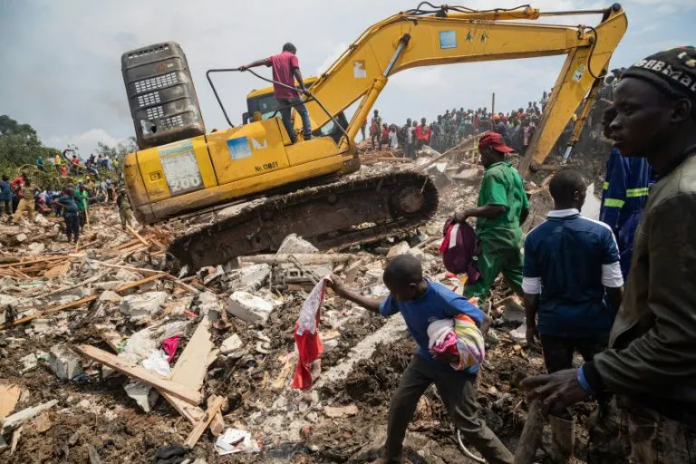
KCCA cleared to begin Kiteezi landfill decommissioning after 2024 collapse

The Solicitor General has allowed Kampala Capital City Authority (KCCA) to commence decommissioning and repurposing of the Kiteezi landfill in Wakiso District following its tragic collapse in 2024.

The process will involve cutting and stabilization of steep waste slopes, pollution management and sealing off the waste surface among others.

KCCA’s Deputy Executive Director, Benon Kigenyi, told Parliament that the regulatory requirement to have the contractor, identified as UN-Habitat, commence works at Kiteezi has been fully met.

Kigenyi said the UN Habitat will by October 2025 begin on the works applauding them for their modern technology and experience garnered over the years from other countries.

“The contract for the UN Habitat has been cleared, they are coming in to give us humanitarian assistance, they have $1 million to support us with technology which has worked elsewhere, they are coming with experience from other countries with landfills, they have the capacity to get the required equipment easily,” Kigenyi said.

Kigenyi was speaking before the Committee on Commission, State Authorities and State Enterprises (COSASE) during a meeting with KCCA officials, on Tuesday, 02 September 2025.

KCCA appeared before COSASE to answer queries within the Auditor General’s report for 2023-2024 financial year.

Kigenyi explained that the contractor’s mandate will also include draining and treatment of the leachate; a watery solution from the landfill which MPs complained about, citing its harm to people living near the landfill as well a danger to the environment.

The committee chairperson, Medard Sseggona pointed out the Auditor General’s concerns over the persisting cracks feared to cause another collapse.

The Auditor General also raised concerns about compensation of up to Shs2 million given to an individual household, saying it is insufficient to facilitate smooth relocation, considering the high costs of urban living.

As a result, his report indicates that some residents who initially relocated have returned to their homes while others are still living close to the landfill.

Sseggona observed laxity on matters and called for urgent response.

“There was laxity occasioned by a chief government valuer who did not treat this matter seriously, yet these are matters you must settle. The report shows the would-be efforts of KCCA have been thwarted by the government valuer,” said Sseggona.

Stories Continues after ad

My husband mistreated me because I was unable to provide for the family

My name is Namakula, and back in 2016, I was married to a man named Joseph Mukasa, who mistreated me simply because I was not well-educated. I dropped out of school in Senior Two after I got pregnant and was forced into early marriage. My parents were so disappointed in me that they never wanted anything to do with me anymore.

I had no academic certificates to my name, so getting a job was nearly impossible. I was entirely dependent on my husband to make ends meet. Though we were newlyweds, Mukasa didn’t show any respect or love toward me. I remember that in the first month of our marriage, he would make long trips, claiming he was attending seminars. I later discovered that he was seeing different women and taking them to luxurious hotels. All this time, while he was living large with other women, he left me at home with nothing to eat.

Things got worse when he started bringing the women home, and I wasn’t allowed to question him about his whereabouts. In my own home, I was treated like a housemaid. I was forced to do their laundry, cook for them, and make sure the house was well kept while they enjoyed themselves.

After a while, I couldn’t take it anymore. I got inspired when I saw how a street girl worked her way up to become a prominent businesswoman. I, too, decided to break free from my frustrations and find a way to survive with my only child. I used to read some of the magazines he brought home, as that was the only thing he ever gave me.

One day, while going through one of those magazines, I came across an article about Dr. Masunga, a renowned herbalist who had helped someone with a problem similar to mine. His contact (+256 769 678458) was there, so it was easy for me to reach out to him. I shared my story, and he assured me he would help me.

He performed a powerful spell and assured me that everything would change. A few weeks later, I left Kampala for Jinja, where I had a relative who helped me open a small café business. Three months later, my business was booming, and I was making a lot of money from sales. Meanwhile, things were not going so well for Langat. He lost his job, and the women he had been spending money on abandoned him. He was forced to go back to the village to live with his parents.

Over the next few months, things improved significantly for me. I managed to buy a piece of land, and now I am slowly building my dream home after Dr. Masunga’s blessings. I am now looking into opening outlets in different parts of Uganda.

Dr. Masunga has vast experience in herbal medicine, and he has established himself as an expert in reuniting divorced or separated lovers, influencing promotions at work, managing chronic illnesses like cancer, high blood pressure, ulcers, and asthma, among others. Many people can attest to his effectiveness.

Are you facing any of these issues? Worry no more!

Contact him now on Call/WhatsApp +256 769 678458 to get your solution.

Website: http://www.masungadoctors.com/

Stories Continues after ad

African Development Bank to upgrade Arua Airfield into international Airport

An artistic Impression of the would-be Arua International Airport.

The African Development Bank (AfDB) is exploring plans to upgrade Arua Airport into an international facility with an aim to boost Uganda’s trade, tourism and regional connectivity.

The development was revealed after AfDB officials held talks with Permanent Secretary, Ministry of Works and Transport, Bageya Waiswa, on the Aerodromes Development Project ahead of the Bank’s pre-approval mission.

The project is aligned with Uganda’s Fourth National Development Plan and the Civil Aviation Master Plan, which seek to transform regional aerodromes; Arua, Gulu, Pakuba, Kidepo, Kisoro and Kasese into an international-standard network of airports.

Phase One of the project will prioritize Arua Airport in Arua City, West Nile’s regional capital, given its strategic location as a gateway to the Democratic Republic of Congo, South Sudan, and neighboring countries.

Arua Airport, which currently operates as an airstrip, has a single runway mainly serving domestic flights, humanitarian operations and small-scale cargo. Its facilities are modest, limiting the volume and size of aircraft it can handle. However, in 2024 the government acquired additional land surrounding the airstrip to pave the way for future expansion, clearing one of the biggest hurdles to its upgrade.

According to officials, the upgrade is expected to expand the runway, build modern passenger and cargo terminals, and enhance navigation systems to meet international standards. This transformation will increase cross-border trade, enhance agricultural exports, strengthen tourism, and expand cargo handling. It will also generate employment opportunities and contribute to economic transformation and poverty alleviation in Uganda and the wider region.

Stories Continues after ad

BoU Governor: Development banks shouldn’t become commercial lenders

Bank of Uganda Governor Michael Atingi-Ego.

Bank of Uganda Governor Michael Atingi-Ego has urged national development banks across Africa to focus on correcting market failures and catalyzing private investment rather than competing with commercial banks.

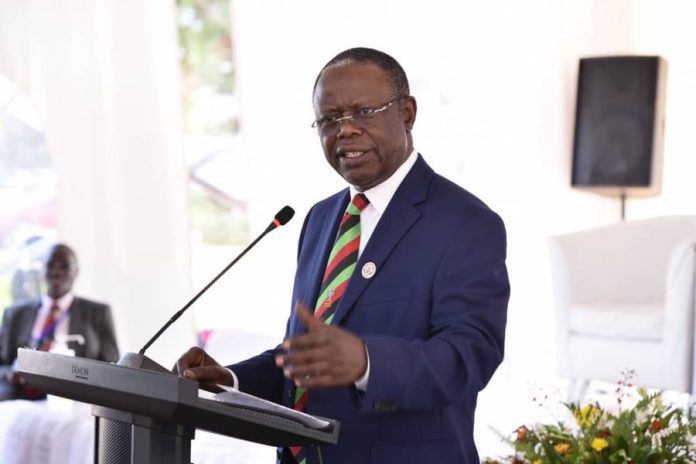
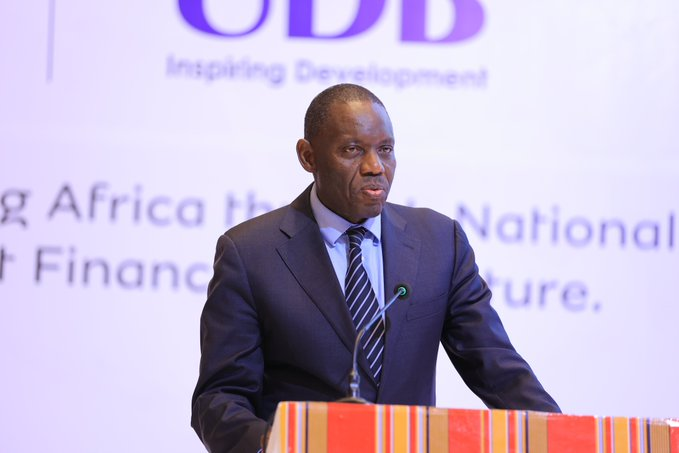
Speaking at the close of the Uganda Development Financing Summit at Speke Resort Munyonyo on Tuesday, September 2, 2025, Dr. Atingi-Ego said institutions such as the Uganda Development Bank (UDB) should provide long-term, high-risk financing that commercial lenders are ill-suited to offer.

“Going to a commercial bank for a 10-year loan from a bank whose liability averages two years is really suicidal,” he warned, noting that the mismatch between short-term deposits and long-term credit raises borrowing costs for both businesses and individuals.

The Governor emphasized that development finance must be “purposeful, inclusive and forward-looking”, targeting projects that traditional financiers avoid while unlocking private sector growth. If development banks were stronger, he argued, they would provide long-term capital, leaving commercial banks to focus on short-term working capital.

Africa’s financing needs are immense. Estimates put the continent’s annual development funding requirement at between $900 billion and $1.3 trillion—around 43% of GDP. Achieving the Sustainable Development Goals (SDGs) by 2030 would cost about $1.3 trillion annually, with up to $250 billion required for climate action alone.

To close this gap, Dr. Atingi-Ego urged African governments to strengthen both national and continental lenders, such as the African Development Bank. Yet he acknowledged the challenge of funding development banks themselves, questioning whether options like issuing corporate bonds are viable given high interest rates.

“Can we maybe consider sustainable financing, where development banks run a sustainability agenda so they can direct funding to projects that are viable and long-term?” he asked.

Currently, UDB lends at an average interest rate of 12%, down from 15%—a level President Museveni recently described as still too high, though he underscored the bank’s importance to Uganda’s growth strategy.

Dr. Atingi-Ego said national development banks must take the lead in value addition and bankable project creation to drive Uganda’s ten-fold growth agenda, which envisions expanding private sector credit from the current $7.5 billion (12% of GDP) to at least $80 billion.

“Development financing is critical,” he said, adding that without robust development banks, African economies risk being trapped in cycles of expensive credit and underinvestment.

Stories Continues after ad

Equity Bank extends ‘ Tupange Business Ne Equity Campaign’ to Fort Portal’s SMEs

Equity Bank Uganda continues its commitment to fostering SME growth nationwide. In Fort Portal, entrepreneurs, traders and community leaders convened to network and envision a brighter future for regional business at the 3rd regional event of Equity Bank Uganda’s Tupange Business Ne Equity, a customer engagement campaign which provides essential financial support to small and medium enterprises (SMEs) across the country.

Following successful customer engagement events in Arua and Mbale, the Fort Portal legs saw customers listening, engaging, networking and empowering participants as Equity Bank staff and business speakers provided insights on the current challenges facing SMES and solutions towards overcoming them.

“At Equity Bank, we value each and every customer and are committed to giving them dignity in whatever aspect of life they do business,” said Felix Babeiha, Branch Manager in Fort Portal.

Professor Alex Ariho (PhD), the Chief Executive Officer of African Agribusiness Incubators Network (AAIN) and Founding Director of Excel Hort Consult Agribusiness Incubator Limited (EHCAI) that operates across Africa, delivered the keynote address, urging SMEs to adopt innovation, skills development and collaboration for long-term success.

He noted that SMEs represent 90% of global businesses and could generate up to 80% of Uganda’s employment opportunities if properly supported.

“If you succeed, the economy succeeds,”  Prof. Ariho emphasized, encouraging entrepreneurs to prioritize value addition, resilience, and a growth-oriented mindset.

Olivia Mugaba, Head of SMEs at Equity Bank Uganda, highlighted SMEs as the backbone of the economy, driving transformation in Uganda and beyond.

“Together, we must support and strengthen this backbone of our economy,” she urged.

Reflecting on Equity Bank’s evolution, Robert Wanok, Head of Retail – Corporate Banking at

Equity Bank Uganda, stated, “Equity Bank’s journey has always been guided by our customers. Over the years, we have taken deliberate steps to listen closely to their feedback. Through an internal clean-up and accountability exercise, we have enhanced our service delivery to respond better to their needs, because customer feedback is at the heart of everything we do.”

The event also honoured local SME leaders that saw Equity Bank presented with the SME Ecosystem Customer Award to Mubunga Samuel, Managing Director of Mubunga Investments Multipurpose Co. Ltd., a distributor of Uganda Breweries Limited in Bundibugyo and Ntoroko districts.

The SME Customer Loyalty Award went to Prof. Edward Bitanywaine Rugumayo of Tooro Botanical Gardens, while the SME Business Influencer Award was given to Rt. Rev. Bishop Reuben Kisembo of the Rwenzori Diocese. These recognitions underscored the role of leadership, loyalty, and influence in strengthening business communities.

Catherine Psomgen, Director of Public Sector and Social Investments at Equity Uganda, reinforced the bank’s collaborative approach: “At Equity, we support the entire value chain from anchor businesses to the smallest players, ensuring that everyone grows together. We are committed to walking with you on your growth journey.”

Stories Continues after ad