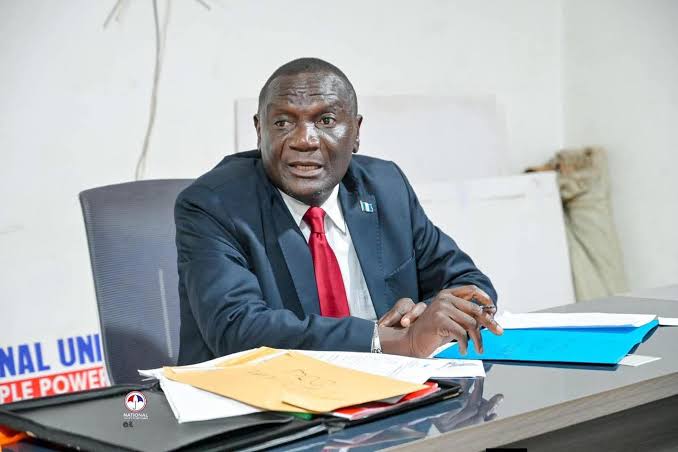
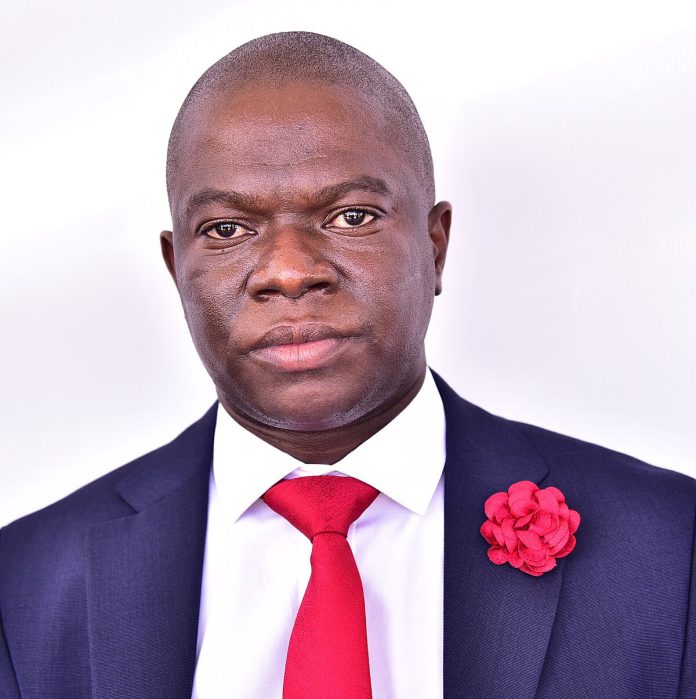
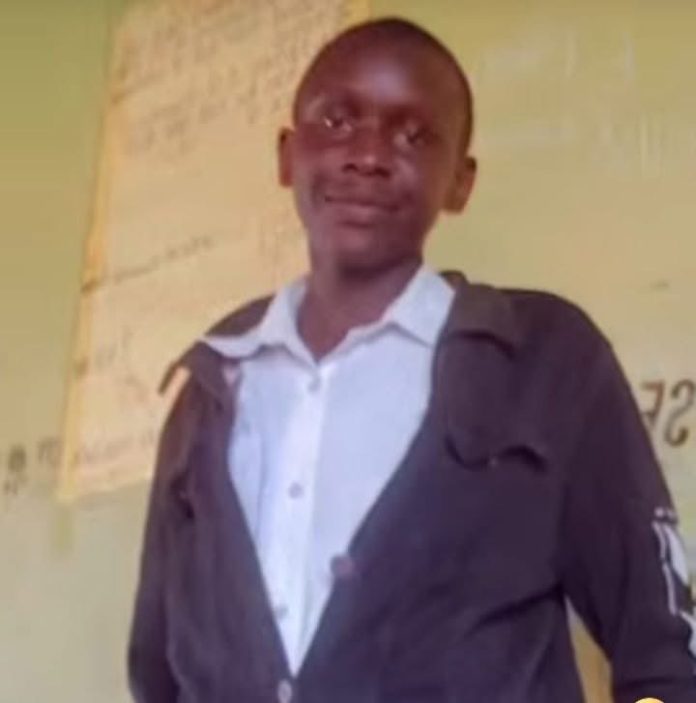
NUP flag bearer and Makindye Division politician Ali Nganda Kasirye Mulyanyama.
The National Unity Platform (NUP) flag bearer and Makindye Division politician, Ali Nganda Kasirye Mulyanyama, is under scrutiny over his academic credentials and official name records as he campaigns for a parliamentary seat in the 2026 elections.
The controversy arises from claims that Mulyanyama studied abroad in the United Kingdom and the United States while submitting only an Uganda Advanced Certificate of Education results slip to the Electoral Commission. This raises questions about the authenticity of his academic documentation, while Mulyanyama maintains that his educational background is valid.
The issue of his name change also adds complexity to the debate. A Gazette and Deed Poll notice registered in Kampala in March 2016 shows that Mulyanyama formally changed his name from Nganda Alan to Kasirye Nganda Ali.
“By this deed, which is to be registered with the registrar of documents at Kampala, I, the undersigned KASIRYE NGANDA ALI, of C/o. P.O. Box 23528, Kampala, lately called NGANDA ALAN, a citizen of Uganda by birth, do hereby for and on behalf of myself wholly renounce, relinquish and abandon the use of former names of NGANDA ALAN, and in place thereof do assume from the date hereof the names of KASIRYE NGANDA ALI, and so that I may hereafter be called, known and distinguished not by former names of NGANDA ALAN but by my assumed names of KASIRYE NGANDA ALI,” he noted in the document.
The document further declares, “And for the purpose of evidencing such my determination, I declare that I shall at all times hereafter in all records, deeds and writings, and in all proceedings, dealings and transactions as well as private and public, use and sign the name of KASIRYE NGANDA ALI as my name in place of and in substitution for my former name of NGANDA ALAN. I expressly authorize and request all persons at all times hereafter to designate and address me by such assumed names of KASIRYE NGANDA ALI, accordingly.”
The deed concludes with Mulyanyama formally signing the document, “Signed and delivered by the above named KASIRYE NGANDA ALI formally NGANDA ALAN. KASIRYE NGANDA ALI, Renouncer. This 17th day of March, 2016.”
While the name change has been legally recognized, doubts about his academic claims persist. Observers note that Mulyanyama submitted only a results slip instead of a verified A Level certificate, fueling criticism from opponents and raising concerns about compliance with Electoral Commission requirements.
Mulyanyama has rejected the allegations, insisting that his academic background is legitimate and challenging anyone with doubts to pursue legal verification. Analysts say his case underscores the importance of transparency and documentation verification for political candidates, particularly in high-stakes elections like Uganda’s 2026 general polls.
Ali Nganda Kasirye Mulyanyama, born on August 31, 1980, is a long-serving Makindye Division politician who has held leadership positions in local government and joined the NUP after previous affiliations with other political parties.
The late Kawempe South MP Muhammad Ssegirinya’s case is the most complicated.
The Uganda Parliamentary Savings and Credit Cooperative Organisation (SACCO) is withholding savings belonging to at least 34 deceased legislators due to bitter disputes among individuals claiming to be their rightful spouses.
The revelation was made by Buvuma County MP Robert Migadde, who chairs the Parliamentary SACCO, during its Annual General Meeting held on November 28, 2025.
Migadde said the cooperative is stuck with the funds because of incomplete member records and unresolved family battles.
“Some members never filled in their bio-data forms and did not name their next of kin. Then you have a situation where a husband passes on and suddenly four, five, or even six spouses show up, each demanding access to the money. It becomes extremely difficult to determine the legitimate claimant,” he said.
He pointed to the late Kawempe South MP Muhammad Ssegirinya’s case as the most complicated, noting that even condolence contributions from MPs—each contributing Shs300,000, have not been disbursed.
“We continue advising our members to update their bio-data and clearly state their next of kin so that benefits can be processed smoothly,” Migadde added.
Despite these challenges, the SACCO reported impressive financial growth over five years. Loans and advances rose from Shs7.96 billion in the 2020/21 financial year to Shs25 billion by June 2025.
Member savings also grew significantly, jumping from Shs17.1 billion to Shs58 billion in the same period, while share capital expanded from Shs3.3 billion in 2021 to Shs5.7 billion by mid-2025.
Migadde said the institution has fixed delays in loan processing by bringing more staff on board.
Methods Mureebe, the SACCO’s Chief Executive Officer, told the AGM that although members approved an investment in government bonds during the 2024 annual meeting, the plan has not taken off.
“Once you put money in bonds, it stays there for a long time. The Board is very careful not to lock away funds at a time when members, especially during election seasons, require high liquidity,” Mureebe said, noting that demand for loans is expected to surge after the next Parliament is sworn in May 2026.
Migadde also disclosed that the SACCO is lobbying for an extension of the tax waiver on SACCO income, which is due to expire in 2027.
“Many SACCOS rely on the Parliamentary SACCO when it comes to advocacy. We are already engaging to ensure the waiver is renewed because the cooperative movement is stronger when united,” he said.
He further informed members that government plans to have all SACCOS registered under the Uganda Registration Services Bureau (URSB), adding that Parliament will seek broad consultations before adopting a position.
The meeting also heard that the SACCO earned Shs2 billion in profit from compensation paid by the Uganda People’s Defence Forces (UPDF) in Mityana.
Bakiga culture is set to take centre stage in Kampala as BakigaNation unveils the 2025 edition of its signature Christmas festival, Rukundo Egumeho – Nohiri Yeitu slated for Sunday, December 14 at Millennium Park, Lugogo.
The organisation says this year’s celebration will revive the true spirit of a traditional Kikiga Christmas, bringing together music, dance, food, stories, and community warmth.
“This is the Christmas of our childhood, the drums, the carols, the stories, the community. We’re bringing it home to Kampala. This is Nohiri Yeitu… our Christmas, celebrated our way,” said Owen Katwesigye Bigombe, the Team Leader of BakigaNation.
The festival promises an immersive cultural experience, recreating memories of Christmas in Kigezi for families in the city. Visitors will enjoy a vibrant lineup led by the BakigaNation Mass Choir, which will perform Christmas carols in a distinctly Kikiga style.
Bigombe noted that the choir will be one of the most emotional moments of the festival, describing it as a grand musical experience designed to warm hearts and unite communities.
A strong artistic lineup is expected to grace the stage, including Florence Musimenta, Lillian Nabaasa, Norman Shaaka, Lady Sarah, TPaul, and the BakigaNation Cultural Troupe. Ugandan star Sheebah Karungi will join as special guest artist in a cultural-meets-contemporary performance.
“This edition is not just an event, it is a return to roots, a celebration of identity, and a moment for families, friends, and communities to reconnect,” Bigombe emphasised.
Beyond music and dance, festivalgoers will enjoy a wide array of activities, among them a cultural village, traditional storytelling sessions, Father Christmas appearances, craft and food exhibitions, family games, and special Christmas giveaways because it’s the season of giving.
The festival is supported by major partners including Pilsner Lager, Roke Telkom, Sanyuka TV, AfroMobile, Capital Radio, Next Music, and several events and production companies.
Organisers describe it as Kampala’s biggest Kikiga Christmas cultural celebration, with a full Christmas cultural village being introduced for the first time.
The event is open to families, youth and cultural enthusiasts and expected to be the largest cultural outing of the festive season.
Uganda’s coffee industry posted one of its strongest months in recent years after export revenues for October climbed sharply to $185.56 million (about Shs730 billion), reflecting a 33 percent rise compared to the same month last year.
The country shipped out 685,720 60kg bags of coffee, representing a 38 percent jump in export volumes from October 2024. Officials attribute the surge to a bumper harvest in the Central and Eastern regions, where the picking season intensified, alongside favourable international prices driven by weather-related supply disruptions in major coffee-producing countries such as Brazil, Vietnam and several Central American nations.
The average export price stood at $4.51 per kilogram, slightly higher than September’s $4.31 but still below the $4.67 registered a year earlier.
Robusta coffee continued to dominate the trade, accounting for 87 percent of all shipments. Uganda exported 597,925 bags of Robusta worth $151.51 million. This represented a 31 percent increase in volume and a 19 percent jump in value compared to last year. The average price for Robusta was $4.22 per kilogram.
Arabica coffee recorded the most dramatic growth, with export volumes soaring by 117 percent and earnings rising by 182 percent year-on-year. Total Arabica exports reached 87,795 bags valued at $34.04 million, fetching an average price of $6.46 per kilogram.
In the broader picture, Uganda exported 8.4 million bags of coffee in the 12 months to October 2025, earning $2.4 billion—an impressive 77 percent increase in value from the previous year.
Europe remained the dominant market, taking in 63 percent of Uganda’s coffee. Italy led with 26.22 percent, followed by Germany at 10.67 percent and Algeria with 7.49 percent. African countries collectively absorbed 16 percent of the exports, amounting to 108,540 bags.
Ugacof (U) Ltd. emerged as the top exporter for October with a 12.44 percent market share, while Sucafina SA was the leading foreign buyer, holding 14.22 percent of the market.
Looking ahead, Uganda’s coffee shipments for November 2025 are projected to reach approximately 550,000 60kg bags.
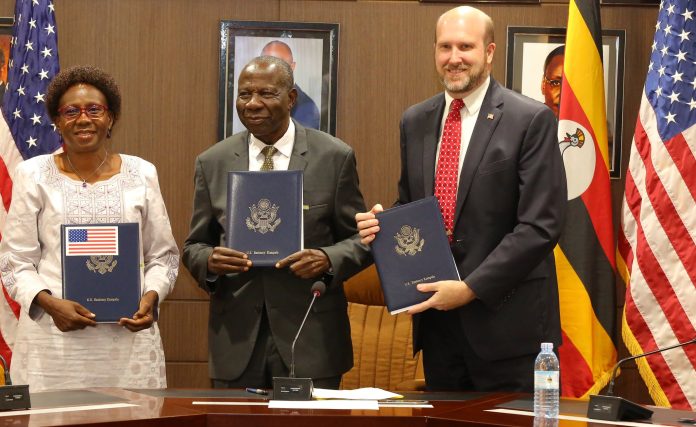
U.S. Ambassador to Uganda, H.E. William W. Popp, and Uganda Ministers of Finance Matia Kasaija and Health, Dr. Ruth Acen, after signing the MoU.
Uganda and the United States have entered a Shs7.8 trillion ($2.2 billion) bilateral health cooperation agreement aimed at strengthening the country’s health system and improving the delivery of essential healthcare services over the next five years.
The Memorandum of Understanding (MOU), signed today at the Ministry of Finance, outlines a comprehensive framework designed to save lives, curb the spread of infectious diseases, and bolster Uganda’s ability to respond to public health emergencies.
Finance Minister Matia Kasaija signed on behalf of the Government of Uganda, while the U.S. Ambassador to Uganda, H.E. William W. Popp, signed on behalf of the United States.
The agreement is expected to advance the longstanding U.S.–Uganda partnership by expanding support to key priority areas, including HIV/AIDS, tuberculosis, malaria, maternal and child health, polio eradication, global health security, human resources for health, disease surveillance, and emergency preparedness. It also includes direct support to faith-based healthcare providers across the country.
Over the five years, the United States has committed $1.7 billion, while the Government of Uganda will increase domestic health spending by $500 million, a move intended to gradually strengthen national ownership and financial responsibility for the health sector.
Speaking at the signing ceremony, Finance Minister Matia Kasaija said the partnership will significantly enhance Uganda’s health infrastructure and workforce.
“This collaboration will yield not only disease-specific outcomes but also significant improvements in national systems, institutions, and workforce capacity. This is highly commendable, ”Kasaija stated.
Ambassador Popp described the MOU as a major long-term investment in shared global health priorities.
“We are building on prior successes and making a significant shift towards promoting self-reliance in the health sector through strong community health systems, clear performance metrics, and a foundational commitment to data systems and global health security that will prevent and stop outbreaks from threatening Uganda, the United States, and the world,” the Ambassador said.
The pool pavilion at Speke Resort Munyonyo is ready to welcome you for Christmas.
Speke Resort Munyonyo has announced an enchanting Christmas Eve Dinner set to take place on December 24, with an unforgettable night of food, music, and family-friendly festivities by the lakeside.
The celebration, scheduled to begin at 6 pm at the Nyanja/Lake Terrace, is designed to bring families together in the true spirit of the season, according to the resort’s announcement.
Guests will be welcomed to a lavishly curated buffet featuring a wide selection of Christmas delicacies prepared by top chefs.
Organisers say the evening will offer far more than a gourmet feast.
There will be heart-warming choir carols, breathtaking fire dance showcases and exhilarating acrobat performances.
Children will also enjoy a dedicated programme tailored just for them.
The resort planned exciting activities including a kids’ movie night and a visit to the petting zoo to ensure the little ones have just as much fun.
The resort has set the price at Shs200,000 for adults and Shs90,000 for children below 12 years. Management encourages early reservations through the contacts provided to ensure a seamless festive experience.
With its serene lakeside atmosphere, captivating performances, and family-centered activities, the 2025 Christmas Eve Dinner at Speke Resort promises to be one of the most vibrant and memorable holiday events.
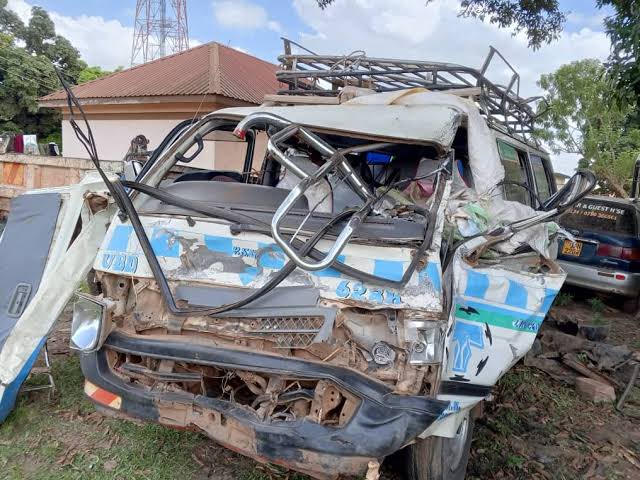
At least ten people have been confirmed dead and three others injured after a fatal road crash at Busowa Town Council along the Busia Highway in Bugiri District on Wednesday morning.
The 7:00 am collision involved a Toyota Hiace, registration UBN 817H, and a stationary trailer, UA 647BA/UA 430AA.
According to the spokesperson for the Directorate of Traffic and Road Safety, Michael Kananura, preliminary investigations indicate that reckless overtaking triggered the deadly crash.
“The driver of the Toyota Hiace attempted to overtake an unidentified vehicle but another vehicle was approaching from the opposite direction,” Kananura said.
He added, “In an effort to avoid a head-on collision, the driver swerved to the left, lost control, and rammed into a stationary trailer. The impact killed ten people on the spot, including the driver, and left three others injured.”
All the victims were occupants of the Toyota Hiace.
Kananura confirmed that police responded swiftly to the scene.
“Our team rushed the survivors to the hospital and conveyed the bodies of the deceased to the mortuary. Investigations into the crash have commenced,” he noted.
He urged motorists to adopt safer road practices, warning that reckless behaviour continues to claim innocent lives.
“We urge all motorists to desist from speeding and unsafe overtaking. Drivers must exercise maximum caution and prioritise safety at all times,” Kananura emphasized.
Police say a full investigation is underway to determine the exact circumstances surrounding the tragedy.
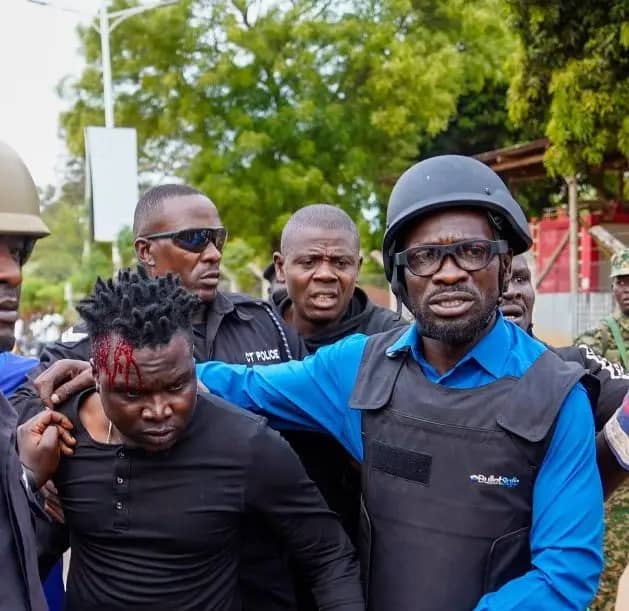
NUP's presidential candidate, Robert Kyagulanyi, with one of the Gulu attack victims.
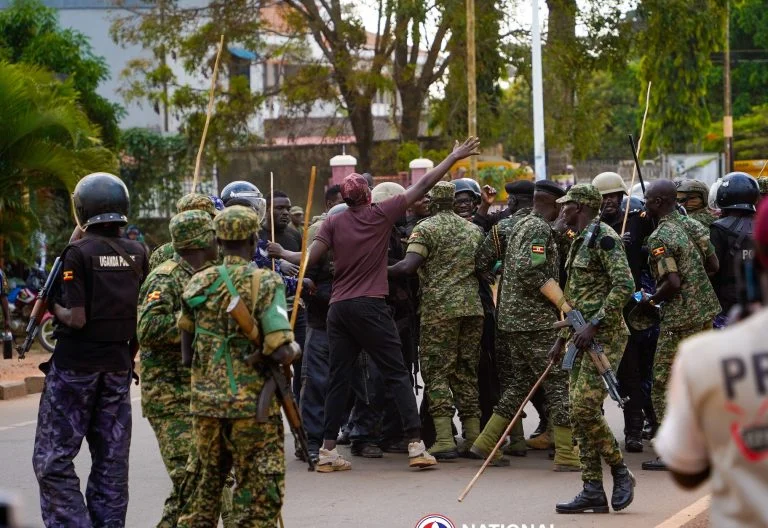
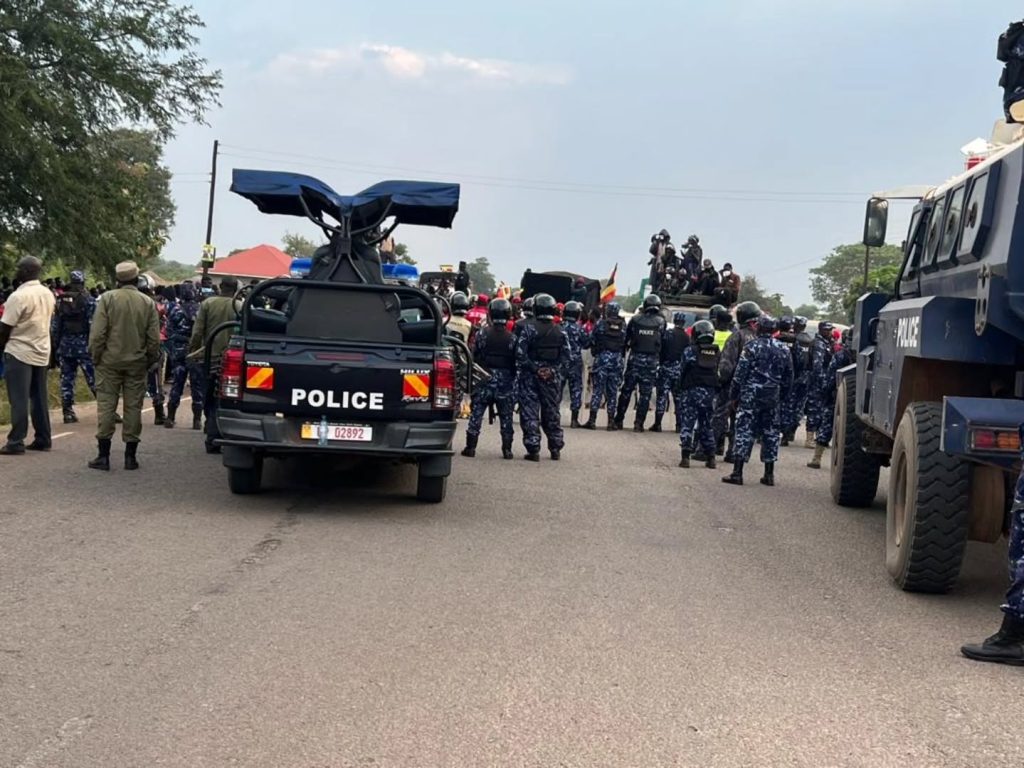
Across Uganda, from the streets of Kawempe to the busy centres of Gulu, Fort Portal, Jinja, and Kayunga, a familiar pattern has marked several opposition campaign activities. Roads have been sealed off, military vehicles have appeared suddenly, police officers have fired teargas or used batons, and at times soldiers have joined operations that ended with injuries and arrests.
This exclusive reconstruction examines what is publicly known about these deployments and what remains unanswered about who actually directs these actions.
A trail of clashes across the campaign map
In the northern city of Gulu, the National Unity Platform (NUP) presidential candidate, Robert Kyagulanyi alias Bobi Wine, was pushed back by uniformed and plain-clothed security personnel during a chaotic confrontation that left several civilians hurt. Video from the scene showed heavily armed officers driving crowds away and striking some of those who attempted to follow the motorcade.
Kawempe in Kampala has witnessed repeated standoffs throughout recent campaigns. Journalists have been beaten, supporters have been arrested, and military units have occasionally joined police in dispersing gatherings. Residents say the force used often escalated without warning, especially during moments when crowds attempted to escort Robert Kyagulanyi, as was the case earlier this year during the by-elections for Member of Parliament Elias Nalukoola.
Similar scenes were reported in Fort Portal, where security teams blocked roads leading to planned rallies. Vehicles carrying campaign equipment were stopped at checkpoints, and some events were postponed because police insisted the meetings did not meet the conditions set for public gatherings.
In Jinja and surrounding areas, sound systems and stage equipment were impounded, and several organisers said they arrived at their venues only to find officers occupying the space. Kayunga has also seen several instances where roads were sealed off, and supporters kept away from campaign venues.
These incidents form a pattern observed across many districts where opposition candidates have attempted to reach supporters.
soldiers from the army and the police beating opposition supporters in Gulu.
What the police and the military have publicly said
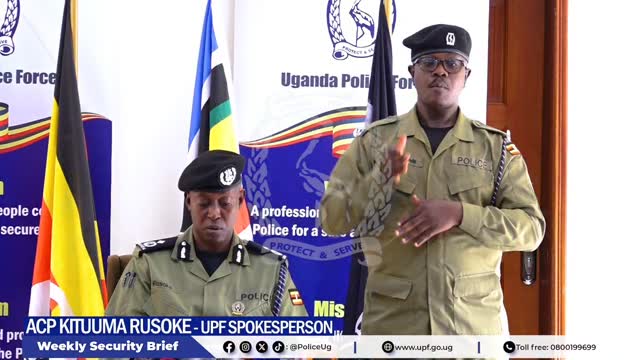
Security agencies consistently defend their actions as enforcement of the law. Police statements issued after several of the confrontations have accused candidates and their teams of holding unlawful processions or violating agreed campaign guidelines. Officers maintain that the interventions were aimed at preventing disorder and ensuring public safety.
After the violent episode in Gulu, police announced that an internal inquiry would be conducted and described the images of officers beating civilians as regrettable. They promised disciplinary action if the investigation confirmed wrongdoing.
In certain cases, including an earlier campaign clash in Kawempe, the army issued public apologies acknowledging that soldiers who took part acted outside acceptable standards. Military officials stated that such behaviour did not reflect the rules of engagement expected of their personnel.
Despite these statements, neither institution has publicly revealed detailed operational orders or the full chain of command responsible for deployments during political events.
What is missing in the public record
While extensive footage shows officers confronting opposition supporters, no publicly available document confirms that a specific political authority instructed police or soldiers to block or assault candidates—the official explanations only reference enforcement of regulations and controlling crowds.
There are no released internal memos, deployment directives, or recorded instructions showing a senior political figure commanding security agencies to use violence against a particular candidate. This absence of documentation makes it impossible to conclusively identify any single individual as the source of these orders.
A pattern rooted in previous election cycles
Uganda’s security responses during elections have long been a subject of scrutiny. In the 2021 presidential race, rights organisations documented widespread use of force, mass arrests, and disruptions of opposition activities. The events of that year established a pattern that still influences present-day operations. The similarity between those past crackdowns and the more recent ones suggests continuity in the way security agencies respond to political competition.
Accounts from the ground
Victims, journalists, and supporters have consistently described seeing both police and soldiers actively participating in confrontations. Some report being beaten while others recount seeing plain-clothed individuals armed with sticks operating alongside uniformed officers. In some incidents, officers are seen standing aside as unidentified groups assault supporters.
Police have sometimes blamed violence on disorderly crowds or on criminal groups mingling with supporters. In other moments, they have admitted that officers may have used more force than necessary but insisted that their overall objective remains maintaining order.
Why the search for the real command remains unresolved
Three factors complicate efforts to identify who truly issues operational instructions during campaign crackdowns.
The first is operational discretion. Local commanders often decide on immediate actions during fast moving situations and these decisions rarely appear in written form.
The second is the lack of prior communications. Without internal deployment circulars, radio communication logs or authenticated recordings, journalists cannot point to a direct instruction from a senior political office.
The third is conflicting official messaging. While government agencies cite enforcement of the law, the scale and coordination of security deployments across many districts raise questions that remain unanswered.
What is needed to establish responsibility?
For investigators to determine who actually commands these operations, several records would be crucial. These include radio communication logs from police and army command centres, internal deployment files, written or verbal instructions issued by top security offices and sworn testimony from officers who were on the ground.
Until such information becomes public, the country is left with a clear picture of what happened but an incomplete understanding of who ordered it.
Final picture
There is no doubt that opposition presidential campaigns across Uganda have repeatedly faced roadblocks, violent dispersals, and heavy security presence. The police and military continue to justify these actions as enforcement of the law and crowd management. Victims and witnesses continue to describe brutal confrontations. But the key question remains unanswered. The public record still does not contain direct proof of who issued the command for the blockages and beatings. Without access to internal security communications, the true source of these decisions remains shrouded in secrecy.
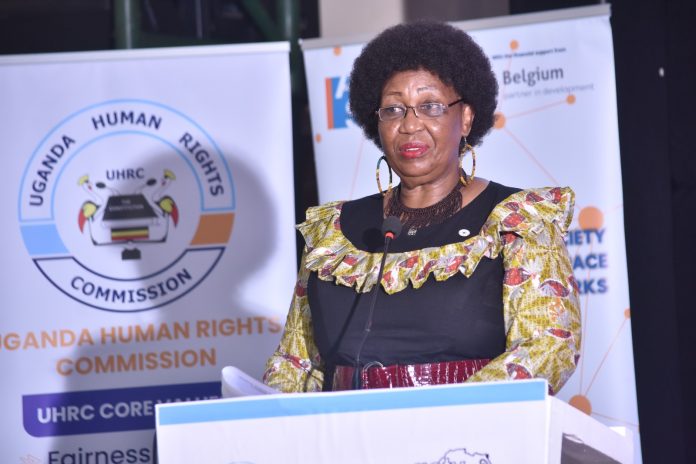
Mariam Wangadya, the chairperson, Uganda Human Rights Commission.
Four major child rights and human rights institutions called on political actors, parents, the media and the public to protect children from exploitation, harm and political manipulation during the election season.
The National Initiative for Civic Education in Uganda (NICE-UG), Uganda Human Rights Commission (UHRC), Uganda Child Rights NGO Network (UCRNN), and UNICEF Uganda jointly warned that children are increasingly at risk during political campaigns, especially when they are drawn into rallies, demonstrations and political advertising.
The institutions stressed that elections must uphold Uganda’s democratic values without compromising the safety, dignity, and wellbeing of children.
“Protecting children from harm and exploitation is not optional. It is a shared responsibility. It is the duty of all parents and caregivers, teachers, religious, cultural, and political leaders, and the media fraternity to ensure that children are protected during elections,” said Mr. Joseph Biribonwa, Chairperson of NICE-UG.
They emphasized that involving minors in campaign activities is a violation of their rights and exposes them to physical and psychological danger. The groups added that using children in political advertisements amounts to exploitation and infringes on their privacy, safety, and protection.
The organizations urged the public to report all cases of child rights violations through existing helplines and formal reporting mechanisms.
“More than half of all Ugandan citizens are children. Investing in children, listening to their voices and promoting their rights needs to be a priority during these elections,” said Mr. Damon Wamara, Executive Director of UCRNN.
To guide political parties and candidates, the child rights organizations developed a comprehensive document inspired by the children’s manifesto previously drafted under UCRNN. The document calls on political actors to integrate child-focused commitments into their campaign agendas, including efforts to combat teenage pregnancy, address malnutrition, improve access to early childhood education, and strengthen protections against violence.
It has already been shared with political parties ahead of the 2026 polls, with a call for candidates to hold child-friendly campaigns and adopt programmes that reflect the best interests of every child.
“We urge all political actors, media, parents, and the public to protect children’s rights during the election period. Let us not allow this election to compromise the safety and well-being of our children,” UHRC Chairperson, Mariam Wangadya said.
To further support public awareness, the four organizations have developed a set of practical Dos and Don’ts for children, parents, politicians, and media practitioners. These are being distributed widely through printed materials, mass media, and social media platforms.
UNICEF Uganda Representative Dr. Robin Nandy reaffirmed the agency’s commitment to safeguarding children during this sensitive period.
“UNICEF remains dedicated to working with the Government of Uganda and alongside all partners… to protect and promote children’s rights, ensuring their safety and well-being across the country during and after the election period,” he said.
The child rights coalition noted that past elections in Uganda and the region have shown an increase in risks to children, including violence, exploitation, and the interruption of essential services. Through stronger coordination, advocacy campaigns, and reporting mechanisms, the organizations aim to minimize these threats throughout the 2026 election cycle.
The Uganda Police Force has clarified that 16-year-old Leon Joshua Otim, whose death has shocked the public, was assaulted by a mob that accused him of stealing a mobile phone, but not by police or military personnel as earlier alleged on social media.
Police said their attention had been drawn to a post circulating in the media regarding the death of Otim Leon Joshua, a 16-year-old student and resident of Customs Corner Cell, Bardeg Layibi Division, Gulu City.
According to police findings, the incident began on December 6, 2025, when Otim left home around 5 pm, telling his mother he was heading to town. He did not return that evening.
“At around 0500hrs, the mother was approached by two boda boda riders who had brought her son, Otim Leon Joshua, badly beaten and unconscious. The riders told her that the boy had been attacked at Lailong after being accused of stealing a phone at about 4am,”Police reported.
Police added that his mother rushed him to Lacor Hospital, where he was admitted, but despite efforts to save him, Leon Joshua Otim passed away today, 09/12/2025, at around midday.
Investigators established that Otim was a student at Excel High School in Mukono and had returned home for holidays.
Police further confirmed that the deceased was assaulted by four boys who are currently at large and a manhunt is underway.
The police dismissed claims circulating on social media suggesting that Otim died from beatings inflicted during a political confrontation.
“Claims circulating on social media suggesting that the deceased died due to a scuffle involving security agencies and Robert Kyagulanyi are false and baseless. The truth is that Otim Leon Joshua succumbed to injuries inflicted by those who suspected him of theft,” police emphasized.
Earlier, however, NUP president Robert Kyagulanyi had linked the teenager’s death to alleged security brutality during an attempted campaign event in Gulu.
Bobi Wine said he was saddened by the death of 16-year-old student Leon Joshua Otim, who has today succumbed to the extensive injuries he sustained last Saturday when police and military officers, aided by gangs in plain clothes holding machetes and sticks, attacked and flogged our supporters and us as we attempted to campaign in Gulu city.
He further stated that, “Otim’s death underscores the ongoing complicity of the Electoral Commission and all other State institutions mandated to ensure a credible, free and fair electoral process. We extend our sincere sympathies to his family and friends, and demand prompt justice against all those responsible for his death.”
Police reiterated that their investigation is based on verified witness accounts and hospital findings, confirming the injuries were a result of mob action over alleged theft.
“We are doing everything possible to ensure justice for the deceased and his family,” the statement noted.