Stanbic Bank
Stanbic Bank
17.6 C
Kampala
Stanbic Bank
Stanbic Bank
Home Blog Page 73

From 420,000 to 1.3 million visitors: Uganda’s tourism sector to celebrate AUTO’s 30-year milestone

Association of Uganda Tour Operators.

The Association of Uganda Tour Operators (AUTO) will mark 30 years of tourism excellence with a prestigious black-tie gala, the Roots & Routes Tourism Dinner set for Thursday, October 17, 2025 at Mestil Hotel in Kampala.

Under the theme “Roots & Routes: Celebrating Uganda’s Past, Present & Tourism Future”, the event will bring together key players from the public and private sectors, including the Ministry of Tourism, the Uganda Tourism Board (UTB), the Uganda Wildlife Authority (UWA), and industry leaders, for a night of recognition, collaboration, and networking.

Tourism continues to play a vital role in Uganda’s economy, contributing significantly to GDP, creating jobs and sustaining livelihoods across communities. It remains one of the country’s most dynamic sectors, offering vast potential for growth and investment.

Speaking ahead of the celebrations, David Kiwanuka, Manager Branding at Centenary Bank emphasized the role of tourism in community development and the bank’s commitment to sustainability.

“Centenary Bank is traditionally known for banking services, but we also believe in corporate social investment. Every year, we dedicate 2% of our profits to communities, and tourism is a key part of that commitment,” he said.

He added that tourism, much like banking, is about people, the planet, and profits and therefore communities must remain central.

He noted, “When we support marathons, Martyrs’ Day or even the Cancer Run, these are tourism activities too because they bring people together and attract visitors. By healing communities, we create a stronger society. AUTO is the vehicle driving tourism across the country, and as a bank with the largest network nationwide, we pledge to continue walking this journey together.”

Reflecting on AUTO’s three-decade journey, Bonifence Byamukama founding Lake Kitandara Tours & Travel recalled the association’s humble beginnings. He noted that when it was founded over 30 years ago, there was a pressing need for an organized body to safeguard professionalism and discipline in the industry.

“Uganda could not build a credible tourism sector without an association. Tourists entrusted us with thousands of dollars, often for safaris booked years in advance. It was critical to guarantee that their investment was safe and that tour operators were trustworthy. From our early offices at Nkrumah Road to where we are now, AUTO has grown into a respected institution,” he said.

Byamukama applauded the successive leaders who have carried the mantle, maintaining standards and integrity in the sector. “AUTO has endured because of discipline and discretion, and that is why we are here today, stronger than ever.”

Uganda Tourism Board Chief Executive Officer Juliana Kagwa praised AUTO for its contribution to the industry and described it as the backbone of Uganda’s tourism.

“We celebrate AUTO at 30 because without tour operators, our visitors would not have a reliable way to reach our parks, rivers, forests, mountains, and wildlife. AUTO is the vehicle through which Uganda’s beauty is experienced,” she said.

Kagwa likened AUTO’s role to the agricultural cooperatives that once powered Uganda’s cash crop economy.

She said, “Just like coffee and cotton were built through cooperatives, AUTO brings together communities, value chain players, and the private sector to drive tourism. At UTB, we recognize this and remain committed to working with tour operators. AUTO is the future of tourism in Uganda, and we do not take your contribution for granted.”

Acting Commissioner for Tourism Development in the Ministry of Tourism, Lyazi Vivian reflected on the industry’s growth over the past three decades and praised AUTO for its pivotal role.

“When you talk about 30 years of existence and reflect back on what was happening then, you really appreciate the journey we’ve traveled. Uganda was bringing in about 420,000 visitors. Last year, we declared 1.3 million arrivals, and this year promises to be even better,” he said.

Lyazi applauded tour operators for their tireless efforts in promoting Uganda on the global stage noting, “We want to thank you very much because you are the foot soldiers. You are the people who go out there, seek the client, and convince them that Uganda is a beautiful place worth visiting. Out of 197 countries all competing for the same tourist, you have ensured that Uganda gets its fair share, and that is no small achievement.”

He stressed that government recognizes the importance of tourism as a driver of economic transformation.

“Tourism is now at the forefront. Everybody is talking about it, and it is truly Uganda’s low-hanging fruit. It is what is going to transform this country,” Lyazi noted, urging AUTO members to rise to the challenge of turning this vision into reality.

Looking to the future, he said the ministry is working closely with partners to strengthen the sector, including financial institutions such as the Central Bank and other non-traditional players in tourism. He also underscored the role of technology in keeping Uganda competitive.

“We are digitizing because the way we consume, attract visitors, and transact is changing. Thank you for embracing these new technologies as we position ourselves in the global market,” he said.

Lyazi rallied stakeholders to join the forthcoming celebrations urging, “On the 17th, we shall all be there in big numbers to celebrate AUTO’s milestones. It has not been an easy journey, but together we shall continue shaping tourism as one of Uganda’s greatest success stories,” he pledged.

The Roots & Routes Dinner will not only celebrate AUTO’s legacy but also honor outstanding contributions, strengthen partnerships and highlight the potential of tourism as a driver of economic transformation. As AUTO turns 30, stakeholders agree that its role will be even more crucial in shaping a sustainable, inclusive and globally competitive tourism industry for Uganda.

Stories Continues after ad

Greater Kampala road projects test World Bank’s social safety standards

Mr Deus Mukalazi.

By Mukalazi Deus

Board Chair, UBUNTALISM GLOBAL

The World Bank’s commitment to protecting vulnerable people affected by development projects is being put to the test in Uganda, where the implementation of the Greater Kampala Metropolitan Area Urban Development Programme (GKMA-UDP) is raising serious concerns. In particular, the practice of soliciting “voluntary land donations” from affected persons—often under pressure—and the lack of compensation for business disruption expose troubling gaps in the application of the World Bank’s own Environmental and Social Framework (ESF), especially its standard on Land Acquisition, Restrictions on Land Use and Involuntary Resettlement.

While urban infrastructure development is a necessity for economic transformation, the process by which these developments occur should not come at the expense of the rights and livelihoods of the very people the projects are meant to benefit. Reports from communities affected by the GKMA-UDP indicate that residents and small business owners were “encouraged” to donate portions of their land for road expansion projects. The encouragement, however, was not always as voluntary as it sounds. In several cases, those who questioned the process or declined to “donate” were allegedly told that the project would bypass their area or that they risked losing future benefits. In other words, consent was conditional and coercive—a clear violation of the ethical and legal standards that should guide any development effort funded by a multilateral lender like the World Bank.

The World Bank clearly says that if people are forced to move or lose their land or way of earning a living, the harm should be kept as small as possible and they must be paid and helped to recover. Even in cases where land is donated, the standard requires that such donations be fully informed, completely voluntary, and well-documented. More importantly, the standards emphasize that economic displacement—such as loss of income from business closures or interruptions—must be adequately compensated. Unfortunately, in Kampala, businesses have been shut down or severely affected by ongoing road construction, without any form of support or compensation. Small traders, kiosk operators, and even formal businesses have been displaced with no clear path to recovery.

The issue here is not just about legal compliance—it’s about fairness, dignity, and the credibility of the World Bank’s social safeguards. The World Bank has long positioned itself as a champion of development that does no harm. Its Social and Environmental Safe guards is designed to ensure that projects it finances uphold international standards of social justice, particularly in fragile or lower-income countries. But when people are pushed to give up land without adequate alternatives, and when business livelihoods are disrupted without compensation, these safeguards are reduced to a paper promise.

The challenge is compounded by weak national enforcement mechanisms. Uganda lacks a clear and enforceable legal framework requiring compensation for economic displacement in urban development. In such a vacuum, it is incumbent upon international funders to ensure that their projects do not contribute to impoverishment or social conflict. Otherwise, the very projects meant to reduce inequality end up exacerbating it.

What is particularly concerning is that this is happening in Kampala—a city striving to modernize and become a beacon of urban growth in Africa. Urban transformation should not be pursued through shortcuts that ignore human impacts. Instead, it should be grounded in inclusive planning, meaningful consultation, and rights-based implementation. Any approach that relies on coercing citizens into land surrender or ignoring the economic shocks of displacement risks breeding long-term resentment and undermining public trust in both local authorities and international development partners.

It is also a wake-up call for the World Bank to strengthen its oversight mechanisms. It is not enough to have policies on paper. Effective monitoring, community grievance mechanisms, and independent third-party evaluations must be built into every stage of project implementation. Civil society actors, media, and local advocacy groups should be empowered to monitor compliance and report violations.

The Greater  Kampala roads project should prompt the World Bank to reassess how “voluntary” donations are being used as a loophole to avoid compensation. In high-pressure environments where communities are desperate for services, or where political messaging creates fear of exclusion, the term “voluntary” becomes deeply problematic. The Bank must develop stricter definitions and clearer safeguards around land donations to prevent abuse.

For Uganda, this is an opportunity to build a more just and equitable approach to urban development. National institutions should take this moment to review existing laws and introduce robust provisions that require compensation for both physical and economic displacement, even when land is not formally titled. Informal economies are the backbone of urban livelihoods, and they deserve protection.

In conclusion, the ongoing road projects in Kampala are more than just an infrastructure story—they are a litmus test for how seriously the World Bank and national actors take the issue of social protection in development. Ignoring the pain and loss of affected persons not only contravenes global standards but also erodes the legitimacy of development itself. If the World Bank is to maintain its credibility as a pro-poor development partner, it must urgently intervene, investigate the implementation gaps in the GKMA-UDP, and ensure that all affected persons are treated with the fairness and respect they deserve.

No one should be made to choose between a better road and their livelihood. Development must not demand such trade-offs.

Stories Continues after ad

UPDF regrets shooting of two civilians in Kitgum

Maj. Gen. Felix Kulaigye, Defence and Army Spokesperson.

The Uganda People’s Defence Forces (UPDF) has confirmed the shooting and killing of two civilians in Kitgum District on the night of August 28, 2025.

According to the army, the incident occurred at around 11:19 pm at Kitleng Detach, Namukora Sub-County, where soldiers had been deployed to protect a community-protected kraal. The victims were shot near the main entry point.

UPDF spokesperson Brig. Gen. Felix Kulayigye explained that the soldiers mistook the men for cattle thieves attempting to drive away two cultivating bulls believed to have strayed from Lapenyi farmland.

“The soldiers, who were on duty protecting livestock, suspected the victims of being cattle thieves. Unfortunately, their suspicion later proved mistaken,” Kulayigye said.

Community leaders later revealed that the two men, who had been drinking, lost their way and were moving during curfew hours.

The deceased have been identified as Mr. Joseph Obutu, 50, a resident of Mangeyi Village, Panyum Melong Parish, Omia Nyima Sub-County, and Mr. Richard Opira, 42, a resident of Amoyo Kol Village, Pella Parish, Omia Nyima Sub-County, all in Kitgum District.

Maj. Gen. Keith Katungi, Commander of the 5th Infantry Division, has since reached out to the bereaved families to assist with burial arrangements and express condolences.

“Maj. Gen. Katungi is in close contact with the families of the deceased to support burial arrangements and conveys his condolences, in conformity with the UPDF ideology,” Kulayigye noted.

While stressing that the soldiers acted in response to what they perceived as a threat, the army extended its sympathy to the affected families and pledged its continued commitment to protecting citizens.

“The UPDF reaffirms its commitment to safeguarding the lives and property of all Ugandans. We deeply regret the circumstances that led to this unfortunate loss of life,” Kulayigye said.

The UPDF also appealed to the public to cooperate with security agencies and respect local bylaws, especially curfew regulations, to avoid such incidents.

“We call upon communities to support security efforts by adhering to local regulations and avoiding situations that may put them at risk,” the spokesperson added.

Stories Continues after ad

Museveni closes NRM Delegates Conference with tough call against corruption

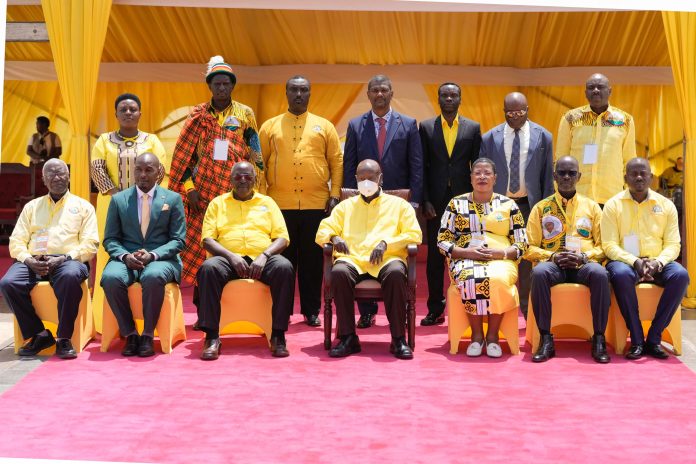
President Museveni with other elected members of the Central Executive Committee of the NRM party.

President Yoweri Museveni has closed the NRM Delegates Conference with a strong call to leaders at all levels to intensify the fight against corruption, particularly in districts, warning that the vice undermines the trust of the people and divides the party.

Museveni stressed that corruption should be condemned and dealt with firmly.

He urged leaders not to frustrate the party’s 20 million-strong membership with injustices and misuse of public resources. “Don’t annoy our members with corruption and bad practices. When you do that, you divide us,” Museveni cautioned, adding that several officials implicated in corruption have already been arrested.

The President also reminded delegates of the seven core principles of the NRM, starting with peace, which he said is guaranteed by the UPDF. However, he tasked local leaders to play a bigger role in monitoring crime, service delivery, and government programs such as the Parish Development Model (PDM).

On infrastructure, Museveni noted the need to properly maintain roads, health centers, and schools, cautioning districts against diverting funds meant for routine road works. He reiterated the government’s commitment to ensuring free education in government schools, safe water supply in villages, and efficient drug supply in health facilities.

The President emphasized the importance of wealth creation at the household level, urging leaders to guide citizens in making good use of PDM funds. “Every home must have some wealth. Leaders should ensure that people get their share without deductions and use it properly so they can pay it back and benefit again,” he said.

He further highlighted challenges such as poor roads, water scarcity, high school fees, and drug shortages as issues that frustrate citizens and create unnecessary opposition against the ruling party. Addressing these, he said, would strengthen harmony between leaders and the people.

Museveni concluded by reminding delegates of Uganda’s broader goals, including access to regional and continental markets, as well as advancing the East African political federation for strategic security. He congratulated the delegates for their support and called for unity in protecting the gains of the NRM.

Meanwhile, the National Delegates Conference adopted a series of resolutions aimed at consolidating Uganda’s economic progress, strengthening regional integration, and reaffirming President Yoweri Kaguta Museveni as party leader and presidential flagbearer for the 2026 general elections.

Reading the resolutions, NRM Secretary General Richard Todwong said the conference recognized President Museveni’s “strategic and visionary document that reflects the revolutionary past of our movement and projects a transformed and united Africa.”

He added that delegates appreciated the 17-fold growth of Uganda’s economy since 1986, the progress in value addition, and the ongoing transition into a knowledge economy.

“Peace is the foundation of all that we are doing,” Todwong told delegates. 

He added,“It underlines every step we take to anchor the development process we are achieving.”

The conference resolved to focus on peace and stability in Uganda, East Africa, and the wider continent, while promoting a people-centered development agenda that emphasizes wealth creation, ICT for job opportunities, market access, and industrialization.

Delegates also reaffirmed their commitment to African integration as a guarantee of strategic security.

International solidarity was also highlighted, with Todwong noting the presence of representatives from several fraternal and revolutionary parties, including South Africa’s ANC, Rwanda’s RPF, SPLM from South Sudan, and the ruling party of Venezuela.

Apologies were received from ZANU–PF of Zimbabwe, MPLA of Angola, Ethiopia’s Prosperity Party, and Algeria’s National Liberation Front.

On internal matters, the delegates unanimously endorsed President Museveni as National Chairman of the NRM and flagbearer for the 2026 elections.

They also approved Al-Hajji Moses Kigongo as First National Vice Chairman and confirmed elections for other senior leaders, including Speaker Anita Annet Among as Second National Vice Chairperson. Regional vice chairpersons were also elected, with Mr. Calvin Echodu (Eastern Uganda), Hon. Haruna Kasolo (Central), Hon. Denis Hamson Obua (Northern), Mr. Asiimwe Jonard (Western), Mr. Lokii John-Baptist (Karamoja), and Mr. Uhuru Salim (Kampala) taking up the positions.

The conference further elected heads of special party organs such as Col. Tom Butime (Historical Leaders Forum), Ms. Komuhangi Adrine (Women’s League), Mr. Tanga Coleman (Youth League), Hon. Business Penina Kabingani (Elders Forum), Shafik Mwanj (PWDs), and Mr. Mushabe Moses (Veterans League).

Todwong emphasized that the party would not tolerate corruption or electoral malpractice. “We strongly condemn criminality, bribery, and all forms of electoral malpractice, and we endorse urgent investigations into all such cases,” he declared.

He also reminded delegates that any disputes arising from the elections would be handled legally. “Once election results are declared, the only way to challenge them is through the courts. That is the process we shall follow,” Todwong explained.

However, the resolutions were amended to include investigations by the party elections tribunal over allegations of malpractice during the voting for the Youth League chairperson.

ChatGPT said:

Here’s a polished version of the news story with a strong corruption-fighting angle, plus a headline suggestion:

Headline:

Museveni Closes NRM Delegates Conference with Tough Warning Against Corruption

Story:

President Yoweri Kaguta Museveni has closed the National Resistance Movement (NRM) Delegates Conference with a stern call to leaders at all levels to intensify the fight against corruption, warning that the vice erodes public trust, divides the party, and frustrates government programs.

Museveni cautioned leaders against misusing public resources and frustrating the party’s 20 million-strong membership with acts of injustice.

“Don’t annoy our members with corruption and bad practices. When you do that, you divide us,” Museveni said, adding that several officials implicated in corruption have already been arrested.

The President reminded delegates of the NRM’s seven core principles, beginning with peace, which he credited the UPDF for securing. However, he tasked local leaders with greater responsibility in monitoring service delivery and fighting misuse of funds in programs such as the Parish Development Model (PDM).

On infrastructure, he cautioned districts against diverting funds meant for routine road maintenance and stressed the government’s commitment to free education in public schools, safe water supply in villages, and efficient drug distribution in health facilities.

Museveni also emphasized household wealth creation, urging leaders to ensure that citizens benefit fully from PDM funds without illegal deductions.

“Every home must have some wealth. Leaders should ensure that people get their share without deductions and use it properly so they can pay it back and benefit again,” he advised.

The President noted that challenges such as poor roads, water scarcity, high school fees, and drug shortages frustrate citizens and fuel unnecessary opposition against the NRM. Addressing these, he said, would strengthen harmony between leaders and the people.

In conclusion, Museveni urged delegates to remain focused on Uganda’s broader goals of market access, regional integration, and the East African political federation for strategic security.

The NRM Delegates Conference adopted several resolutions aimed at consolidating Uganda’s economic progress, deepening regional integration, and reaffirming President Museveni as party leader and presidential flagbearer for the 2026 general elections.

Reading the resolutions, NRM Secretary General Richard Todwong highlighted the 17-fold growth of Uganda’s economy since 1986, strides in value addition, and the transition into a knowledge-based economy. He emphasized peace as the foundation for all progress and warned against corruption and electoral malpractice.

“We strongly condemn criminality, bribery, and all forms of electoral malpractice, and we endorse urgent investigations into all such cases,” Todwong declared.

Delegates also unanimously endorsed Al-Hajji Moses Kigongo as First National Vice Chairman and elected other senior party leaders, including Speaker Anita Annet Among as Second National Vice Chairperson, alongside regional vice chairpersons and heads of special party organs.

International solidarity was underscored by the presence of delegations from revolutionary parties across Africa and beyond, with messages of support received from allies such as ZANU–PF (Zimbabwe), MPLA (Angola), and Ethiopia’s Prosperity Party.

The conference reaffirmed its commitment to people-centered development, ICT-driven job creation, industrialization, and African integration as a guarantee of strategic security.

Stories Continues after ad

West Ruwenzori Diocese launches 5-year strategic plan to drive mission, development & community transformation

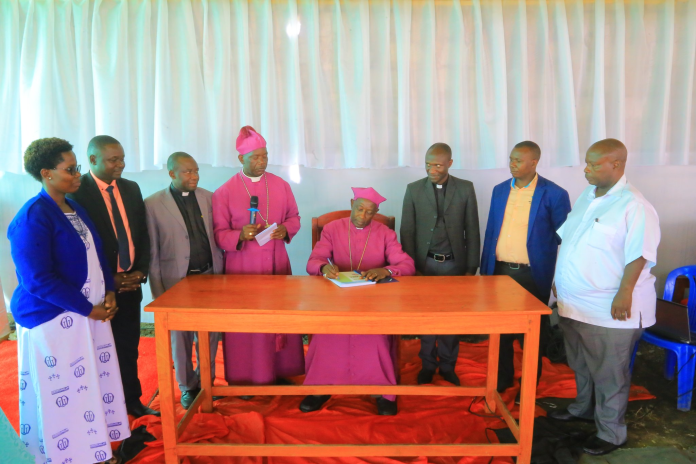
Archbishop of the Church of Uganda, The Most Rev. Dr. Stephen Samuel Kaziimba Mugalu, and other top clergy from the diocese of Rwenzori West.

The Diocese of West Ruwenzori on Thursday, 28 launched its five-year Strategic Development Plan (2026–2030) at St. Barnabas Cathedral, Bumadu in Bundibugyo District at the ceremony presided over by the Archbishop of the Church of Uganda, The Most Rev. Dr. Stephen Samuel Kaziimba Mugalu.

The plan, developed with technical support from Green Organic Solution Uganda, sets out the goals and strategies to be pursued by the Diocese in the areas of mission and evangelism, social-economic development, community engagement, institutional strengthening, environmental protection, and disaster management.

Speaking at the launch, Mr. Zadock Amanya, a consultant from Green Organic Solution Uganda and one of the framers of the plan, said the Diocesan strategy is firmly aligned to the Church of Uganda’s Strategic Planning Framework. He explained that the plan seeks to eradicate poverty, promote health and hygiene, build human capital, and enhance climate resilience in the region.

“This is a faster growing and sustainable Christ-centered Diocese that seeks to inspire Christians’ growth in the knowledge and understanding of our Lord and Savior Jesus Christ, while also addressing key challenges such as poverty, environmental degradation, and limited education opportunities,” Amanya noted.

The Diocesan Vision Statement emphasizes building a faster growing and sustainable Christ-centered Diocese, while the Mission Statement is to win souls for Christ in accordance with the Great Commission (John 10:10). Its core purpose is to proclaim the Gospel and make disciples holistically, with the aim *to have Christ-centered homes for eternity.

The Diocesan Core Values include godliness, integrity, transparency, unconditional love, unity in Christ, forgiveness, co-existence, and faithfulness. By 2030, the Diocese projects that at least 70% of believers will have been nurtured to Christian maturity holistically.

The Diocesan Bishop, Rt. Rev. Barnabas Tibaijuka, said that the plan will bring order and direction to the Diocese.

“This is going to shape our direction. For the last two years we have been surviving on guesswork and uncoordinated planning. We are now going to do better. We consulted several stakeholders because you cannot run a Diocese alone. Together with the clergy, we spent six days reviewing it, and this plan will be our guiding tool to move forward as a team,” Bishop Tibaijuka said.

In his remarks, Archbishop Kaziimba commended the Diocese for embracing planning, reminding the congregation of Benjamin Franklin’s famous words: “If you fail to plan, you plan to fail.” He urged the clergy and Christians to adopt a culture of planning not only in ministry but also in personal life.

“I want to caution you against luxurious expenditures and lifestyles. Clergy must plan for retirement and avoid financial struggles in old age. I encourage you to strengthen integrity and include a provident fund within this strategic framework to help clergy prepare for retirement,” Archbishop Kaziimba said.

The Strategic Development Plan also addresses critical issues affecting the Diocese, such as child marriages, domestic violence, drug abuse, corruption, and environmental degradation. It proposes interventions to improve access to education, reduce poverty, and empower communities to be self-reliant.

Stories Continues after ad

Prof. Bassi outlines pathways for Uganda’s economic growth at 9th Economic Growth Forum

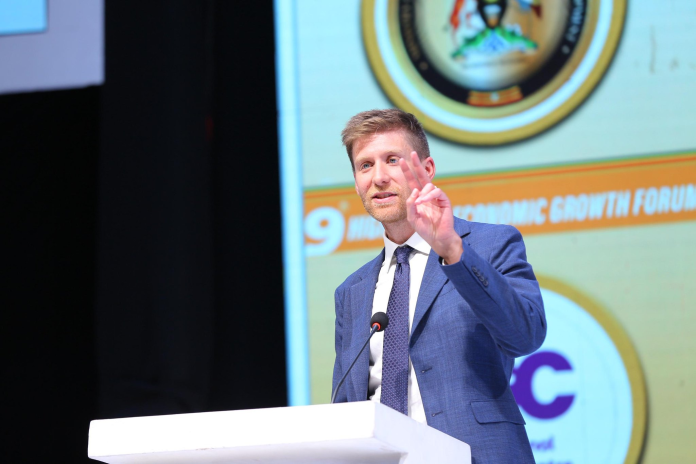
Prof. Vittorio Bassi from the University of Southern California.

At the 9th Economic Growth Forum, Prof. Vittorio Bassi of the University of Southern California emphasized that Uganda’s growth agenda can be accelerated through the National Planning Management Strategy by prioritizing agro-industrialization, tourism, mineral industries, and science and technology.

The forum is underway at Kampala Sheraton Hotel under the theme, “Enhancing Uganda’s competitiveness and growth amid a change global economic environment.”  

“The key is to grow larger and more productive firms,” Prof. Bassi said, adding that evidence shows such firms “pay higher wages and drive economic transformation.”

He noted that Uganda’s economy is dominated by small and medium enterprises (SMEs), which remain less productive compared to larger firms. According to him, four major constraints hinder SME growth: limited access to finance, markets, technology, and skilled labour.

On access to finance, he pointed out that while many SMEs demonstrate high returns to capital, they remain credit constrained.

“Banks often view SMEs as risky and costly, especially in agro-processing, leaving a financing gap for mid-sized firms,” he observed.

Prof. Bassi welcomed initiatives such as ASELI, which incentivize banks to lend to agri-SMEs, and suggested exploring revenue-based contracts and developing a stronger local equity market, noting that “most start-ups in Uganda still depend on foreign capital.”

Drawing from international examples, he highlighted Nigeria’s successful national business plan competitions, which identified and supported high-growth entrepreneurs. “Such targeted interventions could help Uganda nurture firms that create jobs and drive long-term growth,” he said.

On markets, Prof. Bassi stressed that Ugandan firms often operate below capacity and need support to expand both locally and internationally. He said, “Policies that ease access to capital for market entry and connect SMEs with buyers—including through digital platforms—are essential.”

Regarding technology, he emphasized the transformative potential of digital tools such as internet access, mobile money, and artificial intelligence, but warned that low digital literacy remains a barrier.

“Investment in digital readiness is critical to ensure firms and households can take advantage of new technologies,” he remarked.

Prof. Bassi also underscored Uganda’s persistent skills gap, citing evidence that certified vocational training significantly improves employment outcomes, even during crises like #COVID-19. “Scaling up certification systems, including recognition of prior learning, and involving firms in training will improve worker-firm matching,” he said.

He concluded his address by outlining nine priority reforms: lowering lending costs, introducing revenue-based contracts, fostering equity markets, supporting business plan competitions, improving market access, reforming procurement systems, investing in internet infrastructure, promoting digital literacy, and strengthening certified training.

“These reforms offer a clear pathway for Uganda to boost productivity and achieve sustained economic growth,” Prof. Bassi affirmed.

Stories Continues after ad

The 47th OESAI Annual Conference 2025 successfully hosted at Speke Resort Munyonyo

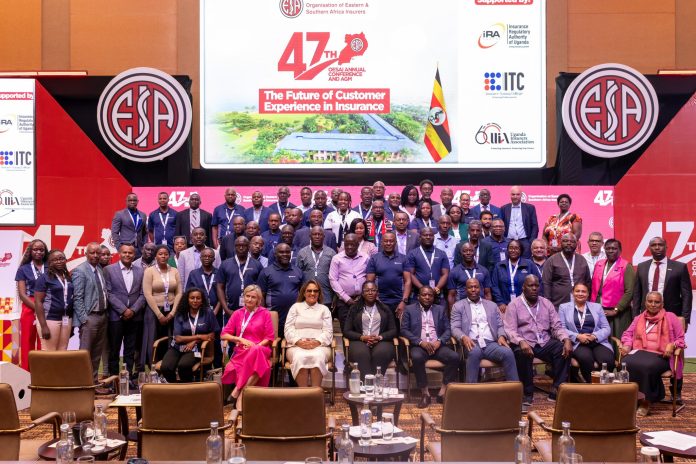
Participants at the conference.

The 47th OESAI Annual Conference & AGM 2025 was successfully hosted at Speke Resort Munyonyo, reaffirming the resort’s reputation as the premier destination for high-profile international gatherings.

The event brought together regional and global leaders in the insurance industry for a week of dialogue, networking, and collaboration.

The conference opened on 23 August and concluded on Wednesday, August 27, marking yet another milestone in Munyonyo’s long history of flawlessly executing large-scale events.

Guided by this year’s theme, “The Future of Customer Experience in Insurance,” participants engaged in rich discussions that explored innovation, regulation, and the customer-focused strategies shaping the industry.

Henry Musasizi, Minister of Finance, Planning & Economic Development, graced the event as Guest of Honour, highlighting the importance of knowledge exchange and collaboration, while acknowledging both the challenges and opportunities facing Africa’s insurance sector.

Alhajji Kaddunabi Ibrahim Lubega, CEO of the Insurance Regulatory Authority of Uganda, set the pace with an address on “Future Customer Experience in Insurance,” calling for trust, transparency, fairness, and simplified products. He further emphasised the need for agile services and prompt claims settlement to build stronger customer confidence.

Sessions also explored the role of data and analytics in reshaping service delivery. Industry experts demonstrated how insights can anticipate client needs, streamline processes, and create personalised solutions—transforming customer engagement across the sector.

As host, Speke Resort Munyonyo provided the perfect setting for the prestigious conference. With state-of-the-art facilities, luxurious accommodation, and a scenic lakeside backdrop, the resort once again demonstrated why it remains the venue of choice for continental and global summits.

Boasting the largest conference halls in East and Central Africa, the resort seamlessly accommodated the event’s scale and diversity.

The guests enjoyed world-class amenities, including the Speke Gym with advanced fitness equipment, the Calabash Spa and Salon for premium wellness treatments, and an Olympic-standard swimming pool—all reinforcing the resort’s blend of luxury, comfort, and sophistication.

Stories Continues after ad

FINCA Uganda supports parents year-round with education loans and schoolpay

As Uganda’s school holidays begin, homes fill with children’s laughter and energy. For parents, however, joy is often tempered by the looming costs of tuition, uniforms, stationery items, and other essentials. These demands frequently clash with rent, medical bills, and household needs, leaving families, especially those living paycheck to paycheck, under immense pressure. Inflation only sharpens the strain, making saving a constant challenge.

To cope, parents turn to different strategies: tracking expenses in notebooks or apps, saving a portion of income through groups or bank accounts, or applying for scholarships and bursaries from the Ministry of Education and Sports or UNICEF. Yet, even with these efforts, many find that savings and grants alone are not enough, making education loans and digital payment platforms vital.

For Sarah Nansubuga, a single mother of two and market vendor in Jinja, such support is life-changing. “I had only scraped together half the fees,” she recalls. “The school demanded full payment, and I had just restocked my business. In my desperation, a friend who is an active FINCA client mentioned the school fees loan. With only my National ID, manageable collateral, and proof of earnings, I applied, and in two days, the money was available. The repayment plan was manageable with my daily stall income, and I paid conveniently through agency banking at no cost. FINCA became the support I needed for my children’s life,” she says with a smile.

In Lira, David Okello, a boda boda rider, once dreaded the start of every term. Borrowing from friends or selling belongings to cover fees was humiliating. “I would do anything for my daughter’s education, but I was always falling behind,” he admits. “Then FINCA gave me Shs800,000 in just 48 hours, and I paid my daughter’s school fees. I have a seven-month repayment plan and will pay via mobile money, which suits my work on the road. FINCA gave me peace of mind.”

On paying school fees, both parents praise the convenience of digital platforms. Sarah says, “The FINCA branch is nearer to where I work than the school, which is miles away. With a student code I can pay from any branch. It is cheaper, easier and the school gets it instantly.” David adds, “With SchoolPay, paying my child’s school fees has become seamless and stress free. I do it from my phone and keep working. It is like depositing on my child’s account whenever I have extra cash even for the next term. That allows me to focus on providing a future for my daughter without the weight of financial stress.”

Schools themselves are also seeing the benefits. “With SchoolPay, we no longer worry about delays or lost school fees. Parents pay directly from their phones and the funds reflect instantly on account. This has improved our financial planning as a school and given parents the convenience and confidence they need,” says Joseph Mukasa, Director of St. Maria Parents School.

Education policy researcher Joan Katusabe explains: “Until education is fully subsidized, accessible financing keeps children in school.”

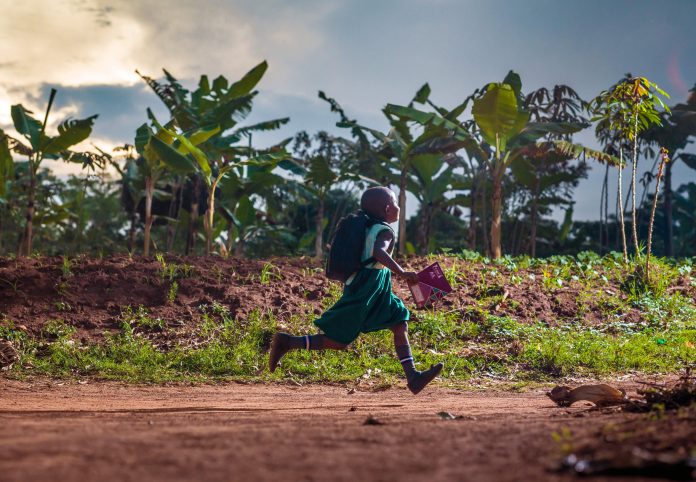
For Sarah, this means her children are walking proudly to school in uniform. For David, it means his daughter is continuing to chase her dream of becoming a Dentist. For countless Ugandan parents, planning, seeking financial aid and embracing tools like education loans and digital payments are keeping education within reach.

Education remains the cornerstone of a brighter future. With the right support, families can safeguard household stability while ensuring their children’s learning continues.

Stories Continues after ad

Uganda offers 28,000 free tickets to fans ahead of CHAN 2024 3rd place playoff


Uganda will this weekend play host to the CHAN 2024 3rd/4th place playoff match between Sudan and Senegal, with the game set for Friday, August 29, 2025, at Namboole Stadium. The development comes as part of the East African region’s co-hosting arrangement, which saw Kenya, Tanzania, and Uganda share the prestigious continental tournament.

The Local Organizing Committee (LOC) confirmed that it has purchased 28,000 tickets from the Confederation of African Football (CAF) to allow Ugandan fans free access to the historic match.

“In recognition of the exemplary participation by football fans who have been part of the CHAN-2024 journey during our historic co-hosting as an East African country, the LOC is purchasing up to 28,000 Match Day tickets for fans of the 3rd/4th Place Playoff match,” the LOC said.

The tournament, which kicked off in January, has seen Uganda play a central role as a co-host, with Tanzania handling the opening match and Kenya preparing for the final. Uganda’s turn comes in the playoff, where two regional giants — Sudan and Senegal — will battle for bronze.

The LOC hailed President Yoweri Museveni and First Lady Janet Museveni for their support, crediting them with inspiring this gesture towards the fans.

“We extend our appreciation to H.E. Gen. Yoweri Kaguta Museveni for his guidance and to Mama Janet Museveni in saying: ‘Thank you to all football fans that have made our homeland proud during this historic experience of hosting CHAN-2024 for the very first time. You have made history. You have made it memorable and a success for us all.’”

To access the free tickets, fans are required to use CAF’s official online ticketing platform. Once logged in, they must enter the promo code CHAN3RD (in capital letters) at checkout to complete the process without payment.

The LOC clarified that the tickets will bear the words “NOT FOR SALE,” stressing that no one is authorized to physically or electronically resell them.

“When it comes to payment, DO NOT make any payment. Instead, use the Promo Code option,” the LOC emphasized, warning fans to avoid fraudsters.

Uganda’s hosting of the playoff marks a proud moment in the country’s football journey, underscoring its capacity to stage major continental events. For fans, Saturday promises to be both a celebration of the game and of Uganda’s successful role in CHAN 2024.

Stories Continues after ad

Equity bank Uganda to showcase its diaspora services at UNAA 2025 convention

Equity Bank is set to showcase its diaspora services at the Uganda North America Association Convention slated for tomorrow in New Orleans. The annual gathering brings together Ugandans living abroad, policymakers and business leaders to explore opportunities for investment, networking and community development.
Equity Bank says its participation is aimed at showcasing tailored financial solutions for Ugandans in the diaspora, while strengthening ties with the wider Ugandan community in North America and beyond. The Bank plans to showcase services including diaspora accounts, investment opportunities, international remittances and financial advisory tailored to the needs of Ugandans living abroad.
The Bank is also one of the sponsors of this year’s Convention: “We are delighted to renew our partnership with UNAA and to continue walking alongside Ugandans living abroad,” said Winfred Wanjiru, Head International Banking Equity Bank Uganda.
“Through this sponsorship, we reaffirm our commitment to providing innovative financial solutions that enables the diaspora to invest back home and remain closely connected to their families,” said Wanjiru Wanjiru said the bank will also engage attendees in discussions around economic empowerment and entrepreneurship. “Our goal is not just to provide banking solutions but to foster a stronger connection between Ugandans at home and abroad,” said Wanjiru, Head of International Banking. “We believe the diaspora is an important player in the country’s economic growth and we are committed to supporting their financial and investment needs.’
Equity Bank’s participation will not only showcase its tailored diaspora banking solutions but also highlight avenues for Ugandans abroad to invest back home, own property home while working abroad and maintain strong financial ties with their families and communities in Uganda and Africa at large.
As part of this collaboration, Equity Bank Uganda will be speaking at the Convention on the topic of investing back home. It will also have its staff stationed at New Orleans for the duration of the convention in the USA.
Attendees can also look forward to interactive sessions at the Equity Bank booth, where its staff will provide guidance on investment opportunities, digital banking solutions and cross-border transfers among others. The hands-on engagement is designed to help Ugandans in the diaspora make informed financial decisions while staying connected to economic opportunities in their home country.
The Equity Group Board recently approved a decision to open a representative office in the UAE. The Bank runs a fully-fledged diaspora banking division that serves Ugandans and other East Africans living abroad.


Stories Continues after ad