Stanbic Bank
Stanbic Bank
23.6 C
Kampala
Stanbic Bank
Stanbic Bank
Home Blog Page 76

US Judge halts deportation of Salvadoran man to Uganda amid Trump immigration saga

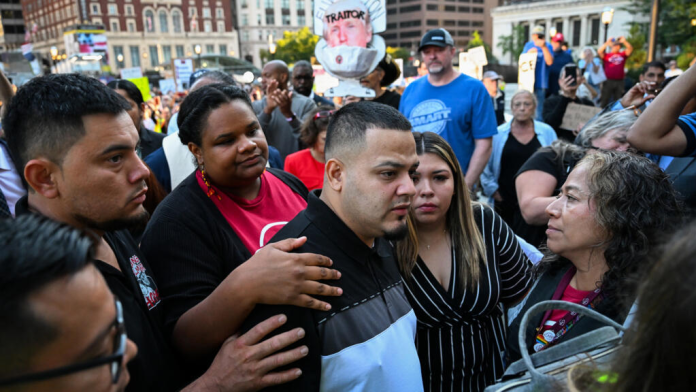
Kilmar Abrego Garcia (white and black shirt).

The federal judge on Monday temporarily blocked the deportation to Uganda of a Salvadoran man whose case has become central to the controversy surrounding former US President Donald Trump’s immigration policies.

Kilmar Abrego Garcia, 30, was wrongly deported to El Salvador in March but later returned to the United States. He was arrested again in Baltimore on Monday by Immigration and Customs Enforcement (ICE), Homeland Security Secretary Kristi Noem announced on X.

Abrego Garcia, who had recently been released from a Tennessee jail where he faces human smuggling charges, had been allowed to return home to Maryland pending trial. The Department of Homeland Security, however, said he would “be processed for removal to Uganda.”

His lawyers immediately challenged the decision, and District Judge Paula Xinis temporarily halted the deportation while further hearings are held.

Abrego Garcia had reported to ICE in Baltimore on Monday as part of his release conditions but was immediately taken back into custody. Outside the ICE field office, protesters held signs reading “Free Kilmar” and “Remove Trump” while chanting “Shame, shame.”

The attempt to deport him to Uganda marks a dramatic twist in a case that has become a test of Trump’s aggressive approach to illegal immigration. Abrego Garcia had been living in the US under protected status since 2019, after a court found he could face harm if returned to his home country.

In March, however, he was among more than 200 people sent to El Salvador’s CECOT mega-prison as part of Trump’s immigration drive. The Justice Department later admitted he had been deported “in error” and returned him to US soil — only for him to be detained again on human smuggling charges.

Abrego Garcia denies the charges, but the Trump administration insists he is a member of the violent MS-13 gang involved in migrant smuggling.

Last week, federal officials offered him a deal: remain in custody, plead guilty to human smuggling, and be deported to Costa Rica. He rejected the offer.

“That they’re holding Costa Rica as a carrot and using Uganda as a stick to try to coerce him to plead guilty is such clear evidence that they’re weaponizing the immigration system in a manner that is completely unconstitutional,” his lawyer Simon Sandoval-Moshenberg told reporters.

The case has become emblematic of Trump’s immigration crackdown, hailed by his supporters as tough enforcement, but condemned by legal experts and human rights advocates as chaotic, unlawful, and unconstitutional.

Stories Continues after ad

NRM halts Entrepreneurs League elections amid irregularities and candidate boycott

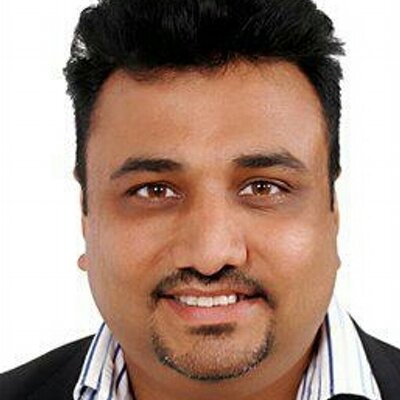
Sanjay Tanna

The ruling National Resistance Movement (NRM) party has suspended elections for its Entrepreneurs League following reports of widespread irregularities and the withdrawal of one of the contenders from the race.

The suspension was announced after former Tororo Municipality MP Sanjay Taana, pulled out of the contest, arguing that the credibility of the election had been fatally compromised. In his petition to the NRM Secretary General, Tanna cited “grave irregularities,” including bribery, the ferrying of voters, and deliberate inaccessibility of the voter base.

“Together with fellow candidates, I first submitted a joint petition on Aug. 17, later raised the same concerns before CEC during vetting on Aug. 21, and again through my formal letter of Aug. 23 to your office,” Tana noted in his letter.

He stressed that no corrective action had been taken despite repeated petitions, adding: “Regrettably, despite these efforts, the violations have persisted. The credibility of the election has, therefore, been fatally compromised.”

Tana further revealed that many delegates were lodged in hotels and shielded from lawful engagement, undermining transparency in the process. Despite his boycott, he reaffirmed his loyalty to the party, urging leadership to reflect on his concerns to strengthen internal democracy.

NRM’s Director of Communication, Emmanuel Dombo, acknowledged the concerns and said the party’s top organs would intervene should the situation escalate.

Before the suspension, the NRM Electoral Commission had instructed delegates that voting would be conducted by a show of hands after verifying names from the party register. The elections were scheduled to take place at eight different venues within Kololo Ceremonial Grounds to minimize confusion.

However, chaos within the Entrepreneurs League disrupted the entire exercise, forcing its postponement. Other elections, including those for the Women, Youth, Persons With Disabilities, Veterans, Elders, and Workers leagues, proceeded as planned.

The delay in the Entrepreneurs League vote is expected to have implications for the upcoming Central Executive Committee elections, which were due to take place this week.

The race for Entrepreneurs League chairperson had drawn eight contenders, among them prominent businessmen Hassan Basajjabalaba and King Ceasor Mulenga, alongside Phillip Kakuru Kwijuka, Shukla Mukesh, Robert Mwesigwa Rukaari, Edison Ruyondo, and Ssemwanga Gyaviira.

Stories Continues after ad

Police clarify handling of sexual assault case at Kajjansi

Kajjansi police station.

The Kampala Metropolitan Police have addressed circulating claims regarding the alleged mishandling of a sexual assault case at Kajjansi Police Station, emphasizing that all procedures were carried out lawfully.

In a statement, ASP Luke Owoyesigyire, Deputy Public Relations Officer for the Kampala Metropolitan Police, explained that the case was registered on August 23, 2025, following a report by a 22-year-old hairdresser from Zana, Makindye Municipality, Wakiso District.

According to the victim, she met the prime suspect, Ngobi Simon, in July 2025 at Karting, Lubowa, and later maintained contact. On the night of the incident, she alleges, “after being given an alcoholic drink, she was driven to Canaan Estate, Akright, Kajjansi where she was raped by Ngobi Simon and another man known to her only as ‘Chairman.’”

ASP Owoyesigyire detailed the police response, saying, “A team of detectives, SOCO, and uniformed officers immediately visited the crime scene. Beddings and other relevant exhibits were recovered, including HIV testing kits. The victim was medically examined and enrolled for specialized care as a rape victim.”

Owoyesigyire confirmed the recovery of the vehicle allegedly used in the assault, a Subaru Silver Grey UBP 276F, which is being held at Kajjansi Police Station to aid investigations. Witnesses, including private security personnel, have also provided statements. Preliminary findings indicate that the victim managed to lock herself in a room after the assault, prompting the suspects to flee.

Addressing allegations of extortion and unlawful seizure of property, ASP Owoyesigyire said, “We wish to clarify that the recovery of property was carried out as part of the investigative process, in line with established procedure to preserve exhibits in sexual offense cases. The suspects were not at the premises at the time, and no unlawful raid or extortion was conducted.”

He added that any officer found to have abused authority will face investigation and disciplinary action, reaffirming the police’s commitment to professionalism and transparency.

The two prime suspects, Ngobi Simon and “Chairman,” remain at large. Police are urging them to come forward and record their statements to ensure due process is followed.

“We condemn all acts of sexual violence in the strongest terms,” ASP Owoyesigyire stated. “At the same time, we reiterate our commitment to professionalism, accountability, and respect for the rights of all parties. Investigations are ongoing, and the public will be updated in due course.”

Police have appealed for calm, patience, and responsible communication as the matter is handled through lawful procedures.

Stories Continues after ad

Museveni tells NRM delegates to fight corruption at local level, monitor gov’t service delivery

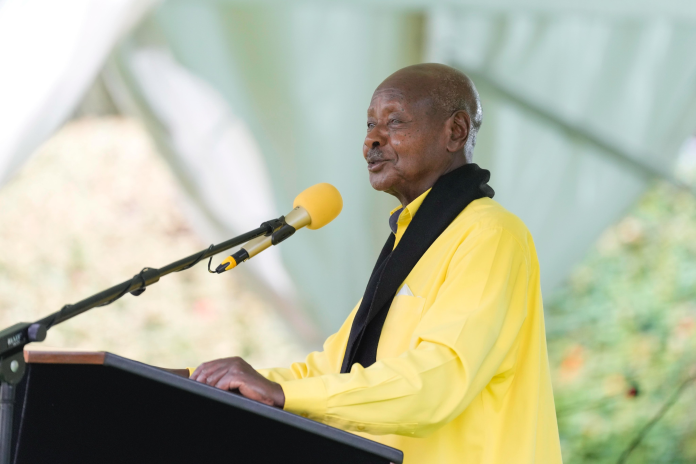
National Resistance Movement (NRM) party national chairman, Gen. Yoweri Museveni.

President Yoweri Museveni has urged National Resistance Movement (NRM) delegates to play a leading role in fighting corruption at the local government level and ensuring that government services reach the people.

While addressing delegates of the NRM Special Interest Groups [SIGs] at Kololo Independence Grounds on Monday, Museveni outlined Uganda’s economic journey, highlighting its expansion from $3.9 billion in 1986 to $66 billion today. He said the country is now working towards becoming a high-middle-income economy worth $500 billion.

The President, who has been endorsed by the party’s top organ, the National Executive Committee (NEC) as the party’s presidential candidate in the 2026 general elections, explained that the economy has gone through five key phases: minimum recovery, expansion of production, diversification, value addition, and the current phase of the knowledge economy. He cited innovations such as the locally developed Kira electric buses, vaccine production, and computer manufacturing as signs of progress.

Museveni explained the need for all Ugandans to join the money economy. 

“In 2013, 68 percent of homesteads were outside the money economy. Today, 67 percent are in, but 33 percent remain out. Every family must produce for both food and cash,” he said.

Turning to governance, Museveni tasked the delegates to ensure that corruption is uprooted, especially at the local level. He warned against bribery in local government recruitment and urged citizens to hold leaders accountable for service delivery. “Don’t allow corrupt people to undermine your progress. Stop those who steal public funds or take bribes,” he said.

He also called on leaders and citizens to ensure proper maintenance of roads, monitor the performance of the police in fighting crime, and safeguard free education in government schools. He expressed concern that despite government funding, some schools still charge parents illegal fees, frustrating poor families.

On healthcare, Museveni decried the theft of medicines from hospitals in the country and urged the communities to expose those responsible. He also emphasised the importance of safe water access, education, and healthcare as foundations for improved welfare.

Museveni concluded by encouraging Ugandans to combat poverty, corruption, and crime, while embracing education, healthcare, and access toclean water as pathways to prosperity.

The NRM Secretary General, Richard Todwong reminded delegates to put the party above personal interests. He urged members to foster unity, stressing that internal competition should not create enmity. “We are members of a family. Focus on the bigger picture of the party, the mission, objectives, and goals, rather than personal ambitions,” Todwong said.

Stories Continues after ad

KCCA holds special council meeting over Nakivubo Channel dispute

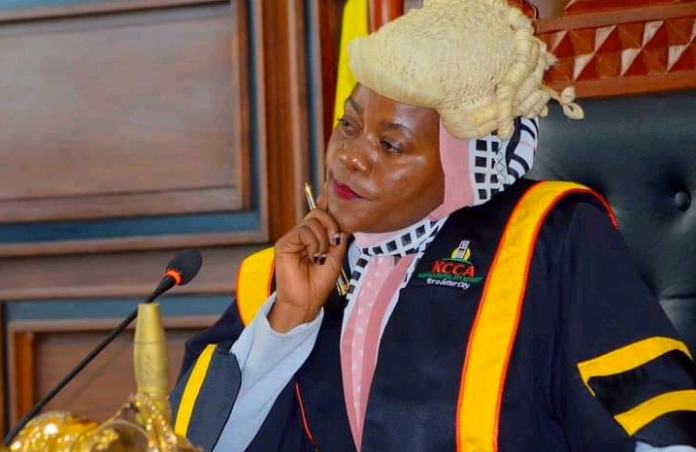
KCCA-speaker-Zahara-Luyirika.

Kampala Capital City Authority (KCCA) has called a special council meeting to deliberate on the growing controversy surrounding businessman Hamis Kiggundu’s redevelopment activities along the Nakivubo Drainage Channel.

In an official notice dated August 25, 2025, Authority Council Speaker Maala Zahrah Luyirika confirmed the meeting would take place in the Council Chambers at 12:00 PM, with an agenda focused on resolving ongoing disputes. The order paper indicates that the meeting will include communications from the Speaker and a discussion of controversies surrounding Nakivubo Channel involving the City Executive Committee, Council of the Authority, and KCCA Management before adjournment.

This extraordinary session follows President Yoweri Museveni’s directive supporting Kiggundu’s proposal to clean, cover and redevelop the Nakivubo Channel, allowing him to construct properties above it as a means to recoup redevelopment costs.

While the President described the plan as “imaginative and simple,” Kampala Lord Mayor Erias Lukwago has criticized it as “illegal and fraudulent,” asserting that Kiggundu lacks the necessary approvals from KCCA and the National Environment Management Authority (NEMA).

KCCA Deputy Executive Director David Kigenyi last week stated that the Authority had instructed Kiggundu to halt all unauthorized activities and remove debris obstructing stormwater flow, emphasizing the importance of following statutory procedures to prevent flooding and environmental hazards.

 The Nakivubo Channel, which stretches from Makerere and Kisenyi through the central business district to Nakivubo swamp, is Kampala’s largest stormwater drainage system. It plays a critical role in protecting downtown Kampala from flooding, particularly during heavy rains.

Over the years, however, the channel has faced multiple challenges, including encroachment, illegal construction, dumping of waste, and silting. These have contributed to frequent urban flooding in areas such as Clock Tower, Nakivubo Place and Kisenyi.

Stories Continues after ad

Police probe explosion at Buziga Country Resort Sauna as three women badly injured 

Kampala Metropolitan Deputy Police Spokesperson, Luke Owoyesigyire.

The Police in Kampala have launched investigations into a massive explosion that rocked the sauna of Buziga Country Resort in Upper Buziga Zone, Makindye Division, leaving three women nursing severe injuries.

“The Police at Kabalagala are actively investigating an incident of suspected rash and neglect that resulted in a massive explosion at the sauna of Buziga Country Resort,” Kampala Metropolitan Deputy Police Spokesperson, Luke Owoyesigyire, said.

The incident occurred on the evening of 24th August 2025 at around 8:30 pm. Victims were identified as Hajjat Masitula, 69, Vice Chairperson LC I of Katuso Cell, who sustained severe burns on her back, chest and lower body; Zahara Nakawesi Kasenene, 39, who suffered burns and a broken left leg; and Mamaram Aisha, who sustained multiple burns across her body.

“All three victims were initially rushed to Kiruddu Hospital for emergency treatment. Two of them were later referred to Nsambya and Mulago Hospitals, respectively, where they are receiving specialized medical attention,” Owoyesigyire confirmed.

Police said a team of detectives and the Scene of Crime Officer quickly responded to the scene, which had sustained extensive damage.

“The scene was found to have sustained extensive damage, with part of the structure collapsing, walls developing cracks, and debris scattered with broken glass and blood stains,” Owoyesigyire noted.

Preliminary investigations suggest that the explosion inside the sauna was “significant in nature,” though its cause is yet to be established. Witness statements, including from the victims, have been recorded as detectives piece together what could have triggered the blast.

“At this stage, no arrests have been made. The scene remains cordoned off for a thorough forensic examination, which is expected to provide more clarity on the cause of the explosion,” he said.

Owoyesigyire assured the public that the Force remains committed to establishing the truth. “The Police assure the public that inquiries are ongoing, and updates will be provided as the investigation progresses. We continue to work closely with medical facilities to monitor the condition of the victims and extend our support to their families,” he added.

Stories Continues after ad

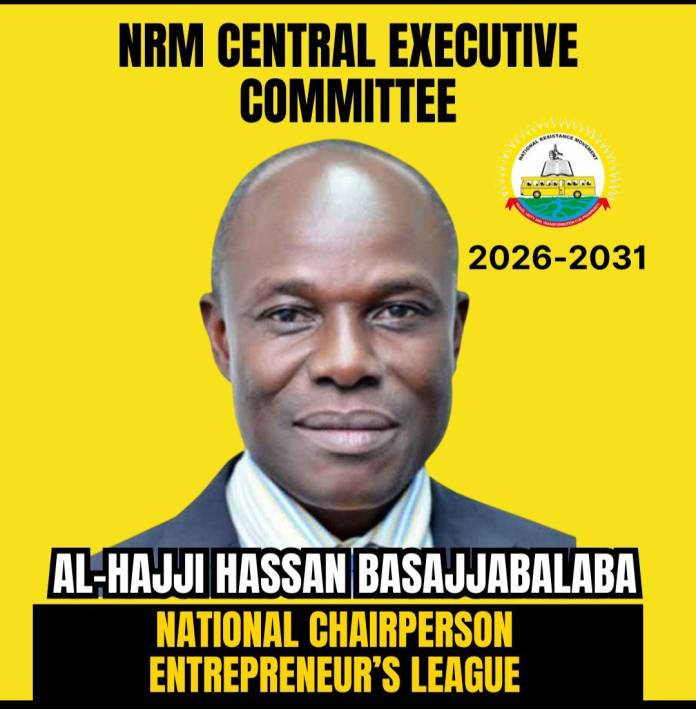
Basajjabalaba unveils ‘Action Now’ manifesto to revive Uganda’s Entrepreneurs’ League from village to national stage

Uganda’s entrepreneurial environment is once again in the spotlight as Al Hajji Hassan Basajjabalaba unveils an expansive manifesto that redefines the very identity of the NRM Entrepreneurs’ League.

Under the theme “Reviving and Building a Vibrant Entrepreneurs League from Village up to National Level: Simple Solutions, Big Results”, his program for 2025–2031 promises not just revival but transformation.

The manifesto is very ambitious. Branded with the slogan “Action Now”, it seeks to rebuild a League that has withered over the past decade and reposition it as both a grassroots mobilizer and an international policy lobby. Hassan Basajjabalaba is not just a candidate; he is a legacy-builder whose ventures pulse at the heart of Ugandan enterprise.

Central to his plan is a revival of League structures at every level, from villages and parishes to districts, regions and the national stage. He argues that without functional systems and properly trained leaders, the League cannot serve its purpose. His strategy therefore includes capacity building, mentorship, and training programs to give grassroots leaders the skills and resources they need to inspire entrepreneurs in their communities.                      

But Basajjabalaba’s manifesto goes far beyond organizational housekeeping. It positions the League as the NRM’s “think tank” on private-sector-led development, emphasizing its role in industrialization, job creation and wealth generation. He pledges evidence-based policy advocacy at the party’s highest decision-making table, the Senior Executive Committee (SEC). Through structured consultations with entrepreneurs across the country, he intends to lobby for fair tax policies, access to affordable financing, and protection of local businesses from predatory foreign competition.

This focus on advocacy marks a sharp departure from the 2015 Chairman’s manifesto, which emphasized mobilization and alignment with government programs like NAADS and Operation Wealth Creation. The earlier plan was inward-looking, concerned with order and discipline, while Basajjabalaba’s outlook was outward-facing, concerned with competitiveness, innovation, and global relevance.

He also leans heavily on his personal achievements as proof of capability. As founder of Kampala International University (KIU), Uganda’s largest private university with a branch in Tanzania, Basajjabalaba has overseen the graduation of nearly 80,000 students, with 30,000 of them on scholarships or bursaries he personally funded. His KIU Teaching Hospital has become a vital healthcare hub, while his partnerships with global universities underscore his ability to connect Ugandan initiatives to the world.

In business, his HABA Group of Companies embodies the breadth of his experience. It spans leather processing and export, pharmaceuticals, real estate development, hospitality and healthcare. His Tea-Maria estates and factories in Bushenyi and Buhweju employ thousands, supporting out-grower farmers, factory workers and exporters. Even during shocks like the Russia–Ukraine war, he maintained stability in production and safeguarded incomes for smallholder farmers. The Group’s estimated value of $520 million reflects the scale of his enterprise, but his manifesto insists that his real legacy lies in the futures he has built for others through jobs, scholarships, and mentorship.

This dual character, business titan and social entrepreneur infuse his vision for the League. He wants to establish district entrepreneur hubs for mentorship and training, create platforms for SMEs to connect with global partners and spearhead district and regional trade fairs under the spirit of Buy Uganda, Build Uganda. He also highlights public-private partnerships as a tool for expanding opportunities.

Significantly, Basajjabalaba identifies digital transformation as the defining challenge of the era. He describes it as “the new determinant of business survival and sustainability,” and vows to prioritize digital literacy, online marketplaces, and advocacy for affordable internet access. By embracing digital inclusion, he argues, SMEs in towns and villages alike will be able to reach regional and global markets.

His manifesto is not without a populist touch. Youth and women feature prominently, with promises of targeted bursaries, mentorship programs and financing for women-led enterprises. He also proposes annual entrepreneur awards to recognize innovation and risk-taking across the country, ensuring that success stories inspire the next generation.

When set against the 2015 manifesto, the difference is stark. The earlier plan provided structure, discipline and access to government opportunities. Basajjabalaba’s 2025 manifesto offers vision, global markets, digital readiness and policy influence. One looked backward at mobilization; the other looks forward to transformation.

For NRM delegates, the choice will be pivotal. Voting for continuity would preserve the League’s traditional role as a mobilization arm. Voting for Basajjabalaba, however, would elevate it into a policy powerhouse with ambitions stretching from local markets to international trade.

At its core, his message is clear: “From bursaries that unlock dreams to factories that sustain families, I don’t just build businesses; I build futures.”

Stories Continues after ad

Underpin President Museveni’s call for UNSC reforms

Ambassador Henry Mayega.

President Yoweri Museveni has once again and rightly added his voice to the burgeoning chorus from Africa to have permanent representation on the UNSC, which is the principal organ of the UN – a microcosm of a world government; currently, the continent’s 54 independent countries represent 28% or a third of the UN’s total membership. Africa’s inglorious and perpetual marginalization at the UNSC is an inequity that was occasioned on the continent after WW2 when the big five unilaterally ring-fenced their current status for themselves.

With vast powers including investigating disputes, recommending solutions, authorizing actions like sanctions or the use of military force amongst others, the UNSC’s permanent members namely China, France, Russia, the UK and the USA have, additionally, veto powers unlike the ten rotational/non-permanent members. 

Ironically and impudently, Africa, with the largest number of continental countries, has, as designed by the framers of the UN charter on April 25, 1945 in San Francisco which came into force on October 24, 1945, zero permanent representation on the UNSC.

The current structure of the UNSC as stipulated in the charter reflects historical and exceedingly ignoble power imbalances since WW2 when the colonizer was still lurking around the largely non-independent Africa whilst devouring whatever resources he could lay his iron-fisted hands on to assuage his insatiable appetite.

As a debilitating consequence, the continent has since been made to play hooky regarding the following:

Ideally the vetoing power of any UNSC resolution is exclusively the preserve of the big five which tool has been used to the detriment of Africa. Essentially, one vetoing power can scuttle a resolution arrived at by the entire world body – the UN. There have been persistent tittle-tattles that Africa is losing out on key decisions that affect the continent due to the dearth of a permanent continental voice on the UNSC canvass.

Secondly, the elements of equal representation as well as decision making are episodically off-tracked at the altar of clubby scheming at that splendid and apex world body whose chores are amongst others the promotion of equity, justice and truth; what the hell, after all, would compel our vulnerable countries chase after the “wild goose” well knowing that it’s an exercise in futility.

Thirdly, the continent resultantly loses significant influence and power given its lack of permanent representation; that, in absolute terms, limits Africa’s ability to shape UNSC decisions which in a majority of cases directly affect us particularly where peace, security and prosperity are concerned. The immediacy of a robust permanent African voice would bring with it the completeness of the UNSC’s legitimacy most especially amongst Africans who currently grasp it as not only a grouping that is far removed from their plight – essentially reducing us to a hermit continent, but also as a tool weaponized against them.

Fourthly, the continent, as a consequence of lacking the vetoing power tool, is profoundly limited in terms of influencing agenda items brought before the council due to procedural constraints of sponsorship. That leads to overlooking and ignoring the urgency of issues considered as vitally relevant to Africa’s progress and global influence. It also means that the powerful will invariably push down our throats agenda items whose import may not be in the continent’s interests.

Fifthly, the UNSC’s dependability is further enfeebled when a continent as big and as populous as Africa – with 1,551,922,497 people, lacks permanent representation; for instance, Europe with a population of 745 million has two representatives on the UNSC namely the UK and France; that general lack of inclusivity de-calibrates the council ostensibly seen as a tool for resolving kaleidoscopic issues which keep dogging Africa in particular and the world in general.

Lastly but not least, Africa’s under-representation has in a sense retrogressed peace, security and development efforts across the continent since we can’t effortlessly push through our regional-leaning agendas.

Amb. Henry Mayega

Stories Continues after ad

Court of Appeal orders businessman Bitature to pay $10m to South African company

Businessman, Patrick Bitature.

The Court of Appeal has ruled in favour of South Africa’s Vantage Mezzanine Fund II Partnership in its high-profile dispute with businessman Patrick Bitature’s Simba Group, clearing the way for the fund to enforce a $10 million loan agreement without being required to register locally under Ugandan partnership laws.

The ruling reverses earlier decisions that had blocked the enforcement of the loan on the grounds that Vantage lacked legal presence in Uganda. The case, which has dragged on for nearly a decade, has been closely watched in business and investment circles for its implications on cross-border financing.

The dispute began in December 2014 when Vantage, one of Africa’s largest mezzanine debt funds, advanced $10 million (about Shs37 billion at the time) to Simba Properties Investment Company Ltd as growth capital to support expansion in real estate and hospitality. Charges were created over Simba Telecom Ltd, Linda Properties Ltd, and Elgon Terrace Hotel Ltd, with share transfer documents signed in favour of the lender as security.

When Simba defaulted, the companies filed multiple suits in the Commercial Division to resist enforcement, but those were dismissed in June 2021 and arbitration ordered. Vantage later moved to enforce the share transfers through the Uganda Registration Services Bureau (URSB). The Bureau, however, rejected the request, arguing that Vantage was not registered to operate in Uganda.

In 2022, High Court Judge Musa Ssekaana upheld URSB’s position, holding that the fund lacked legal standing in Uganda. That ruling has now been unanimously overturned by the Court of Appeal.

Delivering the lead judgment, Justice Esta Nambayo held that lending money to a Ugandan company does not amount to “carrying on business” in Uganda and therefore does not require registration under the Partnership Act or the Business Names Registration Act.

“The mere act of lending money without a physical address in Uganda does not create an obligation for the appellant as a foreign lender to register. The appellant has a right to implement the terms of the agreement in Uganda, including instituting proceedings in court for the enforcement of its rights,” Justice Nambayo ruled.

She further warned that barring Vantage from seeking redress would amount to discrimination: “Locking out the appellant from accessing courts would amount to unequal legal protection by the courts, which would contravene Article 21(1) of the 1995 Constitution of Uganda.”

Justice Fredrick Egonda-Ntende, concurring, said, “Neither the Partnership Act nor the Business Names Registration Act deal with capacity to sue or locus standi at all. There was no basis in law for the conclusion that the appellant did not have capacity to sue.”

The Court also faulted the High Court for allowing Simba companies private entities to join judicial review proceedings which were strictly intended to compel URSB, a public body, to perform a statutory duty. As a result, the Court of Appeal set aside the High Court ruling, affirmed Vantage’s right to sue, and ordered both URSB and the Simba companies to pay costs in the High Court and on appeal.

Patrick Bitature, one of Uganda’s most prominent businessmen has long defended his stance in the dispute, blaming the COVID-19 pandemic for crippling his companies’ cash flows. He argued that lockdowns and travel restrictions severely disrupted revenues in hospitality and real estate, leaving Simba unable to meet obligations on schedule.

In public remarks, Bitature has also portrayed the standoff as a test of how Uganda treats local entrepreneurs in disputes with foreign financiers.

The Court of Appeal ruling is being hailed as a major boost for foreign direct investment and cross-border commercial lending. By confirming that foreign lenders can enforce contracts without local registration, the judgment strengthens Uganda’s reputation as a credible destination for private equity and mezzanine financing.

“This case sends a strong signal to international financiers that Uganda’s courts will uphold contractual rights fairly, even against politically connected or high-profile business figures,” a Kampala corporate lawyer observed.

Analysts argue the decision could encourage more regional and international funds to enter Uganda’s market, potentially lowering borrowing costs for corporates and improving investor confidence in the judiciary.

For Bitature, however, the verdict is a heavy blow at a time when his business empire is still recovering from the aftershocks of the pandemic. While the judgment clears Vantage to enforce its $10 million loan, it also underscores the difficult reality faced by many local firms that took on international financing before COVID-19 struck.

Stories Continues after ad

Housing Finance Bank expands access with new branches in Nansana, Masaka, and Soroti

Banking just got closer for residents of Nansana, Masaka, and Soroti. Housing Finance Bank has officially opened three new branches, expanding its footprint and reinforcing its commitment to supporting communities across Uganda.

For many, access to financial services can mean the difference between waiting in long queues, traveling long distances, and taking control of personal and business finances in their own neighborhood. With these new branches, Housing Finance Bank is ensuring that banking is convenient, accessible, and designed around the needs of local communities.

Doreen Nyiramugisha, Head Marketing and Communications at Housing Finance Bank, highlights the bigger picture: “Our expansion into Nansana, Masaka, and Soroti is more than just about opening branches. It is about opening doors of opportunity. These new touchpoints symbolize our promise to stand with Ugandans in their journey to own, grow, and transform their financial futures.”

At the new branches, customers will enjoy access to a wide range of services, including savings and current accounts, personal and business loans, mortgages, investment opportunities, and advisory services.  In addition, the Bank’s digital platforms offer customers the flexibility to transact seamlessly online, complementing their in-person experience.

Each location was chosen carefully to serve growing communities. Nansana, formerly a service centre, now hosts a full branch, bringing essential financial services closer to residents in its rapidly growing residential and business areas. Masaka, a central hub of commerce and trade, benefits from a modern branch offering solutions for both businesses and individuals. And in Soroti, the Bank is supporting residents and entrepreneurs to access tools to grow their businesses and manage their finances with ease.

This development is a demonstration of Housing Finance Bank’s mission: to deliver efficient, innovative, and customer-focused financial services that truly empower communities and transform lives. By expanding into these key regions, the Bank continues to live out this mission, combining efficiency with convenience, innovation with accessibility, and a customer-first approach with long-term community impact.

The new branches are strategically located to enhance accessibility for customers across the country. The Masaka Branch is housed at Plot 94 Birch Avenue in the Laston Hotel Building, Masaka City. In Soroti, customers can visit the new branch at Plot 67 Gweri Road along Soroti Main Street, and the Nansana Branch is in the Jajja Manjeri Building within Nansana Division, Wakiso District.

Stories Continues after ad