Stanbic Bank
Stanbic Bank
17.4 C
Kampala
Stanbic Bank
Stanbic Bank
Home Blog Page 88

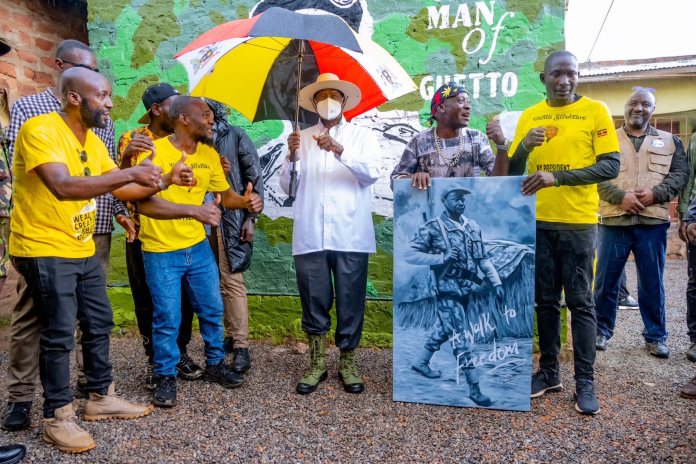
Museveni pledges Shs1b per parish for Kampala ghetto groups

President Museveni.

President Yoweri Museveni has pledged to increase government funding for wealth creation in urban poor communities, raising allocations for ghetto-based structures in Kampala from Shs100 million to Shs1 billion per parish annually.

The announcement came on Friday during the President’s resumed Parish Development Model [PDM] and wealth creation tour, with a stop in Bwaise II, Nabukalu Zone, Kawempe Division, one of Kampala’s most densely populated and economically marginalised areas.

“Now here in the ghetto, because of the high population numbers, we can go from Shs100 million to Shs1 billion per parish per year for the ghetto structures alone,” President Museveni said.

“In the 22 parishes of Kawempe Division, there’s already Shs 2.2 billion of PDM each year, but the ghetto needs special attention.”

The President explained that the increased allocation forms part of a wider government strategy to stimulate small-scale, income-generating activities among the urban poor, particularly those without access to formal employment or business financing.

“Kampala will receive Shs5 billion for ghetto-specific programmes across its five divisions,” he said, clarifying that this is in addition to existing PDM funding.

Museveni also toured several micro-enterprises funded through previous rounds of ghetto development funds. These included goat rearing, electrical repairs, tailoring and design, bakery work, and printing services.

Joined by local government officials and community mobilisers, the President stressed the importance of “pro-poor budgeting,” noting that a significant portion of the national budget is lost to administrative overheads and inefficient spending.

He urged youth and ghetto leaders to take an active role in national development rather than remain passive recipients of aid.

“Support me politically so I am not just left in the hands of technocrats and parliamentarians. If we unite and you support these programmes, we can transform Uganda from the bottom up,” he stated.

President Museveni also called for vigilance in monitoring public funds, pointing to the Shs10 billion allocated to Kawempe under the PDM over the past four years, along with support from Emyooga, the Youth Livelihood Fund [ULP], and the Uganda Women Entrepreneurship [UWEP] Fund.

“Follow the money and ensure it is not eaten. You received Shs500,000 and managed to start something. That shows the potential when funds reach the right people,” he said.

On education, Museveni criticised the undermining of Universal Primary Education (UPE) due to corruption and poor oversight.

“Headmasters connive with PTAs to charge illegal fees. LC5 chairmen and MPs don’t follow up. The poor suffer, and children drop out,” he said, blaming the issue on misplaced political priorities.

He praised the State House Skilling Hubs as a model for vocational training, offering six-month programmes to school dropouts.

“We’ve shown that you can turn someone with nothing into someone productive. Everyone now wants skilling hubs,” he said.


Stories Continues after ad

Gov’t grants Bright Sparks Farm license to grow and export medicinal cannabis

Cannabis.

The Ugandan government has granted Bright Sparks Farm Limited an experimental license to grow, process and export medicinal cannabis, marking a big step in the country’s entry into the global medical marijuana industry.

The license, issued by the Minister of Internal Affairs, Maj. Gen. (Rtd) Kahinda Otafiire allows the company to cultivate cannabis in two districts of Nakasongola and Luwero.

In Nakasongola, it will be grown in Luwampanga, Kisweramindu, while parts of Bulemezi in Luweero.

“Reference is made to your application dated 10th June 2025 for grant of a licence to grow, process and export medicinal cannabis,” reads the government letter addressed to Bright Sparks Farm Limited.

Otafiire added, “An experimental Licence to grow cannabis is granted on the following conditions.”

According to the document, the licensed company must adhere strictly to Uganda Police Force rules and regulations concerning the growth and processing of cannabis.

“Cooperate with the Uganda Police Force Rules and Regulations on the growth and processing of cannabis,” Otafiire instructed.

The government emphasized that the licence comes with clear restrictions on location and oversight.

“In line with existing controls, the Uganda Police Force will supervise your operations as mandated,” the letter continues. Adding, “The License is not transferable nor change of location.”

This move comes amid increasing interest from both domestic and international investors seeking to tap into the lucrative medicinal cannabis market. Uganda’s favorable climate makes it an attractive destination for the cultivation of high-quality cannabis for medical use.

The licence also signifies a cautious but deliberate shift in Uganda’s drug policy, recognizing the potential economic and health benefits of regulated medicinal cannabis production while maintaining strict oversight.

The Inspector General of Police has also been copied in the communication, underscoring the critical role of security agencies in monitoring the production process.

Uganda now joins a growing list of African countries such as Lesotho, Zimbabwe, and South Africa, which have legalized medicinal cannabis production under strict regulatory frameworks.

Stories Continues after ad

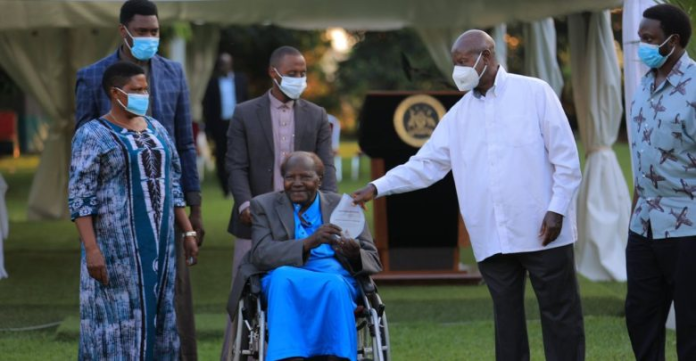
Museveni mourns Prof. Kanyeihamba, hails his legacy

President Museveni presenting an award to the late Prof. Kanyeihamba at a past event.

President Yoweri Kaguta Museveni has paid tribute to former Supreme Court Judge Prof. George Wilson Kanyeihamba, describing him as a patriotic Ugandan who contributed immensely to the country’s liberation, governance, and legal development.

In a statement, the President said he first encountered Prof. Kanyeihamba during the legendary Mazrui-Rodney debate at Makerere University in the 1970s—a moment etched in East Africa’s intellectual history.

“I remember first meeting Professor Kanyeihamba, I think, at the historic debate between Prof. Mazrui and Dr. Rodney at Makerere University,” Museveni recalled. “This is when Prof. Mazrui, in his remarks, said that he was not in conflict with Dr. Rodney, whereupon Rodney said that they cannot be in ‘conflict’ because they were not even in ‘touch’.”

Museveni, reflecting on the ideological depth of the debate, noted that while Mazrui spoke about neo-colonialism, Rodney was focused on complete independence—a discourse that influenced many Ugandan thinkers of that time, including Kanyeihamba.

Prof. Kanyeihamba would later become a key figure in Uganda’s political transition, joining the external committee of the NRM during the 1981–86 liberation war. After the victory, he was appointed to several senior positions in the NRM government—including Minister of Justice and Constitutional Affairs—and eventually served as a Justice of the Supreme Court.

“After liberation, he became part of the NRM Government as a minister and, at one time, he represented Rubaanda. Later on, he became a Judge,” Museveni said. “I salute his contribution to Uganda and to the NRM over the years. Condolences to his family and friends. May his soul rest in eternal peace.”

Born in 1939, Prof. George Kanyeihamba was not only a legal luminary but also a respected academic, author, and one of the framers of the 1995 Constitution. He was known for his fearless stance on constitutionalism, often dissenting from majority judgments in defense of civil liberties and the rule of law.

Educated at the University of London and the University of Warwick, Kanyeihamba’s career spanned academia, politics, and the bench. He taught law at Makerere University and was a visiting professor at institutions in the UK and Nigeria. He also served as a judge on the African Court on Human and Peoples’ Rights.

Even after retirement, he remained an active voice in public discourse, often challenging government excesses and advocating for judicial independence.

His passing marks the end of an era for Uganda’s legal and intellectual community, with many remembering him as a brilliant, principled, and courageous jurist who always spoke truth to power.

Museveni also mourned the passing of Professor Livingstone Luboobi, former Vice-Chancellor of Makerere University and his classmate at Ntare School (1961–1964).

“He was a gifted mathematician, who rendered good contribution to the education sector,” Museveni wrote. “I salute his contribution and thank God for his life. Condolences to his family and friends.”

Prof. Luboobi served as Makerere VC from 2004 to 2009 and was known for championing research and institutional reforms. A product of Ntare School and Makerere University, he also held a PhD in Mathematical Statistics from the University of Sussex.

Prof. Luboobi championed rigorous research, curriculum innovation, and academic integrity. He believed deeply in the transformative power of science and education and was a tireless advocate for capacity-building in the sciences in Africa.” Prof. Winston Tumps Ireeta – College Principal/Ag. DVCFA

The deaths of Prof. Kanyeihamba and Prof. Luboobi come at a time when Uganda is grappling with questions around institutional reform, education quality, and governance—issues both men addressed through their life’s work.

Their passing leaves a gap in Uganda’s intellectual and leadership fabric. Yet, as President Museveni emphasized, their legacies remain etched in the nation’s journey toward justice, education and liberation.

Stories Continues after ad

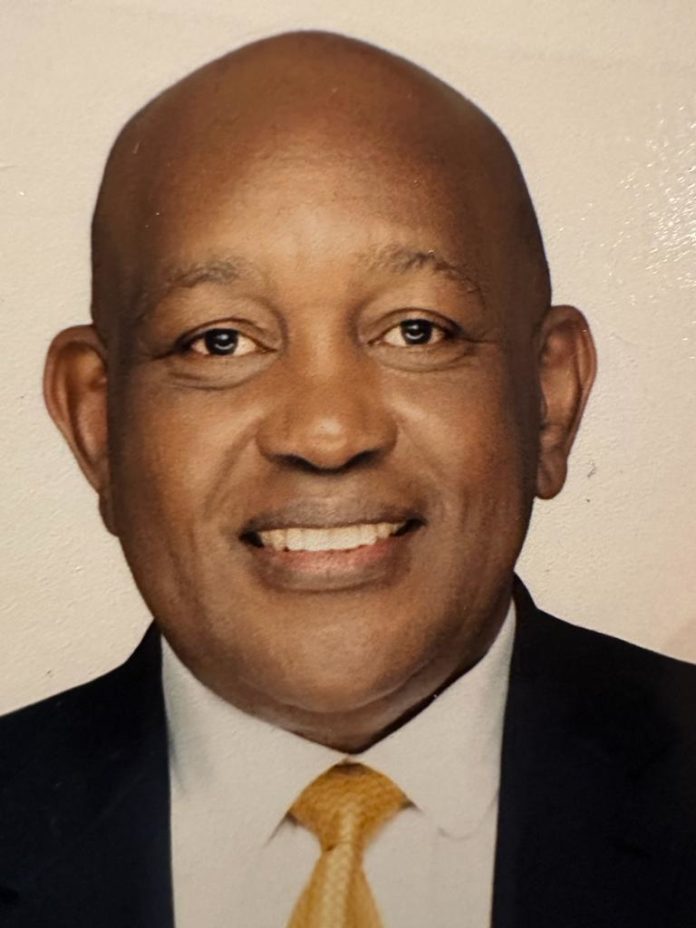
Charles Mbire warns: Africa must abandon political planning or risk losing its youth

Charles Mbire, MTN-Uganda board chairman.

At the just-concluded Africa Unlocked 2025 forum hosted by Standard Bank Group, Uganda’s leading businessman and MTN Uganda Chairman, Dr. Charles Mbire delivered a wake-up call to African leaders: the continent must urgently abandon political planning in favour of economically grounded strategies especially if it is to meaningfully include its youth in shaping the future.

The annual summit, held under the theme “Purposeful and Authentic Leadership in Times of Disruption,” featured a heavyweight panel of African business icons, including Sim Tshabalala (CEO, Standard Bank Group), Dr. Mteto Nyati (Executive Chairman, BSG), and Vukani Mngxati (CEO & Chairman, Accenture Africa). Yet it was Mbire’s sharp commentary rooted in Uganda’s current development paradox that stood out as both timely and provocative.

“We churn out students of IT whose shelf life is seven months with no jobs. They end up being Boda Boda riders or shopkeepers,” Mbire lamented.

He added, “How much money do we spend training them? I think we’ve got to have integrated planning. We should move away from political planning and go to economic planning.”

Dr. Mbire’s words captured the urgency many feel about Africa’s youth bulging a demographic dividend that threatens to become a social and economic liability if not meaningfully engaged. He warned that failing to integrate the younger generation into the continent’s economic systems risks transforming them into a “nuclear landmine.”

“The market is a landmine because we are planning politically, not economically,” he said, calling for better linkage between education, skills development, and actual market demands.

In a strong rebuke to the cookie-cutter development models often pushed by global institutions, Mbire also cautioned against “transplanting business strategies” across African countries without appreciating their unique realities.

“You cannot blindly apply a strategy from one African country to the next. The context in Uganda is not the same as in South Africa or Nigeria. That’s why many multinationals fail.” he said.

While his counterparts on the panel echoed various themes, Mbire’s message offered a grounded, practical take on the cost of planning missteps.

Sim Tshabalala, Standard Bank Group CEO, opened the panel with a philosophical reflection on leadership during uncertainty, urging African leaders to “own up to past decisions that left many behind.”

“We instituted policies, strategies, and actions that caused a lot of people to be left behind… and then we should not be surprised that they’re so angry,” Tshabalala said. “Leadership with purpose is a must. Our job as leaders… is to be dealers in hope.”

He added that hope and vision not fear must guide leadership in both corporations and governments.

Dr. Mteto Nyati, who recently turned down a request by the South African President to lead reforms at Eskom, spoke about the importance of self-awareness in leadership. “You need to know what you’re good at, and what you’re not,” he said, citing personal decisions rooted in introspection and courage.

Vukani Mngxati focused on the authenticity crisis among African leaders. “Authentic leaders are the people who really change the world,” he said. “People don’t follow leaders they cannot trust.”

Mngxati also challenged the global tendency to see Africa as a monolithic entity. “We have 54 countries. Johannesburg is not Africa,” he said, drawing laughter and nods of agreement. “You cannot put one strategy from one country into the next. Each country is different.”

The panel concluded with a powerful call to elevate the voice of African youth in both policy and business planning. Mbire once again raised a red flag: “We’ve let their mindset wander. We don’t control it. We don’t guide it. And that’s the problem we are going to solve.”

Tshabalala acknowledged the brilliance of Africa’s Gen Z but warned of the risks of premature exposure to high-stakes leadership. “It would be great to have a 21-year-old on the Standard Bank board. But if they suffered a massive fraud in Nigeria, they wouldn’t know how to manage the regulator, the staff, or the angry client.”

Nonetheless, all speakers agreed on one thing: Africa’s time is now but only if its leaders move from speeches to substance, from short-term fixes to long-term vision, and most importantly, from political calculations to economic planning.

As Mbire summed it up: “Africa must integrate, invest, and involve. If we don’t, we will be led by a frustrated generation we failed to prepare for.”

Stories Continues after ad

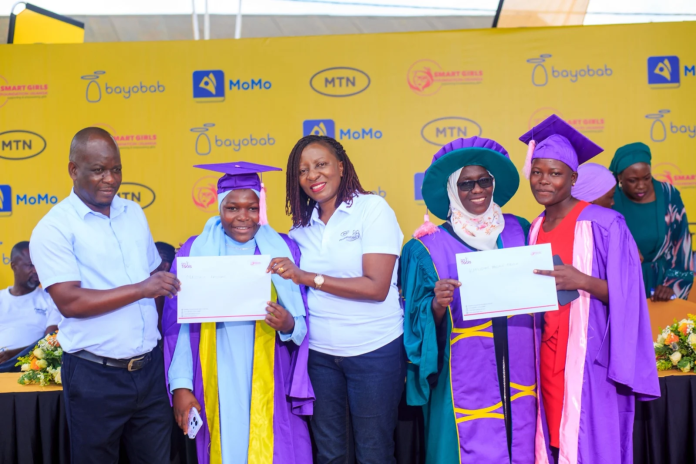
MTN and Smart Girls Foundation graduate 298 youths in tech and vocational skills

MTN Uganda, in partnership with Smart Girls Foundation, has successfully graduated 298 young people under its flagship “Girls in Tech” and ”Girls with Tools” programmes. The initiative is aimed at reducing youth unemployment and closing the digital skills gap in one of Africa’s youngest nations.

The 2025 cohort included 248 female youth trained in ICT and digital skills, alongside 50 trainees who were equipped with vocational competencies in traditionally male-dominated trades such as electrical installation, plumbing, and tailoring. These efforts fall under MTN’s Ambition 2025 strategy, which seeks to accelerate Africa’s digital transformation and enhance youth empowerment across the continent.

“Today, these graduates prove that change is not only possible; it is happening,” said Juliet Kakayi Nsubuga, Managing Director of Bayobab Uganda, MTN Group’s fibre and digital infrastructure unit. “They are equipped to lead Uganda’s digital future, and we are proud to stand with them on this journey.”

Uganda faces a youth unemployment rate of 16.3 percent, according to the Uganda Bureau of Statistics. The situation is even more challenging for young women, who often face barriers such as limited access to technology, technical skills, and financing.

Since 2019, MTN Uganda and Smart Girls Foundation have trained over 1,100 young people, the majority being female, in ICT and digital literacy, and an additional 116 in vocational skills. The programme supports Uganda’s Vision 2040, the Fourth National Development Plan (NDPIV), and the UN Sustainable Development Goals, particularly those focusing on education, innovation, and gender equality.

“This partnership has scaled significantly over the past few years,” said Jamila Mayanja, Founder of Smart Girls Foundation. “We started with 30 girls in mechanics. Today, we’re talking about hundreds of young women stepping into high-potential sectors like tech and energy.”

Graduands shared powerful testimonials. Nicholas Otim, an ICT trainee, said, “I now have the confidence and technical knowledge to launch my own digital skills training centre for youths in my community.”

Similarly, Maria Nakibule, a plumbing graduate, described the programme as life-changing, noting that it gave her a “clearer path to income and independence.”

Government officials present at the graduation commended the initiative’s alignment with national priorities.

“What we’re seeing here is not just training; it’s transformation,” said Maria Lubega, Deputy Resident District Commissioner, Kasangati Town Council, Wakiso district. “This is the kind of public-private effort that can shift the narrative for our youth.”

MTN’s investment in these initiatives—alongside others such as the MTN Ace Programme and the MTN Skills Academy—reinforces its commitment to digital inclusion, ensuring that young Ugandans, especially women, are not left behind in the fast-growing digital economy.

Stories Continues after ad

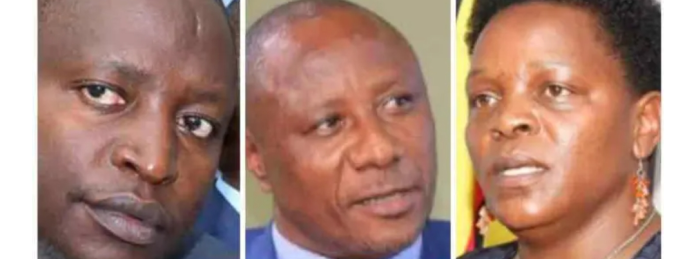
What Next? Ten ministers lose in NRM primaries ahead of 2026 elections

VOTED OUT: Bahati, Kabbyanga and Mutuzo.

In the heavily contested National Resistance Movement (NRM) party primaries ten ministers serving in the cabinet have lost their bids for parliamentary seats. These losses, coming just months before the 2026 general elections raise pressing questions about the future roles of these political heavyweights and the internal dynamics within the ruling party.

Among the ministers who were unsat is Musa Ecweru, the State Minister for Transport, who was defeated in Amuria County. Ecweru’s loss is viewed as a significant upset given his longstanding influence in the government’s emergency and humanitarian response efforts. He has represented Amuria County in the August House for three terms (15 years) before joining parliament, he served as a Resident District Commissioner.

Other notable cabinet members who lost include Jennifer Namuyangu, the State Minister for Bunyoro Affairs. She first joined parliament in 1994 when she was elected youth representative for Eastern Uganda to the National Resistance Council.

Dr. Joyce Moriku Kaducu, the State Minister for Primary Education was also ousted highlighting a shifting political landscape that appears less forgiving even to established incumbents.

Victoria Rusoke Businge, the State Minister for Local Government, and Peace Mutuzo, the State Minister for Gender, Labour and Social Development also failed to secure party tickets reflecting wider voter dissatisfaction with certain government policies and representation.

Trade and Agriculture portfolios also suffered setbacks for the NRM. David Bahati, the State Minister for Trade, Industry and Cooperatives (Industry) lost his re-election bid in Ndorwa West. Bahati, a key architect of Uganda’s industrial policies, had been considered a stalwart within the party’s economic team. Bahati, a turned State House ‘Pastor’ has been Ndorwa West legislator for 20 years.

Similarly, Fred Bwino Kyakulaga, the State Minister for Agriculture representing Kigulu County was defeated amid rising concerns over agricultural reforms and their impact on rural livelihoods. Bwino, a former spy turned politician hasn’t enjoyed government perks like most of his cabinet colleagues.

Fredrick Ngobi Gume, the State Minister for Cooperatives also lost his seat in Bulamogi North West. The cooperative scandal seems to be after the minster.

In the technology sector, Godfrey Kabbyanga, the State Minister for ICT and National Guidance was voted out in Bukonzo West signaling possible people’s belief is going down in the government’s digital transformation agenda.

Rose Lilly Akello, the State Minister for Ethics and Integrity, was among the other ministers who failed to secure their party nominations, underscoring a broad rejection of several incumbents across different sectors. Akello replaced former State Minister for Ethics and Integrity late Simon Lokodo both at cabinet level but also in the same constituency.

Another causality of the political fatigue is Energy State Minister Peter Lokeris. He lost his Chekwii County seat. He has been a legislator for over two decades and a minister at the same time.

These losses come at a critical time for the NRM which seeks to consolidate its grip on power amid growing opposition forces and internal party dissent. The election results may prompt President Museveni and his inner circle to rethink their political strategies and possibly reshuffle the cabinet to maintain cohesion.

The question of who comes back as an independent candidate remains in their hands as they restructure their efforts to secure the seats in parliament.

Stories Continues after ad

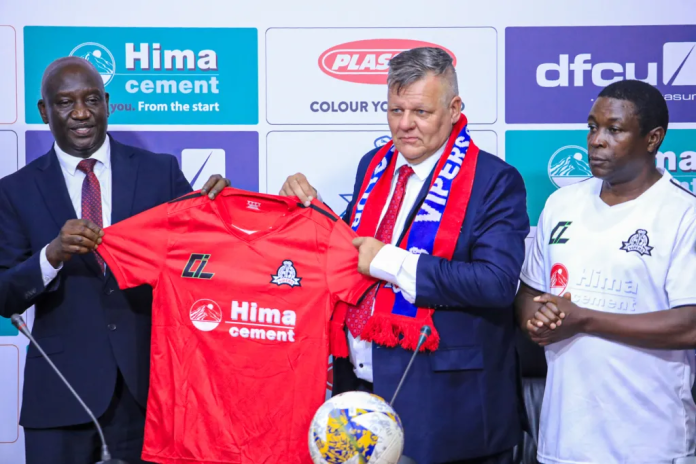
Vipers SC appoint Belgian Ivan Minnaert as Head Coach on two-year deal

Vipers Sports Club proprietor Lawrence Mulindwa unveils the Belgian tactician Ivan Jacky Minnaert as their new head coach on a permanent two-year contract.

Uganda Premier League champions Vipers Sports Club have announced the appointment of Belgian tactician Ivan Jacky Minnaert as their new head coach on a permanent two-year contract running until the end of the 2026/27 season.

The 58-year-old coach arrives as the Venoms prepare to build on their recent success and strengthen their squad ahead of the upcoming campaign. Minnaert replaces the interim duo of John ‘Ayala’ Luyinda and Fred Muhumuza, who managed the team during the 2024/25 season after the dismissal of Serbian coach Nikola Kavazovic just three matches into last season.

Luyinda and Muhumuza were instrumental in guiding Vipers to a historic domestic double – winning both the Uganda Premier League and Uganda Cup – marking only the second time in the club’s history they have achieved the feat. The pair will now remain at the club as assistant coaches, working closely alongside Minnaert.

Minnaert joins Vipers from Liberian Premier League side Fassell Football Club, whom he led to the league title in the 2024/25 season, finishing 11 points clear of their closest rivals, Heaven Eleven FC. His recent success adds to an already impressive coaching resume across Africa and Europe.

Prior to Liberia, Minnaert helped Libyan giants Al-Ittihad Tripoli secure the championship in the 2020/21 campaign. He has also managed several other clubs including Spain’s Union Estepona CF and CD San Roque, Mali’s Djoliba AC, Kenya’s AFC Leopards, and Rwanda’s Rayon Sport FC – where he had two separate spells.

His extensive African experience further includes stints at AS Kaloum Star in Guinea Conakry, Mukura Victory FC in Rwanda, and South Africa’s Black Leopards FC.

Minnaert holds a UEFA Pro License, the highest coaching qualification available, underscoring his tactical expertise and professionalism.

At Vipers, he will be expected to build on the club’s continental ambitions, with the aim of securing a second-ever qualification to the CAF Champions League group stages. His previous record in CAF competitions includes: CAF Champions League: 3 wins, 1 draw, 1 loss, CAF Confederation Cup: 4 wins, 2 draws, 2 losses and CAF Group Stage: 2 wins, 3 draws, 1 loss

The club hopes that Minnaert’s wealth of experience will propel Vipers to new heights both domestically and on the African stage.

Stories Continues after ad

Museveni urges UPDF to master the science and art of modern warfare 

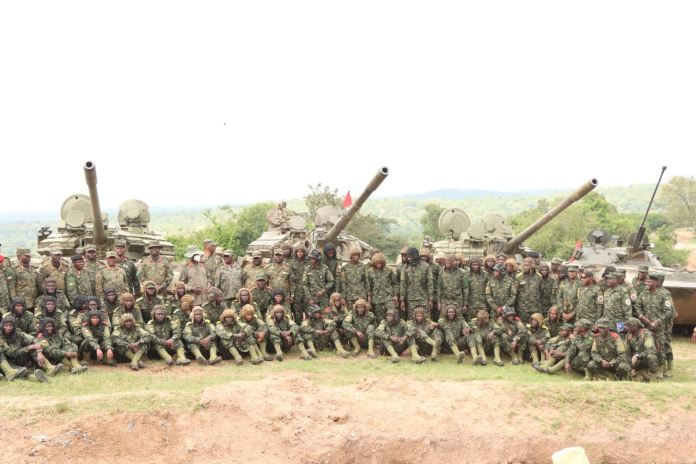
President Museveni and CIC pose for a group photo with Armoured Platoon, Armoured Technical and Crew Courses graduands.

President Yoweri Museveni who is also the Commander-in-Chief of the Uganda Peoples’ Defence Forces (UPDF) has urged the military to deepen its understanding of modern warfare, stressing that victory on the battlefield depends on mastering both the science and the art of military operations.

He made the remarks while officiating at the graduation ceremony of 413 officers and men who completed the Armoured Platoon, Armoured Technical and Crew Courses, and Wheeled Infantry Fighting Vehicle Course at the Mechanised Warfare Training School in Karama, Mubende District. “War is both a science and an art,” President Museveni said. “Science in the form of the equipment used, and art in the way you organise and employ it. Science always influences the organisation and tactics.”

President Museveni traced the evolution of armoured warfare from the mid-19th century, beginning with the introduction of the machine gun during the Crimean War (1854–56). He noted that the weapon’s devastating impact rendered cavalry obsolete and led to the widespread adoption of trench warfare.

“The machine gun chased the horses from the battlefield. That’s why armies resorted to trenches,” he explained.

Museveni described the invention of the tank as a strategic response to trench warfare, combining firepower, protection, and mobility in a single platform. “The tank was seen as a miracle solution; it brought the arrow (firepower), the shield (protection), and the horse (mobility),” he said.

He added, “That is why the tank was very decisive in the Second World War.”

He noted that today, the battlefield is increasingly shaped by precision-guided munitions, unmanned aerial vehicles, and integrated combat systems. As such, he advised the UPDF to adopt a “packaged” approach to combat, bringing together a range of capabilities to enhance operational effectiveness.

Turning to discipline, the Commander-in-Chief warned against corruption within the ranks, especially the mismanagement of fuel, lubricants, and spare parts. “If you sell lubricants, fuel, or spare parts, that’s corruption, and corruption kills,” he cautioned.

He encouraged soldiers to live healthy lives, avoid alcohol and drug abuse, and take proper care of their equipment. “Love yourselves by staying healthy. Love your equipment by maintaining it properly,” he advised.

President Museveni commended the UPDF leadership for its commitment to training and infrastructure development.

“I’m glad the CDF and his team are working on a number of fronts: training, but also infrastructure because they’ve been building barracks and other training facilities,” he said.

He pledged government support for upgrading the local road network to improve access and reduce dust. The roads include routes from Lusalira, Kasanda, and Kasambya through Kabamba and Makore.

The President praised the various commandants for environmental conservation efforts and acknowledged the historical significance of the area.

Representing the Chief of Defence Forces, Gen Muhoozi Kainerugaba, the Deputy Chief of Defence Forces, Lt Gen Sam Okiding, thanked the President for his guidance and strategic foresight.

“Today we have witnessed another level of firepower in our country. The precision we have just witnessed speaks volumes, and it is my humble request that we maintain it,” said Lt Gen Okiding.

He urged the graduates to treat their equipment as an essential partner in combat. “There is a big secret between the equipment and the soldier. When you deny the equipment its lubricants and you divert them, the equipment will deny you victory. And what happens? You’ll die,” he warned.

Lt Gen Okiding revealed that training institutions are being restructured into centres of excellence, with new infrastructure projects set to begin in line with the President’s vision of building a modern, capable force.

 “Our people will be having accommodation. Not only that, we are also looking at capacity and capability building,” he added.

Brig Gen Peter Chandia, the Commandant of the Mechanised Warfare College-Karama, praised the graduates for their resilience and commitment throughout the training. “I am confident that they are capable of skilfully employing mechanised resources in operations in the contemporary battle space,” he said. 

He thanked the Chief of Defence Forces for prioritising troop welfare and ensuring the school is adequately equipped for multiple concurrent courses.

He also reminded the graduates to remain ready for deployment at any moment. “Be prepared to serve your country with total commitment, honour and integrity,” Brig Gen Chandia said.

Stories Continues after ad

Electoral Commission adjusts presidential nominations to September

Justice Simon Byabakama, EC Chairperson.

The Electoral Commission (EC) has announced an adjustment to its 2025/2026 General Elections presidential candidates’ nominations dates to September, 23. 

Originally scheduled for October 2 and 3, the nomination of presidential candidates will now take place on September 23 and 24, 2025, according to Justice Simon Byabakama, Chairperson of the Electoral Commission.

“The Electoral Commission has adjusted the dates for the nomination of candidates for Presidential Elections 2025/2026, which was earlier scheduled to be conducted on October 2 and 3, 2025. The nominations will now take place on September 23 and 24, 2025,” Byabakama stated.

The Commission also reminded the public and all aspirants of other key nomination dates under the General Elections roadmap. The nomination of candidates for Local Governments, including Special Interest Groups (SIGs), will take place from September 3 to 12, 2025. Nomination of candidates for Parliamentary Elections is scheduled for September 16 and 17, 2025, while candidates for SIG Representatives to Local Governments will be nominated between December 8 and 12, 2025.

“The Commission further takes this opportunity to remind aspirants for the various elective positions and the general public to take note of the following key dates under the Roadmap for the General Elections,” Justice Byabakama added.

However, EC Tightened Academic Verification Rules for Aspirants, noting by law, candidates seeking to be elected as President, Member of Parliament, Mayor, or District/City Chairperson must possess a minimum academic qualification of Advanced Level (A-Level) or its equivalent.

“The Electoral Commission wishes to draw the attention of all those who wish to stand/contest for election… that they are required, by law, to have a minimum qualification of Advanced Level (A Level) standard or its equivalent,” the EC noted.

Aspirants who obtained their academic documents outside Uganda must have them verified by the National Council for Higher Education (NCHE), working in consultation with the Uganda National Examinations Board (UNEB). Those who lack A-Level credentials but possess other qualifications that they claim are equivalent must obtain a Certificate of Equivalence from NCHE.

“Aspirants who have obtained the certificate of equivalency from NCHE are required to establish the respective academic qualifications by submitting to the said NCHE certificate to the Electoral Commission Headquarters or to the District Electoral Commission Office in the district where the person wishes to contest, at least two months before nominations,” the EC emphasized.

The Commission clarified that aspirants with A-Level certificates obtained in Uganda, those with higher qualifications whose A-Level was also attained in Uganda, and those with qualifications that included A-Level certification from the former UNEB, will not be required to verify their credentials through NCHE.

Additionally, the EC noted that those holding university degrees or other higher education qualifications are not required to obtain a certificate of equivalence unless their A-Level education was obtained abroad or via non-traditional education pathways.

The Electoral Commission has urged all aspirants to comply with these verification requirements in a timely manner, warning that any failure to meet the academic standard at least two months before nomination will result in disqualification from the race.

Stories Continues after ad

Winners and losers in NRM party primaries

Maj. Guma Gumisiriza won Ibanda North.

Losers

David Bahati-Ndorwa West

Jenifer Namuyangu-Kibuku

As the country gears up to the 2026 general election early next year, internal political primaries are realigning key individuals who are likely to stir the nation’s leadership for the five years ahead.

The National Resistance Movement (NRM) party having governed Uganda for the last three decades and half looks better placed to retain their governance of the Uganda as per the results coming from its primaries.

Why NRM poised to retain leadership

Judging from fielding of candidates across all the constituencies and organised internal elections means that the party will have less challenges ahead of the general elections which is advantageous to the party as compared to other political parties.

The internal party primaries are also threshing credible candidates that will compete against candidates from other political parties. This process further solidifies and markets the party across the nation.

So, with the outcome of the internal primaries for card holders at constituency out, means that some of those already declared card winners will be legislators at the national assembly.

Below is the list of notably winers and losers

Winers     

Gen. Henry Tumukunde-Rukungiri Municipality

Phiona Nyamutoro – Nebbi Woman MP

Thomas Tayebwa – MP, Ruhinda North County in Mitooma District

Anita Among – Woman MP, Bukedea District

Matia Kasaija – Buyanja County, Kibaale District

Jim Muhwezi – MP, Rujumbura County, Rukungiri District

Molly Kamukama – Woman MP, Kazo District

Moses Ali – MP, East Moyo County in Adjumani District

Iddi Bassajja – Bushenyi-Ishaka Municipality

Annet Katusiime Mugisha – Woman MP, Bushenyi District

Robinah Nabbanja – Woman MP, Kakumiro District

Sylvia Alinaitwe – Woman MP, Rukiga County

Jane Frances Acilo – Woman MP, Oyam District

Moses Balyeku – Jinja West

Joseph Mugenyi – MP, Burahya County in Kabarole

Frank Tumwebaze – Kibale East

Jackson Kafuuzi, Kyaka South

Ephraim Kamuntu – Sheema South

Sylia Katooko Damba – Kibuku Woman MP

Edson Rugumayo – MP, Ntoroko County

Mbaziira Richard – MP, Jinja South East

Faridah Nambi – Kawempe North

Micheal Mawanda – Igara East

Steven Shyaka Gashaija – Entebbe Municipality

Rebecca Kyarampe Namanya – Mitooma District

Elioda Tumwesigye – Sheema North MP seat

Dickson Kateshumbwa – Sheema Municipality.

Adrine Mwebesa – Woman MP, Sheema

Kahinda Otafiire – Ruhinda County

Arthur Kazoora – Ruhinda South

Dennis Namara – Buyaga West

Jessica Alupo – Katakwi District Woman MP

Counsel Cohen Kyampene – Igara West

Rebecca Kadaga – Kamuli District Woman MP

Nathan Byanyima-Bukanga North

Umar Nangoli-Mbale North 

Kabuye Kyofatogabye-Nakaseke Central

Emmanuel Rwashande-Lwemiyaga 

Guma Gumisiriza-Ibanda North

Muyanja Mbabali-Bukoto South

Oboth Oboth-West Budama Central

Amelia Kyambadde Mawokota County

Lydia Wanyoto Mbale City

Herbert Burora-Nakawa West

Fred Ruhindi-Nakawa East

Charles Ayume-Koboko Municipality

David Kabanda-Kasambya County

Rebecca Kadaga-Kamuli

Sam Engola-Erute South

Daniel Kananura-Kira

Moses Magogo-Budiope East

Kaliisa Kyomukama-Ibanda

Sarah Najjuma-Nakaseke

Crispus Kiyonga-Bukonzo West

Losers

David Bahati-Ndorwa West

Jenifer Namuyangu-Kibuku

Musa Ecweru-Amuria County

Obiga Kania-Terego County East

Peter Lokeris-Chekwii County

Martin Mapenduzi – MP, Gulu West in Gulu District

Winfred Bagaaya Akiiki – Woman MP, Fort Portal City in Kabarole

Joyce Moriku Kaducu – Woman MP, Moto district. 

Stories Continues after ad