Uganda’s export earnings registered a strong year-on-year increase in November 2025, rising to $1.19 billion (about Shs4.5 trillion) from $698.46 million (about Shs2.6 trillion) recorded in November 2024, according to the latest Performance of the Economy Monthly Report released by the Ministry of Finance, Planning and Economic Development (MoFPED).
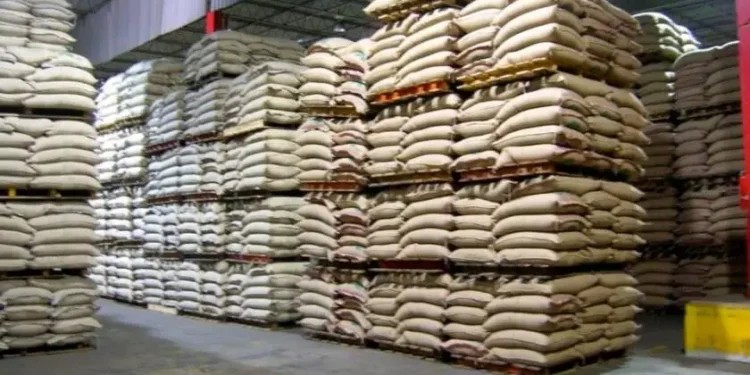
The strong performance was largely driven by higher receipts from coffee and gold exports, which remained the country’s leading foreign exchange earners. The report shows that the value of coffee exports alone grew by 70.8 percent, increasing from $108.91 million (about Shs412 billion) in November 2024 to $185.99 million (about Shs704 billion) in November 2025.

The Ministry attributes the rise in coffee earnings to increased production as harvesting peaked in central and eastern Uganda, combined with improved global coffee prices during the period.
Despite the impressive annual growth, export earnings declined on a month-by-month basis. Receipts fell by 20.4 percent from $1.50 billion (about Shs5.7 trillion) in October 2025 to $1.19 billion (about Shs4.5 trillion) in November 2025. According to the report, the decline was mainly driven by reduced earnings from gold exports, which dropped by 33.7 percent from $964.60 million (about Shs3.65 trillion) in October to $639.26 million (about Shs2.42 trillion) in November.
However, non-gold exports continued to show resilience during the month. Earnings from non-gold exports grew by 3.6 percent, rising to $551.25 million (about Shs2.09 trillion) in November 2025 from $531.85 million (about Shs2.01 trillion) in October. Exports of cocoa beans, tobacco, and fish, among other commodities, supported this growth.

The Middle East remained Uganda’s leading export destination in November 2025, accounting for 42.7 percent of total export earnings, following a $270.06 million (approximately Shs1.02 trillion) increase in receipts from the region. The East African Community followed with a share of 21.7 percent, while Asia and the European Union accounted for 16.9 percent and 13.5 percent, respectively.
Export earnings to Asia and the European Union recorded notable growth compared to the previous month. Exports to Asia rose from $92.2 million (about Shs349 billion) to $201 million (about Shs761 billion), while exports to the European Union increased from $87.3 million (about Shs330 billion) to $160 million (about Shs606 billion).
On the import side, Uganda’s import bill expanded by 36.5 percent on a year on year basis, rising from $1.04 billion (about Shs3.9 trillion) in November 2024 to $1.42 billion (about Shs5.4 trillion) in November 2025. The increase was mainly driven by formal private sector imports, particularly non-oil items such as prepared foodstuffs, machinery, vehicles, and gold.
Compared to the previous month, merchandise imports declined by 9.4 percent from $1.57 billion (about Shs5.9 trillion) in October 2025. Formal private sector non-oil imports recorded the largest drop, falling by 10.3 percent from $1.41 billion (about Shs5.3 trillion) to $1.26 billion (about Shs4.8 trillion).
The East African Community and Asia remained the main sources of Uganda’s imports in November 2025, accounting for 30.4 percent and 28.5 percent of total imports, respectively. Within the region, Tanzania was the leading source, contributing 55.2 percent of imports from the EAC, while China remained the dominant source of imports from Asia with a share of 52.6 percent. Other key sources included the rest of Africa and the Middle East, accounting for 19.6 percent and 10.5 percent, respectively.
As a result of stronger export growth, Uganda’s merchandise trade deficit narrowed by 32.4 percent on a year on year basis, declining from $343.7 million (about Shs1.3 trillion) in November 2024 to $232.3 million (about Shs879 billion) in November 2025. The improvement was largely attributed to export earnings growing faster than imports.
However, on a month-on-month basis, the trade deficit widened sharply to $232.33 million (about Shs880 billion) in November 2025 from $74.46 million (about Shs282 billion) in October, mainly due to the decline in export receipts, particularly from gold.