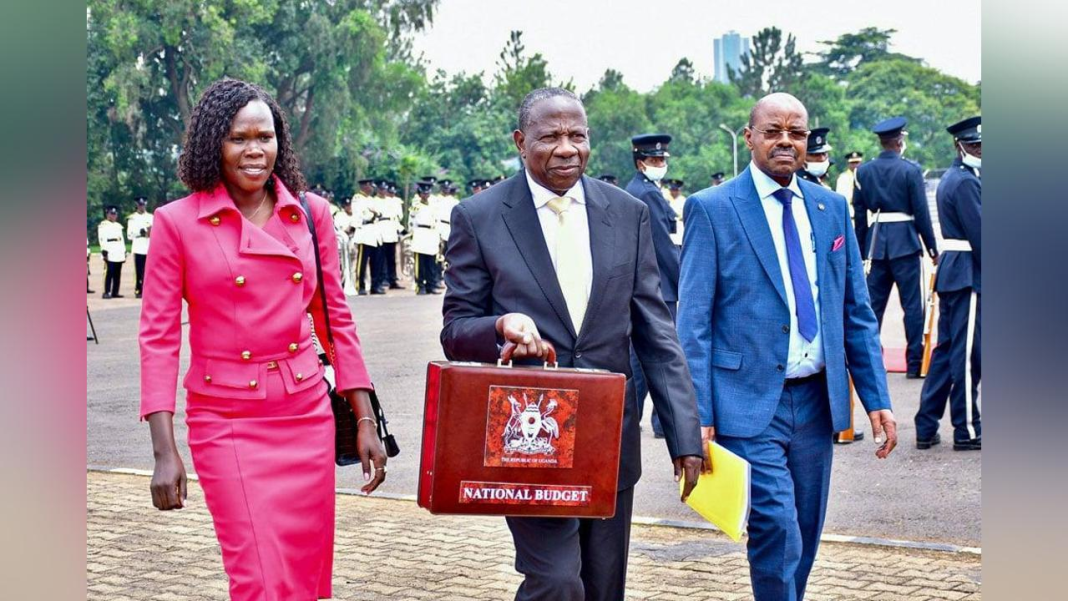
The government, through the Ministry of Finance, Planning and Economic Development, has reduced the preliminary resource envelope for the 2026/27 financial year to Shs69.399 trillion, reflecting a tighter fiscal stance even as efforts intensify to boost domestic revenue and reduce reliance on borrowing.
According to the Finance Ministry’s Budget Framework Paper, the preliminary resource envelope for FY2026/27 stands at Shs69.399 trillion, down from Shs72.376 trillion in the current FY2025/26, reflecting a deliberate move to rein in expenditure amid constrained financing conditions.

Despite the reduced budget size, domestic revenue is projected to rise to Shs40.090 trillion in FY2026/27 from Shs36.806 trillion this financial year, signaling stronger emphasis on tax administration reforms, improved compliance and expansion of the revenue base.
“Much effort will be put on implementing strategies to boost domestic revenue mobilisation and increase foreign direct investments,” the ministry states.
Government discretionary spending, net of arrears, interest payments and domestic debt repayments, is projected at Shs 31.059 trillion, down from Shs 32.480 trillion in FY2025/26, underscoring continued pressure on available fiscal space.

Domestic borrowing is expected to decline sharply to Shs8.952 trillion from Shs 11.381 trillion in the current financial year, while domestic debt refinancing through roll-overs is projected at Shs9.68 trillion, slightly lower than the Shs10.028 trillion recorded in FY2025/26.
External financing is also set to reduce, with budget support from external sources projected to fall from Shs2.084 trillion in FY2025/26 to Shs330.97 billion in FY2026/27. Similarly, external project financing is expected to decline to Shs10.018 trillion from Shs11.327 trillion.
“The budget for FY2026/27 will be financed through a mix of domestic and external resources which include tax revenues, domestic and external loans, and grants,” the ministry notes.
The government says it will prioritise concessional borrowing to support social sector investments, while leveraging innovative financing mechanisms with competitive terms to fund infrastructure projects with high economic returns.
“We will also maintain sound fiscal and monetary policies to ensure macroeconomic stability and improved credit ratings,” the statement adds.
The proposed spending framework signals the government’s intent to balance fiscal discipline with growth supporting investments as Uganda navigates a challenging global and domestic economic environment.